The Constitution of the Inner Country: Leonard Cohen on Words and the Poetry of Inhabiting Your Presence in Language

By Maria Popova (brainpickings.org)

“We die. That may be the meaning of life,” Toni Morrison asserted in her spectacular Nobel Prize acceptance speech“But we do language. That may be the measure of our lives.” We do language not merely with our words — which are themselves events — but with the lived and living presence behind them. “Words mean. Words point. They are arrows. Arrows stuck in the rough hide of reality,”Susan Sontag wrote in contemplating the conscience of words. If words are the arrow, we ourselves — our interior landscapes, our outward actions, the authenticity of our lives — are the bow.

The elusive, essential art of not mistaking one for the other is what Leonard Cohen(September 21, 1934–November 7, 2016) explores in a prose poem from his out-of-print 1978 book of poetry, Death of a Lady’s Man (public library).

Leonard Cohen, 1974 (Photograph: Michael Putland)

In consonance with James Baldwin’s insistence that “it is experience which shapes a language; and it is language which controls an experience,” Cohen — who began his career as a poet — writes:

Take the word butterfly. To use this word it is not necessary to make the voice weigh less than an ounce or equip it with small dusty wings. It is not necessary to invent a sunny day or a field of daffodils. It is not necessary to be in love, or to be in love with butterflies. The word butterfly is not a real butterfly. There is the word and there is the butterfly. If you confuse these two items people have the right to laugh at you. Do not make so much of the word. Are you trying to suggest that you love butterflies more perfectly than anyone else, or really understand their nature? The word butterfly is merely data. It is not an opportunity for you to hover, soar, befriend flowers, symbolize beauty and frailty, or in any way impersonate a butterfly. Do not act out words. Never act out words.

[…]

Speak the words with the exact precision with which you would check out a laundry list. Do not become emotional about the lace blouse. Do not get a hard-on when you say panties. Do not get all shivery just because of the towel. The sheets should not provoke a dreamy expression about the eyes. There is no need to weep into the handkerchief. The socks are not there to remind you of strange and distant voyages. It is just your laundry. It is just your clothes. Don’t peep through them. Just wear them.

Illustration from The Little Golden Book of Words

Four decades before poet Elizabeth Alexander contemplated “the revelatory and unguarded and surprising self in language,” Cohen writes:

The poem is nothing but information. It is the Constitution of the inner country. If you declaim it and blow it up with noble intentions then you are no better than the politicians whom you despise. You are just someone waving a flag and making the cheapest kind of appeal to a kind of emotional patriotism. Think of the words as science, not as art. They are a report. You are speaking before a meeting of the Explorers’ Club of the National Geographic Society. These people know all the risks of mountain climbing. They honour you by taking this for granted. If you rub their faces in it that is an insult to their hospitality. Tell them about the height of the mountain, the equipment you used, be specific about the surfaces and the time it took to scale it. Do not work the audience for gasps and sighs. If you are worthy of gasps and sighs it will not be from your appreciation of the event but from theirs. It will be in the statistics and not the trembling of the voice or the cutting of the air with your hands. It will be in the data and the quiet organization of your presence.

Complement with Virginia Woolf’s love letter to words in the only surviving recording of her voice, then revisit Cohen on creativitythe art of stillness, and democracy and its redemptions.
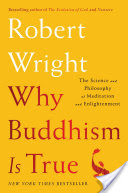
Book: “Why Buddhism is True”

Why Buddhism is True“Ultimately, happiness comes down to choosing between the discomfort of becoming aware of your mental afflictions and the discomfort of being ruled by them.”

Beautifully written that delves on what the author calls phenomena in the mind, private to each specific human being and not inspectable by others. He does not confuse feelings with emotions, which are public and can be inspected by others.

This book is not about meditation, although it explains how it helps us gain distance and discernment from our feelings, even the good ones. Via a version of secular-Buddhism, the author sets out to explain its scientific grounding through aexploration of how we’re controlled by the world around us.

Matthew 6: 19-20

Matthew 6:19 and 6:20 are the nineteenth and twentieth verses of the sixth chapter of the Gospel of Matthew in the New Testament and is part of the Sermon on the Mount. These verses open the discussion of wealth.

In the King James Version of the Bible the text reads:

19: Lay not up for yourselves treasures upon earth, where moth and rust doth corrupt, and where thieves break through and steal.
20: But lay up for yourselves treasures in heaven, where neither moth nor rust doth corrupt, and where thieves do not break through nor steal.
More at:  https://en.wikipedia.org/wiki/Matthew_6:19%E2%80%9320

SUNDAY NIGHT TRANSLATION GROUP — March 4, 2018

Translation  is a 5-step system of syllogistic reasoning using words and their meanings and histories to transform the testimony of the senses and uncover  the underlying timeless reality of Being/Consciousness.

Sense testimony:

Viruses, rats, and persons can invade us and harm us.

For March 5th: Solzhenitsyn on Commemorations for the Anniversary the Death of Stalin

Jordan B. Peterson quotes Aleksandr Solzhenitsyn as saying that “…the line dividing good and evil cuts through the heart of every human being.” While viewing Peterson’s Biblical Series, I remembered that I had a copy of the first volume of The Gulag Archipelago , which includes Parts I and II, and decided it was high time to read at least that much.

Here is a passage I found quite moving (from Part I, p. 443) in which Solzhenitsyn describes how certain former prisoners commemorated (and possibly still do) the death of Stalin:

“In one household I am familiar with, where some former zeks [prisoners – their own word for themselves] live, the following ceremony takes place; On March 5, the day of the death of the Head Murderer [that would be Stalin], they spread out on the table all the photographs of those who were shot and those who died in camps that they have been able to collect – several dozen of them. And throughout the day solemnity reigns in the apartment – somewhat like that of a church, somewhat like that of a museum. There is funeral music. Friends come to visit, to look at the photographs, to keep silent, to listen, to talk softly together, And then they leave without saying goodbye.

“And that is how it ought to be everywhere. At least these deaths would have left a small scar on our hearts.

“So that they should not have died in vain!”

Con Ed Repair Site – SNL


Saturday Night Live
Published on Mar 3, 2018

Construction workers (Charles Barkley, Alex Moffat, Pete Davidson, Kenan Thompson, Beck Bennett, Chris Redd) consider what they’d wear if they were women.

#SNL #SNL43

Get more SNL: http://www.nbc.com/saturday-night-live
Full Episodes: http://www.nbc.com/saturday-night-liv…

Laniakea: Our home supercluster


nature video
Published on Sep 3, 2014
Superclusters – regions of space that are densely packed with galaxies – are the biggest structures in the Universe. But scientists have struggled to define exactly where one supercluster ends and another begins. Now, a team based in Hawaii has come up with a new technique that maps the Universe according to the flow of galaxies across space. Redrawing the boundaries of the cosmic map, they redefine our home supercluster and name it Laniakea, which means ‘immeasurable heaven’ in Hawaiian.

Read the research paper: http://dx.doi.org/10.1038/nature13674
Read Nature’s news story: http://www.nature.com/news/earth-s-ne…

(Contributed by Richard Burns, H.W., M.)

Message to the school shooters: past, present and future


Jordan B Peterson
Published on Mar 3, 2018

I wrote in some detail and with some depth about motivation for the mass slaughter of innocents in my new book, 12 Rules for Life: An Antidote to Chaos. Because of what happened all-too-recently and brutally in Parkland — because of what keeps happening — I thought I would read the relevant chapter (Rule 6: Put your house in perfect order before you criticize the world) and release it on YouTube. I regard the mass shootings as symptomatic of the nihilism and psychological confusion that so deeply characterizes our society at the current time.

This reading will also be put up as a podcast sometime in the next week at http://jordanbpeterson.com/jordan-b-p…

12 Rules of Life: An Antidote to Chaos can be acquired here:

Amazon US: http://amzn.to/2yvJf9L