
Monthly Archives: March 2018
Alice Miller on the real work ahead
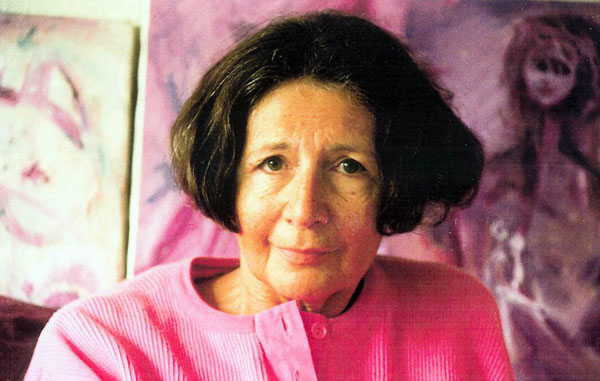
From The Drama of the Gifted Child: The Search for the True Self by Alice Miller
Nationalism, racism, and fascism are in fact nothing other than ideological guises of the flight from the painful, unconscious memories of endured contempt into the dangerous, destructive disrespect for human life, glorified as a political program. The formerly hidden cruelty that was exercised upon the powerless child now becomes only too apparent in the violence of such “political” groups. Its origins in childhood, in the total disregard of the former child, however, remain concealed or absolutely denied, not only by the members of these groups but by society as a whole.
* * * * * *
The basic similarity of the various nationalistic movements flourishing today reveals that their motives have nothing to do with the real interests of the people who are fighting and hating, but instead have very much to do with these people’s childhood histories.
* * * * * *
When Galileo Galilei in 1613 presented mathematical proof for the Copernican theory that the earth revolved around the sun and not the opposite, it was labeled “false and absurd” by the Church. Galileo was forced to recant and subsequently became blind. Not until three hundred years later did the Church finally decide to give up its illusion and remove his writings from the Index.
Now we find ourselves in a situation similar to that of the Church in Galileo’s time, but for us today much more hangs in the balance. Whether we decide for truth or for illusion will have far more serious consequences for the survival of humanity than was the case in the seventeenth century. For some years now, there has been proof that the devastating effects of the traumatization of children take their inevitable toll on society – a fact that we are still forbidden to recognize. This knowledge concerns every single one of us, and – if disseminated widely enough – should lead to fundamental changes in society; above all, to a halt in the blind escalation of violence. The following points are intended to amplify my meaning:
- All children are born to grow, to develop, to live, to love, and to articulate their needs and feelings for their self-protection.
- For their development, children need the respect and protection of adults who take them seriously, love them, and honestly help them to become oriented in the world.
- When these vital needs are frustrated and children are, instead, abused for the sake of adults’ needs by being exploited, beaten, punished, taken advantage of, manipulated, neglected, or deceived without the intervention of any witness, then their integrity will be lastingly impaired.
- The normal reactions to such injury should be anger and pain. Since children in this hurtful kind of environment are forbidden to express their anger, however, and since it would be unbearable to experience their pain all alone, they are compelled to suppress their feelings, repress all memory of the trauma, and idealize those guilty of the abuse. Later they will have no memory of what was done to them.
- Disassociated from the original cause, their feelings of anger, helplessness, despair, longing, anxiety, and pain will find expression in destructive acts against others (criminal behavior, mass murder) or against themselves (drug addiction, alcoholism, prostitution, psychic disorders, suicide).
- If these people become parents, they will then often direct acts of revenge for their mistreatment in childhood against their own children, whom they use as scapegoats. Child abuse is still sanctioned – indeed, held in high regard – in our society as long as it is defined as child-rearing. It is a tragic fact that parents beat their children in order to escape the emotions stemming from how they were treated by their own parents.
- If mistreated children are not to become criminals or mentally ill, it is essential that at least once in their life they come in contact with a person who knows without any doubt that the environment, not the helpless, battered child, is at fault. In this regard, knowledge or ignorance on the part of society can be instrumental in either saving or destroying a life. Here lies the great opportunity for relatives, social workers, therapists, teachers, doctors, psychiatrists, officials, and nurses to support the child and to believe her or him.
- Till now, society has protected the adult and blamed the victim. It has been abetted in its blindness by theories, still in keeping with the pedagogical principles of our great-grandparents, according to which children are viewed as crafty creatures, dominated by wicked drives, who invent stories and attack their innocent parents or desire them sexually. In reality, children tend to blame themselves for their parents’ cruelty and to absolve the parents, whom they invariably love, of all responsibility.
- For some years now, it has been possible to prove, through new therapeutic methods, that repressed traumatic experiences of childhood are stored up in the body and, though unconscious, exert an influence even in adulthood. In addition, electronic testing of the fetus has revealed a fact previously unknown to most adults – that a child responds to and learns both tenderness and cruelty from the very beginning.
- In the light of this new knowledge, even the most absurd behavior reveals its formerly hidden logic once the traumatic experiences of childhood need no longer remain shrouded in darkness.
- Our sensitization to the cruelty with which children are treated, until now commonly denied, and to the consequences of such treatment will as a matter of course bring to an end the perpetuation of violence from generation to generation.
- People whose integrity has not been damaged in childhood, who were protected, respected, and treated with honesty by their parents, will be – both in their youth and in adulthood – intelligent, responsive, empathic, and highly sensitive. They will take pleasure in life and will not feel any need to kill or even hurt others or themselves. They will use their power to defend themselves, not to attack others. They will not be able to do otherwise than respect and protect those weaker than themselves, including their children, because this is what they have learned from their own experience, and because it is this knowledge (and not the experience of cruelty) that has been stored up inside them from the beginning. It will be inconceivable to such people that earlier generations had to build up a gigantic war industry in order to feel comfortable and safe in this world. Since it will not be their unconscious drive in life to ward off intimidation experienced at a very early age, they will be able to deal with attempts at intimidation in their adult life more rationally and more creatively.
“I’ve studied nuclear war for 35 years — you should be worried.”
The History of Healing Trauma With Hypnosis
Freud and Ben Franklin were among the pioneers of bilateral therapy.
March 6, 2018 (alternet.org)

Photo Credit: James Steidl / Shutterstock
Editor’s Note: The following is an excerpt from the book Walking Your Blues Away: How to Heal the Mind and Create Emotional Well-Being by Thom Hartmann (Park Street Press, 2006), available for purchase from Inner Traditions • Bear & Company, Amazon and IndieBound. Reprinted with permission.
In the book, Hartmann explains how walking allows people to heal from emotional trauma. When we walk, we engage both sides of the body, simultaneously activating both the left and right sides of the brain. Hartmann explains that both hemispheres of the brain join forces to break up the brain patterning of a traumatic experience that has become “stuck” in the brain through the bilateral therapy of walking. Below, he covers the history of earlier bilateral therapies (such as hypnosis) and why they were shunned following an uproar in the 1890s.
“It still strikes me as strange that the case histories I write should read like short stories and that, as one might say, they lack the serious stamp of science.”
—Sigmund Freud, 1895
The first person to develop a system that involved bilateral cross-hemispheric stimulation was a man named Franz Anton Mesmer. In the late 1700s, Mesmer, an Austrian physician who lived in France, healed people of trauma by a variety of techniques that he believed stimulated people’s “animal magnetism,” which he defined as the animating life force within the human body. To accomplish this healing he sometimes used lodestones (magnets) or water that he had “magnetized.” He even claimed to use the direct force of his own “magnetism,” including a technique of holding two fingers in front of a patient’s face and gently waving the fingers from side to side for a few minutes at a time while the patient held her or his head steady and followed the physician’s fingers with the eyes. As Mesmer’s biographer James Wyckoff wrote, “Mesmer now considered passes with his hand as the essential part of his cure.
This pioneering physician termed his system mesmerism, and for the latter part of the eighteenth century he was one of the most famous and notorious physicians in Europe. Wolfgang Amadeus Mozart was a friend of Mesmer, and his opera Bastien et Bastienne was performed in 1768 in the garden of Mesmer’s home. Mozart later wrote Mesmer into his opera Così fan tutte:
This magnetic stone
Should give the traveler pause.
Once it was used by Mesmer,
Who was born
In Germany’s green fields,
And who won great fame
In France.
Mesmer’s system was often highly effective and was widely practiced to treat all manner of physical and psychological ailments, although he was careful not to take patients suffering from clearly “organic” problems such as cancers, sexually transmitted diseases, and other types of obvious infections. Trained as a classical physician, by making this distinction Mesmer was separating out those to whom he either would prescribe medications or would refer to other physicians for surgery or other medical techniques.
Mesmer’s special interest was in those conditions caused by a lack of vitality, or magnetism—what Freud referred to as hysteria and what today would be considered psychosomatic or psychiatric conditions—those caused by or rooted in emotional trauma. At the height of his career, Mesmer trained hundreds of physicians across Europe in his techniques and had a following that included royalty and people from the highest echelons of society, as well as the most destitute, whom he treated for free.
As happens with many new and unconventional therapies, the medical establishment of his day decided that Mesmer was a threat to them. A “commission of inquiry” was convened, which included a number of France’s most well-known physicians, along with the American scientist Benjamin Franklin. The investigators taught themselves what they thought were Mesmer’s techniques by having one of his students, d’Eslon, perform mesmerism cures on them. None of them was sick, however, so none was cured.
Recognizing this obvious flaw in their study, the investigators retired to Ben Franklin’s home, where, for three days, they tried to repeat what they had seen d’Eslon do, only this time they practiced his techniques on people of “the lower classes.” One of the commission members, de Jussieu, got good results and dissented from the majority report, concluding that mesmerism worked. The rest thought it a failure and wrote their opinion in a report dated August 11, 1784. The report, which debunked mesmerism, was a huge blow to Mesmer’s reputation and career in France, and caused him to retire to a home in the countryside, where he lived until his death in 1815. He continued to see patients and train doctors, but never again did “grand tours” of the major cities of Europe. Nonetheless, mesmerism and magnetism lived on as healing systems, and were widely practiced all across Europe and the United States well into the nineteenth century.
In November 1841 a French magnetizer by the name of Dr. Charles Lafontaine traveled to England to teach the technique; in the audience was a Manchester physician of Scottish ancestry named James Braid. Braid was fascinated by the techniques Lafontaine presented, and he began to experiment with them extensively. Braid concluded that Mesmer’s claims for the powers of magnets were overstated; the power of trance induction through mesmerism, however, intrigued Braid. He called the phenomenon neurohypnosis, later shortening the name of the trance-induction phenomenon to hypnosis.
Braid carefully chronicled the aspects of trance states that could be brought about by Mesmer’s technique of waving fingers in front of the eyes, so that his patients’ eyes moved from side to side while they considered their malady. Braid wrote:
My first experiments were conceived in view of proving the falseness of the magnetic theory, which states that the provoked phenomena of sleep is the effect of the transmission of the operator on the subject, of some special influence emanating from the first while he makes some touches on the second with the thumb. He looks at him with a fixed stare, while he directs the points of the fingers toward his eyes, and executes some passes in front of him.
It seemed to me that I had clearly established this point, after having taught the subjects to make themselves fall asleep just by fixing an attentive and sustained look on any inanimate object.
To determine whether the technique worked, as Mesmer had believed, because of a magnetic energy moving from the practitioner’s fingers to the patient’s eyes or whether it instead worked by virtue of the eye motion itself, Braid substituted a swinging pocket watch as the object in motion. The technique still worked, causing Braid to conclude that the trance states Mesmer induced—and the healing that came from them—were produced more by “fatigue of the eye muscles” or the power of suggestion than by any sort of animal magnetism or etheric field transmitted from practitioner to patient.
Braid and other doctors worked to strip mesmerism of its esoteric content and to arrive at a scientific understanding of the physiological and psychological processes involved in producing trance states by fixed attention and bilateral stimulation through moving the eyes from side to side. At the same time, Andrew Jackson Davis, Madame H. P. Blavatsky, and Phineas Quimby took the esoteric aspects of Mesmer’s work and transformed parts of those into the systems that would become Christian Science, Theosophy, and the New Thought movements.
Freud Discovers Hypnosis
The world that Sigmund Freud was born into in 1856 was embracing Braid’s refinement of hypnosis with fervor. The practice had spread to hospitals around the world as a means for providing presurgical anesthesia and was being used by many physicians to treat hysteria, a broad category of physical illnesses believed to have a psychological basis. (Those physical illnesses included paralysis, blindness, insomnia, fits, and a wide variety of other conditions.)
When Freud was twenty-four years old and just out of medical school, his mentor, Josef Breuer, began treating a twenty-one-year-old Orthodox Jewish woman named Bertha Pappenheim, whom Freud referred to in writing as Anna O. The young woman had spent several years of her life nursing her ailing father; when he died she developed a number of illnesses, including periodic muteness, paralysis, hallucinations, and spasms. Though she lived in Germany, she refused to speak German; she would converse only in English. She had tried on several occasions to kill herself.
At the time, therapeutic hypnotic methods varied to some degree, although most involved the classic technique of having a patient fix her or his attention on one point. In a paper published in 1881, Freud wrote of several hypnosis techniques he and Breuer preferred. One was clearly handed down from Mesmer: Freud wrote that “we sit down opposite the patient and request him to fixate on two fingers on the physician’s right hand and at the same time to observe closely the sensations which develop.”
The other technique seemed a more recent invention of Breuer’s and Freud’s and involved, as Freud wrote, “stroking the patient’s face and body with both hands continuously for from five to ten minutes,” a technique quite useful for calming “hysterical” female patients. Freud noted that “this has a strikingly soothing and lulling effect.” The “stroking” that Freud and Breuer practiced involved alternately stroking the left, then the right side of the body, a technique Mesmer had first developed.
Breuer treated Bertha with these and other hypnotic techniques to some success, although Freud observed that in the process the woman fell in love with Breuer, a married man old enough to be her father. Bertha claimed Breuer had impregnated her and that she would have his baby; Breuer claimed she had a “hysterical pregnancy.” She was moved to a private sanitarium, where she lived for the next few years out of the public eye. To this day it is not known whether the pregnancy was terminated by abortion or miscarriage, whether she gave birth, or whether, as Breuer claimed, her pregnancy symptoms were all the result of her “hysterical” desire to have his child and had no basis in physical reality.
What is known is that, after her release from the sanitarium, Bertha Pappenheim never again discussed Breuer or Freud, but instead became Germany’s first and most outspoken social worker and feminist. She rose to Susan B. Anthony–like fame in Germany, writing books and producing plays advocating women’s rights, and translating into German and publishing Mary Wollstonecraft’s 1792 groundbreaking treatise on women’s rights, A Vindication of the Rights of Women. In 1904 she founded a Jewish women’s movement, the Jüdischer Frauenbund, which was so influential in Germany that it came to the attention of the Nazis; she died after being interrogated by Hitler’s thugs in 1936. She had never married or, as far as can be ascertained, ever had a relationship with a man after her claim of impregnation by Breuer.
In the first year of her treatment by Breuer, Bertha had found that it was very useful for her to spend long hours talking with the attentive Breuer about her feelings: she called this her “talk therapy” and “chimney sweeping.” He would come to her home both evenings and mornings to hear her “talk therapy.” Even though Freud and Breuer never claimed this talk therapy to be a “cure,” her case became the cornerstone of Freud’s theories and of modern talk-based psychotherapies.
But in the 1880s and early 1890s, talk therapy wasn’t Freud’s favorite or even most common form of treatment for his patients. At the time, Freud’s treatment methodology of choice was a bilateral eye-motion technique known as hypnosis.
In his 1893 Some Points for a Comparative Study of Organic and Hysterical Motor Paralyses and his 1895 Studies on Hysteria (the “founding document” on Freudian psychoanalysis, which was coauthored with Josef Breuer), Freud based nearly all of his conclusions on results he obtained using Mesmer’s and Braid’s eye-motion and other hypnotic techniques. In Studies on Hysteria, for example, Freud wrote: “Quite frequently it is some event in childhood that sets up a more or less severe symptom which persists during the years that follow. Not until they have been questioned under hypnosis [my italics] do these memories emerge with the undiminished vividness of a recent event.”
In 1893 Freud published On the Psychical Mechanism of Hysterical Phenomena: Preliminary Communication, coauthored with Josef Breuer. In it he addressed the subject of hypnosis frequently and explicitly. “As a rule, it is necessary to hypnotize the patient and to arouse memories under hypnosis,” he wrote in the opening paragraph of the paper. “When this [hypnosis] is done, it becomes possible to demonstrate the connection in the clearest and most convincing fashion.” As always, his technique involved using his hand or a watch to move the patient’s eyes from side to side, and occasionally stroking the patient on alternate sides of her body.
In the paper, Freud and Breuer refer to their learning hypnotic techniques in 1881, and refer to their work before 1881 as “the ‘pre-suggestion’ era.” Repeatedly, Freud and Breuer referred to the power of hypnosis for both diagnostic and therapeutic work. They suggested that the root causes of hysteria are found in old memories or emotional traumas, and that “Not until [the patients] have been questioned under hypnosis do these memories emerge.”
And the cure for these painful old memories that are driving neurotic behavior? Freud and Breuer wrote: “It will now be understood how it is that the psychotherapeutic procedure which we have described in these pages has a curative effect. It brings to an end the operative force of the idea which was not abreacted in the first instance, by allowing its strangulated affect to find a way out through speech; and it subjects it to associative correction by introducing it into normal consciousness under light hypnosis or by removing it through the physician’s suggestion, as is done in somnambulism [hypnosis] accompanied by amnesia.”
Freud’s main technique for inducing what he called somnambulism was to wave his hand or his fingers from side to side in front of his patient’s face while suggesting that the person relax and then consider her or his problem or issue. Freud also used techniques borrowed from stage hypnotists, including “tapping,” a technique wherein Freud alternately tapped two fingertips on the person’s forehead, cheeks, or collarbone, continually from left to right, until a trance was induced, and another technique in which he put his hand on the client’s forehead and applied increasing pressure.
Hypnotic-induction techniques such as these were used to treat people across Europe and America; Freud was using quick-induction trance states to give him access to the inner workings of his patients’ minds, helping him to flesh out his theory of the unconscious.
But hypnosis was not uncontroversial. Ever since the father of one of Mesmer’s young female patients forced his way into Mesmer’s treatment room to “rescue” his daughter, the misuse of hypnosis was a hot topic. Stage demonstrations of hypnosis were among the most popular forms of entertainment throughout the mid- and late 1800s, and usually involved a beautiful female assistant who was put into a trance and then commanded to give blind obedience to the hypnotist.
In 1885, the novelist Jules Clarette published in Paris a work of fiction titled Jean Mornas, about a hypnotist who caused people to steal for him and left them with no memory of the events. In July 1886, as the novel was being translated into German and English, the French Revue De l’Hypnotisme magazine published the results of a series of experiments that sensationalized Clarette’s novel: in those experiments, physicians hypnotized their patients and then successfully commanded them to steal. The revelations of these experiments were very troubling to the French public. When Jean Mornas appeared in German in 1889, its publication caused quite a sensation.
Continue reading The History of Healing Trauma With Hypnosis
Book: “Thou Shalt Not Be Aware” by Alice Miller
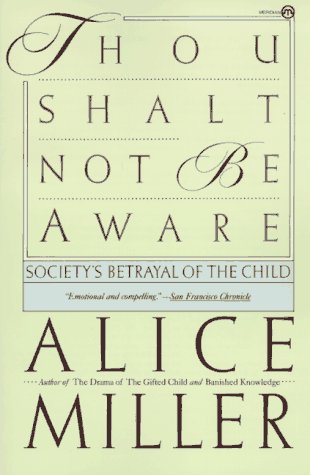
Thou Shalt Not Be Aware : Society’s Betrayal of the Child
by Alice Miller, Hildegarde Hannum , Hunter Hannum
Child abuse is beginning to be recognized as something more significant than an isolated family affair. The title of Alice Miller’s book, first published in Germany in 1981, spells out the unspoken commandment that such abused children – indeed, all of us – have been obeying since early childhood. We have all been made to feel from our earliest days that we are to blame for anything shameful that happens to us, so that our awareness of these inflicted abuses dims. Alice Miller demonstrates that this centuries-old tradition also finds expression in Freud’s notions of “the Oedipus complex” and “infantile sexuality” – his drive theory – which put the blame on the child. Freud maintained that his patients who claimed to have been sexually molested as children were only “fantasizing” as a defense against their own sexual desires for their innocent parents. This theory helped to conceal the fact that sexual abuse of children occurs frequently and results in later emotional disturbances in the victims of such abuse – because they are not allowed awareness of it. In fairy tales, works of literature, and dreams, Alice Miller maintains, the truth about childhood can emerge, precisely because it is not recognized as such. Detailed examples from Kafka, Flaubert, Beckett, and Virginia Woolf offer proof of her thesis and illustrate her understanding of human creativity.
(Goodreads.com)
Newly Declassified Nuclear Explosions

Consciousness in the Universe is Scale Invariant
Mary Fahl Sings George Harrison’s “The Inner Light”
I was very heartened a while back when Gwyllm posted a video of Mary Fahl singing her own co-composition “Exiles: The Wolves of Midwinter”. Mary is by way of being a friend of a friend, so, even though I’ve only met her once, I feel as if I know her. I also have a very high opinion of her as a human being, since, when our mutual friend was in big trouble, she came through like a champ, helping out in a really big way (this all happened in NYC, so my involvement had to remain pretty minimal…).
Anyway, just a few days ago, Mary’s and my mutual friend shared this with me:
Which was part of a tribute to George Harrison – a concert by various performers at the City Winery in New York – on what would have been his 75th birthday.
For more information on this song, including its history and musical structure, click here; for the various versions by the Beatles – including the original single, alternative takes, extended takes, etc. – click here.
PS: And special thanks to Gwyllm for his earlier post; I think Mary deserves a lot more recognition than she’s currently getting…
Saints Polyeuct and Nearchus: Brothers by affection

Saints Polyeuct and Nearchus were Roman soldiers in 3rd-century Armenia and “brothers by affection.” They are a prime example of same-sex lovers in the early church. Polyeuct’s feast day is Feb. 13.
The earliest account of Polyeuct’s martyrdom, a 4th-century Armenian biography, says that they were “brothers, not by birth, but by affection” and enjoyed “the closest possible relationship, being both comrades and fellow soldiers.”
 |
| St. Polyeuctus (Wikimedia Commons) |

Nearchus was Christian, but Polyeuct was not. The men had a strong desire to spend eternity together, so Polyeuct converted from paganism to Christianity, the faith of his beloved Nearchus. With a convert’s zeal he attacked a pagan procession. He was beheaded for his crime in the year 259 in the western Armenian city of Militene. Shortly before he was executed, he spoke his last words to Nearchus: “Remember our secret vow.” Thus Polyeuct is known as a protector of vows and avenger of broken promises, in addition to his role as a probable “gay saint.”
Yale history professor John Boswell names Polyeuct and Nearchus as one of the three primary pairs of same-sex lovers in the early church. (The others are Perpetua and Felicity and Sergius and Bacchus.) The love story of Polyeuct and Nearchus is told with extensive historical detail in two books, “Same Sex Unions in Pre-Modern Europe

Artists portray Polyeuct and Nearchus
Polyeuct and Nearchus look almost like a gay Valentine as they embrace in an icon by Brother Robert Lentz, a Franciscan friar and world-class iconographer known for his innovative icons. It is one of 10 Lentz icons that have sparked controversy since in 2005 when conservative Roman Catholic leaders accused Lentz of glorifying sin and creating propaganda for a progressive sociopolitical agenda. Permission to use these “Images That Challenge” was withdrawn from websites such as Q Spirit in 2018, but some of them can still be found at TrinityStores.com.
Artist Jim Ru was also inspired to paint Polyeuct and Nearchus. His version was displayed in his show “Transcendent Faith: Gay, Lesbian and Transgendered Saints” in Bisbee Arizona in the 1990s.
O’Neill reports that French writer Robert Dartois recently took the story of Polyeuct and Nearchus from “Passionate Holiness” and turned it into a libretto, which was then set by the Swiss composer Thierry Chatelain as the oratorio “Polyeucte et Nearchus.”
There are many variations in the spellings of their names, such as Polyeuctus, Polyeuctes, Polyeuktos and Nearchos and Nearch. Polyeuct’s feast day is Feb.13 in the Catholic calendar, but falls on Jan. 9 in the Eastern Orthodox tradition and Jan. 7 in ancient Armenian calendars. The feast day for Nearchus is April 22.
___
Related links:
Saints Polyeuct and Nearchos, 3rd Century Lovers and Martyrs (Queer Saints and Martyrs — And Others)
Orthodox Prayer for Polyeuctus the Martyr of Melitene in Armenia (goarch.org)
Hermanos de afecto: Santos Polieucto y Nearco (Santos Queer)
___
Top image credit: “Saints Polyeuctus and Nearchus” by Jim Ru
___
This post is part of the LGBTQ Saints series by Kittredge Cherry. Traditional and alternative saints, people in the Bible, LGBTQ martyrs, authors, theologians, religious leaders, artists, deities and other figures of special interest to lesbian, gay, bisexual and transgender and queer (LGBTQ) people and our allies are covered.
Copyright © Kittredge Cherry. All rights reserved.
Qspirit.net presents the Jesus in Love Blog on LGBTQ spirituality.

Kittredge Cherry
Founder at Q Spirit
Kittredge Cherry is a lesbian Christian author who writes regularly about LGBTQ spirituality.She holds degrees in religion, journalism and art history.She was ordained by Metropolitan Community Churches and served as its national ecumenical officer, advocating for LGBTQ rights at the National Council of Churches and World Council of Churches.
Ruth and Naomi: Biblical women who loved each other
 Love between women is honored in the lives of Biblical figures Ruth and Naomi. The two women are an inspiration for lesbians and the whole LGBTQ community. Some churches observe their feast day on Dec. 20.
Ruth’s famous vows to Naomi are often used in weddings — heterosexual as well as same-sex marriages. Few people realize that these beautiful promises were originally spoken by one woman to another:
“Where you go I will go, and where you stay I will stay. Your people will be my people and your God my God.”
(Ruth 1:16)
The old-fashioned King James translation, still beloved by many, begins, “Whither thou goest, I will go…”
There are no wedding ceremonies in the Bible, so the same-sex vows between Ruth and Naomi and David and Jonathan provide the best Biblical models for wedding vows.

Ruth and Naomi from ChristianImageSource.com
Were Ruth and Naomi lesbians? The same Hebrew word (dabaq) is used to describe Adam’s feelings for Eve and Ruth’s feelings for Naomi. In Genesis 2:24 it says, “Therefore shall a man leave his father and his mother, and shall cleave unto his wife: and they shall be one flesh.” The way that Adam “cleaved” to Eve is the way that Ruth “clung” to Naomi. Countless couples have validated this interpretation by using their vows as a model for how spouses should love each other.
A billboard featuring Ruth and Naomi is part of the Would Jesus Discriminate project sponsored by Metropolitan Community Churches. It states boldly, “Ruth loved Naomi as Adam loved Eve. Genesis 2:24. Ruth 1:14.” The website WouldJesusDiscriminte.org gives a detailed explanation. For more info on the billboards, see the previous post, “Billboards show gay-friendly Jesus.”

Ruth and Naomi billboard from from WouldJesusDiscriminte.org
Ruth and Naomi in the Bible
Naomi was the mother-in-law of Ruth and Orpah. After their husbands died, Naomi urged both of them to remarry. But Ruth refused, declaring her love in words that have extra meaning for LGBTQ people because they were spoken between women.
In the Bible Ruth was born to a pagan family and married the Jewish man Boaz. Because of her heterosexual marriage, she may also be considered bisexual. In Judaism she is honored as a convert. Ruth is an ancestor of Jesus Christ, listed in his genealogy in the gospel of Matthew. It reports mostly a male lineage, and Ruth is one of only four women who are included.
Lesbian interpretations of Ruth and Naomi
The openly lesbian interpretation dates back at least to 1937, when the novel “Pity for Women” by Helen Anderson was published. The two main characters, Ann and Judith, recite Ruth’s famous vow to show their commitment as a lesbian couple.
Ruth and Naomi also play a role in the award-winning 1971 lesbian historical novel “Patience and Sarah” by Isabel Miller. In 19th-century New England, love blossoms between Patience, an educated painter of Bible scenes, and cross-dressing farmer Sarah. The first picture that Patience paints when they move in together is the embrace of Biblical women Ruth and Naomi.
Contemporary Christian singer-songwriter Marsha Stevens used their vow as the basis for the song she wrote for her legal wedding to Cindy Pino: “Wherever You Go.” She sings about how Cindy grew up feeling alone as “a guest at every wedding, an extra place at meals,” with nobody recognizing her lesbian relationships as family. But the mood shifts after a chorus with Ruth’s vow to Naomi :
Now we stand on sacred ground, our families near,
Law allows these holy vows, your home is here.
“Wherever You Go” is available for listening and download at BALM (Born Again Lesbian Music) Ministries: http://balmministries.net/track/323379/wherever-you-go
Ruth and Naomi in art
Enjoy a selection of Bible illustrations that celebrate the love between these two women of spirit. If you look closely, it sometimes seems that they are about to kiss.

The previous two images are details from larger scenes that show Orpah leaving while Ruth stays with Naomi.

Ruth clings to Naomi (ChristianImageSource.com)

“Naomi and Her Daughters-in-Law” from Doré’s English Bible, 1866 (Wikimedia Commons)


“Ruth and Naomi” by Brandon Buehring
Artist Brandon Buehring included Ruth and Naomi in his “Legendary Love: A Queer History Project.” He uses pencil sketches and essays “to remind queer people and our allies of our sacred birthright as healers, educators, truth-tellers, spiritual leaders, warriors and artists.” The project features 20 sketches of queer historical and mythological figures from many cultures around the world. He has a M.Ed. degree in counseling with an LGBT emphasis from North Carolina State University in Raleigh. He works in higher education administration as well as being a freelance illustrator based in Northampton, Massachusetts.
Ruth and Naomi’s love has been illustrated by many artists, including the great English Romantic painter William Blake.

“Naomi entreating Ruth and Orpah to return to the land of Moab” by William Blake, 1795 (Wikimedia Commons)

The hardships experienced by Ruth and Naomi are often overshadowed by their famous vow of love and their association with the giving of the Torah to the Jewish people. Ruth is revered as a Jewish convert and an ancestor of Jesus. But Ruth and her Israelite mother-in-law were so poor that Ruth had to survive by picking up leftover grains of barley in the fields after harvest. Gay Israeli artist Adi Nes brings home the reality of their poverty by showing the pair scavenging onions from a contemporary street littered with trash after an open-air market. They are posed like the peasants in Millet’s “The Gleaners,” a painting well known for showing the dignity of society’s poorest members.

“Untitled (Ruth and Naomi)” by Adi Nes
The careworn faces of Ruth and her beloved Naomi become visible in a second portrait by Nes. He shows that their love for each other is all they have as they sit together among discarded crates. For more about Adi Nes, see my previous post “Adi Nes: Gay Israeli artist humanizes Bible stories.”

“Untitled (Ruth and Naomi)” by Adi Nes
The painting below, “Whither Thou Goest” by Trudie Barreras, was commissioned in 2004 by Rev. Paul Graetz, pastor of City of Light / First Metropolitan Community Church of Atlanta, for a sermon series that he was doing on the Book of Ruth.
 “Whither Thou Goest” by Trudie Barreras, 2004
Acrylic, 18” x 14.” Collection of City of Light / First Metropolitan Community Church of Atlanta, GA.
Ruth and Naomi in prayer
Here my queer prayer inspired by Ruth and Naomi:
O God, inspire us to love one another
as Ruth and Naomi loved each other.
They gave us a powerful example
of love between women.
May their love guide same-sex couples
and all couples into a deeper connection
with each other and
with the Spirit who created us to love. Amen.
___
Top image credit: “Ruth’s Wise Choice,” 1907 Bible card by the Providence Lithograph Company (Wikimedia Commons)

Ruth and Naomi links
Queering the Church: Ruth and Naomi
Pharsea’s World: Homosexuality and Tradition: Ruth and Naomi
Stroppy Rabbit Blog: Naomi and Ruth in art
Conjubilant with Song Blog: “Song of Ruth” hymn by Fanny Crosby, 1875
___
To read this article in Spanish, go to:
Rut y Noemí: El amor entre mujeres en la Biblia (Santos Queer)
___
This post is part of the LGBTQ Saints series by Kittredge Cherry. Traditional and alternative saints, people in the Bible, LGBTQ martyrs, authors, theologians, religious leaders, artists, deities and other figures of special interest to lesbian, gay, bisexual and transgender and queer (LGBTQ) people and our allies are covered.
Copyright © Kittredge Cherry. All rights reserved.
Qspirit.net presents the Jesus in Love Blog on LGBTQ spirituality.
Kittredge Cherry
Founder at Q Spirit
Kittredge Cherry is a lesbian Christian author who writes regularly about LGBTQ spirituality.She holds degrees in religion, journalism and art history.She was ordained by Metropolitan Community Churches and served as its national ecumenical officer, advocating for LGBTQ rights at the National Council of Churches and World Council of Churches.