TRANSLATION ADVENTURE – 3/11/18

Translators: Ned Henry, Alex Gambeau, Heather Williams

SENSE TESTIMONY: Persons are unconscious of their fear aggression

5th Step Conclusions:

  1. I AM I awareness of ONE MIND formless thinking force of the Universal Being.
  2. One Consciousness is a timeless connection linking past and present as ONE Loving Energy that is Eternal Truth of all LIFE.
  3. The powerful peace of TRUTH is being illuminated.

Putting the History of Earth into Perspective. (3-minute animation)

We all know that Earth is old, but it’s hard to put into perspective just how old it is. After all, what does 4.5 billion years really mean? How do you even comprehend that amount of time with our short-lived human brains? Well, Business Insider has done a pretty incredible job of it in this 3-minute animation, by displaying the timeline of Earth if time was the distance from Los Angeles to New York. And, oh boy, our world-view will never be the same.

main article image

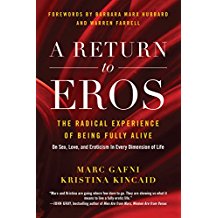
SOME MORE NOTES FROM “A RETURN TO EROS: THE RADICAL EXPERIENCE OF BEING FULLY ALIVE: ON SEX, LOVE, AND EROTICISM IN EVERY DIMENSION OF LIFE” BY MARC GAFNI AND KRISTINA KINCAID

“EDEN is that old-fashioned House
We dwell in every day,
Without suspecting our abode
Until we drive away.”
–Emily Dickenson

In a Moveable Feast, Hemingway remarks on the difference between his telling a story and the story telling itself.  When he begins to tell the story, he knows it is time to quit for the day.  This is a true echo of the temple tradition.  SIT DOWN WHEN YOU CAN HEAR YOURSELF SPEAK.

The Zohar masters understood Eros to be the essential goal of the spiritual journey.  Often in Hebrew mystical texts the erotic is called “a messiah experience.”  For the masters, the messiah was not a historical happening as much as an inner event.  The Hebrew word for “messiah” derives from the root word siach.  Siach means no more and no less than “conversation.”  The core of the Zohar text is basically a series of sacred conversations.  The messiah, they taught, lingers whenever we so fully enter conversation that the boundaries of ego fall away and we are left only with the raw joy of fellowship.”

“Holiness is eroticism.  Sin is superficiality.”

“The German writer Goethe was right when he defined addiction as anything you cannot stop doing.  We are all addicts.”

“One of the defining characteristics of the Zohar mystics was that illumination happens not in solitary retreat but in groups engaged in sacred conversation.”

“The biblical text describes the pit into which Joseph was thrown by his jealous brothers:  “The pit was empty; it had not water,” reads the story.  Of course, the real pit at play in the story is not a pit in the earth.  The pit is in Joseph’s brothers’ ground of being.  Their own gaping sense of emptiness makes them envy Joseph so.  Their inability to walk through their own pit (void) moves them to project a pit into the world, in which they would cast their brother. The snakes and scorpions come from the unacknowledged emptiness of the brothers.”

“And down his mouth comes to my mouth! and down
His bright dark eyes come over me, like a hood
Upon my mind! his lips meet mine, and a flood
Of sweet fire sweeps across me, so I drown
Against him, die and find death good.”
–D.H. Lawrence

“Do not pretend to be working for your core survival (bread) when it is really gold (honor and glory) that you are after.  Know what you want and pursue it.  ‘Have few desires burt have great ones,’ Buddha reportedly said.”

“I want
to do with you what spring does with the cherry trees.”
–Pablo Neruda

“We are not discrete units but rather interconnected indiscrete “unities.” Like a network of rivers that interweave along their way back to the sea, we are beings fully woven into each other and thus able to traverse all the frontiers of separateness, including space and even time.”

“Being in love is the nature of reality.  Survival of the fittest begins to mean what Darwin originally intuited, and not what his teachings were distorted by neo-Darwinists to mean.  Survival of the fittest means that what survives is what fits with all dimensions of reality–interiors and exteriors.  To survive is to fit with both insides and outsides.  That means that to survive is to be connected to the most beauty, the most love, the deepest values of collaboration, and the highest vision of community.”

“Wild Nights–Wild Nights!
Were I with thee
Wild Nights should be
Our luxury!

“Futile–the Winds–
To a Heart in port–
Done with the Compass–
Done with the Chart!

“Rowing in Eden–
Ah, the Sea!
Might I but moor–tonight–
In Thee!”
–Emily Dickinson

“Reality is going somewhere.”

“But love is not only falling in love but also rising in love.  We dare not exile falling in love to the merely sexual or the merely romantic.”

“I have come to drag you out of your self
and take you in my heart.
I have come to bring out the beauty
you never knew you had
and lift you like a prayer to the sky.”
–Rumi

“When you awaken as your Unique Self, you are, in effect, awakening as evolution in person.”

Freud on the id

Es war, soll Ich werden, translated as:
Where id was, there ego shall be.

–Freud, New Introductory Lectures on Psychoanalysis, trans. (which could mean where unconsciousness was, there shall consciousness be.   
–Editor, BB)

A NOTE FROM ASTROLOGER SUSAN MILLER – MARCH 2018

Welcome to March, one of my favorite months of 2018. This month has more spectacular aspects in the first three weeks, and I want you to think about how you can take full advantage.

Remarkably in the first week of March, none of the planets will be retrograde, which is a very unusual circumstance that we often don’t see during an entire year. That situation will end on March 8 when Jupiter goes retrograde, but if you are initiating an important action in the first week of March, such as to start a business or get married, you have an ideal time.

The full moon of March 1 on Virgo, 11 degrees, will be sweet as sugar. Saturn will staunchly support that new moon, so actions you take are likely to remain with you a long time. Here is more good news! Venus and Mercury will individually receive golden rays from Jupiter in the breathtakingly harmonious trine position (120 degrees). This is perfect for falling in love or committing your love that you’ve found, and to travel, sign a contact, have a presentation, give a speech, shop for beautiful things – March 1 to 4 will be heavenly.

More good news comes at the March 17 new moon in Pisces 27 degrees, for Jupiter in Scorpio will be at the ideal position to shower that new moon with radiant luck, expansion, prosperity, healing, and happiness. All new moons open a new path, but this one is outstandingly special – read your forecast to find out which area of life will bring good news for you.

This month has three moons, so the third one will arrive as a full moon on March 31, commonly called a blue moon. That one has some hash aspects, for Saturn and Mars, traveling together like Siamese twins, will both send a harsh 90-degree square to the full moon in Libra, and in the opposite side of the sky, to the Sun in Aries. We will all feel the ripples of those hard aspects, so keep your schedule light at that time so you can move in any direction that full moon asks you to do.

Many readers say they write down the dates that I give in my monthly column – thank you! I was hoping you would do that. There is another, easier way to do this. Try using my Year Ahead 2018 Astrological Wall Calendar or if you like, my smaller, Year Ahead 2018 Astrological Desk Planner that is meant to be on your desk. You will have my advice on the dates that matter most throughout each month to help you plan your meetings, travel, social events, and other important initiations. When you are asked, do you want to come in on Monday or Thursday, you will know instantly which day is best!

To order, go to my publisher’s website, www.AmericaDirectBook.com (note – his company name starts with the word America, not American). This year’s calendars are some of the most beautiful we have ever designed. They are only available through my publisher or on my website homepage (easiest if you are on a laptop). The artwork by the famous artist Izak is so beautiful that many readers say at the end of a year, they cut out the art, get inexpensive frames and mats, and give them to friends of that sign. We use the richest inks and think 100-percent rag paper, so there is no bleed-through ever.

Mercury will retrograde from March 22 to April 15, so get your most important actions done early in the month. If you are not familiar with all the facets of this famous aspect that affects everyone of every sign, see my essay on the homepage of my website, AstrologyZone.com. Look at to the lower left hand corner where many of my articles are found. Although Mercury retrograde can cause changes and delays, these periods also open up our schedules and help us to go back to projects to polish them to an even higher level. Mercury retrograde is also a great time to reconnect with friends, colleagues, and clients we have not seen in a long time, and for me, that’s the most fun.

If you are reading my monthly forecasts on your cell phone’s browser, consider getting my free app, Susan Miller’s Astrology Zone Daily Horoscope, on Apple or Google Play. Simply search for the words Susan Miller – I come up first. You will see the dark blue icon with white letters AZ come up. Both my free and paid versions have my uncut monthly forecast.

I must say, the name I gave my app is a bit of a misnomer, because while I do give you daily forecasts (and really long ones if you get the paid premium subscription), I also have many essays you might like. One popular one on my premium version has to do with the question – Is there a 13th sign? In my piece, I tackle the subject and show you why no, there is no 13th sign, and why, using science as the basis of my essay, you should continue to read the same sign you always knew you were born into.

If you want to try the premium paid version of my app, you can choose one month for $4.99, three months for $12.99, or a full year for $49.99. Apple and Google Play are my retailers. You can end the subscription any time, and you will never see ads on the paid version of my app.

On January 18 in Los Angeles, my app won the top Media Excellence Award for Best Daily Connected Content. What a thrill that was to be named the winner! It was a red carpet event for the mobile industry, and it was fun to meet all the other winners and finalists.

The first eclipses of 2018 on January 31 and February 15 brought many changes to many readers in the five days that circled those eclipse dates. If you didn’t hear news, it may be because your natal planets were not touched mathematically by either of those eclipses. You may hear news this month on March 16, because 20 percent of eclipses deliver their news one month to the day later, plus or minus five days. No more eclipses are due to come by until July, so we all have plenty of time to adjust to any new conditions we have now. Not all eclipses bring hard news – many people saw happy opportunities pop up and heard happy surprise news.

Enjoy March!

Susan Miller (astrologyzone.com)

The World Is Better Than Ever. Why Are We Miserable?

By  

March 9, 2018 (nymag.com)

Lucky?  Photo: Yiu Yu Hoi/Getty Images


Earlier this week, I went to a lecture given by Steven Pinker on his latest book, Enlightenment Now. I’m a huge and longtime fan of Pinker’s, and his book The Blank Slate was, for me, a revelation. He’s become a deep and important critic of the visceral hostility to nature and science now so sadly prevalent on the left and right, a defender of reason and the Enlightenment against the “social justice” movements on campus, and his new book is a near-relentless defense of modernity. I sat there for an hour slowly being buried in a fast-accumulating snowdrift of irrefutable statistics showing human progress: the decline of violence and war, the rise and rise of democracy, the astonishing gains against poverty of the last couple of decades, the rise of tolerance and erosion of cruelty, lengthening lifespans, revolutions in health, huge increases in safety, and on and on. It was one emphatic graph after another that bludgeoned my current depression into a kind of forced rational cheeriness. There were no real trade-offs here; our gloom is largely self-imposed; and is entirely a function of our media and news diets.

At the same time, I was finally reading another new book, Why Liberalism Failed, by Patrick J. Deneen. If you really want a point of view that is disturbingly persuasive about the modern predicament and yet usually absent from any discussion in the mainstream media, I cannot recommend it highly enough. A short polemic against our modern liberal world, it too is relentless. By “liberal,” I don’t mean left-liberal politics; I mean (and Deneen means) the post-Machiavelli project to liberate the individual from religious authority and the focus of politics on individual rights and the betterment of humankind’s material conditions. Deneen doesn’t deny any of the progress Pinker describes, or quibble at the triumph of the liberal order. It is, by and large, indisputable. He does something more interesting: He argues that liberalism has failed precisely because it has succeeded.

As we have slowly and surely attained more progress, we have lost something that undergirds all of it: meaning, cohesion, and a different, deeper kind of happiness than the satiation of all our earthly needs. We’ve forgotten the human flourishing that comes from a common idea of virtue, and a concept of virtue that is based on our nature. This is the core of Deneen’s argument, and it rests on a different, classical, pre-liberal understanding of freedom. For most of the Ancients, freedom was freedom from our natural desires and material needs. It rested on a mastery of these deep, natural urges in favor of self-control, restraint, and education into virtue. It placed the community — the polis — ahead of the individual, and indeed could not conceive of the individual apart from the community into which he or she was born. They’d look at our freedom and see licentiousness, chaos, and slavery to desire. They’d predict misery not happiness to be the result.

Pinker’s sole response to this argument — insofar as he even acknowledges it — is to cite data showing statistical evidence of rising levels of a sense of well-being in one’s life across the world. And this is a valid point. But Pinker seems immune to the idea of paradox, irony, or unintended consequences. He doesn’t have a way of explaining why, for example, there is so much profound discontent, depression, drug abuse, despair, addiction, and loneliness in the most advanced liberal societies. His response to the sixth great mass extinction of the Earth’s species at the hands of humans is to propose that better environmental technology will somehow solve it — just as pharmaceuticals will solve unhappiness. His general view is that life is simply a series of “problems” that reason can “solve” — and has solved. What he doesn’t fully grapple with is that this solution of problems definitionally never ends; that humans adjust to new standards of material well-being and need ever more and more to remain content; that none of this solves the existential reality of our mortality; and that none of it provides spiritual sustenance or meaning. In fact, it might make meaning much harder to attain, hence the trouble in modern souls.

He has contempt for religion — which is odd for an evolutionary psychologist, since his field includes the study of genetic, evolutionary roots for religious belief. And, equally odd for an evolutionary psychologist, he sees absolutely no problem that humans in the last 500 years (and most intensely in the last century) have created a world utterly different than the one humans lived in for close to 99 percent of our time on the planet. We are species built on tribe; yet we live increasingly alone in societies so vast and populous our ancestors would not recognize them; we are a species designed for scarcity and now live with unimaginable plenty; we are a species built on religious ritual to appease our existential angst, and yet we now live in a world where every individual has to create her own meaning from scratch; we are a species built for small-scale monocultural community and now live increasingly in multiracial, multicultural megacities.

Which is to say that both Pinker and Deneen are right, but Deneen is deeper. Deneen sees paradox in human life, tragedy even; he respects the wisdom of the aeons that Pinker is simply relieved we have left behind; and he has a perspective that Pinker — despite his vast erudition and intelligence — doesn’t seem to grasp. Pinker, for example, has no way to understand our current collective rage — why aren’t we all ecstatic about such huge and continuing “progress”? — unless he blames our gloom and grief and discontent on … bad media. It’s all the journalists’ and intellectuals’ fault for persuading people they’re sad when, in fact, they’re super-happy! And he has a faltering grasp of politics, the cycle of regimes, the vicissitudes of history, the decadence of democracies, or the appeal of tyrants. His view of history is so relentlessly Whiggish it’s almost a self-parody. His understanding of the Enlightenment, as David Bell notes, surgically removes its most popular representative, Jean-Jacques Rousseau, who saw from the very beginning the paradoxes of liberty and reason, and, for that matter, Edmond Burke, who instantly realized the terrifying emptiness of modernity, and the furies it might unleash upon us.

But, as Deneen understands, we are where we are. There is no going back. For our civilization, God is dead. Meaning is meaningless outside the satisfaction of our material wants and can become, at its very best, merely a form of awe at meaninglessness. We have no common concept of human flourishing apart from materialism, and therefore we stand alone. Maybe we will muddle through this way indefinitely, and I sure hope we do, numbed or placated by continuous material improvement. But it is perfectly possible that this strange diversion in human history — a few centuries at most, compared with 200 millennia — is a massive error that will at some point be mercilessly corrected; that our planet, on present trends, will become close to uninhabitable for most of its creatures thanks to the reason and materialism Pinker celebrates; that our technology will render us unnecessary for the tasks our species has always defined itself by; and that our era of remarkable peace could end with one catastrophic event, as it did in 1914. We have, after all, imperfectly controlled weapons of mass destruction, and humans have never invented a weapon we haven’t used (including nukes, of course). It is also true that humans have never lived before without a faith or cult or set of practices designed to reconcile us to death and suffering.

Why should this continue forever? Pace Pinker, this is a question that remains terrifyingly open. For Pinker, every sharply upward graph continues indefinitely upward. But I have never seen such an astonishingly rapid ascent without an equally sudden decline, a return to the mean. Maybe I’m just a doomsayer. But it takes a remarkably sturdy set of blinkers to think it’s an impossibility.

An Implicit Anti-Semitism

There’s been a lot of puzzlement about how key leaders of the Women’s March could have any affection for Louis Farrakhan. The Weekly Standard cheerfully provides a few classic Farrakhan quotes pertinent to feminism. My faves: “When a woman does not know how to cook and the right foods to cook, she’s preparing death for herself, her husband, and her children.” Or: “[M]an is supposed to have rule, especially in his own house … and when she rules you, you become her child.” You get the drift. I once went to a Farrakhan rally and noticed something else: sex segregation in the congregation. When Christina Hoff Sommers is designated a “fascist” for being a feminist skeptical of some of the empirical claims to her left, and constantly silenced on campus as a consequence, surely the leaders of the super-woke left would have a few issues with Farrakhan.

But nah. For at least three key leaders, he’s a hero. It emerged recently that a co-president of the Women’s March, Tamika Mallory, has actually been attending Farrakhan’s creepy and menacing events for 30 years! Last year, she put out a photo of her meeting with Farrakhan, writing: “Thank God this man is still alive and doing well. He is definitely the GOAT [Greatest of All Time].” She’s not alone in her fandom. Check out this Instagram page where no fewer than three Women’s March leaders — Carmen Perez, Tamika Mallory and Linda Sarsour — gush over the benighted old bigot. Perez cites his honesty — “the Minister often speaks his truth” (notice how “truth” is entirely subjective). Mallory sends her love: “My family! Love you all!” Sarsour notes how he doesn’t seem to age — “God Bless him.”

Vox has a hilarious writeup of the issue here – it’s a kind of study in politically correct journalism, navigating the line between wokeness and reality, and failing. My colleague Jesse Singal has a sane summary of the contretemps here. The fact that neither Tamika Mallory nor the Women’s March itself can clearly apologize for fraternizing with a genocidal anti-Semite, vicious homophobe, and hoary old actual “male supremacist” baffles Jesse, as it might. If an alt-right organization were found cozying up to Farrakhan, it would be on the front pages of every newspaper. So why is the identity-based left’s alliance with him be a nonissue for many? Neither the New York Times nor the Washington Post has reported on the story.

But I have to say that, unlike Jesse, the alliance with Farrakhan doesn’t baffle me at all. Once you understand the intellectual roots of the social justice movement, you see how anti-Semitism must logically be intrinsic to it. The essential claim is that all differences in outcome between any racial groups or the two sexes is entirely a function of oppression. Therefore those at the top of the hierarchy are logically the most oppressive, and the extraordinary success and achievements and prosperity of American Jews are thereby deeply suspicious. The fact that the Jewish people have been subjected in living memory to the most brutal oppression known to humans — mass extermination — is largely irrelevant. What matters for “social justice” is their alleged power now in America — and the urgent need for resistance to it.

This necessary dimension is largely kept on the down-low within social justice movements. Posters demanding “End Jewish Supremacy Now!” would expose the movement’s bald-faced racism against whites. But if it’s legit to fight against “whiteness,” it’s surely necessary to fight against “Jewishness” as well, because it is, in fact, one of the most successful and prominent forms of “whiteness” there is. Once you start down the path of racially based struggle, you find yourself quite quickly submerged in toxins. And when a movement is rooted in anti-white racism, anti-Semitism will never be that far behind.

The Unkindest Cut of All

Some extra thoughts on mass male genital mutilation, after my brief discussion last week. First to note is that one of the motives for male circumcision was the same as for female genital mutilation from the get-go. It was in part about dulling or removing sexual pleasure in order to control sexual immorality. The first-century philosopher Philo Judaeus described the practice as “the symbol of excision of excessive and superfluous pleasure.” Maimonides viewed it as a means to “bring about a decrease in sexual intercourse and a weakening of the organ in question, so that this activity be diminished and the organ be in as quiet a state as possible.” It was performed, he wrote, to “quell all the impulses of matter” and “perfect what is defective morally.” And that’s exactly what it does. The foreskin is packed with nerve endings, making it the most sensitive part of the penis, and it protects the glans from chafing and surface scarring, which also dulls sensation. Removing it is on its face an attack on male sexuality. Its analog among women is the clitoral hood, the removal of which is rightly considered an abomination. But for infant boys, it’s routine.

Mass circumcision is also very recent — a function of mid-19th century obsessions with cleanliness and masturbation. Wanking, at the time, was linked to a whole host of ailments, including epilepsy and insanity, and cutting off the super-sensitive foreskin was designed to prevent them. This is, of course, bonkers science — and yet we continue to live with its consequences. The prevalence of circumcision in America is also a function of fee-for-service medicine. In Britain, for example, routine genital mutilation is rightly not regarded as medically necessary, and if you want to mutilate your infant son, you have to pay for it out of pocket. The result is a rate of circumcision around 10 percent. In America, in contrast, where hospitals can actively profit from routinely including the procedure in labor and delivery, the rate is close to 60 percent. It’s a scam, in other words. Getting rid of it would cut health-care costs.

There are studies — largely in Africa — which show that it does seem to lower the incidence of some STIs, such as HIV, HPV, and herpes. You’d expect therefore that in developed European countries where it is rare, you’d also see higher rates of STDs. In fact, Europe has much, much lower rates of STIs than the U.S. There are a host of complicating factors, of course, that affect rates in Africa, Europe, and the U.S. But the fact that the U.S. has four times the rate of chlamydia and far higher incidences of gonorrhea and syphilis certainly doesn’t indicate that circumcision is a decisive factor in restraining sexual infections. The AIDS epidemic also had a much bigger impact in circumcised America than in intact Europe.

So why does it persist? Some fathers want their sons to look like them. Circumcised men understandably don’t like being told they’re living with mutilated, less sensitive dicks. Very few people personally experience the difference between having a natural and a circumcised penis, and so it remains a largely ignored procedure. In general, it’s all a rather squeamish subject. But it shouldn’t be. There are times when an irrational and massive aberration in human history — mass circumcision — needs to be subjected to reason. We can end this. And we should.

See you next Friday.

(Submitted by Bruce King.)

“Renegade” by Styx


“Renegade”

Oh, Mama, I’m in fear for my life from the long arm of the law
Law man has put an end to my running and I’m so far from my home
Oh, Mama I can hear you a-cryin’, you’re so scared and all alone
Hangman is comin’ down from the gallows and I don’t have very long

The jig is up, the news is out
They’ve finally found me
The renegade who had it made
Retrieved for a bounty

Never more to go astray
This will be the end today
Of the wanted man

Oh, Mama, I’ve been years on the lam and had a high price on my head
Lawman said, ‘Get him dead or alive.’ Now it’s for sure he’ll see me dead
Dear Mama, I can hear you cryin’, you’re so scared and all alone
Hangman is comin’ down from the gallows and I don’t have very long

The jig is up, the news is out
They’ve finally found me
The renegade who had it made
Retrieved for a bounty

Never more to go astray
The judge will have revenge today
On the wanted man

Oh, Mama, I’m in fear for my life from the long arm of the law
Hangman is comin’ down from the gallows and I don’t have very long

The jig is up, the news is out
They’ve finally found me
The renegade who had it made
Retrieved for a bounty

Never more to go astray
This will be the end today
Of the wanted man

The wanted man
And I don’t wanna go, oh, no
Oh, Mama, don’t let them take me
No, no, no, I can’t go
Hey, hey

In case you need something to RHS . . .

From The Continuum Concept by Jean Liedloff:

In the maternity wards of Western civilization there is little chance of consolation . . . The newborn infant, with his skin crying out for the ancient touch of smooth, warmth-radiating, living flesh, is wrapped in dry, lifeless cloth. He is put in a box where he is left, no matter how he weeps, in a limbo that is utterly motionless (for the first time in all his body’s experience, during the aeons of its evolution or during its eternity in the womb). The only sounds he can hear are the wails of other victims of the same ineffable agony. The sounds can mean nothing to him. He cries and cries; his lungs, new to air, are strained with the desperation in his heart. No one comes. Trusting in the rightness of life, as by nature he must, he does the only act he can, which is to cry on. Eventually, a timeless lifetime later, he falls asleep exhausted.

He awakes in a mindless terror of the silence, the motionlessness. He screams. He is afire from head to foot with want. with desire, with intolerable impatience. He gasps for breath and screams until his head is filled and throbbing with the sound. He screams until his chest aches, until his throat is sore. He can bear the pain no more and his sobs weaken and subside. He listens. He opens and closes his fists. He rolls his head from side to side. Nothing helps. It is unbearable. He begins to cry again, but it is too much for his strained throat; he soon stops. He stiffens his desire-racked body, and there is a shadow of relief. He waves his hands and kicks his feet. He stops, able to suffer, unable to think, unable to hope. He listens. Then he falls asleep again.

When he awakens he wets his nappy and is distracted from his torment by the event. But the pleasant feeling of wetting and the warm, damp, flowing sensation around his lower body are quickly gone. The warmth is now immobile and turning cold and clammy. He kicks his legs, stiffens his body, sobs. Desperate with longing, his lifeless surroundings wet and uncomfortable, he screams through his misery until it is stilled by lonely sleep.

Suddenly he is lifted; his expectations come forward for what is to be his. The wet nappy is taken away. Relief. Living hands touch his skin. His feet are lifted and a new, bone-dry, lifeless cloth is folded around his loins. In an instant it is as though the hands had never been there, nor the wet nappy. There is no conscious memory, no inkling of hope. He is in unbearable emptiness, timeless, motionless, silent, wanting, wanting. His continuum tries its emergency measures, but they are all meant for bridging short lapses in correct treatment or for summoning relief from someone (it is assumed) who will want to provide it. His continuum has no solution for this extremity. The situation is beyond its vast experience. The infant, after breathing air for only a few hours, has already reached a point of disorientation from his nature beyond the saving powers of the mighty continuum. His tenure in the womb was the best approximation he is ever likely to know of the state of well-being in which it is his innate expectation that he will spend his lifetime. His nature is predicated upon the assumption that his mother is behaving suitably and that their motivations and consequent actions will naturally serve one another.

Someone comes and lifts him deliciously through the air. He is in life. He is carried a bit too gingerly for his taste, but there is motion. Then he is in his place. All the agony he has undergone is nonexistent. He rests in the enfolding arms, and though his skin is sending no message of relief from the cloth, no news of live Oesh on his flesh, his hands and mouth are reporting normal. The positive pleasure of life, which is continuum-normal, is almost complete. The taste and texture of the breast are there; the warm milk is flowing into his eager mouth; there is a heartbeat, which should have been his link, his reassurance of continuity from the womb; moving forms are visible that spell life. The sound of the voice is right too. There are only the cloth and the smell (his mother uses cologne) that leave something missing. He sucks and, when he feels full and rosy, dozes off.

When he awakens he is in hell. No memory, no hope, no thought can bring the comfort of his visit to his mother into this bleak purgatory. Hours pass and days and nights. He screams, tires, sleeps. He wakes and wets his nappy. By now there is no pleasure in this act. No sooner is the pleasure of relief prompted by his innards than it is replaced, as the hot, acid urine touches his by now chafed body, by a searing crescendo of pain. He screams. His exhausted lungs must scream to override the fiery stinging. He screams until the pain and screaming use him up before he falls asleep.

At his not unusual hospital the busy nurses change all nappies on schedule, whether they are dry, wet or long wet, and send the infants home, chafed raw, to be healed by someone who has time for such things.

By the time he is taken to his mother’s home (surely it cannot be called his) he is well versed in the character of life. On a pre-conscious plane that will qualify all his further impressions, as it is qualified by them, he knows life to be unspeakably lonely, unresponsive to his signals and full of pain.

But he has not given up. His vital forces will try for ever to reinstate their balances as long as there is life.

Home is essentially indistinguishable from the maternity ward except for the chafing. The infant’s waking hours are passed in yearning, wanting and interminable waiting for rightness to replace the silent void. For a few minutes a day his longing is suspended, and his terrible skin-crawling need to be touched, to be held and moved about, is relieved. His mother is one who, after much thought, has decided to allow him access to her breast. She loves him with a tenderness she has never known before. At first, it is hard for her to put him down after feeding, especially because he cries so desperately when she does. But she is convinced that she must, for her mother has told her (and she must know) that if she gives in to him now, he will be spoiled and cause trouble later. She wants to do everything right; she feels for a moment that the little life she holds in her arms is more important than anything else on earth.

She sighs and puts him gently in his cot, which is decorated with yellow ducklings and matches his whole room. She has worked hard to furnish it with fluffy curtains, a rug in the shape of a giant panda, a white dresser, a bath and a changing table equipped with powder, oil, soap, shampoo and hairbrush, all made and packed in colours especially for babies. On the wall there are pictures of baby animals dressed as people. The chest of drawers is full of little vests, Baby-Gros, bootees, caps, mittens and nappies. There is a toy woolly lamb stood at a beguiling angle on top and a vase of flowers – which have been cut off from their roots, for his mother also ‘loves’ flowers.

She straightens baby’s vest and covers him with an embroidered sheet and a blanket bearing his initials. She notes them with satisfaction. Nothing has been spared in perfecting the baby’s room, though she and her young husband cannot yet afford all the furniture they have planned for the rest of the house. She bends to kiss the infant’s silky cheek and moves towards the door as the first agonized shriek shakes his body.

Softly she closes the door. She has declared war upon him. Her will must prevail over his. Through the door she hears what sounds like someone being tortured. Her continuum sense recognizes it as such. Nature does not make clear signals that someone is being tortured unless it is the case. It is precisely as serious as it sounds.

She hesitates, her heart pulled towards him, but resists and goes on her way. He has just been changed and fed. She is sure he does not really need anything therefore, and she lets him weep until he is exhausted.

He awakens and cries again. His mother looks in at the door to ascertain that he is in place; softly, so as not to awaken in him any hope of attention, she shuts the door again. She hurries to the kitchen, where she is working, and leaves that door open so that she can hear the baby, in case ‘anything happens to him’.

The infant’s screams fade to quavering wails. As no response is forthcoming, the motive power of the signal loses itself in the confusion of barren emptiness where the relief ought, long since, to have arrived. He looks about. There is a wall beyond the bars of his cot. The light is dim. He cannot turn himself over. He sees only the bars, immobile, and the wall. He hears meaningless sounds in a distant world. There is no sound near him. He looks at the wall until his eyes close. When they open again, the bars and the wall are exactly as before, but the light is dimmer.

At Yale, we conducted an experiment to turn conservatives into liberals. The results say a lot about our political divisions

By John Bargh November 22, 2017 (washingtonpost.com)

(Getty Images)

When my daughter was growing up, she often wanted to rush off to do fun things with her friends — get into the water at the beach, ride off on her bike — without taking the proper safety precautions first. I’d have to stop her in her tracks to first put on the sunscreen, or her bike helmet and knee pads, with her standing there impatiently. “Safety first, fun second,” was my mantra.

Keeping ourselves and our loved ones safe from harm is perhaps our strongest human motivation, deeply embedded in our very DNA. It is so deep and important that it influences much of what we think and do, maybe more than we might expect. For example, over a decade now of research in political psychology consistently shows that how physically threatened or fearful a person feels is a key factor — although clearly not the only one — in whether he or she holds conservative or liberal attitudes.

Conservatives, it turns out, react more strongly to physical threat than liberals do. In fact, their greater concern with physical safety seems to be determined early in life: In one University of California study, the more fear a 4-year-old showed in a laboratory situation, the more conservative his or her political attitudes were found to be 20 years later. Brain imaging studies have even shown that the fear center of the brain, the amygdala, is actually larger in conservatives than in liberals. And many other laboratory studies have found that when adult liberals experienced physical threat, their political and social attitudes became more conservative (temporarily, of course). But no one had ever turned conservatives into liberals.

Until we did.

In a new study to appear in a forthcoming issue of the European Journal of Social Psychology, my colleagues Jaime Napier, Julie Huang and Andy Vonasch and I asked 300 U.S. residents in an online survey their opinions on several contemporary issues such as gay rights, abortion, feminism and immigration, as well as social change in general. The group was two-thirds female, about three-quarters white, with an average age of 35. Thirty-percent of the participants self-identified as Republican, and the rest as Democrat.

But before they answered the survey questions, we had them engage in an intense imagination exercise. They were asked to close their eyes and richly imagine being visited by a genie who granted them a superpower. For half of our participants, this superpower was to be able to fly, under one’s own power. For the other half, it was to be completely physically safe, invulnerable to any harm.

If they had just imagined being able to fly, their responses to the social attitude survey showed the usual clear difference between Republicans and Democrats — the former endorsed more conservative positions on social issues and were also more resistant to social change in general.

But if they had instead just imagined being completely physically safe, the Republicans became significantly more liberal — their positions on social attitudes were much more like the Democratic respondents. And on the issue of social change in general, the Republicans’ attitudes were now indistinguishable from the Democrats. Imagining being completely safe from physical harm had done what no experiment had done before — it had turned conservatives into liberals.

In both instances, we had manipulated a deeper underlying reason for political attitudes, the strength of the basic motivation of safety and survival. The boiling water of our social and political attitudes, it seems, can be turned up or down by changing how physically safe we feel.

This is why it makes sense that liberal politicians intuitively portray danger as manageable — recall FDR’s famous Great Depression era reassurance of “nothing to fear but fear itself,” echoed decades later in Barack Obama’s final State of the Union address — and why President Trump and other Republican politicians are instead likely to emphasize the dangers of terrorism and immigration, relying on fear as a motivator to gain votes.

In fact, anti-immigration attitudes are also linked directly to the underlying basic drive for physical safety. For centuries, arch-conservative leaders have often referred to scapegoated minority groups as “germs” or “bacteria” that seek to invade and destroy their country from within. President Trump is an acknowledged germaphobe, and he has a penchant for describing people — not only immigrants but political opponents and former Miss Universe contestants — as “disgusting.”

“Immigrants are like viruses” is a powerful metaphor, because in comparing immigrants entering a country to germs entering a human body, it speaks directly to our powerful innate motivation to avoid contamination and disease. Until very recently in human history, not only did we not have antibiotics, we did not even know how infections occurred or diseases transmitted, and cuts and open wounds were quite dangerous. (In the American Civil War, for example, 60 out of every 1,000 soldiers died not by bullets or bayonets, but by infections.)

Therefore, we reasoned, making people feel safer about a dangerous flu virus should serve to calm their fears about immigrants — and making them feel more threatened by the flu virus should cause them to be more against immigration than they were before. In a 2011 study, my colleagues and I showed just that. First, we reminded our nationwide sample of liberals and conservatives about the threat of the flu virus (during the H1N1 epidemic), and then measured their attitudes toward immigration. Afterward we simply asked them if they’d already gotten their flu shot or not. It turned out that those who had not gotten a flu shot (feeling threatened) expressed more negative attitudes toward immigration, while those who had received the vaccination (feeling safe) had more positive attitudes about immigration.

In another study, using hand sanitizer after being warned about the flu virus had the same effect on immigration attitudes as had being vaccinated. A simple squirt of Purell after we had raised the threat of the flu had changed their minds. It made them feel safe from the dangerous virus, and this made them feel socially safe from immigrants as well.

Our study findings may have a silver lining. Here’s how:

All of us believe that our social and political attitudes are based on good reasons and reflect our important values. But we also need to recognize how much they can be influenced subconsciously by our most basic, powerful motivations for safety and survival. Politicians on both sides of the aisle know this already and attempt to manipulate our votes and party allegiances by appealing to these potent feelings of fear and of safety.

Instead of allowing our strings to be pulled so easily by others, we can become more conscious of what drives us and work harder to base our opinions on factual knowledge about the issues, including information from outside our media echo chambers. Yes, our views can harden given the right environment, but our work shows that they are actually easier to change than we might think.

John Bargh is a professor of social psychology at Yale University and the author of “Before You Know It: The Unconscious Reasons We Do What We Do”

(Submitted by Gwyllm Llwydd.)

How to Get to Conscious Machines

Unlike the director leads you to believe, the protagonist of Ex Machina, Andrew Garland’s 2015 masterpiece, isn’t Caleb, a young programmer tasked with evaluating machine consciousness. Rather, it’s his target Ava, a breathtaking humanoid AI with a seemingly child-like naïveté and an enigmatic mind.

Like most cerebral movies, Ex Machina leaves the conclusion up to the viewer: was Ava actually conscious? In doing so, it also cleverly avoids a thorny question that has challenged most AI-centric movies to date: what is consciousness, and can machines have it?

Hollywood producers aren’t the only people stumped. As machine intelligence barrels forward at breakneck speed—not only exceeding human performance on games such as DOTA and Go, but doing so without the need for human expertise—the question has once more entered the scientific mainstream.

Are machines on the verge of consciousness?

This week, in a review published in the prestigious journal Science, cognitive scientists Drs. Stanislas Dehaene, Hakwan Lau and Sid Kouider of the Collège de France, University of California, Los Angeles and PSL Research University, respectively, argue: not yet, but there is a clear path forward.

The reason? Consciousness is “resolutely computational,” the authors say, in that it results from specific types of information processing, made possible by the hardware of the brain.

There is no magic juice, no extra spark—in fact, an experiential component (“what is it like to be conscious?”) isn’t even necessary to implement consciousness.

If consciousness results purely from the computations within our three-pound organ, then endowing machines with a similar quality is just a matter of translating biology to code.

Much like the way current powerful machine learning techniques heavily borrow from neurobiology, the authors write, we may be able to achieve artificial consciousness by studying the structures in our own brains that generate consciousness and implementing those insights as computer algorithms.

From Brain to Bot

Without doubt, the field of AI has greatly benefited from insights into our own minds, both in form and function.

For example, deep neural networks, the architecture of algorithms that underlie AlphaGo’s breathtaking sweep against its human competitors, are loosely based on the multi-layered biological neural networks that our brain cells self-organize into.

Reinforcement learning, a type of “training” that teaches AIs to learn from millions of examples, has roots in a centuries-old technique familiar to anyone with a dog: if it moves toward the right response (or result), give a reward; otherwise ask it to try again.

In this sense, translating the architecture of human consciousness to machines seems like a no-brainer towards artificial consciousness. There’s just one big problem.

“Nobody in AI is working on building conscious machines because we just have nothing to go on. We just don’t have a clue about what to do,” said Dr. Stuart Russell, the author of Artificial Intelligence: A Modern Approach in a 2015 interview with Science.

Multilayered consciousness

The hard part, long before we can consider coding machine consciousness, is figuring out what consciousness actually is.

To Dehaene and colleagues, consciousness is a multilayered construct with two “dimensions:” C1, the information readily in mind, and C2, the ability to obtain and monitor information about oneself. Both are essential to consciousness, but one can exist without the other.

Say you’re driving a car and the low fuel light comes on. Here, the perception of the fuel-tank light is C1—a mental representation that we can play with: we notice it, act upon it (refill the gas tank) and recall and speak about it at a later date (“I ran out of gas in the boonies!”).

“The first meaning we want to separate (from consciousness) is the notion of global availability,” explains Dehaene in an interview with Science. When you’re conscious of a word, your whole brain is aware of it, in a sense that you can use the information across modalities, he adds.

But C1 is not just a “mental sketchpad.” It represents an entire architecture that allows the brain to draw multiple modalities of information from our senses or from memories of related events, for example.

Unlike subconscious processing, which often relies on specific “modules” competent at a defined set of tasks, C1 is a global workspace that allows the brain to integrate information, decide on an action, and follow through until the end.

Like The Hunger Games, what we call “conscious” is whatever representation, at one point in time, wins the competition to access this mental workspace. The winners are shared among different brain computation circuits and are kept in the spotlight for the duration of decision-making to guide behavior.

Because of these features, C1 consciousness is highly stable and global—all related brain circuits are triggered, the authors explain.

For a complex machine such as an intelligent car, C1 is a first step towards addressing an impending problem, such as a low fuel light. In this example, the light itself is a type of subconscious signal: when it flashes, all of the other processes in the machine remain uninformed, and the car—even if equipped with state-of-the-art visual processing networks—passes by gas stations without hesitation.

With C1 in place, the fuel tank would alert the car computer (allowing the light to enter the car’s “conscious mind”), which in turn checks the built-in GPS to search for the next gas station.

“We think in a machine this would translate into a system that takes information out of whatever processing module it’s encapsulated in, and make it available to any of the other processing modules so they can use the information,” says Dehaene. “It’s a first sense of consciousness.”

Meta-cognition

In a way, C1 reflects the mind’s capacity to access outside information. C2 goes introspective.

The authors define the second facet of consciousness, C2, as “meta-cognition:” reflecting on whether you know or perceive something, or whether you just made an error (“I think I may have filled my tank at the last gas station, but I forgot to keep a receipt to make sure”). This dimension reflects the link between consciousness and sense of self.

C2 is the level of consciousness that allows you to feel more or less confident about a decision when making a choice. In computational terms, it’s an algorithm that spews out the probability that a decision (or computation) is correct, even if it’s often experienced as a “gut feeling.”

C2 also has its claws in memory and curiosity. These self-monitoring algorithms allow us to know what we know or don’t know—so-called “meta-memory,” responsible for that feeling of having something at the tip of your tongue. Monitoring what we know (or don’t know) is particularly important for children, says Dehaene.

“Young children absolutely need to monitor what they know in order to…inquire and become curious and learn more,” he explains.

The two aspects of consciousness synergize to our benefit: C1 pulls relevant information into our mental workspace (while discarding other “probable” ideas or solutions), while C2 helps with long-term reflection on whether the conscious thought led to a helpful response.

Going back to the low fuel light example, C1 allows the car to solve the problem in the moment—these algorithms globalize the information, so that the car becomes aware of the problem.

But to solve the problem, the car would need a “catalog of its cognitive abilities”—a self-awareness of what resources it has readily available, for example, a GPS map of gas stations.

“A car with this sort of self-knowledge is what we call having C2,” says Dehaene. Because the signal is globally available and because it’s being monitored in a way that the machine is looking at itself, the car would care abouthe low gas light and behave like humans do—lower fuel consumption and find a gas station.

“Most present-day machine learning systems are devoid of any self-monitoring,” the authors note.

But their theory seems to be on the right track. The fewexamples whereby a self-monitoring system was implemented—either within the structure of the algorithm or as a separate network—the AI has generated “internal models that are meta-cognitive in nature, making it possible for an agent to develop a (limited, implicit, practical) understanding of itself.”

Towards conscious machines

Would a machine endowed with C1 and C2 behave as if it were conscious? Very likely: a smartcar would “know” that it’s seeing something, express confidence in it, report it to others, and find the best solutions for problems. If its self-monitoring mechanisms break down, it may also suffer “hallucinations” or even experience visual illusions similar to humans.

Thanks to C1 it would be able to use the information it has and use it flexibly, and because of C2 it would know the limit of what it knows, says Dehaene. “I think (the machine) would be conscious,” and not just merely appearing so to humans.

If you’re left with a feeling that consciousness is far more than global information sharing and self-monitoring, you’re not alone.

“Such a purely functional definition of consciousness may leave some readers unsatisfied,” the authors acknowledge.

“But we’re trying to take a radical stance, maybe simplifying the problem. Consciousness is a functional property, and when we keep adding functions to machines, at some point these properties will characterize what we mean by consciousness,” Dehaene concludes.

By 

Image Credit: agsandrew / Shutterstock

Consciousness, sexuality, androgyny, futurism, space, the arts, science, astrology, democracy, humor, books, movies and more