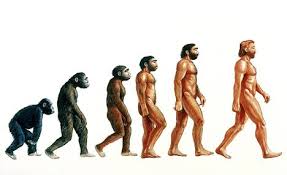
Augmented evolution: Why the definition of “human” is about to change

By Michelle Thaller (BigThink.com)

If there are intelligent alien civilizations out there, would they look like us? To answer that question, we first have to ask another: Is our species about to take an evolutionary leap? “I think that the definition of being human is about to change a lot in the next century,” says Michelle Thaller, astronomer and Assistant Director for Science Communication at NASA. Over the next few decades, Thaller speculates that humanity’s augmented evolution will begin as we start to merge with A.I.s. Our biological bodies might just be a first step in human evolution, says Thaller, and high-tech implants and neural interfaces may make it possible for us to design our own bodies. “When you design your own body to suit any environment you want, why look like a human? Maybe you want to—[or] maybe you want to be a piece of foil that spreads itself across square kilometers to fly on solar winds and actually move around through solar systems. Maybe you look nothing like a human. Maybe you have nothing like a human life.” So what does this have to do with aliens? Thaller posits that any advanced civilization that is more evolved than us would also have left its biological evolution behind. Expecting humanoid extraterrestrials might be too narrow minded. Maybe aliens are algorithms. Maybe we shouldn’t even be looking for DNA and microbial life. Perhaps ET is a flat sheet of foil cruising through the universe on solar winds.

TRANSCRIPT

Michelle Thaller: You know, one of oldest questions I think humankind has asked is: “If there’s other life in the universe, is it very, very different from us, or is it very similar?”

And even when it comes to the microbial level, even like very small bacteria things—you know, right now we’re exploring the solar system looking for evidence of life on Mars or on some of the icy moons of Jupiter and Saturn. There are oceans underneath the ice, and even if we found a microbe I think one of the first questions is: Does it have something like DNA? Is it similarly put together the way we are, or is it something very different, even at the microbial level?
And then you take that question and you move even farther. I mea,n what would aliens that are more evolved look like? Aliens that maybe even have advanced civilizations? And this is one of these things where I’m very aware of the limits of human imagination. Einstein famously said ‘the universe is not stranger than we do imagine—it’s stranger than we can imagine.’

And I think that a lot of times people say, Well, we have one evidence of how life started and how life can exist, and it sort of makes sense that maybe something similar would have started on different planets. I think actually when you think about civilizations, aliens out there that are advanced—that maybe even have more advanced civilizations than we do—the thing that I really can’t get around is, that I think that the definition of being human is about to change a lot in the next century.

I think that humans and A.I.s and computers will begin to merge and actually become somewhat indistinguishable from each other. This is not some Terminator scenario of the A.I.s taking over and destroying everything. But, for example, I have a friend who has cochlear implants. He was profoundly deaf and then had cochlear implants put in. And I’ve gone to classical music concerts with him—I remember we went to go see Carmen, and there were tears rolling down his face as he was listening to Carmen. And he knows that he doesn’t hear like a human being hears. There are wires that are directly implanted into his brain that stimulate the auditory section; it never goes through an ear. And he upgrades his software every now and then and then he hears differently. All of a sudden the sounds are different and he actually hears different ranges depending on how his software has been updated. But he always reminds me that what technology did for him was make him more connected, more emotional. I remember somebody was color blind but they actually have an auditory cue as to color, and so it sort of changed the way their brain responds. The implants that are coming, and they will be coming soon, you know.

Once you could implant artificial ears in people, why just hear with the range of a human, right? Why not hear with the range of a dog or a whale or a bird that can hear much higher and lower pitched frequencies than we can? That will come soon. And then when we can augment our eyes, why just see visible light? Why not see x-rays and ultraviolet and infrared light and everything that’s out there? I don’t think there’s any way around this. The aliens we’re going to encounter, if they are advanced from us by many centuries of technology, are going to be indistinguishable from A.I.s. And I don’t think we are looking for biological life. I think we should spend more time thinking about what life really will evolve into.

It may be that the biological being that I am was just a first stage in evolution, and a necessary and maybe even beautiful next step in evolution is for us to be augmented—and maybe someday to completely design our artificial bodies.

When you design your own body to suit any environment you want, why look like a human? Maybe you want to; maybe you want to be a piece of foil that spreads itself across square kilometers to fly on solar winds and actually move around through solar systems. Maybe you look nothing like a human. Maybe you have nothing like a human life.

So this is not a scary science-fiction scenario. I’m not saying that we’re going to be overrun and destroyed by the A.I.s, but I don’t know how you get around very advanced civilizations having gone through an augmentation stage. And I think the next stage in our evolution will most likely be that. And I think maybe we shouldn’t be looking in environments just like the Earth—that maybe where life started, but truly evolved civilizations left that biological necessity behind long ago.

It’s very interesting. But like I said, there’s this guy, his name is Michael, with the cochlear implants. I mean he’s like, “Why do we assume technology is going to keep us apart from each other and make us less human? It might make us even more human.”

Fetus Exhibit Museum of Science and Industry Chicago IL

Prenatal Development

A highlight of Your Beginning is the return of Prenatal Development, the Museum’s timeless collection of 24 real human embryos and fetuses. Ranging from 28 days to 38 weeks, this timeline vividly captures the amazing stages of growth and development before birth. Originally donated to the Museum in 1939, the collection has been newly interpreted in a darkened gallery to allow for quiet reflection upon Your Beginning.

Background on the Exhibit

Collected in the 1930s by Dr. Helen Button with help from local hospitals, Prenatal Development contains specimens from the difficult times of the Great Depression. To the best of our knowledge, all failed to survive because of accidents or natural causes. Dr. Button obtained the parents’ permission to use these specimens as teaching tools.

(msichicago.org)

Published on Apr 16, 2012

45 seconds in….you will see the fetus exhibit. This has been on display at the Museum of Science and Industry in Chicago, IL since I was child (circa 1970’s) and I believe my father stated this exhibit was around when he was younger. These are bodies of human fetuses which were stillborn or once living, died of natural causes, and donated to science. I am not certain how they are preserved, but this has to be one of the most fascinating things I have ever seen. I often wonder if they had lived, who they would be today.

God Recalls 1983 Speedboat Accident That Sent Him To Heaven

January 23, 2018 (theonion.com)

THE HEAVENS—Acknowledging that He had been behaving recklessly that night, God, Our Holy Father, recalled Monday the speedboat accident in 1983 that originally sent Him to heaven. “The last thing I remember was tearing across Lake Winnepesaukah in a Jr. Executive 21 JRV with my buddy Dave and suddenly slamming right into an outcropping of rocks,” said the Almighty, admitting that He was to blame for not wearing a life jacket and having “a few too many wine coolers.” “Well, next thing I know, I’m in eternal paradise, and I’ve been here ever since. It’s pretty cool, and there’s enough stuff going on that I hardly ever think about getting back on a speedboat.” God went on to say that adjusting to heaven had been relatively easy since his good friend Dave had arrived mere seconds after He did.

‘How Democracies Die’ Authors Say Trump Is A Symptom Of ‘Deeper Problems’


‘How Democracies Die’ Authors Say Trump Is A Symptom Of ‘Deeper Problem’

January 22, 20181:25 PM ET
Heard on Fresh Air
DAVE DAVIES

Fresh Air

Harvard professors Steven Levitsky and Daniel Ziblatt are experts in what makes democracies healthy — and what leads to their collapse. They warn that American democracy is in trouble.

How Democracies Die
by Steve Levitsky and Daniel Ziblatt

Hardcover, 312 pages purchase

DAVE DAVIES, HOST:

This is FRESH AIR. I’m Dave Davies in for Terry Gross, who’s off today. If watching President Trump and listening to American political discourse these days makes you feel something’s gone wrong, our guests today will tell you it’s not your imagination. Steven Levitsky and Daniel Ziblatt have spent years studying what makes democracies healthy and what leads to their collapse. And they see signs that American democracy is in trouble.

In a new book, they argue that Trump has shown authoritarian tendencies and that many players in American politics are discarding long-held norms that have kept our political rivalries in balance and prevented the kind of bitter conflict that can lead to a repressive state. Steven Levitsky and Daniel Ziblatt are both professors of government at Harvard University. Levitsky’s research focuses on Latin America and the developing world. Ziblatt studies Europe from the 19th century to the present. Their new book is called “How Democracies Die.”

Well, Stephen Levitsky, Daniel Ziblatt, welcome to FRESH AIR. You know, you write that some democracies die in a hail of gunfire. There’s a military coup. The existing leaders are imprisoned or sometimes shot. Not – this is not the kind of death of a democracy that you think is most relevant to our purposes. What’s a more typical or meaningful scenario?

STEVEN LEVITSKY: Well, the kind of democratic breakdown that you mentioned was more typical of the Cold War era, of a good part of the 20th century. But military coups, although they occur occasionally today in the world, are much, much less common than they used to be. And, in fact, the primary way in which democracies have died since the end of the Cold War, over the last 30 years or so, is at the hands of elected leaders, at the hands of governments that were often freely or close to freely elected, who then use democratic institutions to weaken or destroy democracy. And we’re very hopeful that America’s democratic institutions will survive this process. But if we were to fall into some kind of crisis, surely it would take that form.

DAVIES: And it doesn’t typically happen the week or month after the elected leader takes power, right? It unfolds gradually.

DANIEL ZIBLATT: Yeah, that’s right. I mean, that’s one of the things that makes it so difficult, both to study and also as a citizen to recognize what’s happening. You know, military coups happen overnight. I mean, they’re sudden instances – sudden events. Electoral authoritarians come to power democratically. They often have democratic legitimacy as a result of being elected. And there’s a kind of gradual chipping away at democratic institutions, kind of tilting of the playing field to the advantage of the incumbent, so it becomes harder and harder to dislodge the incumbent through democratic means.

And, you know, when this goes through the whole process, you know, at the end of the process – this may take years, it may take a decade. You know, in some countries around the world, this has taken as long as a decade to happen. At the end of that process, the incumbent is firmly entrenched in power.

DAVIES: And just to define what we’re talking about, we’re talking – when we say a democracy dies, we mean there is a circumstance in which there are relatively freely elected leaders and, at the end, what?

ZIBLATT: Yeah, so at the end of this process, it’s hard – it becomes harder and harder – it takes different forms in different countries. I mean, so what’s happened in Turkey over the last 10 years, essentially President Erdogan has entrenched himself in power, weakened the opposition, and so it’s become harder and harder to dislodge him. So there may continue to be elections, but the elections are tilted in favor of the incumbent. The elections are no longer fair.

Through a variety of mechanisms, the president’s able to stay in power and to withstand criticism, although public support may not fully be there. Media is – you know, there’s kind of a clampdown on media and sort of a variety of institutional mechanisms that an incumbent can use to kind of keep himself in power.

LEVISKY: Right. As Daniel said, very often these days, the kind of formal or constitutional architecture of democracy remains in place, but the actual substance of it is eviscerated.

DAVIES: And does that describe Russia today? Is its democracy essentially dead?

LEVISKY: Yeah, well, I…

ZIBLATT: Yes.

LEVISKY: Russia was never really much of a democracy. If it was a democracy, it was one very, very briefly, so Russia’s really at the other end of the spectrum in terms of the strength of its democratic institutions. But yes, Russia has the trappings of democracy. They still hold elections. They’ve got a Parliament. But in practice, it’s an outright autocracy.

DAVIES: You have a chapter called “Fateful Alliances,” and it’s about circumstances – cases where a populist demagogue, who turns out to be an authoritarian, got help along the way from mainstream political figures or political parties. Do you want to give us an example of that?

ZIBLATT: Yeah, so in our book, we recount a couple of these kinds of scenarios. And it turns out that often the way elected authorities get into power is not just through elections and appealing to the public but by allying themselves with establishment politicians. The most kind of recent example of this that we – and we have this – describe this in greater detail in the book – is the case of Venezuela where Hugo Chavez, kind of with the aid of President Caldera, who was a longstanding politician and establishment politician in Venezuela, was kind of aided along the way in some sense by being freed from jail by President Caldera and his – he kind of gained in legitimacy and then eventually was able to come into power.

A similar story can be told about the interwar years, as well – and interwar years in Europe. So these are the most prominent cases of Democratic collapse, really, in the 20th century – Italy, Germany in the – Italy in the 1920s, Germany in the 1930s. In both of these cases, you have Mussolini coming along, who didn’t really – you know, he had some support. But he was able to kind of increase his profile by being put on a party list by a leading liberal statesman Giovanni Giolitti, who included him on his party’s list. And he gained in legitimacy. And suddenly, you know, here he was, a leading statesman, Mussolini himself.

And a similar story – this – you know, Hitler came to power in a similar alliance with mainstream conservative politicians at the end of the 1920s and into the 1930s – was famously placed as chancellor of Germany by leading statesmen in Germany. In each instance, there’s a kind of Faustian bargain that’s being struck where the statesmen think that they’re going to tap into this popular appeal of the demagogue and think that they can control them. I mean, this is this incredible miscalculation. And this miscalculation happens over and over. And in each instance, the establishment statesmen are not able to control the demagogue.

DAVIES: And you note that there have been figures in American political history that could be regarded as dangerous demagogues and that they’ve been kept out of major positions of power because we’ve had gatekeepers – people who somehow controlled who got access to the top positions of power – presidential nominations, for example. You want to give us some examples of this?

LEVISKY: Sure. Henry Ford was an extremist, somebody who was actually written about favorably in “Mein Kampf.” He flirted with a presidential bid in 1923, thinking about the 1924 race, and had a lot of support, particularly in the Midwest. Huey Long obviously never had the chance to run for president. He was assassinated before that.

DAVIES: He was the governor of Louisiana, right?

Continue reading ‘How Democracies Die’ Authors Say Trump Is A Symptom Of ‘Deeper Problems’

This Is The Scientific Way To Win Any Argument (And Not Make Enemies)

It’s not about the specific points you make, it’s all about how you position them.

This Is The Scientific Way To Win Any Argument (And Not Make Enemies)

[Photo: Alex Hiller/Unsplash]

BY DAVID HOFFELD

You’re in the middle of a heated discussion–or fine, let’s just call it an argument–and the person whom you’re trying convince seems unable or unwilling to grasp your point of view. What should you do?

For starters, you should realize that your odds aren’t exactly superb. Belief change, as psychologist and fellow Fast Company contributor Art Markman put it, is frequently “a war of attrition. There’s usually no one argument that can suddenly get someone to see the light.” Still, some fascinating research suggests that reframing your ideas can boost your opponent’s receptiveness to them. Here’s how it works.

BUT FIRST, “FRAMES”

Before you can reframe an argument, you need to understand what “frames” are in the first places. They’re simply the term psychologists give to the theoretical filters or categories our minds use to help us store, manage, and interpret the meaning of information.

Our brains deploy frames out of necessity. Though the brain is an incredibly powerful organ, it’s limited in its ability to process information. As a result, it instinctively creates these categories for understanding its experience of the world. The type of frame a person may be using determines how they’ll perceive and respond to what you say and do. For instance, imagine you’re in the market for a new car. Here are three different frames (though there can be many more) that might describe the exact same car:

  • Frame #1: The car is blue.
  • Frame #2: The car is for sale and priced at $30,000.
  • Frame #3: The car is two years old.

The first frame is aesthetic (the car’s color), the next is economic (the car’s price and market value), and the third is historical (the car’s age). While all this information can be held in mind simultaneously, it’s possible to rearrange the frames that organize it by order of preference; your preferred frame will alter your perception of the car’s value and influence whether or not you’ll purchase it.


CHANGING FRAMES

So how can you coax someone who’s stuck in a certain frame to try on another one–and to consider the validity of your argument? The answer is counterintuitive: You change their frame by reframing your own position.

Behavioral scientists Matthew Feinburg and Robb Willer conducted six experiments with a total of 1,322 participants, seeking to identify how to make the most effective political arguments to those people with opposing political beliefs. They found that “compliance rates” with a given political message increased if that message was reframed to leverage the existingbeliefs of the listener.

In one of their experiments, which dealt with the topic of same-sex marriage, politically liberal participants were more persuaded when the argument was reframed to focus on fairness (treating everyone equally), while conservative-leaning participants found the argument more compelling when it was framed to emphasize how same-sex couples were loyal, patriotic Americans.

Feinburg and Willer concluded that to win someone to your position, it’s best not to challenge their beliefs but to instead connect your own position to those beliefs (which, obviously, means empathizing with values you may not share–often the tricky part). Doing this can help others see the legitimacy of your position and reduce the perceptual gap between your viewpoint and theirs.

USE THESE FRAME-CHANGING SCRIPTS

So if you’re in a disagreement with a coworker who’s feeling anxious about moving ahead with a new project, you could say:

I respect your commitment to doing what’s best for the company [existing belief]. Can I share with you the two reasons why this new project will strengthen the company?

Suddenly you’ve reframed the dispute around a shared belief: the health of the company.

Or perhaps you’re sharing your plan to improve production rates and your manager tells you that what you’re recommending is too costly. Instead of trying to justify the cost, reframe your position by connecting it with her existing beliefs:

I know you want to improve our production capabilities to make sure we’re able to meet the new objectives for the year [existing belief]. My concern is that if we under-invest in these upgrades, we’ll limit our ability to grow our output, which will cost us a lot in lost production. The plan I’ve put together is priced to grow production so that we’ll meet our objectives.

What the research on reframing shows is that the key to winning any argument is to understand your opponents’ perspective first, and then to link the beliefs supporting their perspective to your argument. The point is to influence them by finding enough common ground to win them to your side–not running to opposite corners and shouting across the divide.

Walking as Creative Fuel: A Splendid 1913 Celebration of How Solitary Walks Enliven “The Country of the Mind”

By Maria Popova (brainpickings.org)

“Every walk is a sort of crusade,” Thoreau wrote in his manifesto for the spirit of sauntering. And who hasn’t walked — in the silence of a winter forest, amid the orchestra of birds and insects in a summer field, across the urban jungle of a bustling city — to conquer some territory of their interior world? Artist Maira Kalman sees walking as indispensable inspiration“I walk everywhere in the city. Any city. You see everything you need to see for a lifetime. Every emotion. Every condition. Every fashion. Every glory.” For Rebecca Solnit, walking “wanders so readily into religion, philosophy, landscape, urban policy, anatomy, allegory, and heartbreak.”

Perched midway in time between Thoreau and Solnit is a timeless celebration of the psychological, creative, and spiritual rewards of walking by the Scottish writer Kenneth Grahame (March 8, 1859–July 6, 1932), best known for the 1908 children’s novel The Wind in the Willows — a book beloved by pioneering conservationist and marine biologist Rachel Carson, whose own splendid prose about nature shares a kindred sensibility with Grahame’s.

Kenneth Grahame

Five years after publishing The Wind in the Willows, Grahame penned a beautiful short essay for a commemorative issue of his old boarding school magazine. Titled “The Fellow that Goes Alone” and only ever published in Peter Green’s 1959 biography Kenneth Grahame (public library), it serenades “the country of the mind” we visit whenever we take long solitary walks in nature.

With an eye to “all those who of set purpose choose to walk alone, who know the special grace attaching to it,” Grahame writes:

Nature’s particular gift to the walker, through the semi-mechanical act of walking — a gift no other form of exercise seems to transmit in the same high degree — is to set the mind jogging, to make it garrulous, exalted, a little mad maybe — certainly creative and suprasensitive, until at last it really seems to be outside of you and as if it were talking to you whilst you are talking back to it. Then everything gradually seems to join in, sun and the wind, the white road and the dusty hedges, the spirit of the season, whichever that may be, the friendly old earth that is pushing life firth of every sort under your feet or spell-bound in a death-like winter trance, till you walk in the midst of a blessed company, immersed in a dream-talk far transcending any possible human conversation. Time enough, later, for that…; here and now, the mind has shaken off its harness, is snorting and kicking up heels like a colt in a meadow.

In a sentiment which, today, radiates a gentle admonition against the self-defeating impulse to evacuate the moment in order to capture it — in a status update, in an Instagram photo — Grahame observes:

Not a fiftieth part of all your happy imaginings will you ever, later, recapture, note down, reduce to dull inadequate words; but meantime the mind has stretched itself and had its holiday.

Art from What Color Is the Wind? by Anne Herbauts

Nearly a century before Wendell Berry’s poetic insistence that in true solitude “one’s inner voices become audible” and modern psychology’s finding that a capacity for “fertile solitude” is the seat of the imagination, Grahame writes:

This emancipation is only attained in solitude, the solitude which the unseen companions demand before they will come out and talk to you; for, be he who may, if there is another fellow present, your mind has to trot between shafts.

A certain amount of “shafts,” indeed, is helpful, as setting the mind more free; and so the high road, while it should always give way to the field path when choice offers, still has this particular virtue, that it takes charge of you — your body, that is to say. Its hedges hold you in friendly steering-reins, its milestones and finger-posts are always on hand, with information succinct and free from frills; and it always gets somewhere, sooner or later. So you are nursed along your way, and the mind may soar in cloudland and never need to be pulled earthwards by any string. But this is as much company as you ought to require, the comradeship of the road you walk on, the road which will look after you and attend to such facts as must not be overlooked. Of course the best sort of walk is the one on which it doesn’t matter twopence whether you get anywhere at all at any time or not; and the second best is the one on which the hard facts of routes, times, or trains give you nothing to worry about.

In consonance with artist Agnes Martin’s quiet conviction that “the best things in life happen to you when you’re alone,” Grahame writes:

As for adventures, if they are the game you hunt, everyone’s experience will remind him that the best adventures of his life were pursued and achieved, or came suddenly to him unsought, when he was alone. For company too often means compromise, discretion, the choice of the sweetly reasonable. It is difficult to be mad in company; yet but a touch of lunacy in action will open magic doors to rare and unforgettable experiences.

But all these are only the by-products, the casual gains, of walking alone. The high converse, the high adventures, will be in the country of the mind.

Complement with poet May Sarton’s sublime ode to solitude, Robert Walser on the art of walking, and Thoreau on the singular glory of winter walks, then revisit Rebecca Solnit’s indispensable cultural history of that art.

SUNDAY NIGHT TRANSLATION GROUP — JANUARY 21, 2018

To quote Mike Zonta, H.W., M., “Translation is ‘magical thinking’  based on self-evident axioms and syllogistic reasoning (which is to say that Translation is not magical thinking at all).”  And to quote Heather Williams, H.W., M., “Translation is the creative process of re-engineering the outdated software of your mind.” Translation  is a 5-step process using words and their meanings and histories to transform the testimony of the senses and uncover  the underlying timeless reality of the Universe.

Sense testimony:

Abuse of power by others forces us to conform and neglect our own satisfaction.

Carl Jung on ideas

“People don’t have ideas. Ideas have people.” 

–Carl Gustav Jung (July 26, 1875 – June 6, 1961)  was a Swiss psychiatrist and psychoanalyst who founded analytical psychology. His work has been influential not only in psychiatry but also in anthropology, archaeology, literature, philosophy, and religious studies. Wikipedia

Consciousness, sexuality, androgyny, futurism, space, the arts, science, astrology, democracy, humor, books, movies and more