One Prosperos Mentor’s perspective: On Translation as Transformative Prayer in the Modern World.
By Calvin Harris, H. W., M.
01 January 2018
As a Mentor for The Prosperos, I find myself often receiving requests for Translation, many times from those who have no understanding of Translation, nor The Prosperos, but who have known and observed my person long enough to understand that when I use Translation, it has a transformative quality that they identify as meditation or prayer. Then, when I am approached with a request to do Translation, it is with a statement such as: “Do that thing that you do.”
A majority of Americans turn to prayer after major catastrophes or tragedies in the hope for healing, or to have something brought into their world that they feel is missing in their life. This begs the question of what is Translation or Transformative prayer?
Prayer, in whatever spiritual context it is found, discerns the nature of Spirit, God, Divine Love, Universal Principal. It then encompasses the spiritual idea of the self and its relationship to the Universal Principal. In Translation, with its practice and manipulation of words, it becomes understood that God, Spirit,
Universal Consciousness is stable and dependable. The Divine Principle is present, no matter the appearance of variation or transitional change, and that Principle is good. This understanding would indicate that human events don’t influence or change Divine Good, or God’s relation to spiritual creation.
Therefore, the role of Translation, as prayer, is to better understand what is eternally true of God, and of us all, as God’s own image. This practice within itself brings about alignment with Truth and naturally brings increased harmony and healing into our experience. Soren Kierkegaard said: “Prayer does not change God, but it changes him who prays.”
The Lord’s Prayer resonates with Christian’ based faiths during times of crisis and challenge, and its healing message is the basis for Translation. The Lord’s Prayer begins with God acknowledged as the all-encompassing Universal Principal, helping our attention to turn from seeing evil as a controlling power, and to pivot our point of view to the fixed principal of God as good, as the first and the last, and all there is. This in itself gives us a profoundly different starting point for looking at ourselves and our world.
Translation or transformative prayer is more than a repetition of words, The words must be understood, the thoughts behind the words are what are important. and their meaning wholeheartedly recognized as truth here and now. The purpose of Translation is to confirm in Consciousness that perfect spiritual beingness, is the reality behind contrary evidence of the three-dimensional human physical sense.
Translation, like the Lord’s Prayer, begins with acknowledging God as Universal Reality, the Universal Principal, that by its very nature turns the individual toward itself as whole, sound, complete, and as the perpetual fount of solutions. And when understood properly one derives an understanding of all that is real, whole, sound and good.
Translation encourages the practitioner to look again at the second step of sense testimony of the human equation, with its transient conditions of what is good, bad, desirable and evil; then in the third step of Translation, to expose that condition in relationship to a process of reasoning to the nature of Universal Principal as a spiritual understanding of God’s kingdom “as it is in heaven.” This enable one to see more evidence of God’s Kingdom “on earth.” This is true because I have seen, time and again in my experience, that we can rely on Translation to reveal the True Nature of the Universe. The spiritual factor of our permanent relation to God never changes. Consequently, I realize that my Translation reveals the truth in the misconception of the problem that lifted me out of darkness and fear by revealing the Christ Consciousness understanding of God and of man’s true nature of Oneness with God. Translation does not try to have Universal Principal intercede in mortal perceptions, nor bring its designs into a change of mortal human equations; but it can and does change our perception of a false sense of Life, Love, and small truth, uplifting us to Truth and Universal Principal.
This is a way to understand, focus and shine a light of higher understanding on those areas to displace illness, doubt, disagreement, and fear in every place where they seem to lurk.
In Translation or Transformative prayer whether the issue is something big or small, we seek, through Translation, an understanding of the unchangeable nature of Universal Consciousness and the Self, then a restoration of peace and harmony is natural. And it’s not because Universal Consciousness or ‘God’ comes into the problem to fix it or take it away, but because Translation is a means of affirming reality as Universal Consciousness knowing itself as “all there is.”
Unchanging, Universal Love is reshaped by Consciousness from hopelessness to an expectation of good, wholeness, and completeness in life, and the fear and depression dissolved.
This Principle elevates human thought from material beliefs of sin, discord, and dis-ease, to the understanding that Truth is all, whole. Complete. and perfect, lacking nothing.
Bremmer’s J Curve describes the relationship between a country’s openness and its stability; focusing on the notion that while many countries are stable because they are open (the United States, France, Japan), others are stable because they are closed (North Korea, Cuba, Iraq under Saddam Hussein). According to Bremmer, a government’s motivations differ dramatically depending on where they fall on the J curve.
The J Curve model
The x-axis of the political J-Curve graph measures the “openness” (of freedom) of the State in question, and the y-axis measures the stability of that same state. It suggests that those states that are ‘closed’/undemocratic/unfree (such as the Communistdictatorships of China and Cuba) are very stable; however, as one progresses right, along the x-axis, it is evident that stability (for relatively short period of time in the lengthy life of nations) decreases, creating a dip in the graph, until beginning to pick up again as the ‘openness’ of a state increases; at the other end of the graph to closed states are the open states of the West, such as the United States or the United Kingdom. Thus, a J-shaped curve is formed.
States can travel both forward (right) and backwards (left) along this J-curve, and so stability and openness are never secure. The J is steeper on the left hand side, as it is easier for a leader in a failed state to create stability by closing the country than to build a civil society and establish accountable institutions; the curve is higher on the far right than left because states that prevail in opening their societies (Eastern Europe, for example) ultimately become more stable than authoritarian regimes.
Bremmer’s entire curve can shift up or down depending on economic resources available to the government in question. Therefore, Saudi Arabia‘s relative stability at every point along the curve rises or falls depending on the price of oil; China’s curve, meanwhile, analogously depends on the country’s economic growth.
Quotes by the author
“
The developed world should neither shelter nor militarily destabilize authoritarian regimes—unless those regimes represent an imminent threat to the national security of other states. Developed states should instead work to create the conditions most favorable for a closed regime’s safe passage through the least stable segment of the J curve — however and whenever the slide toward instability comes. And developed states should minimize the risk these states pose the rest of the world as their transition toward modernity begins.
But that’s exactly what we’ll do here. Since we’re rapidly approaching the ten year anniversary of Bitcoin’s whitepaper publication, I’ll attempt to project out twenty years to see the evolution of Bitcoin, blockchain, alternative cryptocurrencies and decentralization.
This is the type of article that will look unbelievably foolish or incredibly brilliant when I’m old and gray.
I don’t care. I’m going for it anyway.
I’m also going to go much, much deeper than “Bitcoin will go to zero” or “Bitcoin will become the reserve currency and be worth $1,000,000”. That’s not really saying all that much and anyone can do it.
Instead we’ll look at how the technology will transform and how society will transform with it.
Chaos theory tells us it’s impossible to predict the future.
But that’s not entirely true.
We can never see black swan events or completely unexpected technology (try explaining a computer and the Internet to an 18th century farmer) but we can do a kind of Monte Carlo analysis of tomorrow and see the major pathways spinning out into infinity.
Few people can do it well.
In fact, most people get the future laughably wrong so before we leap into our predictions, we need to understand why so we can try to avoid the same mistakes.
This Internet Thing will Never Work Out
The first reason people get the future so wrong is because they dedicate about five minutes to looking at something before they form an opinion on it.
That isn’t thinking.
Homer’s brain.
That’s the primordial lizard brain running a mental heuristic that’s absolutely incapable of understanding anything new and novel. It’s only good at attack, defense, finding food and shelter and avoiding boredom. It’s a survival machine.
Unfortunately, many people live almost their entire lives at this level and their opinions are worth zero when it comes to seeing new trends and developments.
The second major reason people get the future so wrong is it goes against everything they understand about the world. Think about a company like Kodak who simply refused to see the power of digital filmbecause they’d built up a business over a hundred years on the back of chemical film. They had every advantage and they blew it. They mistook the past for the future and they paid a heavy price by going bankrupt as the market roared past them. To see the future you have to be able to step outside of yourself, forget your past successes and see beyond your current understanding.
They literally can’t see clearly because they’re the main beneficiaries of the current system. They don’t want to see. So they engage in a kind of information warfare, even if it’s unconscious. It’s nothing but a mental defense mechanism. The rise of new ways of running the world means their position is under fire and they’re terrified.
Asking these people about Bitcoin is like asking a taxi driver what he thinks about Uber or a horse and buggy manufacturer what he thinks about cars. Their opinions are worth less than nothing.
The fourth major reason people screw up predictions is because they mistake their opinion for reality. There’s what you think about the world and there’s actual reality and they’re often not the same thing. One is the map and one is the territory. Don’t mistake the map for the territory.
“Visionaries see a future of telecommuting workers, interactive libraries and multimedia classrooms. They speak of electronic town meetings and virtual communities. Commerce and business will shift from offices and malls to networks and modems. And the freedom of digital networks will make government more democratic. Baloney.” [Emphasis mine.]
Clifford Stoll: I see nothing but the shadow of my opinions in Plato’s cave.
Reading that quote it’s impossible not to grin ear to ear as feelings of tremendous superiority wash over you. What an idiot! Who didn’t see the Internet coming?
Answer: Almost nobody.
Hindsight is 20/20.
I’m betting almost everyone busting up laughing at the poor guy didn’t see it coming either, if they even knew what the Internet was in the first place. If they did they almost certainly didn’t see a working Wikipedia, the rise of telecommuting and a day when they would buy everything from books to groceries through Amazon.
Actually what’s most striking about the above quote is not howinaccurateit is, but how accurate it is on so many levels.
That’s right.
Read the article and you’ll see tons of his predictions are incredibly spot on!
If you go back and strip out all Stoll’s opinions what emerges is an amazingly clear picture of the next two decades of the net. Check it out:
“Nicholas Negroponte, director of the MIT Media Lab, predicts that we’ll soon buy books and newspapers straight over the Internet.”
I yanked two words: “Uh, sure.” His opinion.
Stoll saw the future, he just refused to see it. If he managed to get out of his own way and just observe instead of interpreting and filtering what he saw, the article would have gone down in history as one of the most forward thinking and accurate ever written. That brings us to our next reason.
The fifth reason people get the future wrong is a complete and total lack of patience.
Take the opening line of Stoll’s article:
“After two decades online, I’m perplexed.”
Stoll had already lived with the Internet for twenty years but it just wasn’t coming together for him. It’s easy to think it’s never going to happen when that much time goes by.
The waiting is the hardest part. It takes patience to let things develop naturally.
Patience. Patience. Patience.
Creativity requires setbacks and failures and tremendous tenacity. Once you expose your idea to the reality of rust, gravity and friction, things tend to fall apart. No plan survives contact with the enemy. Reality is a whetstone that either shatters you or sharpens your ideas.
He first came up with the idea in 1941, after taking his dog for a walk in the woods and seeing a bunch of burrs attached to his fur. The concept didn’t fully take root in his mind for another seven years. He started working on recreating the tiny hooks in 1948 and it took him ten years to make it work and mass produce it.
After that he opened his company in the late 1950s, he expected immediate high demand.
It didn’t happen.
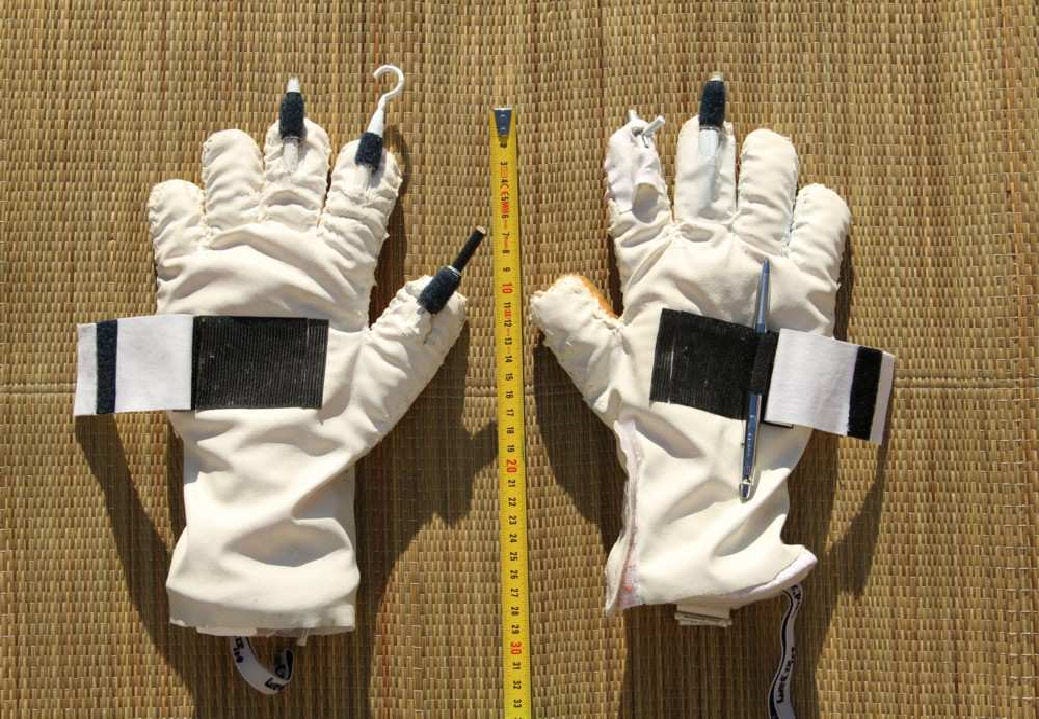
It took another five years before the budding space program in the 1960’s saw Velcro as a way to solve the problem of getting astronauts in and out of bulky and unwieldy space suits. The rest of the world only cares about the problems things solve for themnot the idea or ideology behind it. Soon after the ski industry noticed it would work on boots.
All in all from initial idea to functioning, profitable business?
About twenty five years.
Lastly, we can take one more lesson from Stoll before I launch into my predictions for crypto.
His biggest mistake is the sixth and final reason people are blind to the future. He took current inventions, air lifted them forward and imagined them as the solution to future problems. Wrong!
Current inventions solve current problems. Future problems will take brand new solutions.
In the article Stoll mentions that CD books would never replace real books. He was right that reading books on CD with a crappy CRT monitor that rips apart your retinas was a miserable experience. But understanding that helps us understand the necessary characteristics of a future solution.
It’s nearly impossible to know what form those solutions will take, but we can figure out what traits the solution will have so we can recognize it when it gets here.
Let’s see how it works:
CDs are clunky. Monitors back then were blurry and hard to read. They hurt the eyes. Computers were huge and not very portable. Even laptops were bricks that burned your legs that nobody would want to read a damn thing on.
But he also missed the shortcomings of books.
Books are heavy too. They’re made of trees! And they can easily get lost or damaged by the elements. You can only carry so many before you’re carrying a huge weight around.
From there we can see that a good solution would be:
Super-portable and lightweight.
Have a crystal clear display.
Hides the data storage completely from the user.
As easy to use as a book. Just open and read.
Protect the data so if we lose it or damage it, we can recover it without needing to buy it again.
Allow you to carry lots of books at once.
The Kindle improved reading and now it’s even waterproof which makes it better than traditional books. New solutions must offer the same feature set plus new and improved features to really take off.
Of course we know the answer now: the Kindle and the iPad.
Both have tremendous ease of use, hide the storage media from the user completely, protect the data by backing it up and they’re easy on the eyes.
Solutions start by pointing out what’s wrong, asking the right questions about how to fix it and correctly defining what properties we would need to have a better experience.
From the above, we have three principles to help us predict the future:
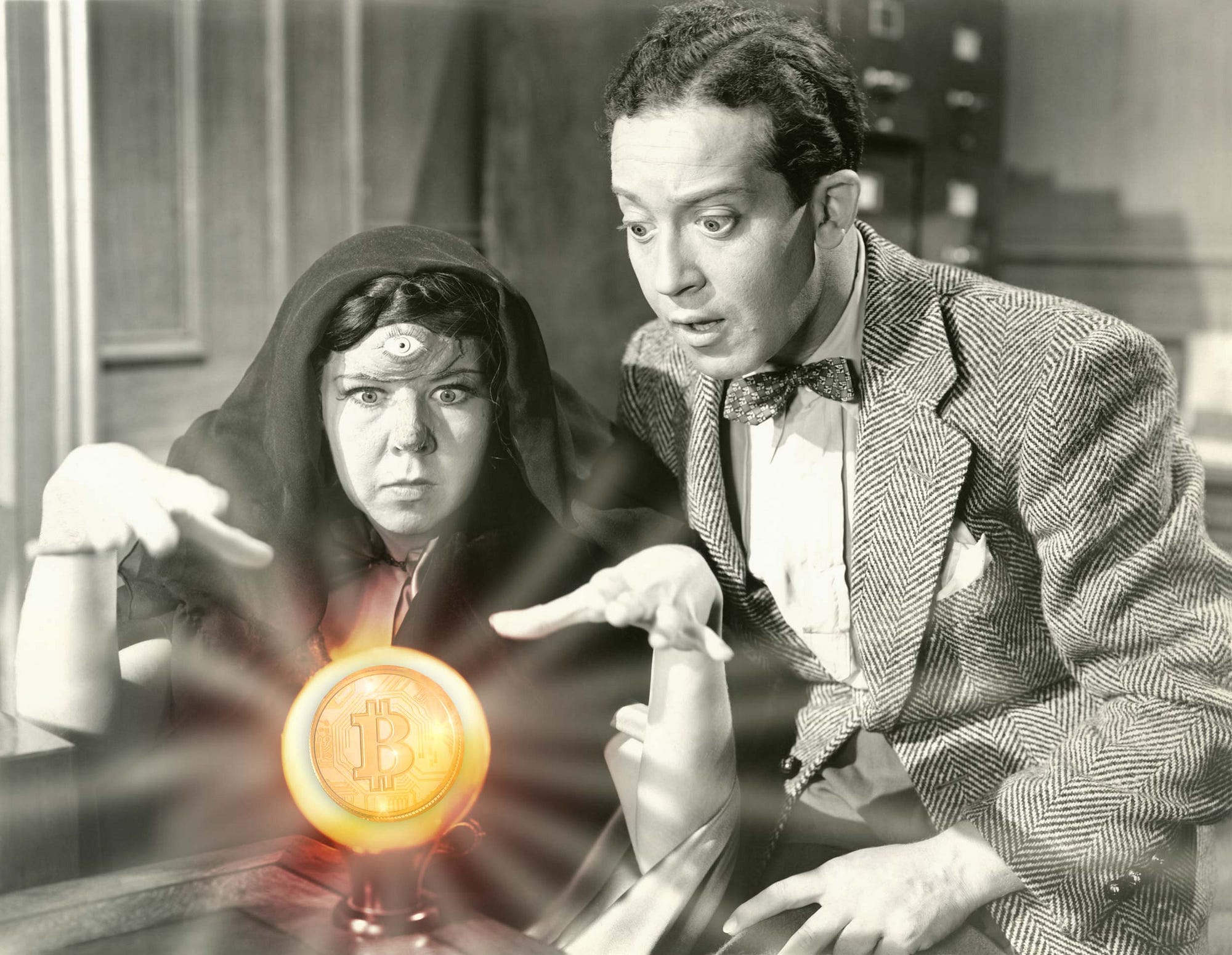
All right, let’s break out the crystal ball and peer into the fate of Bitcoin and crypto.
Hopefully we’ll have better luck than Stoll and this article won’t get trotted out by tomorrow’s Boing Boing replacement to call me an idiot.
The Rise of Bitcoin, Crypto and Decentralization
We’ll start with a few easy predictions and move on to some more complex and far reaching ones as well as some seriously controversial ones.
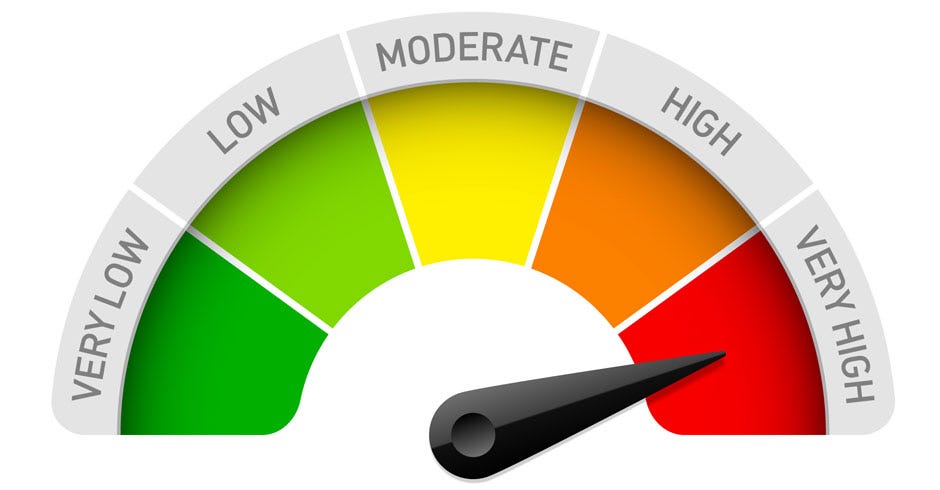
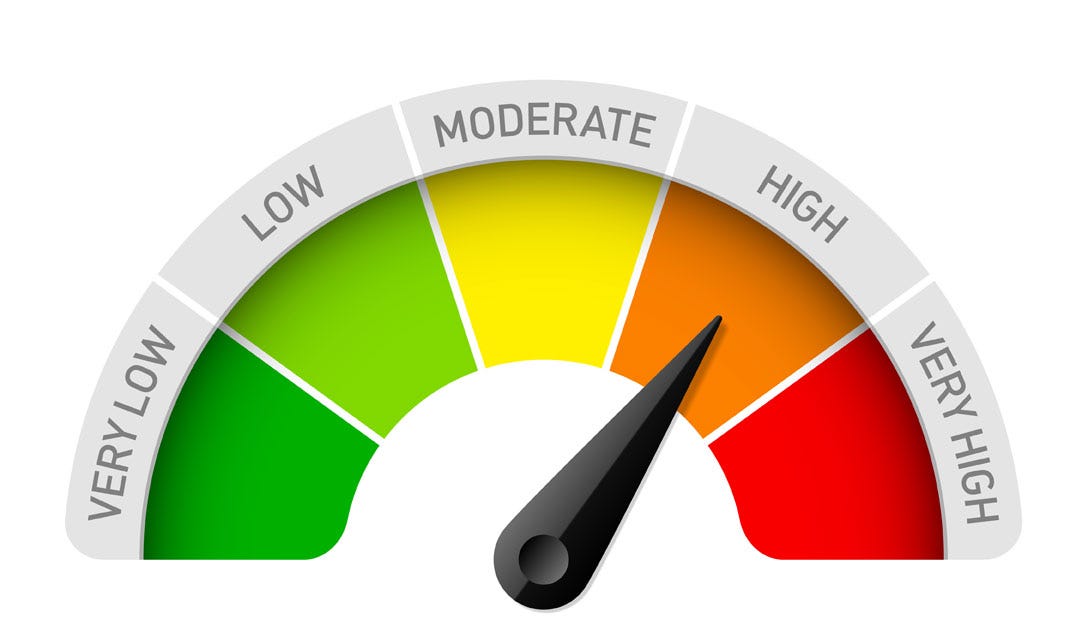
I’ll also include a confidence meter to let you know how strongly I feel about the scenario playing out.
1) The Bubble Bursts
People in and out of crypto see them as bubble that will pop, causing prices to crash badly.
They’re right.
But so what?
That’s not the end of the story. It’s just the beginning.
Right now we’re in the grips of tremendous euphoria. There’s so much potential. We can practically taste the decentralized future. It’s just around the corner! Any day now.
Eight years into the crypto experiment, everyone is working on the railroad tracks of the future but we don’t have much to show for it other than speculative trading and some smart contracts. The apps are hideous and practically unusable. It’s nerve wracking when you push “send” and blast $5000 across the web to someone. Better hope you copy and pasted that address right so your money doesn’t disappear into the void!
When the Internet bubble burst many of today’s marquee companies saw their stocks crash 85%. Yet they survived and the best was yet to come. Amazon and Google went on to dominate the world.
The same will happen in crypto.
The 10% of projects that make it through the bloodbath will turn into the Amazon, Google and Facebook of tomorrow and likely even the JP Morgan and Goldman Sachs as well, not to mention maybe even the governments of the future, like digital direct democracies or liquid democracies.
Innovation is hard work. You’re literally trying to create something that doesn’t exist!
There are no guidelines, no working templates, no business models to clone. There’s nothing. You’re on your own! It’s just you and your imagination. With those odds of course 90% of people and companies fail!
The bubble burst is just the next step. Three years after that the tech will really mature and take off running.
2) Government Cryptocurrencies will Flourish
The community won’t like this one, but it’s a no brainer.
Many governments will not sit by and lose control of the money supply without a vicious fight. Anyone working on a project right now should be anticipating protocol level assaults on decentralized cryptos and designing defenses against them.
A distributed, decentralized DDoS stopping grid, like the one from Gladius is a great first step but there is a lot more work to be done. We’ll talk about some additional defenses cryptos needs to survive later when I come to the evolution of protocols.
Governments will lose the battle in the long run, probably in thirty to one hundred years (maybe faster depending on how many wars or financial crises strike). That’s provided we survive as a race, don’t nuke ourselves, and push out into space. But in ten or twenty years expect very strong government cryptocurrencies to come to power and dominate the flow of money for many, if not most, people around the world.
“But no one will adopt them!” scream the crypto faithful!
Of course, they will.
The average person has zero understanding of just about anything that actually matters and they absolutely don’t see a need for privacy and security until it’s physically ripped away from them under extreme circumstances like a war. When soldiers invade your house and take everything you own suddenly the need for privacy becomes very real to people.
Remember this interview with Snowden about government surveillance on the John Oliver show?
Watch the look on Snowden’s face when he realizes that the average man on the street doesn’t know a damn thing about privacy and doesn’t care about it in the least! The only time they care is when the government has a picture of their dick on file. Seriously.
People will adopt government cryptos like good little sheep without a second thought. Even better, they’ll think it’s absolutely the right thing to do and they’ll even be willing to kill for it if told that’s right. Count on it!
Of course, in many ways government issued cryptocurrencies are utterly ridiculous, as Naval Ravikant points out in his epic blockchain tweetstorm:
They’re nonsense because the very purpose of blockchain is to distribute power across a system. By not allowing a single group to control or change the rules arbitrarily, decentralized cryptos and apps provide a powerful set of checks and balances against harmful actions to the system.
When five different banks own a blockchain, that’s not a blockchain, that’s a database. Only when the banks, the regulators, the shareholders and the customers of the bank hold the keys to the blockchain at the same time and can counteract each other’s power is it a true blockchain.
The checks and balances on power are exactly the point!
Government crypto will represent a total and complete corruption of that idea.
But it won’t matter. They’ll do it any way.
In fact, instead of distributing power, they’ll look to concentrate even more power, by giving themselves the ability to track every single citizen’s spending with impunity and automatically collect taxes from wages and sales of goods and services. That’s why authoritarian governments are racing to build official state cryptos. They can’t wait to have panopticon money in your pocket as soon as possible.
They will absolutely outlaw physical cash and they will do it under the guise of one of three excuses:
Stopping money laundering
Stopping terrorists
Stopping crime
Of course, knowing that you spend half your paycheck on Amazon, groceries and rent has nothing to do with any of those things but hey, if you trot out any or all of the above reasons you can easily get half the population to do whatever you want and even better they’ll believe it with all their hearts.
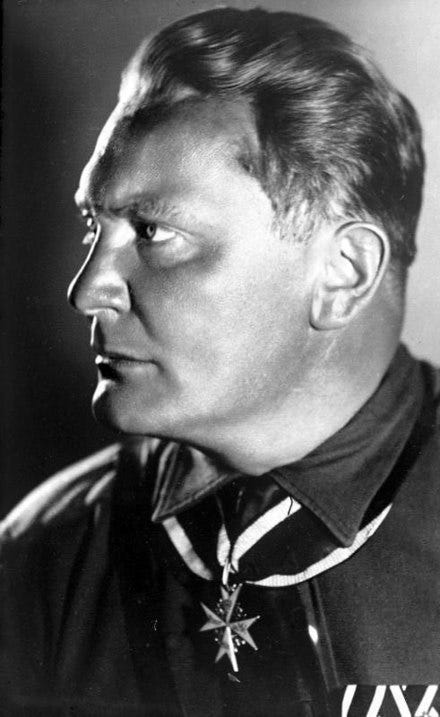
Naively, Gilber replied, “There is one difference. In a democracy, the people have some say in the matter through their elected representatives, and in the United States only Congress can declare wars.”
But Goring only laughed and said, “Oh, that is all well and good, but, voice or no voice, the people can always be brought to the bidding of the leaders. That is easy. All you have to do is tell them they are being attacked and denounce the pacifists for lack of patriotism and exposing the country to danger. It works the same way in any country.”
Government cryptos will be a very, very bitter pill to swallow for current true believers in the crypto space but they better get used to them.
A better bet is to assume there’ll be hybrid systems of decentralized and centralized crypto and to design for it right now to avoid getting swallowed in the tsunami to come. Better to embrace the current system with blockchain and then overwhelm it from within rather than ignore it so that it becomes hostile.
3) Decentralized Cryptocurrencies Will Become a Parallel Economic Operating System for the Planet
Just because centralized cryptos rise to prominence doesn’t mean the decentralized cryptos will go away. Oh, many governments will try, but in the end they’ll fail to stamp them out. The reasons are simple.
The same factors that make it hard to form consensus across a blockchain, make it hard for all the world’s governments to agree on anything. They won’t be able to do it. Some governments will love decentralization and others will hate it.
Even as some countries openly rail against them, many others will openly embrace decentralized cryptocurrencies, especially the ones who suffered the worst under the dominance of Europe and the US dollar over the last century.
I see the Latin American countries, freewheeling no-holds-barred globalists like Singapore, historical bankers-to-the-world Switzerland and many of the Asian and African countries welcoming decentralized crypto with open arms, if only to stick it to the current empires.
If all the countries don’t agree, then decentralized cryptos are never going away, even as centralized cryptos come to power.
But to remain relevant, decentralized cryptos need to move fast. They need a killer app. Right now they’re vulnerable to attack. To really take root they need that killer app to spread virally across the globe. It’s got to be something so indispensable that people can’t imagine their lives without it. This will bring existing power players into the system and they will then use that power to defend it against attacks from outside powers.
I outlined one of the ways that can happen in my article for gamifying the distribution of money. But that’s just one way it can play out. There are many, many more. If you’re working on a platform now, know that it’s a race against time before central cryptos take root.
4) The Killer App for Crypto is NOT a Browser
This is a classic example of grafting old inventions onto a new system. The Brave Browseris awesome and I bet I’ll really love it as it gets paired with BATand/or a universal payment system that automatically swaps cryptocurrencieswithout the need for an exchange but I don’t see it as the final interface to the blockchain. I see it as a potential intermediate step.
So what does the killer app look like?
I don’t know.
But I know it is:
Ubiquitous
Easy to use
Acts as a platform for everything from changing money to getting tickets to protecting privacy and information.
Open source
It’s also something totally new and original that expands and extends the best characteristics of the blockchain while minimizing its greatest weaknesses.
Maybe a decentralized AI assistant or attention filter? The possibilities are endless so get moving!
5) Blockchain is Just the Beginning of Decentralized Consensus
Blockchain systems are only the first successful implementation of decentralized consensus mechanisms.
It doesn’t really matter if both of those projects prove failures in the long run because some other project will create another method. This is virtually guaranteed.
Over the next twenty years, I predict dozens, if not hundreds of experimental distributed consensus protocols, capable of transaction levels that blow away Visa level processing, augmented by artificial intelligence systems.
It’s also strongly possible that none of these systems will be designed by humans.
Instead AI’s will rapidly iterate on ideas and come up with systems that no human ever could if they had a hundred years. They’ll draw their inspiration from nature and systems of insects or roots or other biological systems like proteins.
One or two of these systems will come to dominate all coins and become the meta-system to rule them all, uniting many different kinds of coins and running the entire system like a massive fractal that enables countless daughter networks to flourish inside of it.
6) Crypto Will Get a LOT Easier to Use
Today’s user experience in crypto is awful.
If I mistype something or copy and paste wrong, my money disappears forever. If there’s a software glitch I lose my money forever. If someone hacks my computer or phone my money is gone forever.
See a trend there? Make any mistake you’re toast. It’s like driving a motorcycle on the edge of a one inch mountain road with no rail.
The core wallets are slow, hard to use and ugly. When I last upgraded Ethereum, it forgot to keep my private keys so I had to go restore them all. Earlier this year I had an old Bitcoin stuck in an ancient version of Multibit from 2013. It took me a week to free it after the software mistakenly thought I had sent a transaction that was never actually broadcast.
Imagine these wallets going into cold storage and coming out five years later. Will they even be usable? What happens when quantum computers come out and we need to completely update the basic protocols that underscore the system?
The average person will never be able to do these procedures. Zero chance. Two decades in IT taught me that people can and will screw up their machines in ways that are utterly unimaginable to tech people. Murphy’s Law rules.
Even worse, there’s no way to reverse any transaction or to secure it against mistakes. I foresee many algorithmic methods to freeze, roll back and protect transactions, as well as ways to self-escrow money and recover stolen money. Think of them as automated versions of calling the bank and declaring a card stolen.
If grandma can’t do it, forget it. Everyone is not an IT person who can bang away at the Linux terminal.
Only systems that provide all the features of the old systemplus brand new featuresachieve mass adoption.
Think about CD-ROM books from the 80’s again. They had a bunch of new features, like charts and color and you could back them up.
But it wasn’t good enough because CD’s had fatal flaws. Ray Kurzweil calls this the “false pretender” phase of evolutionary development in his book The Singularity is Near. The new tech has some advantages but too many disadvantages to really make it with the wider world and replace the old technology.
And death shall have no dominion.
Dead man naked they shall be one
With the man in the wind and the west moon;
When their bones are picked clean and the clean bones gone,
They shall have stars at elbow and foot;
Though they go mad they shall be sane,
Though they sink through the sea they shall rise again;
Though lovers be lost love shall not;
And death shall have no dominion.
And death shall have no dominion.
Under the windings of the sea
They lying long shall not die windily;
Twisting on racks when sinews give way,
Strapped to a wheel, yet they shall not break;
Faith in their hands shall snap in two,
And the unicorn evils run them through;
Split all ends up they shan’t crack;
And death shall have no dominion.
And death shall have no dominion.
No more may gulls cry at their ears
Or waves break loud on the seashores;
Where blew a flower may a flower no more
Lift its head to the blows of the rain;
Though they be mad and dead as nails,
Heads of the characters hammer through daisies;
Break in the sun till the sun breaks down,
And death shall have no dominion.
Here’s an opportunity to further your Adventure of Self Discovery as we move into and through the New Year by learning more about Archetypal Dynamics and how they are functioning within the Psyche.
Support/study groups online are a delightful way to ‘grow together’ in community. You may find that your participation as we have, brings impetus and stimulation along the way. (Four participants max in any one group.)
Consider joining us in one or two of the new Book Support/Study Groups beginning mid-late January for 12 monthly meetings of 90 minutes each.
The books are:
Goddesss in Older Women, Archetypes in Women Over Fifty, by Jean Shinoda Bolen
The Hidden Spirituality of Men, Ten Metaphors to Awaken the Sacred Masculine, by Matthew Fox
One group has already formed for the second book listed here. However depending on interest a second one may develop.
Write to me at: lifeodysseys01@gmail.com and let me know of your interest and for registration details.
Total Fee: $60 for the 12 monthly meetings of 90 minutes each.
February:
Cosmic Intention Therapy Monitor Class Online with Thane of Hawaii in the Southern Hemisphere monitored by Zoë Robinson, H.W.,M.
Start Date: Early February – specific dates to be announced.
We start off this New Year’s Day, Full Moon in Cancer, with the biggest SuperMoon of the year. A SuperMoon is when the Moon is closest to the earth in its rotation and it appears brighter and more full than usual. It can look 16 to 20% larger. The gravitational pull on the earth is also greater and the strength of it can be measured by larger storms, tides and possibly earthquakes. (Let’s hope not!)
We want to use this super energy to magnify our desires for 2018. Cancer energy represents the Great Mother Goddess and adds fertile and creative power to our goals, hopes and wishes for the coming year. Cancer energy is very nurturing, flowing water and just as a parent helps a child to grow, this nurturing can assist us to grow into our potential this year. No need to look to the past, or past fears and blockages, look only to the future and your fertile possibilities. Here is a link to a great course, by Sarah Walton to help you do just that.
To further assist us toward our goals, this Full Moon is forming a Grand Trine with the other water signs with Neptune in Pisces and Mars and Jupiter in Scorpio. Our feelings and intuition are strongly activated at this time helping and guiding us toward our true path and passion, and assisting us in owning our power and our evolutionary process. Those with strong water in their charts could receive more psychic impressions during the next couple of days.
In opposition to this Cancer Full Moon are the Sun, Venus, Saturn, and Pluto in Capricorn. Capricorn can help bring structure, stability and success to your goals, increasing your ability to take them into a stable and tangible form. Water and intuition can be shifting which can cause apprehension and fear as we strive for concrete progress. Trust your inner guidance and follow your passion and ignore or push through the fear. Face it, it is only a mental construct in your mind. De-conctruct it with enthusiasm and determination. Soften your defenses, open your heart, and feel.
Cancer is a gentle energy and encourages us to be gentle with ourselves and others. Capricorn’s tendencies are toward judgment and the accomplishment of goals at the expense of needs and feelings. Cancer reminds us that vulnerability can be our strength. This flowing of emotion helps to balance out the rigidity of Capricorn (earth) energy.
To add to this Full Moon’s capacity for change, is Uranus. For the past five months Uranus has been retrograde and big changes have been simmering. Now, Uranus stations direct on January 2nd, and all those ideas and strategies can come forward. Uranus will not be ignored. Watch for unexpected shifts and changes in your life and in the public sector. Uranus is back within a 6° orb of its square to Pluto. This energy is what has been the catalyst for all of the global chaos we have experienced in the past few years. This means a continuation of governmental and corporate changes and disruption which will hopefully swing the pendulum back to some sort of sanity in the future. There is wisdom in experiencing the corruption so we will work to bring back an even better world where there is truly justice and a productive economic climate for all.
Written by Wendy Cicchetti
A Full Moon symbolizes the fulfillment of the seeds planted at a previous New Moon or some earlier cycle. Each Full Moon reminds us of the seeds that may be coming to maturity, to their fullness, to fruition, to the place where the fruits or gifts are received. It may seem that fulfillment of our goals takes a long time. Some intentions may manifest within the two week phase prior to the next New or Full Moon. Some however, depending on their complexity, may take a much longer time. Just remember that our thoughts and emotions set Universal Action in motion and much work takes place behind the scenes as everything is orchestrated for fulfillment. Keep visualizing your goals as though you have already attained them and they will eventually manifest. Do not concern yourself with current conditions or worry about controlling it. The universe takes care of those details. Just keep seeing what you want, and move in that direction with your actions, and give no energy to what you don’t want. Patience is required.
It should not come as a surprise to anyone that taking care of your body, exercising, eating right, getting the sleep your body needs, and tending to the needs of your mental health can help to make you a happier person overall.
The physical benefits of exercise alone is enough to make someone happier. Our bodies release endorphins when we exercise and these endorphins can provide us with the same level of satisfaction that chocolate can.
So rather than fill up on chocolate that could make you feel bloated and full of guilt, spend time outdoors walking. Your body and brain will thank you for you.
2) Working to Improve Your Relationships
Humans crave love and attention and we are able to satisfy those cravings with our relationships: friends, family, marriages, coworkers, neighbors.
Everyone in our lives has the ability to make us feel happy. Of course, we can’t like everyone all the time, and we don’t always get along with everyone all the time, but the general consensus is that someone who is loved and who works to put their relationships first, experiences more happiness overall than people who don’t.
Which makes sense if you think about it, people who spend their lives alone don’t tend to be very happy. Sharing your life with people can make you happier.
What’s more, spending your life in service of others: your wife, children, friends, extended family, can make you feel happier as well. When we remove our needs from the equation and work to make others happy, we experience a great deal of happiness as a byproduct of those actions.
3) See the Beauty All Around
Yesterday I put a pot of soup on the stove to boil and then hours later remembered that I had put soup on the stove. Thankfully, my husband saw that I was busy with housework, so he took the soup off the stove before it burned and made a mess.
This is just one example of how busy our lives are: we don’t even remember that we wanted to eat soup for lunch.
If we want to be happier, we need to slow down and take in the scenery around us. Stop and eat lunch, smell those roses, nap on the patio, picnic under a tree, share some change with a man on the street, visit a friend, appreciate the beauty that is everywhere.
We don’t do this enough as humans. There is always money to make and places to go and projects to deliver. Taking the time to soak up the world around us can help improve our happiness and reduce our stress levels as well.
4) Enjoy Your Work and Life
Everyone’s interest in work varies depending on who you are talking to. There is a great divide between people who live to work and those who work to live.
The happiness of employees seems to go up when they enjoy their work and don’t feel like they need to separate their personal from their professional lives.
When we feel needed and productive, our levels of happiness go up. While many people don’t put any stock in their jobs at all, those that do experience more satisfaction and better standards of living overall because they take pride in their work and products.
5) Something to Believe
While formal religion is not necessary to lead a long and happy life, many people, including Jung, believed that having something bigger than yourself to believe in could lead you down a path of happiness.
The idea that life doesn’t end when we leave this world is of great comfort to millions of people and it can bring solace and acceptance during particularly difficult times in our lives.
If you find yourself struggling to grab hold of happiness, try focusing on one aspect of your life that you can improve upon. Sometimes, the simple of act trying to improve one’s self or one’s situation can bring about a great deal of satisfaction and happiness as well.
~ “What a wonderful full Moon rich with feelings !~
~Sense the ancient memories that are in your infinite sea of nurturing love.
~You are the mother goddess energy from which all life springs. The water (emotions) flow in the sea of non~time. Hurt and scared feelings they peek out from under their hard shell are normal to the GREAT memories. Infinite.
Cancer is about feeling. It feels all feelings everywhere and all at once, The shell is needed to contain the secret to giving birth. They nurture thier feelings feeling secure in nurturing and being nurtured. Security in caring it rules the breasts, giving milk of love to sustain life.. Delicate and sweet inside, and over sensitive when it comes to the ability to laugh with people in fun.
~Cancer walking sideways, meaning it is hard confront ones own feelings. As with the water sign sister of Scorpio is to protect. A protective mother that loves and learns to let go of people, places, and things from its’ crab claw. They hang on and lose the claw to its attachment. So they are forced to “let go.”
Astrology Readings
and counseling available upon request.
30 min $50
1 hour $75
Thank you for your readership and nurture your self today.
Much love and sweetness~
Robert
Consciousness, spirituality, biography, sexuality, androgyny, futurism, space, the arts, science, astrology, democracy, humor, books, movies and more