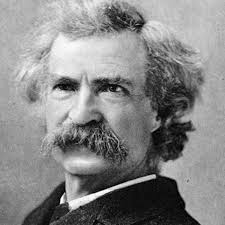
Mark Twain on being king

“When I am king, they shall not have bread and shelter only, but also teachings out of books; for a full belly is little worth where the mind is starved . . . for learning softeneth the heart and breedeth gentleness and charity.”

–Mark Twain, “The Prince and the Pauper”

“Merry Maywishes” by Hugh Malanaphy (2003)

May you and those you love
share health peace
and inner gratitude
magnified a thousand times
by the brevity of this day.

May you discover
the ultimate power
of the unknown
the way it amends
our most careful intent
with an illuminating intervention.

May you feel truly
in your soul’s core
a native born
citizen of the Universe,
with all rights and benefits
guaranteed,
and capitalize on them
every chance you get.

May your loved ones
here, gone, and coming,
with all their being,
nourish you this day,
living clearly
in the orbit of your love.

–Hugh J. Malanaphy

Scientists say your “mind” isn’t confined to your brain, or even your body

The mind is more than just the brain. (The Regents of the University of California)

by Olivia Goldhill (qz.com)

You might wonder, at some point today, what’s going on in another person’s mind. You may compliment someone’s great mind, or say they are out of their mind. You may even try to expand or free your own mind.

But what is a mind? Defining the concept is a surprisingly slippery task. The mind is the seat of consciousness, the essence of your being. Without a mind, you cannot be considered meaningfully alive. So what exactly, and where precisely, is it?

Traditionally, scientists have tried to define the mind as the product of brain activity: The brain is the physical substance, and the mind is the conscious product of those firing neurons, according to the classic argument. But growing evidence shows that the mind goes far beyond the physical workings of your brain.

No doubt, the brain plays an incredibly important role. But our mind cannot be confined to what’s inside our skull, or even our body, according to a definition first put forward by Dan Siegel, a professor of psychiatry at UCLA School of Medicine and the author of a recently published book, Mind: A Journey to the Heart of Being Human.

He first came up with the definition more than two decades ago, at a meeting of 40 scientists across disciplines, including neuroscientists, physicists, sociologists, and anthropologists. The aim was to come to an understanding of the mind that would appeal to common ground and satisfy those wrestling with the question across these fields.

After much discussion, they decided that a key component of the mind is: “the emergent self-organizing process, both embodied and relational, that regulates energy and information flow within and among us.” It’s not catchy. But it is interesting, and with meaningful implications.

The most immediately shocking element of this definition is that our mind extends beyond our physical selves. In other words, our mind is not simply our perception of experiences, but those experiences themselves. Siegel argues that it’s impossible to completely disentangle our subjective view of the world from our interactions.

“I realized if someone asked me to define the shoreline but insisted, is it the water or the sand, I would have to say the shore is both sand and sea,” says Siegel. “You can’t limit our understanding of the coastline to insist it’s one or the other. I started thinking, maybe the mind is like the coastline—some inner and inter process. Mental life for an anthropologist or sociologist is profoundly social. Your thoughts, feelings, memories, attention, what you experience in this subjective world is part of mind.”

The definition has since been supported by research across the sciences, but much of the original idea came from mathematics. Siegel realized the mind meets the mathematical definition of a complex system in that it’s open (can influence things outside itself), chaos capable (which simply means it’s roughly randomly distributed), and non-linear (which means a small input leads to large and difficult to predict result).

In math, complex systems are self-organizing, and Siegel believes this idea is the foundation to mental health. Again borrowing from the mathematics, optimal self-organization is: flexible, adaptive, coherent, energized, and stable. This means that without optimal self-organization, you arrive at either chaos or rigidity—a notion that, Siegel says, fits the range of symptoms of mental health disorders.

Finally, self-organization demands linking together differentiated ideas or, essentially, integration. And Siegel says integration—whether that’s within the brain or within society—is the foundation of a healthy mind.

Siegel says he wrote his book now because he sees so much misery in society, and he believes this is partly shaped by how we perceive our own minds. He talks of doing research in Namibia, where people he spoke to attributed their happiness to a sense of belonging.

When Siegel was asked in return whether he belonged in America, his answer was less upbeat: “I thought how isolated we all are and how disconnected we feel,” he says. “In our modern society we have this belief that mind is brain activity and this means the self, which comes from the mind, is separate and we don’t really belong. But we’re all part of each others’ lives. The mind is not just brain activity. When we realize it’s this relational process, there’s this huge shift in this sense of belonging.”

In other words, even perceiving our mind as simply a product of our brain, rather than relations, can make us feel more isolated. And to appreciate the benefits of interrelations, you simply have to open your mind.

(Thanks to Janet Cornwell for this.)

Advent: “The Fifth Candle — walking the path of Christ Consciousness” by Suzanne Deakins, H.W., M.

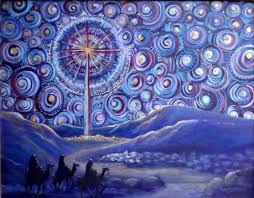
As we celebrate the birth of Christ there are new things we must understand to prepare for this light and the Prince of Peace. Most scholars agree that part of the message of Christ was a fulfillment and a new interpretation of the Mosaic Law (Old Testament laws of the Prophets).  With the birth or coming of the light is the new law.  Law is a very old word that comes from the Hebrew concept of path or the way of walking

In preparation for the Advent we have cleared our altars of false gods, understood the need for hope, filled our life with joy (vibration of light), understood peace to mean existence or to be and finally we have understood that love is the binding force of all life, consciousness in the universe. Not romantic, love but love that understands the existential meaning of our conscious existence.

We are now prepared for the coming of the light (knowing and understanding) and the new law that Christ will present during his brief lifetime. In all of Christianity and its myriad forms the event of this birth is the beginning of the cycles of birth and death. With this comes a new understanding of the way to proceed or the path. Literally we are to embrace this new law of life.   

The birth marks a major consciousness shift in our known world. This shift is evident in all religious writings shortly before and after the birth of Christ. For instance in China during this time, Confucius started a new “Law” a different way of existing.

But when the time arrived that was set by God the Father, God sent his Son, born among us of a woman, born under the conditions of the law.

As we light our fifth candle we understand we are freed from the old interpretation of the laws, Egypt (our misunderstanding of materiality, our sensory input, which is telling us we are solid and immutable. We are freed from thinking our consciousness is doomed to suffering, pain and death… we are freed from the many false gods we have built in our mind and lives…we now have a chance of salvation. We can be saved from our misconceptions and understanding of the way or path or Tao… for a new understanding of love and peace… revenge and lack of forgiveness no longer haunt our minds and thoughts. Belief is replaced by understand at this moment of epiphany that we have always existed and always will, that at any time we can grasp this new light, peace, joy and hope.

As we light our candle we realize that which was dark is now light.

“Do not think that I have come to abolish (weaken or put down the path of one God) the Law or the Prophets; I have not come to abolish them but to fulfill them. I tell you the truth, until heaven and earth disappear, not the smallest letter, not the least stroke of a pen, will by any means disappear from the Law until everything is accomplished” ( HYPERLINK “http://bible.logos.com/passage/niv/Matthew%205.17-18” \t “_blank” Matthew 5:17-18).

The word (vibration of all life, LOVE) becomes flesh with the Advent of Christ. The laws or way we are to walk becomes our salvation or release from the dark prison we have been banished to by our senses. As we walk this path toward the Ascension of Being (symbolically played out in the death and arise of Christ at Easter) we hear the word (creative force) of God in all that we do.

May your holiday season be filled with joyous celebration of the coming light. May your holiday stocking be filled with hope, peace, joy, and love.

© Suzanne Deakins

Baraka means to speak with lighting or understanding.

“You’re so vain” by Carly Simon


Carly Simon’s 1972 hit “You’re So Vain” with lyrics below.

LYRICS:

You walked into the party like you were walking onto a yacht
Your hat strategically dipped below one eye
Your scarf it was apricot
You had one eye in the mirror as you watched yourself gavotte
And all the girls dreamed that they’d be your partner
They’d be your partner, and….

You’re so vain, you probably think this song is about you
You’re so vain, I’ll bet you think this song is about you
Don’t you? Don’t you?

You had me several years ago when I was still quite naive
Well you said that we made such a pretty pair
and that you would never leave

But you gave away the things you loved and one of them was me
I had some dreams they were clouds in my coffee, clouds in my coffee and….

You’re so vain, you probably think this song is about you…..

Well I hear you went up to Saratoga and your horse naturally won
Then you flew your Lear jet up to Nova Scotia to see the total eclipse of the sun
Well, you’re where you should be all of the time
And when you’re not you’re with
Some underworld spy or the wife of a close friend
Wife of a close friend, and….

You’re so vain, you probably think this song is about you…..

For The Solstice (from Gwyllm Llwydd)

“You darkness, that I come from,
I love you more than all the fires
that fence in the world,
for the fire makes
a circle of light for everyone,
and then no one outside learns of you.
But the darkness pulls in everything;
shapes and fires, animals and myself,
how easily it gathers them!—
powers and people—
and it is possible a great energy
is moving near me.
I have faith in nights.”
– Rainer Maria Rilke, On Darkness