Hillary’s America: The Secret History of the Democratic Party (2016)

hillarys-america-the-secret-history-of-the-democratic-party-2016

This is a must watch movie about the beginning of the klu clux klan, Andrew Jackson and the tyranny of the south in living freely off the backs of abused black citizens? Sexual theft, viewing blacks as non-person’s, the generalization of their immanent threat to so called white people and our women? And not only were blacks generally attacked and murdered, also anyone that disagreed with the southern belief about slavery were also gunned down in public by masked fear oriented person’s?The democrats have been against the social alignment with the absolute for over 100 years? So called ghettos’ are an act of intentional deprivation of social character, and personality, by forceful obedience to voting for the democratic party? A very interesting portrayal of consciousness changes needed as to our world of human equation mind out of control in a rage of fear of immanent change that is presence now <3 :>). And as well a vivid expression of the republican party always being against slavery and for social justice as it were supposed to be? Look into the life of Saul Alinsky and his high school introduction to Hillary clinton and her using his methods to radically change American politics towards her agenda of  free wealth? Even to the point of embezzling, usurping donation money’s  through the clinton foundation, where not a dime is toward’s the donated purpose? Planned parenthood especially for the purpose of stopping non-white, and some stupid women from having children? There is a ton of consciousness data here needing to be absolutely understood<3 :>). The democrats have hindered the 13, 14, and 15th amendment’s giving blacks and women the right to vote and be heard? If anyone can’t figure out how the watch this all revealing documentary; please inform and I’ll send you an email with the video intact <3.

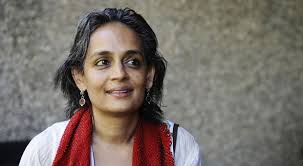
Arundhati Roy on history

arundhatiroy

“History is really a study of the future, not the past.”
–Arundhati Roy

Suzanna Arundhati Roy (born November 24, 1961) is an Indian author. She is best known for her novel The God of Small Things, which won the Man Booker Prize for Fiction in 1997. This novel became the biggest-selling book by a nonexpatriate Indian author. Wikipedia

A LOT Of Straight Men Watch Gay Porn


A new survey suggests a lot more heterosexual men watch gay porn than you’d think. Cenk Uygur and Ana Kasparian, hosts of The Young Turks, break it down. Tell us what you think in the comment section below. http://tytnetwork.com/join

“Great news for dudes and society’s potential of accepting the idea their sexuality may also exist on a spectrum! A new study from Dr. Martin J. Downing dives the into porn-watching habits of 821 gay, straight, and bisexual men reveals some unexpected behavior. Namely, despite the annoying perpetuation of homophobic rhetoric — like “bromance,” why — surrounding the culture, 21 percent of the heterosexual men surveyed say they’ve watched same-sex male porn in the past six months.

This is progress! This is (hopefully) the death of beer-fueled, bro-on-bro hugs cut abrupt by a “no homo” disclaimer! Conventional wisdom and acceptance of women’s sexual fluidity has only gained steam sinceAngelina Jolie started being open about her sexuality eons ago — perhaps making Miley Cryus coming out as pansexual pretty anticlimactic (and, frankly, not super surprising). It only seems fair that hetero men should enjoy the same freedom to dig whomever they dig.

Because self-identifying gay dudes do. The same study found 55 percent of gay male participants have watched heterosexual pornrecently. Researchers call this “identity discrepant porn-viewing,” according to Vocativ. I call this “cool. Watch whatever porn you want without letting that inform your sense of sexuality or self unless that’s what you want.””*

Read more here: http://www.thefrisky.com/2016-10-12/w…

Hosts: Cenk Uygur, Ana Kasparian
Cast: Cenk Uygur, Ana Kasparian

***

The Largest Online News Show in the World. Hosted by Cenk Uygur and Ana Kasparian. LIVE STREAMING weekdays 6-8pm ET. http://www.tytnetwork.com/live

Young Turk (n), 1. Young progressive or insurgent member of an institution, movement, or political party. 2. Young person who rebels against authority or societal expectations. (American Heritage Dictionary)

“Spacecraft ‘Nuclear Batteries’ Could Get a Boost from New Materials” from NASA JPL (and Hanz Bolen, H.W., M.)

Samad Firdosy, a materials engineer at JPL, holds a thermoelectric module made of four thermocouples, which are devices that help turn heat into electricity. Thermocouples are used in household heating applications, as well as power systems for spacecraft. Credit: NASA/JPL-Caltech  › Larger image

No extension cord is long enough to reach another planet, and there’s no spacecraft charging station along the way. That’s why researchers are hard at work on ways to make spacecraft power systems more efficient, resilient and long-lasting.

“NASA needs reliable long-term power systems to advance exploration of the solar system,” said Jean-Pierre Fleurial, supervisor for the thermal energy conversion research and advancement group at NASA’s Jet Propulsion Laboratory, Pasadena, California. “This is particularly important for the outer planets, where the intensity of sunlight is only a few percent as strong as it is in Earth orbit.”

A cutting-edge development in spacecraft power systems is a class of materials with an unfamiliar name: skutterudites (skut-ta-RU-dites). Researchers are studying the use of these advanced materials in a proposed next-generation power system called an eMMRTG, which stands for Enhanced Multi-Mission Radioisotope Thermoelectric Generator.

What is an RTG?

Radioactive substances naturally generate heat as they spontaneously transform into other elements. Radioisotope power systems make use of this heat as fuel to produce useful electricity for use in a spacecraft. The radioisotope power systems on NASA spacecraft today harness heat from the natural radioactive decay of plutonium-238 oxide.

The United States first launched a radioisotope thermoelectric generator (RTG) into space on a satellite in 1961. RTGs have powered NASA’s twin Voyager probes since their launch in 1977; more than 10 billion miles (16 billion kilometers) away, the Voyagers are the most distant spacecraft from Earth and are still going. RTGs have enabled many other missions that have sent back a wealth of science results, including NASA’s Mars Curiosity rover and the New Horizons mission, which flew by Pluto in 2015.

The new eMMRTG would provide 25 percent more power than Curiosity’s generator at the start of a mission, according to current analyses. Additionally, since skutterudites naturally degrade more slowly that the current materials in the MMRTG, a spacecraft outfitted with an eMMRTG would have at least 50 percent more power at the end of a 17-year design life than it does today.

“Having a more efficient thermoelectric system means we’d need to use less plutonium. We could go farther, for longer and do more,” Bux said.

What are skutterudites?

The defining new ingredients in the proposed eMMRTG are materials called skutterudites, which have unique properties that make them especially useful for power systems. These materials conduct electricity like metal, but heat up like glass, and can generate sizable electrical voltages.

Materials with all of these characteristics are hard to come by. A copper pot, for example, is an excellent conductor of electricity, but gets very hot quickly. Glass, on the other hand, insulates against heat well, but it can’t conduct electricity. Neither of these properties are appropriate in a thermoelectric material, which converts heat into electricity.

“We needed to design high temperature compounds with the best mix of electrical and heat transfer properties,” said Sabah Bux, a technologist at JPL who works on thermoelectric materials. “Skutterudites, with their complex structures composed of heavy atoms like antimony, allow us to do that.”

RTGs in space

A team at JPL is working on turning skutterudites into thermocouples. A thermocouple is a device that generates an electrical voltage from the temperature difference in its components. Compared to other materials, thermocouples made of skutterudites need a smaller temperature difference to produce the same amount of useful power, making them more efficient.

THERMOCOUPLES
What is a thermoelectric material?

Thermoelectric materials are materials that can convert a temperature difference into electricity, or vice versa.

What is a thermocouple?

A conventional thermocouple is made of two different thermoelectric materials joined together at one “shoe,” or end, where its temperature is measured. When you heat up a thermocouple, the difference in the conductivity of the materials results in one metal becoming hotter than the other, and causes the temperature of the joined end to change. This temperature difference creates a voltage (the force with which electrons flow through the material), and converts a portion of the transferred heat into electricity.

How do thermocouples work?

Thermocouples are in every home: They measure the temperature in your oven and control your water heater. Most household thermocouples are inefficient: they produce a voltage so small, it produces almost no electrical current. By contrast skutterudites are a lot more efficient: They require a smaller temperature difference to produce useful electricity.

NASA is studying thermocouples made out of skutterudites that have a flat top and two “legs,” somewhat like the iconic Stonehenge stone monuments. Heat transfers across the thermocouple from a high-temperature heat source to a suitable heat ‘sink’ (such as cold water). An electrical current is produced between the hot end (the flat top) and the cold end (the legs) of the thermocouple.

“It’s as though there are a lot of people in a room where one side is hot and one side is cold,” said JPL’s Sabah Bux. “The people, which represent the electrical charges, will move from the hot side to the cold side. That movement is electricity.”

The thermocouples are joined end-to-end in one long circuit – the electrical current goes up, over and down each thermocouple, producing useful power. Devices outfitted in this way can take advantage of a variety of heat sources, ranging in temperature from 392 to more than 1832 degrees Fahrenheit (200 to more than 1000 degrees Celsius).

In Curiosity’s power system, the Multi Mission RTG (MMRTG), 768 thermocouples encircle a central can-like structure, all facing the same direction towards the heat source, at the center of the generator. The enhanced MMRTG (eMMRTG) would have the same number of thermocouples, but all would be made from skutterudite material instead of the alloys of telluride currently used.

“Only minimal changes to the existing MMRTG design are needed to get these results,” Fleurial said. A group of about two dozen people at JPL is dedicated to working on these advanced materials and testing the resulting thermocouple prototypes.

The new skutterudite-based thermocouples passed their first major NASA review in late 2015. If they pass further reviews in 2017 and 2018, the first eMMRTG using them could fly aboard NASA’s next New Frontiers-class mission.

Earth-based applications of skutterudite

There are many potential applications for these advanced thermoelectric materials here on Earth.

“In situations where waste heat is emitted, skutterudite materials could be used to improve efficiency and convert that heat into useful electricity,” said Thierry Caillat, project leader for the technology maturation project at JPL.

For example, exhaust heat from a car could be converted into electricity and fed back into the vehicle, which could be used to charge batteries and reduce fuel use. Industrial processes that require high temperatures, such as ceramic and glass processing, could also use skutterudite materials to make use of waste heat. In 2015, JPL licensed patentson these high-temperature thermoelectric materials to a company called Evident Technologies, Troy, New York.

“Over the last 20 years, the field of thermoelectrics has come into being and blossomed, especially at JPL,” said Fleurial. “There’s a lot of great science happening in this area. We’re excited to explore the idea of taking these materials to space, and benefitting U.S. industry along the way.”

JPL’s work to develop higher-efficiency thermoelectric materials is carried out in partnership with the U.S. Department of Energy (DOE), Teledyne Energy Systems and Aerojet Rocketdyne, and is funded by NASA’s Radioisotope Power System program, which is managed by NASA Glenn Research Center in Cleveland. The spaceflight hardware is produced by Teledyne Energy Systems and Aerojet Rocketdyne under a contract held by the DOE, which fuels, completes final assembly and owns the end item. Caltech manages JPL for NASA.
News Media Contact

Elizabeth Landau
Jet Propulsion Laboratory, Pasadena, Calif.
818-354-6425
elizabeth.landau@jpl.nasa.gov

“Teleporting toward a quantum Internet” from NASA JPL (and Hanz Bolen, H.W., M.)

This image shows crystals used for storing entangled photons, which behave as though they are part of the same whole. Scientists use crystals like these in quantum teleportation experiments. Image Credit: Félix Bussières/University of Geneva.

Fast Facts:

› Quantum teleportation, a phenomenon in quantum physics, can be used to encrypt data.

› New study tests quantum teleportation in a city’s fiber network for the first time.

› In the future, quantum teleportation could be developed into infrastructure – creating a “quantum Internet.”

Quantum physics is a field that appears to give scientists superpowers. Those who understand the world of extremely small or cold particles can perform amazing feats with them — including teleportation — that appear to bend reality.

The science behind these feats is complicated, and until recently, didn’t exist outside of lab settings. But that’s changing: researchers have begun to implement quantum teleportation in real-world contexts. Being able to do so just might revolutionize modern phone and Internet communications, leading to highly secure, encrypted messaging.

A paper published in Nature Photonics and co-authored by engineers at NASA’s Jet Propulsion Laboratory, Pasadena, California, details the first experiments with quantum teleportation in a metropolitan fiber cable network. For the first time, the phenomenon has been witnessed over long distances in actual city infrastructure. In Canada, University of Calgary researchers teleported the quantum state of a photon more than 3.7 miles (6 kilometers) in “dark” (unused) cables under the city of Calgary. That’s a new record for the longest distance of quantum teleportation in an actual metropolitan network.

While longer distances had been recorded in the past, those were conducted in lab settings, where photons were fired through spools of cable to simulate the loss of signal caused by long distances. This latest series of experiments in Calgary tested quantum teleportation in actual infrastructure, representing a major step forward for the technology.

“Demonstrating quantum effects such as teleportation outside of a lab environment involves a whole new set of challenges. This experiment shows how these challenges can all be overcome and hence it marks an important milestone towards the future quantum Internet,” said Francesco Marsili, one of the JPL co-authors. “Quantum communication unlocks some of the unique properties of quantum mechanics to, for example, exchange information with ultimate security or link together quantum computers.”

Photon sensors for the experiment were developed by Marsili and Matt Shaw of JPL’s Microdevices Laboratory, along with colleagues at the National Institute of Standards and Technology, Boulder, Colorado. Their expertise was critical to the experiments: quantum networking is done with photons, and requires some of the most sensitive sensors in the world in order to know exactly what’s happening to the particle.

“The superconducting detector platform, which has been pioneered by JPL and NIST researchers, makes it possible to detect single photons at telecommunications wavelengths with nearly perfect efficiency and almost no noise. This was simply not possible with earlier detector types, and so experiments such as ours, using existing fiber-infrastructure, would have been close to impossible without JPL’s detectors,” said Daniel Oblak of the University of Calgary’s Institute for Quantum Science and Technology.

Safer emails using quantum physics

Shrink down to the level of a photon, and physics starts to play by bizarre rules. Scientists who understand those rules can “entangle” two particles so that their properties are linked. Entanglement is a mind-boggling concept in which particles with different characteristics, or states, can be bound together across space. That means whatever affects one particle’s state will affect the other, even if they’re located miles apart from one another.

This is where teleportation comes in. Imagine you have two entangled particles — let’s call them Photon 1 and Photon 2 — and Photon 2 is sent to a distant location. There, it meets with Photon 3, and the two interact with each other. Photon 3’s state can be transferred to Photon 2, and automatically “teleported” to the entangled twin, Photon 1. This disembodied transfer happens despite the fact that Photons 1 and 3 never interact.

This property can be used to securely exchange secret messages. If two people share an entangled pair of photons, quantum information can be transmitted in a disembodied fashion, leaving an eavesdropper with nothing to intercept and so unable to read the secret message.

Teleportation Means Going the Distance

This system of highly secure communications is being tested in a number of fields, Marsili said, including financial industries and agencies like NASA that want to protect their space data signals. The superconducting single photon detectors developed by Marsili, Shaw and their NIST colleagues are a key tool in doing this, because sending photons over long distances will inevitably lead to “loss” of the signal. Even when using a laser in space, light diffuses over distance, weakening the power of the signal being transmitted.

The next step is building repeaters that can further teleport the state of a photon from one location to the next. Just as repeaters are used to carry other telecommunication signals across long distances, they could be used to teleport entangled photons. Super-sensitive photon detectors would allow repeaters to send entangled photons across the country. For space-related communications, repeaters wouldn’t even be necessary; photons could eventually be fired into space using lasers, and photon states could be teleported from Earth.

No repeaters were used in the Calgary experiments, which were mainly meant to establish how quantum teleportation can be performed outside the lab. Researchers used the city’s dark fiber — a single optical cable with no electronics or network equipment flowing through them.

“By using advanced superconducting detectors, we can use individual photons to efficiently communicate both classical and quantum information from space to the ground,” Shaw said. “We are planning to use more advanced versions of these detectors for demonstrations of optical communication from deep space and of quantum teleportation from the International Space Station.”

The study was funded by Alberta Innovates Technology Futures; the National Science and Engineering Research Council of Canada; and the Defense Advanced Research Projects Agency. Part of the detector research was carried out at JPL under a contract with NASA. Caltech in Pasadena manages JPL for NASA.

Researchers Advance ‘Quantum Teleportation’

For more information about JPL’s research on quantum teleportation, visit:

http://www.jpl.nasa.gov/news/news.php?feature=4384

News Media Contact

Andrew Good
Jet Propulsion Laboratory, Pasadena, Calif.
818-393-2433
Andrew.c.good@jpl.nasa.gov

“The Mask You Live In” by The Representation Project


The Mask You Live In follows boys and young men as they struggle to stay true to themselves while negotiating America’s narrow definition of masculinity.

Pressured by the media, their peer group, and even the adults in their lives, our protagonists confront messages encouraging them to disconnect from their emotions, devalue authentic friendships, objectify and degrade women, and resolve conflicts through violence. These gender stereotypes interconnect with race, class, and circumstance, creating a maze of identity issues boys and young men must navigate to become “real” men.

Experts in neuroscience, psychology, sociology, sports, education, and media also weigh in, offering empirical evidence of the “boy crisis” and tactics to combat it. The Mask You Live In ultimately illustrates how we, as a society, can raise a healthier generation of boys and young men.

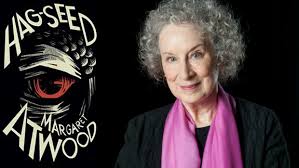
Book news: “Hag-Seed” by Margaret Atwood

hag-seed

Hag-Seed is the latest offering from Hogarth Shakespeare, a series that takes Ben Jonson’s quote “He was not of an age, but for all time” seriously and publishes novels by acclaimed and best-selling authors retelling Shakespeare’s plays. Hag-Seed is Margaret Atwood’s contribution—a brilliant retelling of The Tempest that is as enjoyable to read as it must have been for Prospero to watch the storm he created.

Hag-Seed starts in the middle of its story with the beginning of a production ofThe Tempest:

The house lights dim. The audience quiets.

ON THE BIG FLATSCREEN: Jagged yellow lettering on black:

THE TEMPEST

By William Shakespeare

With

The Fletcher Correctional Players

The Fletcher Correctional Players? Yes, this is a Tempest performed within a prison, with its own particular language, which we hear right away when the announcer begins:

What you’re gonna see, is a storm at sea:

Winds are howlin’, sailors yowlin’,

Passengers cursin’ ’em, ’cause it gettin’ worse:

Gonna hear screams, just like a ba-a-d dream,

But not all here is what it seem,

Just sayin’ …

Now we gonna start the playin’.

You might think that this is a cheap or easy way to adapt The Tempest but, as the announcer says at the very beginning: not all here is as it seems. There are layers upon layers of The Tempest woven throughout the plot of Hag-Seed, as we see just pages later when we meet Felix Phillips, the director of the Fletcher Correctional Players. We quickly learn that he used to be the artistic director of the prestigious Makeshiweg Festival before being disgraced and deposed by his colleague and rival, Anthony. Felix goes into self-imposed exile, taking a new name, Mr. Duke, and during his 12 years of reclusive living imagines that his daughter, Miranda, who died of meningitis at the age of 3, is living with him. This parallels the plot of Shakespeare’s play, in which Prospero, the duke of Milan, is overthrown by his brother Antonio, and set adrift in a leaky boat with his daughter Miranda until they come to the shore of an enchanted island. (If you need to brush up on yourTempest, Atwood thoughtfully includes a summary chapter at the end of the book.)

Felix has a history of adapting Shakespeare’s plays in highly creative ways—a “freely bleeding Lavinia in Titus,” a Pericles with spaceships and aliens, and, in A Winter’s Tale, a Hermione who returns to life as a vampire. And just before Anthony’s power play forces him out of the Makeshiweg Festival, Felix is planning an elaborate production of The Tempest. He wants it to be magical in more ways than one—he wants to use it to bring some aspect of his dead daughter back to life: “Lavinia, Juliet, Cordelia, Perdita, Marina. All the lost daughters. But some of them had been found again. Why not his Miranda?”

So after 12 years of living alone and following Anthony’s career from a distance, Felix takes a job directing a group of inmates at the Fletcher County Correctional Institute, certain that an opportunity for revenge will come. And when it does, he decides that it is time for him to stage The Tempest, a play about revenge, restoration, and return all at once.

While there are some wild moments in Hag-Seed, Atwood’s writing is so skillful that it is easy to suspend our disbelief. It also helps that so much theater is involved—we become used to articulate and expressive characters and fortuitous plot twists. One of the greatest pleasures of the book comes from one of the rules Felix sets out for his inmate actors: They can only use curse words from the play they are producing. “Whoreson … Malignant thing … Thou earth. Thou tortoise. Thou poisonous slave … Hag-seed … Pied ninny. Scurvy patch.” Which leads to such excellent exclamations as “Scurvy awesome!” and “Way to red plague go!” and “What the pied ninny is this?”

Another pleasure is being uncertain how the book will end—even if you know how The Tempest ends. Will The Fletcher Correctional Players perform the play? Will it help Felix get his revenge? Will it bring some version of Miranda back? The post-play reports that the actors are assigned help to keep the suspense—each one imagines the fate of their assigned character after The Tempest is over. Will Prospero be happy as reinstated Duke? What will Ariel do with his freedom? And what will happen to Caliban? The actors/inmates come up with surprising futures for their characters—some happy and some violent—and these possibilities make us wonder: Will any of these happen to Felix?

Only the title of the book remains a bit of a puzzle. Hag-seed is one of the nasty things that Prospero calls Caliban, an often-violent half-human creature who inhabits the island, and it makes the reader expect the book to be more about him. Caliban does get some good musical numbers in the Fletcher production ofTempest, but Hag-Seed is mostly about Felix-as-Prospero. Still, Caliban’s imagined afterlife sheds some light on Felix and the inmates’ possible futures, so perhaps the title is meant to call attention to that shift, which adds one last layer of The Tempest across Atwood’s brilliant tale, taking it past the last pages of the book and allowing it to linger in our minds even as we close its back cover.


Purchasing Hag-Seed via Amazon helps support The A.V. Club.

(Courtesy of avclub.com and Richard Burns, H.W., M.)

Biography: Blaise Pascal (via Wikipedia.org)

blaisepascal

“Remove reason if you value your life.”
–Blaise Pascal

Blaise Pascal (19 June 1623 – 19 August 1662) was a French mathematician, physicist, inventor, writer and Christian philosopher. He was a child prodigywho was educated by his father, a tax collector in Rouen. Pascal’s earliest work was in the natural and applied sciences where he made important contributions to the study of fluids, and clarified the concepts of pressure and vacuum by generalising the work of Evangelista Torricelli. Pascal also wrote in defence of the scientific method.

In 1642, while still a teenager, he started some pioneering work on calculating machines. After three years of effort and 50 prototypes, he built 20 finished machines (called Pascal’s calculators and later Pascalines) over the following 10 years, establishing him as one of the first two inventors of the mechanical calculator.

Pascal was an important mathematician, helping create two major new areas of research: he wrote a significant treatise on the subject of projective geometry at the age of 16, and later corresponded withPierre de Fermat on probability theory, strongly influencing the development of modern economics and social science. Following Galileo Galilei and Torricelli, in 1646, he rebutted Aristotle‘s followers who insisted that nature abhors a vacuum. Pascal’s results caused many disputes before being accepted.

In 1646, he and his sister Jacqueline identified with the religious movement within Catholicism known by its detractors as Jansenism.  His father died in 1651. Following a religious experience in late 1654, he began writing influential works on philosophy and theology. His two most famous works date from this period: the Lettres provinciales and the Pensées, the former set in the conflict between Jansenists and Jesuits. In that year, he also wrote an important treatise on the arithmetical triangle. Between 1658 and 1659 he wrote on the cycloid and its use in calculating the volume of solids.

Pascal had poor health, especially after the age of 18, and he died just two months after his 39th birthday.

Early life and education

Pascal was born in Clermont-Ferrand, which is in France’s Auvergne region. He lost his mother, Antoinette Begon, at the age of three.  His father,Étienne Pascal (1588–1651), who also had an interest in science and mathematics, was a local judge and member of the “Noblesse de Robe“. Pascal had two sisters, the younger Jacqueline and the elder Gilberte.

In 1631, five years after the death of his wife, Étienne Pascal moved with his children to Paris. The newly arrived family soon hired Louise Delfault, a maid who eventually became an instrumental member of the family. Étienne, who never remarried, decided that he alone would educate his children, for they all showed extraordinary intellectual ability, particularly his son Blaise. The young Pascal showed an amazing aptitude for mathematics and science.

Particularly of interest to Pascal was a work of Desargues on conic sections. Following Desargues’ thinking, the 16-year-old Pascal produced, as a means of proof, a short treatise on what was called the “Mystic Hexagram”, Essai pour les coniques (“Essay on Conics”) and sent it—his first serious work of mathematics—to Père Mersenne in Paris; it is known still today as Pascal’s theorem. It states that if a hexagon is inscribed in a circle (or conic) then the three intersection points of opposite sides lie on a line (called the Pascal line).

Pascal’s work was so precocious that Descartes was convinced that Pascal’s father had written it. When assured by Mersenne that it was, indeed, the product of the son and not the father, Descartes dismissed it with a sniff: “I do not find it strange that he has offered demonstrations about conics more appropriate than those of the ancients,” adding, “but other matters related to this subject can be proposed that would scarcely occur to a 16-year-old child.”

In France at that time offices and positions could be—and were—bought and sold. In 1631 Étienne sold his position as second president of theCour des Aides for 65,665 livres. The money was invested in a government bond which provided, if not a lavish, then certainly a comfortable income which allowed the Pascal family to move to, and enjoy, Paris. But in 1638 Richelieu, desperate for money to carry on the Thirty Years’ War, defaulted on the government’s bonds. Suddenly Étienne Pascal’s worth had dropped from nearly 66,000 livres to less than 7,300.

An early Pascaline on display at theMusée des Arts et Métiers, Paris

Like so many others, Étienne was eventually forced to flee Paris because of his opposition to the fiscal policies of Cardinal Richelieu, leaving his three children in the care of his neighbour Madame Sainctot, a great beauty with an infamous past who kept one of the most glittering and intellectual salons in all France. It was only when Jacqueline performed well in a children’s play with Richelieu in attendance that Étienne was pardoned. In time, Étienne was back in good graces with the cardinal and in 1639 had been appointed the king’s commissioner of taxes in the city of Rouen—a city whose tax records, thanks to uprisings, were in utter chaos.

In 1642, in an effort to ease his father’s endless, exhausting calculations, and recalculations, of taxes owed and paid (into which work the young Pascal had been recruited), Pascal, not yet 19, constructed a mechanical calculator capable of addition and subtraction, called Pascal’s calculator or the Pascaline. Of the eight Pascalines known to have survived, four are held by the Musée des Arts et Métiers in Paris and one more by the Zwinger museum in Dresden, Germany, exhibit two of his original mechanical calculators.  Though these machines are pioneering forerunners to a further 400 years of development of mechanical methods of calculation, and in a sense to the later field of computer engineering, the calculator failed to be a great commercial success. Partly because it was still quite cumbersome to use in practice, but probably primarily because it was extraordinarily expensive, the Pascaline became little more than a toy, and a status symbol, for the very rich both in France and elsewhere in Europe. Pascal continued to make improvements to his design through the next decade, and he refers to some 50 machines that were built to his design.

Contributions to mathematics

Pascal’s triangle. Each number is the sum of the two directly above it. The triangle demonstrates many mathematical properties in addition to showing binomial coefficients.

Pascal continued to influence mathematics throughout his life. His Traité du triangle arithmétique (“Treatise on the Arithmetical Triangle”) of 1653 described a convenient tabular presentation for binomial coefficients, now called Pascal’s triangle. The triangle can also be represented:

0 1 2 3 4 5 6
0 1 1 1 1 1 1 1
1 1 2 3 4 5 6
2 1 3 6 10 15
3 1 4 10 20
4 1 5 15
5 1 6
6 1

He defines the numbers in the triangle by recursion: Call the number in the (m + 1)th row and (n + 1)th column tmn. Then tmn = tm–1,n + tm,n–1, for m = 0, 1, 2, … and n = 0, 1, 2, … The boundary conditions are tm,−1 = 0, t−1,n = 0 for m = 1, 2, 3, … andn = 1, 2, 3, … The generator t00 = 1. Pascal concludes with the proof,

{\displaystyle t_{mn}={\frac {(m+n)(m+n-1)\cdots (m+1)}{n(n-1)\cdots 1}}.\ }t_{mn}={\frac {(m+n)(m+n-1)\cdots (m+1)}{n(n-1)\cdots 1}}.\

In 1654 he proved Pascal’s identity relating the sums of the p-th powers of the first n positive integers for p = 0, 1, 2, …, k.

In 1654, prompted by his friend the Chevalier de Méré, he corresponded with Pierre de Fermat on the subject of gambling problems, and from that collaboration was born the mathematical theory of probabilities.  The specific problem was that of two players who want to finish a game early and, given the current circumstances of the game, want to divide the stakes fairly, based on the chance each has of winning the game from that point. From this discussion, the notion of expected value was introduced. Pascal later (in the Pensées) used a probabilistic argument, Pascal’s Wager, to justify belief in God and a virtuous life. The work done by Fermat and Pascal into the calculus of probabilities laid important groundwork for Leibniz‘ formulation of the calculus.

After a religious experience in 1654, Pascal mostly gave up work in mathematics.

Philosophy of mathematics

Pascal’s major contribution to the philosophy of mathematics came with his De l’Esprit géométrique (“Of the Geometrical Spirit”), originally written as a preface to a geometry textbook for one of the famous “Petites-Ecoles de Port-Royal” (“Little Schools of Port-Royal”). The work was unpublished until over a century after his death. Here, Pascal looked into the issue of discovering truths, arguing that the ideal of such a method would be to found all propositions on already established truths. At the same time, however, he claimed this was impossible because such established truths would require other truths to back them up—first principles, therefore, cannot be reached. Based on this, Pascal argued that the procedure used in geometry was as perfect as possible, with certain principles assumed and other propositions developed from them. Nevertheless, there was no way to know the assumed principles to be true.

Pascal also used De l’Esprit géométrique to develop a theory of definition. He distinguished between definitions which are conventional labels defined by the writer and definitions which are within the language and understood by everyone because they naturally designate their referent. The second type would be characteristic of the philosophy of essentialism. Pascal claimed that only definitions of the first type were important to science and mathematics, arguing that those fields should adopt the philosophy of formalism as formulated by Descartes.

In De l’Art de persuader (“On the Art of Persuasion”), Pascal looked deeper into geometry’s axiomatic method, specifically the question of how people come to be convinced of the axioms upon which later conclusions are based. Pascal agreed with Montaigne that achieving certainty in these axioms and conclusions through human methods is impossible. He asserted that these principles can be grasped only through intuition, and that this fact underscored the necessity for submission to God in searching out truths.

Contributions to the physical sciences

Portrait of Pascal

An illustration of the (apocryphal)Pascal’s barrel experiment

Pascal’s work in the fields of the study of hydrodynamics andhydrostatics centered on the principles of hydraulic fluids. His inventions include the hydraulic press (using hydraulic pressure to multiply force) and the syringe. He proved that hydrostatic pressure depends not on the weight of the fluid but on the elevation difference. He demonstrated this principle by attaching a thin tube to a barrel full of water and filling the tube with water up to the level of the third floor of a building. This caused the barrel to leak, in what became known as Pascal’s barrel experiment.

By 1646, Pascal had learned of Evangelista Torricelli‘s experimentation with barometers. Having replicated an experiment that involved placing a tube filled with mercury upside down in a bowl of mercury, Pascal questioned what force kept some mercury in the tube and what filled the space above the mercury in the tube. At the time, most scientists contended that, rather than a vacuum, some invisible matter was present. This was based on the Aristotelian notion that creation was a thing of substance, whether visible or invisible; and that this substance was forever in motion. Furthermore, “Everything that is in motion must be moved by something,” Aristotle declared. Therefore, to the Aristotelian trained scientists of Pascal’s time, a vacuum was an impossibility. How so? As proof it was pointed out:

  • Light passed through the so-called “vacuum” in the glass tube.
  • Aristotle wrote how everything moved, and must be moved by something.
  • Therefore, since there had to be an invisible “something” to move the light through the glass tube, there was no vacuum in the tube. Not in the glass tube or anywhere else. Vacuums – the absence of any and everything – were simply an impossibility.

Following more experimentation in this vein, in 1647 Pascal produced Experiences nouvelles touchant le vide (“New Experiments with the Vacuum”), which detailed basic rules describing to what degree various liquids could be supported by air pressure. It also provided reasons why it was indeed a vacuum above the column of liquid in a barometer tube.

On 19 September 1648, after many months of Pascal’s friendly but insistent prodding, Florin Périer, husband of Pascal’s elder sister Gilberte, was finally able to carry out the fact-finding mission vital to Pascal’s theory. The account, written by Périer, reads:

The weather was chancy last Saturday…[but] around five o’clock that morning…the Puy-de-Dôme was visible…so I decided to give it a try. Several important people of the city of Clermont had asked me to let them know when I would make the ascent…I was delighted to have them with me in this great work…

…at eight o’clock we met in the gardens of the Minim Fathers, which has the lowest elevation in town….First I poured 16 pounds ofquicksilver…into a vessel…then took several glass tubes…each four feet long and hermetically sealed at one end and opened at the other…then placed them in the vessel [of quicksilver]…I found the quick silver stood at 26″ and 3½ lines above the quicksilver in the vessel…I repeated the experiment two more times while standing in the same spot…[they] produced the same result each time…

I attached one of the tubes to the vessel and marked the height of the quicksilver and…asked Father Chastin, one of the Minim Brothers…to watch if any changes should occur through the day…Taking the other tube and a portion of the quick silver…I walked to the top of Puy-de-Dôme, about 500 fathoms higher than the monastery, where upon experiment…found that the quicksilver reached a height of only 23″ and 2 lines…I repeated the experiment five times with care…each at different points on the summit…found the same height of quicksilver…in each case…

Pascal replicated the experiment in Paris by carrying a barometer up to the top of the bell tower at the church of Saint-Jacques-de-la-Boucherie, a height of about 50 metres. The mercury dropped two lines.

In the face of criticism that some invisible matter must exist in Pascal’s empty space, Pascal, in his reply to Estienne Noel, gave one of the 17th century’s major statements on the scientific method, which is a striking anticipation of the idea popularised by Karl Popper that scientific theories are characterised by their falsifiability: “In order to show that a hypothesis is evident, it does not suffice that all the phenomena follow from it; instead, if it leads to something contrary to a single one of the phenomena, that suffices to establish its falsity.”  His insistence on the existence of the vacuum also led to conflict with other prominent scientists, including Descartes.

Pascal introduced a primitive form of roulette and the roulette wheel in his search for a perpetual motion machine.

Adult life, religion, philosophy, and literature

For after all what is man in nature? A nothing in relation to infinity, all in relation to nothing, a central point between nothing and all and infinitely far from understanding either. The ends of things and their beginnings are impregnably concealed from him in an impenetrable secret. He is equally incapable of seeing the nothingness out of which he was drawn and the infinite in which he is engulfed.

Blaise Pascal, Pensées No. 72

Religious conversion

Pascal studying thecycloid, by Augustin Pajou, 1785, Louvre

In the winter of 1646, Pascal’s 58-year-old father broke his hip when he slipped and fell on an icy street of Rouen; given the man’s age and the state of medicine in the 17th century, a broken hip could be a very serious condition, perhaps even fatal. Rouen was home to two of the finest doctors in France: Monsieur Doctor Deslandes and Monsieur Doctor de La Bouteillerie. The elder Pascal “would not let anyone other than these men attend him…It was a good choice, for the old man survived and was able to walk again…” But treatment and rehabilitation took three months, during which time La Bouteillerie and Deslandes had become household guests.

Both men were followers of Jean Guillebert, proponent of a splinter group from Catholic teaching known asJansenism. This still fairly small sect was making surprising inroads into the French Catholic community at that time. It espoused rigorous Augustinism. Blaise spoke with the doctors frequently, and upon his successful treatment of Étienne, borrowed from them works by Jansenist authors. In this period, Pascal experienced a sort of “first conversion” and began to write on theological subjects in the course of the following year.

Pascal fell away from this initial religious engagement and experienced a few years of what some biographers have called his “worldly period” (1648–54). His father died in 1651 and left his inheritance to Pascal and Jacqueline, for whom Pascal acted as her conservator. Jacqueline announced that she would soon become apostulant in the Jansenist convent of Port-Royal. Pascal was deeply affected and very sad, not because of her choice, but because of his chronic poor health; he too needed her.

Suddenly there was war in the Pascal household. Blaise pleaded with Jacqueline not to leave, but she was adamant. He commanded her to stay, but that didn’t work, either. At the heart of this was…Blaise’s fear of abandonment…if Jacqueline entered Port-Royal, she would have to leave her inheritance behind…[but] nothing would change her mind.

By the end of October in 1651, a truce had been reached between brother and sister. In return for a healthy annual stipend, Jacqueline signed over her part of the inheritance to her brother. Gilberte had already been given her inheritance in the form of a dowry. In early January, Jacqueline left for Port-Royal. On that day, according to Gilberte concerning her brother, “He retired very sadly to his rooms without seeing Jacqueline, who was waiting in the little parlor…” In early June 1653, after what must have seemed like endless badgering from Jacqueline, Pascal formally signed over the whole of his sister’s inheritance to Port-Royal, which, to him, “had begun to smell like a cult.” With two thirds of his father’s estate now gone, the 29-year-old Pascal was now consigned to genteel poverty.

For a while, Pascal pursued the life of a bachelor. During visits to his sister at Port-Royal in 1654, he displayed contempt for affairs of the world but was not drawn to God.

Brush with death

On 23 November 1654, between 10:30 and 12:30 at night, Pascal had an intense religious vision and immediately recorded the experience in a brief note to himself which began: “Fire. God of Abraham, God of Isaac, God of Jacob, not of the philosophers and the scholars…” and concluded by quoting Psalm 119:16: “I will not forget thy word. Amen.” He seems to have carefully sewn this document into his coat and always transferred it when he changed clothes; a servant discovered it only by chance after his death.  This piece is now known as the Memorial. The story of the carriage accident as having led to the experience described in the Memorial is disputed by some scholars.  His belief and religious commitment revitalized, Pascal visited the older of two convents at Port-Royal for a two-week retreat in January 1655. For the next four years, he regularly travelled between Port-Royal and Paris. It was at this point immediately after his conversion when he began writing his first major literary work on religion, the Provincial Letters.

Beginning in 1656, Pascal published his memorable attack on casuistry, a popular ethical method used by Catholic thinkers in the early modern period (especially the Jesuits, and in particular Antonio Escobar). Pascal denounced casuistry as the mere use of complex reasoning to justify moral laxity and all sorts of sins. The 18-letter series was published between 1656 and 1657 under the pseudonym Louis de Montalte and incensed Louis XIV. The king ordered that the book be shredded and burnt in 1660. In 1661, in the midsts of the formulary controversy, the Jansenist school at Port-Royal was condemned and closed down; those involved with the school had to sign a 1656 papal bullcondemning the teachings of Jansen as heretical. The final letter from Pascal, in 1657, had defiedAlexander VII himself. Even Pope Alexander, while publicly opposing them, nonetheless was persuaded by Pascal’s arguments.

Aside from their religious influence, the Provincial Letters were popular as a literary work. Pascal’s use of humor, mockery, and vicious satire in his arguments made the letters ripe for public consumption, and influenced the prose of later French writers like Voltaire and Jean-Jacques Rousseau.

Charles Perrault wrote of the Letters: “Everything is there—purity of language, nobility of thought, solidity in reasoning, finesse in raillery, and throughout an agrément not to be found anywhere else.”

The Pensées

Main article: Pensées

Pascal’s most influential theological work, referred to posthumously as the Pensées (“Thoughts”), was not completed before his death. It was to have been a sustained and coherent examination and defense of the Christian faith, with the original title Apologie de la religion Chrétienne (“Defense of the Christian Religion”). The first version of the numerous scraps of paper found after his death appeared in print as a book in 1669 titled Pensées de M. Pascal sur la religion, et sur quelques autres sujets(“Thoughts of M. Pascal on religion, and on some other subjects”) and soon thereafter became a classic. One of the Apologies main strategies was to use the contradictory philosophies of skepticism and stoicism, personalized by Montaigne on one hand, and Epictetus on the other, in order to bring the unbeliever to such despair and confusion that he would embrace God.

Pascal’s Pensées is widely considered to be a masterpiece, and a landmark in French prose. When commenting on one particular section (Thought #72), Sainte-Beuve praised it as the finest pages in the French language.  Will Durant hailed it as “the most eloquent book in French prose”.  In Pensées, Pascal surveys several philosophical paradoxes: infinity and nothing, faith and reason, soul and matter, death and life, meaning and vanity – seemingly arriving at no definitive conclusions besides humility, ignorance, and grace. Rolling these into one he developsPascal’s Wager.

Last works and death

Pascal’s epitaph in Saint-Étienne-du-Mont, where he was buried

T. S. Eliot described him during this phase of his life as “a man of the world among ascetics, and an ascetic among men of the world.” Pascal’s ascetic lifestyle derived from a belief that it was natural and necessary for a person to suffer. In 1659, Pascal fell seriously ill. During his last years, he frequently tried to reject the ministrations of his doctors, saying, “Sickness is the natural state of Christians.”

Louis XIV suppressed the Jansenist movement at Port-Royal in 1661. In response, Pascal wrote one of his final works, Écrit sur la signature du formulaire (“Writ on the Signing of the Form”), exhorting the Jansenists not to give in. Later that year, his sister Jacqueline died, which convinced Pascal to cease hispolemics on Jansenism. Pascal’s last major achievement, returning to his mechanical genius, was inaugurating perhaps the first bus line, moving passengers within Paris in a carriage with many seats.

In 1662, Pascal’s illness became more violent, and his emotional condition had severely worsened since his sister’s death. Aware that his health was fading quickly, he sought a move to the hospital for incurable diseases, but his doctors declared that he was too unstable to be carried. In Paris on 18 August 1662, Pascal went into convulsions and received extreme unction. He died the next morning, his last words being “May God never abandon me,” and was buried in the cemetery of Saint-Étienne-du-Mont.

An autopsy performed after his death revealed grave problems with his stomach and other organs of his abdomen, along with damage to his brain. Despite the autopsy, the cause of his poor health was never precisely determined, though speculation focuses on tuberculosis, stomach cancer, or a combination of the two.  The headaches which afflicted Pascal are generally attributed to his brain lesion.

Legacy

Death mask of Blaise Pascal.

In honour of his scientific contributions, the name Pascal has been given to the SI unit of pressure, to aprogramming language, and Pascal’s law (an important principle of hydrostatics), and as mentioned above, Pascal’s triangle and Pascal’s wager still bear his name.

Pascal’s development of probability theory was his most influential contribution to mathematics. Originally applied to gambling, today it is extremely important in economics, especially in actuarial science. John Ross writes, “Probability theory and the discoveries following it changed the way we regard uncertainty, risk, decision-making, and an individual’s and society’s ability to influence the course of future events.”  However, it should be noted that Pascal and Fermat, though doing important early work in probability theory, did not develop the field very far. Christiaan Huygens, learning of the subject from the correspondence of Pascal and Fermat, wrote the first book on the subject. Later figures who continued the development of the theory include Abraham de Moivre and Pierre-Simon Laplace.

In literature, Pascal is regarded as one of the most important authors of the French Classical Period and is read today as one of the greatest masters of French prose. His use of satire and wit influenced laterpolemicists. The content of his literary work is best remembered for its strong opposition to the rationalism of René Descartes and simultaneous assertion that the main countervailing philosophy, empiricism, was also insufficient for determining major truths.

In France, prestigious annual awards, Blaise Pascal Chairs are given to outstanding international scientists to conduct their research in the Ile de France region.  One of the Universities of Clermont-Ferrand, France – Université Blaise Pascal – is named after him. The University of Waterloo, Ontario, Canada, holds an annual math contest named in his honour.

Pascalian theology has grown out of his perspective that we are, according to Wood, “born into a duplicitous world that shapes us into duplicitous subjects and so we find it easy to reject God continually and deceive ourselves about our own sinfulness”.

Roberto Rossellini directed a filmed biopic, Blaise Pascal, which originally aired on Italian television in 1971.  Pascal was a subject of the first edition of the 1984 BBC Two documentary, Sea of Faith, presented by Don Cupitt.

CoverGirl’s First “CoverBoy” James Charles Was “Shook” When He Learned He Was the New Face

coverboy

You might recognize makeup artist and YouTuber James Charles’s face from his ***flawless senior pictures. They went viral after he revealed that he’d brought his own light ring to the portrait session do-over (he didn’t like how the originals turned out).

Well, this 17-year-old is about to have another viral moment under his beauty belt (not to mention be a household name!) now that CoverGirl has announced that James is its first male CoverGirl spokesmodel.

Fellow CoverGirl spokesmodel Katy Perry broke the news early Tuesday morning. “Honored to have the pleasure to announce the very first COVERBOY, James Charles!” she wrote on Instagram.

James will start out as the face/lashes of the brand’s latest mascara launch “So Lashy!,” but will also be fully integrated into ads, commercials, etc. He couldn’t be more excited about the news! Just see for yourself:

I’m actually not a bit surprised James is the new CoverGirl spokesmodel for two reasons: (1) He’s so cute and bubbly and his energy is infectious, and (2) I recently saw him at GenBeauty and both his skin and makeup were impeccable. I was staring at him with my jaw dropped, wondering how he got his eye makeup so perfect and why my cheekbones have never looked that contoured/amazing in my life?!

“All of our COVERGIRLs are role models and boundary-breakers, fearlessly expressing themselves, standing up for what they believe, and redefining what it means to be beautiful. James Charles is no exception,” the beauty brand said in a release. “One year ago, he boldly chose to launch his Instagram to the world, using transformative, dynamic makeup looks to showcase the many facets of his personality, serving as an inspiration to women, men, guys and girls who might have been afraid to do the same.”

Get non-boring fashion and beauty news directly in your feed. Follow Facebook.com/CosmoBeauty.

(Courtesy of Richard Burns, H.W., M.)

Biography: Tom Campbell

tomcampbell

Thomas Warren Campbell (born December 9, 1944) is a physicist, lecturer, and author of the My Big T.O.E. (Theory of Everything) trilogy, a work that claims to unify general relativity, quantum mechanics, and metaphysics along with the origins of consciousness. The work is based on thesimulation argument, which posits that reality is both virtual and subjective. Campbell agrees with other notable philosophers and scientists including Hans Moravec, Nick Bostrom, Brian Whitworth, Marcus Arvan and others who hypothesize that reality is a simulation generated by acomputer (or peer-to-peer network according to Aravan), while Campbell contends reality evolved from a “digital big bang“. These ideas are heavily influenced by the concepts of digital physics.

Work with NASA and DoD

Campbell has had a long career as a scientist and physicist. He received a B.S. in Physics as well as an M.S. in Physics. His Ph.D. work specialized in Experimental Nuclear Physics with a thesis in low-energy nuclear collisions. He worked as a systems analyst with Army technical intelligence for a decade before moving into the research and development of technology supporting defensive missile systems. Subsequently, he spent the better part of 30 years working within the US missile defense community as a contractor to the Department of Defense. Campbell most recently worked for NASA within the Ares I program (follow-on to the Shuttle) assessing and solving problems of risk and vulnerability to insure mission and crew survivability and success.

Work with Bob Monroe

After receiving his master’s degree in physics in 1968, Campbell commenced on a Ph.D. program with a specialization in experimental nuclear physics. During this time, Campbell enrolled in a Transcendental Meditation class and discovered an aptitude for it, a technique he says he would employ to discover errors in his computer code while working for Army Intelligence. Around this time, Campbell was introduced to Bob Monroe’s book, Journeys Out Of The Body, on out-of-body experiences. Upon learning that Monroe was looking for scientists to help him study altered states of consciousness, Campbell applied for the position and subsequently began working with Monroe at Monroe Laboratories. This research facility would evolve to become The Monroe Institute. Tom is the “TC physicist” described in Monroe’s second book Far Journeys. Both Campbell and electrical engineer Dennis Mennerich were instrumental in developing TMI’s “Hemi-Sync” technology, based on the binaural beat method for creating specific altered states of consciousness within subjects. Campbell believes his research with Monroe informed many of his insights into the nature of reality and mechanics of what he calls “the larger consciousness system”.

My Big TOE (Theory of Everything)

The My Big TOE trilogy develops a complete derivation (in outline) of consciousness. This derivation begins with two assumptions and then proceeds to logically derive all the attributes, limitations, properties, qualities, and mechanics of consciousness – what it is, where it comes from, and how it works. The two assumptions are 1) that consciousness exists as a self-changing information system capable of evolving and 2) that evolution exists as a process of natural selection. Neither assumption is particularly remarkable, and both fit comfortably within common experience and everyday scientific understanding.

Since its publication, My Big Toe has garnered an international following with Campbell’s videos, as of December 31, 2015 having had more than 2 million views on YouTube and 309 videos of his lectures, public appearances, interviews, and fireside chats explaining fundamentals, nuances, implications, and applications of his theory. He continues to lecture around the world, holding workshops on M.B.T., teaching workshops on the principles of simulation theory and speaking at conferences on the topic of consciousness.

Reception and criticism

Upon completion of My Big TOE, Campbell sent copies of the book to leading physicists, and fellow scientists, but received little response. This prompted Campbell to forgo enlisting support from “the top”, in favor of reaching out to lay audiences as a better way to share and spread his ideas about consciousness and the nature of reality.

(Wikipedia.org)