The Upanishads on the Self

upanishads

“Thou art the Self, and what thou art, that I AM.”
–Upanishads

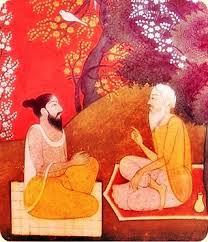
The Upanishads are a collection of texts that contain some of the central philosophical concepts of Hinduism, some of which are shared with Buddhism andJainism.  The Upanishads are considered by Hindus to contain utterances (śruti) concerning the nature of ultimate reality (brahman) and describing the character of and path to human salvation (mokṣa or mukti).

The Upanishads are commonly referred to as Vedānta, variously interpreted to mean either the “last chapters, parts of the Veda” or “the object, the highest purpose of the Veda”. The concepts ofBrahman (Ultimate Reality) and Ātman (Soul, Self) are central ideas in all the Upanishads, and “Know your Ātman” their thematic focus.  The Upanishads are the foundation of Hindu philosophical thought and its diverse traditions.  Of the Vedic corpus, they alone are widely known, and the central ideas of the Upanishads are at the spiritual core of Hindus.

More than 200 Upanishads are known, of which the first dozen or so are the oldest and most important and are referred to as the principal or main (mukhya) Upanishads.  The mukhya Upanishads are found mostly in the concluding part of the Brahmanas and Aranyakas and were, for centuries, memorized by each generation and passed down orally. The early Upanishads all predate the Common Era, five of them in all likelihood pre-Buddhist (6th century BCE), down to the Maurya period.  Of the remainder, some 95 Upanishads are part of the Muktika canon, composed from about the last centuries of 1st-millennium BCE through about 15th-century CE.  New Upanishads, beyond the 108 in the Muktika canon, continued to be composed through the early modern and modern era, though often dealing with subjects which are unconnected to the Vedas.

Along with the Bhagavad Gita and the Brahmasutra, the mukhya Upanishads (known collectively as the Prasthanatrayi) provide a foundation for the several later schools of Vedanta, among them, two influential monistic schools of Hinduism.

With the translation of the Upanishads in the early 19th century they also started to attract attention from a western audience. Arthur Schopenhauer was deeply impressed by the Upanishads and called it “the production of the highest human wisdom”. The 19th-century transcendentalists noted the influence of the Upanishads in western philosophy.

(Wikipedia.org)
First words on the telephone

alexandergrahambell

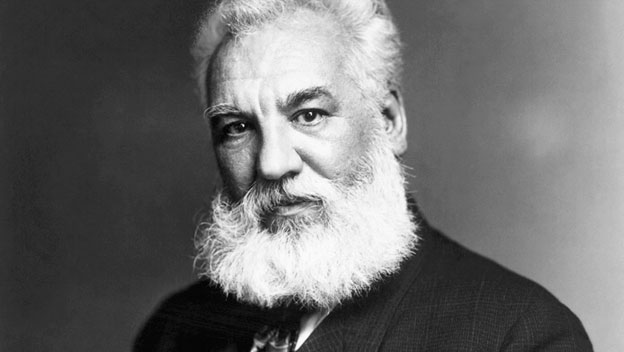
They were spoken by Alexander Graham Bell, inventor of the telephone, when he made the first call on March 10, 1876, to his assistant, Thomas Watson:

“Mr. Watson–come here–I want to see you.”

Alexander Graham Bell (March 3, 1847 – August 2, 1922) was a Scottish-born scientist, inventor, engineer and innovator who is credited with patenting the first practical telephone. Wikipedia

“Searching” by Derek Lamar

DerekLamar2016

We are lost, we are found
Forever hanging around
Falling, falling, forever falling
Waiting for that sound

Hallelujah, hallelujah
The chorus from on high
Hoping our life was not in vain
As we search for the lonely “I”

Indifference, perseverance
Unquestioning being drawn
Deep into the vacuum
and back where we came from

So lonely, so confusing
As we pretend to finally see
So much we won’t let go of
Is this what’s become of me?

The struggle, the loss
So much left to gain
We step outside of our fantasies
To see just what remains

We rise up into the Light
The Truth we hold so dear
We reach and yet it’s lost again
It seemed this time so near

We give up and let go
Thinking it’s just no use
We feel ourselves falling at last
Into the lap of Truth

We see ourselves in a brand new light
As we never glimpsed before
Standing proud and tall it seems
Before the shadow’s door

No longer afraid, no sense of remorse
We are prepared to finished our dream
Not to pretend what we thought it was
But what it really means

The sound of wind rushing around us
Ideas, thoughts and love
Truth and Reality finally seen
This time it’s known from above

No pressure, no guilt, no sadness at all
Refreshed in knowing it’s true
Now we are free to finally let go
And do what it is we must do.

~ Derek Lamar

Why are we [The Prosperos] still here? (from Suzanne Deakins, H.W., M.)

Suzanne_Deakins

Sorry, this a bit long…

Thank you to all who have answered [this email]. There are of course no right or wrong answers nor am I looking for anything specific. However, I feel we need to think about these questions. The legacy of Truth and what we are capable of doing needs to be understood as we begin to pass.

To me, friendship is indeed why we stick together to a degree. We share a common language. When I was in China I often longed to hear English spoken with American accents. I could understand Cantonese to an extent, and many people spoke passable English. But it was something about being able to converse more freely that brought me back to the USA.  We share a common language and accent from our study and connections. But that, I believe is not why we remain.

I believe that there is a hidden agenda waiting for us. I say hidden because as consciousness we have not recognized it as yet. This agenda (and I have ideas but no answers) does not keep us from teaching and writing but awaits us.

There is one thing we do better as a group than anybody else, that is brainstorming. I believe we could solve some real problems for our country and world if we put our heads to it.

While in NYC, I sat on two brain trusts. One was under Bloomberg, We discussed and came up with ideas for the business world.

The other was with the IBM fellows program where we discussed their inventions and came up with ways to use the emerging technology and how to communicate the ideas.

The common denominator in each group was speaking the same language. The Bloomberg had in its’ group people like Jarvik (who invented the first artificial heart) and Marilyn Von Savant etc. There was a wide disparity of occupations and of course languages.

In both cases, we came up with some pretty innovative ideas that were passed on to people who could use them. To me, they appeared to benefit quite a few people in a positive manner.

I believe that this kind of brain trust may be why we are still in contact with each other putting friendship aside.

The present atmosphere in America is dire and is affecting the entire world to a degree. A large conflict of values has permeated our politics and government. The value confusion has left us feeling as if there are no values at all. Moral and ethical considerations seem to have been thrown out the window. All resolution between the material and spiritual laws seem to have been lost.

As Translators, we hold a wholistic and eclectic view of the world. Our ability to Translate is a simple concept of resolution that brings focus and clarity. In essence, Translation denotes a broader, more comprehensive, multi-disciplinary approach to human problems. Most problem solvers tend to fit their problems to their way of thinking about the problem. Hence, you cannot solve a problem with the same thinking that produced it.

Straight thinking is a science; it is a search (of values) truth, insight, and understanding. This type of thinking cannot be, should not be limited to professionals in their chosen fields.

Orthodox scientific thinking has tended to put too much emphasis on instruments, techniques, procedures, and methods rather than the problems, questions, functions, and goals. If the end goal is a resolution of conflict and confusion, then only deductive reasoning is going to work (as we use in the syllogistic process).

As early as 1928 Abraham Maslow wrote in an undergraduate paper: “At the moment of the mystic experience we see wonderful possibilities and inscrutable depths in mankind.”

I don’t know if any of this resonates with you, but I feel brainstorming could bring about a new idea or or or… If we solve a world problem hurrah, if we simply find a way to make sure that in the future Translation and RHS are not forgotten great!  Time is growing short for all of us. To me, we have the ability to help bring the world into a new dimension we just have to think about it as a group.

Our study has been like Joseph…preparing us to know that Truth has sent us before so we might preserve consciousness.

Much love,

Suzanne

Aries Full Moon, October 15, at 09:23 pm PDT

WendyCicchetti

This is a challenging Full Moon cycle and there are several factors at play. First, Uranus is conjunct this Aries Full Moon, causing quick and sudden shifts in feelings and moods, which is challenging enough, but the Moon and Uranus in Aries are also in opposition to Mercury in Librawhich portends dramatic shifts in communication and how we feel and respond to what we see and hear.

If that isn’t enough, Pluto in Capricorn is conjunct Mars in Capricorn, creating a dynamic T-Square to the other difficult energies. These aspects are known to expose secrets, hidden agendas and deceptions within global political and financial structures, governments, organized religions, and large corporate interests. This is a powerful time when the dark underbelly can be more visible bringing public awareness that will eventually liberate us from outdated structures and old ineffective and harmful patterns of living and being. We must see the mire and corruption before we can effectively change it.

Aries energy can be headstrong, impulsive, impatient and reactive, moving forward with dynamic and often aggressive force. As a result we may see public and private controversy heat up and people taking action more on impulse than reason.

The Sun in Libra is a good balance for the aggravation of this T-Square. Libra energy always wants to consider all sides and take action that is considerate of everyone and everything involved, striving for balance and harmony. The down side is sacrificing too much to keep the peace.

Issues about freedom and independence may take center stage and shake things up personally and publicly. We may feel off balance or out-of-harmony. This is a good time to ask yourself what must be done to restore harmony. What bold, well thought out steps can you take to start a new, more balanced approach to rectify discord in your personal life and in your world. Spend time in quiet contemplation and listen for guidance.

Written by Wendy Cicchetti

A Full Moon symbolizes the fulfillment of the seeds planted at a previous New Moon or some earlier cycle. Each Full Moon reminds us of the seeds that may be coming to maturity, to their fullness, to fruition, to the place where the fruits or gifts are received. It may seem that fulfillment of our goals takes a long time. Some intentions may manifest within the two week phase prior to the next New or Full Moon. Some however, depending on their complexity, may take a much longer time. Just remember that our thoughts and emotions set Universal Action in motion and much work takes place behind the scenes as everything is orchestrated for fulfillment. Keep visualizing your goals as though you have already attained them and they will eventually manifest. Do not concern yourself with current conditions or worry about controlling it. The universe takes care of those details. Just keep seeing what you want, and move in that direction with your actions, and give no energy to what you don’t want. Patience is required.

She became Christine and the Queens so she could be herself

christineandthequeens

By Ryan Kost (sfgate.com)

October 7, 2016

There’s a difference between the person Héloïse Letissier is as she walks down the street and the person she becomes onstage. The person who stands quietly at the periphery of a party, the person who describes herself as “loner,” that’s Héloïse.

But the person who has become one of France’s biggest pop musicians, the smooth-moving weirdo with the funny faces performing Sunday, Oct. 16, at Treasure Island Music Festival, that’s Christine — or, to be very precise, Christine and the Queens.

The story of how Letissier found Christine is almost a legend at this point. It happened six years ago, back when she was a 22-year-old French theater student with a broken heart, alone in London.

“I was kind of lost in every way,” she says over the phone from Paris. Letissier pauses for a moment. “Trapped as well.”

She felt “lost” in the sense that she didn’t know “how to go on in life and what to do” with herself. She felt trapped in the sense that she had always been surrounded by images of women to which she couldn’t relate. “I didn’t feel like a proper young lady,” she says. “Or I was made to feel improper.”

After some wandering, she made her way to Madame JoJos, a queer nightclub in the city’s West End. There she met three drag queens who didn’t have much time for her self-pity.

“I don’t understand what you’re whining about,” she remembers one of them saying. “Just try to do something out of your love for the stage.”

“I don’t know how to do that,” she replied.

“Well, search. Search for something. Create a character for yourself.”

It was simple advice, the right sort at the right time, and something clicked.

“Meeting those drag queens, those performers, was incredible for me as a young girl,” Letissier says. “I was like, ‘Let’s not play by the rules, then — let’s play with the rules. Let’s try to subvert them.’”

Letissier, who identifies as pansexual, thought about her own childhood, about the role models she’d searched for but rarely found. “We don’t have lots of different ways of existing as women,” she says. Occasionally she’d come across somebody like Patti Smith or Laurie Anderson, artists “who drifted slightly away from what we expect a woman to be. … But they are quite few.”

So she began to get to know Christine, to create her, really, out of her own desire as “this kind of weird cousin and weird sister that could just portray a different way of existing.”

“If we’re really honest, I think I’m even more myself when I’m Christine,” she says. “It’s just a full expression of myself.”

While all of this was going on, Letissier also began, for the first time in her life, making music. What she wound up with was an understated synth-pop that mixes minimalist beats with elements of R&B and funk. She sings over all of this with the sort of expressive voice that creates audible characters; sometimes she whispers, sometimes she shouts.

Both the person she presents onstage — in the ways she moves and dresses — and the lyrics she’s crafted subvert gender and the sorts of social expectations that led Letissier to create Christine in the first place. In “iT,” one of her most striking songs, she addresses her own queerness head on.

“She wants to be a man/ But she lies/ She wants to be born again/ But she’ll lose/ She draws her own crotch by herself/ But she’ll lose because it’s fake/ It’s a fake, it’s a fake, it’s a fake.” The last bit fades just slightly, until she’s back with force: “No! I’ve got it/ I’m a man now/ And there’s nothing you can do to make me change my mind/ I’m a man now.”

Letissier released her first studio album, “Chaleur Humaine” (Human Warmth), in France in 2014, and less than a year later she was named best female artist at the Victoires de la Musique, the French equivalent of the Grammy Awards. Earlier this year, that same album was rereleased in English (though Letissier still dips in and out of French as she sings) to even further acclaim.

That’s all secondary, though, Letissier says, to the real prize that came with having created Christine.

“I don’t feel I come onstage to be admired,” she says. “I do come onstage to be contagious. To really relate. I kind of really feel like sometimes I dissolve, and people really share something with me.

“Onstage I do have this feeling of belonging. … I don’t find it anywhere else.”

Ryan Kost is a San Francisco Chronicle staff writer. Email: rkost@sfchronicle.com Twitter: @RyanKost


Consciousness, sexuality, androgyny, futurism, space, the arts, science, astrology, democracy, humor, books, movies and more