
(Image from planetpailly.com)
AI Overview
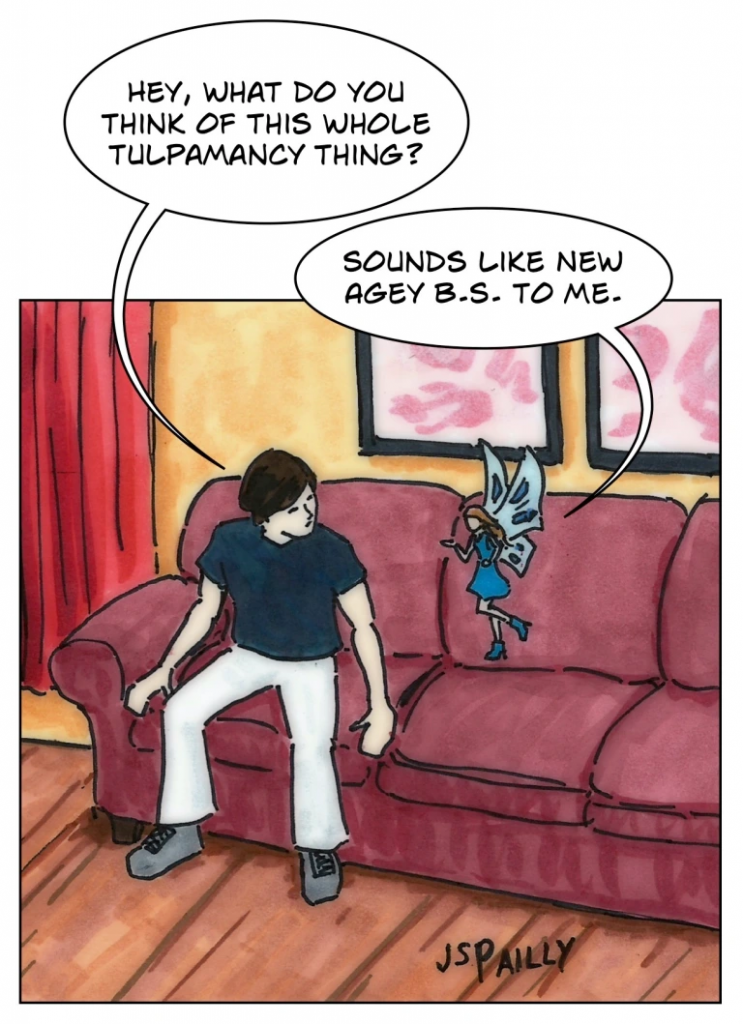
Tulpamancy is the practice of training the imagination to cultivate friendly dialogues with invisible companions, or “tulpas,” which are considered to be sentient and relatively independent thought-forms.
Here’s a more detailed explanation:
- Origin:The concept of “tulpa” originates in Tibetan Buddhism, referring to a materialized being or thought-form created through spiritual practice and intense concentration.
- Modern Interpretation:Modern practitioners, who call themselves “tulpamancers,” use the term to describe a type of willed imaginary friend that they consider to be sentient and relatively independent.
- Psychological Focus:Modern tulpamancy is predominantly viewed as a psychological rather than a paranormal concept.
- Training the Imagination:The practice involves rigorous training of the imagination to create and interact with these thought-forms.
- Autonomous Agency:Tulpas are understood to share the mind and body of the person who created them, but to have their own autonomous free will and agency.
- Online Community:Tulpamancy has gained some online attention as a subculture, with people sharing their experiences and methods.
- Not a Mental Illness:There is no evidence to suggest that tulpamancy is related to the development of psychopathology.
Generative AI is experimental.