May 1, 2023 (SFChronicle.com)
Three celestial events will unfold Friday: a penumbral lunar eclipse accompanying a Flower Moon, and the peak of the Eta Aquarid meteor shower.
But Bay Area stargazers should keep their expectations in check, astronomers say — especially since the eclipse will come and go while it’s still daylight in the region.
Lunar eclipses occur only during full moons, and Friday night brings the Flower Moon — the nickname for the full moon that occurs in May.
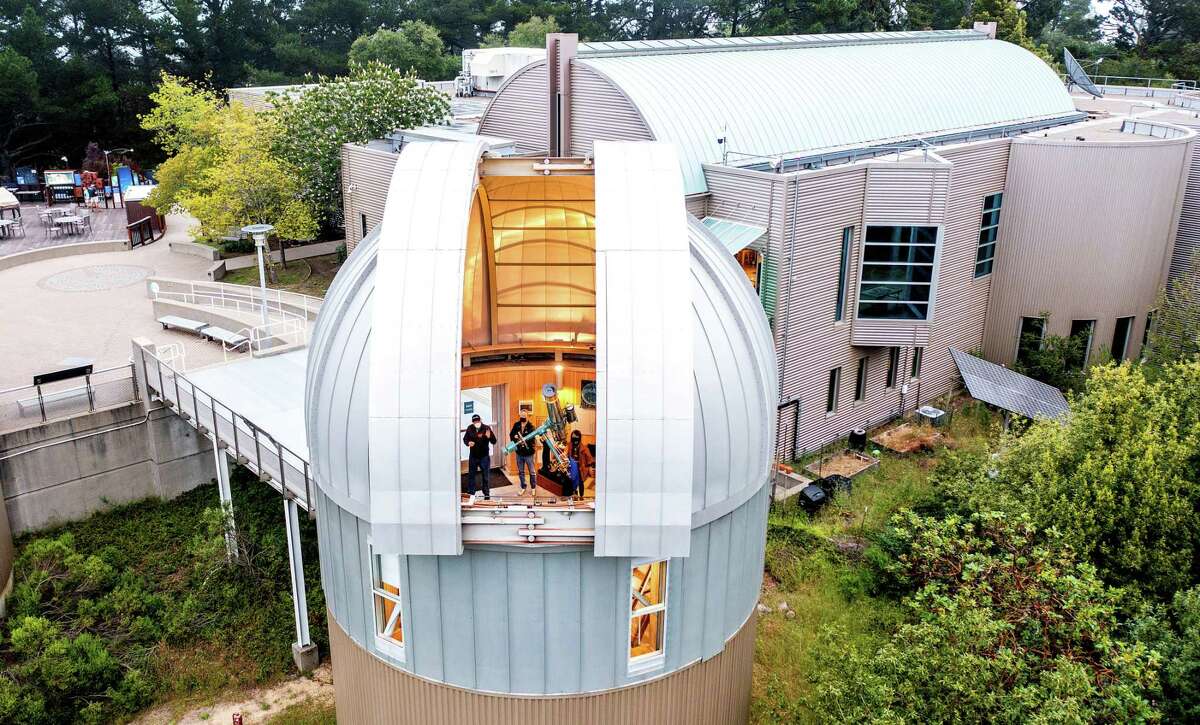
“Native Americans gave names to each of the full moons during the year, and those names often referred to natural seasonal events that occur at the time of the full moon,” said Gerald McKeegan, an adjunct astronomer at the Chabot Space & Science Center in Oakland. “Thus the full moon in early May is a springtime full moon, when flowers are in bloom.”
Other examples include the Snow Moon during winter snowfall in February, and the Strawberry Moon in June when strawberries ripen.
Geoff Mathews, professor of astronomy at Foothill College in Los Altos Hills, explained further: “Just about every culture used astronomical events as a calendar for human needs, like planting, harvesting, and sailing seasons.”
The Flower Moon won’t appear any different than usual, but Mathews said viewing any full moon is a great experience.
“I always enjoy the perspective illusion that as the moon rises it appears larger to us,” he said. “Near the horizon, there are other things to compare it to, while high in the sky there is nothing else around. That fools our visual systems.”
The Flower Moon will be accompanied by a penumbral lunar eclipse, which occurs when the moon passes through the shadow of the Earth as the moon orbits around us, said McKeegan. The Earth’s shadow has a dark inner circular shadow called the umbra, and a fainter outer shadow called the penumbra.
“The moon will pass just inside the faint penumbral shadow,” he said.
However, while the eclipse will be viewable in Africa, Asia and Australia, the Bay Area won’t be so fortunate.
“For those of us in the Bay Area, this event will occur in the daytime, between 8:14 a.m. and 12:31 p.m., when the moon will not be visible,” McKeegan said.
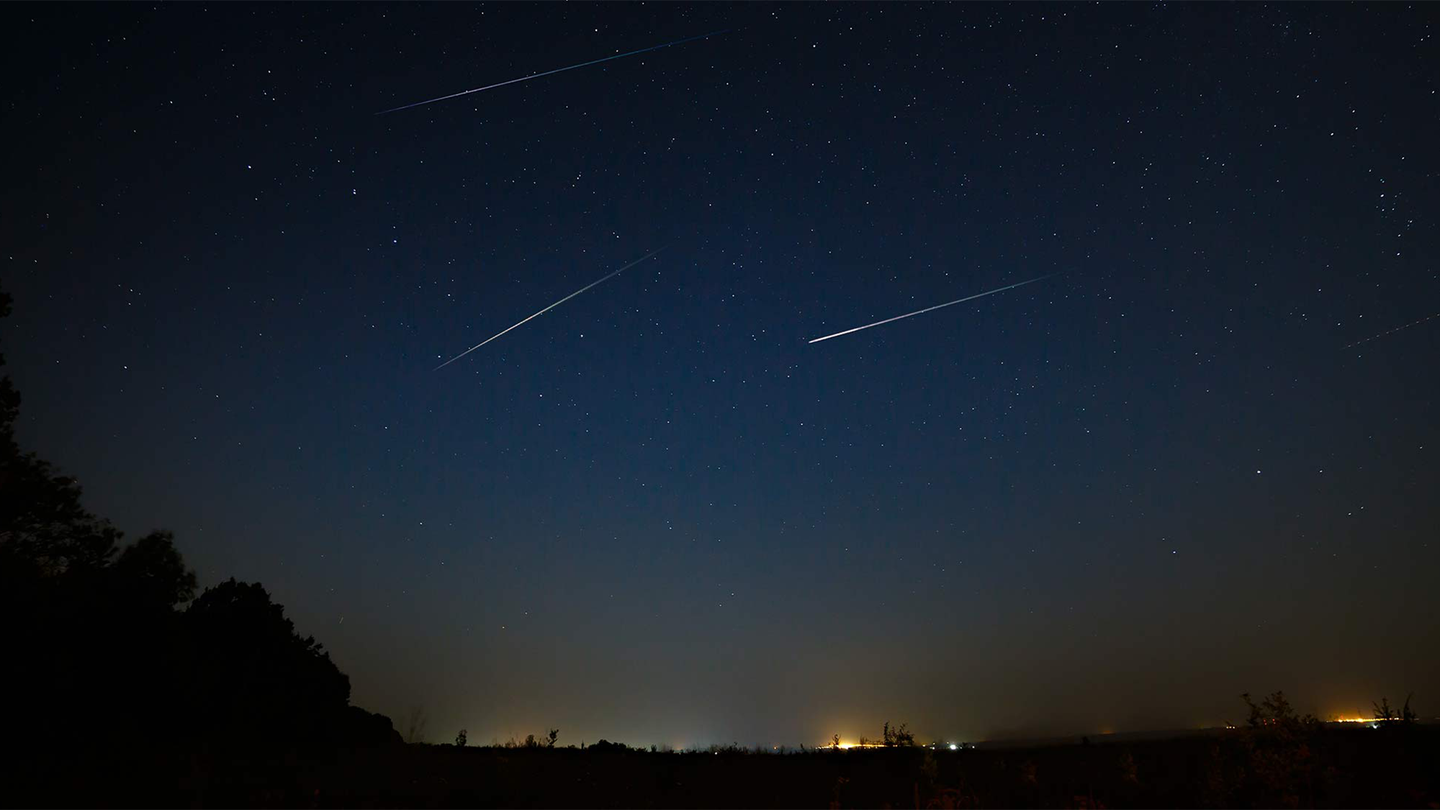
Instead, avid stargazers might try looking for meteors from the Eta Aquarid shower, which is active around April 19 to May 28 and reaches peak activity around May 5.
The meteors are small rocky particles left behind by Halley’s Comet, McKeegan said. Every year in early May during Earth’s orbit around the Sun, we pass through the particle stream.
However, astronomers explained that the Bay Area is not well-positioned to view this meteor shower. The meteors appear to trace back to Aquarius, which is a quite southerly constellation, so it never rises very high here, Mathews said. Also, the full moon will make the meteors more difficult to view.
“Most Eta Aquarid meteors seen in the Bay Area will likely appear to streak close to parallel with the horizon, which is a pretty cool sight,” Mathews said. “But there won’t be that many.”
According to McKeegan, “only the brightest” meteors will be visible. Viewers can expect to see only about a dozen per hour, with the best viewing times after midnight and closer to 3 a.m. during the very wee hours of May 4, 5 and 6. So unless you’re particularly adventurous, it might not be worth the effort for the casual stargazer.
But if you’re determined to try, keep in mind that meteors can appear in any part of the sky, and will streak across large distances, so you shouldn’t use binoculars or telescopes to watch for them, Mathews said.
“Find a nice dark sky location, lay out on a blanket and just stare up at the sky, away from the moon,” he said. “If you are lucky, you might catch a few meteors.”
Reach Kellie Hwang: kellie.hwang@sfchronicle.com; Twitter: @KellieHwang
Written By Kellie Hwang
Kellie Hwang is the newsletter editor for The San Francisco Chronicle. She was previously an engagement reporter.
Before returning to the Bay Area, she held roles as transportation reporter and trending news reporter at the IndyStar in Indianapolis. Previously, Kellie covered dining news and trends, visual arts, events and nightlife for the Arizona Republic, and freelanced for the former Contra Costa Times. Kellie has held many leadership roles for the Asian American Journalists Association, including most recently a board member for the San Francisco chapter. She is a University of Washington graduate.

 ©2023 Hearst Communications, Inc.