
Rupert Spira • Feb 11, 2024 • A man asks Rupert to comment on the Sanskrit term Satchitananda — often translated as ‘awareness of Being is bliss’. Rupert explains that Sat-Cit-Ananda is considered to be the pinnacle of the non-dual understanding. Sat means being, Chit means consciousness and Ananda is usually misleadingly translated as bliss. But, bliss is a mistranslation of the term Ananda. It just means peace. So all the Vedantic scriptures are saying is this: the awareness of your being, as it essentially is before it is mixed with the content of experience, is the experience of peace for which you long. It’s so simple. But, if we were to reformulate the Vedantic understanding or take all the scriptures from all the traditions from the last three thousand years and distil them into one sentence now, I think it would read like this: Happiness is the nature of being and we share our being with everyone and everything. Peace on the inside, love on the outside. That’s it. If you understand that you don’t need any other spiritual instruction. *This video is taken from one of Rupert’s in-person retreats at Mercy Center, 24 to 31 October 2021. To view and book for upcoming retreats (many of which can be attended online via livestream) go to: ▸ UK https://rupertspira.com/event/locatio… ▸ EU https://rupertspira.com/event/locatio… ▸ US https://rupertspira.com/event/locatio… Timestamps: 0:00 Satchitananda 0:31 Awareness Of Being Is Happiness 1:01 The Pinnacle Of The Non-Dual Understanding 1:58 A Mistranslation Of The Term Ananda 3:00 Everyday Peace And Happiness 4:13 Peace On The Inside, Love On The Outside 5:25 The Only Spiritual Understanding You Need
Tag Archives: Happiness
Rupert Spira on happiness

“Do not expect the world to bring you happiness.
Bring your happiness to the world.“
–Rupert Spira
Rupert Spira (born March 13, 1960) is an English spiritual teacher, philosopher and author of the Direct Path based in Oxford, UK. Wikipedia
(newsletter@rupertspira.com)
Bertrand Russell on the Secret of Happiness
By Maria Popova (themarginalian.org)

In my darkest hours, what has saved me again and again is some action of unselfing — some instinctive wakefulness to an aspect of the world other than myself: a helping hand extended to someone else’s struggle, the dazzling galaxy just discovered millions of lightyears away, the cardinal trembling in the tree outside my window. We know this by its mirror-image — to contact happiness of any kind is “to be dissolved into something complete and great,” something beyond the bruising boundaries of the ego. The attainment of happiness is then less a matter of pursuit than of surrender — to the world’s wonder, ready as it comes.
That is what the Nobel-winning philosopher and mathematician Bertrand Russell (May 18, 1872–February 2, 1970) explores in The Conquest of Happiness (public library) — the 1930 classic that gave us his increasingly urgent wisdom on the vital role of boredom in flourishing.
Bertrand Russell
Russell writes:
The world is vast and our own powers are limited. If all our happiness is bound up entirely in our personal circumstances it is difficult not to demand of life more than it has to give. And to demand too much is the surest way of getting even less than is possible. The man* who can forget his worries by means of a genuine interest in, say, the Council of Trent, or the life history of stars, will find that, when he returns from his excursion into the impersonal world, he has acquired a poise and calm which enable him to deal with his worries in the best way, and he will in the meantime have experienced a genuine even if temporary happiness.
In a sentiment he would expand in his final years as he contemplated what makes a fulfilling life, he adds:
Couple this fragment of the wholly nourishing The Conquest of Happiness with Kurt Vonnegut on the secret of happiness, then revisit Russell on the key to the good life, how to heal a divided world, and his magnificent Nobel Prize acceptance speech about the four desires driving all human behavior.
Sharon Salzberg on happiness

The Thrilling New Science of Awe
Dacher Keltner
February 2, 2023 (onbeing.org)
One of the most fascinating developments of our time is that human qualities we have understood in terms of virtue — experiences we’ve called spiritual — are now being taken seriously by science as intelligence — as elements of human wholeness. Dacher Keltner and his Greater Good Science Center at Berkeley have been pivotal in this emergence. From the earliest years of his career, he investigated how emotions are coded in the muscles of our faces, and how they serve as “moral sensory systems.” He was called on as Emojis evolved; he consulted on Pete Docter’s groundbreaking movie Inside Out.
All of this, as Dacher sees it now, led him deeper and deeper into investigating the primary experience of awe in human life — moments when we have a sense of wonder, an experience of mystery, that transcends our understanding. These, it turns out, are as common in human life globally as they are measurably health-giving and immunity-boosting. They bring us together with others, again and again. They bring our nervous system and heartbeat and breath into sync — and even into sync with other bodies around us.

Image by Neon Zoo, © All Rights Reserved.
Guest
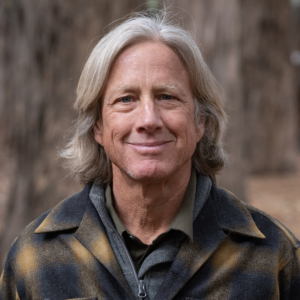
Dacher Keltner is a professor of psychology at the University of California, Berkeley, and founding director of the Greater Good Science Center. He hosts the podcast The Science of Happiness. His latest book is Awe: The New Science of Everyday Wonder and How It Can Transform Your Life.
Transcript
Transcription by Alletta Cooper
Krista Tippett, host:To me, one of the most fascinating developments of our time is that human qualities we have understood in terms of virtue — experiences we’ve called spiritual — are now being taken seriously by science as intelligence — as elements of human wholeness. And Dacher Keltner and his Greater Good Science Center at Berkeley have been pivotal in this emergence.
From the earliest years of his career Dacher investigated how emotions are coded in the muscles of our faces, and how they serve as “moral sensory systems” — the way a feeling, like sadness or fear or a sense of injustice, goes on to infuse how we see everything that’s happening.
[music: “Seven League Boots” by Zoë Keating]
He was called on as Emojis evolved; he consulted on Pete Docter’s groundbreaking movie Inside Out. And all of this, as Dacher sees it now, led him deeper and deeper into investigating the primary experience of awe in human life — moments when we have a sense of wonder, an experience of mystery, that transcends our understanding. These, it turns out, are as common in human life globally as they are measurably health-giving and immunity-boosting. They bring us together with others, again and again. They bring our nervous system, and heartbeat, and breath into sync — and even into sync with other bodies around us. This science is a wildly accessible, minute-to-minute invitation to practice a common human experience that is literally life-giving, and nourishing, and actively good for this world of pain and promise that we inhabit.
I’m Krista Tippett, and this is On Being.
I’ve been in a conversation of friendship and shared curiosity with Dacher Keltner for years, and I’m so happy to bring this conversation to you as he has now translated his studies into a book: Awe: The New Science of Everyday Wonder and How It Can Transform Your Life.
Tippett:So, I want to start at the beginning, which is where I like to start.
Dacher Keltner:OK.
Tippett:And it seems to me that so much — I mean, at the beginning of you, right? [laughs]
Keltner:[laughs]
Tippett:It seems to me that so much of your science — one way to talk about it, there are many ways to talk about it, but one way to talk about it is you are taking the stuff of what has always been moral virtue, and you’re taking it into the laboratory. So I start to wonder, just knowing a little bit about you. Where — if you would trace, I know that you had a rather kind of experimental, unorthodox, spiritual upbringing. [laughs]
Keltner:[laughs] Oh, no. Yeah.
Tippett: So I wonder if you look back at that, and if you trace the roots of this inquiry in you, this curiosity, and the way you’ve come at it.
Keltner:Oh yeah. You know, there are times in a scientific career where we believe we’re doing work that has some degree of objectivity, where you realize it’s all subjective and personal. You know, I was raised by a literature professor who loves romanticism and Virginia Woolf and quoted William Blake and others in the household. And then a visual artist, my dad, who loves Goya and Francis Bacon and all the horrors of their art, and the awe-inspiring horrors. And I grew up in a really, kind of a radical time of the late ’60s and Laurel Canyon. And so awe was all around me. And I think that being raised by people in the humanities and being a little contrarian, I guess, like kids often are, I always wanted proof [laughs].
Tippett:Right.
Keltner:And I wanted to measure things and I wanted to test things. And so it’s very fitting that, at this stage in my life, I would turn to science to figure out awe. And so yeah, it — and to find in that science and the limits of the science, sort of the what lies beyond it, which is the metaphysical or the spiritual. And so studying awe really brought me into contact with spirituality, too.
Tippett:And then, it’s so interesting to me that you really wandered into a new science as it was emerging, right?
Keltner:Yeah.
Tippett:I mean, I’ve had this conversation with other neuroscientists as well. And it’s really easy, I think, for people now to forget that this particular form of science has just been around for a few decades.
Keltner:Yeah.
Tippett:And you were right there at the beginning. It feels like you walked into this new science of emotions, which science had very, very strictly avoided. And it was really new for you to be taking things like laughter and gratitude and love and desire and compassion into study.
Keltner:You know, it was astonishing to me. I was in graduate school in the mid to late ’80s at Stanford. And it was the heyday of what’s called the “cognitive revolution.” And the metaphor was that the human mind was like a computer with software and hardware, and cranking out these algorithms and computations, and that’s consciousness. Right?
And some of the most famous people in the field just felt like emotions couldn’t be studied, it was inappropriate to study them. They were intractable in terms of measurement and conceptualization, or how we would even measure them. And I just felt my past at that time of being raised by these wonderfully emotional parents, who are like — but what about poetry and what about paintings and what about the feelings you have? And what would human life be like without crying and laughter? So it was astonishing to just hear the brightest minds say: there’s no place for human emotion in prejudice, in racism, in morality — literally. Carrying on Western European traditions, in many ways. But what a great opportunity to fall into as a young scholar.
Tippett:So now you have written this wonderful book, the first lines, “I have taught happiness to hundreds of thousands of people around the world. It is not obvious why I ended up doing this work: I have been a pretty wound-up, anxious person for significant chunks of my life and was thrown out of my first meditation class.”
Keltner: [laughs] Which is true.
Tippett:So thank you for that full disclosure. [laughs]
Keltner:Yeah. I have to say, my friend and I in college went to this meditation class, and they had us chanting, “I am a being of purple fire.”
Tippett:Yeah, which is a reason to laugh. I give you that.
Keltner:Yeah. And I’m like, “I’m not a being a purple fire. I’m an adolescent who wants to meet interesting people.” And so yep. We got tossed out of that class. So — [laughs]
Tippett:But I mean, yeah. And you — I’ve been following your work, off and on for many years, and this really has deepened and deepened and deepened into this, this study of awe. And you say now after 20 years, you have the answer to the perennial question: how to live a good life? And the answer is: to “find awe.” And so tell me if, is this right? You’ve done these massive studies, right? I don’t know, somewhere I’ve got 2,600 narratives, 20 languages.
Keltner:Yeah.
Tippett:And were you surprised? I kind of was — to read that what most commonly led people around the world to feel awe was an experience of other people’s “courage, kindness, strength, or overcoming.”
Keltner:Yeah. You know, the first surprise was: it’s other people around us — everyday people — who bring us awe, and what we called moral beauty.
Tippett:And I love that language, “moral beauty.”
Keltner:Yeah, kindness, courage, overcoming obstacles. You know, saving people’s lives. Just time and time again the most common source of awe is other people. And you wouldn’t think that given what we look at on Twitter and Instagram, but it’s a deep, a deep tendency to choke up and get tears thinking about what people can do.
Tippett:And so you kind of named — and this is how the book is structured, around “Eight Wonders of Life.” And I mean, I’m assuming I hear that as in interior analogs to what we call Wonders of the World. Is that right?
Keltner:I think we need new Wonders of the World.
Tippett:Right!
Keltner:You know, you look at those, and those are all power based.
Tippett:Those are monuments, right?
Keltner:What nonsense, you know?
Tippett:Yeah. Go on. Go on.
Keltner:Well this is saying, that’s like a hierarchical conceptualization of wonder, like what did the guy in charge in the Egyptian period do?
Tippett:That’s right. Make thousands of people do —
Keltner:Yeah. Or Trump Tower or whatever. But, you know. But yeah, and that was this big surprise in this research, is how ordinary awe can be. It’s everywhere, right? So it’s the flowers blooming and the moral beauty of people, and some pattern of light on the sidewalk. So yeah, we called them “Eight Wonders of Everyday Life.”
Tippett:Yeah. So what I would like to do is — obviously we can’t walk through it all, but I just kind of went through myself and pulled out some threads…
Keltner:That’s good.
Tippett:… that intrigue and illuminate and turns a phrase that for me, put something into a new light. So I just like to walk through it that way. And yeah, first of all, there is this, what you call the first wonder of life, “moral beauty.”
Keltner:Yeah.
Tippet:And there’s also, there’s this — in terms of this moral beauty of awe at the kindness and strength and courage and overcoming of others, you use this phrase: “allowing goodness its own speech.” So what is that? What does that mean to you? Or how did that come out of the research?
Keltner:Well it comes — “allowing goodness its own speech,” comes out of a graduation speech by Toni Morrison, the great writer, who said this is what she sees to be the purpose of her creative life and literature and the like. And Krista, I mean obviously we live in these times where you arrive at a really cynical view of human beings. And that cynical view, I might add, has prevailed in a lot of the social sciences, and it’s been refuted — that people actually share instinctively, we cooperate, we have neurophysiological systems that help us care for a lot of people. It’s, as Darwin said, sympathy is our strongest instinct.
Tippet:Yeah.
Keltner:And what struck me about the ease with which people around the world would, like, “Hey, what’s awe inspiring?” They didn’t mention a God or the Grand Canyon. They mention ordinary people doing amazing things. And so I felt like that scientific act was “allowing goodness its own speech.” Like, man, this just surfaces in how people think about the transcendent.
And I hope — you know I just, I think we need more of that. We need more stories around goodness and this human capacity. So for me, like I said, I can get really tense and anxious. I can be a little misanthropic. I hate to say it. [laughs]
Tippet:[laughs] Yeah.
Keltner:You know, I wasn’t the kindest little kid. And this science was like: wow, there is a lot of goodness out there that we need to allow its articulation.
Tippett:So the second one is “Collective Effervescence.” And what wonderful language for what you’re describing is, again, so ordinary and built into all kind of life.
Keltner:Oh my god. Yeah. “Collective Effervescence.” Émile Durkheim, the great French sociologist: just moving together, feeling exalted, bubbling, being ecstatic, is just this deep tendency. Young people feel it all the time. You know, they dance, and they go to political rallies and sporting events and world —
Tippett:Right.
Keltner:But it’s everywhere. You know, once I started to think about this — I love walking in Berkeley, and Berkeley’s this buzzing, high-energy place. And you would see these patterns of collective effervescence that the science is starting to capture, you know. People walking to work, little kids going to a dance class, people at a picnic, people lining up to get onto a bus. We just have this tendency to start to move together.
Tippett:Right.
Keltner:And it brings us a lot of sense of unity and a sense of awe. And if you really push it in the right context, bliss. [laughs] And a sense of like, “Wow, look at what I’m part of. You know, I’m part of this human — this collective.” What a striking tendency we have.
And I, as I started to dig into this concept, I love Søren Kierkegaard’s quote. You know, this grouchy philosopher writing about dread. He’d go out and walk, and he would say: it puts me into contact with the significance of insignificant things. You know? And that’s how I felt, like man, watching kids line up to go play is awesome. Or marching to their preschool in their incredible ways.
Tippett:Well, yeah. And you have this phrase also — that somehow what becomes collective effervescence has to do with moving the way our bodies “were meant to move.”
Keltner:Yeah.
Tippett:Which is so interesting to think about. But everything you’re talking about though, we do so unconscious of the fact that this is primal and life-giving. Right? Which is what you’re saying, what the science is saying.
Keltner:Yeah. You know, I mean, almost all cultures have deep histories and traditions of dance. I was just in the Himalayas, in Bhutan for this project, and the Layap people dance all the time. You know, they have a government ceremony and then they dance. And that is very human to move in unison like that. And it’s, as you said, Krista, it’s life-giving. And I hate juxtaposing with our screen-based, chair-based life, but we’ve lost that. And, but I see young people moving back to it of board games and dance clubs and, so I have hope we can return to it.
[music: “Blue Latex” by Blue Dot Sessions]
Tippett:I mean, you also use this, you say “awe is an emotion of the superorganism.”
Keltner:[laughs]
Tippett:And I’ve heard you talk about this in a few contexts, and I want you to talk about the superorganism because I guess — is collective effervescence also an expression of this when this happens? When we’re together in these gatherings having these experiences?
Keltner:Yeah, and this is where the science is really cool, which is that, you know, you can get people and they start moving in unison. Like in experiments you have them walk in unison or move their — do some gestures in unison. And they’re like, okay, this is kind of artificial, or it doesn’t have the power of dance or a political rally. But then their brains start showing similar patterns of activation throughout the 80 billion neurons that are their brains. And their physiologies, their cortisol, and their hormones start linking up. And the next thing you know, it’s like, well, we’re kind of this a shared mental state. And—
Tippett:And you can measure that, right, with your science now?
Keltner:Yeah, definitely. You know —
Tippett:You can measure that we literally physiologically sync up in all kinds of minute ways.
Keltner:Yeah. I mean, one study had people listen to music together, and their brains started to synchronize — people in the music venue — in a similar pattern of activation. So they’re literally, their neurophysiological mental state is similar.
We did a study of really poor kids and veterans rafting, and we measured the hormone cortisol, which is a stress hormone. At the start of the day, their hormone levels were all different. They’re separate individuals. By the end of the day, after having rafted with a little collection of people, their hormone levels are the same. Lots of data on that. And, and that’s striking that these processes of collective effervescence — you’re doing rituals in a church, right? You’re chanting at a game. You are greeting people in a ceremony. They sync us up physiologically, which enables lots of good things.
Tippett:Yeah. Oh gosh, it’s so fascinating.
Keltner:Yeah.
Tippett:And then of course nature, which is maybe what I would’ve expected to be the first, from 2,600 narratives. I might have thought that the most stories would be about awe of the natural world. And of course, it’s in here, and it’s important. And some of the things you’re describing happen outside. But I want to hear more about the neurophysiology, what you call “the neurophysiology of wild awe.”
Keltner:Yeah.
Tippett:Which I guess is that awe that happens outdoors, in the wild.
Keltner:Yeah. It is a universal. It might be mushrooms in Russia, or the desert landscape in part of the Middle East, or the ocean for surfers — but nature is directly evocative of awe, but not as much as other people, which surprised us.
And the neurophysiology is amazing. It is truly amazing. And it gets back to this old indigenous idea of — we are part of an ecosystem, our bodies are part of them. So there’s a review of how nature benefits us, and there are 21 pathways by which that’s true, including awe. But what really struck me is the neurophysiology, which is, you know — sound waves coming off of streams, and moving bodies of water, activate the vagus nerve. They calm us down. There are chemical compounds in nature. You might smell a flower or tree bark, or the resin on a tree, that activate parts of the brain and the immune system, right? So our bodies are wired to respond in an open, empowering, strengthening way to nature. That work is largely done in Japan and South Korea.
Tippett:Interesting.
Keltner:And I think one of the broader lessons that awe provides for us is, you know, these ideas of separate self. Like, “oh, I’m different from other people.” Which is true, but we’re also synced up with other people. “I’m different from nature.” That’s true. But we’re also part of an ecosystem.
And I’m always persuaded by certain kinds of physiological data, which say like, man, you’ve got cells in your skin that are tracking chemicals in nature that benefit you. So it’s striking to me, the uses and meaning of that science.
Tippett:And, and you mentioned the vagus nerve, which is our favorite nerve here at On Being. [laughs]
Keltner:That makes me tear up, I have to say. [laughs]
Tippett:[laughs] Yeah, I think it’s one of maybe your favorite nerves too.
Keltner:Oh my God.
Tippett:So I have a question for you.
Keltner:Yeah.
Tippett:So you call it, interestingly, the “caretaking nerve.” Obviously, I think it translates to the “wandering nerve.” I don’t know if you know Resmaa Menakem, who’s worked with racialized trauma in the body. He calls it the “soul nerve.” And is this also— so I feel like the vagus nerve is this great frontier that’s helping explain a lot. And yet, is this also new science? I feel like it’s everywhere now. But was the vagus nerve not seen before? Or was it just not taken seriously?
Keltner:What a terrific question, Krista. And I love the phrase “soul nerve.” I’ll use that going forward.
Tippett:Okay.
Keltner:I think we should use the word “soul” more often. I know you do, but we narrow-minded scientists should too. You know? Yeah, it’s so striking to reflect on how cultural biases shape science, and then our claims about human nature. You know, for 60, 70 years we’ve been studying fight-or-flight physiology. “Oh, we’re wired to fight or flee in life.” You know? And that was a sense of what physiology was — it’s really about self-preservation. And we made progress in understanding cortisol and the amygdala, the threat-related region of the brain, and blood pressure.
Tippett:It was this view of human nature that really penetrated the Western society, right?
Keltner:Totally.
Tippett:So, yeah. So you’re saying, so we applied that lens to our bodies.
Keltner:We did. And, with profound myopias. And one of them being, well, your body has the vagus nerve. And we call it the autonomic nervous system. There are all these bundles of nerves coming out of your spinal cord that affect blood flow and digestion and muscle contractions and glucose and so forth. And the vagus nerve is part of that system. It’s a mammalian bundle of nerves. It stretches from the top of your spinal cord. It wanders through your heart and lungs and digestive organs. And remarkably, Krista, gets into your gut.
Tippett:Yeah.
Keltner:And receives all this information from the microbiome. It is the mind-body nexus. And we just hadn’t studied it. And it was really Steve Porges, who is this scholar in the ’80s, who was saying — hey, we’ve got this love organ in the body. And people are like, “oh, I know what that is.”
Tippett:[laughs] Love organ. Whoa.
Continue reading The Thrilling New Science of Awe