
| June 16, 2024 (LitHub.com) |
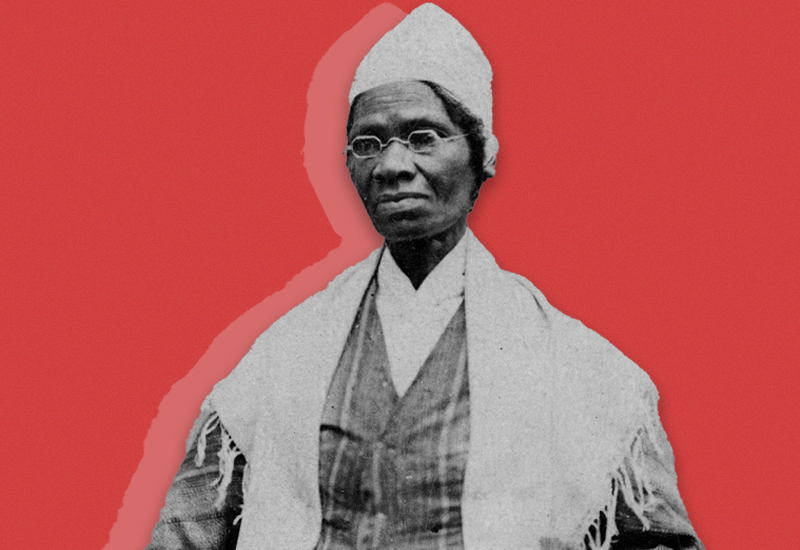
| The abolitionist, activist, and preacher Sojourner Truth, née Isabella Baumfree, delivered her now-famous “Ain’t I a Woman” speech on May 29, 1851, at the 1851 Women’s Rights Convention in Akron, Ohio. (You’ve probably heard of it.) It was transcribed by journalist Marius Robinson, a friend of Truth’s who was in the audience that day, and published in the Anti-Slavery Bugle on June 21 of that year. “One of the most unique and interesting speeches of the Convention was made by Sojourner Truth, an emancipated slave,” Robinson wrote. “It is impossible to transfer it to paper, or convey any adequate idea of the effect it produced upon the audience. Those only can appreciate it who saw her powerful form, her whole-souled, earnest gesture, and listened to her strong and truthful tones.” Interestingly, Robinson’s account of the speech does not include the phrase “ain’t I a woman,” the title by which Truth’s address is now most widely known. That phrase comes from a version of the speech constructed by Frances Dana Gage, twelve years later, and published in the New York Independent on April 23, 1863. (Even in this speech, now considered to be inaccurate in both content and its attempt to approximate a Southern dialect—for one thing, Truth lived in the North—it’s actually “ar’n’t I a woman.”) However, as librarian Arlene Balkansky points out, for Gage in 1863, who had been the president of the Convention, and was herself an abolitionist and advocate for women’s rights, rhetorically connecting Truth to Southern slavery was “a more useful tool” than “recalling already abolished slavery in a Northern state loyal to the Union.” Robinson’s version might be more accurate, but Gage’s may have been the reason for her lasting fame. Truth, who could not read or write, never contested either of them. “We cannot know exactly what Truth said at Akron in 1851,” wrote Nell Irvin Painter in her biography of Truth. “She put her soul and genius into extemporaneous speech, not dictation, and lacking sound recordings or reliable transcripts, seekers after Truth are now at the mercy of what other people said that she said.” |