
J Pee • Aug 26, 2017 The official channel RE-RELEASE of J Pee’s first music video, I’M NOT GAY. A HUGE thank you to the video’s original producers, Branden Blinn and TBBMG, for allowing me to re-release this on my own channel. Check out more of their content at: / brandenblinn www.thebrandenblinnmediagroup.com www.brandenblinn.com Purchase audio on iTunes at https://itunes.apple.com/us/artist/j…. Also don’t forget to follow on Spotify J Pee created by Jesse Pepe I’M NOT GAY Written and Performed by: Jesse Pepe Directed by: Ryan Turner Song Engineering/Mastering: Jeeve Ducornet Produced by: The Branden Blinn Media Group and Lucid Media Distribution: The Branden Blinn Media Group, LLC, TBBMG ON Demand with Gregory Shelby, Matheiu Forget, Nicholas Rush Butler and Devin Wiggins (as the WEHO dude)
NEVER SHALL I FORGET – BY ELIE WIESEL
Never shall I forget that night, the first night in camp, that turned my life into one long night seven times sealed.
Never shall I forget that smoke.
Never shall I forget the small faces of the children whose bodies I saw transformed into smoke under a silent sky.
Never shall I forget those flames that consumed my faith for ever.
Never shall I forget the nocturnal silence that deprived me for all eternity of the desire to live.
Never shall I forget those moments that murdered my God and my soul and turned my dreams to ashes.
Never shall I forget those things, even were I condemned to live
as long as God Himself.
Never.
Never Shall I Forget from Night by Elie Wiesel.
Copyright © 1958 by Les Editions de Minuit.
Translation copyright © 2006 by Marion Wiesel.
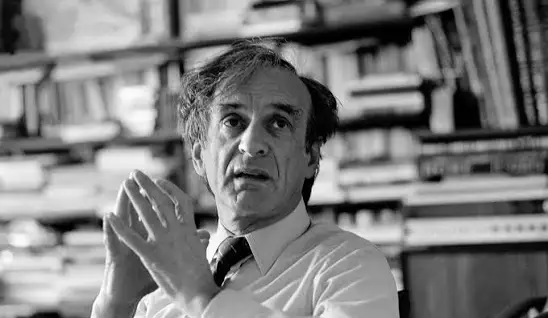
Elie Wiesel, the Holocaust survivor, author and Nobel Peace Prize laureate, at home in New York, March 7, 1985. Wiesel, whose writings including “Night” did as much as anyone to sear the memory of the Holocaust on the world’s conscience, died at home in Manhattan on July 2, 2016. He was 87. (Neal Boenzi/The New York Times)
Eliezer “Elie” Wiesel (September 30, 1928 – July 2, 2016) was a Romanian-born American writer, professor, political activist, Nobel laureate, and Holocaust survivor. He authored 57 books, written mostly in French and English, including Night, a work based on his experiences as a Jewish prisoner in the Auschwitz and Buchenwald concentration camps. Wikipedia
Can Russia disconnect from the World Wide Web? • FRANCE 24 English
Video by:Julia SiegerFollow
In the wake of Russia’s presidential election, we take a look at Moscow’s efforts to disconnect from the global internet. The Kremlin regularly expresses concerns about its dependence on the World Wide Web. In the past few years, Moscow has undertaken initiatives aimed at creating its own independent internet infrastructures. The goal is to increase government control over the flow of information accessible to Russians and strengthen digital sovereignty. FRANCE 24’s Julia Sieger tells us more.
Mysteriousness and reasonableness

Can Unions Rebuild Our Democracy?
Alex Han/In These Times
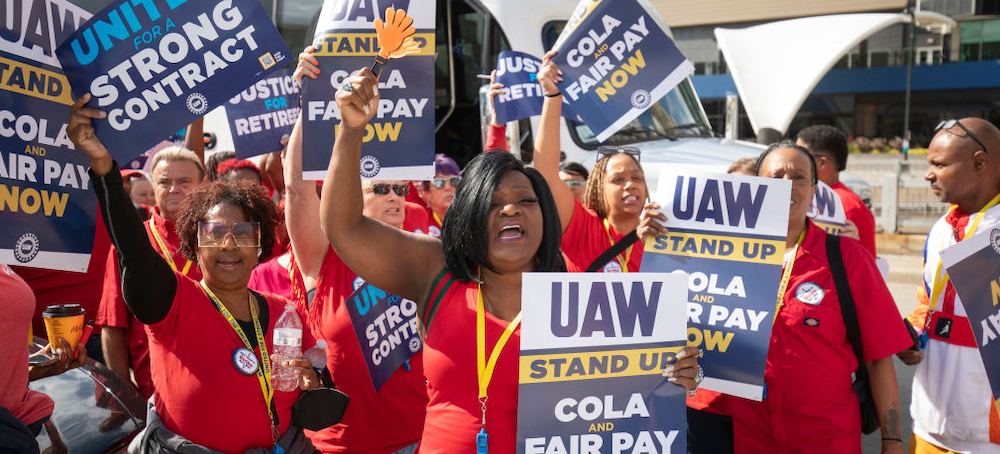 United Auto Workers members attend a solidarity rally as the UAW strikes the Big Three automakers on September 15, 2023, in Detroit, Michigan. (photo: Bill Pugliano/Getty Images)
19 march 24 (RSN.org)
Our institutions have failed to protect democracy. Can unions take up the fight?
For so many of us, these are mostly dark times interrupted by brief windows of hope — and the road ahead is daunting. No matter how this year’s presidential election plays out, the contest’s ultimate winner will surely be pessimism, one of the few things Americans across the political spectrum seem to be in alignment on: pessimism for the future, pessimism for possibilities of transformation, pessimism for the idea that justice will win the day.
We exist in a political system built on institutions seemingly unable to fulfill even the basic function of producing policies that huge majorities of Americans support, like lower prescription drug prices, less debt, increasing the minimum wage, a cease-fire in Gaza. It’s no wonder that public polling shows, according to the Pew Research Center, that “Americans’ views of politics and elected officials are unrelentingly negative, with little hope of improvement on the horizon.”
There’s little evidence that our political system is anything but broken, and confidence in these failing institutions — from Congress to the news media to organized religion to the Supreme Court to the White House — continues to decline.
The necessary conversations in our movement spaces are mostly quite simple: What’s left? What’s worth salvaging? What can we carry with us? For those of us who see the power and potential of organized workers, the questions are sharper: What has our crumbling democracy meant for working people? Where are the centers of power within our labor movements? And, most importantly, can unions and workers ultimately change the horizons we’re walking toward?
(It is important to note that — from Starbucks Workers United to the United Auto Workers—we’ve seen some hopeful examples recently of unions setting such new horizons.)
One of our biggest challenges in answering these questions is that our politics — within labor, within our social movements — don’t seem to evolve; they only stumble from crisis to crisis. We exist in an interconnected landscape that previous generations could never have imagined, but the algorithmically fueled engines of online interaction seem to divide and distract as much as they connect. The panopticon of social media has actually served to atomize us, endangering the very idea of collective experience and action.
It would be a mistake to simply blame our pitfalls on technology. For all our talk of solidarity, we have to be honest with ourselves that our movements so rarely live up to anything that truly resembles and honors it. Part of this conundrum is a familiar dynamic — for many of us on the “practical Left,” our view of the world has been defined by what we are not and the forces we are arrayed against. But the answers aren’t as simple as saying “what we are for” and “what we are against,” which can force us into cycles of reaction.
Our response must be a refusal to allow our imaginations to be limited by our immediate needs — and recognize instead that the steps toward building a better world require setting our sights and horizons higher than mere survival.
We desperately need these new horizons, and we need to raise them beyond the contours of our practicality.
Demonizing enemies is an adequate organizing strategy for the nihilist Right, which aims to hold onto power for the good of a handful of elites. If our project is not just defending democracy — but demanding and creating it — then we require a different approach.
We should open ourselves to seeing the signs of a bigger horizon wherever we can find them. Is the demand for a shorter workweek one that can help us lift our eyes? Can we imagine reconstructing our unions and organizations into ones that can respond to our real needs and hopes?
Labor is, indeed, the source of all wealth. The collective actions of those who provide that labor are the building blocks of democracy — and the way to construct new horizons.
Tarot Card for March 20: The Knight of Wands
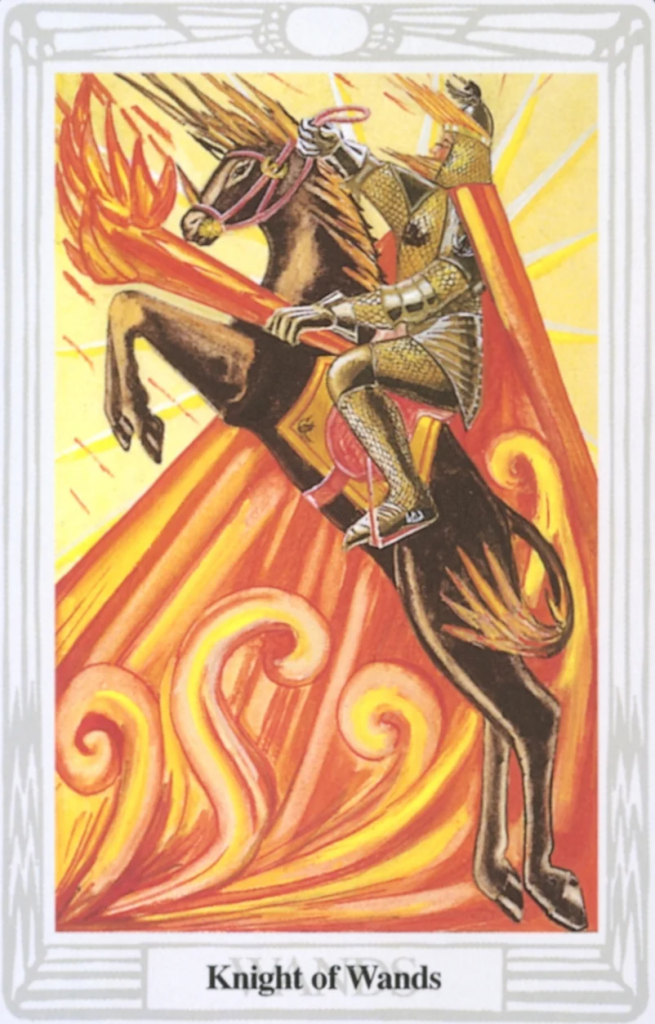
| The Knight of Wands The man represented by the Knight of Wands will be a loving and open-hearted person, with a strong sense of morality and a great sense of humour. He will be active, energetic and willing to help. You often find these types of men in the healing professions, or in other areas where they are required to assist, guide and support others.He’s a man with a deep respect for life and all living things, attuned to Nature and to the creatures of the earth. He has a deep well of compassion which spills over readily to anyone who needs his help, but he also has the restraint to know when too much assistance is a bad thing. Then he will act to enable and empower, rather than to assisting.He’s a faithful, and dedicated family man, being fully engaged in the domestic situation. His life reflects his high ethical standards, though he is not given to sermonising, nor standing in judgement on others. He could be defined as an idealistic realist – accepting the frailties of the race, whilst doing his best to strengthen it.His faults spring from his good points – for instance, he dislikes causing pain, and will therefore delay when he needs to act if he thinks it will hurt other people. He will sometimes remain in limiting or painful circumstances because of this. His sense of rightness and duty is intense, and sometimes drives him to make foolish choices and decisions. He will shy away from conflict and unpleasant situations, especially when these arise as a result of his own needs, though he will never walk away from a struggle on behalf of somebody else.If you are regarding this card as a spiritual change, then see it as an indication that the warrior of right and light is required – you’ll need to stand up for something that matters, and which is unable to defend itself. |
In the Waiting Room
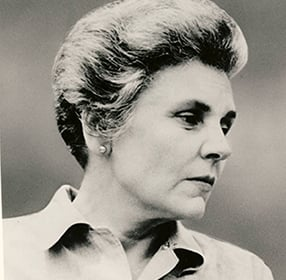
Elizabeth Bishop 1911 – 1979 The technical brilliance and formal variety of Elizabeth Bishop’s work—rife with precise and true-to-life images—helped establish her as a major force in contemporary literature. (Poets.org)
In Worcester, Massachusetts,
I went with Aunt Consuelo
to keep her dentist’s appointment
and sat and waited for her
in the dentist’s waiting room.
It was winter. It got dark
early. The waiting room
was full of grown-up people,
arctics and overcoats,
lamps and magazines.
My aunt was inside
what seemed like a long time
and while I waited I read
the National Geographic
(I could read) and carefully
studied the photographs:
the inside of a volcano,
black, and full of ashes;
then it was spilling over
in rivulets of fire.
Osa and Martin Johnson
dressed in riding breeches,
laced boots, and pith helmets.
A dead man slung on a pole
–“Long Pig,” the caption said.
Babies with pointed heads
wound round and round with string;
black, naked women with necks
wound round and round with wire
like the necks of light bulbs.
Their breasts were horrifying.
I read it right straight through.
I was too shy to stop.
And then I looked at the cover:
the yellow margins, the date.
Suddenly, from inside,
came an oh! of pain
–Aunt Consuelo’s voice–
not very loud or long.
I wasn’t at all surprised;
even then I knew she was
a foolish, timid woman.
I might have been embarrassed,
but wasn’t. What took me
completely by surprise
was that it was me:
my voice, in my mouth.
Without thinking at all
I was my foolish aunt,
I–we–were falling, falling,
our eyes glued to the cover
of the National Geographic,
February, 1918.
I said to myself: three days
and you’ll be seven years old.
I was saying it to stop
the sensation of falling off
the round, turning world.
into cold, blue-black space.
But I felt: you are an I,
you are an Elizabeth,
you are one of them.
Why should you be one, too?
I scarcely dared to look
to see what it was I was.
I gave a sidelong glance
–I couldn’t look any higher–
at shadowy gray knees,
trousers and skirts and boots
and different pairs of hands
lying under the lamps.
I knew that nothing stranger
had ever happened, that nothing
stranger could ever happen.
Why should I be my aunt,
or me, or anyone?
What similarities–
boots, hands, the family voice
I felt in my throat, or even
the National Geographic
and those awful hanging breasts–
held us all together
or made us all just one?
How–I didn’t know any
word for it–how “unlikely”. . .
How had I come to be here,
like them, and overhear
a cry of pain that could have
got loud and worse but hadn’t?
The waiting room was bright
and too hot. It was sliding
beneath a big black wave,
another, and another.
Then I was back in it.
The War was on. Outside,
in Worcester, Massachusetts,
were night and slush and cold,
and it was still the fifth
of February, 1918.
From The Complete Poems 1927-1979 by Elizabeth Bishop, published by Farrar, Straus & Giroux, Inc. Copyright © 1979, 1983 by Alice Helen Methfessel. Used with permission.
Marcus Aurelius: How I Escaped (Or No, Discarded) Anxiety
“We are in the habit of exaggerating, or imagining, or anticipating, sorrow.” But you can change the narrative

Published in Personal Growth
Feb 15, 2024 (Medium.com)

Marcus Aurelius, the Roman emperor and Stoic philosopher, wrote a powerful statement in his book “Meditations.” He said, “Today I escaped anxiety. Or no, I discarded it, because it was within me, in my own perceptions — not outside.” For anyone battling anxiety, it doesn’t sound like the life-changing habit you need to escape anxiety, right? Well, let’s unpack it because the psychology behind it is too strong to ignore.
Anxiety is a human experience. It’s not the same for everyone, though. I get anxious before a big presentation. But it passes. I feel completely different when it’s over. It’s nothing compared to those who battle anxiety daily. Some people feel tightness in their chests during a heated argument. Others get churning thoughts that keep them awake at night.
For many people, the consistent whisper of doubts and the amplifying fear drown out reason. It’s horrible. But Aurelius wants us to change the stories we tell ourselves to overcome anxiety.
He observed anxiety is not an external force. It’s something we create and nurture within. Because of what we’ve been through or an environment that made it difficult to interpret and react to experiences differently. Most people think they have no control over anxiety. They feel helpless. According to Aurelius, if it’s internal (of thoughts and emotions), we can untangle it. If our interpretations and fears fuel it, we can tame it.
I like what the Stoic philosopher of Ancient Rome, Seneca, once said, “It is likely that some troubles will befall us, but it is not a present fact. How often has the unexpected happened! How often has the expected never come to pass! And even though it is ordained to be, what does it avail to run out to meet your suffering?…Perhaps it will come, perhaps not; in the meantime it is not. So look forward to better things.”
For example, what comes to mind when you think about an upcoming presentation? Your mind might conjure images of judgmental eyes, critical observers, and potential failure. These imagined “what-ifs”, not the actual event itself, trigger the anxiety that cripples us. “What upsets people is not things themselves, but their judgements about these things,” says Stoic philosopher Epictetus. “Man is not worried by real problems so much as by his imagined anxieties about real problems,” he observed. So, how do we discard anxiety, as Aurelius proposes?
First of all, you can’t push anxiety away. You can’t pretend it doesn’t exist. But you can start to change the narrative.
Start with the source. When anxiety strikes, pause and identify its root. What situations or thoughts typically trigger your anxiety? Is it public speaking, a looming deadline, social interactions, small talk, a difficult conversation, an uncertain future or something else? Pinpoint the source to know how to reinterpret the narratives in your head. Or gain a sense of control.
For example, you might realise that your social anxiety flares up in large groups but feels manageable in smaller settings. That awareness allows you to choose more comfortable situations and gradually expand your comfort zone. That simple awareness empowers you to address the fear, not be consumed by it. “We are more often frightened than hurt; and we suffer more from imagination than from reality,” says Seneca.
Once you know the source, challenge the anxious thoughts. Are they based on reality or fuelled by worst-case scenarios? Your mind is a master storyteller, but not always a reliable one.
For example, instead of believing “I’ll mess up the presentation,” reframe it as “I’m prepared and will do my best.” Reframe the worst-case-scenario thoughts to calm the internal storm. Or instead of “I’m going to fail this presentation,” tell yourself, “I’m nervous, but I’ve prepared, I’ve practised, and I’m about to do my very best.” Changing the stories in your head reduces the emotional charge of your anxiety.
Now, ground yourself in the present. Anxiety thrives on dwelling on the past or worrying about the future. Bring your thoughts to your present experience. What is happening right now? What can you control? Focus on your breath, your senses, and the present task. Stoics observed the only true power we have is the present. When your mind wanders, gently guide it to what you are doing now. It will help you detach from anxious thoughts or break free from the anxiety-inducing stories playing in your head.
For example, if you’re feeling anxious about a deadline. Instead of obsessing about meeting it perfectly, focus on the task. What is the next step you can take right now? Take a deep breath, put your phone away, and start working. Each proactive action brings you closer to completion and reduces anxiety. Sometimes, the best way to battle anxiety is to take action. If you’re worried about a presentation, start practising. If you’re anxious about a conversation, initiate it. Taking action, even small steps, can empower you and chip away at the anxieties holding you back.
You can overcome anxiety by using daily practices, tools and habits to manage your internal war. Awareness, reframing, and mindfulness can help you take control. Use them to disarm the anxious self within. Listen to Seneca, “What I advise you to do is, not to be unhappy before the crisis comes…some things torment us more than they ought; some torment us before they ought; and some torment us when they ought not to torment us at all. We are in the habit of exaggerating, or imagining, or anticipating, sorrow.”
The key is to do more of what helps you quiet the inner critic, reframe your stories, and connect with the present task.
As you do, you’ll notice that anxiety may still circle, but it no longer holds power over you. “The next time you run into an obstacle and feel resistance, don’t look at what’s around you. Instead, look within. It is not outside forces that make us feel something, it is what we tell ourselves that create our feelings,” writes creative director, writer, and strategist Paul Jun. You have the strength to discard it, one day at a time. It’s easier said than done, though. But you’ve got to start somewhere, right? You have nothing to lose. But more to gain. One step at a time. Get help if anxiety gets overwhelming.
Let’s stay connected. Join over 70K curious subscribers who receive my best essays and free curated tools for smarter living. Join us and get a free ebook (A collection of essays on life, productivity, and happiness).

Written by Thomas Oppong
·Writer for Personal Growth
Making the wisdom of great thinkers instantly accessible. As seen on Forbes, Inc. and Business Insider. For my popular essays, go here: https://thomasoppong.com
Western leaders denounce Putin’s ‘illegal’ election win as allies send congratulations
President Vladimir Putin won a fifth term in the Kremlin with 87.28 percent of the vote, Russia’s electoral commission said Monday, after a three-day ballot in which he ran against no real challengers. While Putin’s friends and allies were quick to congratulate him, Western leaders denounced what they called an illegal election.
Issued on: 18/03/2024 – (France24.com)

While the results of the 2024 presidential election was never in doubt, many Russians attempted to defy the inevitable outcome, heeding a call to protest Putin’s repression at home and his war in Ukraine by showing up at polling stations at noon on the last voting day of a three-day election.
But from the earliest returns, it was clear Putin would extend his nearly quarter-century rule with a fifth term.
The final results announced Monday, which did not include votes from abroad, showed Putin winning 87.28 percent of votes. The three other candidates who ran – but did not openly challenged Putin – won 4.31, 3.85 and 3.20 percent of the vote.
Read moreRussia’s presidential election: Three Putin challengers but little suspense
Here is a round-up of the main reactions so far:
Conditions for ‘free’ election not met, France says
– The EU’s foreign policy chief Josep Borrell said the election had not been free and fair and was based on repression and intimidation. Borrell added that the 27 EU nations would issue a joint statement on the election later on Monday.
– Ukraine‘s President Volodymyr Zelensky dismissed the result as illegitimate. “Everyone in the world understands that this person, like many others throughout history, has become sick with power and will stop at nothing to rule forever,” he said.
“There is no evil he would not do to maintain his personal power. And no one in the world would have been safeguarded from this.”
– France said the election took place amid “repression” and hailed the “many” Russians who demonstrated their opposition.
“The conditions for a free, pluralist and democratic election were not met,” the French foreign ministry said, adding the three-day vote took place amid “increasing repression of civil society and all forms of opposition to the regime”.
“France salutes the courage of the many Russian citizens who have peacefully demonstrated their opposition to this attack on their fundamental political rights,” it added.
Read moreRussian presidential election: The dashed hopes of Russian exiles in France
– Germany‘s Foreign Minister Annalena Baerbock dismissed Putin’s re-election as a vote “without choice” after all genuine opposition was crushed.
The election process shows “Putin’s heinous behaviour against his own people”, Baerbock said at a meeting in Brussels. “The election in Russia was an election without a choice.”
– Britain’s Foreign Minister David Cameron said the “illegal” elections featured “a lack of choice for voters and no independent OSCE monitoring”, adding: “This is not what free and fair elections look like.”
– Italian Foreign Minister Antonio Tajani said the “elections were neither free nor fair”.
“We are continuing to work for a just peace that will bring Russia to put an end to the war of aggression against Ukraine, in accordance with international law.”
– Czech Foreign Minister Jan Lipavsky called the election a “farce and parody”. He said: “This was the Russian presidential election that showed how this regime suppresses civil society, independent media, opposition.”
– Former oligarch and prominent Kremlin critic Mikhail Khodorkovsky called on Western governments not to recognise Putin’s election win, affirming that the opposition was united against the Russian ruler.
“It is now about… finally publicly recognising Putin as illegitimate,” said Khodorkovsky. “We have high expectations for Western society, who we ask to turn to their governments to ask them not to recognise Putin as legitimate,” he said
China, India, Turkey congratulate Putin
– Beijing congratulated Putin, saying that “China and Russia are each other’s largest neighbours and comprehensive strategic cooperative partners in the new era.”
Foreign ministry spokesman Lin Jian said President Xi Jinping and Putin “will continue to maintain close exchanges, lead the two countries to continue to uphold longstanding good-neighbourly friendship, deepen comprehensive strategic coordination”.
– Indian Prime Minister Narendra Modi said in a congratulatory message to Putin that he looked forward to boosting ties to develop their “special” relationship.
“Look forward to working together to further strengthen the time-tested Special and Privileged Strategic Partnership between India and Russia in the years to come,” Modi wrote on social media platform X. He also offered his “warm congratulations” to Putin.
– Turkey’s President Recep Tayyip Erdogan congratulated Putin and offered to mediate between Moscow and Ukraine.
In a phone call with Putin on Monday, Erdogan said Turkey was ready to play a facilitator role to return to the negotiating table with Ukraine,” the Turkish presidency said in a statement.
– North Korean leader Kim Jong Un in his congratulatory message said Russian voters had shown “unshakeable support” for Putin.
“Your reelection to the heavy responsibility of the head of state is the Russian people’s valuable estimate of the outstanding leadership and tenacious executive ability you displayed in state activities,” Kim said.
– Bosnian Serb leader Milorad Dodik said: “The Serb people welcomed with joy the victory of President Putin for they see in him a great statesman and a friend on whom we can always count and who will watch over our people.”
– Venezuelan President Nicolas Maduro said: “Our older brother has triumphed, which bodes well for the world.”
(FRANCE 24 with AFP , AP and Reuters)
The Unimaginable Suffering of Gaza’s Children
Catherine Russell/CNN
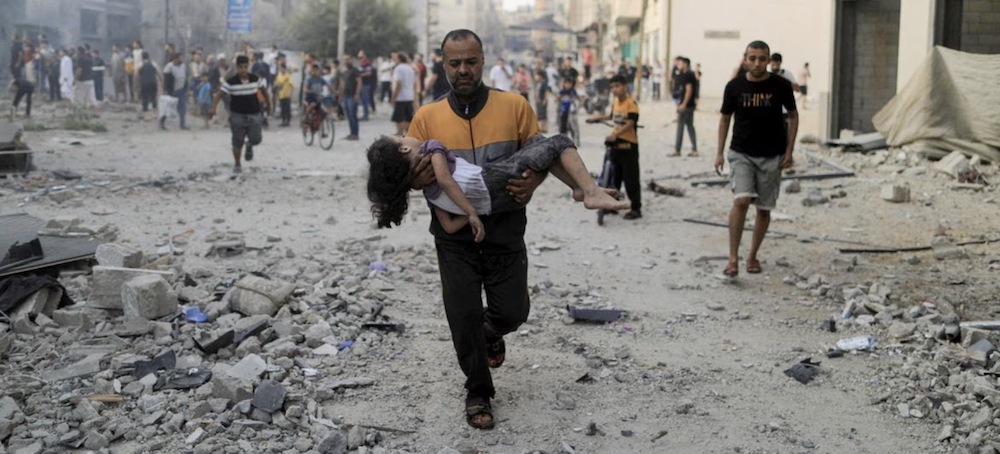 The aftermath of an Israeli airstrike in Gaza. (photo: Reuters)
18 march 24 (RSN.org)
The conflict in Gaza has now passed the 20-week mark. Since October, unrelenting war has squeezed people farther and farther south, pushing them to Rafah, the final stretch of Gazan territory before the Egyptian border.
In just the past six weeks, the population of Rafah has increased from less than 300,000 people to 1.4 million as desperate families, including many young children, seek refuge from horrific violence in other parts of the territory.
Gazans sheltering in Rafah now face the terrifying reality that large-scale military operations could be imminent in the very area where they have fled for refuge. They cannot be pushed farther, however, and there is no safe place to go in the north.
Occupying an area of just 25 square miles on the border with Egypt, Rafah now has twice the population density of New York City and more than four times that of Washington, DC. But unlike either of those American cities, people in Rafah are not living in high-rises or townhomes. They are sheltering together in crammed hospitals and schools. More than 610,000 children are trapped there, making up about half of the displaced population.
Gazans struggling to survive in Rafah are enduring unimaginable conditions, including prolonged exposure to cold and wet winter weather, sheltering side-by-side in the streets, under tents and tarpaulins — anywhere they can find space.
Now this small section of Gaza, which already has experienced an abundance of suffering, faces the prospect of additional hardship and heartache. In recent weeks, headlines have been filled with news of a possibly imminent offensive.
Given the sheer population density and lack of safe spaces in Rafah, any significant military escalation — especially the use of explosive weapons that can have indiscriminate consequences — would be catastrophic for the civilian population trapped there, including its most vulnerable inhabitants.
We have already seen this play out in other parts of Gaza, with children and women estimated to make up a shocking 70% of the more than 29,000 people reported to have been killed over the last four months.
A major attack on Rafah would add considerably to Gaza’s already grim toll of deaths and injuries. Thousands more would likely die in the violence or from the lack of essential services, and further disruption of humanitarian assistance to a civilian population that is extremely vulnerable. An attack would also accelerate the ongoing breakdown in law and order.
The staff of UNICEF on the ground has borne witness to some of the cruel horrors of this war. Parties to the conflict have blatantly committed grave violations against children – including killing, maiming, kidnappings, attacks on schools and hospitals and the denial of humanitarian access.
Injured children are reporting to the few remaining functional hospitals with severe burns, injuries that require amputation, open wounds and other serious traumas.
Rafah is home to some of Gaza’s last remaining hospitals, shelters, markets and water systems — all of which are essential for children’s health and well-being. Without these resources, the incidence of hunger and disease will increase dramatically, costing more children their lives.
Even now, we estimate that at least 90% of Gaza’s children under the age of five are affected by one or more infectious diseases, and that 70% have had diarrhea in the past two weeks — a 23-fold increase compared with the 2022 baseline.
There are reportedly plans to evacuate civilians in Rafah ahead of a major military offensive. But where can they go? Much of Gaza has been reduced to rubble. Civilians cannot be forcibly displaced farther south. And they cannot, as some have suggested, reasonably move to Al-Mawasi, a Palestinian town on the southern coast of Gaza, because it is just a narrow strip of beach that lacks basic infrastructure including sufficient toilets and running water needed to sustain the population.
Most of the children in Rafah have already been displaced multiple times by the fighting in Gaza, in direct contravention of international law. We know that as the war enters its 20th week many are injured, sick and malnourished and will struggle to find the wherewithal to move yet again. We estimate that at least 17,000 children in Gaza are now unaccompanied or have become separated from their families, a number that would surely increase in the event of further population displacement.
It is imperative to refrain from further military escalation in and around Rafah and to ensure that all hostages still inside Gaza are urgently and safely released. If the parties do not heed this call, they will be responsible for the deaths of many more children, in addition to the thousands who have already perished.
Parties to the conflict should urgently implement a permanent humanitarian ceasefire so that our group and other humanitarian agencies can help to roll out the massive, multi-agency operation that is so desperately needed. I strongly urge the authorities to allow more aid trucks through border checks, to lift restrictions on the movement of humanitarian workers, and to guarantee safety for people accessing and distributing aid.
The destruction of Gaza and killing of civilians will not bring peace or safety to the region. That can only be achieved with a negotiated political solution, one that prioritizes the rights and well-being of this and future generations of Israeli and Palestinian children.