The Lord of Prudence is not quite as austere a card as it first sounds. It’s another of those Disks that works on more than one level. In the purely material and mundane sphere it indicates a period where financial resources must be carefully managed.So long as it does not appear with cards like the Ten of Swords or the Five of Disks, there will not normally be any grave material problem. But there is a warning here that there may be unexpected expense, and good money management will enable us to fund whatever arises.At the next level, the Eight of Disks can apply to a period where you enter into additional training in order to enhance your career projects. In this case look for cards like the Three of Disks, or the Ace, to indicate some new area of study. Then look for cards like the Universe, or the Sun to indicate the successful outcome of your efforts.Finally in the spiritual area, when the Lord of Prudence comes up with cards like the Priestess, Death, the Moon, or the Hierophant, you’re approaching a period of rapid spiritual development – almost an initiation. In this case, this card is warning you to be alert for opportunities, ready to deal with stress and pressure, and to manage your energies thoughtfully and carefully. You can perhaps see the correlation which exists with regard to energy management between the material and spiritual definitions of the card – in either case energy must be regulated and respected in order for life to go smoothly and for you to get the best out of your experiences.
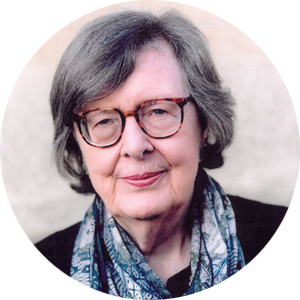
“I’ve never written directly onto a typewriter or computer. The great advantage of writing longhand is that you are crossing out and revising all the time as you go. I remember when a friend of mine first showed me her word processor. She was in raptures about it. But all I could think was, The problem with this is that it looks too finished, too soon. It looks perfect when of course it isn’t. There’s also a sort of extraordinary intimacy in looking at work written out in longhand.”
–PENELOPE LIVELY
Dame Penelope Margaret Lively DBE FRSL (born 1933) is a British writer of fiction for both children and adults. Lively has won both the Booker Prize and the Carnegie Medal for British children’s books. Wikipedia
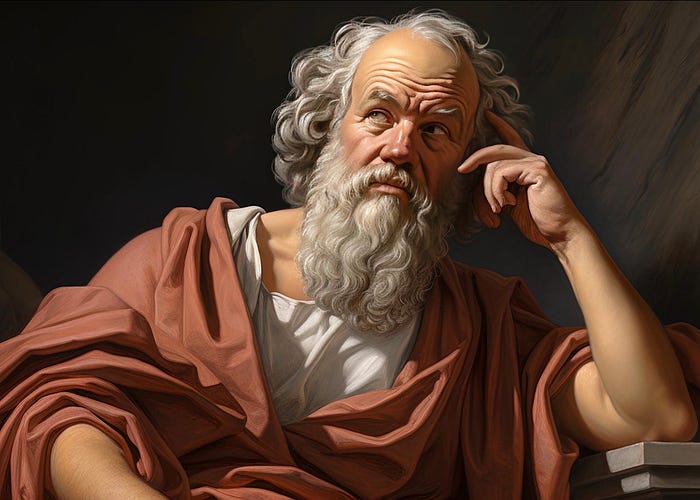
Busyness is nothing new under the sun. It goes way back in time. Two millennia ago, the ancient philosopher Socrates warned us to question the purpose of our constant activity. He thought the potential hollowness it might conceal was too significant to ignore. “Beware the barrenness of a busy life,” he said. It still makes sense even now. He also said, “It is possible that a man could live twice as long if he didn’t spend the first half of his life acquiring habits that shortens the other half.”
But to understand Socrates’ perspective, let’s look back to the bustling marketplace of ancient Athens. It was a vibrant hub of commerce, politics, and philosophy. It thrived on social gatherings, debates, and public events. Socrates saw many citizens consumed by the pursuit of wealth, power, and pleasure, neglecting the true purpose of life — the pursuit of wisdom and self-knowledge to live well. He thought they were cultivating a barren orchard in their relentless busyness.
“I have not sought during my life to amass wealth and to adorn my body, but I have sought to adorn my soul with the jewels of wisdom, patience, and above all with a love of liberty,” he said.
Socrates famously questioned the Athenian elites. He challenged their perceptions about morality, virtue, and the good life. While he valued social interaction, Socrates criticised those who engaged in superficial conversations and activities lacking intellectual or moral depth. His warning transcends the Athenian context.
Now, fast forward to our 21st-century world. Socrates’ wisdom resonates louder than ever. Task and responsibility fatigue are growing concerns. We juggle careers, families, social obligations, and personal pursuits, often feeling overwhelmed and exhausted. The “always on” mindset is draining us. Work expands into every crevice of our lives, turning nights into extensions of the day. We check emails during dinner and work late into the night. Every day is full of activity, but are we truly living? Just as Socrates cautioned the Athenians against mistaking mere movement for meaningful action, we must pause and examine the “fruits” of our frantic pace.
In our relentless pursuit of “doing,” we risk neglecting the value of “being”. Socrates wasn’t advocating for apathy; he highlighted the dangers of a life devoid of the time and space to introspect. He believed true fulfilment is in the internal quest for meaning and virtue. But it requires downtime and mental space, “luxuries” often sacrificed in the name of busyness. Socrates believed the true measure of a good lifewasn’t the accumulation of activities but the pursuit of wisdom and understanding. Busyness, he argued, could become a barrier to that goal, distracting us from the essential questions about ourselves, our values, and the meaning of our existence.
“The real important thing is not to live, but to live well. And to live well meant, along with more enjoyable things in life, to live according to your principles,” says Socrates.
His message highlights a key difference between mere busyness and meaningful engagement. You’re busYou’re, but to what end? Are you enriching your life or simply going through the motions? Socrates advocated for a conscious approach to how we spend our time. In our pursuit of a good life, we juggle work, social commitments, hobbies, and endless streams of information. Most people never pause to ask:
Is this activity or task bringing me closer to my long-term goals?
Am I truly engaged in what I’m doing, or am I on autopilot?
What am I sacrificing when I’m rushing from task to task?
Busyness becomes barren when you are not crushing your life or career goals. Applying Socrates’ advice requires a shift in perspective. It’s about prioritising quality over quantity. “The secret of happiness, you see, is not found in seeking more, but in developing the capacity to enjoy less,” he said.” That means choosing meaningful work over chasing deadlines.
Prioritising quality time in your relationships over superficial interactions. And using technology to enhance your life, not replace genuine human connection and reflection. While activity is necessary, blind busyness can become a trap. A life rich in meaning requires both engagement with the world and introspection. Know yourself well enough to pursue what brings out the best in you. “My friend “care for your psyche…know thyself, for once we know ourselves, we may learn how to care for ourselves,” says Socrates.
To apply his wisdom, conduct a “time audit.” Track your activities for a week to understand where your time truly goes.
Identify your values. What matters most to you? Align your activities with your core values. Politely decline commitments that drain your energy and time without adding value to your life. Schedule time for reflection. Take time each day or week to introspect and assess your progress. You could dedicate even 15 minutes daily to quiet contemplation before you start work or later in the evening. It allows you to step back, assess your priorities, and reconnect with yourself. The many life activities don’t mean a life lived well.
Hit pause on the hustle.This week, grant yourself the gift of a calm, collected mind. Take a step back from the whirlwind of distractions and fleeting activities.
What truly matters to you? Is it family, a passion project, career goals, or something else entirely? Are distractions pulling you away from these priorities? Figure it out and make more time for it. Put down the phone and mute the notifications. Sit with a cup of tea, simply be. Rediscover the joy of quiet time and the clarity it brings. This week, choose peace first. Choose a life that is not just busy but rich, meaningful, and truly your own. You have the power to choose. Will you cultivate the barren orchard of busyness, or will you nurture the garden of a meaningful life? The choice, as Socrates might say, is yours.
Let’s stay connected. Join over 70K curious subscribers who receive my best essays and free curated tools for smarter living. Join us and get a free ebook (A collection of essays on life, productivity, and happiness).
Making the wisdom of great thinkers instantly accessible. As seen on Forbes, Inc. and Business Insider. For my popular essays, go here: https://thomasoppong.com
Mercury conjunct Chiron is an opportunity to dig deep into wounds, identify self-sabotaging patterns, and reframe our understanding of ourselves.
Mercury Conjunct Chiron In Aries – Why It’s Important
Mercury conjunct Chiron in Aries is not your typical Mercury transit.
Why?
Because Mercury will spend an unusually long time in Aries due to its upcoming retrogradation.
Mercury will stay within the conjunction orb with Chiron and the North Node for a very long time, activating opportunities to revisit and rewrite self-sabotaging patterns of thinking.
During this transit (which is active until May 7th, 2024), we can find healing by addressing old wounds and embracing new perspectives that align with our highest potential.
The Mercury-Chiron conjunction on March 20th, 2024 is the first conjunction in a series of 3. The other conjunctions happen on April 15th, 2024, at 20° Aries (with Mercury retrograde) and the 3rd on May 7th, 2024, at 21° Aries.
While the exact dates mark the energy peak of the transit, Mercury conjunct Chiron is active for the whole period – from now until mid-May. This is an intense transit that will influence every single one of us.
Mercury Conjunct Chiron In Aries – The Identity Wound
The Mercury-Chiron conjunction happens in the sign of Aries. Aries is the sign of “I am”. Aries is our identity.
Therefore, Mercury conjunct Chiron will be triggering our identity wound.
No matter how confident and accomplished we are, we all have a deeply ingrained identity wound, because we all suffered at some point from feelings of rejection and abandonment.
Whenever someone abandoned or rejected us, it inherently questioned our existence. “Do I have the right to be here?” “Does my existence really matter?” “Who am I?”
These are the fundamental questions that the Mercury-Chiron conjunction in Aries will bring to the surface.
Mercury Conjunct Chiron – The Story Of Your Identity Wound
Mercury in astrology represents the ‘general narrative’– the way we make sense of the world, the overall accepted ‘story’, what we tell ourselves, what we believe to be true.
Therefore, Mercury conjunct Chiron will reveal the ‘general narrative’ or the story of our Chiron wound. More precisely, the story of our identity wound (Chiron in Aries).
The story of our wound can be traced through our family lineage, potentially spanning generations back.
North Node in Aries is also involved in this transit; Mercury is not only conjunct Chiron, but also the North Node.
Lunar Nodes show up all the time in family dynamics, highlighting patterns that are inherited through generations. If the South Node is past karma that needs to be released and transformed, the North Node is the opportunity to change our karma, and rewrite our destiny.
When Mercury aligns with Chiron and the North Node, we have a unique opportunity to delve intothe deeply ingrained patterns inherited from our family, and understand the ways they have affected our sense of individuality and purpose.
Here are examples of Mercury-Chiron in Aries narratives that may arise in the next weeks:
“I am flawed”
This is when the person believes – due to real experiences of rejection or interpreted cues from their family, that they are flawed, perhaps because their family wanted a child with different qualities, of a different gender, or with a different appearance.
This rejection drives them to alter their personality so that they conform to what is expected. This approach is, of course, self-defeating because we can only be ourselves, NOT someone else.
“I am a burden”
The child was born ‘by accident’, or in a family with material problems or other types of burdens. The child was either abandoned in the hands of other family members or caregivers and/or was made feel like a burden.
They might have been told “I have sacrificed myself for you”, basically accused of being an obstacle, preventing the parent from fulfilling their own goals.
“I am a carbon copy of my family”
In this narrative, the child was expected to adopt the family’s values, beliefs, social behavior, or social status. Any deviation from the ‘norm’ was seen as a betrayal.
Unconsciously, the child believes their existence is validated only within the context of the family ‘story’, and that they cannot ‘exist’ outside this story. Therefore, their unique individuality is invalidated and denied.
The child grappling with this narrative believes they can’t surpass their family members. For instance, if no family member went to university, the child may sabotage themselves and ‘fail’ the exams to enter university so that they don’t change the family narrative.
“I am a sinner”
In this narrative, the child internalizes a sense of wrongdoing or guilt associated with natural impulses, desires, or pleasures.
Due to sexual repression, religious or cultural beliefs, the family’s imposition of restrictive norms leads the child to perceive their innate instincts and desires as sinful or morally wrong.
This internal conflict inhibits the child from fully embracing life, trusting their instincts, and realizing their potential.
In all these narratives, the Aries-like qualities of assertiveness, independence, and self-expression are stifled.
These scenarios are not meant to foster resentment towards our family, nor to make us feel like victims.
In fact, the more we look into these family dynamics, the more we understand the deep roots of these patterns. Our parents have likely inherited these stories from their own parents, and this goes back through generations.
However, just because these stories exist for decades – or even centuries – this doesn’t mean we must continue to perpetuate them.
Mercury Conjunct Chiron In Aries – Healing The Identity Wound
The good news is that the upcoming Mercury-Chiron transit – accompanied by the North Node – is a unique opportunity to 1) understand the deeper dynamics of this identity wound and 2) rewrite this script that has been passed down for generations.
Your family (his)story has shaped you, but it does not define you. You can break the cycle. You can rewrite the script.
You are not flawed. You are you – a unique individual who may or may not resemble what your family expects or desires. Your worth is inherent and not defined by others’ perceptions of you.
You are not a burden. There are a myriad of factors that need to align for a child to be born. You are here for a reason; the fact that you were born in some difficult circumstances does not invalidate your existence.
You are not a carbon copy of your family. While we share DNA with our relatives, we are all unique individuals, with a unique story and individual mission to fulfill. Your identity is not confined to the expectations or limitations set by your family.
You are not a sinner. Pleasure is the portal to our essence and personal creativity. You CAN trust your impulses and your creative genius. They will direct you toward fulfillment and authenticity.
Mercury Conjunct Chiron – The Gift Inside The Wound
You may wonder – then why all these struggles? Why do we have to experience the wound and the challenges associated with it?
Because there is a hidden treasure in the wound.
It’s all the things we do to heal, all the lessons we learn, and all the strengths we develop to overcome adversity that shape our unique potential, eventually transforming our wound into our greatest gift.
The upcoming Mercury-Chiron conjunction on March 20th, 2024 is just the beginning of the unveiling of the ‘wound story’. More and more layers will be revealed as the transit develops over the next few weeks.
In addition to Mercury conjunct Chiron and North Node, we have two powerful eclipses; a Lunar Eclipse in Libra on March 25th, 2024, with Mercury conjunct Chiron and the North Node, and a Solar Eclipse in Aries on April 8th, 2024, exactly conjunct Chiron.
These transits come with a once-in-a-lifetime opportunity to rewrite our karmic patterns.
This time we can truly break the cycle.
The upcoming weeks will offer more clues on what exactly we need to do to rewrite the story of our wound so we can unlock our full potential, and live the life we are meant to be living.
When the author received an impassioned email, he dropped everything to visit the students who inspired it.
What drew Tommy Orange to reading, he said, was the “feeling of not being as alone as you thought you were.” Students found in his work a similar sense of belonging.Credit…Hiroko Masuike/The New York Times
Tommy Orange sat at the front of a classroom in the Bronx, listening as a group of high school students discussed his novel “There There.”
A boy wearing blue glasses raised his hand. “All the characters have some form of disconnection, even trauma,” Michael Almanzar, 19, said. “That’s the world we live in. That’s all around us. It’s not like it’s in some faraway land. That’s literally your next-door neighbor.”
The class broke into a round of finger snaps, as if we were at an old-school poetry slam on the Lower East Side and not in an English class at Millennium Art Academy, on the corner of Lafayette and Pugsley Avenues.
Orange took it all in with a mixture of gratitude and humility — the semicircle of earnest, engaged teenagers; the bulletin board decorated with words describing “There There” (“hope,” “struggle,” “mourning,” “discovery”); the shelf of well-thumbed copies wearing dust jackets in various stages of disintegration.
When Orange spoke, students paid close attention. Many identified with the characters in Orange’s book “There There” and with the world it portrayed. Credit…Hiroko Masuike/The New York Times
His eyebrows shot up when a student wearing a sweatshirt that said “I Am My Ancestors’ Wildest Dreams” compared the book to “The Road,” by Cormac McCarthy. When three consecutive students spoke about how they related to Orange’s work because of their own mental health struggles, he was on the verge of tears.
“That’s what drew me to reading in the first place,” Orange said, “The feeling of not being as alone as you thought you were.”
It’s not often that an author walks into a room full of readers, let alone teenagers, who talk about characters born in his imagination as if they’re living, breathing human beings. And it’s equally rare for students to spend time with an author whose fictional world feels like a refuge. Of all the classroom visits he’s made since “There There” came out in 2018, the one at Millennium Art Academy earlier this month was, Orange said later, “the most intense connection I’ve ever experienced.”
The catalyst for the visit was Rick Ouimet, an energetic, pony-tailed English teacher who has worked in the fortresslike building for 25 years. Ouimet is the kind of teacher students remember, whether it’s for his contributions to their literary vocabulary — synecdoche, bildungsroman, chiasmus — or for his battered flip phone.
In the three years since Orange’s novel became a part of the Millennium Art curriculum, students’ performance on the A.P. literature exam improved.Credit…Hiroko Masuike/The New York Times
He first learned about “There There” from a colleague whose son recommended it during the pandemic. “I knew from the first paragraph that this was a book our kids were going to connect to,” he said.
The novel follows 12 characters from Native communities in the lead-up to a powwow at a stadium in Oakland, Calif., where tragedy strikes. “Orange leads you across the drawbridge, and then the span starts going up,” a critic with The New York Times, Dwight Garner, wrote when it came out. The novel was one of The Times’s 10 Best Books of 2018 and was a finalist for the Pulitzer Prize. According to Orange’s publisher, over one million copies have been sold.
Ouimet’s hunch proved true: “Students love the book so much, they don’t realize they’re reading it for English class. That’s the rare find, the gift of gifts.”
Some relevant statistics: Attendance rates at Millennium Art are below the city average. Eighty-seven percent of students are from low-income households, which is above the city average.
In the three years since Orange’s novel became a mainstay of the Millennium Art curriculum, pass rates for students taking the Advanced Placement literature exam have more than doubled. Last year, 21 out of 26 students earned college credit, surpassing state and global averages. The majority of them, said Ouimet, wrote about “There There.”
Orange said he wasn’t much of a reader in high school: “Nobody handed me a book and said, this book is for you. I also had a lot going on at home.” Credit…Hiroko Masuike/The New York Times
When three students in the school’s art-bedecked hallway were randomly asked to name a favorite character from “There There,” they all answered without hesitation. It was as if Tony, Jacquie and Opal were people they might bump into at ShopRite.
Briana Reyes, 17, said, “I connected so much with the characters, especially having family members with alcohol and drug abuse.”
Last month, Ouimet learned that Orange, who lives in Oakland, was going to be in New York promoting his second novel, “Wandering Stars.” An idea started to percolate. Ouimet had never invited an author to his classroom before; such visits can be pricey and, as he pointed out, Shakespeare and Zora Neale Hurston aren’t available.
Ouimet composed a message in his head for over a week, he said, and on Monday, March 4, just after midnight, he fired it off to the Penguin Random House Speakers Bureau.
“The email felt like a raw rough draft, but I didn’t agonize,” he said. “It was my midlife college essay.”
The 827-word missive was written in the go-for-broke style Ouimet encourages in his students’ work, full of personality, texture and detail, without the corporate-speak that infiltrates so much Important Professional Correspondence.
According to Rick Ouimet, his students loved the book so much, they forgot they were reading it for class.Credit…Hiroko Masuike/The New York Times
Ouimet wrote: “In our 12th-grade English classroom, in our diverse corner of the South Bronx, in an under-resourced but vibrant urban neighborhood not unlike the Fruitvale, you’re our rock star. Our more than rock star. You’re our MF Doom, our Eminem, our Earl Sweatshirt, our Tribe Called Red, our Beethoven, our Bobby Big Medicine, our email to Manny, our ethnically ambiguous woman in the next stall, our camera pointing into a tunnel of darkness.”
Orange, he added, was a hero to these kids: “You’ve changed lives.” There was Tahqari Koonce, 17, who drew a parallel between the Oakland Coliseum and the Roman Colosseum; and Natalia Melendez, also 17, who noted that a white gun symbolized oppression of Native tribes. And then there was Dalvyn Urena, 18, who “said he’d never read an entire book until ‘There There,’” and was now comparing it to a Shakespearean sonnet.
He ended with: “Well, it was worth a shot. Thanks for taking the time to read this — if it ever finds its way to you. In appreciation (and awe), Rick Ouimet.”
“I took a chance,” Ouimet said. And why not? “My students take a chance every time they open a new book. There’s groaning, and they open the page. To see what they gave this book? The love was palpable.”
Orange found a way to work a visit to the high school into a packed, 24-city tour for his new book, “Wandering Stars.”Credit…Hiroko Masuike/The New York Times
Within hours, the message reached Orange, who was in the midst of a 24-city tour with multiple interviews and events each day. He asked Jordan Rodman, senior director of publicity at Knopf, to do whatever she could to squeeze Ouimet’s class into the mix. There would be no fee attached. Knopf donated 30 copies of “There There” and 30 copies of “Wandering Stars.”
In a big, bustling school full of squeaky soles, walkie-talkies and young people, moments of silence can be hard to come by. But when Orange cracked open his new novel, you could hear a pin drop.
“It’s important to voice things, to sound them out, like the way we learn to spell by slowly saying words,” Orange read.
He went on: “It’s just as important for you to hear yourself speak your stories as it is for others to hear you speak them.”
The students followed along in their own copies, heads bent, necks looking vulnerable and strong at the same time. Their intentness proved that, like the spiders described in “There There,” books contain “miles of story, miles of potential home and trap.” On this nondescript gray Thursday, Orange’s work offered both.
After the 13-minute reading came the questions, fast and furious, delivered with refreshing bluntness: “What even inspired you to write these two books?” and “Did Octavio die?” and, perhaps most pressing, “Why did ‘There There’ end that way?” Not since “The Sopranos” has an ambiguous denouement caused more consternation.
“We were like whaaaat?” a student said, holding the last word in a high note.
“It was a tragic story,” Orange said. “Some people hate it, and I’m sorry.”
The class held up copies of Orange’s new book, “Wandering Stars.”Credit…Hiroko Masuike/The New York Times
He admitted that he hadn’t been a reader in high school: “Nobody handed me a book and said, This book is for you. I also had a lot going on at home.” He talked about how he staves off writer’s block (by changing points of view), how he reads his drafts aloud to hear how they sound. Orange shared his Cheyenne name — Birds Singing in the Morning — and introduced a childhood friend who is traveling with him on tour.
Through it all, Ouimet stood quietly at the side of the room. He shot gentle stink eye at a gaggle of chatty girls. He used a long wooden pole to open a window. Mostly, he just beamed like a proud parent at a wedding where everyone is dancing.
The truth is, “There There” didn’t cast a spell only on his students: It also had a profound effect on Ouimet himself. When he started teaching the book, he’d just given up coaching soccer and softball after 22 years.
“I was afraid: If I don’t have coaching, am I still going to be an effective teacher? ‘There There’ was this kind of renaissance. I don’t want to get too sappy,” he said, “but it was a career-saver in some way.”
Eventually the bell sounded. The students pushed back from their desks and lined up to have their books signed by Orange, who took a moment to chat with each one.
Over the din, to anyone who was still listening, Ouimet called: “If you love a book, talk about it! If you love a story, let other people know!”
A version of this article appears in print on March 19, 2024, Section C, Page 1 of the New York edition with the headline: Bronx Students Embraced A Book That Spoke to Them. Order Reprints | Today’s Paper | SubscribeREAD 221 COMMENTS
The price we pay for being children of chance, born of a billion bright improbabilities that prevailed over the staggering odds of nothingness and eternal night, is the admission of our total cosmic helplessness. We have various coping mechanisms for it — prayer, violence, routine — and still we are powerless to keep the accidents from happening, the losses from lacerating, the galaxies from drifting apart.
Because our locus of choice is so narrow against the immensity of chance, nothing haunts human life more than the consequences of our choices, nothing pains more than the wistful wish to have chosen more wisely and more courageously — the chance untaken, the love unleapt, the unkind word in the time for tenderness. Regret — the fossilized fangs of should have sunk into the living flesh of is, sharp with sorrow, savage with self-blame — may be the supreme suffering of which we are capable. It poisons the entire system of being, for it feeds on the substance we are made of — time, entropic and irretrievable. It tugs at our yearning for, in James Baldwin’s perfect words, “reconciliation between oneself and all one’s pain and error” and stings with the reminder that eventually “one will oneself become as irrecoverable as all the days that have passed.”
There is, therefore, no mightier spell against unhappiness than moving through the present in a way that preempts regret in the future — with integrity, with humility, with wholeheartedness.
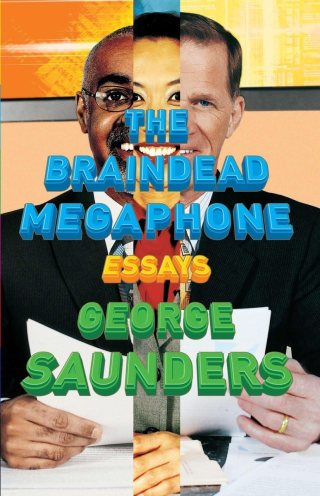
In one of those tangents that give the essay form its fractal splendor, he writes:
You know that feeling at the end of the day, when the anxiety of that-which-I-must-do falls away… That moment when you think, Oh God, what have I done with this day? And what am I doing with my life? And how must I change to avoid catastrophic end-of-life regrets?
[…]
At the end of my life, I know I won’t be wishing I’d held more back, been less effusive, more often stood on ceremony, forgiven less, spent more days oblivious to the secret wishes and fears of the people around me.
So what is stopping me from stepping outside my habitual crap?
My mind, my limited mind.
The story of life is the story of the same basic mind readdressing the same problems in the same already discredited ways.
In a wonderful aside from another essay, he offers what may be the best recipe for breaking out of the mind’s recursive and limiting stories:
Don’t be afraid to be confused. Try to remain permanently confused. Anything is possible. Stay open, forever, so open it hurts, and then open up some more, until the day you die, world without end, amen.
“We speak of four fundamental forces,” a physicist recently said to me, “but I believe there are only two: good and evil” — a startling assertion coming from a scientist. Beneath it pulsates the sensitive recognition that it is precisely because free will is so uncomfortably at odds with everything we know about the nature of the universe that the experience of freedom — which is different from the fact of freedom — is fundamental to our humanity; it is precisely because we were forged by these impartial forces, these handmaidens of chance, that our choices — which always have a moral valence — give meaning to reality.
Whether our cosmic helplessness paralyzes or mobilizes us depends largely on how we orient to freedom and what we make of agency. “The smallest act in the most limited circumstances,” Hannah Arendt wrote in The Human Condition, “bears the seed of… boundlessness, because one deed, and sometimes one word, suffices to change every constellation.”
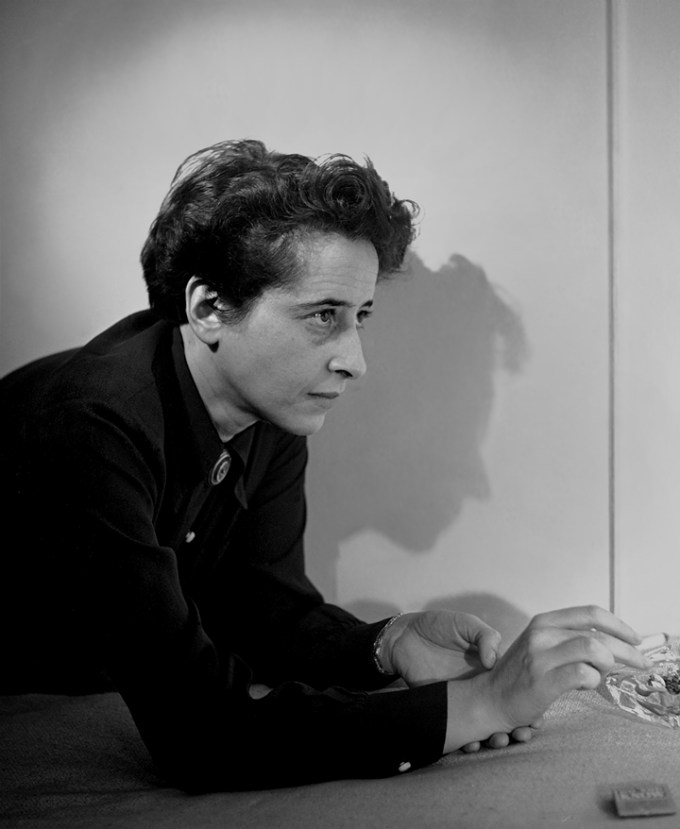
Hannah Arendt by Fred Stein, 1944. (Photograph courtesy of the Fred Stein Archive.)
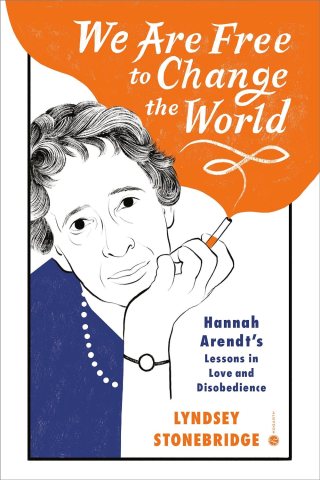
Arendt’s rigorously reasoned, boundlessly mobilizing defiance of helplessness and “the stubborn humanity of her fierce and complex creativity” come abloom in We Are Free to Change the World: Hannah Arendt’s Lessons in Love and Disobedience (public library) — Lyndsey Stonebridge’s erudite and passionate celebration of what Arendt modeled for generations and goes on modeling for us: “determined and splendid goodwill, refusing to accept the compromised terms upon which modern freedom is offered and holding out for something new.”
Stonebridge, who has been studying Arendt for three decades, writes:
Hannah Arendt is a creative and complex thinker; she writes about power and terror, war and revolution, exile and love, and, above all, about freedom. Reading her is never just an intellectual exercise, it is an experience.
[…]
She loved the human condition for what it was: terrible, beautiful, perplexing, amazing, and above all, exquisitely precious. And she never stopped believing in a politics that might be true to that condition. Her writing has much to tell us about how we got to this point in our history, about the madness of modern politics and about the awful, empty thoughtlessness of contemporary political violence. But she also teaches that it is when the experience of powerlessness is at its most acute, when history seems at its most bleak, that the determination to think like a human being, creatively, courageously, and complicatedly, matters the most.
She too lived in a “post-truth era,” she too watched the fragmentation of reality in a shared world, and she saw with uncommon lucidity that the only path to freedom is the free mind. Whether she was writing about love and how to live with the fundamental fear of loss or about lying in politics, she was always teaching her reader, as Stonebridge observes, not what to think but how to think — a credo culminating in her parting gift to the world: The Life of the Mind.
Having a free mind in Arendt’s sense means turning away from dogma, political certainties, theoretical comfort zones, and satisfying ideologies. It means learning instead to cultivate the art of staying true to the hazards, vulnerabilities, mysteries, and perplexities of reality, because ultimately that is our best chance of remaining human.
Celebrating Arendt as a “conservationist” who “traveled back into the traditions of political and philosophical thought in search of new creative pathways to the present,” Stonebridge reflects:
Fundamental questions about the human condition are not beside the point in dire political times; they are the point. How can we think straight amidst cynicism and mendacity? What is there left to love, to cherish, to fight for? How can we act to best secure it? What fences and bridges do we need to build to protect freedom and which walls do we need to destroy?
In my own longtime immersion in Arendt’s world, I have often shuddered at how perfectly her indictment of political oppression applies to the tyranny of consumerist society, although Arendt did not overtly address that. In this passage from Stonebridge, one could easily replace “Nazism,” “totalitarianism,” and “the Holocaust” with “late-stage capitalism” and feel the same sting of truth:
Nazism was undoubtedly tyrannical, and self-evidently fascist in its gray-black glamour, racist mythology, and disregard for the rule of law. However, Arendt argued that modern dictatorship had an important new feature. Its power reached everywhere: not a person, an institution, a mind, or a private dream was left untouched. It squeezed people together, crushing out spaces for thought, spontaneity, creativity — defiance. Totalitarianism was not just a new system of oppression, it seemed to have altered the texture of human experience itself.
[…]
The moral obscenity of the Holocaust had to be recognized, put on trial, grieved, and addressed. But it could not be made right with existing methods and ideologies… You cannot simply will this evil off the face of the earth with a few good ideas, let alone with the old ones that allowed it to flourish in the first place. You have to start anew.
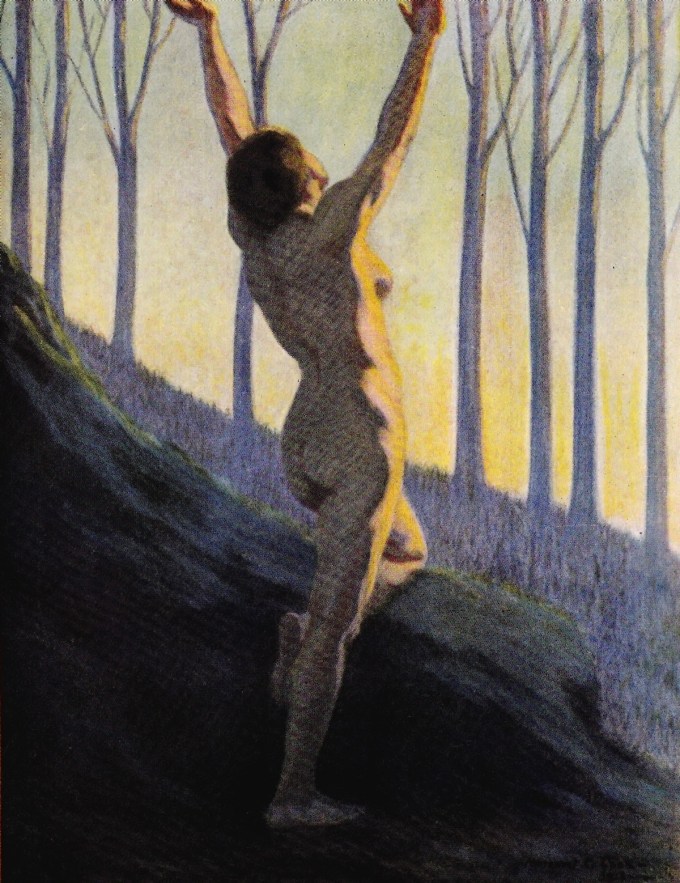
One of English artist Margaret C. Cook’s illustrations for a rare 1913 edition of Walt Whitman’s of Leaves of Grass. (Available as a print.)
This belief that “we are free to change the world and to start something new in it” animated Arendt’s life — a freedom she located not in what she termed reckless optimism (the divested shadow side of Rebecca Solnit’s notion of hope as an act of defiance), but in action as the crux of the pursuit of happiness — what Stonebridge so astutely perceives as “the determination to exist as a fully living and thinking person in a world among others.” She writes:
Freedom cannot be forced; it can only be experienced in the world and alongside others. It is on this condition that we are free to change the world and start something new in it.
Learning to love the world means that you cannot be pleasantly indifferent about its future. But there is a wisdom in knowing that change has come before and, what is more, that it will keep on coming, often when you least expect it; unplanned, spontaneous, and sometimes, even just in time. That, for Hannah Arendt, is the human condition.
In my case, bumping into the idea of self-remembering was like bumping into an old friend with whom one had lost contact for decades…
In my case, bumping into the idea of self-remembering was like bumping into an old friend with whom one had lost contact for decades, whom one barely recognizes at first, but by virtue of some distinguishing mannerism—a grin, a gesture, a toss of their hair—one suddenly remembers them quite unmistakably.
I shudder at the notion that this chance encounter could have easily never happened. For a long time, I had been searching for meaning. I could find nothing praiseworthy in myself, and although I thought myself smart, it was a futile kind of smartness always bent on wittiness and self-glorification. Strangely, I could see this but not change it, and this frustration powered my search. I could conceive of myself acting differently but could not take any practical steps to do something about it. Was there not more to being human than being endowed with the capacity for ineffectual self-reflection? I determined to find out.
I scoured bookstores and libraries in search of literature on psychology and philosophy. The idea that others had searched like this before me was itself some consolation, although none so far seemed to have found anything substantial. Some equated human potential with physical discipline: yoga exercises, strict diets, breathing techniques, and the like. Following their suggestions did improve my physical well-being, but that was not what I had been after. I remained the same selfish, arrogant and witty fool, with even more energy to power my folly. Others wrote off the prospect of a ‘search’ as a futile intellectual endeavor. It was our human birthright to experience love, empathy, and kindness—emotions that altogether eradicated the need to ‘search’. I could agree with this in principle but could only pretend to live up to these noble emotions—and strongly suspected that those advocating them were not always practicing what they preached. Try as hard as I may, I could not bring myself to cover my deeply embedded weaknesses with a dishonest smile or show of empathy. Others steered the search for meaning towards philosophical debate and argument. The more complicated their theories, the more difficult they were to apply. Even if by a strong mental effort I could fathom some of their reasonings, I remained unchanged; the same self-indulgent, witty, fool I had always been. And so, the accounts I was reading seemed to be memoirs of seekers who had—in my opinion—despaired midway in their search and compromised, like knights whose forlorn skeletons now lined the path to some Holy Grail, the existence of which I was beginning to doubt.
Perhaps the truth could not be found in books? Perhaps I should venture to distant lands in search of teachers, or secret brotherhoods? But where would I go, and what if these attempts would also lead to dead ends? The hours wasted on fruitless reading would be nothing compared to the weeks, months, and years I’d be wasting in fruitless journeys.
Meanwhile, the door of opportunity seemed to be closing. I sensed I could not continue this search indefinitely, especially because it was pressing me against the reality of my own weaknesses. The more advice I was exposed to, the more I saw how I couldn’t follow it, in which case, what was I really searching for? Even if I came upon some truth, some sound formula for actualizing the latent potential in human beings, was I not too scattered, too inconsistent, and too lazy, to put this into practice? Was my search, then, merely an escape from acknowledging my fundamental inadequacy?
Was I uncorrectable?
“Read this,” said an acquaintance one day, dropping a book on my desk. “It’s not for everyone, but some find it a good last resort.”
The book lay untouched for a while before I came around to opening it, and when I did, I found it engaging. The author cut straight to the point. He called for self-observation as a natural remedy for self-ignorance. My pride was quick to brush this aside, convinced that I already knew myself quite well. Nonetheless, the teaching he presented laid out very specific instructions about what to observe. The reader was being given a map. This was somewhat new to me, and I thought it worthy of respect, although it still didn’t address the fundamental problem of my inconsistency. I was not lacking in good instruction, I lacked the ability to apply it. I urgently needed a tool for change, a mantra that would take away my sense of impotence, a handle with which to firmly grasp my laziness and turn it around.
Just as the flame of my interest was beginning to flicker, the book took a surprising turn. As if taking back what he had said so far, the author plainly stated that if one were to try to follow this map, one would discover that one could not. This sounded true and painfully familiar—and a bit unusual for an author to disqualify the value of everything he had presented so far. My curiosity was rekindled. “However,” he continued, “by trying to observe ourselves we stumble upon an important fact—that generally we do not remember ourselves.”
I was overcome by a powerful sense of recognition and slammed the book shut.
The word self-remembering exploded in my mind sending shivers down my spine and flooding my eyes with tears. This is the missing link. If I could remain aware of myself—as vividly as I was aware right then—I would be able to catch my laziness, inconsistency, and wittiness in real time, and do something about them. This was the handle I had so desperately searched for.
The shock was not only in the profundity of the idea my eyes had just read , but also its familiarity. Had I heard this before? Certainly not, or I would have already begun practicing it. Yet why was this concept so familiar? And how did I know to recognize its value so unmistakably? Nothing in my past could explain this recognition. Beyond doubt, beyond any rational explanation, I was keenly aware that this marked the end of my search.
And that I had just experienced a miracle.
About the Founder
Asaf Braverman is the founder of beperiod.com, a worldwide community of people dedicated to self-development.
Richard Hartnett, H.W., M., is presenting a live Translation® class on March 23 and 24th, 2024 via Zoom. Class runs from 10:00 a.m. PST to 4:30 p.m. PST both days.
Translation® provides an easy-to-use method for stripping away false ideas and releasing the innate wholeness and integrity which is your birthright.
Class fees are $195 for new to class and $75 for review. Fees cover the two-day class, class PDF / workbook, and a follow-up workshop! Those new to class also receive a one year membership with the Prosperos.
Hear the exciting podcast episode where Richard discusses what Translation® is, how it has impacted his life, why you will want to learn or renew your knowledge of this tool, what his favorite word track is, and so much more!





 You know that feeling at the end of the day, when the anxiety of that-which-I-must-do falls away… That moment when you think, Oh God, what have I done with this day? And what am I doing with my life? And how must I change to avoid catastrophic end-of-life regrets?