Decoding the Mystery of Intuition: Pioneering Philosopher of AI Margaret Boden on the Three Elements of Creativity

By Maria Popova (themarginalian.org)

“The Analytical Engine has no pretensions whatever to originate anything. It can do [only] whatever we know how to order it to perform,” Ada Lovelace inveighed upon composing the world’s first algorithm for the world’s first computer. Meanwhile, she was reckoning with the nature of creativity, distilling it to a trinity: “an intuitive perception of hidden things,” “immense reasoning faculties,” and the “concentrative faculty” of bringing to any creative endeavor “a vast apparatus from all sorts of apparently irrelevant and extraneous sources” — that is, intuition, the analytical prowess to evaluate the fruits of intuition, and a rich reservoir of raw material to feed the “combinatory play” Einstein considered the crux of creativity.

The first comes from experience — intuition is what we call the pattern recognition unconsciously honed in the act of living. The third also comes from experience — everything we have ever read and seen, everyone we have ever loved, everything we have suffered becomes a building block for the combinatorial alchemy of creation. The second is the fault line between genius and madness — a creative revelation, be it the heliocentric model of the universe or the Goldberg Variations, is seeing something no one else has seen, which has acute relevance to the world as we know it, touches it, transforms it; a hallucination is seeing something no one else can see without the ability to evaluate its irrelevance to the real world.

A quarter millennium after Lovelace, we face the question of whether AI can achieve all three, and therefore originate truly new ideas, or remain in the straitjacket of binary logic — a disembodied intellect without the lived experience, in all its embodied and ambiguous wildness, on which true creativity draws. Out of this arises the far more disquieting question of whether we, as a species, are being trained by this “mechanical kingdom” of our own creation to mistake the simulacrum of life for life itself, to reduce our aliveness to algorithms. Given that creativity is a hallmark of our species, questions about the nature of creativity in human and non-human minds are ultimately questions about what it means to be — and remain — human.

Operators at the MANIAC I (Mathematical Analyzer Numerical Integrator and Automatic Computer Model I), 1952.

Few have reckoned with these questions more deeply, or more durationally, than British philosopher Margaret Boden (November 26, 1936–July 18, 2025), who composed her revelatory book The Creative Mind: Myths and Mechanisms (public library) when the Internet was just a few years old and computational models still in their infancy. At its heart is an investigation of how the human mind can surpass itself, how our intuition works, and how it is possible for us to think new thoughts, anchored in the insight that “a computational approach gives us a way of coming up with scientific hypotheses about the rich subtleties of the human mind,” that AI-concepts are valuable not because they can (which they very well could) originate new ideas but because they can help us do so, because “both their failures and their successes help us think more clearly about our own creative powers.”

All of this requires a clear definition of those powers — not the ancient cop-out of divine inspiration, not the Romantic conceit of the chosen few gifted with special talents, but a model that accounts for both the immense range of creativity and the wide variations across that range, for its fundamentally mysterious nature and for the possibility of comprehending the mystery without reducing it to code.

An epoch after Einstein observed that “the most beautiful experience we can have is the mysterious” because there is always “something deeply hidden… behind things,” after Carl Sagan insisted that “bathing in mystery… will always be our destiny [because] the universe will always be much richer than our ability to understand it,” Boden considers the mystery of the universe within:

If a puzzle is an unanswered question, a mystery is a question that can barely be intelligibly asked, never mind satisfactorily answered. Mysteries are beyond the reach of science. Creativity itself is seemingly a mystery, for there is something paradoxical about it, something which makes it difficult to see how it is even possible. How it happens is indeed puzzling, but that it happens at all is deeply mysterious.

[…]

A science of creativity need not be dehumanizing. It does not threaten our self-respect by showing us to be mere machines, for some machines are much less “mere” than others. It can allow that creativity is a marvel, despite denying that it is a mystery.

Margaret Boden, 1990.

Defining creativity as “the ability to come up with ideas or artefacts that are new, surprising and valuable,” Boden argues that it permeates every aspect of human life, is not a special “faculty” of the mind but “grounded in everyday abilities such as conceptual thinking, perception, memory, and reflective self-criticism,” and is not binary — the question that should be asked is not whether an idea is creative but how creative it is, which allows us to assess both the subtleties of the idea itself and the “subtle interpretative processes and complex mental structures” through which it arose in the mind.

Drawing on everything from Euclid’s revolutionary geometry to Coleridge’s “Rime of the Ancient Mariner,” she distinguishes between two types of creativity — personal creativity, which “involves coming up with a surprising, valuable idea that’s new to the person who comes up with it” no matter how many other people have come up with it, and historical creativity, in which the idea is completely new in the whole of human history. Both are axoned in a substrate of surprise — “the astonishment you feel on encountering an apparently impossible idea. It just couldn’t have entered anyone’s head, you feel — and yet it did.”

Boden identifies three aspects of creativity: First there is tessellating familiar ideas into unfamiliar combinations. Arthur Koestler, who greatly influenced Boden, termed this “bisociation” in his pioneering model of creativity. Gianni Rodari echoed in his notion of “the fantastic binomial” key to great storytelling. For such a combination to be truly novel, Boden observes, it requires “a rich store of knowledge in the person’s mind, and many different ways of moving around within it.”

The other two aspects of creativity both involve the conceptual spaces in people’s minds — those structured styles of thought we absorb unconsciously from our peers, our parents, our culture, the fashions and fictions of our time and place: styles of writing and dress, social mores and manners, existing theories about the nature of reality, ideological movements. One creative approach to conceptual space is exploration. Boden writes:

Within a given conceptual space many thoughts are possible, only some of which may actually have been thought… Exploratory creativity is valuable because it can enable someone to see possibilities they hadn’t glimpsed before.

Exploratory creativity discovers novel ideas within an existing conceptual space and, in the process, invites others to consider the limits and potential of the space. But one can go even further, beyond exploring and toward transforming the conceptual space:

A given style of thinking, no less than a road system, can render certain thoughts impossible — which is to say, unthinkable… The deepest cases of creativity involve someone’s thinking something which, with respect to the conceptual spaces in their minds, they couldn’t have thought before. The supposedly impossible idea can come about only if the creator changes the preexisting style in some way. It must be tweaked, or even radically transformed, so that thoughts are now possible which previously (within the untransformed space) were literally inconceivable.

This, of course, is the paradox of all transformation, best illustrated by the Vampire Problem thought experiment — because our imagination is the combinatorial product of past experience, we are fundamentally unable to imagine a truly altered future state and deem such states impossible, chronically mistaking the limits of our imagination (which transformative experience expands) for the limits of the possible.

Card from An Almanac of Birds: 100 Divinations for Uncertain Days.

Boden picks up where Koestler left off to explore what it takes for an idea to be truly transformative. “Bisociation” alone, she argues, is not enough to originate such ideas:

Combining ideas creatively is not like shaking marbles in a bag. The marbles have to come together because there is some intelligible, though previously unnoticed, link between them which we value because it is interesting — illuminating, thought-provoking, humorous — in some way… We don’t only form links; we evaluate them.

This question of value is where the central paradox of creativity resides, because our values are largely inherited conceptual spaces, making it difficult to assess or even recognize the value of a transformative idea whose originality overflows and overwhelms the conceptual space. In consonance with Bob Dylan’s observation that “people have a hard time accepting anything that overwhelms them,” Boden writes:

Our aesthetic values are difficult to recognize, more difficult to put into words, and even more difficult to state really clearly. (For a computer model, of course, they have to be stated really, really clearly.) Moreover, they change… They vary across cultures. And even within a given “culture,” they are often disputed: different subcultures or peer groups value different types of dress, jewellery or music. And where transformational creativity is concerned, the shock of the new may be so great that even fellow artists find it difficult to see value in the novel idea.

She returns to the most crucial element of creativity — surprise so intense it has an edge of shock: Something previously unthinkable has entered your mind. To be surprised is to watch your calculus of probability crumble in the face of the possible, to find the locus of your expectations too small to encompass what you have just encountered. (This is why societies and epochs, such as ours, that prioritize certainty and self-righteousness over exploration and surprise are shackling their own creativity.) Boden writes:

A merely novel idea is one which can be described and/or produced by the same set of generative rules as are other, familiar, ideas. A radically original, or creative, idea is one which cannot.

[…]

To be fundamentally creative, it is not enough for an idea to be unusual — not even if it is valuable, too. Nor is it enough for it to be a mere novelty, something which has never happened before. Fundamentally creative ideas are surprising in a deeper way. Where this type of creativity is concerned, we have to do with expectations not about probabilities, but about possibilities. In such cases, our surprise at the creative idea recognizes that the world has turned out differently not just from the way we thought it would, but even from the way we thought it could.

We are animated by this creative urge to bridge the actual and the possible because it matters to us what world we live in — it matters because we are made of matter, because while a computer’s generative flow is, as Boden puts it, “implemented rather than embodied,” ours streams in through through the sensorium of our bodily aliveness. A quarter century after the publication of Boden’s seminal book, months after the emergence of transformer-based large language models, Cambridge University endowed a lecture series in her honor. In her inaugural address, she reflected:

Homo sapiens is an intensely social species. Our needs for what Maslow called “love and belonging” (which includes collaboration and conversation) and “esteem” (which includes respect and dignity) are not mere trivialities, or optional extras. They matter. They must be satisfied if we are to thrive. Their degree of satisfaction will influence the individual’s subjective experience of happiness (and others’ measurements of it).Computers have no such needs.

It is out of this mattering, out of our creaturely neediness, that we originate anything of substance, value, and surprise. It is because things matter to us that we suffer, and it is because we suffer that we are impelled to transmute our suffering into art.

In the remainder of The Creative Mind, Boden goes on to explore the complementary role of chaos and constraint in creativity and how, despite their limitations, AI models can help us better understand the mystery of human intuition. Complement it with Oliver Sacks, writing three decades before ChatGPT, on consciousness, AI, and our search for meaning, then revisit his own take on the three essential elements of creativity.

Orcas and the Price of Consciousness: Lessons in Love and Loss from Earth’s Most Successful and Creative Predator

By Maria Popova (themarginalian.org)

Marbling the waters of every ocean with their billows of black and white, orcas are Earth’s most creative and most successful apex predator. Although they are known as killer whales, they are the largest member of the dolphin family. Older than great white sharks, they hunt everything from seals a tenth their size to moose bathing in the shallows to Earth’s largest animal — the blue whale, whose tongue alone can weigh as much as a female orca.

The secret to these staggering feats is not brute force but strategy and synchrony.

Beneath the shimmering surface that divides us from what Rachel Carson called “those six incomprehensible miles into the recesses of the abyss,” through the growling din of the engines that conduct consumerism between continents, orcas are communicating in their sonic hieroglyphics, speaking to each other in haunting and melodious voices that summon the most coordinated hunting strategy known in the animal kingdom.

Traveling in matrilineal groups, they search for seals across the frozen expanse, moving effortlessly through pack ice that sinks immense ships. As soon as they identify the prey, they swim together under the ice to shatter it with a sub-surface shock wave, then begin blowing bubbles beneath to push the broken pieces apart. Once the cracks are wide enough, they turn on their sides to create a synchronized surface wave so large its crest crashes onto the ice, pushing seals into the water, where the pod divides the bounty according to a complex calculus of social bonds.

All the while, they are teaching their young how to perform this collaborative symphony of physics and predation — a further testament to social learning as a key substrate of intelligence — and it is the females, particularly post-menopausal matriarchs, who are doing the teaching. Orcas have such strong maternal bonds that sons stay with their mothers for life — a phenomenon so well documented that the researchers behind one longitudinal study dubbed male orcas “mamma’s boys.”

Orca pod hunting a great blue whale. St. Nicholas magazine, 1920.

But while these bonds are the orcas’ great strength, they are also their great vulnerability.

In 2018, while secluded on a small mossy island in Puget Sound to finish my first book, I watched the world turn with shattering tenderness toward an unfolding local event — for seventeen days, across a thousand miles of ocean, an orca mother carried her dead calf draped over her head, hardly eating, barely keeping up with her pod. NPR called it her “tour of grief.” When she lost another calf in early 2025 — two thirds of orca pregnancies result in either miscarriage or infant death — she did the same, this time seventeen days.

Such sights so chill us because they are emblems of the miracle and tragedy of consciousness. Orcas would not be capable of such staggering success as predators if they were not also capable of such shattering grief, both a function of their intricate bonds, their collaborative interdependence, their complex consciousness that differentiates and bridges the difference between self and other. In the human realm, we call this love — the aspect of consciousness subject to the cruelest evolutionary equation: As Hannah Arendt so poignantly articulated, loss is the price we pay for love. It seems almost unbearable as we watch the mother orca carry her dead calf, and yet we too must bear it, and do bear it, however long and however far we may have to carry the dead weight of our grief — because we must, if we are worthy of our own aliveness, love anyway. “Gamble everything for love, if you are a true human being,” wrote Rumi. Perhaps we are here to learn that love is worth any price, any price at all.

Rewilding the Human Spirit in the Age of Moral Colonialism: Brian Eno on Carnival as a Model for Saving Culture

By Maria Popova (themarginalian.org)

The prisons we choose to live inside hardly ever look like prisons while we are living in them.

If the twentieth century was the age of dictatorships — I grew up in one — reducing human beings to a herd, the twenty-first century, with its self-appointed moral despots, is the age of the tyranny of the herd itself. Having invented a merciless weapon of individual destruction — the pitchfork of the cancel mob — we are now doing to human nature what we have already done to nature, turning a biodiverse wilderness into a monoculture of a single crop deemed correct, forgetting there are infinitely many valid ways of being alive, that they can and must be complementary rather than contradictory if the ecosystem is to thrive.

It takes courage to resist this moral colonialism, to rewild the human spirit with the insistence that life, allowed its full aliveness, is not a symposium of self-righteousness but a festival of wonder, not a military parade of masses marching behind generals uniformed in the moral fashions of the day but a carnival of felicitous participancy on equal terms — people of all kinds, each costumed in some choice expression of their light, together constellating a collaborative cosmos of belonging to something both transient and transcendent.

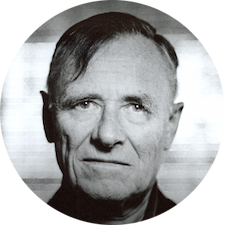
Brian Eno

This model of life calls to mind a long-ago essay by pioneering musician Brian Eno, originally published in The Utne Reader in 2002, contemplating the qualities of a good carnival. They are, he argues, also the qualities of a good culture — a natural parallel given carnival is the consecration of aliveness through play and play is the lever by which humankind lifted itself from survival to civilization.

Looking back on his many years of taking part in London’s Notting Hill Carnival — the world’s second-largest carnival after Rio’s — he writes:

Carnival is good when the number of participants isn’t grossly outweighed by the number of spectators. Carnival is good when many of the `spectators’ are actually also joining in (dancing and singing along). Carnival is good when the participants exhibit a range of skills from the absolutely minimal to the absolutely astonishing (the first being an invitation not to be intimidated — “Hey! I could do that!” — and the second an invitation to be amazed). Carnival is good when people of all ages, sexes, races, shapes, sizes, beauties, inclinations, and professions are involved. Carnival is good when there’s too much to look at and everything’s mixed up and you have to sort it all out for yourself.

Carnival costumes by Boris Israelevich Anisfeld, 1920s

Culture, in the modern sense, is the container we have created for human nature. But before a small clan of rebel anthropologists in the early twentieth century began using it to describe the customs of human societies, “culture” was a term of the natural sciences: in botany, the cultivation of plants; in biochemistry, the cultivation of cells in a nutrient-rich solution. It strikes me that effective conservation — the safekeeping of living systems — also shares the features Eno identifies in a good carnival. In a passage that reads like a perfect description of biodiversity in a thriving ecosystem and of the evolutionary processes of competition, collaboration, elaboration, and adaptation by which life came to occupy such different niches, he writes:

Carnival is good when it dignifies and rewards all sorts of abilities — singing, jumping, laughing infectiously, dressing weirdly, writing the hit song of the carnival, wiggling your backside, standing on a soapbox praising Jesus or the local hardware store, frying salt fish over an oil drum in public, inventing symphonic arrangements for steel bands, designing and building fabulously impossible things. Carnival is good when people try to outdo each other, and then applaud with delight those who in turn outdo them. Carnival is good when it gives people an alibi to become someone different.

Carnival, The Netherlands, 1911.

At its heart, a carnival is — as a healthy culture should be — an affirmation of our aliveness, in all its blessed improbability. Eno concludes:

Carnival is good when it lets people present the best part of themselves, and be, for a little while, as they’d like to be all the time. Carnival is good when it gives people the feeling that they’re really lucky to be alive right here and now. Carnival is good when it leaves people with the feeling that life in all its bizarre manifestations is unbeatably lovely and touching and funny and worthwhile.

Complement with Leonard Cohen on what makes a saint and Walter Lippmann on what makes a hero — those twin pylons of a culture — then revisit Brian Eno’s reading list of 20 books essential for civilization.

Christopher Isherwood on war

“If I fear anything, I fear the atmosphere of the war, the power which it gives to all the things I hate—the newspapers, the politicians, the puritans, the scoutmasters, the middle-aged merciless spinsters. I fear the way I might behave, if I were exposed to this atmosphere. I shrink from the duty of opposition. I am afraid I should be reduced to a chattering enraged monkey, screaming back hate at their hate.”

–Christopher Isherwood

Christopher William Bradshaw Isherwood (August 4, 1904 – January 4, 1986) was an English and American novelist, playwright, screenwriter, autobiographer, and diarist.

Source: Wikipedia

Ukraine’s ‘Black Cloud’ artwork to evoke war at Burning Man festival

By Anna Voitenko

June 10, 2025 (Reuters.com)

The first moment after an explosion, black smoke rising. Had it been somewhere up in the sky I would have associated it with a cloud but as it is it evoked images of explosion in me, destruction.

Video: https://imasdk.googleapis.com/js/core/bridge3.715.0_en.html#fid=goog_926648701

  • Summary
  • Art installation in Kyiv evokes bleakness of war
  • Ukrainian artist’s ‘Black Cloud’ to show in U.S.
  • ‘Made me think of evil,’ says passer-by

KYIV, June 10 (Reuters) – A massive black cloud has stood in Kyiv’s historic Sophia Square this week, emitting flashes of lightning and the rumble of thunder in evocation of war, before it travels to the Burning Man art festival in the United States later this year.

The “Black Cloud” installation, by Ukrainian artist Oleksiy Say, measures 30 metres (100 feet) long and 15 high, weighs nearly eight tonnes and is made from four kilometres of fabric.

The Reuters Daily Briefing newsletter provides all the news you need to start your day. Sign up here.

The work also includes the sounds of artillery fire, explosions, drones and military vehicles in a chilling evocation of Russia’s all-out invasion of Ukraine since February 2022.

“Get ready. Evil is just around the corner. It makes sense to face it,” Say told Reuters, standing beside his work, in a message to others beyond Ukraine.

The 50-year-old, who studied at the Kyiv Art and Industrial Technical School, lives and works in the capital of Ukraine where there has been a surge of “war art” during the conflict.

The "Black Cloud" installation, by Ukrainian artist Oleksiy Sai is seen in central Kyiv

Item 1 of 2 The “Black Cloud” installation, by Ukrainian artist Oleksiy Sai (Liosha Say), which includes the sounds of artillery fire, explosions, drones and military vehicles in a chilling evocation of Russia’s all-out invasion of Ukraine since February 2022, is displayed in central Kyiv, June 8, 2025. The artwork is 30 meters (100 feet) long and 15 meters (49 feet) high, weighs nearly eight tonnes, and is made from four kilometers of fabric. REUTERS/Vladyslav Musiienko

[1/2]The “Black Cloud” installation, by Ukrainian artist Oleksiy Sai (Liosha Say), which includes the sounds of artillery fire, explosions, drones and military vehicles in a chilling evocation of Russia’s all-out invasion of Ukraine since February 2022, is displayed in central Kyiv, June 8, 2025. The… Purchase Licensing Rights, opens new tab Read more

Say’s installation will be a Ukrainian contribution to the annual, eight-day independent art festival in the Black Rock Desert in Nevada in August.

“Perhaps the next time someone watches news about Ukraine they will register not only the information but also experience an emotion that goes with it. That’s how it (the Black Cloud) is intended to work,” said Maria Moroz, executive producer of the project.

For Kyiv residents, the Black Cloud is a stark symbol.

On a recent day, some took photos while others stood quietly, one couple hugging in silence under its shadow.

“Had it been somewhere up in the sky, I would have associated it with a cloud, but as it is, it evoked images of explosions and destruction in me,” said Natalia, 58, from Kyiv.

“I was walking to work when I saw this installation. It made me think of something evil. It reminded me of the war,” said Tetiana, 54. “Constant air raid alerts, missiles, … drones, this is what it makes me think of.”

Are “Spiritual” People Supposed to be Political?

Marianne Williamson Aug 25, 2025 In 1998 I published a book called HEALING THE SOUL OF AMERICA, about the relationship between spirituality and politics. I learned many things writing it, particularly how everyone from Gandhi to the Abolitionists to the Suffragists to Martin Luther King Jr. based their calls for justice on their adherence to their spiritual beliefs. Martin Luther King Jr. famously said, “Power without love is reckless and abusive, and love without power is sentimental and anemic.” We cannot stand for love only in the easy places. We must be willing to apply power – even, and in some cases particularly political power – if we’re to make the dreams we dream real for ourselves and for the world.

How this content was made

Auto-dubbed

Audio tracks for some languages were automatically generated. Learn more

Book: “The Iron Heel”

The Iron Heel

Jack LondonMatt Soar (Narrator)

Generally considered to be “the earliest of the modern Dystopian,” The Iron Heel chronicles the rise of an oligarchic tyranny in the United States. It is arguably the novel in which Jack London’s socialist views are most explicitly on display. London presents a fictional “Everhard Manuscript”, hidden and found centuries in the future. This book is a platform for him to espouse his socialist views and predict the collapse of capitalism. Very different from his other action novels, it envisions a future oligarchic tyranny in America and the rise of the Socialist party. The book has been credited with influencing George Orwell’s Nineteen Eighty-Four.

About the author

Jack London

John Griffith Chaney, better known as Jack London, was an American novelist, journalist and activist. A pioneer of commercial fiction and American magazines, he was one of the first American authors to become an international celebrity and earn a large fortune from writing. He was also an innovator in the genre that would later become known as science fiction.
London was part of the radical literary group “The Crowd” in San Francisco and a passionate advocate of animal rights, workers’ rights and socialism. London wrote several works dealing with these topics, such as his dystopian novel The Iron Heel, his non-fiction exposé The People of the Abyss, War of the Classes, and Before Adam.
His most famous works include The Call of the Wild and White Fang, both set in Alaska and the Yukon during the Klondike Gold Rush, as well as the short stories “To Build a Fire”, “An Odyssey of the North”, and “Love of Life”. He also wrote about the South Pacific in stories such as “The Pearls of Parlay” and “The Heathen”.

(Goodreads.com)

Book: “Nothing More of This Land: Community, Power, and the Search for Indigenous Identity”

Nothing More of This Land: Community, Power, and the Search for Indigenous Identity

Joseph V. Lee

From award-winning journalist Joseph Lee, an exploration of Indigenous identity that builds on the author’s experiences and questions as an Aquinnah Wampanoag from Martha’s Vineyard.

Growing up Aquinnah Wampanoag, Joseph Lee grappled with what it means to be an Indigenous person in the world today, especially as tribal land, culture, and community face new threats. Starting with the story of his own tribe, which is from the iconic Martha’s Vineyard, Lee tackles key questions around Indigenous identity and the stubborn legacy of colonialism.

Lee weaves his own story—and that of his family—with conversations with Indigenous leaders, artists, and scholars from around the world about everything from culture and language to climate change and the politics of belonging. As he unpacks the meaning of Indigenous identity, Lee grants us a new understanding of our nation and what a better community might look like.

(Goodreads.com)

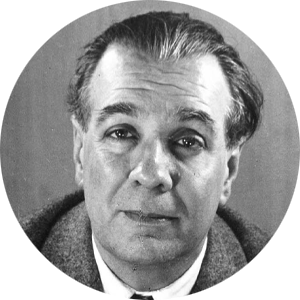
Jorge Luis Borges on dictatorships

“Dictatorships foster oppression, dictatorships foster servitude, dictatorships foster cruelty; more abominable is the fact that they foster idiocy.”

–JORGE LUIS BORGES

Jorge Luis Borges (24 August 1899 – 14 June 1986) was an Argentine writer, poet, and essayist who is considered a central figure in Spanish and international literature. He is best known for his short stories, particularly the 1940s collections Fictions and The Aleph, which mix elements of fantasy, science fiction, and surrealism. Some consider him a contributor to the beginnings of magical realism. 

The world will end in 25 years, humanity will die and towns will become slaughterhouses: Oxford scientists’ nightmare prediction, their proof it’s inevitable and why billionaires in their bunkers should tremble

By CHRISTOPHER STEVENS, TV CRITIC

PUBLISHED: 22 August 2025 (archive.ph via Daily Mail+)

In a game of Russian roulette with a standard Colt revolver, the chances of instant death are one-in-six.

Terrifyingly, that’s the same as the odds of humanity being wiped out within 75 years – everyone dead in a cataclysmic and total breakdown of civilisation, according to Oxford University futurologist Toby Ord, an expert on the threat of artificial intelligence.

Does it sound impossibly bleak? His colleague Nick Bostrom is more pessimistic still. He rates the possibility of human extinction by the next century as one in four.

Pulitzer prize-winning writer Jared Diamond is even less hopeful, predicting our species’ chances of survival beyond 2050 – just 25 years away – are no better than evens, or 50/50.

Not so long ago, only oddballs in sandwich boards and evangelical cult leaders seriously believed ‘the end of the world is nigh’. The phrase itself was a comic cliche, so gloomy it was funny.

But the voices now warning of our impending extinction come from highly respected scientists, not kooky doom-sayers. They point to multiple existential threats faced by the human race: not only nuclear weapons, but rampant climate change, artificially engineered viruses and even malevolent AI capable of manufacturing its own super-weapons.

In a chilling new book, Cambridge academic Luke Kemp draws a ghastly conclusion. Human societies and empires always collapse, he warns, because they are fuelled by unsustainable greed.

Dr Kemp dubs them ‘Goliaths’, after the giant warrior in the Old Testament who appeared invincible until a single stone from a slingshot felled him.

Experts point to multiple existential threats faced by the human race: not only nuclear weapons, but rampant climate change, artificially engineered viruses and even malevolent AI capable of manufacturing its own super-weapons

Experts point to multiple existential threats faced by the human race: not only nuclear weapons, but rampant climate change, artificially engineered viruses and even malevolent AI capable of manufacturing its own super-weapons

Not so long ago, only oddballs in sandwich boards and evangelical cult leaders seriously believed 'the end of the world is nigh'. The phrase itself was a comic cliche, so gloomy it was funny

Not so long ago, only oddballs in sandwich boards and evangelical cult leaders seriously believed ‘the end of the world is nigh’. The phrase itself was a comic cliche, so gloomy it was funny

Every civilisation in human history has been ‘self-terminating’, he says. The pattern is always the same, beginning with an inequality in wealth between the powerful few and the mass of ordinary people. This leads to an imbalance in decision-making, as those in power – whether emperors, presidents or chief executives – rewrite the rules to suit the elite few.

Goliath societies are rapacious. They suck up all the available wealth and funnel it to the ruling class. When the rest of society starts to starve, a violent reaction sets in. Weak Goliaths are overthrown easily. Stronger ones fight back, using military dominance to cling to power.

And the harder they fight, the harder they fall.

Their civilisations are gradually hollowed out, by corruption, infighting among the rulers, over-expansion, degradation of the environment and what Kemp calls ‘immiseration of the masses’.

The collapse of infrastructure, political systems and the rule of law put these societies at the mercy of drought, wildfires, an earthquake or tsunami, floods, war and disease – events that could normally be weathered but here become the final death blow to civilisation.

It’s a nightmarish vision. What makes it so compelling and frightening is the proof Kemp supplies, in a thick volume, that this pattern is an ancient one far older than the Bible itself.

He traces it back to the earliest farmers, where the boom-and-bust cycle of primitive agriculture led to the rapid growth of towns that would be abandoned when famine struck.

Kemp, a senior research fellow at the Centre for the Study of Existential Risk at the University of Cambridge, argues that throughout much of history, the collapse of a society brought benefits for many as well as localised death and disaster.

Peter Thiel, the brains behind online purchasing system PayPal, has a private jet on standby to take him to his bunker in New Zealand should Doomsday become reality

Peter Thiel, the brains behind online purchasing system PayPal, has a private jet on standby to take him to his bunker in New Zealand should Doomsday become reality

Sam Altman, the CEO of OpenAI, has revealed that he and Peter Thiel have a deal whereby, if societal collapse looms, they will board a private jet and fly to the bunker together

Sam Altman, the CEO of OpenAI, has revealed that he and Peter Thiel have a deal whereby, if societal collapse looms, they will board a private jet and fly to the bunker together

Empires that grew fat on slavery – for instance, the Greek and Roman civilisations – helped new technology to spread. When one society fell apart, another grew up in its place, after a period of readjustment, and took advantage of the lessons from the past.

But when the globalised Goliath of the 21st century is destroyed, there might be nothing and no one left to take its place.

And that destruction, Kemp warns, seems imminent.

In the 1950s, nuclear weapons were our sole existential threat. That has not gone away: an estimated 10,000 such warheads are stockpiled, controlled not only by the superpowers China, Russia and America, but by India, Pakistan, Israel and North Korea, as well as France and the UK.

Iran was also close to building a nuclear bomb and detonator, until its underground facilities were targeted in US strikes in June.

But weapons of mass destruction are no longer the only nightmare – nor even the worst.

In the past, diseases such as the Black Death, which killed between a third and half of the British population in the 1300s, were limited by the speed of spread, no faster than people could travel.

Now, a novel virus such as Covid, engineered in a biowarfare laboratory using gain-of-function technology, can move around the world as fast (and in as many directions) as passenger airliners.

Climate change is taking place at an unprecedented rate – ten times faster than the global warming that triggered the greatest mass extinction in the planet’s history: the Great Permian Dying, which wiped out between 80 and 90 per cent of all life 252 million years ago.

And in 2023, hundreds of AI scientists, including the bosses of leading developers such as Google DeepMind, issued a statement highlighting real fears that the software they were trialling could become virulently hostile… capable of enslaving or obliterating us.

Fear of death by tech is nothing new. In 1924, Winston Churchill published a pamphlet entitled Shall We All Commit Suicide?

Writing 21 years before the first atomic bomb was dropped on Hiroshima, and a century before drones were used in warfare, his vision seems extraordinarily prophetic: ‘Might not a bomb no bigger than an orange be found to possess a secret power to destroy a whole block of buildings – nay, to concentrate the force of a thousand tons of cordite and blast a township at a stroke?

‘Could not explosives even of the existing type be guided automatically in flying machines by wireless or other rays, without a human pilot, in ceaseless procession on a hostile city, arsenal, camp or dockyard?’

The fact that humanity has not so far been consumed in a conflagration is not proof, Kemp points out, that it will not happen.

The only question is how bad it will be.

He defines ‘societal collapse’ as the failure of a state combined with economic breakdown and mass deaths. Anything less than global decimation – that is, the death of 10 per cent of the planet’s population – does not qualify as total societal collapse on a worldwide scale. It has happened before, and humanity recovered.

But beyond that, there is a spectrum of catastrophic risk, all the way to 100 per cent annihilation – human extinction.

A worldwide disaster that wrecks the delicate network of telecommunications and food distribution, for instance, could quickly turn civilisation into chaos. Kemp cites the Carrington Event of 1859, a massive ejection of electromagnetic solar flares from the sun which, if it happened today, would fry much of our electrical infrastructure.

Without satellites, computers and the internet, our banking system, health service, phone networks and many vehicles, from cars to warplanes, would cease to function, quite literally in a flash. The best estimates put the probability of this at 20.3 per cent per decade – or 50/50 by the midpoint of the century.

How quickly this would turn Britain’s towns into slaughterhouses is anybody’s guess.

The panic that gripped millions of people at the onset of the pandemic in 2020, with supermarket shelves emptied within hours, is not cause for hope.

Little optimism exists among the billionaires who have benefited most from computers and the internet. Many are active super-preppers, getting ready for the end of the world as fervently as religious extremists awaiting the End Of Days.

Peter Thiel, the brains behind online purchasing system PayPal, has a private jet on standby to take him to his bunker in New Zealand. In 2011, he purchased a 477-acre former sheep station on the South Island as a safe haven against Doomsday.

He also arranged New Zealand citizenship for himself, despite having spent just a dozen days in the country (the usual requirement is 1,350 days).

The island’s location, deep in the southern hemisphere, makes it well placed – in theory, at least – to weather the worst of global radiation fallout if a nuclear war escalates to ‘mutually assured destruction’. It would also be relatively isolated in the event of another pandemic.

Sam Altman, the CEO of OpenAI, has revealed that he and Thiel have a deal whereby, if societal collapse looms, they will board a private jet and fly to the bunker together.

Indeed, that day will see a wholesale exodus of the super-rich. Kemp points to ‘an entire industry of reinforced, luxury bunker-manors with pools, wine vaults, artificial gardens for sunbathing in simulated sunlight, and underground hydroponic farms, from Texas to the Czech Republic… in one case, with a dozen ex-Navy special forces SEALs’.

The former cryptocurrency tycoon Sam Bankman-Fried, once reckoned to be the richest man in the world aged under 30 before he was jailed for fraud last year, wanted to go one further and buy the Pacific island of Nauru, in Micronesia, as a refuge for himself and his fabulously wealthy family and friends.

But a heavily defended bunker comes with its own problems. One frequent worry for super-preppers is: ‘How do I maintain authority over my security force after civilisation collapses?’

After all, the people guarding the billionaires will be the ones with the guns and the military training. An armed coup might not be far behind. Proposed solutions included electric ‘zapper’ collars for staff, and AI robots instead of human bodyguards.

Such a dictatorial mindset is at the core of why societies break down, Kemp argues. Rule by coercion never survives for long. Since the Stone Age, human networks have prospered only when they are built on trust and mutual respect for an agreed set of laws. Once that disintegrates, everything else falls with it.

But even a bunker-world founded on the most altruistic principles is unlikely to survive the apocalypse.

Isolated pockets of humanity never do last long. Because they are geographically confined and unable to trade with other groups, they are inevitably reliant on localised food supplies – and when these fail, starvation follows.

The mega-rich might be able to prepare for a global collapse, but it is the very poor who stand the best chance of living through it.

If the world’s industries shut down, highly developed countries that depend on food imports will be hit first.

Then, as the supply of fertilisers and pesticides runs out, the major producers of North America and Europe, China and India will see their output crash. Wheat, rice, corn and soybean yields will all drop by at least 75 per cent.

In Africa, where subsistence farmers use far less chemicals, rice production might fall by as little as 25 per cent and soybean by just 5 per cent. There will be hunger, but not on the scale suffered in richer countries.

Developing countries, on the other hand, are most at risk from climate change. About 30 million people currently live in places on the planet where average yearly temperatures exceed 29C.

But if greenhouse gas emissions carry on at medium to high levels, it is expected that by 2070 around 2 billion people will be living in those sweltering conditions. This will drive mass migration to cooler climes, but it will also devastate agriculture. The amount of land viable for corn and wheat crops would be halved.

Even the solutions Kemp proposes come with their own apocalyptic risks.

One is stratospheric aerosol injection, which involves pumping the upper atmosphere with chemicals such as sulphur dioxide to reflect sunlight.

This mimics volcanic eruptions and could be done at a cost of about £7.5billion a year.

Kemp and a colleague, Dr Aaron Tang, carried out a study in 2021 and found this massive chemical release could have unpredictable effects on rainfall patterns.

But a bigger problem is one of ‘termination shock’. These chemicals wash out of the atmosphere within six months. They have to be constantly replaced – and that might be impossible if, for instance, solar flares or another pandemic grounded all the world’s planes.

The planet would start to heat up again, this time even faster than before. The warming we have experienced over 250 years, since the start of the Industrial Revolution, could be repeated in just a couple of decades.

Every option comes with near-suicidal implications. Think back to that imaginary game of Russian roulette, and now imagine that every threat to human existence is another bullet in the chamber of the revolver.

Nuclear war… climate catastrophe… misanthropic AI… geo-magnetic storms… man-made viruses.

How many bullets before we no longer have any chance at all?

Goliath’s Curse: The History And Future Of Societal Collapse, by Luke Kemp, is published by Penguin/Viking

Consciousness, spirituality, biography, sexuality, androgyny, futurism, space, the arts, science, astrology, democracy, humor, books, movies and more