The Dialectics of Postmodern Sexual Identity

DECEMBER 3, 2019 (counterpunch.org)

by DAVID ROSEN

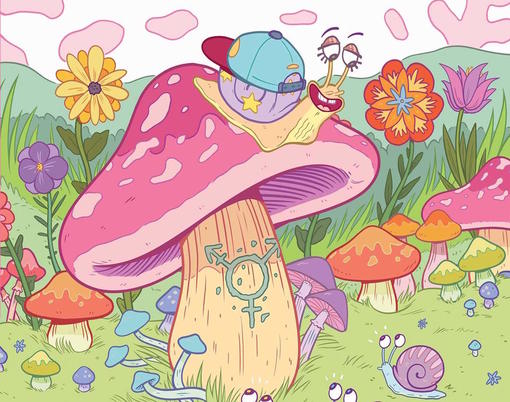
Cover art for the book A Quick & Easy Guide to Queer & Trans Identities

Earlier this year Mady G. and J.R. Zuckerberg, two cartoonists and illustrators, published a wonderful nonfiction graphic booklet, A Quick & Easy Guide to Queer & Trans Identities, that is recommended to everyone seeking a better understanding of sexual identity today.They use an image of a cartoon snail, Iggy, to reflect on key issues of sex and gender identity, making the booklet appropriate for younger, teenage, readers.

Mady G. notes in the “Intro,” “the main purpose of self-identification and classification is to foster community and counteract feelings of confusion, otherness, and shame. … [A] person’s personal identity, queer or otherwise, is more tangible if that person can name it and thus own it.”

Iggy and the other plants and animal characters are attractive, drawn in an inoffensive, if dull, pastel pinks and purples.  More important, the Guide is a popularly written work revealing the meaning and history of many words and phrases – some disparaging — common to today’s consideration of sexual identity. These include: What does “queer” mean?; what is gender identity?; what does dysphoria means?; what is asexuality?; what does it mean to “come out”?; and what is a queer relationship?

For example, the authors distinguish between gender and sex in the following terms:

Gender “is the social, cultural, and mental state of being male, female, a combination of the two, or neither.  It has to do how somebody feels inside rather than what they look like.”

Sex “has to do with reproduction as well as physical and biological make-up and can reference things like chromosomes, genitalia, and hormonal activity rather than mental attributes.”

They also distinguish between “cisgender” (i.e., “a person whose assigned sex and gender match”) and “transgender” (i.e., “a person whose assigned sex and gender do not match”).

The Guide suggests just how far popular notions of sexual identity have come from the old days when “heterosexual”/“homosexual” or “straight”/“gay” sufficed.  Such terms are so yesterday.

The Human Rights Campaign identifies more than two dozen terms defining sexual identity, ranging from “androgynous” to “transgender”.  GLAAD identifies more than a dozen acceptable terms and includes a list of “terms to avoid.”  Slate reported in 2015 that Facebook offered users 50 custom gender identifiers.  And even USA Today published a list of “LGBTQ definitions every good ally should know.”

***

The growing number of terms relating to sexual identity suggests a unique historical dialectic.  The struggle over language is part of the struggle for self-identity and political legitimacy – it is a struggle that “nonconforming” people have been waging for eons.  It reflects the growing social power — and self-empowerment! — of a once shamed (and worse) segment of the population who have found new – if still contested — acceptance.

After a millennium of denial, sexual self-identity is becoming a more complex – more honest – category of personal being and social life.  The traditional, conventional, distinctions between male/female and straight/gay are proving inadequate for the truth, reality, of 21st century sexual culture, at least in the more advanced capitalist countries.  For as long as humans have been human, there has been a separate category of “other” that infused both dimensions of sexual identity – gender and sex – with disruptive dissonance.

This dissonance has considerable resonance.  It included the unacceptable, the illicit, the immoral, the weird, the nonconforming.  Postmodern capitalism has fostered a sexual culture in which the other has been mainstreamed, with gender differences acknowledged – accepted! — as a defining feature of human experience and identity, no longer a deviance.

The Christian West — along with other global system of patriarchal belief – long imposed a biologically-grounded, belief system defined by two genders (male and female) and one sexuality (heterosexuality).  But what if this is not the case?  What if gender is, like sexuality and self-identity, more complex, more varied, and evolution over time?

A century ago, the leading sex researcher was Magnus Hirschfeld, founder of the Institute of Sexual Research in Berlin.  His institute existed from 1919-1933, until the Nazis closed it down and famously burned its legendary library. He coined the term “transvestite” and is the author of The Transvestites: The Erotic Drive to Cross-Dress (1910).  Anticipating changes that were yet to come, he famously noted: “The number of actual and imaginable sexual varieties is almost unending; in each person there is a different mixture of manly and womanly substances, and as we cannot find two leaves alike on a tree, then it is highly unlikely that we will find two humans whose manly and womanly characteristics exactly match in kind and number.”

A half-century later, America’s sexual culture began to be transformed due to changes fostered by the post-WW-II consumer revolution.  Alfred Kinsey and Harry Benjamin played critical roles in this process.

Kinsey was a PhD biologist, professor of entomology and zoology, who helped define modern sexuality.  Mainstream postwar Americas were shocked, shocked, by the revelations about male and female sexuality revealed in Kinsey and his associates’ now-classic studies – Sexual Behavior of Human Male (1948) and Sexual Behavior of Human Female (1953). They represent a landmark in not only empirical research, but moral philosophy as well.

Kinsey and his team revised the then-popular tri-part model of human sexuality — i.e., heterosexual, homosexual and bisexual — into a seven-point spectrum.  The new model ran from zero to six in terms of sexual proclivity, or heterosexual-to-homosexual scale; the data was based on the reported sexual practices of his subjects. Each point delineated a very imprecise distinction between men engaged in exclusive heterosexual to exclusive homosexual acts and—with any bell-curve—the greatest segments of the population concentrated somewhere in the middle. For Kinsey, there were no “homosexuals” or, for that matter, “heterosexuals” — only men engaged in sexual acts that were labeled the one or the other.  Five years later, in Sexual Behavior of Human Female, Kinsey and his team would find an equally complex sexual culture among American women.

Benjamin was an MD endocrinologist who was among the first medical professionals to treat and study transsexuals; he is author of the pioneering study, The Transsexual Phenomenon (1966).  He provided hormone therapy to America’s most celebrated transgender personality, Christine Jorgenson, as part of her gender reassignment procedure.  In 1966, Benjamin introduced a modified — but more formal – Kinsey scale, the Sex Orientation Scale (SOS), categorizing those with gender identity issues.

Type 1 – Transvestite – (Pseudo)

Type 2 – Transvestite – (Fetishistic)

Type 3 – Transvestite – (True)

Type 4 – Transsexual – (Non-Surgical)

Type 5 – Transsexual – (Moderate Intensity)

Type 6 – Transsexual – (High Intensity)

Benjamin’s model, the Standards of Care, remains the cornerstone of the de-facto guidelines for treating sexual reassignment, the WPATH (World Professional Association of Transgender Health) standards.

***

Over the last decade or so, the gender nonconforming community has grown, drawing support from young people, gender-theory academics and sex-politics activists.  Their call for a fuller range of sexual identity recalls — if unacknowledged – Hirschfeld.  This shift is gender consciousness is exemplified by the growth of nonconforming networking sites, domains that have moved beyond the conventional identities of male or female, gay or straight.

In 2016, the Williams Institute at the UCLA School of Law released a study on transgender people in the U.S., noting the following. “We estimate that 0.7% of youth ages 13 to 17, about 150,000 youth, would identify as transgender, in addition to 0.6% (or about 1.4 million) adults.

Most recently, the Proceedings of the National Academy of Sciences (PNAS) recently published a revealing study, “Similarity in transgender and cisgender children’s gender development”; the lead author is Selin Gülgöz, PhD, postdoctoral researcher, Department of Psychology, University of Washington.  One of its findings is suggestive as to how sexual culture changes through the experience of transgender kids aged 3 and 12.  It reports: “transgender children strongly identify as members of their current gender group and show gender-typed preferences and behaviors that are strongly associated with their current gender, not the gender typically associated with their sex assigned at birth.”

Gülgöz report that “”the overwhelming finding is that transgender children … show strong identification with their current gender, and they show strong preferences for toys, clothing, and peers typically associated with their current gender, and not their assigned sex.”

Jack Drescher, MD, clinical professor, psychiatry, Columbia University, cautions: “This study does not answer the question of why some children develop a transgender identity, or a cisgender identity, for that matter.”

Nevertheless, something profound is at play.  The meaning of “sexual identity” – however defined – is profoundly changing.   The old model, comforting to the maintaining of political and patriarchal power, is being challenged – and something new is pushing the historical agenda.

***

As others far smarter have considered, history is a complex dialectic. It is of the present, but a present mediated by a past and a future.  It is a present that is multidimensional, one fashioned by many causes and consequences.  Yet, it is very specific, local, yet global occurrence.  It is a present that is everything yet nothing, a part of a complex whole ever in development.

The world changes, and so does sexual identity.  A century ago, the U.S. confronted WW-I, getting ready for the Roaring ‘20s and – its negative dialectic – Prohibition.  The 1920s was a decade distinguished by its new women, jazz and speakeasies. During this period, the social categories that defined male and female sexual identify were not as yet as formal, fixed or exclusionary as they would become in the post-WW-II.  In the 21st century, they would become all pervasive.

A century ago, male and female sexual categories were in some important ways less restrictive than they are today.  George Chauncey, author of the essential study, Gay New York: Gender, Urban Culture, and the Making of the Gay Male World, 1890-1940, suggests thatthe 1920s was a more intriguing, complex era than is conventionally acknowledged.

This was the era of jazz, the flapper, drag balls and zillions of illegal speakeasies.  Chauncey found:

Many men alternated between male and female sexual partners without believing that interest in one precluded interest in the other, or that their occasional recourse to male sexual partners, in particular, indicated an abnormal, ‘homosexual,’ or even ‘bisexual’ disposition, for they neither understood nor organized their sexual practices along a hetero-homosexual axis.

Most prophetic, he noted, “the social dichotomies of heterosexuality and homosexuality were not yet hegemonic.”

Chauncey’s revealing history of Gotham was published 1994.  The U.S. has come a long way over the last quarter-century – and so too the historical dialectic.  Today, three-fourths (75%) of American women and teen girls engage in premarital sex; nearly two-thirds (62%) of all women of reproductive age use a contraceptive.  Most revealing, between 1991 and 2014, the teen birthrate fell by nearly 40 percent and the abortion rate for women 15 to 44 years has markedly declined.

Welcome to the new normal.Join the debate on FacebookMore articles by:DAVID ROSEN

David Rosen is the author of Sex, Sin & Subversion:  The Transformation of 1950s New York’s Forbidden into America’s New Normal (Skyhorse, 2015).  He can be reached at drosennyc@verizon.net; check out www.DavidRosenWrites.com.

Very Rare Portal of Profound Love is Open (Venus-Saturn-Pluto Triple Conjunction 12/02-12/20)

DECEMBER 3, 2019 BY MATTHEW STELZNER (stelz.biz)

I hope you all have been experiencing much joy and abundance in the Portal of the Expanding Heart (the recent Venus Jupiter conjunction that I wrote about last time). We are still moving through this portal for a few more days, and at the same time we are at the threshold of a new portal, what I’m calling the Portal of Profound Love. This is the name I’ve chosen for this rare conjunction of Venus, Saturn and Pluto which lasts until about December 20th. 

We only get a tight triple conjunction like this twice during our current Saturn-Pluto conjunction, with the first having been in February of this year. Previous to February, the last time to catch a wave like this was way back in 1983, so this is a very rare chance to set an intention for deeper, more sustained and sustainable love and intimacy in our lives, with both self and others. 

When these three planets are in alignment with the Earth there is an opportunity to strengthen and deepen our love relationships. We all long for deep intimacy and for strong secure attachments with the people who matter the most to us, and this starts with ourselves. Do we feel satisfied by the depth of intimacy we have with ourselves? Are we loyal lovers to ourselves? Are we able to demonstrate love towards ourselves in the tough times, on our tough days? Do we notice when our hearts are closed toward ourselves, and how do we work to keep our hearts open and practice forgiveness towards ourselves and others?

For me this is the essence of the spiritual path: learning to love and forgive ourselves each day, especially in the areas where we see our flaws and limitations. Its about learning to love our flaws, and its about learning to bring love into our depths where shame, ugliness and repressed pain, as well as our greatest gifts and passions, often live. 

This is the masterclass in love, and these next few weeks are a chance to really learn to grow in these areas, as well as set intentions for the future. It is also an important time to appreciate and anchor all the ways we’ve already matured and found wisdom in these areas. It is a time to ask ourselves how we are doing in the grand masterclass of love: the experience of our entire lifetime journey.

This is the cycle of time where we stretch ourselves to work harder at loving ourselves, where we learn to navigate our own shadow material and the shadow material of others with greater lovingkindness. It is also the cycle where we learn to find additional support and guidance from those with more skills and wisdom in these areas. In my experience these are lifetime daily practice, and like the cycles of the heavens, there are many ups and downs and spirals of growth when it comes to our capacity to be loyal deep lovers with ourselves and others. 

What have been the consequences in our lives, (joyful, challenging, and mixed) when it comes to love and sexuality? What are the consequences for not going deep enough, and what are the consequences for going too deep? What are the consequences when we hang in there with the people that matter the most? Has it been worth it? Is it worth it to try harder? Have we hung in there too long with someone, and are we experiencing the consequences of being too loyal where there has been a proven lack of reciprocity? When have we been too serious in love, and when not enough?

Another question we might ask: do I have a pattern of going too deep too fast in my new intimate relationships? If yes then Saturn can help us slow things down to a sustainable pace as we learn how to dive only as deep as we have the skills for, and then coming up for air before it is too much.

This is a time to let ourselves be attracted to maturity, to fall in love with wisdom, to see the beauty in our own aging process and the aging process of those we are attracted to. 

Venus and Saturn have something to do with how love grows stronger and more mature over time, and how there are special qualities of love that can only be found on planets like the Earth where time feels linear and where death seems real. 

Now is a time to recognize our own maturation process in the area of love, sexuality and intimacy, to see how we’ve learned from our mistakes in these areas and to honor ourselves for how far we have come. It is also an important time to honor those support people who have embodied wisdom and helped us to mature and grow stronger in these areas. 

Who are the people in our lives that have helped us through the hard times? Who’s hung in there with us, and who have we hung in there with? Now is a time to recognize these people and to appreciate the value of that work, to honor how far we’ve come and the quality of love that we have built. These are the people to keep hanging in there with because of the value of that investment of love.

It is a time to recognize how the challenges of life draw forth the strongest love, both within ourselves and between ourselves and others, and how this is even more true when it comes to the  challenges that feel most epic in scope and consequential in their gravity. These are the times when the deepest powers of love emerge and we get to see that love is a force of nature that we can trust to transform, heal and sustain us when we are working with our most demanding Karmic patterns. 

This can also be a moment where we recognize either our maturity in finding sexual satisfaction, or our need to seek guidance in this area. Its a moment where we can see the positive consequences in our lives for any work we’ve done around sexuality as well as the healing power of sustained deep intimacy. We learn to see the moments when we feel a lack  of intimacy in our lives as a chance to put more time and energy into developing the skills necessary to get our needs met.

These are weeks where there is a chance to set the tone for the coming decades (until the next tight Venus-Saturn-Pluto triple conjunction in February of 2053). Its not that there won’t be tons of support from the heavens in these areas between now and then (Venus is conjunct Saturn and Pluto at different times every year, and there is actually another, broader, triple conjunction of these three in February of 2021), but I say this to indicate the rare chance to set a powerful intention to become more mature, and wiser in these areas.

This is also a great time to commune with the sky for support and guidance, a great time to observe the planets. For the hour after sunset look towards the western horizon and with a clear sky you will first see Jupiter closest to the horizon, then above that (and much brighter) you will see Venus followed by Saturn above. Saturn is a significantly fainter light than Venus, but still a clear pin-prick of slightly orange light. Imagine right next to Saturn is Pluto and watch how Venus gets closer to them in the coming days. Extend yourself to these planets and pray for guidance and support in your relationship with yourself and with those for whom you feel the most love. 

So lets get down, lets get funky, and lets get real as we approach the beginning of a new decade and a chance to find stronger and more satisfying love in our lives. For more of my thoughts on this special alignment please watch my new video where I explore other potentials of this alignment not mentioned here. This could also be a great time to have an astrological consultation to focus on these themes, and I would love to be of support to you if you are feeling drawn to it. Please click the blue button below in the right corner to see my schedule  for the month of December and to sign up for a consultation. Wishing you all deep sustained intimacy with yourself and the most important people in your life. Blessings!

The Tempest

The Tempest, a play by William Shakespeare (1611). An elaborate blend of comedy, drama, and fantasy, it is set on an enchanted island where Prospero, rightful duke of Milan, has lived since being usurped by his brother Antonio. Using his magical powers, Prospero conjures up a storm that forces Antonio and his companions onto the island, paving the way for an ingenious reconciliation. The word sea-change meaning a change caused by the sea, and figuratively, a major transformation, comes from Act 1, scene ii of this play: “Nothing of him that doth face, but doth suffer a sea-change into something rich and strange.”

–Encarta Wold English Dictionary

Alain de Botton on Existential Maturity and What Emotional Intelligence Really Means

By Maria Popova (brainpickings.org)

schooloflife_book.jpg?fit=320%2C484

“Maturity is the ability to live fully and equally in multiple contexts,” poet and philosopher David Whyte wrote in one of his most beautiful meditations. A generation before him, Anaïs Nin took up the subject in her diary, which is itself a work of philosophy: “If you intensify and complete your subjective emotions, visions, you see their relation to others’ emotions. It is not a question of choosing between them, one at the cost of another, but a matter of completion, of inclusion, an encompassing, unifying, and integrating which makes maturity.” And yet emotional maturity is not something that happens unto us as a passive function of time. It is, as Toni Morrison well knew, “a difficult beauty, an intensely hard won glory” — the product of intentional character-sculpting, the slow and systematic chiseling away of our childish impulses for tantrums, for sulking, for instant self-gratification without regard for others, for weaponizing our feelings of shame, frustration, and loneliness. Like happiness — another life-skill we have miscategorized as a passive abstraction — it requires early education, consistent relearning, and unrelenting practice.

That is what Alain de Botton, one of our era’s most uncommonly perceptive, lyrical, and lucid existential contemplatives, offers in The School of Life: An Emotional Education (public library) — the book companion to his wonderful global academy for self-refinement, a decade in the making.

ab1.jpg?resize=680%2C656

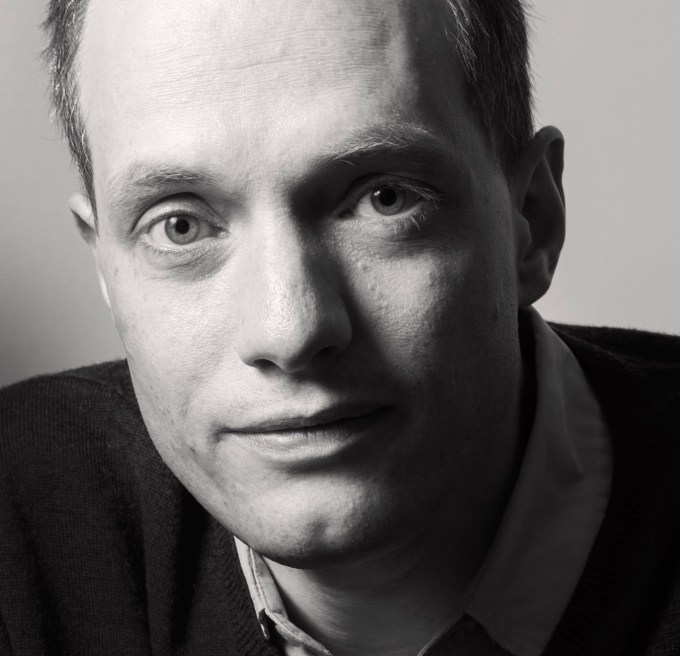
Alain de Botton

De Botton considers the type of learning with which the road to emotional maturity is paved:

2e292385-dc1c-4cfe-b95e-845f6f98c2ec.png

The knack of our species lies in our capacity to transmit our accumulated knowledge down the generations. The slowest among us can, in a few hours, pick up ideas that it took a few rare geniuses a lifetime to acquire.

Yet what is distinctive is just how selective we are about the topics we deem it possible to educate ourselves in. Our energies are overwhelmingly directed toward material, scientific, and technical subjects and away from psychological and emotional ones. Much anxiety surrounds the question of how good the next generation will be at math; very little around their abilities at marriage or kindness. We devote inordinate hours to learning about tectonic plates and cloud formations, and relatively few fathoming shame and rage.

The assumption is that emotional insight might be either unnecessary or in essence unteachable, lying beyond reason or method, an unreproducible phenomenon best abandoned to individual instinct and intuition. We are left to find our own path around our unfeasibly complicated minds — a move as striking (and as wise) as suggesting that each generation should rediscover the laws of physics by themselves.

MouniFeddag.jpg?resize=680%2C944

Art by Mouni Feddag for a letter by Alain de Botton from A Velocity of Being: Letters to a Young Reader. Available as a print.

This irrational orientation to our emotional lives, De Botton argues, is our inheritance from the Romantics, who crowned the untrained intuition the supreme governing body of human conduct. (And yet the Romantics contained multitudes — for all their belief in the unalterable givenness of emotional reality and the fidelity of feeling, they had a glimmering recognition that reason must be consciously applied to reining in the wildness of the emotions. Mary Shelley, offspring of the greatest power couple of political philosophy, placed at the heart of Frankenstein — one of the most prescient and psychologically insightful works of literature ever composed, triply so for being the work of an eighteen-year-old girl — an admonition against the unbridled reign of the ego’s emotional cravings unchecked by reason and forethought of consequence.) Exception aside, De Botton’s broader point is excellent:

2e292385-dc1c-4cfe-b95e-845f6f98c2ec.png

The results of a Romantic philosophy are everywhere to see: exponential progress in the material and technological fields combined with perplexing stasis in the psychological one. We are as clever with our machines and technologies as we are simple-minded in the management of our emotions. We are, in terms of wisdom, little more advanced than the ancient Sumerians or the Picts. We have the technology of an advanced civilization balancing precariously on an emotional base that has not developed much since we dwelt in caves. We have the appetites and destructive furies of primitive primates who have come into possession of thermonuclear warheads.

In 1983, the psychologist Howard Gardner devised his seminal theory of multiple intelligences, expanding our narrow cultural definition of intelligence as verbal and mathematical skill to include seven other modes of intellectual ability. A decade later, Daniel Goleman added a tenth form of intelligence — emotional intelligence — which quickly permeated the fabric of popular culture as hoards of humans felt suddenly recognized in an endowment long neglected as a valuable or even extant faculty of consciousness. Building on that legacy, De Botton brings his own sensitive perspicacity to a richer, more dimensional definition:

2e292385-dc1c-4cfe-b95e-845f6f98c2ec.png

The emotionally intelligent person knows that love is a skill, not a feeling, and will require trust, vulnerability, generosity, humor, sexual understanding, and selective resignation. The emotionally intelligent person awards themselves the time to determine what gives their working life meaning and has the confidence and tenacity to try to find an accommodation between their inner priorities and the demands of the world. The emotionally intelligent person knows how to hope and be grateful, while remaining steadfast before the essentially tragic structure of existence. The emotionally intelligent person knows that they will only ever be mentally healthy in a few areas and at certain moments, but is committed to fathoming their inadequacies and warning others of them in good time, with apology and charm… There are few catastrophes, in our own lives or in those of nations, that do not ultimately have their origins in emotional ignorance.

De Botton is careful to acknowledge that this line of inquiry might trigger the modern intellectual allergy to the genre of learning dismissively labeled self-help. And yet he reminds us that the quest for self-refinement has always accompanied the human experience and animated each civilization’s most respected intellects — it is there at the heart of the Stoics, and in the essays of Montaigne, and at the center of Zen Buddhism, and in the literary artistry of Proust (whom De Botton has especially embraced as a fount of existential consolation). He aims a spear of simple logic to the irrational and rather hubristic disdain for self-help:

2e292385-dc1c-4cfe-b95e-845f6f98c2ec.png

To dismiss the idea that underpins self-help — that one might at points stand in urgent need of solace and emotional education — seems an austerely perverse prejudice.

myheart_luyken2.jpg

Art by Corinna Luyken from My Heart — an emotional intelligence primer in the form of an uncommonly tender illustrated poem.

Our cultural failure at making emotional intelligence an educable thing, De Botton argues, stems from two flawed baseline assumptions of our education system itself — its focus on what people are taught over how they are taught, and its tendency to mistake information for wisdom. (Adrienne Rich shone a sidewise gleam on these flaws and their remedy in her superb 1977 convocation address about why an education is something you claim, not something you get.) De Botton envisions the emotionally enlightened alternative:

2e292385-dc1c-4cfe-b95e-845f6f98c2ec.png

An emotional education may require us to adopt two different starting points. For a start, how we are taught may matter inordinately, because we have ingrained tendencies to shut our ears to all the major truths about our deeper selves. Our settled impulse is to blame anyone who lays our blind spots and insufficiencies bare, unless our defenses have first been adroitly and seductively appeased. In the face of critically important insights, we get distracted, proud, or fidgety. We may prefer to do almost anything other than take in information that could save us.

Moreover, we forget almost everything. Our memories are sieves, not robust buckets. What seemed a convincing call to action at 8 a.m. will be nothing more than a dim recollection by midday and an indecipherable contrail in our cloudy minds by evening. Our enthusiasms and resolutions can be counted upon to fade like the stars at dawn. Nothing much sticks.

It was the philosophers of ancient Greece who first identified these problems and described the structural deficiencies of our minds with a special term. They proposed that we suffer from akrasia, commonly translated as “weakness of will,” a habit of not listening to what we accept should be heard and a failure to act upon what we know is right. It is because of akrasia that crucial information is frequently lodged in our minds without being active in them, and it is because of akrasia that we often both understand what we should do and resolutely omit to do it.

How to overcome akrasia and live with life-enlarging emotional intelligence — by absorbing the beauty and wisdom encoded in literature and art, by harnessing the power of ritual, by undertaking the difficult, immensely rewarding and redemptive work of self-knowledge — is what De Botton offers in the remainder of the throughly helpful The School of Life: An Emotional Education. Complement this small prefatory excerpt with philosopher Martha Nussbaum on the intelligence of emotions, then revisit De Botton on what makes a good communicatorthe psychological paradox of sulking, and his lovely letter to children about why we read.

FROZEN’S QUEEN ELSA IS A DANGEROUS AUTOCRAT

Disney’s Animated Franchise Sends Children an Anti-Democratic Message 

Frozen’s Queen Elsa Is a Dangerous Autocrat | Zocalo Public Square • Arizona State University • Smithsonian

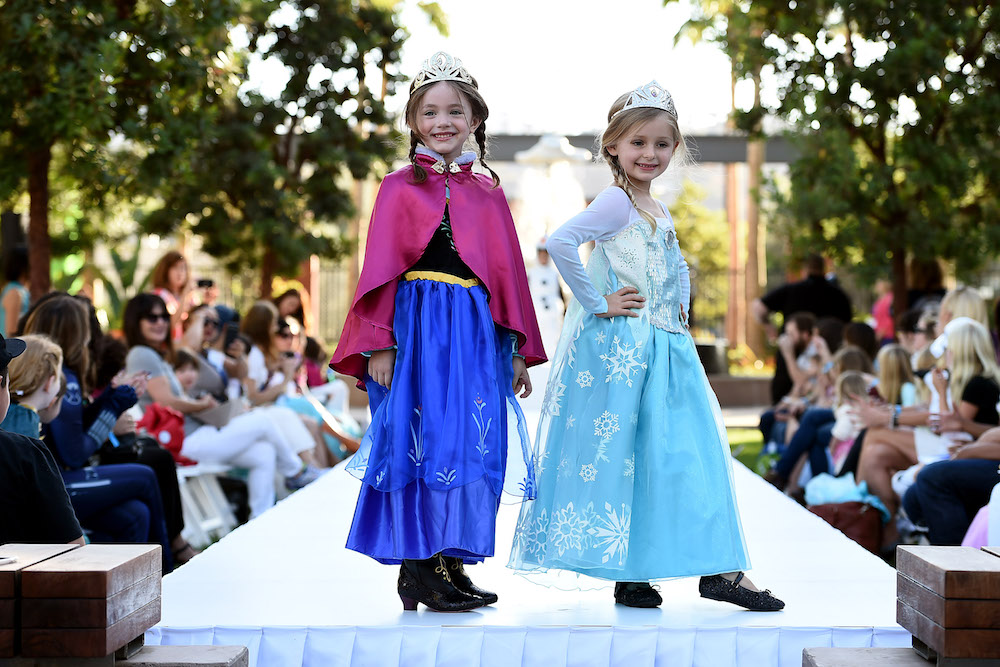
At Disney Consumer Products’ VIP Halloween Fashion Show in October 2014, two kids modeling Anna and Elsa costumes pose at the end of a runway. Courtesy of Jordan Strauss/Associated Press.

by JOE MATHEWS | NOVEMBER 26, 2019 (zocalopublicsquare.com)

So far, our republic has survived the Civil War, the Great Depression, two world wars, and even the 2016 election. But can it survive the new sequel to the mega-hit animated film, Frozen?

I doubt it.

While this now-concluding decade has seen autocrats rise and democracy decline around the globe, no unelected ruler of the 2010s has set as seductive an example of unaccountable authoritarianism as Queen Elsa, the monarch at the center of the Frozen franchise.

For all its lovely images and irresistible songs, Frozen celebrates the illogic of monarchs from Louis XIV to Trump: l’etat c’est moi, or “the state is me,” reflecting the idea that a society is defined by the feelings and needs of its rulers.

Sadly, the blame for this animated attack on democratic values falls on our fellow Californians—specifically, Disney executives, writers, and animators. They are the most powerful players in the great California-based enterprise of exporting narratives that capture children’s imaginations, and thus shape the future of culture and politics worldwide. Unfortunately, these creative Californians—who live in a state built on the promise that you can live like a king—prefer tales of princes, princesses, and other pretty people whose power is not derived from the consent of the governed.

I’m sorry if this sounds overwrought, but I’ve suffered under the Frozen tyranny personally. My three kids are among the hundreds of millions of people who loved the original Frozen film, an animated tale of a young Scandinavian queen named Elsa, who has the magical voice of Idina Menzel, the power to create ice with her hands, and a loyal-to-the-death sister, Anna (Kristen Bell).

But the overwhelming success of that 2013 film—$1.2 billion in global box office and two Oscars—has become a form of cultural oppression. The film’s best-selling soundtrack, its ubiquitous swag, its endless YouTube fan videos have made Frozen inescapable, so visible and audible in our lives as to raise questions about whether Disney marketers are violating the Geneva Convention. The torture is worst for parents; by my rough count, I’ve seen the movie 25 times—not once of my own free will.

I would compare Frozen’s cultural tyranny to that of the sloppy neo-authoritarians—Trump, Bolsonaro, Modi, Duterte, Orbán, Erdoğan—who now dominate media and politics worldwide. Except that Disney is a more effective, disciplined, and ambitious demagogue than any of these guys. Here in America, Frozen’s dominance of the media has lasted six years, while Trump has monopolized the headlines for only three.

To be fair, the filmmakers clearly intended their 2013 movie as a celebration of loyalty and familial love. We are meant to identify with Elsa, who becomes queen of the kingdom of Arendelle when her parents are lost at sea. She can’t control her ice-making powers, so, after setting off an epic winter freeze, she flees to an ice castle in the mountains. Anna chases after her. Eventually—after adventures including a scary monster, a reindeer, romance, and trolls who mercifully aren’t on Facebook—love and magic conquer all, and Elsa and Anna return to Arendelle to continue their monarchical rule.

The seeming villain of this piece is Anna’s boyfriend Prince Hans of the Southern Isles, who is left in charge of Arendelle when Elsa abandons her post. Hans is portrayed as the bad guy because he doesn’t really love Anna and because he seeks to retain power when Elsa returns to reclaim her throne.When Elsa leaves her people in total darkness after a disaster of her own making (who does she think she is—PG&E?), Hans steps in to comfort the public, hand out blankets and food, and try to find some way to end the winter. He, unlike the narcissistic and irresponsible Elsa, sees climate change as a real emergency.

But I don’t think he’s the real villain. After my first half-dozen-or-so forced viewings of the film, I began to see Hans—voiced by the Tony Award-winning actor Santino Fontana, the Stockton-born son of a schoolteacher and an agronomist—as the film’s flawed and tragic hero.

While Elsa and Anna are unelected rulers consumed with their own personal dramas, Hans is the only character in the movie who thinks about the needs of Arendelle’s traumatized citizens, who barely register in the film.

When Elsa leaves her people in total darkness after a disaster of her own making (who does she think she is—PG&E?), Hans steps in to comfort the public, hand out blankets and food, and try to find some way to end the winter. He, unlike the narcissistic and irresponsible Elsa, sees climate change as a real emergency.

So I, for one, find it hard to blame Hans when, upon Elsa’s return, he tries to slay a tyrant who effectively abdicated her throne during a national crisis. His action would seem to qualify both as a good-faith defense of Arendelle’s national security, and as a brave application of the Jeffersonian principle that the people possess the right of revolution against dictators.

Of course, this is a film for young people, who, as the political scientists Roberto Stefan Foa and Yascha Mounk have shown, are turning against democracy. So Hans is thrown into a dungeon without trial. Meanwhile, Elsa melts all the ice she created. Then, instead of rallying her administration to respond to the dangerous flooding that such a sudden melt would produce, she holds a party outside her castle—thus establishing the emergency response model followed by the federal government after Hurricane Maria hit Puerto Rico.

For the sequel, I’d been hoping to see Arendelle’s residents rise up against the monarch, free the political prisoner Hans, and turn their kingdom into another robust Scandinavian social democracy. Alas, Frozen 2’s plot is instead an imperial adventure about an enchanted forest and the royal sisters who continue their undemocratic rule.

GET MORE ZÓCALO

Ideas journalism with a head and heart.

You may opt out or contact us anytime.

By this point in the column, you may say that we shouldn’t worry about a computer-animated fantasy. But mass entertainment has a huge impact on how we think and feel. Animated films from the Disney empire have inspired major social shifts—most notably Bambiwhich spawned the environmental movement, not to mention a population explosion of deer. And Disney has never been more powerful than it is right now, with the corporate bullies from Burbank having bought up Marvel and Star Wars properties to form a veritable cartel of fantasy.

So, while our current civic problems are rightfully pinned on white supremacy, economic dislocation and digital disruption, Frozen shouldn’t entirely escape blame.

It’s understandable that frustrated parents, given the difficulty of finding childcare, might use this film to distract their kids temporarily with sweet songs. But I worry about the long-term effects of these movies. One question: If we’re going to teach our children to sing along with an unaccountable autocrat like Elsa, how will we ever muster the social consensus to remove real-life authoritarians from office?

The Secret Life of Trees: The Astonishing Science of What Trees Feel and How They Communicate

“A tree can be only as strong as the forest that surrounds it.”

Brain Pickings|

  • Maria Popova

Illustration by Arthur Rackham for a rare 1917 edition of the Brothers Grimm fairy tales. Available as a print.

Trees dominate the world’s the oldest living organisms. Since the dawn of our species, they have been our silent companions, permeating our most enduring tales and never ceasing to inspire fantastical cosmogonies. Hermann Hesse called them “the most penetrating of preachers.” A forgotten seventeenth-century English gardener wrote of how they “speak to the mind, and tell us many things, and teach us many good lessons.”

But trees might be among our lushest metaphors and sensemaking frameworks for knowledge precisely because the richness of what they say is more than metaphorical — they speak a sophisticated silent language, communicating complex information via smell, taste, and electrical impulses. This fascinating secret world of signals is what German forester Peter Wohlleben explores in The Hidden Life of Trees: What They Feel, How They Communicate (public library).

Wohlleben chronicles what his own experience of managing a forest in the Eifel mountains in Germany has taught him about the astonishing language of trees and how trailblazing arboreal research from scientists around the world reveals “the role forests play in making our world the kind of place where we want to live.” As we’re only just beginning to understand nonhuman consciousnesses, what emerges from Wohlleben’s revelatory reframing of our oldest companions is an invitation to see anew what we have spent eons taking for granted and, in this act of seeing, to care more deeply about these remarkable beings that make life on this planet we call home not only infinitely more pleasurable, but possible at all.

But Wohlleben’s own career began at the opposite end of the caring spectrum. As a forester tasked with optimizing the forest’s output for the lumber industry, he self-admittedly “knew about as much about the hidden life of trees as a butcher knows about the emotional life of animals.” He experienced the consequence of what happens whenever we turn something alive, be it a creature or a work of art, into a commodity — the commercial focus of his job warped how he looked at trees.

Then, about twenty years ago, everything changed when he began organizing survival training and log-cabin tours for tourists in his forest. As they marveled at the majestic trees, the enchanted curiosity of their gaze reawakened his own and his childhood love of nature was rekindled. Around the same time, scientists began conducting research in his forest. Soon, every day became colored with wonderment and the thrill of discovery — no longer able to see trees as a currency, he instead saw them as the priceless living wonders that they are. He recounts:

Life as a forester became exciting once again. Every day in the forest was a day of discovery. This led me to unusual ways of managing the forest. When you know that trees experience pain and have memories and that tree parents live together with their children, then you can no longer just chop them down and disrupt their lives with large machines.

The revelation came to him in flashes, the most eye-opening of which happened on one of his regular walks through a reserve of old beech tree in his forest. Passing by a patch of odd mossy stones he had seen many times before, he was suddenly seized with a new awareness of their strangeness. When he bent down to examine them, he made an astonishing discovery:

The stones were an unusual shape: they were gently curved with hollowed-out areas. Carefully, I lifted the moss on one of the stones. What I found underneath was tree bark. So, these were not stones, after all, but old wood. I was surprised at how hard the “stone” was, because it usually takes only a few years for beechwood lying on damp ground to decompose. But what surprised me most was that I couldn’t lift the wood. It was obviously attached to the ground in some way. I took out my pocketknife and carefully scraped away some of the bark until I got down to a greenish layer. Green? This color is found only in chlorophyll, which makes new leaves green; reserves of chlorophyll are also stored in the trunks of living trees. That could mean only one thing: this piece of wood was still alive! I suddenly noticed that the remaining “stones” formed a distinct pattern: they were arranged in a circle with a diameter of about 5 feet. What I had stumbled upon were the gnarled remains of an enormous ancient tree stump. All that was left were vestiges of the outermost edge. The interior had completely rotted into humus long ago — a clear indication that the tree must have been felled at least four or five hundred years earlier.

How can a tree cut down centuries ago could still be alive? Without leaves, a tree is unable to perform photosynthesis, which is how it converts sunlight into sugar for sustenance. The ancient tree was clearly receiving nutrients in some other way — for hundreds of years.

Beneath the mystery lay a fascinating frontier of scientific research, which would eventually reveal that this tree was not unique in its assisted living. Neighboring trees, scientists found, help each other through their root systems — either directly, by intertwining their roots, or indirectly, by growing fungal networks around the roots that serve as a sort of extended nervous system connecting separate trees. If this weren’t remarkable enough, these arboreal mutualities are even more complex — trees appear able to distinguish their own roots from those of other species and even of their own relatives.

Art by Judith Clay from Thea’s Tree.

Wohlleben ponders this astonishing sociality of trees, abounding with wisdom about what makes strong human communities and societies:

Why are trees such social beings? Why do they share food with their own species and sometimes even go so far as to nourish their competitors? The reasons are the same as for human communities: there are advantages to working together. A tree is not a forest. On its own, a tree cannot establish a consistent local climate. It is at the mercy of wind and weather. But together, many trees create an ecosystem that moderates extremes of heat and cold, stores a great deal of water, and generates a great deal of humidity. And in this protected environment, trees can live to be very old. To get to this point, the community must remain intact no matter what. If every tree were looking out only for itself, then quite a few of them would never reach old age. Regular fatalities would result in many large gaps in the tree canopy, which would make it easier for storms to get inside the forest and uproot more trees. The heat of summer would reach the forest floor and dry it out. Every tree would suffer.

Every tree, therefore, is valuable to the community and worth keeping around for as long as possible. And that is why even sick individuals are supported and nourished until they recover. Next time, perhaps it will be the other way round, and the supporting tree might be the one in need of assistance.

[…]

A tree can be only as strong as the forest that surrounds it.

One can’t help but wonder whether trees are so much better equipped at this mutual care than we are because of the different time-scales on which our respective existences play out. Is some of our inability to see this bigger picture of shared sustenance in human communities a function of our biological short-sightedness? Are organisms who live on different time scales better able to act in accordance with this grander scheme of things in a universe that is deeply interconnected?

To be sure, even trees are discriminating in their kinship, which they extend in varying degrees. Wohlleben explains:

Every tree is a member of this community, but there are different levels of membership. For example, most stumps rot away into humus and disappear within a couple of hundred years (which is not very long for a tree). Only a few individuals are kept alive over the centuries… What’s the difference? Do tree societies have second-class citizens just like human societies? It seems they do, though the idea of “class” doesn’t quite fit. It is rather the degree of connection — or maybe even affection — that decides how helpful a tree’s colleagues will be.

These relationships, Wohlleben points out, are encoded in the forest canopy and visible to anyone who simply looks up:

The average tree grows its branches out until it encounters the branch tips of a neighboring tree of the same height. It doesn’t grow any wider because the air and better light in this space are already taken. However, it heavily reinforces the branches it has extended, so you get the impression that there’s quite a shoving match going on up there. But a pair of true friends is careful right from the outset not to grow overly thick branches in each other’s direction. The trees don’t want to take anything away from each other, and so they develop sturdy branches only at the outer edges of their crowns, that is to say, only in the direction of “non-friends.” Such partners are often so tightly connected at the roots that sometimes they even die together.

Art by Cécile Gambini from Strange Trees by Bernadette Pourquié.

But trees don’t interact with one another in isolation from the rest of the ecosystem. The substance of their communication, in fact, is often about and even to other species. Wohlleben describes their particularly remarkable olfactory warning system:

Four decades ago, scientists noticed something on the African savannah. The giraffes there were feeding on umbrella thorn acacias, and the trees didn’t like this one bit. It took the acacias mere minutes to start pumping toxic substances into their leaves to rid themselves of the large herbivores. The giraffes got the message and moved on to other trees in the vicinity. But did they move on to trees close by? No, for the time being, they walked right by a few trees and resumed their meal only when they had moved about 100 yards away.

The reason for this behavior is astonishing. The acacia trees that were being eaten gave off a warning gas (specifically, ethylene) that signaled to neighboring trees of the same species that a crisis was at hand. Right away, all the forewarned trees also pumped toxins into their leaves to prepare themselves. The giraffes were wise to this game and therefore moved farther away to a part of the savannah where they could find trees that were oblivious to what was going on. Or else they moved upwind. For the scent messages are carried to nearby trees on the breeze, and if the animals walked upwind, they could find acacias close by that had no idea the giraffes were there.

Because trees operate on time scales dramatically more extended than our own, they operate far more slowly than we do — their electrical impulses crawl at the speed of a third of an inch per minute. Wohlleben writes:

Beeches, spruce, and oaks all register pain as soon as some creature starts nibbling on them. When a caterpillar takes a hearty bite out of a leaf, the tissue around the site of the damage changes. In addition, the leaf tissue sends out electrical signals, just as human tissue does when it is hurt. However, the signal is not transmitted in milliseconds, as human signals are; instead, the plant signal travels at the slow speed of a third of an inch per minute. Accordingly, it takes an hour or so before defensive compounds reach the leaves to spoil the pest’s meal. Trees live their lives in the really slow lane, even when they are in danger. But this slow tempo doesn’t mean that a tree is not on top of what is happening in different parts of its structure. If the roots find themselves in trouble, this information is broadcast throughout the tree, which can trigger the leaves to release scent compounds. And not just any old scent compounds, but compounds that are specifically formulated for the task at hand.

The upside of this incapacity for speed is that there is no need for blanket alarmism — the recompense of trees’ inherent slowness is an extreme precision of signal. In addition to smell, they also use taste — each species produces a different kind of “saliva,” which can be infused with different pheromones targeted at warding off a specific predator.

Wohlleben illustrates the centrality of trees in Earth’s ecosystem with a story about Yellowstone National Park that demonstrates “how our appreciation for trees affects the way we interact with the world around us”:

It all starts with the wolves. Wolves disappeared from Yellowstone, the world’s first national park, in the 1920s. When they left, the entire ecosystem changed. Elk herds in the park increased their numbers and began to make quite a meal of the aspens, willows, and cottonwoods that lined the streams. Vegetation declined and animals that depended on the trees left. The wolves were absent for seventy years. When they returned, the elks’ languorous browsing days were over. As the wolf packs kept the herds on the move, browsing diminished, and the trees sprang back. The roots of cottonwoods and willows once again stabilized stream banks and slowed the flow of water. This, in turn, created space for animals such as beavers to return. These industrious builders could now find the materials they needed to construct their lodges and raise their families. The animals that depended on the riparian meadows came back, as well. The wolves turned out to be better stewards of the land than people, creating conditions that allowed the trees to grow and exert their influence on the landscape.

Art by William Grill from The Wolves of Currumpaw.

This interconnectedness isn’t limited to regional ecosystems. Wohlleben cites the work of Japanese marine chemist Katsuhiko Matsunaga, who discovered that trees falling into a river can change the acidity of the water and thus stimulate the growth of plankton — the elemental and most significant building block of the entire food chain, on which our own sustenance depends.

In the remainder of The Hidden Life of Trees, Wohlleben goes on to explore such fascinating aspects of arboreal communication as how trees pass wisdom down to the next generation through their seeds, what makes them live so long, and how forests handle immigrants. Complement it with this wonderful illustrated atlas of the world’s strangest trees and an 800-year visual history of trees as symbolic diagrams.

This article was originally published on September 26, 2016, by Brain Pickings, and is republished here with permission.

SCIENTISTS: OMINOUS BLACK HOLE IS WAY TOO BIG TO EXIST

Black hole, artwork

December 1, 2019 VICTOR TANGERMANN (futurism.com)

Chungus

Researchers at the Chinese Academy of Sciences have spotted a mindbogglingly colossal black hole, according to Live Science, that’s roughly 70 times the mass of the Sun.

That’s more than three times the presumed upper limit of 20 solar masses that astrophysicists believed a black hole in our galaxy could be, setting up a scientific race to explain the existence of the cosmic monster.

“Black holes of such mass should not even exist in our Galaxy, according to most of the current models of stellar evolution,” lead researcher LIU Jifeng of the National Astronomical Observatory of China of the Chinese Academy of Sciences said in a statement.

LB-Fun

The black hole, dubbed LB-1, is some 15,000 light years from Earth and is one of an estimated 100 million stellar black holes in our galaxy — though only about two dozen have been spotted so far. A paper of their research was published in the journal Nature last week.

Towards the end of a typical Milky Way star’s life cycle, most of its gas is shed due to powerful stellar winds, leaving almost nothing behind. Yet “LB-1 is twice as massive as what we thought possible,” Jifeng said. “Now theorists will have to take up the challenge of explaining its formation.”

The researchers used China’s Large Sky Area Multi-Object Fiber Spectroscopic Telescope to spot signs of the black hole using a technique that’s only been around for about four years.

READ MORE: Stellar Black Hole in Our Galaxy Is So Massive It Shouldn’t Exist [Live Science]

W.H. Auden on crisis

W. H. Auden

W. H. Auden was admired for his unsurpassed technical virtuosity and ability to write poems in nearly every imaginable verse form; his incorporation of popular culture, current events, and vernacular speech in his work; and also for the vast range of his intellect, which drew easily from an extraordinary variety of literatures, art forms, social and political theories, and scientific and technical information.

September 1, 1939

W. H. Auden – 1907-1973 (poets.org)

I sit in one of the dives
On Fifty-second Street
Uncertain and afraid
As the clever hopes expire
Of a low dishonest decade:
Waves of anger and fear
Circulate over the bright
And darkened lands of the earth,
Obsessing our private lives;
The unmentionable odour of death
Offends the September night.

Accurate scholarship can
Unearth the whole offence
From Luther until now
That has driven a culture mad,
Find what occurred at Linz,
What huge imago made
A psychopathic god:
I and the public know
What all schoolchildren learn,
Those to whom evil is done
Do evil in return.

Exiled Thucydides knew
All that a speech can say
About Democracy,
And what dictators do,
The elderly rubbish they talk
To an apathetic grave;
Analysed all in his book,
The enlightenment driven away,
The habit-forming pain,
Mismanagement and grief:
We must suffer them all again.

Into this neutral air
Where blind skyscrapers use
Their full height to proclaim
The strength of Collective Man,
Each language pours its vain
Competitive excuse:
But who can live for long
In an euphoric dream;
Out of the mirror they stare,
Imperialism’s face
And the international wrong.

Faces along the bar
Cling to their average day:
The lights must never go out,
The music must always play,
All the conventions conspire
To make this fort assume
The furniture of home;
Lest we should see where we are,
Lost in a haunted wood,
Children afraid of the night
Who have never been happy or good.

The windiest militant trash
Important Persons shout
Is not so crude as our wish:
What mad Nijinsky wrote
About Diaghilev
Is true of the normal heart;
For the error bred in the bone
Of each woman and each man
Craves what it cannot have,
Not universal love
But to be loved alone.

From the conservative dark
Into the ethical life
The dense commuters come,
Repeating their morning vow;
“I will be true to the wife,
I’ll concentrate more on my work,”
And helpless governors wake
To resume their compulsory game:
Who can release them now,
Who can reach the deaf,
Who can speak for the dumb?

All I have is a voice
To undo the folded lie,
The romantic lie in the brain
Of the sensual man-in-the-street
And the lie of Authority
Whose buildings grope the sky:
There is no such thing as the State
And no one exists alone;
Hunger allows no choice
To the citizen or the police;
We must love one another or die.

Defenceless under the night
Our world in stupor lies;
Yet, dotted everywhere,
Ironic points of light
Flash out wherever the Just
Exchange their messages:
May I, composed like them
Of Eros and of dust,
Beleaguered by the same
Negation and despair,
Show an affirming flame.

Consciousness, sexuality, androgyny, futurism, space, the arts, science, astrology, democracy, humor, books, movies and more