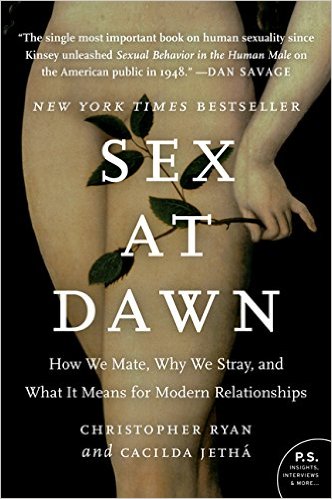
A controversial, idea-driven book that challenges everything you (think you) know about sex, monogamy, marriage, and family. In the words of Steve Taylor (The Fall, Waking From Sleep), Sex at Dawn is “a wonderfully provocative and well-written book which completely re-evaluates human sexual behavior and gets to the root of many of our social and psychological ills.”
Utopia (Libellus vere aureus, nec minus salutaris quam festivus, de optimo rei publicae statu deque nova insula Utopia) is a satirical work of fiction and political philosophy by Thomas More (1478–1535) published in 1516 in Latin. The book is a frame narrative primarily depicting a fictional island society as described by the character Raphael Hythloday who lived there some years, who describes and its religious, social and political customs.
Translators: Mike Zonta, Melissa Goodnight, Richard Branam, Hanz Bolen
SENSE TESTIMONY: Telling lies (and believing lies) is misleading and we might not be able to brake the resultant behavior.
5th Step Conclusions:
1) Truth is innate all-knowing, always telling the Truth, always believing the Truth, the reality of grandeur, the unbrakeability and unbreakability of Truthful behavior.
2) All is always only ONE, Infinite Consciousness Being, expressing and informing and conveying, the Perfectly Whole Truth — which is knowing and remembering such, in every moment of True Awareness.
3) Truth is the One Infinite ready Mentality, persistently Cultivating it’s Center of creativity, Beautifully Bestowing it’s Fully Attentative Pre -Occupation of Playfully Singing its Melodic Utopian Dance of Living Life Fully
4) The Truth I am is the only Dominion, the Universal Integrity, Essence, Value Expression of All there is. Truth is the only Familiarity, only Evidence, Feeling Spirit, Expression, The only Value, Purchase, Agreement there is. I am Only of the Family of Truth, Guiding All there is.
All Translators are welcome to join this group. See Weekly Groups page/tab.
I am going to attempt to tackle the subject of Monogamy…
Even if we have managed to shake off the shackles of guilt, shame and conditioning, I believe that we all have different appetites around sexuality and intimacy. I don’t believe most of us are built to only have sex with one person for our adult life.
As mentioned in the book ‘Sex at Dawn’ (highly recommended reading), our DNA is almost identical to Bonobo monkeys, who happily live and procreate together in groups not in nuclear families. This raises the question: What is social conditioning and what is our real nature?
I think up to the age of twenty one and perhaps into our twenties, it is important to express ourselves intimately with many people – only then can we make better choices around our self-belief, our desires and our responsibilities, because it is the first experience of ourselves outside of the childhood setting.
In many indigenous societies, this time of teenage-hood would be a very different time of initiation where we would explore our fear of death and our own unique away of engaging life. We have none of these initiation ceremonies in our modern culture and really have no idea who we are until we end up on a therapists couch or in an AA meeting.
Some people really are built to have many partners and some are not – we must be authentic in the face of societal conditioning. The main aim if you are to have children is to be ready to be a mother or father and the surrender that entails. Too many people think if they find the ‘right’ partner, they will be a good parent! Backwards thinking.
I feel it takes a whole village to raise a child and it’s that village you need to concentrate building so that you don’t fall into codependency. If you decide monogamy is for you then it should not be held by law in a marriage contract but held by love in a heart space in the sacred bond that can happen when two people are interdependent not codependent. Most indigenous tribes do not necessarily mate for life but have many partners (both men and women) because it’s the children and the village that matter. They feel secure in their support and in themselves so they don’t have to keep someone close in a contract but keep people close in their heart.
Jordan Peterson’s year of ‘absolute hell’: Professor forced to retreat from public life because of addiction
The controversial author and professor is recovering from addiction to tranquilizers and near-death in Russia, his family says
Jordan Peterson is recovering from a severe addiction to
benzodiazepine tranquilizers and was recently near death in an induced
coma, his daughter Mikhaila said.
He is being treated at a clinic in Russia after being repeatedly misdiagnosed at several hospitals in North America, she said.
The
University of Toronto psychologist who became an intellectual hero to a
global audience by aligning self-help theory with anti-progressive
politics was first prescribed the medication a few years ago to treat
anxiety after what Mikhaila described as an autoimmune reaction to food.
His physical dependence on it became apparent to his family last April,
when his wife Tammy was diagnosed with cancer.
The last year, which saw him retreat from public life after swiftly becoming one of the most famous authors in the world, has been an “absolute hell,” said Mikhaila, also a well known speaker on diet, who advocates eating only beef.
n November, he went to a rehabilitation centre in New York. He has previously discussed his long history of depression.
His
conditioned worsened through the winter, Mikhaila said. He was driven
to thoughts of suicide by a movement disorder called akathisia, a well
known side effect of various drugs for mental illnesses. It is a sense
of restlessness and an inability to sit still.
“It became apparent that he was experiencing a paradoxical reaction to the medication, meaning the benzos did the opposite of what they’re supposed to do. These reactions are rare but are not unheard of,” Mikhaila said in the script for a video shared with the National Post.
She and her husband took him to Moscow last month, where
he was diagnosed with pneumonia and put into an induced coma for eight
days. She said his withdrawal was “horrific,” worse than anything she
had ever heard about. She said Russian doctors are not influenced by
pharmaceutical companies to treat the side-effects of one drug with more
drugs, and that they “have the guts to medically detox someone from
benzodiazepines.”
Jordan Peterson has only just come out of an
intensive care unit, Mikhaila said. He has neurological damage, and a
long way to go to full recovery. He is taking anti-seizure medication
and cannot type or walk unaided, but is “on the mend” and his sense of
humour has returned.
“He’s smiling again for the first time in months,” she said.
Before There Was a Secular Argument Against Believing in God, There Was a Groundswell of Popular Distrust
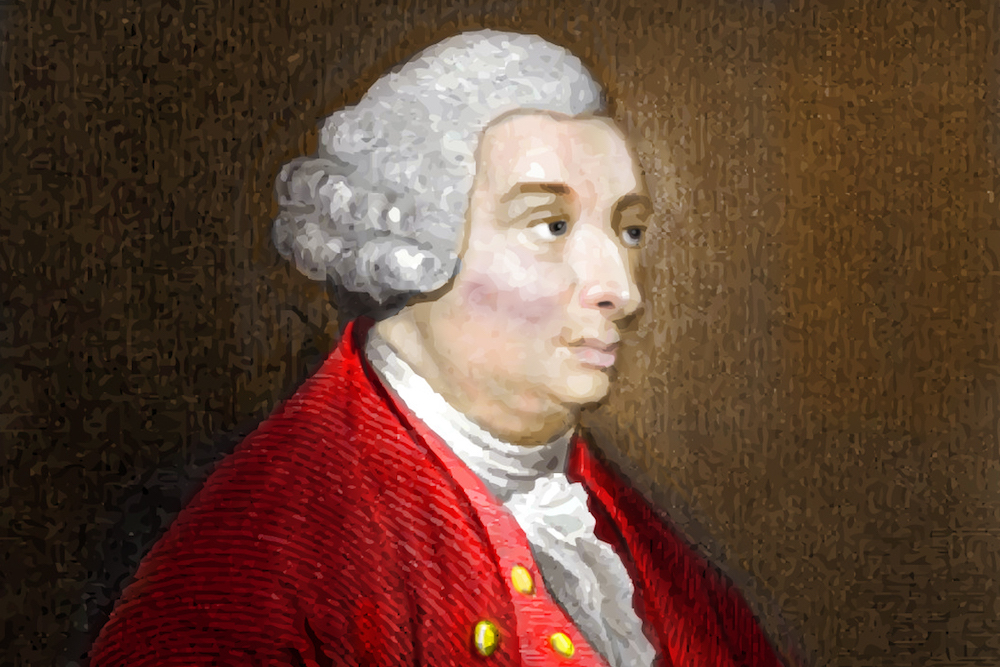
During the 18th and 19th centuries a cohort of influential individuals, including David Hume, questioned the existence of a Judeo-Christian God. Courtesy of Wikimedia Commons.
by ALEC RYRIE | FEBRUARY 5, 2020 (zocalopublicsquare.org)
“God is dead,” Nietzsche claimed, “and we have killed him.”
Well, maybe. But who is the we here? Who did the dreadful deed, and when, and how?
The usual suspects include David Hume, Karl Marx, Charles Darwin, and the rest of the philosophers, scientists and intellectuals who, during the Enlightenment and scientific revolution of the 18th and 19th centuries, were accused of directly bludgeoning God. Since then, the story goes, the rest of the world has been slowly catching up—and as a result we have our current ‘secular’ age.
But I don’t buy it. For one thing, the chronology doesn’t fit: those were also the centuries of the Great Awakenings, groundswells of religious reinvention and renewal. Nor does the logic hold up in more recent times. The secularist surge in the West since the 1960s wasn’t caused by any new scientific or philosophical bombshells. Above all, it’s clear that European Christians had been fretting about ‘atheists’ and ‘unbelievers’ long before the Enlightenment.
In fact, anxiety about unbelief stretches back even before the Reformation, in the 16th century.
This type of early atheism is usually dismissed by historians on the grounds that it had no serious philosophical backing. And that’s true, but that fact simply shows that unbelief existed in practice before it existed in theory.
People who read and write books have a persistent tendency to overestimate the power of ideas. But how many of us actually change our beliefs or our lives as the result of a chain of conscious reasoning? The conventional story has it that philosophers attacked religion and people then stopped believing. But what if people stopped believing and then invented arguments to justify their unbelief?
If we look back at Christianity’s history of unbelief, we can see raw, unsophisticated, emotional skepticism running deep into the Middle Ages. It was driven by two things: anger and anxiety. Anger was directed at overbearing churches, interfering priests and the God who they claimed was on their side. Anxiety was about whether God really hears prayers, and whether the soul is really immortal.
Neither anger nor anxiety was a threat to a Christian society back then; they were perennial, predictable and eminently manageable.
But then the Reformation hit.
In the early 1500s, Martin Luther turned his personal crisis into a Europe-wide religious explosion by weaponizing skepticism: training Christians not just to doubt other Christians, but to mock and vilify them mercilessly, accusing them of perpetrating a centuries-long priestly con-trick. Of course, Luther’s point was to overthrow a supposedly corrupt church and set up a purified one in its place. But the trouble with arming entire populations—even if only with ideas—is that it is hard to control what they do.And as believers caught in the crossfire were threatened with hellfire by preachers on every side, they asked themselves the once-unthinkable question: Is Hell just another con-trick? Would a good God could ever truly condemn his creations to eternal torment?
It should be no surprise that some people turned their scorn onto the new religion as well as the old. Catholics were blind, and Protestants one-eyed, said one group of French freethinkers: only they themselves were truly deniaisez. That French word meant both “enlightened” and “deflowered.” They had lost their religious virginity, and there was no going back.
Unbelief in the wake of the Reformation remained a story of anger and anxiety. Furious resentment at the churches, which were as bad as one another. Paralyzing fear that your eternal fate depended on making the choice between Catholic and Protestant—without any assurance about which one was right. But what changed was that both the anger and the anxiety now had a moral edge—as they still do today.
During the persecution and religious wars of the seventeenth century, fury at the church easily became righteous anger: Was this really how Jesus Christ would have lived? And as believers caught in the crossfire were threatened with hellfire by preachers on every side, they asked themselves the once-unthinkable question: Is Hell just another con-trick? Would a good God could ever truly condemn his creations to eternal torment? Maybe, a few people began to wonder, the most truly moral thing to do was to walk away from all this so-called religion.
The canonical founding fathers of western atheism—like Baruch Spinoza and Pierre Bayle in the later 17th century, or Voltaire and Tom Paine in the 18th—were not trying to abolish religion, but to reform and purify it. In practice, though, that could look pretty similar. Once you conclude that your house of faith is built on sand, you might as well demolish it and start digging in order to find bedrock so you can build anew. And that is not too different from just smashing it up—especially if, no matter how deep you dig, your shovel never seems to ring on anything truly solid.
These same themes of anger and anxiety run right up through the modern period and can be seen in the anticlerical fury of Karl Marx and the anarchist Mikhail Bakunin, as well as in the agonized literary doubts of Fyodor Dostoevsky and George Eliot. As ever, what truly fires those emotions is not science or metaphysics, but ethics.
In light of all of this history, the secular surge of our own times does not represent any kind of intellectual breakthrough. Instead, in the wake of two world wars and the social revolutions which followed, our society no longer measures its morals by the old religious yardsticks. Not that our new, secular moral convictions rest on any firmer foundations than the old ones.
Most of us, from the Middle Ages to the present, have always made the great choices—about our beliefs, values, identities, and purposes—intuitively and emotionally, with our whole selves. That applies to religious faith, which as we all know is often chosen for instinctive, inarticulate, intuitive reasons, but it is just as true of unbelief.
This is not because belief, or unbelief, is irrational. It is because human beings are irrational—or rather, because we are not calculating machines. The emotional history of belief and unbelief suggests that our intuition often has a certain wisdom to it. As Blaise Pascal, one of the seventeenth century’s shrewdest wrestlers with doubt, put it: the heart has its reasons, of which Reason knows nothing. He knew that we rarely choose either belief or unbelief. They choose us.ALEC RYRIEis a professor of the history of Christianity at Durham University and a professor of Divinity at Gresham College. His most recent book is Unbelievers: An Emotional History of Doubt.
…is excited to be part of the Conscious Life Expo, Fri, Sat and Sunday this weekend. If you are in the area, we’ll be on the first floor at the LAX Hilton Hotel so please stop by and say hi: LAX Hilton is located at 5711 W. Century Blvd. near the Los Angeles International Airport
Al will be doing a talk on Sunday at 6pm so please come and support Al and meet some potential new students. We’ve also got some free give away’s so please come on by. Aloha!!!
Al Haferkamp, H.W., M. will be speaking at 6pm Sunday Feb 9th.
And we’ll be inviting Students and Seekers to our other upcoming events.