It seems to be fashionable right now to ponder whether we are living in a simulation. Tech moguls have been reported to do it in hot tubs. I’m doing it at 6 am in an Airbnb in Marin County, California. Before we begin, I think it’s really important to distinguish between two possible major hypotheses: (A) what seems to be happening is a simulation but “we” are not, and (B) everything that seems to be happening is simulated, including “us”. Let’s break these down a little, one by one.
Hypothesis A: This is Virtual Reality (VR)
In this hypothesis, somewhere there is an “real”, non-simulated organism that possibly contains something brain-like, a sort of “natural” processor that instantiates the sense of selfhood, a mechanism that receives input and produces output and also possibly witnesses that process and has a sense that it exists as a conglomeration of phenomena apart from everything else that seems to be happening.
In this hypothesis, either that brain actually exists inside what we think of as our head, or it exists in some other place and is wired up to an input/output interface, enabling it to experience a simulated reality. If the reality we experience is simulated, then what that root brain is interacting with could be an arbitrary number of simulation levels down. For example, in the first layer of simulation, the brain could be wired up to experience a second layer of simulation. This process could continue ad infinitum and we could be experiencing reality, probably very inefficiently, at whatever the lowest current layer is.
In this model, there is a consciousness peering through from a root reality into whatever simulation level this is. As an aside, I have to reveal that I’m personally not a big proponent of the idea of consciousness in the first place. I think it’s a myth created by a sufficiently complex pattern recognition machine, an illusive shadow imagined to be somehow behind or beyond the simplicity of what seems to be happening.
Proponents of this hypothesis posit, based on how we see technology advancing in our potentially synthetic world (or worlds), that technology will always advance to the point where sentient beings will become immersed inside a simulated sub-reality. Then, those beings living in a simulated world will themselves develop technology sufficiently sophisticated to allow them to become immersed in a synthetic world (or worlds) of their own creation. The argument is that, assuming that any one of these civilizations does not destroy itself before becoming totally immersed in a sub-reality, then we could be any number of simulated layers deep. Speaking statistically, if we’re sampling from all possibilities, and assuming that all our assumptions are correct, then it’s infinitely more likely that what we’re experiencing is simulation than not.
Hypothesis B: We Are Artificial Consciousnesses (AC)
This is another possibility that I’ve not heard others talk about much. I also suspect that when people talk about “us” being simulated, they usually really mean that our bodies are simulated in whatever simulation level we’re in (as in hypothesis A).
What I’m talking about here is that we are artificial consciousnesses. This means that there is no self peering through from a higher-level, root reality. The sense of self is arising spontaneously in this current level. The thoughts and feelings that are appearing are interpreted by sophisticated pattern matching as being for and about someone. When action happens, this artificial consciousness assumes this it is initiating it.
In this model, there isn’t really anyone. There is just a computer simulation running that includes an experience of something being separate from what seems to be happening.
Hypothesis C: The VR/AC Hybrid
Now, of course, it’s possible that there is a hybrid of the two first hypotheses. There might be trillions of nested virtual worlds that root consciousnesses are peering into, and then at some point someone creates an artificial consciousness in a synthetic sub-world and the possibilities branch at that level. Some sub-worlds could contain no artificial consciousnesses and some could only instantiate consciousnesses peering in from a higher level.
But why would they have to be just one or the other? Root consciousnesses could be peering into a sub-layer that also contains its own artificially created root consciousnesses. Using the statistical argument I expressed earlier, a possibly infinite number of layers would contain an arbitrary mixture of freshly created artificial, or “fake,” consciousnesses mixed with an arbitrary number of “real,” or at least passed-down, consciousnesses. We are infinitely more likely to be experiencing a sub-layer, and to be an artificial consciousness, than to be experiencing the root layer and to be a natural consciousness (whatever that might be).
In fact, there is no reason to assume that this would even start occurring at lower levels. It could could happen at any level. Even in the root level there could be artificial consciousnesses and those could be peering down through to the level that we’re experiencing now.
Why We Can Never Really Know
All of this wonderful mental masturbation might feel good, and possibly serves some kind of emotionally-motivated intended positive outcome such as signaling intelligence, avoiding uncomfortable feelings, or as a mating ritual. However, it contains one massive flaw.
All of the prior argumentation leads to the conclusion that we are almost certainly experiencing a simulated world, whether or not “we” are in any sense “real” or not. However, this whole argument is then based on a set of axioms that are, by definition, wholly synthetic.
There is no way to know if the world that we experience has any relationship to the layer above it. In fact, even if differences were only due to slight coding errors, over trillions of layers those errors would amplify into astronomical differences. It also possible that virtual realities, and artificial consciousnesses, are designed to appear, behave, and perceive completely unlike in the layer above. For example, on at least one level I bet that everything is about sex. Wait.
It’s hard to imagine what I’m referring to, and we’re actually limited by the constraints of this reality. So there’s no real thinking outside of this. However, we can try to push on the edges. For example, what if math and statistics are not real at all? What if they are fabricated at some level? What if they are simply metaphors or approximations for some other form of reasoning? The statistical argument, paradoxically, makes this infinitely likely.
Conclusion
There seems to be a paradox that prevents us from knowing whether or not the world we experience is virtual. This paradox also prevents us from knowing whether or not our sense of self is artificial. Nevertheless, it’s been fun mentally masturbating with you.
An engineer-psychologist focused on machine intelligence. I write from my own experience to support others in living more fulfilling lives | duncanriach.com
I believe the Tao Te Ching is the wisest book ever written. This is the first line:
“The tao that can be told is not the eternal Tao.”
That one sentence carries a gold mine worth of spiritual wisdom. How? I’ll get there quickly (I promise).
First, some context. The Tao is thought to be written in China by Lao Tzu some 2,500 years ago. It is nothing less than a handbook on how to live life.
Definition of the Tao
So, what is the Tao? Here the definition is given in the Merriam-Webster dictionary: “The unconditional and unknowable source and guiding principle of all reality.” Some equate it with God, others with nature.
Which leads us back to that first line: “The tao that can be told is not the eternal Tao.” The fact that Lao Tzu chose to begin his sublime treatise on life with this sentence reveals the import he places on its meaning.
What that sentence means is that the Tao/God cannot be understood by talking about it or thinking about it or reading about it or writing about it. So how does one come to understand the Tao? By sensing it.
This is enormously important for those trekking the spiritual path. I know many people who derive great pleasure and stimulation from talking and engaging about spiritual issues and concepts. They love to talk, for instance,about the conscious self and how that is the real self vis-à-vis the egoic, voice-in-the-head self. And on down the line of the myriad topics in the spiritual realm.
Don’t talk, get quiet inside
I’m not opposed to talking, writing, etc., about spirituality. That’s most of what I do on Medium! What I do caution against is allowing the stimulation gained by talking/writing, etc., to become one’s primary spiritual pursuit.
Because as Lao Tzu so eloquently puts it, you can’t understand the Tao or God by talking about it. The only path to the Tao and God is through the silent stillness inside you.
This concept of going inside to find the big answers is universal. Luke 17:21 quotes Jesus as saying, “…The Kingdom of God is within you.” Well, you don’t enter that kingdom by listening to the cacophony of chatter spewed out by your conceptualizing mind. You get there, as you do with the Tao, by entering the state of no-thought, or still, presence as Eckhart Tolle calls it. In other words, you sense the Tao/God.
The fundamental problem with many spiritually-minded people is that they spend 80 percent of their spiritual energy conceptualizing and only 20 percent on getting quiet inside and sensing their true self/the Tao/God. Those numbers need to be reversed if true spiritual growth is to be achieved.
Why do so many people focus on the conceptual aspect of spirituality? Because going inside and getting quiet is HARD. Really hard. Our minds love to race. They’re like rambunctious five-year-old boys: They don’t like to sit still.
Meditate to get quiet inside
The best way to teach your mind to sit still is to develop a regular meditation practice. I’ve been practicing regularly for seven years and it’s made me a better dad, husband (even my wife agrees!), friend and overall human being.
I created a simple program designed to get people into regular meditation practice in the easiest way possible. It’s free and can be found at davidgerken.net. I also recommend the books and recordings of Jack Kornfield, Jon Kabat-Zinn and Peter Russell.
Read the Tao!
Finally, if you haven’t already, do yourself a huge favor and read the Tao. It’s easy to read and is only 4,000 words, which is shorter than many magazine articles. The Stephen Mitchell translation is the best.
I’ll leave you with one of my favorite passages:
“Can you step back from your own mind and thus understand all things?” Publishous
Former Washington, DC political aide and Writer for THE WEST WING. Currently devoted to spreading meditation to the masses. Follow me at davidgerken.net.
Your subconscious mind is always at work processing the millions of experiences and sensations your brain receives every day. It’s an enormous bank vault containing everything that’s happened to you ever since you were a small child. It will go on receiving and collecting data until the day you die.
Not only that, it’s constantly working hard trying to make sense of all this information for you.
When you get that uneasy feeling that something’s not right, or when you do something without thinking, that gut instinct comes courtesy of your subconscious. It’s accessing stored knowledge and experience to make sense of a situation and keep you safe — natural self-preservation at its best.
I’ve read several articles recently that suggest we can put our subconscious mind to work solving problems that trouble our conscious mind. One suggestion is to write a letter to our subconscious, laying out the issue that’s bothering us and asking it to come back with a solution as soon as it has one. The idea is that our brain continues to work on the problem, sorting through its vault of knowledge, while we go about our daily business. This is a no-nonsense approach to tapping into the power of our super-computer brains. Anyone who has ever had that lightbulb moment, when the answer to a puzzle seems to pop into their mind out of nowhere, has experienced this.
Meditation is another means of connecting with our subconscious, with what lies deep inside us. Studies have shown that increased alpha waves experienced by the brain during the meditative state help stimulate creativity and can reduce depression.
And while mindfulness is all about being in the moment and being aware of what is happening around us, mindfulness meditation also allows us to stop for a moment and listen to our own thoughts. It is generally acknowledged to have both physical and psychological benefits, although more research is being done to establish its opportunities and risks.
These are all conscious, purposeful ways of harnessing our inner resources. But what about those of us who don’t practice them? I’ve never written a letter to my subconscious self asking it to work on a problem for me. And much as I like the idea of them, meditation and mindfulness are things I rarely make time to try.
I believe that those of us who are swept along by day to day life, rarely stopping for long enough to consult ‘what lies beneath’, are still in touch with our subconscious. Or rather, our subconscious is in touch with us. And from time to time, whether we like it or not, sleep and dreams are the portal to that inner self.
I strode out onto the track and sat down to switch on my feet. Everybody else had already started the race and most were zooming past me in Formula 1 cars. I fumbled around by my little toe; where was the ‘on’ button? I was certain it used to be here.
The crowd watched. My fellow competitors roared past. I was embarrassed, sure, but my overwhelming feeling was frustration. The air was thick with excitement, adrenaline surged around me. I longed to be flying along with the wind in my face and instead I was motionless in the mud. I just couldn’t seem to get started.
Fortunately, as you’ll have gathered, this was a dream. As I woke from it, the meaning slid into my head. This was a metaphor for my creative life — or rather, the lack of it. I used to be one of the drivers happily doing laps at speed and enjoying the rush. Now I sit on the sidelines unable to even get started – I’m so far out of the race, I might as well have stayed in the car park.
I’m on the cusp of starting again, of regaining that daily writing habit. During my waking hours, I read articles about how I should write every day, the need to grow an audience, and even how to make money from my efforts. My conscious mind is straining to begin. And yet. When I grab an hour to write, I find myself staring at a blank page. At the end of my precious hour, I often go downstairs to make coffee, sighing and feeling a failure, hoping it will all click into place tomorrow.
I can picture my creative mental pixie, dehydrated and restless, jumping up and down in rage and frustration at being sidelined for so long.
I know that the dream was desperate semaphore. My subconscious mind is taking action because my conscious mind is unable to break out of its morass. I can picture my creative mental pixie, dehydrated and restless, jumping up and down in rage and frustration at being sidelined for so long. She’s waving a flag and yelling now that she’s caught my attention. “Don’t go back to sleep!”
Our minds are amazing machines that have been programmed by nature to work. They need tasks and challenges, something to engage in, get their teeth into (minds with teeth – there’s a scary image). But more than that, your subconscious mind is also the essential you-ness of you, your instrument of expression and creativity. Deny yourself a creative outlet at your peril. You will grow unfulfilled and bitter. Your underused, neglected psyche will either keep you awake at night or send you strange dreams in an attempt to get through to you.
Now that I’ve recognised my subconscious is frantically messaging me, I’m going to try one or more of the purposeful methods of tuning in to it. Perhaps the next thing I write will be a letter to my subconscious, asking it to come up with a plan to release my creativity. If I ask earnestly enough and determinedly enough, maybe the signposts to the road ahead will pop into my mind when I least expect them.
Writer, editor and English teacher. Reader and beach walker. I used to live in Hong Kong and London but now I’m back home in the North East of England.
Laura Kiesel was only 6 years old when she became a parent to her infant brother. At home, his crib was placed directly next to her bed, so that when he cried at night, she was the one to pick him up and sing him back to sleep. She says she was also in charge of changing his diapers and making sure he was fed every day. For the majority of her early childhood, she remembers, she tended to his needs while her own mother was in the depths of heroin addiction.
From as early as she can remember, Kiesel says she had to take care of herself—preparing her own meals, clothing herself, and keeping herself entertained. At school, she remembers becoming a morose and withdrawn child whose hair was often dirty and unkempt.
It was a dark time made even bleaker by her mother’s violent outbursts. “During dope sickness, she would unleash a lot of fury onto me,” said Kiesel, a 38-year-old freelance writer. “I became the buffer or scapegoat of her rage to divert it [from] my younger (much more defenseless) brother.” (Kiesel’s mother is no longer living.)
At one point, she says she learned to take her small brother and kitten into their bathroom and barricade the door to keep them safe. “I felt a lot of weight on my shoulders, like my brother could die without me there,” Kiesel remembers.
She started breaking out in severe hives for months at a time, which she believes were triggered by the “burden of loneliness and responsibilities at that age.” Becoming responsible for an infant at such a young age came with a toll, she explained. “I sometimes picked on my brother or was quick to shove or slap his arm because I was overwhelmed and didn’t know how to handle the shrieks of a 2-year-old when I was 8.”
Eventually, at age nine, Kiesel and and her 3-year-old brother were taken in by their grandparents, but the trauma of their former living situation stayed with the children. By the time Kiesel was 14, she says she suffered from daily panic attacks, OCD, and depression. It wasn’t until she was older, she says, that she began to understand the connection between her childhood experiences and numerous chronic illnesses.
Kiesel’s story is one of what psychologists refer to as destructive parentification—a form of emotional abuse or neglect where a child becomes the caregiver to their parent or sibling. Researchers are increasingly finding that in addition to upending a child’s development, this role reversal can leave deep emotional scars well into adulthood. Many, like Kiesel, experience severe anxiety, depression, and psychological distress. Others report succumbing to eating disorders and substance abuse.
“The symptoms look similar to some extent, from cradle to grave,” said Lisa M. Hooper, a professor at the University of Louisville and prominent parentification researcher. Some of these behaviors start out in childhood, and become exacerbated in adulthood, she explains.
“Children’s distrust of their interpersonal world is one of the most destructive consequences of such a process,” writes Gregory Jurkovic in his book Lost Childhoods: The Plight of the Parentified Child.
While there is a large body of literature that focuses on the neglect children experience from their parents, there’s less examination of how this neglect puts kids in roles of parenting each other. And there is virtually no empirical research on how this affects relationship dynamics later in life—both with siblings and others. Scholars agree that there are gaps in sibling research—primarily an incomplete understanding of how these relationships and roles are affected by abusive family environments. Hooper noted that “the literature is very scarce in this area.”
In Kiesel’s case, looking after her brother as a kid has led to a tenuous and chaotic relationship with him over the years, fraught with bouts of estrangement and codependency. Though they remain close, there were periods where she and her brother didn’t speak for months at a time. “My brother is constantly on the edge of some crisis (a health crisis from his drinking, homelessness, etc.) so it is a worry that never goes completely away,” she told me in an email.
Her brother, Matthew Martin, 32, acknowledges the role their upbringing has played in these dynamics. “She was the only protector that I had,” he recalls. “My mother was a hard-core addict from very early on.” Throughout his childhood and early teens, he says he relied on Kiesel for the emotional support his mother couldn’t provide.
“We’ve had our fair share of arguments about [my addictions] and it’s hard, because she wants me to have some longevity. She wants me to be around for her the way that she was for me.”
* * *
From the age of eight until she left home at 15, Rene, who asked to be identified by only her first name because she was concerned about upsetting her family, says she would pick up her three younger siblings from day care, bring them home, feed and bathe them, read them stories, and put them to bed. “Basically, I played the role of mother,” said the 50-year-old Oregon resident. She remembers standing on a chair as a child and cooking dinner for her entire family. In spite of the enormous burden of responsibility, she recalls it as a role she cherished. “I have really fond memories, particularly of reading them stories in bed at night.”
But Rene’s home life was far from peaceful. She says her mother’s alcoholism prevented her from properly caring for her five children, placing the task of child-rearing on the shoulders of Rene and her older brother. (Rene’s mother is no longer living.) But just as Rene took care of her younger siblings, she and her older brother relied on each other for emotional support.
“I think that it’s important to recognize that a lot of parentification is codependent,” she said, “Perhaps one sibling is the one who does the dishes and cleans the house, and takes care of the mom who is sick or drunk.” She explains that the other sibling might be the one who provides more emotional support, either by listening to problems or comforting.
Just as Wendy assumed the role of “mother” for the Lost Boys in Peter Pan, parentified siblings often forge symbiotic relationships, where they meet each others’ needs for guardians in a lot of different ways.
“We know that siblings can buffer each other from the impacts of stressful relationships with parents,” said Amy K. Nuttall, an assistant professor in human development and family studies at Michigan State University. This may account for why some parentified siblings who come from abusive homes end up maintaining close, albeit complex, bonds into adulthood, with some “continuing to attempt to fill parental needs at the expense of their own.”
Still, Nuttall adds, others may distance themselves from their families altogether in order to escape the role.
Rene found herself homeless after she was kicked out of her mother’s house when she was 15 years old. She says her siblings still blame her for leaving them behind. “When you think about it, if you’re parentified and you leave your younger siblings, it’s like having a parent abandon them,” said Rene. For years after, she was plagued by feelings of guilt—a common experience among people who have been parentified.
Sibling relationships usually generate a lifelong bond, yet for Rene, freedom from caretaking responsibilities came at a cost: the loss of her family. “I don’t have a relationship with my siblings anymore,” she says.
* * *
Unpredictable childhood trauma has long-lasting effects on the brain. Studies have shown that people with adverse childhood experiences are more likely to suffer from mental- and physical-health disorders, leading people to experience a chronic state of high stress reactivity. One study found that children exposed to ongoing stress released a hormone that actually shrank the size of their hippocampus, an area of the brain that processes memory, emotion, and stress management. Individuals who have experienced emotional or physical neglect by a parent are also at a greater risk of suffering from chronic illness as adults.
“Chronic, unpredictable stress is toxic when there’s no reliable adult,” said Donna Jackson Nakazawa, the author of Childhood Disrupted and a science journalist who focuses on the intersection of neuroscience and immunology.
Nakazawa has conducted extensive research on the body-brain connection, with a focus on studies initiated by physicians Vincent Felitti and Robert Anda. Their work on adverse childhood experiences (ACEs) has since grown into a burgeoning field with hundreds of peer-reviewed studies. The findings show that people who experienced four categories of childhood adversity—neglect and physical, sexual, and emotional abuse—were twice as likely to be diagnosed with cancer and depression as adults.
Jordan Rosenfeld, a 43-year-old author from California, attributes her own digestive issues to her childhood. When her mother was in the throes of substance abuse, she says, there were times she didn’t have food to eat. By the time she left home at 18, she began suffering from chronic pain after eating.
In adulthood, Rosenfeld noticed it was hard to regulate her emotions around hunger. “If I’m out with friends and we can’t decide on a restaurant, and I’m hungry—I can actually go into a little bit of a meltdown,” she said. “And I can trace that back to literally not having been fed as a child at various junctures.”
From an early age, Rosenfeld recalls having to remind her mother when they needed groceries and pulling her out of bed in the mornings to get to school on time. “I did a lot of that kind of parenting her, in a way, because what I was trying to do was get parented myself.” Because of this, she says she often distrusts that other people will take care of things. “That’s why I tend to step up and do it myself.”
Jordan’s mother, Florence Shields, remembers it was a depressing time in both their lives. “I had welfare for a while and I think that my diet—because of drugs and alcohol—wasn’t very good, and she probably got the brunt of that.” As a recovering alcoholic, Shields, who is now retired and lives in Petaluma, California, says she lacked the tools for parenting due to her own upbringing and history of tragedy.
When she became a mother at age 24, Shields was still grieving the loss of her older brother who died unexpectedly when she was 18. Opioids and alcohol were a way of coping with this loss, she says.“It’s like that grief is in there with you because that person is with you for the rest of your life, so when sad things come up, there he is.”
While both Rosenfeld and her mother have since attended therapy sessions together as adults, the effects of parentification continue to this day. Shields recognizes that her earlier struggles with addiction have profoundly influenced her daughter’s behavior. “Jordan is very orderly and in control,” she said by phone. When Rosenfeld’s father later remarried and had children of his own, Rosenfeld learned to project her role of caretaker onto her siblings. “I spent a lot of time babysitting them as a teenager and I think it’s been a challenge for me to separate out feeling like I’m a parent to them.”
This has often caused rifts between the siblings into adulthood, Rosenfeld says. “I’ve always been somebody who thinks it’s my job to offer help, care, and advice even when it’s not asked for.”
* * *
How does someone learn that becoming self-reliant is safer than trusting others? Nakazawa believes that in destructive parentification, “you don’t have a reliable adult to turn to.” And if a child’s early experiences at home consisted of making sure everyone else’s needs were met, then the “child doesn’t feel seen.”
This sense of responsibility and compulsive caretaking can follow them into future relationships as well. “You tend to project it onto other people in your life,” Rosenfeld says. This isn’t surprising, claims Jenny Macfie, an associate director of clinical training at the University of Tennessee and another prominent parentification researcher, as “adults who report role confusion in their childhoods may have difficulty with their identity development,” and this in turn, can affect a person’s romantic relationships.
For the first half of her marriage, Rosenfeld found herself regularly putting her partner’s needs ahead of her own—essentially mirroring her childhood role.
Others echoed this experience; Kiesel says she struggles with learning how to establish firm boundaries with partners and believes this is directly tied to caring for her brother at a young age. Similarly, Rene says finding the right balance between expectation and autonomy has been a constant problem in her relationships. She’d like to find a partner but has doubts. “It’s very easy for me to get into caretaking roles with people who basically exploit my nature.”
But these effects often go beyond the individual—studies by Nuttall and others have found that destructive parentification in a family can carry over to other generations as well. “Mothers who were overburdened by taking care of their parents during childhood have a poorer understanding of their infant’s developmental needs and limitations,” explained Nuttall. This, consequently, “leads to a parenting style that lacks warmth and sensitivity.”
* * *
As of today, there is scarce research on treatment or prevention efforts. How can a parentified sibling heal? Nakazawa believes that recognizing how these psychological puzzle pieces all fit together can be a step in the right direction. “Physically and mentally, the architecture of the brain has changed, the immune system has changed, and without that validation, you can’t begin an appropriate healing journey.”
Some people have found community through Al-Anon, a support group for the loved ones of alcoholics. “The group has a really strong focus on explaining what codependency is and offering solutions for learning new behaviors,” explained Rosenfeld. She’s attended the meetings for over a year now and says she’s noticed a tremendous change in her habits and awareness of how to set boundaries. “I’ve learned that I can’t just blame people in my life with substance-abuse issues for causing me suffering; I have a choice in taking care of myself,” she says.
Despite negative outcomes associated with parentification, researchers say that going through that experience also confers some advantages that can help people later in life. Hooper believes that people who have been parentified as children possess a greater capacity for resiliency and self-efficacy. Nakazawa echoes this. “Current [American] culture thinks of resiliency as gutting it out and getting through, and one foot in front of the other,” she says. “But resiliency is learning and making meaning from what happened.”
A common thread found in people with these shared childhood experiences is a heightened sense of empathy and an ability to more closely connect to others. This is not to say that the negative impacts of their childhood are diminished, says Nakazawa, but that many are able to forge meaning out of their suffering. “People begin to see that their path to well-being must take into account the way in which trauma changed their story,” she explains, “And once they’re able to do that, they can also see how resiliency is also important in their story.”
For Kiesel, the freelance writer who cared for her brother from a young age, counseling and Al-Anon have helped her feel less personally responsible for her brother, though she laments the lack of support networks for siblings who have been parentified and have their own specific needs.
Though her relationship with her brother remains tenuous because of his addictions, she continues to look out for him by regularly calling and checking in on him every month.
Martin admits that to this day, she remains the voice of positivity and reason in his life. “I’m struggling with my own demons, but like my sister says, there is a future there for me.”
As Kiesel explains: “Our mother and grandmother died a few months apart, and our grandfather a little over a year later—so essentially, we’re all we have left.”Cindy Lamothe is a writer based in Antigua, Guatemala. Her work has appeared in Quartz, Guernica, and The Rumpus.
This article was originally published on October 26, 2017, by The Atlantic, and is republished here with permission.
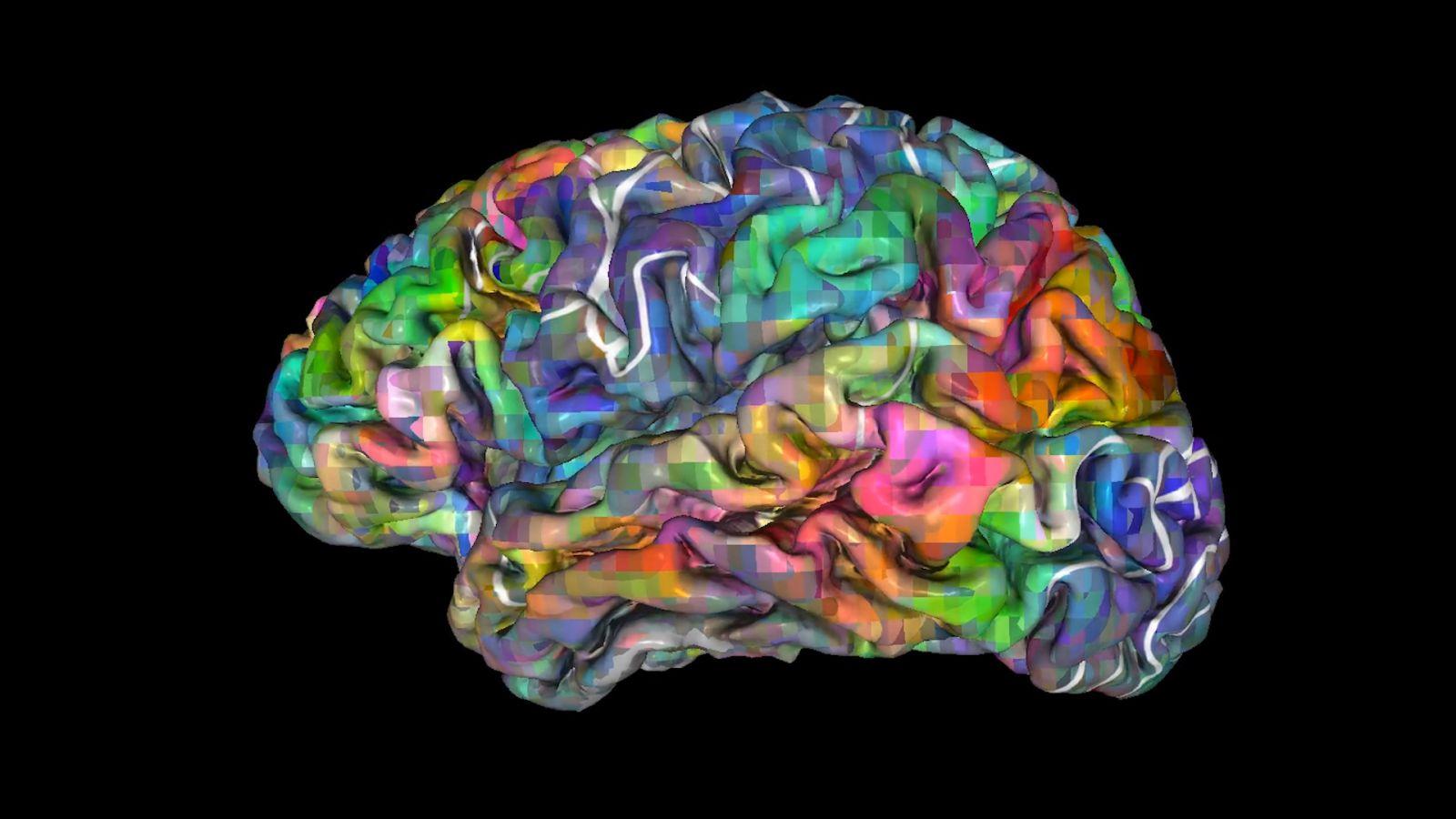
The mind is more than just the brain. Photo from The Regents of the University of California.
You might wonder, at some point today, what’s going on in another person’s mind. You may compliment someone’s great mind, or say they are out of their mind. You may even try to expand or free your own mind.
But what is a mind? Defining the concept is a surprisingly slippery task. The mind is the seat of consciousness, the essence of your being. Without a mind, you cannot be considered meaningfully alive. So what exactly, and where precisely, is it?
Traditionally, scientists have tried to define the mind as the product of brain activity: The brain is the physical substance, and the mind is the conscious product of those firing neurons, according to the classic argument. But growing evidence shows that the mind goes far beyond the physical workings of your brain.
No doubt, the brain plays an incredibly important role. But our mind cannot be confined to what’s inside our skull, or even our body, according to a definition first put forward by Dan Siegel, a professor of psychiatry at UCLA School of Medicine and the author of the 2016 book, Mind: A Journey to the Heart of Being Human.
He first came up with the definition more than two decades ago, at a meeting of 40 scientists across disciplines, including neuroscientists, physicists, sociologists, and anthropologists. The aim was to come to an understanding of the mind that would appeal to common ground and satisfy those wrestling with the question across these fields.
After much discussion, they decided that a key component of the mind is: “the emergent self-organizing process, both embodied and relational, that regulates energy and information flow within and among us.” It’s not catchy. But it is interesting, and with meaningful implications.
The most immediately shocking element of this definition is that our mind extends beyond our physical selves. In other words, our mind is not simply our perception of experiences, but those experiences themselves. Siegel argues that it’s impossible to completely disentangle our subjective view of the world from our interactions.
“I realized if someone asked me to define the shoreline but insisted, is it the water or the sand, I would have to say the shore is both sand and sea,” says Siegel. “You can’t limit our understanding of the coastline to insist it’s one or the other. I started thinking, maybe the mind is like the coastline—some inner and inter process. Mental life for an anthropologist or sociologist is profoundly social. Your thoughts, feelings, memories, attention, what you experience in this subjective world is part of mind.”
The definition has since been supported by research across the sciences, but much of the original idea came from mathematics. Siegel realized the mind meets the mathematical definition of a complex system in that it’s open (can influence things outside itself), chaos capable (which simply means it’s roughly randomly distributed), and non-linear (which means a small input leads to large and difficult to predict result).
In math, complex systems are self-organizing, and Siegel believes this idea is the foundation to mental health. Again borrowing from the mathematics, optimal self-organization is: flexible, adaptive, coherent, energized, and stable. This means that without optimal self-organization, you arrive at either chaos or rigidity—a notion that, Siegel says, fits the range of symptoms of mental health disorders.
Finally, self-organization demands linking together differentiated ideas or, essentially, integration. And Siegel says integration—whether that’s within the brain or within society—is the foundation of a healthy mind.
Siegel says he wrote his book now because he sees so much misery in society, and he believes this is partly shaped by how we perceive our own minds. He talks of doing research in Namibia, where people he spoke to attributed their happiness to a sense of belonging.
When Siegel was asked in return whether he belonged in America, his answer was less upbeat: “I thought how isolated we all are and how disconnected we feel,” he says. “In our modern society we have this belief that mind is brain activity and this means the self, which comes from the mind, is separate and we don’t really belong. But we’re all part of each others’ lives. The mind is not just brain activity. When we realize it’s this relational process, there’s this huge shift in this sense of belonging.”
In other words, even perceiving our mind as simply a product of our brain, rather than relations, can make us feel more isolated. And to appreciate the benefits of interrelations, you simply have to open your mind.
This article was originally published on December 24, 2016, by Quartz, and is republished here with permission.
Your charred, lifeless body will time and again debunk the old myth about lightning never striking the same place twice.
Pisces | Feb. 19 to March 20
Your mother claims that she never raised a liar for a son, but then what else do you expect from a lizard-human hybrid born out of a top-secret government project?
Aries | March 21 to April 19
Fun and despair will be in the air this week when a nearby confetti factory explodes, killing 63 employees.
Taurus | April 20 to May 20
You’ve never been good at saying goodbye, which explains why your speech therapist keeps charging you for an extra half hour each week.
Gemini | May 21 to June 20
The stakes will be raised this Thursday, moments before being repeatedly plunged by frightened townspeople into your chest.
Cancer | June 21 to July 22
You’ll soon stumble upon the secret to a happy marriage—a secret so simple you’ll take perverse pleasure in keeping it from your wife.
Leo | July 23 to Aug. 22
There’s a time and a place for everything, as you’ll soon discover after falling into the rhinoceros pit during mating season.
Virgo | Aug. 23 to Sept. 22
Your first instinct this week will be to run, while your second instinct this week will be to find your legs.
Libra | Sept. 23 to Oct. 22
The sudden rise in mood swings, wild food cravings, and rapid head-to-toe hair growth can only mean one thing: It’s that time of the lunar cycle again!
Scorpio | Oct. 23 to Nov. 21
Your entire life will flash before your eyes this week, an insignificant blip made all the more trivial by the Benny Hill theme that will accompany it.
Sagittarius | Nov. 22 to Dec. 21
While you may have valor, resolve, and even vigor, what you don’t have is a basic understanding of what those words actually mean.
Capricorn | Dec. 22 to Jan. 19
After days of grave and anxious discussion, the stars have decided that it’s better you don’t know.
“We fear the idea of personal change, because we think we need to sacrifice something; to give something up. But human beings at our best are so creative and inventive, and we can create, develop and implement systems of change that are beneficial to all sentient beings and the environment.”
“I’m full of so much gratitude now. I do not feel elevated above any of my fellow nominees or anyone in this room, because we share the same love – that’s the love of film. And this form of expression has given me the most extraordinary life. I don’t know where I’d be without it. But I think the greatest gift that it’s given me, and many people in [this industry] is the opportunity to use our voice for the voiceless. I’ve been thinking about some of the distressing issues that we’ve been facing collectively. I think at times we feel or are made to feel that we champion different causes. But for me, I see commonality. I think, whether we’re talking about gender inequality or racism or queer rights or indigenous rights or animal rights, we’re talking about the fight against injustice. We’re talking about the fight against the belief that one nation, one people, one race, one gender, one species, has the right to dominate, use and control another with impunity. I think we’ve become very disconnected from the natural world. Many of us are guilty of an egocentric world view, and we believe that we’re the centre of the universe. We go into the natural world and we plunder it for its resources. We feel entitled to artificially inseminate a cow and steal her baby, even though her cries of anguish are unmistakeable. Then we take her milk that’s intended for her calf and we put it in our coffee and our cereal. We fear the idea of personal change, because we think we need to sacrifice something; to give something up. But human beings at our best are so creative and inventive, and we can create, develop and implement systems of change that are beneficial to all sentient beings and the environment. I have been a scoundrel all my life, I’ve been selfish. I’ve been cruel at times, hard to work with, and I’m grateful that so many of you in this room have given me a second chance. I think that’s when we’re at our best: when we support each other. Not when we cancel each other out for our past mistakes, but when we help each other to grow. When we educate each other; when we guide each other to redemption. When he was 17, my brother [River] wrote this lyric. He said: “run to the rescue with love and peace will follow.”
I never cease to be shocked – shocked! – how many scientists don’t know how science works and, worse, don’t seem to care about it. Most of those I have to deal with still think Popper was right when he claimed falsifiability is both necessary and sufficient to make a theory scientific, even though this position has logical consequences they’d strongly object to.
Trouble is, if falsifiability was all it took, then arbitrary statements about the future would be scientific. I should, for example, be able to publish a paper predicting that tomorrow the sky will be pink and next Wednesday my cat will speak French. That’s totally falsifiable, yet I hope we all agree that if we’d let such nonsense pass as scientific, science would be entirely useless. I don’t even have a cat.
As the contemporary philosopher Larry Laudan politely put it, Popper’s idea of telling science from non-science by falsifiability “has the untoward consequence of countenancing as `scientific’ every crank claim which makes ascertainably false assertions.” Which is why the world’s cranks love Popper.
But you are not a crank, oh no, not you. And so you surely know that almost all of today’s philosophers of science agree that falsification is not a sufficient criterion of demarcation (though they disagree on whether it is necessary). Luckily, you don’t need to know anything about these philosophers to understand today’s post because I will not attempt to solve the demarcation problem (which, for the record, I don’t think is a philosophical question). I merely want to clarify just when it is scientifically justified to amend a theory whose predictions ran into tension with new data. And the only thing you need to know to understand this is that science cannot work without Occam’s razor.
Occam’s razor tells you that among two theories that describe nature equally well you should take the simpler one. Roughly speaking it means you must discard superfluous assumptions. Occam’s razor is important because without it we were allowed to add all kinds of unnecessary clutter to a theory just because we like it. We would be permitted, for example, to add the assumption “all particles were made by god” to the standard model of particle physics. You see right away how this isn’t going well for science.
Now, the phrase that two theories “describe nature equally well” and you should “take the simpler one” are somewhat vague. To make this prescription operationally useful you’d have to quantify just what it means by suitable statistical measures. We can then quibble about just which statistical measure is the best, but that’s somewhat beside the point here, so let me instead come back to the relevance of Occam’s razor.
We just saw that it’s unscientific to make assumptions which are unnecessary to explain observation and don’t make a theory any simpler. But physicists get this wrong all the time and some have made a business out of it getting it wrong. They invent particles which make theories more complicated and are of no help to explain existing data. They claim this is science because these theories are falsifiable. But the new particles were unnecessary in the first place, so their ideas are dead on arrival, killed by Occam’s razor.
If you still have trouble seeing why adding unnecessary details to established theories is unsound scientific methodology, imagine that scientists of other disciplines would proceed the way that particle physicists do. We’d have biologists writing papers about flying pigs and then hold conferences debating how flying pigs poop because, who knows, we might discover flying pigs tomorrow. Sounds ridiculous? Well, it is ridiculous. But that’s the same “scientific methodology” which has become common in the foundations of physics. The only difference between elaborating on flying pigs and supersymmetric particles is the amount of mathematics. And math certainly comes in handy for particle physicists because it prevents mere mortals from understanding just what the physicists are up to.
But I am not telling you this to bitch about supersymmetry; that would be beating a dead horse. I am telling you this because I have recently had to deal with a lot of climate change deniers (thanks so much, Tim). And many of these deniers, believe that or not, think I must be a denier too because, drums please, I am an outspoken critic of inventing superfluous particles.
Huh, you say. I hear you. It took me a while to figure out what’s with these people, but I believe I now understand where they’re coming from.
You have probably heard the common deniers’ complaint that climate scientists adapt models when new data comes in. That is supposedly unscientific because, here it comes, it’s exactly the same thing that all these physicists do each time their hypothetical particles are not observed! They just fiddle with the parameters of the theory to evade experimental constraints and to keep their pet theories alive. But Popper already said you shouldn’t do that. Then someone yells “Epicycles!” And so, the deniers conclude, climate scientists are as wrong as particle physicists and clearly one shouldn’t listen to either.
But the deniers’ argument merely demonstrates they know even less about scientific methodology than particle physicists. Revising a hypothesis when new data comes in is perfectly fine. In fact, it is what you expect good scientists to do.
The more and the better data you have, the higher the demands on your theory. Sometimes this means you actually need a new theory. Sometimes you have to adjust one or the other parameter. Sometimes you find an actual mistake and have to correct it. But more often than not it just means you neglected something that better measurements are sensitive to and you must add details to your theory. And this is perfectly fine as long as adding details results in a model that explains the data better than before, and does so not just because you now have more parameters. Again, there are statistical measures to quantify in which cases adding parameters actually makes a better fit to data.
Indeed, adding epicycles to make the geocentric model of the solar system fit with observations was entirely proper scientific methodology. It was correcting a hypothesis that ran into conflict with increasingly better observations. Astronomers of the time could have proceeded this way until they’d have noticed there is a simpler way to calculate the same curves, which is by using elliptic motions around the sun rather than cycles around cycles around the Earth. Of course this is not what historically happened, but epicycles in and by themselves are not unscientific, they’re merely parametrically clumsy.
What scientists should not do, however, is to adjust details of a theory that were unnecessary in the first place. Kepler for example also thought that the planets play melodies on their orbits around the sun, an idea that was rightfully abandoned because it explains nothing.
To name another example, adding dark matter and dark energy to the cosmological standard model in order to explain observations is sound scientific practice. These are both simple explanations that vastly improve the fit of the theory to observation. What is not sound scientific methodology is then making these theories more complicated than needs to be, eg by replacing dark energy with complicated scalar fields even though there is no observation that calls for it, or by inventing details about particles that make up dark matter even though these details are irrelevant to fit existing data.
But let me come back to the climate change deniers. You may call me naïve, and I’ll take that, but I believe most of these people are genuinely confused about how science works. It’s of little use to throw evidence at people who don’t understand how scientists make evidence-based predictions. When it comes to climate change, therefore, I think we would all benefit if philosophers of science were given more airtime.
With all that is churning our world today, (from the blizzard of “Fake News” to daily reports of violence, coronavirus, climate change, the amazing advances of Artificial Intelligence – to name a few) – YOU may be searching through your old Prosperos Class notes seeking to recall that your True Identity is Consciousness.
YES!
It is the I AM CONSCIOUSNESS IDENTITY that centers and grounds us in TRUTHFUL THINKING about change!It is the I AM CONSCIOUSNESS that helps us move beyond reacting with impulsive, fear-based perceptions of how change is dangerous!It is the I AM CONSCIOUSNESS that inspires usTo CREATE positive solutions.
When was the last time you had Cosmic Intention Therapy Class?Do you have a family member who never had CIT Class but would be interested?
I am re-writing my class notes for the upcoming CIT class.I am amazed at how relevant this class is in understanding our world today!
CONSIDER Pushing out of your comfort zone and coming to Madison for CIT class.COSMIC INTENTION THERAPY CLASSDATE: Saturday & Sunday, April 18 & 19, 2020
Added Fun: GREAT FARMER’S MARKET every Sunday in Madison.Take home Wisconsin Cheese Curds & more!
With LOVE and sincere gratitude for all that I have learned in The Prosperos over 50 years!
–Heather Williams, Artist, Author of Drawing as a Sacred Activity, High Watch Mentor with The Prosperos School of Ontology, Retired ART & Sp Ed middle school Teacher www.drawingtogether.com
The Power is within us! True Power is LOVE! ❤️ Let’s draw it out!
In 2016, Jang Ji-sung’s seven-year-old daughter Nayeon died of an incurable disease. Three years later, the South Korean mother was reunited with Nayeon — sort of — in a virtual world created for a televised documentary.
On Thursday, the Munhwa Broadcasting Corporation shared a clip from the special documentary, titled “I Met You,” on its YouTube page, with the footage cutting between the “real world” and the virtual one.
In the former setting, Jang stands in front of a massive green screen while wearing both a VR headset and what appear to be some sort of haptic gloves. In the latter, she and her daughter talk, hold hands, and even have a birthday party complete with a lit cake.
The VR reunion is, as you might expect, extremely emotional. Jang appears to begin crying the moment she sees the virtual Nayeon, while the rest of the family — Nayeon’s father, brother, and sister — watch the reunion unfold with somber expressions and the occasional tear.
“Maybe it’s a real paradise,” Jang said of the reunion in VR, according to Aju Business Daily. “I met Nayeon, who called me with a smile, for a very short time, but it’s a very happy time. I think I’ve had the dream I’ve always wanted.”
According to Aju Business Daily, the production team spent eight months on the project. They designed the virtual park after one the mother and daughter had visited in the real world, and used motion capture technology to record the movements of a child actor that they could later use as a model for their virtual Nayeon.
All that to say: the process might not be simple and the final product might not be perfect, but we now have the technology to recreate the dead in VR — convincingly enough to move their loved ones to tears.
And the implications of that are impossible to predict.
It may have taken an entire team of experts to produce “I Met You,” but how far can we be from a platform that lets anyone upload footage of a deceased love one and then interact with a virtual version of that person? Years? Months?
And what sort of impact will that have on the grieving process? Will seeing a loved one in VR help people find closure and move on following a death? Will some people become addicted to this virtual world, spending more and more time in it and less and less in the real one?
And will it stop with VR? Or is this just the first step to androids designed to mimic our dead loved ones in both appearance and personality, like in the “Black Mirror” episode Be Right Back?
The key to a VR reunion being a positive thing — that is, more like a twenty-first century take on flipping through a photo album and less like that “Black Mirror” episode — appears to be in the living person fully accepting their loved one’s death.
“Since you know the person is gone, you accept the virtual equivalent for what it is — a comforting vestige,” Princeton neuroscientist Michael Graziano told Dell Technologies in December. “There is nothing wrong or unethical about it.”
Perhaps regulation is necessary. Rather than letting startups offer the public the chance to interact with virtual versions of their dead loved ones — undoubtedly at a cost — maybe we can make the technology available only to people who’ve submitted to a screening with a psychologist.
It’s hard to say what might work as the opportunity to interact with convincing versions of the deceased in VR is decidedly uncharted territory — but now that we’ve officially entered that arena, we have a lot of questions we need to answer as soon as possible.
Editor’s Note, 2/07/20: This article was updated to correct the name of the broadcaster that aired the documentary.