
By Craig Hamilton
June 17, 2020 (integalenlightenment.com)
“As long as we take the position that we need to feel more love in order to be love, we’re missing the whole point of love.”
Do you believe in love? Most of us spiritually oriented people would say that we do. In fact, I often ask people what they consider to be the most important thing in the world—and the answer I receive most often is “LOVE.” As spiritual practitioners, we may have even at some point had an experience of a kind of divine love, a spiritual love, that was not merely sentimental love for another person or an animal—but a recognition that love is woven into the very fabric of reality. A sense that God is love—and in fact, that our own true nature is love. That who we most deeply are is love.
And in that realization, we may have recognized that this love is not a scarce commodity. It’s always freely given. The universe is held up by a source of infinite unconditional love that’s always present in every moment. There’s never a moment and never a place where love does not fully penetrate and permeate.
When we discover this source of infinite love—whether it’s just a taste or a glimpse, an insight, or a profound moment of spiritual revelation—it tends to bring us to our knees in awe and in devotion for this love that is own deepest nature.
We also realize this love is ever-present. When we get a taste or glimpse of this, we see that there was never a moment in our life and never a moment in all of life where this love was not already present and overflowing.
When we discover the perfection of love at the heart of all of this, there’s an overwhelming recognition that this love is unconditional. It’s not something I have to earn, it’s not something I have to generate, it’s not something I have to create or become worthy of or prove I’m good for. It’s what’s always already so. The whole Cosmos is shot through with love, beginning to end and beyond.
Just take a moment now to allow yourself to be drawn into a recognition of the love I’m speaking about. Maybe you can remember a moment in your own search or in your own life when you knew in some undeniable way some aspect of what I’ve just been describing. When you knew this love. When you knew it was never far away. Allow yourself to remember what you saw about reality in that moment. What was clear to you about love? What’s the source of all of it?
Now, notice that I didn’t ask you how it felt. I didn’t ask you, “How did you feel in that moment of knowing love, recognizing love?” You see, when we think of love, the first thing most of us think of is that it’s a feeling. We think of it as a really warm, overwhelmingly positive, uplifting, soothing feeling that we want to have more of.
But love is so much more than a feeling. In fact, the most important part of it is not the feeling part, even though love does have a lot of beautiful feelings associated with it.
Here’s the great challenge of love: as long as we take the position that we need to feel more love in order to be love, we’re missing the whole point of love. It means we don’t really believe in love.
I’m going to say it again. As long as our relationship to love is one where we’re seeing it as a feeling that we want more of—that we need to be feeling in order to express it, in order to be that love in the world—then we’re missing what love is all about.
And it means that we don’t really believe in love. Because, you see, if we believe in the love that I’m speaking about here, we don’t need to feel it. If we believe that this love is ever-present everywhere, at all times freely given, never lacking—that every moment is full of that love in every corner of the cosmos, that it’s the very nature of what we are—why would we ever need to feel it again to fully step forth and be it?
Imagine a person who, every time the sun shines, gets all excited and starts running around saying “Oh, my God! The sun is shining! I feel so great! I feel so warm! The sun exists! It’s a miracle. There’s a sun and it feels so warm and wonderful. Everyone exalt in the presence of the sun. Look at this glorious sun that fills our world with warmth and energy and fuels this whole amazing biosphere that we’re a part of. Celebrate the sun.”
But when they wake up on a cloudy day, they always say, “God, I don’t know what I was thinking yesterday. Obviously there’s no sun. Look up at the sky. There are only clouds. That’s what’s real.”
And you try to reason with them, saying, “Wait a minute, silly. Don’t you know the sun’s still there? The clouds are just covering it up. You know the sun exists. In fact, you saw it yesterday and you were celebrating it and exalting in it. You felt its warmth on your skin. You knew it was real without any doubt.” And they just look at you blankly and say, “I’ll believe it when I see it and feel its warmth. Oh, how I long to know the sun. Wouldn’t it be great if there was a sun?” Now, this might seem like a slightly silly analogy, but it’s actually not that far off from how most of us relate to divine love. Because, truthfully, how much love do any of us need to experience in order to believe in love in the way I’m talking about? What if you’ve already experienced enough love for a whole lifetime?
Arguably, you could choose to believe in love even without ever experiencing it for yourself. You could simply say, “I can see the truth of it and I’m going to be that in the world. I’m going to be a stand for it.”
But let’s say, to give us all the benefit of the doubt, that we at least need a little taste of it to prove it—because we don’t want to just believe something somebody else tells us, or something we read about in a book. And we don’t want to just reason our way to it. Even at that, haven’t we all had a little taste of love—enough to know it’s real?
So then what if, instead of waiting to feel more love, or trying or seeking or stretching or striving to feel more love, we decided instead to believe in love? To never doubt love, to have faith in the power of love? How would we live then?
How would you live if you believed in love?
What if, instead of waiting for God to prove to you that love is real, or waiting for love to prove to you that it is real, your job is to prove to the world that love is real by demonstrating its existence every minute of your life—whether you feel a current of love in that moment or not?
What if that’s the great spiritual challenge? What if the nature of our evolutionary calling is to prove the reality of love to everyone and everything by demonstrating its reality every minute of our life? How would you live if you took that up as your challenge, as your calling?
Now, when we think about what it would mean to be a living expression of love all the time, we tend to bring images to mind like Mother Teresa. We imagine ourselves giving all of our time to relieving suffering in the world. Or maybe we decide that our mission in life is to make everyone we meet feel personally loved by us. I have a good friend who’s done that.
And certainly that represents one level of being love. We all know the experience of encountering someone who is selflessly devoted to serving others, or relieving the anguish of others, or unconditionally loving everyone they meet, or putting themselves in harm’s way for the benefit of others. It’s an elevating experience to encounter that, to hear stories about that. And it is an example of demonstrating that love exists—because that’s what those encounters do, right? Those individuals are demonstrating love. They’re proving it. In fact, I heard a story recently about something that happened on 9/11 that I hadn’t heard before, and it had that elevating impact on me. Apparently, just after the towers fell in New York that day, the Coast Guard sent out a call to boat owners to help evacuate people from the city. This was a moment, you realize, when nobody knew what was coming next. Nobody knew if this was just the beginning of a whole series of attacks. This had just begun.
But when the smoke from the towers started to lift, they saw that there were hundreds of boats of all shapes and sizes streaming into the harbor, heading straight for the smoke-filled shore, moving straight to the heart of what may have been their own demise.
Those boat owners had no idea what they were heading into, but they went anyway. There was a video posted on YouTube in which they were interviewing a lot of these folks, these boat owners, who were saying “Look, I didn’t know what I was headed into. I just felt this deep call from within me that I had to help.” And over the course of that day they evacuated more than half a million people—just those private boat owners did that. And I was uplifted by this, as I think we all are by any story of self-sacrifice in which someone’s willing to put themselves in harm’s way in order to help or save another.
In a sense, you could say they were demonstrating love. They were proving the existence of love. Just as somebody who turned the other way and said, “Well, I can’t be bothered” might be proving something else, at least attempting to validate our cynicism.
So that is one dimension of what it means to believe in love, or to be a stand for love. And anytime one of us does this, we are helping to prove and demonstrate that love is real. But there’s a deeper layer to this as well, and that’s the layer I really want to focus our attention on here.
What does it really mean to believe in love and to be a stand for love in the world? If we say we believe in love in the way I’m describing—in the “always already present,” fully available love that is our own nature and could never be taken away—then we’re accepting the fullness that’s already here all the time. If we let in the reality that love is never lacking in any moment, what we’re saying is that the most important thing is always already here—because, as we’ve already noted, most of us will say love’s the most important thing, right?
If love is the most important thing there is, and we accept that it’s never lacking, never not present, never goes away—then that means that the most important thing can never be taken away from me or you or anyone.
The most important thing in the universe is already abundant in every molecule of the cosmos. I don’t have to look for it, I don’t have to earn it, I don’t have to generate it, I don’t have to create it. I don’t have to go seeking to find it. And most importantly, I don’t have to worry about losing it.
So what does that mean? It means I can let go. I can let go of wanting or needing anything else from this world. I can let go of grasping, of living in fear of lack or loss. I can let go of trying to get something that’s already intrinsic to my own nature, because I can accept the glory and the fullness that’s already here in every moment.
This is what faith really means. This is what it means to live a life of faith. Faith means that whether or not I feel particularly loved, or particularly loving, or anything in particular, I know what this is all about and I’m standing for that.
I’m never going to doubt that love is always already here. I’m never going to deny it. I’m never going to demand that God or love prove it to me—because I know. I’ve seen enough to know, and that’s enough for me.
So I’m going to be love, which means I’m not going to hold on to my little grasping self with all of its stories about what I need and what I don’t have, and all the things I want to accumulate or acquire. I’m not going to hold on to my ideas about experiences I need to have, or people who need to love me.
I’m never going to buy into any of that again because I know the whole thing’s already love. It never wasn’t. I had bought into a sham that said it was all about me and that I didn’t have enough, and that life wasn’t enough as it is. But I’m not buying it anymore.
A life of faith means that when the voice of the ego comes back in, asserting that I need something else to be happy, full, or complete, I say “No. I’m not going to believe your story of limitation. I’m not going to listen to your doubt. Love is here. It’s always been here, and I am now going to prove it.”
What I’m saying is that if you believe in love, you can never again listen to the voice of limitation telling you that something fundamental is missing, that life’s not enough, that you’re not enough, or that love is something outside of you that you need to find. You can live a life of faith, a life that says “I know the sun exists,” even after three months of a Portland, Oregon, or Seattle, Washington, winter. Even when you might not have seen the sun for quite a while.
In a sense, where the rubber meets the road with this is when life gets challenging, when we hit difficult circumstances—when the sun goes away, as it were. That can tempt us to doubt the ever-present nature of love, the inherent perfection and fullness of each moment. But to believe in love means that no matter how challenging life gets, I will never give in to doubt. I will never give in to the temptation to believe that something is missing, that love is lacking. What happens to us when we make the choice to live a life of faith, to believe in love? One of the most miraculous things that happens is that suddenly I’m not an issue anymore. All the things that I thought I needed to have, all the things I thought I needed to get or become or get over in order to be ready to show up as love—they all just sort of fall to the side.
It’s not that those things necessarily utterly cease to exist. It’s just that we’re a stand for fullness in such a fundamental way that we can’t take those stories of limitation and lack seriously any longer. We can’t buy it. We can’t believe in it. We can’t be bothered wasting our time with it, because it seems small and petty and unimportant.
So many things that seemed so important, so meaningful—my personal hopes, dreams, ambitions, fears, worries, doubts—no longer seem so significant. Sure, maybe some of those personal hopes, dreams and ambitions will happen. And it would be nice if they did. They’re still there as preferences. We’re human beings. We like certain things. Other things we don’t like as much. We want certain things. Other things we don’t want as much. All of that is still there.
But we’re taking a stand fundamentally for the truth that none of those things are going to add any love to my life. None of those things I think I need and want and have to have are going to add anything fundamental—because the most important thing’s already here and I’m a living stand for it. I’m proving it every day. And part of how I’m proving it is by letting go of all these things I used to believe I needed, or that had to happen, or that were supposedly going to bring more love.
And all the things I feared, that seemed so frightening or potentially threatening to my well-being, my success, my happiness—guess what? Now I know that even if they all happened, all those “worst things” I’m so afraid of, there wouldn’t be any less love. The most important thing would still be here in its fullness and completeness. The nature of life would still be love.
Therefore, I don’t need to be so preoccupied about all those fears, needs, wants, and concerns. They may not entirely go away, and they don’t need to. But I’m not focused on them. I’m living a life of faith, which means I’ve tethered myself to something that transcends every created thing, every detail, every coming and going, every bit of change. I’ve hooked myself to the ultimate. That’s now my reference point.
With no problem to focus on, I start to forget about myself. I have everything I ever needed, really. I have the most precious thing. I always did. I just didn’t realize it or I didn’t admit it. So now I can stop resisting the way things are, because I know that fundamentally the way things are at the deepest level is full and good and indescribably sacred.
As my attention is freed from any self-fixation, I become vast. I become as infinite as the sky, expanding out in all directions, no longer tethered to this little self with its world of lack. I become the whole.
And my heart becomes that big too, an expanse without boundaries or limitation, because I realize that I don’t need to “hold love in my heart.” I don’t need to protect my little heart. I don’t need to be delicate with it. I can let it expand to include everything and everyone. Why? Because I’m becoming that boundless sacred love. Because I made a decision to be love.
What happens then, from that expansive place, when I look upon the world of form and manifestation? Well, one of the things that happens is that care begins to well up. A vast, deep care that knows no boundaries wells up in that big heart. And what we see is that the world doesn’t know about this. The world at large, humanity at large, does not know love. The human race has not accepted and embraced this love that’s everywhere all the time. Nobody knows about this, almost nobody.
We see a lot of people talk about it. It’s in a lot of books. People preach it on TV. But they don’t know about this. You can tell that nobody really knows that it’s all permeated with love already. Don’t you see, everyone? It’s what we are. You don’t need to hold on. You don’t need to be afraid. You don’t need to just grasp and get for yourself. The thing we’re all looking for is already here trying to be known.
How can I help everybody know this love? How can I help the world know that the love we’re striving so hard for is actually freely given and never lacking—that it’s the ground we’re standing on? Because if everybody knew that, we’d all treat each other so differently. The whole human game would change completely. It would become sacred. Every act would be a sacred act of communion in this love. We’d create heaven on earth. It wouldn’t even be that hard.
So I have to prove the reality of this love with everything I do. I have to show the way. The world needs to know the reality of this. It needs to wake up. And I need to take responsibility for this perfection, for this fullness, for this boundless love—for being it in the world.
Of course, the moment we recognize we need to take responsibility for it, part of us gets scared. There’s a fear of doing it wrong, of failing to meet such an enormous challenge and call. But that fear is just temptation to doubt that love is enough. It’s temptation to think we don’t have enough, or that we don’t have what it takes to do this.
To take responsibility for this means we have to really permanently let go of all of that, and stay true to the reality of this ever-present love, demonstrating it no matter how intense that fear might get. It means we have to be willing to take great risks for that love. We might have to be warrior for that love—metaphorically speaking, of course. We might have to sacrifice for that love, give up something that we really wanted but realized wasn’t important enough to give our time and energy to, so we let it go because something else is more important now. This is what a life of faith means.
Now, the other thing that happens to us when we begin to live a life of faith—to believe in love, to plant our stake there—is that, mysteriously, we begin to know love all the time. It doesn’t mean that we always feel a certain way, like a certain warm, gentle, nurturing glow. Not at all. But in a mystical sense, when we make the decision to be love—to stand for love, to risk for love, to not doubt the truth of love—love begins to become our reality. So we’re not just proving it to the world, it’s being proven to us in our own experience. Ironically, at the same time we no longer need that proof. We don’t need to have a certain experience. We don’t need to feel a certain way. We know what’s so, and we’re going to stand for it. We’ve gone beyond needing to feel it.
In this sense, love is both unconditional and conditional at the same time. Love is unconditional in the sense that it is always already here. It’s always the nature of things. It’s woven into every fiber of reality. It’s not dependent on anything else.
But love is also conditional in the sense that in order to truly know love, to truly live in love, you have to first take a stand for love. The price for living in love is a kind of ultimate sacrifice: it’s the letting go of everything I thought was so important, me and my little world of problems and fears and needs and concerns. Letting go of the notion that life’s all about me. It’s taking a stand that I’m never going back to that smallness no matter how challenging things get, no matter how tempting it might be. It’s only when we’re willing to do that and mean it—and back it up day after day—that we’ll really know love.
This is tremendously liberating if we really do it, because it means you being an expression of love doesn’t depend on anything other than you deciding to be an expression of love. It doesn’t depend on you feeling any particular way. What a relief! I can be aligned with the most important thing no matter how I feel. Finally I don’t have to be worried about my inner world. “How do I feel today? Am I in touch with love? Am I in touch with God? No. Yes. This moment I was, that moment I wasn’t.” We can let go of all that and just strive to bring it into the world and be an expression of it, live in deeper alignment with it. And even as love begins to become our reality, we’re no longer attached to it. Even when the spiritual gold nuggets we were digging for all those years finally show up and get dumped all over our driveway, we see it out there and say, “That’s nice, but that’s not what I’m oriented toward anymore. I’m not trying to feel love. I’m not trying to get God consciousness for myself. I’m already expressing it. So the keys to the kingdom showed up, the inner riches are here—great. I’m experiencing love much more often, but I still don’t really need that at all to express love.”
You don’t grab onto it. You say, “Maybe it’s here today. Maybe it’ll be gone tomorrow—but I’m still the same. I’m here to prove love exists to the world.”
— CH


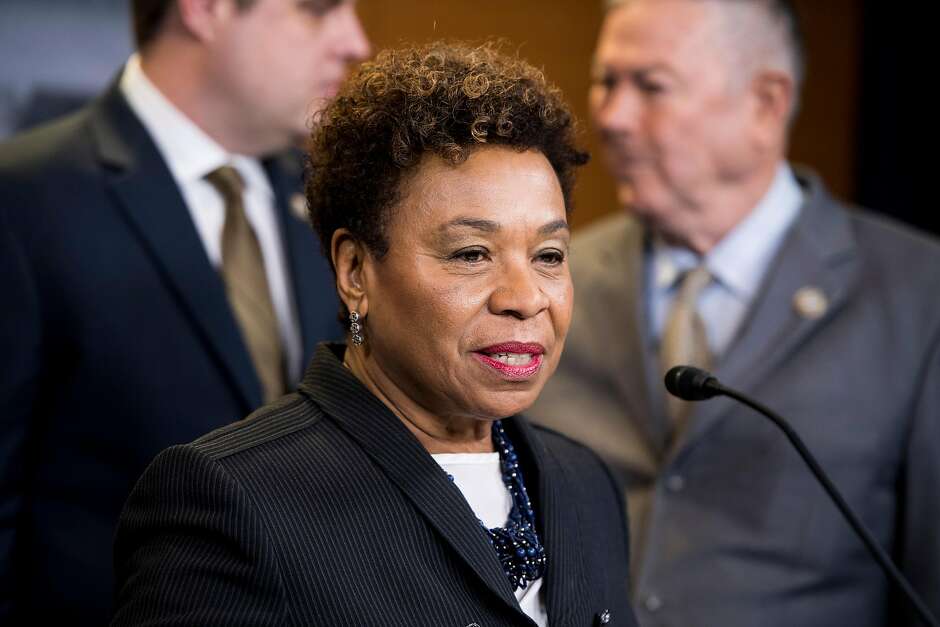 Rep. Barbara Lee, D-Oakland, shown at a 2018 news conference, has drafted legislation to create a national Truth and Reconciliation Commission on racial injustice.Photo: Bill Clark / CQ-Roll Call 2018
 ©2020 Hearst