The pandemic has brought home what the threats of global destruction by climate change and nuclear war should have long ago—that the promises of normalcy will never deliver in the end.
Daniel Berrigan at Cornell University circa 1970 in Ithaca, New York. (Photo: PL Gould/IMAGES/Getty Images)
“But what of the price of peace?” asked Jesuit priest and war resister Daniel Berrigan, writing from federal prison in 1969, doing time for his part in the destruction of draft records. “I think of the good, decent, peace-loving people I have known by the thousands, and I wonder. How many of them are so afflicted with the wasting disease of normalcy that, even as they declare for the peace, their hands reach out with an instinctive spasm in the direction of their loved ones, in the direction of their comforts, their home, their security, their income, their future, their plans — that twenty-year plan of family growth and unity, that fifty-year plan of decent life and honorable natural demise.”
From his prison cell in a year of mass movements to end the war in Vietnam and mobilizations for nuclear disarmament, Daniel Berrigan diagnosed normalcy as a disease and labeled it an obstacle to peace. “’Of course, let us have the peace,’ we cry, ‘but at the same time let us have normalcy, let us lose nothing, let our lives stand intact, let us know neither prison nor ill repute nor disruption of ties.’ And because we must encompass this and protect that, and because at all costs — at all costs — our hopes must march on schedule, and because it is unheard of that in the name of peace a sword should fall, disjoining that fine and cunning web that our lives have woven… because of this we cry peace, peace, and there is no peace.”
“In the midst of this terrible despair, it offers us a chance to rethink the doomsday machine we have built for ourselves. Nothing could be worse than a return to normality. Historically, pandemics have forced humans to break with the past and imagine their world anew. This one is no different. It is a portal, a gateway between one world and the next.”
Fifty one years later, due to the COVID-19 pandemic, the very notion of normalcy is being questioned as never before. While Donald Trump is “chomping on the bit” to return the economy to normal very soon based on a metric in his own head, more reflective voices are saying that a return to normal, now or even in the future, is an intolerable threat to be resisted. “There is a lot of talk about returning to ‘normal’ after the COVID-19 outbreak,” says climate activist Greta Thunberg, “but normal was a crisis.”
In recent days even economists with the World Bank and the International Monetary Fund and columnists in the New York Times have spoken about the urgent necessity of reordering economic and political priorities to something more human- only the thickest and cruelest minds today speak of a return to normal as a positive outcome.
Early in the pandemic, the Australian journalist John Pilger reminded the world of the baseline normal that COVID-19 exacerbates: “A pandemic has been declared, but not for the 24,600 who die every day from unnecessary starvation, and not for 3,000 children who die every day from preventable malaria, and not for the 10,000 people who die every day because they are denied publicly-funded healthcare, and not for the hundreds of Venezuelans and Iranians who die every day because America’s blockade denies them life-saving medicines, and not for the hundreds of mostly children bombed or starved to death every day in Yemen, in a war supplied and kept going, profitably, by America and Britain. Before you panic, consider them.”
I was starting high school when Daniel Berrigan asked his question and at the time, while there obviously were wars and injustices in the world, it seemed as though if we did not take them too seriously or protest too strenuously, the American Dream with its limitless potential was spread before us. Play the game, and our hopes would “march on schedule” was an implied promise that in 1969 looked like a sure thing, for us young white North Americans, anyway. A few years later, I abandoned normal life, dropped out after a year of college and joined the Catholic Worker movement where I came under the influence of Daniel Berrigan and Dorothy Day, but these were privileged choices that I made. I did not reject normalcy because I did not think that it could deliver on its promise, but because I wanted something else. As Greta Thunberg and the Friday school strikers for climate convict my generation, few young people, even from previously privileged places, come of age today with such confidence in their futures.
The pandemic has brought home what the threats of global destruction by climate change and nuclear war should have long ago- that the promises of normalcy will never deliver in the end, that they are lies that lead those who trust in them to the ruin. Daniel Berrigan saw this a half century ago, normalcy is an affliction, a wasting disease more dangerous to its victims and to the planet than any viral plague.
Author and human rights activist Arundhati Roy is one of many who recognizes the peril and the promise of the moment: “Whatever it is, coronavirus has made the mighty kneel and brought the world to a halt like nothing else could. Our minds are still racing back and forth, longing for a return to ‘normality’, trying to stitch our future to our past and refusing to acknowledge the rupture. But the rupture exists. And in the midst of this terrible despair, it offers us a chance to rethink the doomsday machine we have built for ourselves. Nothing could be worse than a return to normality. Historically, pandemics have forced humans to break with the past and imagine their world anew. This one is no different. It is a portal, a gateway between one world and the next.”
“Every crisis contains both danger and opportunity,” said Pope Francis about the present situation. “Today I believe we have to slow down our rate of production and consumption and to learn to understand and contemplate the natural world. This is the opportunity for conversion. Yes, I see early signs of an economy that is less liquid, more human. But let us not lose our memory once all this is past, let us not file it away and go back to where we were.”
“There are ways forward we never imagined – at huge cost, with great suffering – but there are possibilities and I’m immensely hopeful,” said Archbishop of Canterbury, Justin Welby, on Easter. “After so much suffering, so much heroism from key workers and the NHS (National Health Service) in this country and their equivalents all across the globe, once this epidemic is conquered we cannot be content to go back to what was before as if all was normal. There needs to be a resurrection of our common life, a new normal, something that links to the old but is different and more beautiful.”
In these perilous times, it is necessary to use the best social practices and to wisely apply science and technology to survive the present COVID-19 pandemic. The wasting disease of normalcy, though, is the far greater existential threat and our survival requires that we meet it with at least the same courage, generosity and ingenuity.
“I believe that unarmed truth and unconditional love will have the final word in reality. That is why right, temporarily defeated, is stronger than evil triumphant.”
On April 22nd, 2020 we have a New Moon in Taurus. The New Moon is at 3° Taurus and it is conjunct Uranus, the planet of freedom and liberation.
New Moons are powerful prediction tools. A New Moon influences us not only on the day it occurs, but for the whole lunar cycle.
The previous New Moon on March 24th was conjunct Chiron, the Wounded Healer. So the whole lunar month (March 24th – April 21st) was about healing, by coming to terms with our wound.
For some of us, the wound was literal. For others, the dramatic changes in our lifestyle forced us to find reconciliation with things we were perhaps running away from or have been brushing under the carpet.
When we can’t go outside, we HAVE to go inside. And inside there’s nowhere to run.
Also, at the time of the previous New Moon in Aries, Saturn moved in Aquarius. Saturn is the planet of restrictions and Aquarius, the sign of freedom and groups of people – so we got lockdown and social distancing.
That was then.
Now the New Moon in Taurus on April 22nd has a totally different vibe.
The upcoming New Moon is conjunct Uranus, the planet of freedom. So the upcoming lunar month (April 22nd – May 21st) is not about being face-to-face with the wound. It is about freedom from the wound.
It is interesting that in astrology, Chiron (a symbol for what we’ve been through in the last lunar cycle) is the link between Saturn (restrictions) and Uranus (freedom, liberation).
It is only when we are face to face with the wound, and find creative ways to heal it, that we can find freedom.
If we look at Chiron’s myth, Chiron was a wise centaur and healer that accidentally gets shot by an arrow coated with the blood of Hydra. Arrows coated with the blood of Hydra would bring wounds that would never heal, so Chiron, even if he was a healer to other people, was not able to heal himself.
Also, because Chiron was a demigod, he was also not able to die. So Chiron got stuck in a difficult situation, hence the association with the “Wounded healer”.
But the story has a happy ending. Gods agree to free Chiron from suffering by allowing him to exchange his immortality for Prometheus’ life.
Prometheus was chained to a rock as a punishment for stealing fire from the Gods and bringing it to people.
In astrology, Prometheus is a symbol for Uranus, and the fire he stole from the gods is a symbol of the fire of knowledge – and yes, a symbol of freedom, because it is only the higher knowledge that can set us free from what is otherwise bound to nature, karma, and fate.
The morale of the story? It is only through Chiron that we can access the higher wisdom of Uranus.
It is only by embracing our pain, that we can set ourselves free.
Now the question is, what kind of freedom does Uranus bring. Is it the type of freedom Uranus brought at the time of its discovery, in the late 18 century?
The discovery of Uranus coincided with the French, American and other countries’ revolutions and fights for independence as well as with the era of Enlightenment, and the technological and industrial revolution.
Will the New Moon in Taurus bring us freedom from restrictions? Will it bring an end to social distancing? Or will it bring a different kind of freedom?
New Moon In Taurus – The Most Important Kind Of Freedom
The New Moon is in Taurus, the sign of autonomy, self-reliance and common sense. The New Moon in Taurus will ask us to find that type of freedom that can allow us to be who we are – an individual in our own right.
And from that place of total autonomy and self-awareness, we can find a sense of freedom that goes beyond the walls and social distancing that are restricting us.
“The one thing you can’t take away from me is the way I choose to respond to what you do to me. The last of one’s freedoms is to choose one’s attitude in any given circumstance.” V. Frankl
Perhaps this is the most important type of freedom.
We may or may not be able to change our circumstances. But we can always choose how we respond to what happens to us. Real freedom comes from the knowing that we can handle whatever it is that comes our way.
In The Scarlet Plague, the California Author Imagined a 21st-Century Epidemic Hitting the Bay Area and the World
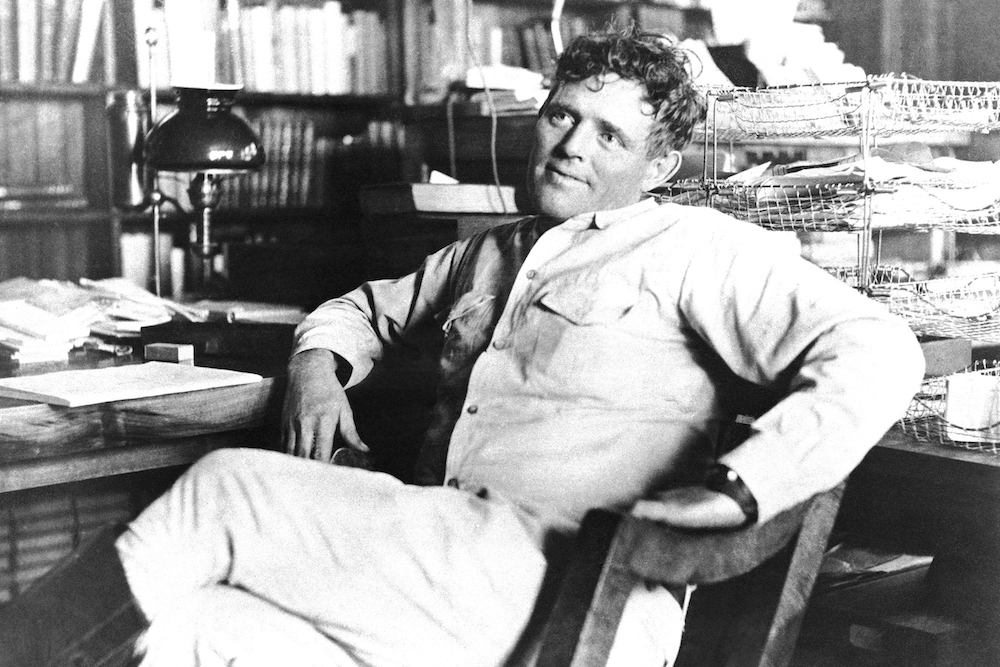
Jack London in 1916, shortly before his death. Courtesy of the Asociated Press.
by JOE MATHEWS | APRIL 14, 2020 (zocalopublicsquare.org)
Jack London saw this coming. So why didn’t we?
In 1910 the California author, already famous for The Call of the Wild and White Fang, wrote a short post-apocalyptic novel about a 21st-century pandemic in his home state.
To revisit The Scarlet Plague now, in the midst of the COVID-19 crisis, is to marvel at how much London understood—a century ago—about the challenges facing Californians now.
London imagined a global epidemic in the year 2013 that killed almost all the people in California, and presumably on Earth. In the novel, this “scarlet plague”—its victims became red-faced before dying—is recalled 60 years later, in the year 2073, by the only living pandemic survivor: a one-time UC Berkeley professor of English literature.
Jack London died in 1916, well before the medical advances that protect us against many diseases. And, having lived through a turn-of-the-century bubonic plague outbreak in San Francisco, he was more familiar with epidemics than we are. The Scarlet Plague thus expertly explains aspects of human behavior with which we have only become reacquainted during the current pandemic—from the enormous value of isolating yourself, to the mass madness at grocery stores, to all the myriad ways, both beautiful and awful, that people behave at moments like this.
But London’s larger message was even more powerful and prescient: When pandemic strikes, don’t be distracted by saving your home or your work or even your economy. Prioritize safety, and saving as many humans—and as much human knowledge—as possible.
London was from the Bay Area, and his plague novel is set firmly in Northern California. We start in 2073, with the elderly professor dodging bears. When he’s handed a 2012 coin found among the herds of goats that are San Jose’s only occupants, the professor tries to explain life before the 2013 plague to his grandchildren, who, like other humans of their time, are illiterate and savage hunter-gatherers. Education died with the 2013 pandemic.
London’s vision of early 21st century life wasn’t really too far off. He foresaw our wireless communications, the growth and wealth of the Bay Area, and the fact that America would be run by billionaires. In London’s story, the president of the United States is appointed by “the Board of Magnates,” a dozen rich men who fund and rule everything. The Bay Area of London’s imagining is full of restaurants and culture.
But in the summer of 2013, the scarlet plague hits, and all the modern institutions quickly stop. Then our basic systems of modern life are undermined by disease and death, and the fear that ensues. “The fleeting systems lapse like foam,” the professor says of the time. “That’s it—foam, and fleeting. All man’s toil upon the planet was just so much foam.”The Scarlet Plague thus expertly explains aspects of human behavior with which we have only become reacquainted during the current pandemic—from the enormous value of isolating yourself, to the mass madness at grocery stores, to all the myriad ways, both beautiful and awful, that people behave at moments like this.
London hits awfully close to our present predicament. For all the 21st century’s medical advances, London’s imaginary scientists can’t understand the micro-organism causing the plague fast enough. In the novel, there is too much confidence in the ability of modern society to find a cure. “It looked serious, but we in California, like everywhere else, were not alarmed,” the professor recalls. “We were sure that the bacteriologists would find a way to overcome this new germ, just as they had overcome other germs in the past.”
This fictional disease, like COVID-19, was transmitted easily by those without symptoms. During a lecture, the professor watches one of his students turn scarlet and die. Universities and schools were among the very first things to close. Before long, all enterprises have shut down, as people struggled to process the reality around them.
“Everything had stopped,” the professor recalls. “it was like the end of the world to me—my world … It was like seeing the sacred flame die down on some thrice-sacred altar. I was shocked, unutterably shocked.”
And London had a clear bead on what would happen at grocery stores during a modern pandemic, too. When hordes descend and begin stealing from a local store, the owner, unable to stop them, starts shooting customers. “Civilization was crumbling, and it was each for himself,” the professor recounts. With the fever spreading in the densely populated Bay Area, those with means try to escape the region. But they just end up spreading the plague to rural areas.
The professor struggles to remain composed as he sees people behave generously and heroically, but then die, even while the selfish live. “He was a violent, unjust man,” says the professor of one man who is spared. “Why the plague germs spared him I can never understand. It would seem, in spite of our old metaphysical notions about absolute justice, that there is no justice in the universe.”
The professor isn’t sure why he survived. Perhaps he is immune. But he also takes his brother’s advice to isolate himself. “To all of this I agreed,” the professor recalls, “staying in my house and for the first time in my life attempting to cook. And the plague did not come out on me.”
With nearly everyone dead, the professor finds a pony and makes his way east, eating fruit still hanging unpicked on trees and dodging packs of dogs that survive by devouring corpses. He crosses the Livermore Valley, and then forages through the San Joaquin, where he finds a horse that he rides up into Yosemite Valley. For three years, he makes “the great hotel” there his home, until the loneliness gets to him. “Like the dog, I was a social animal and I needed my kind,” he says.
So he rides back to Bay Area, where he discovers a few other survivors, who are living in different camps. The professor ultimately joins one such camp in Sonoma.
Society is not reconstituted. Sixty years after the Scarlet Plague, California is a lightly populated place of tiny tribes. There are the Sacramen-tos, the Palo-Altos, the Carmel-itos, and the professor’s own Santa Rosans, who are based in Glen Ellen (where Jack London had a ranch, now a state park). The professor also hears stories about Los Ange-litos. “They have a good country down there, but it is too warm,” he says.
The professor never reconciles himself to the post-pandemic reality. “The great world which I knew in my boyhood and early manhood is gone. It has ceased to be,” he says. “We, who mastered the planet—its earth, and sea, and sky—and who were as very gods, now live in primitive savagery along the water courses of this California country.”
The novel concludes with the professor telling his grandchildren that he has stored all his books in a cave on Telegraph Hill, hoping that the knowledge will survive him. He predicts that a new civilization will eventually rise, but it too will fail, because nature in the end always wins.
“All things pass,” the professor says.
London was famous for his faith in animals and his skepticism of people and the societies they construct. By my lights, the book underestimates the resilience of 21st-century institutions, and the goodness and determination of our fellow humans.
But this old little novel retains considerable power as a warning about the vulnerability of our state and civilization. Even advanced societies can fall apart quickly. Writing from the past, London reminds us that today’s horrors were not really unthinkable, and that, as we seek shelter now, we must not lose sight of the future.
I have officiated only one memorial service in which I thought the dead person might come back. Dorothy was 103, and she was known for surprise reappearances. Dorothy had resided in an independent living apartment at the retirement community, and I had visited her on the few occasions when she had come to the Gardens to recover from an illness. I had learned over the course of these visits that as a teenager, she had left home to become a stage assistant to Harry Houdini—against her parents’ wishes, of course. What did a nice Methodist girl, a preacher’s daughter, want with an older man—a Vaudeville magician, no less—rumored to be a Jew, the son of a rabbi? Only after Houdini and his wife, Bess, visited Dorothy’s parents and promised to care for her as their own daughter did her parents relent.
In Houdini’s shows, Dorothy would pop out from the top of an oversized radio that Houdini had just shown the audience to be empty, kicking up one leg and then the other in Rockettestyle extension. Grabbing her at the waist, Houdini would lower her to the floor, where she would dance the Charleston. In another act, she was tied, bound feet to neck, to a pole. A curtain would fall to the floor, and voila!—she would reappear as a ballerina with butterfly wings, fluttering across the stage. At the end of each night’s performance, Dorothy stood just off stage next to Bess to witness Houdini’s finale: the Chinese Water Torture Cell. A shackled Houdini was lowered, upside down, into a tank of water from which he escaped two minutes later. Dorothy knew how he accomplished this stunt—what was often deemed his “greatest escape”—but she never broke confidence.
Dorothy was the last surviving member of Houdini’s show. Long after his death, she attended séances on Halloween, awaiting communication with the Great Houdini—which, apparently, was never forthcoming. Eighty-five years after Houdini’s death, now she, too, had died. Each time I had visited her, I had felt her end was imminent. Already a petite woman, she seemed to grow smaller and smaller, until I was sure I would find her one day simply gone. But somehow she persisted— until she died about three years into my tenure.
As I prepared for her memorial, I imagined her doing one of her famous acts at the service. Instead of an oversized radio, her legs would kick open and emerge—up one, up two—from a once-closed coffin. Back to do the Charleston one last time. Or, breaking free from the chains of death, she would pirouette through the parlor in her butterfly wings. Instead, her son, who was in his eighties and also lived at the retirement community, opted for a casketless memorial service rather than a traditional funeral, and this somewhat allayed my anxieties about the coffin popping open. While a reappearance out of thin air seemed less likely, I knew by then that anything was possible with her.
Dorothy went to her grave without ever having revealed Houdini’s secrets, true to the vow she took at seventeen. I wonder what it is like to hold the keys to illusion, to know how to unbind one’s self, to learn the mechanisms of vanishing, to feel the weight of magic’s wisdom. Had she not been so scrupulously loyal, perhaps she could have helped the rest of us solve the riddle of how to vanish well.
* * *
I came of age in the 1990s when terms like “the right to die,” “persistent vegetative state,” and “advance directive” infused public discourse, and debates raged over euthanasia. In grade school, I became vaguely aware of Nancy Cruzan, a resident of my home state of Missouri, and Terri Schiavo—women who could not articulate their end-of-life wishes, whose bodies became the site of fierce political contestation. Dr. Jack Kevorkian was solidly a household name. In defiance of the law, he had helped dozens of seriously ill patients end their lives. His visage saturated the media, even appearing on a 1993 cover of Time with the title “Doctor Death” and the question “Is he an angel of mercy or a murderer?” It was only recently, however, that I learned of Kevorkian’s first client, a fifty-four-year-old English teacher from Portland, Oregon, named Janet Adkins. Diagnosed with early-onset Alzheimer’s disease, she could and did articulate her wishes and decided to make herself gone before the disease got the chance.
At a press conference shortly after his wife’s death, Ron Adkins read from Janet’s suicide note: “I have decided for the following reasons to take my own life. This is a decision taken in a normal state of mind and is fully considered. I have Alzheimer’s disease and do not want to let it progress any further. I do not want to put my family or myself through the agony of this terrible disease.” One week after beating her sons at tennis, according to reports, she lay supine in the back of Kevorkian’s 1968 VW van in a parking lot in a Detroit suburb. In her arm: an IV hooked to the pathologist’s own invention, the Thanatron, which delivered heart-stopping potassium chloride into her bloodstream.
The person with dementia exists beyond my capacity to keep her in my line of sight; she remains a person despite my (or anyone else’s) limited powers of vision.
Janet Adkins’s sympathizers pointed to the horrific prospect of this dementing disease’s pathology and her calculated courage. While she could still act on her own behalf, in what she had called in her note a “normal state of mind,” Janet Adkins headed off what she imagined as agony for her future self and her family. A pianist, Janet Adkins feared losing music, reportedly telling her pastor, “I can’t remember my music. I can’t remember the scores. And I begin to see the beginning of the deterioration and I don’t want to go through with that deterioration.” Perhaps the scores might degenerate into strungout smudges of black, and she might find notes tangled, unable to fight themselves free to make melody. Perhaps her deterioration would be depleting in every way; it would be saturated with sorrow; it would require heroic fortitude. Perhaps her family would be drained in Sisyphean service to a Janet Adkins unable even to thank them. I imagine Janet Adkins wished to spare her loved ones the torment of her slow self-disappearance.
* * *
In the days leading up to Dorothy’s service, I read the tributes to her that appeared in major newspapers. I learned that she was the last of two hundred women to audition for Houdini’s show and had instantly dazzled the illusionist. After her contract with Houdini had ended, she went on to create a Latin dance called the “rumbalero” and to appear in several movies, including Flying Down to Rio with Fred Astaire. In her later years, she donated $12.5 million to build an arts center.
Reading these tributes prompted me to consider the story of my grandfather Jack, whose life—while not as glamorous as Houdini’s assistant’s—had seemed remarkable to me in its own right. A World War II veteran, Jack received the Distinguished Flying Cross for rescuing a fellow pilot by making a tricky, unauthorized landing in the Himalayas. Upon his return from the war, Jack had considered becoming a band teacher but instead pursued a career in medicine. He played jazz trombone in dive bars at night to pay for medical school. Jack was a committed and smart country doctor. He made house calls and forgave patients’ debts. He delivered babies and aided the dying. In the days before defibrillators, Jack once frayed a lamp cord, plugged it in, and shocked a patient to revive him. In retirement, he owned and helped to operate a local pharmacy. Jack was an avid hobbyist—always working in his woodshed or on his computer or on perfecting his omelets. He traveled the world as an ambassador with Rotary International. He maintained his passion for music, singing solos at church, playing the electric organ for his grandkids, and leading songs at Rotary meetings well into his eighties.
While my grandfather’s life, in many respects, had “shrunk,” he certainly was not gone to those who knew and loved him.
The Jack of all these activities—and the Jack who had the ability to narrate them and their importance to him—steadily vanished in his final years. On his eightieth birthday, eleven and a half years before his death, he could not keep score in a simple dice game we played. This singular memory helps me to date the duration of his dementia. At the time of Dorothy’s death, Jack was living in an assisted living facility that specialized in memory care. Jack would soon thereafter move to a nursing home where he lived his last two years. If not in bed, he was in his wheelchair at a table with other old war veterans in wheelchairs. He said very few words.
When I told a minister friend about my grandfather’s move to the nursing home, she reflexively responded: Oh, so he’s gone. Her words reminded me of another friend, who told me that she promised her father that if he ever gets dementia, not to worry, she will take him on a “nice walk to the edge of a cliff.” She then made a quick pushing motion—gone. It seems persons with dementia are more subject to being pronounced gone— to being pushed off the proverbial cliff—than persons with other kinds of progressive illnesses. While my grandfather’s life, in many respects, had “shrunk,” he certainly was not gone to those who knew and loved him. But I felt the push toward his erasure, and I wanted to know who or what was doing the pushing.
* * *
A couple of weeks after Dorothy’s memorial service, I attended a workshop on spirituality and dementia, where I first learned of the late British social psychologist Tom Kitwood, who, in the 1980s and ’90s, had developed a new model for providing care to persons with dementia. Challenging the old culture of care that viewed dementia patients as problems to be managed, as bodies in need of physical care and little else, Kitwood argued that people with dementia should be engaged with as complex individuals living within complex social environments. From what I gleaned at the workshop, I sensed that his approach to dementia might help me better understand what contributes to the invisibility of persons with dementia.
In the coming months, I read his seminal work, whose title alone attracted me: Dementia Reconsidered: The Person Comes First. It seemed telling that a reconsideration of dementia would entail something as seemingly obvious as centering the person— as giving persons preeminence in their own lives. Most of the research on dementia had ignored the impact of the social environment on people with dementia, and on their disease process. Kitwood offered a profound corrective. He observed the ubiquity of what he called “malignant social psychology” in relation to persons with dementia. Through close observation of daily interactions between caregivers and dementia patients, Kitwood identified seventeen malignant elements that promote the depersonalization of persons with dementia: treachery, disempowerment, infantilization, intimidation, labeling, stigmatization, outpacing, invalidation, banishment, objectification, ignoring, imposition, withholding, accusation, disruption, mockery, disparagement.
Kitwood argued that care settings shaped by malignant social psychology can actually accelerate neurological decline. He critiqued the “standard paradigm” of dementia, which in his view often blamed only the organic progression of dementia for the decline that sufferers experience. The silent, stigmatizing partner in this dynamic—that is, the cultural bigotry against both cognitive impairment and old age—gets off scot-free. The process of dementia, according to Kitwood, involves “a continuing interplay between those factors that pertain to neuropathology per se, and those which are social-psychological.” Herein lies the frightening and hopeful prospect: the person with dementia does not simply disappear on her own. It is not just a matter of the private malfunctioning of her private brain. It has to do with our malfunctioning, our diseased public mind.
Not long after I read Kitwood, I walked into the program room and found Ruth yelling and pounding her fists on the table. She had recently moved to the dementia unit, where I had met her a few days before during my rounds. At that time, Ruth had been unhappy about her move but not distraught like she was now. Seeing my shock, an activities staff member explained, “She’s been terrible to us—yelling out bad things at everyone who walks by. She said she was hungry, that she wanted lunch. But she just ate lunch, so I got her pudding for a snack. And she threw the pudding at me, and it splattered all over the floor. Then she called me a bad name. I’m done; I’m just done.” She turned her back to Ruth and walked away.
Understanding Kitwood’s malignant social psychology helped me unpack this brief encounter. There was infantilization: Ruth was not permitted the food of her choice, because she “just ate lunch.” There was ignoring and objectification: the staff member talked over and about the resident as if she were not there, as if she were a nonentity. There was imposition: overriding Ruth’s stated desire, the worker insisted she must have a snack instead of a meal. There was disparagement: the staff member was clearly angry with Ruth, blaming her for her bad mood. There was withholding and banishment: the staff member left Ruth, declaring, “I’m just done.” Ruth was left alone. Malignancy now hemmed her in. I watched a dining room staff member approach Ruth. “What would you like?” he asked. “A sandwich or something,” she replied. He returned from the kitchen with a peanut butter and jelly sandwich. Ruth immediately bit into it. “Thank you, I never thought I’d be this happy with a peanut butter and jelly sandwich,” she said.
By this relatively simple act, the staff member had unraveled a bit of the malignancy, but the task of undoing malignant social psychology cannot rest only on direct caregivers. Kitwood understood malignant social psychology as “in the air”—part of our cultural inheritance, not a phenomenon to be blamed on (or solely remediated by) individual caregivers. Malignant responses to dementia, in Kitwood’s analysis, revealed tragic inadequacies in our culture, economy, and medical system, which often define a person’s worth in terms of financial, physical, and intellectual power.
That certain mental powers determine one’s moral standing reflects what the bioethicist Stephen Post calls our culture’s “hypercognitive” values, a phrase he first used in his 1995 book, The Moral Challenge of Alzheimer Disease. Revisiting the concept in a 2011 article, Post highlights the “troubling tendency,” in our hypercognitive culture, to “exclude human beings from moral concern while they are still among the living.” Our particular veneration of cognitive acumen generates “dementism”—a term Post uses to describe the prejudice against the deeply forgetful.
It is not just a matter of the private malfunctioning of her private brain. It has to do with our malfunctioning, our diseased public mind.
Transcending the acts and intentions of discrete individuals, systemic dementism exists in structures that overlook, minimize, or actively undermine the needs of persons with dementia. For example, assisted living facilities, in which approximately seven out of ten residents have some degree of cognitive impairment, are underregulated—leaving people with dementia particularly vulnerable. A severe shortage in the United States of geriatricians, who are often best equipped to provide ongoing clinical support for older persons with dementia, signals a prejudice in the medical system.
The overuse of psychotropic drugs, which carry risky side effects for elders with dementia, is another sign of dementism. Unlike medicines used to treat the cognitive symptoms of dementia, these psychotropic drugs, which include antidepressants, antipsychotics, anxiolytics for anxiety, and antiseizure medications, are used to manage certain behaviors associated with dementia—and are not approved by the FDA for this specific use. Antipsychotic medications are particularly hazardous for older adults with dementia, greatly increasing the likelihood of stroke and death. A study published in 2016 in International Psychogeriatrics revealed that only 10 percent of psychotropic drug use among people with dementia is fully appropriate. And yet pharmaceutical companies have pushed the use of such medications for persons with dementia. In 2013, Johnson & Johnson paid a $2.2 billion settlement for the improper promotion of Risperdal, a drug designed to treat schizophrenia and bipolar disorder, for use with dementia patients, despite the company’s knowledge of its serious health risks for this population.
As I consider religious institutions within my own Protestant circles, I notice how rarely seminaries offer much if any training to future pastors about aging and dementia. Churches often pump tremendous resources into ministries for young families and children, with little attention to elders—let alone elders with dementia. Progressive churches like mine, which faithfully fight for racial, gender, and economic justice, often fail to take into account ageism and the plight of people with cognitive impairment. Redressing malignant social psychology is not as easy as serving peanut butter and jelly sandwiches. Remediation is needed at every level.
* * *
It occurs to me that the possible roots of dementism may lie in a discomfort related to the body; I sense that our culture is fearful both of the body’s powerlessness and its power. As I prepared for Dorothy’s memorial service, I reflected on such corporeal conundrums. The body is unwieldy and dies. A source of perpetual conflict, the body is at once our home—there’s no escaping it—and our battleground, as we struggle to break free from its inevitable demise. We want the box to pop open to reveal our still-kicking legs; we want to shed impossible shackles.
I suspect those bodies in need of hands-on care by others are objects of cultural contempt, because they lay bare our collective fear of the body’s fragility and dependence. Perhaps those bodies most charged with the hands-on care of these bodies also bear the taint. The same malignant forces that marginalize the old and the cognitively impaired also marginalize their caregivers, who are often the most economically vulnerable and politically invisible people in American society.
The philosopher Eva Kittay notes that the particular demands of caregiving and the traditional relegation of this work to women or servants make care workers “more subject to exploitation than most.” According to a 2018 report released by the Paraprofessional Health Institute, nursing assistants who work in nursing homes—the majority of whom are women of color—suffer workplace injuries at nearly three and a half times the national average. Half of nursing assistants have no formal education beyond high school, and nearly 40 percent rely on some form of public assistance. Fifteen percent of nursing assistants live below the federal poverty line, compared to 7 percent of all U.S. workers.
Nursing assistants spend more time with residents than any other clinical staff, providing a median of 2.2 hours of hands-on care per resident per day. That this occupation, so central to resident care, is both hazardous and poorly compensated reflects the low cultural value placed upon those who perform it and, by extension, their clients. I can count on one hand the occasions I saw administrators on the Gardens’ dementia unit spending time with residents and staff. This absence reflected and reinforced the broader culture of invisibility. Perhaps it is little surprise that both the vulnerable staff (often black immigrant women) and their patients (often immobile, voiceless, dependent) were relegated to the same space. The curtain is drawn, hiding them from view—a vanishing act with no scheduled reappearance.
* * *
Accompanying Dorothy’s obituary, many newspapers included a black-and-white photograph of her popping out of Houdini’s oversized radio—a prop that looked to me like nothing more than a coffin with dials affixed to it. Next to this box stood a tuxedo-clad, wild-eyed Houdini, his arms agape, holding a wand overhead as he presented his assistant, the “Radio Girl.”
The image made me think—perhaps irreverently—of the stories of Jesus’s empty tomb and the play of presence and absence that permeated early accounts surrounding his death. In Mark’s gospel, when women come to the tomb to anoint Jesus’s dead body, a young man dressed in a white robe—presumably an angel—appears to them and points to absence: to nothing but a heap of empty grave clothes. “Look, there is the place they laid him,” he says. The women look at where the body was. Offered only a brief explanation of the absence—“He has been raised; he is not here”—the women are granted no positive confirmation of Jesus’s whereabouts. They respond the way any God-fearing people would: they flee the scene, deathly afraid.
The scene has the right components of a magic show—an expectation of presence or absence (depending upon the setup) and a surprise reversal. I imagined Houdini at Jesus’s tomb wearing a white tuxedo and waving a magician’s wand overhead as he presented the empty space. The reversal, however, is askew, or it is, at least, incomplete. The dead body should be revealed as alive—not merely as missing. But the original ending of Mark, the earliest Gospel, includes no post-resurrection sightings of Jesus. The women at the tomb were to believe based on what was not there—a faith based on disappearance.
Uncomfortable with this silence and with the last image being one of women fleeing in fear—and perhaps intuiting the failed dramatic arc—Mark’s earliest editors added postresurrection encounters with Jesus in the flesh, and not just with the clothes his flesh had once inhabited. The later Gospels chronicled rather detailed meetings between the risen Jesus and the disciples. Jesus shows them his feet, hands, and side; he walks through closed doors, breathes on them, and makes breakfast for them on the seashore. In John’s Gospel, Mary Magdalene mistakes the risen Jesus for a gardener, until he speaks her name. The disciples experience, with their senses, a newly constituted but still bodily Jesus—and thus gain what we moderns might call a sense of “closure” in the wake of Jesus’s traumatic death. When all seems lost, a magical, fleshly reappearance defies death’s despair.
Nevertheless, I am drawn to Mark’s original ending; it rings truer in light of the abundant absence that, to my mind, marks all earthly existence. The dead don’t often visit us again (imagine the silence at the yearly Houdini séance). The Population Reference Bureau estimates that 107 billion people have ever lived, which means that for every one person now alive, approximately fifteen people have died. There comes a tipping point in the timeline of our own lives when we know more of the dead than of the living. We all have forgotten much more than we remember. The proliferation of vanishing, more and more, is what we have to live with.
And yet disappearance does not necessarily mean obliteration. I hope that what remains might be enough, that beholding something as quotidian as a dead body’s dirty laundry might be enough to ignite and kindle undying devotion.
* * *
For all of his losses in old age, I have come to feel that my grandfather—Jack as Jack—did not vanish. He persisted, a complex conglomeration of the past and his new present. Jack would mock-sing into a saltshaker when good music came on in the nursing home dining room. What else but an affinity for life was behind the enjoyment of playing instruments, traveling the world, perfecting omelets, and singing into a saltshaker? Stooping over his wife’s coffin, deep in dementia, Jack said, “I don’t want to join you yet, babe!” What else but a will to survive was behind piloting a cargo plane across the treacherous Burmese Hump, scraping his way through medical school playing gigs in bars at night, and declaring at my grandmother’s graveside his desire to live? The essences behind his previous life endeavors seemed intact in Jack until the end—in subtle shades, often known only to those who spent time with him— while the activities that once embodied them had fallen away.
The mystics might say what is left is a truer, purer self. The dissolving of all doing, the stripping away of the via activa, makes straight the path for the naked, beloved self to emerge. The deconstruction of ego can facilitate a new freedom of being.
* * *
The definition of “vanishing point” seems to integrate apparent opposites. The point at which parallel lines receding from an observer converge at the horizon is also the point at which the lines disappear. The vanishing point is both unification and dissolution, the point of convergence and cessation.
If I stand still and watch a person walk away from me, she grows smaller and smaller, until she reaches the vanishing point. She has not vanished from the planet or from herself— she has vanished only from my view. If I move toward her, she reaches her vanishing point more slowly; if I move away from her, she reaches it sooner.
Kitwood argued that as the degree of neurological impairment increases, the person’s need for psychosocial care increases. What traditionally happens is the exact opposite. As the degree of neurological impairment increases, the person becomes increasingly neglected and isolated, further increasing neurological impairment—a vicious circle. Malignant social psychology hastens the vanishing point. Person-centered care, which aims to affirm identity and promote well-being, tries to keep the vanishing point far off, to keep the person with dementia in view as a unified whole. The benefits of person-centered approaches, including the reduced usage of psychotropic medications among residents in long-term care settings, have been well documented. The Alzheimer’s Association 2018 Dementia Care Practice Recommendations, a comprehensive guide to evidence-based quality care practices, names person-centered care as its underlying philosophy, pointing to research showing that individualized care decreases depression, agitation, loneliness, boredom, and helplessness among people with dementia, and reduces staff stress and burnout.
Only 10 percent of psychotropic drug use among people with dementia is fully appropriate. And yet pharmaceutical companies have pushed the use of such medications for persons with dementia.
The vanishing at the vanishing point, however, is an illusion. A road does not cease at the horizon; it simply disappears from an observer’s view. The person with dementia exists beyond my capacity to keep her in my line of sight; she remains a person despite my (or anyone else’s) limited powers of vision. Still, we must reckon with the disappearing—even if it is, in some sense, illusory.
Leonardo’s Last Supper contains perhaps the most famous vanishing point. Our eye is pulled into Christ’s head at the center of the composition; it is the aggregating point. We are drawn to and through the mind of Christ—both to disappear there and to gather there. Christ dies on the cross (dissolution); Christ merges with the divine (unification). As we reach the vanishing point, we both dissolve and converge.
* * *
Having previously made arrangements with a Detroit funeral home for Janet Adkins’s remains, her husband, Ron, headed straightaway to the airport to catch his flight back to Portland on the afternoon of Janet’s death. “He wanted to get out of our jurisdiction as quickly as possible,” one prosecutor involved in the case told the Los Angeles Times. “He wanted to disappear.”
Ron Adkins publicly voiced support for his wife’s decision, but I wonder if he pled with her not to do it—that it might be his honor to be burdened by her. Perhaps he resented his wife’s determination that he should not be asked to do so. Perhaps he could come up with nothing more pressing in his life that would render caring for his wife a lesser good. Perhaps he was willing to risk their futures. He had purchased his wife a round-trip ticket, in case she changed her mind and wished to return to Oregon with him.
I suspect those bodies in need of hands-on care by others are objects of cultural contempt, because they lay bare our collective fear of the body’s fragility and dependence.
I have witnessed many loving partners unable to rise to the occasion—and perhaps this is what Janet Adkins wished to avoid. I have seen one spouse keep the other alive by any means necessary because the idea of being without the person was simply unbearable. Maybe Janet Adkins knew that love is blindness at times. Maybe the only person she trusted was herself, in the present—and a pathologist in Michigan.
I don’t think Janet Adkins wanted to kill herself—rather, she wanted to kill her future self, the deteriorated self she imagined, the self she worried would put her family “through the agony of this terrible disease.” The Janet Adkins on the tennis court and at the piano killed the projected Janet Adkins in a wheelchair, unable to find notes on an instrument whose name she cannot recall. The self-determining Janet Adkins killed the dependent Janet Adkins. The strong Janet Adkins killed the weak Janet Adkins, before the weak Janet Adkins got a foothold. The story is a familiar one: the strong subjecting the weak—the strong eradicating their fears through expulsion of the weak. Is this not the fascist impulse, the imperialist compulsion? Or might it be the compassionate impulse, the yearning to be free of unnecessary affliction? How blurry the distinction between exterminating weakness and alleviating suffering.
* * *
What does it mean to vanish well? After all, the result is always the same: you end up gone. There are no tricks to undo this finality. Magic’s familiar script—the sudden deletion into thin air; the breathtaking reappearance out of thin air—does not seem to apply in the end. The stage assistant’s role, however, may abide.
Perhaps, to vanish well entails allowing others to help unbind you, trusting them to keep your secrets. I think of Dorothy, who stood just offstage, offering a measure of knowing assurance, as Houdini attempted improbable escapes. We need compassionate attendants who help us in our final stages of disappearance, too. I think of my mother, soaking her dad’s feet in a tub of warm water; of the nursing assistants, tenderly lifting spoons to open mouths; of Ron Adkins, sliding Janet’s return ticket into his breast pocket. I imagine a world in which securing good support is not so hard, because living and dying with dementia is not so feared or fearful. For most of us, our vanishing will occur slowly and may mercifully give us time to gather willing assistants who know the illusoriness of disappearance when we reach the vanishing point.
***
Lynn Casteel Harper is a minister, chaplain, and essayist. Her work has appeared in Kenyon Review Online, and Catapult magazine. She is a Barbara Deming Memorial Fund grant recipient and the winner of the 2017 Orison Anthology Award in Nonfiction. She lives in New York City and is currently the minister of older adults at The Riverside Church.
What came first – all-seeing Gods or complex societies? God the Father and Angel, Guercino Giovan Francesco Barbieri via Wikimedia Commons.
When you think of religion, you probably think of a god who rewards the good and punishes the wicked. But the idea of morally concerned gods is by no means universal. Social scientists have long known that small-scale traditional societies – the kind missionaries used to dismiss as “pagan” – envisaged a spirit world that cared little about the morality of human behaviour. Their concern was less about whether humans behaved nicely towards one another and more about whether they carried out their obligations to the spirits and displayed suitable deference to them.
Nevertheless, the world religions we know today, and their myriad variants, either demand belief in all-seeing punitive deities or at least postulate some kind of broader mechanism – such as karma – for rewarding the virtuous and punishing the wicked. In recent years, researchers have debated how and why these moralising religions came into being.
Now, thanks to our massive new database of world history, known as Seshat (named after the Egyptian goddess of record keeping), we’re starting to get some answers.
Eye in the Sky
One popular theory has argued that moralising gods were necessary for the rise of large-scale societies. Small societies, so the argument goes, were like fish bowls. It was almost impossible to engage in antisocial behaviour without being caught and punished – whether by acts of collective violence, retaliation or long-term reputational damage and risk of ostracism. But as societies grew larger and interactions between relative strangers became more commonplace, would-be transgressors could hope to evade detection under the cloak of anonymity. For cooperation to be possible under such conditions, some system of surveillance was required.
What better than to come up with a supernatural “eye in the sky” – a god who can see inside people’s minds and issue punishments and rewards accordingly. Believing in such a god might make people think twice about stealing or reneging on deals, even in relatively anonymous interactions. Maybe it would also increase trust among traders. If you believe that I believe in an omniscient moralising deity, you might be more likely to do business with me, than somebody whose religiosity is unknown to you. Simply wearing insignia such as body markings or jewellery alluding to belief in such a god might have helped ambitious people prosper and garner popularity as society grew larger and more complex.
Nevertheless, early efforts to investigate the link between religion and morality provided mixed results. And while supernatural punishment appears to have preceded the rise of chiefdoms among Pacific Island peoples, in Eurasia studies suggested that social complexity emerged first and moralising gods followed. These regional studies, however, were limited in scope and used quite crude measures of both moralising religion and of social complexity.
Sifting Through History
Seshat is changing all that. Efforts to build the database began nearly a decade ago, attracting contributions from more than 100 scholars at a cost of millions of pounds. The database uses a sample of the world’s historical societies, going back in a continuous time series up to 10,000 years before the present, to analyse hundreds of variables relating to social complexity, religion, warfare, agriculture and other features of human culture and society that vary over time and space. Now that the database is finally ready for analysis, we are poised to test a long list of theories about global history.
One of the earliest questions we’re testing is whether morally concerned deities drove the rise of complex societies. We analysed data on 414 societies from 30 world regions, using 51 measures of social complexity and four measures of supernatural enforcement of moral norms to get to the bottom of the matter. New research we’ve published in the journal Nature reveals that moralising gods come later than many people thought, well after the sharpest rises in social complexity in world history. In other words, gods who care about whether we are good or bad did not drive the initial rise of civilisations – but came later.
As part of our research we created a map of where big gods appeared around the world. In the map below, the size of the circle represents the size of the society: bigger circles represent larger and more complex societies. The numbers in the circle represent the number of thousand years ago we find the first evidence of belief in moralising gods. For example, Emperor Ashoka adopted Buddhism 2,300 years ago after he had already established a large and complex South Asian empire known as the Mauryan Empire.
The global distribution and timing of beliefs in moralising gods shows that big gods appear in big societies. Whitehouse, Francois Savage et al. Nature., Author provided.
Our statistical analysis showed that beliefs in supernatural punishment tend to appear only when societies make the transition from simple to complex, around the time when the overall population exceed about a million individuals.
Social complexity tends to increase more rapidly before the appearance of moralising gods, not after. Whitehouse, Francois Savage et al. Nature., Author provided.
We are now looking to other factors that may have driven the rise of the first large civilisation. For example, Seshat data suggests that daily or weekly collective rituals – the equivalent of today’s Sunday services or Friday prayers – appear early in the rise of social complexity and we’re looking further at their impact.
If the original function of moralising gods in world history was to hold together fragile, ethnically diverse coalitions, what might declining belief in such deities mean for the future of societies today? Could modern secularisation, for example, contribute to the unravelling of efforts to cooperate regionally – such as the European Union? If beliefs in big gods decline, what will that mean for cooperation across ethnic groups in the face of migration, warfare, or the spread of xenophobia? Can the functions of moralising gods simply be replaced by other forms of surveillance?
Even if Seshat cannot provide easy answers to all these questions, it could provide a more reliable way of estimating the probabilities of different futures.
* * *
Harvey Whitehouse is Statutory Chair in Social Anthropology at the University of Oxford.
Patrick E. Savage is an Associate Professor in Environment and Information Studies at Keio University.
Peter Turchin is Professor of Anthropology, Ecology and Evolutionary Biology, and Mathematics at the University of Connecticut.
Pieter Francois is an Associate Professor in Cultural Evolution at the University of Oxford.
You’ve probably heard that COVID-19 is far deadlier than the flu. But it could turn out to be more akin to a severe flu season. Surprisingly, both of those assessments come from the same authority at the same time: Dr. Anthony Fauci, the nation’s chief infectious disease specialist.
Fauci, the director of the National Institute of Allergy and Infectious Diseases, has repeatedly cited more jarring figures in public. For instance, Fauci declared in March 11 congressional testimony that the current coronavirus “is 10 times more lethal than the seasonal flu,” which would be about 1 percent. His testimony generated news headlines that blared across the internet and television news, and it remains frequently cited today.
But among his learned colleagues in academia, he has provided the more conservative analysis.00:14/00:40Read more
“[T]he case fatality rate may be considerably less than 1%,” Fauci wrote in an article published in the New England Journal of Medicine on March 26. “This suggests that the overall clinical consequences of COVID-19 may ultimately be more akin to those of a severe seasonal influenza (which has a case fatality rate of approximately 0.1%) or a pandemic influenza (similar to those in 1957 and 1968) rather than a disease similar to SARS or MERS, which have had case fatality rates of 9 to 10% and 36%, respectively.”
A day after the NEJM article was published, Fauci was back to repeating the higher fatality number in public rather than “considerably less than 1%.”
“The mortality of [COVID-19] is about 10 times [flu],” Fauci told Comedy Central host Trevor Noah on March 27.
Fauci was not available to answer questions when Just the News contacted him, his office said. A source familiar with the background of the NEJM article says it was written many weeks ago and was attempting to convey that coronavirus mortality appears to be closer to that of a severe flu season than the earlier coronavirus outbreaks known Sudden Acute Respiratory Syndrome (SARS) or Middle East Respiratory Syndrome, (MERS).
But the seemingly different assessments draw attention to the inexact nature of scientific projections, and difficulties inherent in quantifying the unknown. They also heighten suggestions from other scientists who say the most widely-publicized death rates are being incorrectly calculated, and that early predictions about coronavirus mortality could turn out to be too high.
Reporting accurately on simple but important scientific facts can be fraught with peril in today’s charged media environment. Those who make cataclysmic-sounding projections are accused of being alarmist. Those who point to the possibility of lesser risks get attacked for downplaying or doubting coronavirus. Rarely is the public provided a range of possibilities with clear explanations.
A lower-than-advertised coronavirus fatality rate would not mean concern is misplaced. Since there is no vaccine for coronavirus, experts say it could end up infecting a much larger proportion of the population than the flu typically does. Stated plainly: even if the rate at which Covid-19 kills is not substantially different than flu, coronavirus could reach more of the population and, therefore, kill more people than seasonal flu.
But the wildly divergent death rates have huge implications. They are the difference, for example, between 200,000 deaths and two million.
Calculating the death rate for a disease is mathematically simple, requiring 4th or 5th grade skills. Take the number of deaths (numerator) divided by the whole group (denominator). But officials have routinely made what some scientists see as an error in defining “the whole group.” They use the relatively small number of sick patients testing positive.
In fact, the way to figure an accurate death rate is to use the much larger number of people who have coronavirus, including the majority with mild symptoms or no symptoms at all, who are never diagnosed or even tested.
Many in the media have made the mistake of reporting that coronavirus mortality “is a moving target” or is “falling.” In fact, scientists say coronavirus mortality in a given region of the world isn’t changing. The number being reported is merely inching closer to becoming more accurate as cases are added to the denominator.
What difference does it make? By way of hypothetical example, if 10 sick people have coronavirus and one of them dies, the first method produces a fatality rate of 10%. But if you factor in 90 others who had coronavirus, but were neither tested nor diagnosed, the fatality rate becomes much smaller: 1%.
“The true fatality rate is the portion of those infected who die, not the deaths from identified positive cases,” says Dr. Jay Bhattacharya, professor of medicine at Stanford University in California.
Bhattacharya and his colleagues worked out the math in an opinion article recently published in The Wall Street Journal. The true number of infections is likely orders of magnitude more than confirmed cases, they say. “Epidemiological modelers haven’t adequately adapted their estimates to account for these factors,” they wrote.
“Since Italy’s case fatality rate of 8% is estimated using the confirmed cases, the real fatality rate could in fact be closer to 0.06%,” they write. That estimate is a remarkable departure from Italy’s widely-publicized figures.
Bhattacharya hypothesizes that COVID-19 is likely about as lethal as a typical flu, but more deadly for older patients and those with chronic health conditions. “We need to know the number of people who have been infected (including those who have recovered) before we can figure out whether that hypothesis is correct,” Bhattacharya explained.
Bhattacharya is part of a group of scientists launching a new, landmark study this week to answer that question. They plan to begin by using a new coronavirus antibody test to sample 5,000 people grocery shopping from geographically representative samples around Santa Clara county.
Such studies aim to yield the most accurate fatality rate so far. Even more important, perhaps, we will learn who has gotten coronavirus and fought it off, but never knew it. These people could go about their business in the nation because they would have antibodies theoretically protecting them from a recurrence, and would be of no danger to those who have not had coronavirus.
“Everything up until this point is just a guess,” Dr. Bhattacharya told Just the News. “I think it is unlikely that the case fatality rate is 10 times more deadly than the flu.”
[Editor’s Note: I have always been a bit skeptical about using quantum physics as a guide to dealing with problems on a human scale. I’m not convinced that quantum reality shapes or could shape human decisions or human illness. What I am sure of is that the bulk of this article does not depend on the quantum physics tie-in and makes some very important points, and for that reason I hope you will read it. –Rabbi Michael Lerner rabbilerner.tikkun@gmail.com]
QUANTUM MEDICINE FOR THE CORONAVIRUS
One of the real dangers of the current pandemic is for us to feel helpless, overwhelmed with despair, impending doom and pessimism, a state which cuts us off from our agency and creative power. Strangely enough, the hardest of the hard sciences—quantum physics—comes to our aid to serve as medicine to protect us from this psychological danger. A little insight into the essence of what quantum physics reveals to us can be the best anti-depressant imaginable. By revealing that we live in a thoroughly quantum universe, quantum physics is literally placing the keys to our future in our own hands – the question is, do we know how to wisely use the gift that is being freely offered to us?
Called “the crowning intellectual achievement of the last century,” quantum physics points out that even if something is, to quote pre-eminent quantum theorist John Archibald Wheeler, “incredibly, ridiculously unlikely,” it can still manifest “in reality” in this very moment. Wheeler explains, “unlikely is not quite the same as impossible.” An infinitesimally small or “nonzero” probability is radically different from something that is impossible; we should be very careful what we assign to the trash bin of the impossible. The implications of this, both in “the real world” and within our minds, are truly uplifting and inspiring.
The quantum world is the realm of the extremely small, the sub-microscopic dimension. Even though the macroscopic world of our everyday human experience appears to operate classically, it is built out of nothing but quantum entities. Before a quantum entity is observed, for example, it exists in a state of open-ended potentiality such that each and every possible state in which it could ever manifest exists in a potential parallel universe. At the moment of observing a quantum entity it actualizes into one particular state (what we call “the real world”) and all of its other potential states vaporize as if they never existed.
This process (which is happening at each and every moment, including right now!) takes place instantaneously, in no time at all – literally outside of time in such a way so as to be practically imperceptible. Entrancing ourselves via our own intrinsic creative genius to call forth reality, we think the world is simply happening to us, as we miss how the quantum nature of our creativity has a hand in evoking each moment of our experience. We have then literally bewitched ourselves—casting a spell on ourselves—through using our own creative power in an unconscious, disempowering way that is potentially killing us.
Getting back to the so-called “real world” for an instant, I am personally aware of being haunted by a sense of foreboding. From one very convincing perspective our future looks bleak as our country and world trends towards the specter of totalitarianism and environmental destruction. I have to confess that there is a part of me—thankfully, it is only a part—that can feel a sense of despair about what’s going on in our world. I imagine we all have an analogous part within us – it is hard for me to imagine how any thinking, feeling sentient person doesn’t have this part unless they are in denial.
It seems to me a question of what we do with this despairing part, how we relate to it within ourselves. I notice that it is getting harder for me to marginalize this aspect of myself and just go about my life pretending—as if playing a game of make believe—that everything is fine, which it clearly isn’t. If I compartmentalize this part, trying to render it unconscious, I notice I feel slightly ill at ease, out of sorts with myself, somewhat blocked creatively, less than my full self. It feels helpful to at least consciously acknowledge and name this part, to bring it to light and own it, so that it doesn’t unconsciously run me.
When I allow this despairing part into my awareness and, instead of identifying with, becoming absorbed by or falling under its spell, I develop a conscious relationship with it, I notice that the creative spirit within me oftentimes becomes ignited. It is as if the part of me that is in despair, if I don’t allow it to stop me in my tracks and become paralyzing poison, can potentially set aflame a burning inner necessity that impels me to give shape and form to what is going on inside of me – for what else do I have to lose? The despair can be the rocket fuel to catapult me out of my struggles with resistance, inertia and self-created demands of perfection, propelling the creativity within me that is thirsting for expression to cross the threshold of the unexpressed and give voice to itself.
The way our world is manifesting—even before the advent of the coronavirus—seems nightmarish beyond belief; add in the global pandemic and the nightmare takes on an even denser seeming reality than before. When I see the truly dire nature of our situation, any talk about global awakening and the evolution of our species seems like utter pablum, the ravings coming from the fevered imagination of someone who is deeply in denial regarding the depth of evil manifesting in our world. And yet, I also see that something is being revealed to us through the darkness that can—in true quantum style, potentially—change everything.
The source of the problems confronting humanity is fundamentally not economic, political or technological, but rather, is to be found within the human psyche. To quote Dr. Stanislov Grof, “In the last analysis, the current global crisis is a psychospiritual crisis; it reflects the level of consciousness evolution of the human species. It is, therefore, hard to imagine that it could be resolved without a radical inner transformation of humanity on a large scale and its rise to a higher level of emotional maturity and spiritual awareness…. Radical psychospiritual transformation of humanity is not only possible, but is already underway.” This is an important point to consider: There is undeniable evidence that an expansion of consciousness in the human species is not only a remote possibility but is already taking place. Grof concludes, “The question is only whether it can be sufficiently fast and extensive to reverse the current self-destructive trend of modern humanity.” In other words, will we wake up in time?
I am what holocaust survivor Victor Frankl would call a “tragic optimist,” (or in my words, a “pessi-optimist”). Being a pessi-optimist, I see with open eyes and am deeply affected by the tragic and unbearable suffering, the unspeakable evil and mind-rending horror that is unfolding in our world. This causes me immense pain and distress. At the same time, however, I am still able to find the good in our world, create a sense of meaning and see glimmers of light in the darkness. This ability allows me to grow and evolve (what has been called “post-traumatic growth”) in ways I might not have been able to previously. This is related to the archetype of the wounded healer – it is by going through (as contrasted to turning a blind eye towards) the pain and darkness of our wounds that we are enabled to receive their gifts.
As quantum physics has revealed, our act of observing the universe influences the universe that we are observing, which is to say that our act of observation is creative. By our very nature we are interpreters of our experience and generators of meaning, a process which deeply affects our experience of both ourselves and of the universe. How do we place meaning on the fact that we ourselves are the generators of meaning?
EXPANDING THE REALM OF THE POSSIBLE
In questioning and shedding light on the boundary between the possible and the impossible, quantum physics is expanding the realm of the possible to previously unimaginable degrees. In a time such as ours, replete with lies, propaganda and disinformation, it becomes nearly impossible to tell what is true from what is false. It thus greatly behooves us to at least be able to say what is within the realm of the possible.
To be clear – there is still a small chance—even if it’s an “incredibly, ridiculously unlikely” chance—that enough of humanity might wake up in time so as to be able to change our species’ trajectory before we destroy ourselves. This doesn’t require all of humanity, but when a critical mass is reached—think of the hundredth monkey phenomenon (when enough monkeys learn a new behavior, it is suddenly, energetically accessed by the collective monkey population), or the symbolic 144,000 in The Biblical Book of Revelations—this acts as so much yeast in the dough to help the bread (of humanity) to rise, so to speak.
That our species is waking up is not just a remote possibility, but a desperate necessity, an imperative that is demanded by circumstances. We have become conditioned, however, to make use of only a very small portion of our soul’s abundant resources. To quote psychologist William James, our situation is “much like a man who, out of his whole bodily organism, should get into a habit of using and moving only his little finger…. We all have reservoirs of life to draw upon, of which we do not dream.” Sometimes the unconscious (the dreamer of both our night and waking dreams) puts us in a seemingly hopeless, dangerous and unsustainable situation so as to catalyze us to become lucid and find gifts within ourselves that we didn’t know we had.
Quantum physics has empirically shown the malleable and dreamlike nature of our universe. The mutability of the universe—which quantum physics has discovered to be one of the primary aspects of nature, not to mention of our minds—implies that nothing is absolute, nothing is so fundamental (particularly our state of consciousness) that it cannot change under certain circumstances. Being that we’ve collectively dreamed up our current situation, when enough of us wake up to the dreamlike nature of our world and the role our consciousness plays each moment in giving it shape and form we can, in theory and hopefully in practice, discover that we can dream it differently. In other words, when we realize that we actually have a hand in creating something that isn’t serving us, it is within the realm of possibility—and within our power—to “un-create it,” thereby changing the collectively shared waking dream we are having.
Each one of us has creative power beyond measure at our disposal, but to the extent we are unconscious of our co-creative power, we allow ourselves to be victimized by it, as our power both turns against us within ourselves, as well as gets picked up and manipulated by outside forces to be used against us. When a sufficient number of us who are waking up to our creative potency connect with each other, it is within the realm of the possible for us to discover that we can collectively put our lucidity together in a way that can literally change the way our world operates and does business. This isn’t some New Age woo-woo theory, but is the very real power that we, as a species, unknowingly wield. When we begin to consciously realize this and get in sync with each other, all bets are off as to what is possible. The only limits are in our imagination, or rather, our lack thereof.
I keep on having a feeling, as if in a cosmic version of the movie “Groundhog Day,” that we have been here before. To let my imagination run wild for a moment (or two) – the image is that we are having a recurring dream. We have been at this same turning point in the historical evolution of our species countless times, and again and again we have tragically destroyed ourselves as a species. It takes billions upon billions of years (which in dreamtime is no time at all) to regenerate ourselves, and here we are, back at the same choice point – are we going to once again enact collective suicide, or this time are we finally going to get the message, recognize our interdependence, come together as interconnected cells in a greater organism, and avert the impending self-created catastrophe so as to collectively evolve as a species? As quantum physics points out, due to the uncertain, indeterminate and probabilistic nature of our experience, the choice and responsibility are truly ours regarding how things turn out. As quantum physics points out, the best way to predict the future is, after all is said and done, to consciously create it.
A French proverb comes to mind, “This is no time for pessimism. Let’s save that for better times.” People who are caught in a pessimistic worldview have fallen victim to an infinitely regressing self-reinforcing samsaric feedback loop: they wouldn’t be so pessimistic if their world wasn’t manifesting so darkly, and their world wouldn’t be manifesting so darkly if they weren’t so pessimistic. People who are trapped in pessimism have literally hypnotized themselves via the creative genius of their own mind in a way that is “taking them down” a path of self-destruction.
It is within the realm of the possible, however, for enough people to snap out of their self-created spell of pessimism, fear and separation and put our emerging lucidity together so as to collectively dream up a more grace-filled world into materialization that more reflects and is in alignment with who we are discovering ourselves to be relative to—and as relatives of—each other. Quantum at its core, our universe is not composed of separable parts or separate people, but rather, contrary to appearances, like any quantum system, our universe is seamlessly and indivisibly whole and one with itself. It is not a crazy “conspiracy theory” to imagine that we can “conspire to co-inspire” each other so as to help us collectively re-cognize that we are all one singular and indivisible human family.
The main gift that quantum physics—the wisdom tradition of modern times—is offering to the world is that it is revealing to us, as well as activating, our unconscious creativity. The revelations emerging from quantum physics imply that it is crazy not to invest our creative energy into envisioning that we can “come together” so as to turn the tide of self-destructive madness that is fast overtaking us, and just as crazy to imagine that we can’t accomplish this. If we aren’t investing our creative imagination in ways for us to heal, evolve, and wake up, then what are we thinking? As always, the real solution gets turned back onto—and into—ourselves.
Throughout her life, Rosa Parks repeatedly challenged racial violence and the prejudiced systems protecting its perpetrators. Her refusal to move to the back of a segregated bus ignited a boycott that lasted 381 days and helped transform civil rights activism into a national movement. But this work came at an enormous risk— and a personal price. Riché D. Richardson details the life of Rosa Parks. [Directed by Eido, narrated by Christina Greer, music by John Poon].
MEET THE EDUCATOR
Riché Richardson · Educator
ABOUT TED-EDTED-Ed Original lessons feature the words and ideas of educators brought to life by professional animators.
Consciousness, sexuality, androgyny, futurism, space, the arts, science, astrology, democracy, humor, books, movies and more