I think a lot about what to say about this situation we are in.
On the big Universal level that I access as a Shaman, there is a big fate/destiny story (please read my previous fate/destiny newsletter here), and how it unfolds will be down to all of us.
There is a very necessary reset for Nature – but what about us humans. Is there not a better way?
I recommend you watch the Secrets Of Silicon Valley, a BBC production by Jamie Bartlett, to see what possible futures we might have in store and what futures we can co-create outside of some of the silicon valley outcomes that include microchipping.
Some of you are worried about the effects of EMF radiation. I suggest that you sign up to this programme that my friend has put together that will help you stay healthy. Here is a video outlining the program by Jeremy Jones.
I would love you to read these facts for a good overview about the actual virus and question why all our lives have been brought to a stand still brought together by the Swiss Propaganda Research Institute.
In the end, if you walk down a beach in late afternoon when the sun is shining the most brightly into your face, your shadow is the longest.
We can never know the light until we fully look into the dark.
Do your research, look at the darkest facts inside and outside of you, and then knowing that, meditate with love in your heart and imagine a bright future where there is a sense of responsibility to our land, to each other and a right relationship to our friends, our families and to the whole world.
I personally have looked into the Bill Gates vaccine programme. I would like to see a thorough enquiry into this possible future of vaccination. This is a petition I have signed.
“Accepting our human condition of unsatisfactoriness is the antidote to suffering, for somebody who knows that the oil in his lamp is limited, will not moan after its extinction. One who knows that the lamp which he has lit is not safe from the harsh winds will not scream when it is blown out.” — Bayazid al-Bistami
Asimple surfing of the internet or single remote control flick unleash the floodgates of terrible news and scenes of suffering from all around the world. News cycles often feature stories of poverty, famine, death, illness, injustice, torture, wars and conflict, a clear reflection of the amount of suffering endured on a daily basis all around the world.
Still, some would argue that the overall condition of modern-day society is progressing with somewhat of that suffering being alleviated. Even if that were true, this completely ignores the individualistic view of suffering found in every home around the globe, of course in varying amounts. Sure, our economic, political and social statuses might be improving, but that does not mean the world is any less insufferable.
Since the dawn of civilization, philosophers, theologians, spiritualists, social scientists and artists have tried to make sense of the world’s problem of suffering, searching for ways to cope with this recurring state.
Starting with Buddhism’s ‘Four Noble Truths’, we find Siddhartha Gautama enlightening seekers about the truth of suffering, the truth of the cause of suffering, the truth of the end of suffering, and the truth of the path that leads to the end of suffering.
The Four Noble Truths contain the essence of the Buddha’s teachings. It was these four principles that the Buddha came to understand during his meditation under the Bodhi tree:
The truth of suffering
The truth of the origin of suffering
The truth of the cessation of suffering
The truth of the path to the cessation of suffering
In the Fire Sermon, delivered to a thousand Bhikkhus (Buddhist monks), the Buddha elaborated more on suffering and its true cause.
Bhikkhus, all is burning. And what is the all that is burning?
The eye is burning, forms are burning, eye-consciousness is burning, eye-contact is burning, also whatever is felt as pleasant or painful or neither-painful-nor-pleasant that arises with eye-contact for its indispensable condition, that too is burning. Burning with what? Burning with the fire of lust, with the fire of hate, with the fire of delusion. I say it is burning with birth, aging and death, with sorrows, with lamentations, with pains, with griefs, with despairs.
— The Fire Sermon (SN 35:28), translation by N̄anamoli Thera.
In Buddhism, suffering is associated with attachment, and the release from that state can only be achieved by relinquishing the delusion and ignorance that fuel the attachment and clinging. The cessation of suffering is the nirvana.
According to Hindu literature and thought, suffering is an inevitable and essential aspect of life. Religious practice in various schools of Hinduism has a purpose of resolving human suffering that arises from samsara, which in a specific sense means the cycle of births and deaths and in a more general sense, transient life. As long as one is blinded by this transient life, indulging in all its materialistic and mundane aspects, one stays bound by attachment, with no escape from suffering.
Hindu traditions call for coping with suffering by accepting it as a fair and just consequence, keeping in mind that suffering is not random. If one were to ask why is he facing all grief and suffering, with a thought of certain circumstances being unfair, the response would be that his current situation is the exact, accurate and correct situation for him to be in, given his soul’s previous actions.
As a concept, Taoists do not maintain the philosophical position of good versus evil; rather believing in the interdependence of all dualities. Therefore, by labeling something as good, one automatically creates evil. In this sense, all actions contain some aspect of what we call good and evil. This is represented in the Taiji, the “Great Ultimate” state of undifferentiated absolute and infinite potential, oneness before duality, from which the wide-known Yin and Yang terms originate.
According to theTao Te Ching and Zhuangzi, nature is indifferent, amoral and cares nothing for individuals. For instance, the Zhuangzi emphasizes that death is a mere part of the natural cycle, and that illness, death, and misfortune, all considered manifestations of suffering, are inevitable aspects of human life. Similar to the Buddhist concept of Śūnyatā — translated most often as voidness and sometimes emptiness — good and evil are just empty conceptual abstractions that have no permanent independent existence.
Islam teaches enduring grief and suffering through hope and faith. Those who are faithful should not resist it, nor ask why. Instead, the faithful must accept suffering as “God’s will” and live through it with faith that God never asks more of them than they can endure.
Allah does not charge a soul except [with that within] its capacity. It will have [the consequence of] what [good] it has gained, and it will bear [the consequence of] what [evil] it has earned. — Quran [2:286]
Sufism, or the mystical branch of Islam, offers a more down-to-earth existentialist perspective concerning suffering and its purpose with respect to our human condition of “unsatisfactoriness”. In this regard, Hazrat Bayazid Bistami, a Persian Sufi spiritual master, explains:
Accepting our human condition of unsatisfactoriness is the antidote to suffering, for somebody who knows that the oil in his lamp is limited, will not moan after its extinction. One who knows that the lamp which he has lit is not safe from the harsh winds will not scream when it is blown out.
Sufism, like Buddhist thought, acknowledges the inevitability of suffering as part of the general structure of this existence, and spiritually speaking, suffering is beneficial, even a blessing, if one knows its redemptive purport, transformative aim and transcendental objective.
Some Sufis have been called the “people of the graves”, because of their practice of frequenting graveyards to ponder on death and one’s mortality, as a way of reminding themselves of the true nature of existence and the true aim. Constant remembrance of death and its inevitability leads the Sufi to reassess many things, in particular, Sufis develop a careful attitude towards the time which they have on Earth. Reflections on death are an efficient means of fighting unwanted attachments and habits. In this regard, Imam Abu Hamid al-Ghazali states: “If you like something of the world and an attachment is born in you — recall about death.”
One cannot examine the problem of suffering without touching on the issue of Jesus’ trials and tribulations. Throughout these trials, Jesus was faced by physical pain, emotional and even spiritual, with both exoteric and esoteric interpretations giving great importance to that idea. In a way, Jesus’ suffering and burdens meant to highlight the role of suffering in transcending the materiality of the world, with all its vices, and reaching the ultimate truth and meaning.
The Bible’s Book of Job reflects and examines the nature and meaning of suffering. This ancient wisdom literature is often used to ponder the purpose of suffering and the outcome to be reached after experiencing dreadful pain and despair. The Book of Job has without a doubt one of the most in-depth descriptions of the human psyche when faced with hardships and suffering, with plenty of lessons and morals to be derived both in spiritual and earthly senses.
Tales and mentions of Job’s suffering can be found in Jewish, Christian, Bahá’í and Islamic literature, with details describing the distress, intense illness and suffering he went through. Job’s endurance of suffering and his strong faith may be powerful symbols of how a human being should treat misfortune and the hardships that come along the journey of life, no matter how devastating.
According to the Bahá’í Faith, suffering is nothing but a brief and temporary manifestation of physical life, whose source is the material aspects of physical existence, and often attachment to them, whereas only joy exists in the spiritual worlds. In the words of `Abdu’l-Bahá:
All these examples are to show you that the trials which beset our every step, all our sorrow, pain, shame and grief, are born in the world of matter; whereas the spiritual Kingdom never causes sadness. A man living with his thoughts in this Kingdom knows perpetual joy. The ills all flesh is heir to do not pass him by, but they only touch the surface of his life, the depths are calm and serene.
Suffering has also been a concept of interest for Stoic philosophers and thinkers. For Stoics, the greatest good lies in reason and virtue, but the soul best reaches it through a kind of indifference to pleasure and pain: as a consequence, this doctrine has become identified with stern self-control in regard to suffering.
In this regard, Roman emperor and philosopher Marcus Aurelius writes:
Whenever you suffer pain, keep in mind that it’s nothing to be ashamed of and that it can’t degrade your guiding intelligence, nor keep it from acting rationally and for the common good. And in most cases you should be helped by the saying of Epicurus, that pain is never unbearable or unending, so you can remember these limits and not add to them in your imagination. Remember too that many common annoyances are pain in disguise, such as sleepiness, fever and loss of appetite. When they start to get you down, tell yourself you are giving in to pain.
In one of literature’s most powerful works, we see Seneca, the Stoic philosopher and statesman, write a consolatory letter to his friend Marcia years after she lost her son Metilius. Through this letter, Seneca intended to cure Marcia’s chronic sorrow that was bounding her, warning his friend that he is willing to battle this grief.
Through this work, Seneca offers several Stoic statements regarding the nature of life, the truth about death, while addressing the issues of grief, suffering and misfortune which often bond human beings.
I have determined to do battle with your grief, and I will dry those weary and exhausted eyes, which already, to tell you the truth, are weeping more from habit than from sorrow. I will effect this cure, if possible, with your goodwill: if you disapprove of my efforts, or dislike them, then you must continue to hug and fondle the grief which you have adopted as the survivor of your son.
All vices sink into our whole being, if we do not crush them before they gain a footing; and in like manner these sad, pitiable, and discordant feelings end by feeding upon their own bitterness, until the unhappy mind takes a sort of morbid delight in grief.
What madness this is, to punish one’s self because one is unfortunate, and not to lessen, but to increase one’s ills! … For there is such a thing as self-restraint in grief also.
There is no great credit in behaving bravely in times of prosperity, when life glides easily with a favoring current, neither does a calm sea and fair wind display the art of the pilot. Some foul weather is wanted to prove his courage.
Stoicism’s prominent leaders and philosophers, especially Epictetus, Seneca, and Marcus Aurelius, offered rules and guidelines to help people get through the hardships of life, with brilliant words and aphorisms.
Epictetus overcame the horrors of slavery, ending up founding his own school which led to teaching many of Romes greatest minds. Seneca, the man who was charged with suicide by Nero, was concerned with consoling his wife and friends. And of course, Marcus Aurelius, one of the greatest leaders in his time, spent a good portion of his time in meditation writing brilliant pages calling for compassion, patience, and restraint.
The central essay of Albert Camus’ The Myth of Sisyphus revolves around a portrait of the mythological figure of Sisyphus. Sisyphus, the king of Corinth, was infamous for his trickery, ultimately cheating death twice, which ultimately led Zeus to sentence him to an eternal punishment of rolling a boulder up a hill in the depth of Hades, only for the boulder to roll back down again.
Camus presents The Myth of Sisyphus as an allegory attempting to justify the view that life is meaningless and absurd, but nonetheless should be taken as a challenge. Sisyphus is a symbol of mankind as a whole and Sisyphus’ punishment symbolizes what we do every single day during our lives. In Camus’ view, our actions are also as meaningless and fruitless just like Sisyphus’ boulder-rolling.
Surely this sounds horrifying, a life lived with utter despair, but Camus tells us that we should imagine Sisyphus happy, he writes:
I leave Sisyphus at the foot of the mountain. One always finds one’s burden again.But Sisyphus teaches the higher fidelity that negates the gods and raises rocks. He too concludes that all is well. This universe henceforth without a master seems to him neither sterile nor futile. Each atom of that stone, each mineral flake of that night-filled mountain, in itself, forms a world. The struggle itself toward the heights is enough to fill a man’s heart. One must imagine Sisyphus happy.
Sisyphus is happy because he has accepted the punishment assigned to him. Sisyphus understands that he has to roll the boulder up, and when he achieves this goal while standing at the top of the hill he experiences happiness, momentary happiness. He looks forward to this happiness.
The idea that life is full of suffering is not a call to hopelessness and despair. On the contrary, acknowledging suffering and its indifferent and inevitable nature requires an immense amount of will, with the aim of overcoming in mind. Tibetan Buddhists believe that the best world to be born in is the physical world, due to its great opportunity for spiritual growth and realization, placing great importance in suffering as a tool for reaching enlightenment.
People rarely consider suffering and misfortune blessings, yet suffering usually brings out strengths most people are unaware of. Devoid of any attachment to earthly desires, one begins his true journey towards meaning, through which essence and truth are deciphered.
In his masterpiece On The Genealogy of Morals, German Philosopher Friedrich Nietzsche writes that man’s problem,“Was not suffering itself, but the lack of an answer to that crying question, “To what purpose do we suffer?” Man, the bravest animal and the one most inured to suffering, does not repudiate suffering in itself: he wills it, he even seeks it out, provided that he is shown a meaning for it, a purpose of suffering”.
And in Man’s Search For Meaning, Viktor E. Frankl writes that,“In some way, suffering ceases to be suffering at the moment it finds a meaning, such as the meaning of a sacrifice….That is why man is even ready to suffer, on the condition, to be sure, that his suffering has a meaning.”
Fortuna cannot be outsmarted, but with the right mentality it could become powerless. One shouldn’t live terrified of possible grief, nor should be crippled by the presence of suffering. Suffering shouldn’t be something one runs away from, nor tries to ignore, on the contrary, suffering should be embraced as the necessary dark tunnel one goes through to reach the brighter side.
This article includes affiliate links.
For more information on similar topics check out the following books:
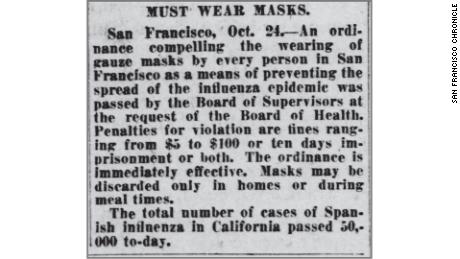
On October 24, 1918, the city’s elected legislative body, the Board of Supervisors of San Francisco, realizing that drastic action needed to be taken with over 4,000 cases recorded, unanimously passed the Influenza Mask Ordinance (cnn.com).
And the people stayed home. And read books, and listened, and rested, and exercised, and made art, and played games, and learned new ways of being, and were still. And listened more deeply. Some meditated, some prayed, some danced. Some met their shadows. And the people began to think differently.
And the people healed. And, in the absence of people living in ignorant, dangerous, mindless, and heartless ways, the earth began to heal.
And when the danger passed, and the people joined together again, they grieved their losses, and made new choices, and dreamed new images, and created new ways to live and heal the earth fully, as they had been healed.
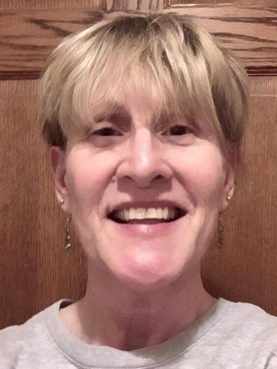
Kitty O’Meara is a retired school teacher living near Madison, Wisconsin.
This article was written prior to the pandemic, but still contains relevant and applicable information.
The Taurus New Moon exhibits a determination to fulfill certain plans and find fulfillment, no matter what kinds of obstacles may have stood in the way previously. This is likely based not just on a desire, but a deep-down sense of need. If needs are not met, this can eventually have a profound effect on us, which possibly reverberates into various areas and layers of existence. It may be like an ongoing hunger, which just gets stronger, so that the level of need then seems to increase exponentially. The Taurus Moon reminds us not only to notice when a new need is making itself known, but also to be careful not to delay doing something to try to meet the need.
With Uranus conjunct the New Moon, there could be an added pressure to make things happen. But if the approach of digging in our heels, in usual Taurus fashion, doesn’t achieve the desired result, Uranus also hints at the wisdom of being able to break the mould and change tack. Even Taurus sometimes needs to turn a corner and try something different!
Uranus, with its lightning-bolt association, does represent the power to dislodge anything that is stuck or getting in the way. So, this energy could be helpful for finally moving past a block, whether this be at a personal, professional, or other level. Sometimes such blocks are internal and psychological, but with outer planets they can also relate to external factors. Thus, there may soon be an opportunity to engage in activities that were closed to us before. Because the sign of Taurus is involved, this may well assist with steps to ensuring greater future security.
It is also true that Uranus can sometimes send that bolt from the blue to alert us to a problem or issue, but usually in a quite uncomfortable way. We may feel rather exposed, perhaps becoming more aware of our shortcomings. We have choices in how we handle such shocks, however. We can look for a nurturing and healthy way to deal with the shock itself, to start with. We can also then consider if there are steps we could take for the future, which would help our situation. Although the winds of change that Uranus brings can blow us sideways, we don’t always have to lose everything. We may be able to gain new ground and bring with us essentials that can be built upon. Or we may rebuild some of what we had, but in a better way. With the outer planets, we often divest ourselves of anything nonessential, not regretting what we’ve needed to let go of, because the new world that opens up is so much better.
The Taurus New Moon is also square Jupiter and Saturn, indicating extra tension around changes, but also extra creativity. Interestingly, the squares to Jupiter in late Capricorn are out of sign (“dissociate”). In other words, a mix of sign qualities is in play. Rather than the more straightforward square to Saturn in Aquarius, which involves a fixed Moon squaring a planet in a fixed sign, we now have a mix of fixed with cardinal, in a Taurus–Capricorn square. However, this introduces another kind of commonality, because both of these are earth signs. It may well be, then, that the conflicting dynamic inherent in the square becomes more creative than divergent, due to both parties being able to find common ground. There may also be a more obvious leader figure involved, thanks to the cardinal sign predominance.
The New Moon makes a minor aspect to Neptune, a semi-square, which brings in a softer edge, with Neptune in Pisces. Minor aspects are not always so easy to spot in a chart. But the semi-square is often easier to pick out when we remember that, with a 45° arc, it involves a planet that is one-and-a-half signs away. This is a bit like saying that there’s help at hand from a neighbor living one-and-a-half blocks away. If we can manage to get a little beyond the next block, we can find a solution. We don’t have to go out of our way, but we do need to make an extra amount of effort. In this case, it’s of the Neptunian kind, meaning more compassion, more imagination, or just a willingness to escape from the usual routines for a while.
This article is from the Mountain Astrologer, written by Diana Collis.
Egon Schiele (German: [ˈʃiːlə] (listen); 12 June 1890 – 31 October 1918) was an Austrian painter. A protégé of Gustav Klimt, Schiele was a major figurative painter of the early 20th century. His work is noted for its intensity and its raw sexuality, and the many self-portraits the artist produced, including nude self-portraits. The twisted body shapes and the expressive line that characterize Schiele’s paintings and drawings mark the artist as an early exponent of Expressionism.
Biography
Early life
Schiele aged 16, self-portrait from 1906
Schiele was born in 1890 in Tulln, Lower Austria. His father, Adolf Schiele, the station master of the Tulln station in the Austrian State Railways, was born in 1851 in Vienna to Karl Ludwig Schiele, a German from Ballenstedt and Aloisia Schimak; Egon Schiele’s mother Marie, née Soukup, was born in 1861 in Český Krumlov (Krumau) to Johann Franz Soukup, a Czech father from Mirkovice, and Aloisia Poferl, a German Bohemian mother from Český Krumlov.[1][2] As a child, Schiele was fascinated by trains, and would spend many hours drawing them, to the point where his father felt obliged to destroy his sketchbooks. When he was 11 years old, Schiele moved to the nearby city of Krems (and later to Klosterneuburg) to attend secondary school. To those around him, Schiele was regarded as a strange child. Shy and reserved, he did poorly at school except in athletics and drawing,[3] and was usually in classes made up of younger pupils. He also displayed incestuous tendencies towards his younger sister Gertrude (who was known as Gerti), and his father, well aware of Egon’s behaviour, was once forced to break down the door of a locked room that Egon and Gerti were in to see what they were doing (only to discover that they were developing a film). When he was sixteen he took the twelve-year-old Gerti by train to Trieste without permission and spent a night in a hotel room with her.[4]
Academy of Fine Arts
When Schiele was 15 years old, his father died from syphilis, and he became a ward of his maternal uncle, Leopold Czihaczek, also a railway official.[2] Although he wanted Schiele to follow in his footsteps, and was distressed at his lack of interest in academia, he recognised Schiele’s talent for drawing and unenthusiastically allowed him a tutor, the artist Ludwig Karl Strauch. In 1906 Schiele applied at the Kunstgewerbeschule (School of Arts and Crafts) in Vienna, where Gustav Klimt had once studied. Within his first year there, Schiele was sent, at the insistence of several faculty members, to the more traditional Akademie der Bildenden Künste in Vienna in 1906. His main teacher at the academy was Christian Griepenkerl, a painter whose strict doctrine and ultra-conservative style frustrated and dissatisfied Schiele and his fellow students so much that he left three years later.
Klimt and first exhibitions
Portrait of Arthur Rössler, 1910
In 1907, Schiele sought out Gustav Klimt, who generously mentored younger artists. Klimt took a particular interest in the young Schiele, buying his drawings, offering to exchange them for some of his own, arranging models for him and introducing him to potential patrons. He also introduced Schiele to the Wiener Werkstätte, the arts and crafts workshop connected with the Secession. Schiele’s earliest works between 1907 and 1909 contain strong similarities with those of Klimt,[5] as well as influences from Art Nouveau.[6] In 1908 Schiele had his first exhibition, in Klosterneuburg. Schiele left the Academy in 1909, after completing his third year, and founded the Neukunstgruppe (“New Art Group”) with other dissatisfied students. In his early years, Schiele was strongly influenced by Klimt and Kokoschka. Although imitations of their styles, particularly with the former, are noticeably visible in Schiele’s first works, he soon evolved his own distinctive style.
Portrait of Anton Peschka 1909
Living room in Neulengbach, 1911
Klimt invited Schiele to exhibit some of his work at the 1909 Vienna Kunstschau, where he encountered the work of Edvard Munch, Jan Toorop, and Vincent van Gogh among others. Once free of the constraints of the Academy’s conventions, Schiele began to explore not only the human form, but also human sexuality. Schiele’s work was already daring, but it went a bold step further with the inclusion of Klimt’s decorative eroticism and with what some may like to call figurative distortions, that included elongations, deformities, and sexual openness. Schiele’s self-portraits helped re-establish the energy of both genres[clarification needed] with their unique level of emotional and sexual honesty and use of figural distortion in place of conventional ideals of beauty. He also painted tributes to Van Gogh‘s Sunflowers as well as landscapes and still lifes.[7]
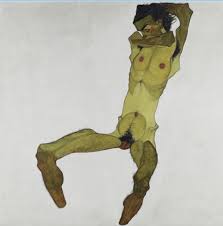
In 1910, Schiele began experimenting with nudes and within a year a definitive style featuring emaciated, sickly-coloured figures, often with strong sexual overtones. Schiele also began painting and drawing children.[8] Schiele’s self portrait, Kneeling Nude with Raised Hands (1910), is considered among the most significant nude art pieces made during the 20th century.[by whom?] Schiele’s radical and developed approach towards the naked human form challenged both scholars[who?] and progressives alike. This unconventional piece and style went against strict academia and created a sexual uproar with its contorted lines and heavy display of figurative expression.[citation needed] At the time, many[who?] found the explicitness of his works disturbing.
From then on, Schiele participated in numerous group exhibitions, including those of the Neukunstgruppe in Prague in 1910 and Budapest in 1912; the Sonderbund, Cologne, in 1912; and several Secessionist shows in Munich, beginning in 1911. In 1911, Schiele met the seventeen-year-old Walburga (Wally) Neuzil, who lived with him in Vienna and served as a model for some of his most striking paintings. Very little is known of her, except that she had previously modelled for Gustav Klimt and might have been one of his mistresses. Schiele and Wally wanted to escape what they perceived as the claustrophobic Viennese milieu, and went to the small town of Český Krumlov (Krumau) in southern Bohemia. Krumau was the birthplace of Schiele’s mother; today it is the site of a museum dedicated to Schiele. Despite Schiele’s family connections in Krumau, he and his lover were driven out of the town by the residents, who strongly disapproved of their lifestyle, including his alleged employment of the town’s teenage girls as models. Progressively, Schiele’s work grew more complex and thematic, and he eventually would begin dealing with themes such as death and rebirth.[9]
Neulengbach and imprisonment
Schiele’s drawing of his prison cell in Neulengbach
Together they moved to Neulengbach, 35 km (22 mi) west of Vienna, seeking inspirational surroundings and an inexpensive studio in which to work. As it was in the capital, Schiele’s studio became a gathering place for Neulengbach’s delinquent children. Schiele’s way of life aroused much animosity among the town’s inhabitants, and in April 1912 he was arrested for seducing a young girl of 13,[10] below the 14 year old age of consent.[11]
When the police came to his studio to place him under arrest, they seized more than a hundred drawings which they considered pornographic. Schiele was imprisoned while awaiting his trial. When his case was brought before a judge, the charges of seduction and abduction were dropped, but the artist was found guilty of exhibiting erotic drawings in a place accessible to children. In court, the judge burned one of the offending drawings over a candle flame. The twenty-one days he had already spent in custody were taken into account, and he was sentenced to a further three days’ imprisonment. While in prison, Schiele created a series of 12 paintings depicting the difficulties and discomfort of being locked in a jail cell.
Self portrait
In 1913, the Galerie Hans Goltz, Munich, mounted Schiele’s first solo show. A solo exhibition of his work took place in Paris in 1914.[12]
Edith Schiele 1915
In 1914, Schiele glimpsed the sisters Edith and Adéle Harms, who lived with their parents across the street from his studio in the Viennese district of Hietzing, 101 Hietzinger Hauptstraße. They were a middle-class family and Protestant by faith; their father was a master locksmith. In 1915, Schiele chose to marry the more socially acceptable Edith, but had apparently expected to maintain a relationship with Wally. However, when he explained the situation to Wally, she left him immediately and never saw him again. This abandonment led him to paint Death and the Maiden, where Wally’s portrait is based on a previous pairing, but Schiele’s is newly struck. (In February 1915, Schiele wrote a note to his friend Arthur Roessler stating: “I intend to get married, advantageously. Not to Wally.”) Despite some opposition from the Harms family, Schiele and Edith were married on 17 June 1915, the anniversary of the wedding of Schiele’s parents.
WWI to death
Photograph of Egon Schiele, 1910s
Although Schiele avoided conscription for almost a year, World War I now began to shape his life and work. Three days after his wedding, Schiele was ordered to report for active service in the army where he was initially stationed in Prague. Edith came with him and stayed in a hotel in the city, while Egon lived in an exhibition hall with his fellow conscripts. They were allowed by Schiele’s commanding officer to see each other occasionally.
During the war, Schiele’s paintings became larger and more detailed. His military service, however, gave him limited time, and much of his output consisted of linear drawings of scenery and military officers. Around this time, Schiele also began experimenting with the themes of motherhood and family.[12] His wife Edith was the model for most of his female figures, but during the war (due to circumstance) many of his sitters were male. Since 1915, Schiele’s female nudes became fuller in figure, but many were deliberately illustrated with a lifeless doll-like appearance.
Despite his military service, Schiele was still exhibiting in Berlin. He also had successful shows in Zürich, Prague, and Dresden. His first duties consisted of guarding and escorting Russian prisoners. Because of his weak heart and his excellent handwriting, Schiele was eventually given a job as a clerk in a POW camp near the town of Mühling. There, he was allowed to draw and paint imprisoned Russian officers; his commander, Karl Moser (who assumed that Schiele was a painter and decorator when he first met him), even gave him a disused store room to use as a studio. Since Schiele was in charge of the food stores in the camp, he and Edith could enjoy food beyond rations.[13]
By 1917, he was back in Vienna and able to focus on his artistic career. His output was prolific, and his work reflected the maturity of an artist in full command of his talents. He was invited to participate in the Secession’s 49th exhibition, held in Vienna in 1918. Schiele had fifty works accepted for this exhibition, and they were displayed in the main hall. He also designed a poster for the exhibition; it was reminiscent of the Last Supper, with a portrait of himself in the place of Christ. The show was a triumphant success. As a result, prices for Schiele’s drawings increased and he received many portrait commissions.
In the autumn of 1918, the Spanish flupandemic that claimed more than 20,000,000 lives in Europe reached Vienna. Edith, who was six months pregnant, succumbed to the disease on 28 October. Schiele died only three days after his wife. He was 28 years old. During the three days between their deaths, Schiele drew a few sketches of Edith.[14]
Sue-Ann Siegel takes a call as she works a shift monitoring the Montgomery County Hotline from her home office fielding calls from the National Suicide Prevention Lifeline in Chevy Chase, Maryland, on March 18, 2020. The COVID-19 pandemic has led to a big spike in calls to mental health and suicide prevention hotlines. PHOTO BY KATHERINE FREY / THE WASHINGTON POST / GETTY IMAGES
Therapists, counselors, and social workers are providing vital community support despite also experiencing elevated symptoms of anxiety and depression themselves.
We’ve all heard the stories by now about health care providers on the frontlines of the COVID-19 crisis who are still working without proper protection equipment, not to mention the lack of adequate sleep and meals. Many of us have responded within our capabilities to help—several groups and individuals have taken to sewing face masks, neighbors have created GoFundMe accounts to collect donations to provide breakfast, lunches, and dinner for hospital staff, among other acts of kindness.
But other first responders on the frontline facing extraordinary challenges who we’re not hearing much about are mental health providers.
Therapists, counselors, and social workers are providing vital support for community members as well as other first responders, with many also having to put themselves at risk by continuing to go into an office space, as well as providing services with limited resources. Some have had to shoulder the cascading impacts of rapidly moving their services entirely online, while others have lost half of their caseloads because clients won’t try online sessions, according to therapist and telehealth consultant Tiffany Chhuom. And then there are those who lack access to reliable video software that provides the same privacy and confidentiality as in-person sessions.
Mental health professionals are also experiencing elevated symptoms of anxiety and depression themselves. Despite their own challenges, providers are quickly creating and sharing resources and solutions to the technology, access, and insurance problems that the novel coronavirus crisis has created. Because of their impressive efforts and the resilience they hope to instill in those they work with, some of the changes forced by a temporary acute crisis may last longer than COVID.
New Ways of Working with Clients
Practitioners doing remote evaluations and intakes are able to meet with family members together in one video-conferencing session, which is giving them a much fuller picture and sense of clients’ background than they were used to getting when meeting with clients individually, according to psychologist Sara Woods, Ph.D., a private practitioner in Lacey, Washington.
“Kids are also loving showing me their pets and homes and other things that help me get to know them better. I wouldn’t normally get to see all of that!” says Woods, who also works at the University of Washington Autism Center in Tacoma.
In a COVID-related survey to three large Facebook groups, which Chhoum administers, she found that clients who are willing to participate in virtual therapy or telehealth sessions can be more relaxed and receptive to the difficult work of therapy since they are in familiar, safe environments that they can control, rather than a therapist’s office, which she says can feel clinical and sterile to some.
“Some clients actually feel more comfortable opening up to their providers on video compared to in person,” Chuuom explains. “Additionally, telehealth might be helpful specifically for clients with traumatic brain injuries who may have memory challenges and mobility limitations. Because telehealth enables automated appointment reminders, it allows clients to remain in their homes and facilitates smoother coordinated care among the client’s providers who can stay in touch more easily with text and video consultation with the proper end-to-end encryption, of course.”
Danielle Jenkins, a psychologist in Washington and blogger, says the telehealth sessions are making the hard work of supporting clients much easier. “Group practices [are] creating affordable support groups online for people who cannot do traditional therapy at this time, and experts [are] letting people join their trainings for free,” Jenkins says.
It’s the first time she’s used telehealth services, and she says she loves it.
Jenkins says she plans to keep telehealth as an option going forward. “I see primarily new and expectant moms as well as immunocompromised clients and this option expands location and minimizes time constraints.”
This new telehealth frontier isn’t limited to talk therapy. Providers are pioneering online eye movement desensitization and reprocessing—an effective treatment for trauma—for clients, and training their colleagues around the world how to pivot from in-office EMDR treatment to EMDR online. They’re also hosting brainstorming calls for how to continue therapy online for various topics: working with children, working with domestic-violence survivors, combating loneliness-related depression, and more.
Similarly, providers are creating transcontinental support groups for their clients, for those being hit especially hard by the social distancing and isolation requirements, as well as for fellow therapists.
Resources for the Greater Good
Therapists and their professional organizations are creating free resources for their colleagues and for the community. Dr. Matthew Whalley and Dr. Hardeep Kaur have written a free guide to living with fear and uncertainty and are now coordinating its crowdsourcing translation into many languages. And the American Counseling Association is offering free continuing education units that providers are required to complete every year to maintain licensure.
Beyond the increased need for virtual sessions with new or existing clients, COVID-19 is highlighting the need for therapists who specialize in working with other therapists. Large, multistate medical systems such as Providence are responding to that need by rolling out mental-health services for their mental-health providers. Therapists are offering pro bono telehealth to first responders, but the challenge is finding ways to connect those offering services with those who need them.
Other providers are turning to social media to facilitate those connections. Brooke Fina, LCSW, BCD, Associate Professor-Research in the Department of Psychiatry and Behavioral Sciences at the University of Texas Health Science Center at San Antonio, is asking mental health professionals to promote their skills, resources, and organizations under the hashtag #ImTrainedImHere, with the goal of helping community members know where they can go for mental health resources.
Maintaining Healthy Connections
Virtual connection is our primary option right now. Businesses, therapists, and, increasingly, congressional representatives, medical centers, and governmental agencies are providing regular live updates through their Facebook pages, YouTube channels, and Twitch accounts, where they answer questions in real time from anyone tuning in. However, even with this new level of access to authorities, Roxane Silver, professor of psychological science at the University of California, says, people should take caution.
“Research does make it clear that social media is a larger source of misinformation and rumor than we typically get from traditional media,” Silver says.
Julianne Holt-Lunstad, professor of psychology and neuroscience at Brigham Young University, echoes Silver’s concerns. She doesn’t believe tech tools should remain the centerpiece of social connection after the crisis ends. “It’s concerning to think of [virtual connection] as becoming a predominant means of communication—losing face-to-face connection could lead to a longer-term public-health crisis,” she says. “We need to regain a sense of normal face-to-face connection once this crisis is over.”
Even as we may still be at the beginning of this crisis and its effects, mental-health providers have already done so much work to make support and resources available to as many people as possible, even as they themselves are struggling. And while their work is not done, the contributions they’ve made to healing from this collective trauma are already taking effect.
MEGAN WILDHOODis a writer, speaker, and advocate for the marginalized. She is the author of the poetry collection Long Division.
Photograph Source: The White House – Public Domain
“Where does incompetence end and crime begin?” asked an appalled German chancellor in the First World War on learning that his chief military commander planned to renew his bloody but futile attacks on the Western Front.
President Trump is showing a similar disastrous inability during the coronavirus pandemic to shift from his well-tried tactics of claiming non-existent successes and blaming everybody for his blunders aside from himself. It is his first true crisis in his three years in the White House and, like that German general, he is visibly incapable of changing the way he deals with it.
Much virtual ink has been spilled over the last three years about the ineptitude and isolationism of the Trump presidency, and how far it will erode American hegemony. The pandemic has posed the question more starkly than ever before, but it has also provided something of an answer. Crudely put, the US will not remain the one single superpower if the rest of the world sees evidence day after day that the country is run by a crackpot who cannot cope with a global calamity.
More is at stake here than the future of the Trump presidency. Over the last decade, Trumpian nationalist populist leaders have taken power all around the world, and they too are being tested and found wanting. Without exception, they have shown themselves to be better at winning (or fixing) elections than they are at combating this virus. Some admit the gravity of the outbreak, but use it to enhance their power and silence their critics. Others reject social distancing and restrictive measures as unnecessary or denounce them as a hoax cooked up by the media. What comes across in all these cases is that Trumpian regimes, for all their self-serving threat enhancement, do not know what to do when there is a real threat to their nation.
In India, the Hindu nationalist prime minister Narendra Modi locked down his country with just four hours’ notice, forcing millions of jobless migrant labourers with little money or food to trek hundreds of miles to their home villages.
In Brazil, the far-right president Jair Bolsonaro took an opposite tack, downplaying the crisis and defying his own health ministry’s appeal for social distancing by going into the street to buy doughnuts and mingle with his supporters: one film shows him wiping his nose with his wrist before shaking hands with an elderly woman.
In Turkey, President Recep Tayyip Erdogan is reluctant to do anything to stall the Turkish economy and is jailing journalists who say he is not doing enough for victims of the virus. In Hungary, prime minister Viktor Orban used the pandemic as an excuse to pass a law suspending elections and enabling him to rule indefinitely by decree. The dire state of underfunded Hungarian hospitals is ignored.
What might be loosely called the Trump playbook – though much of it predates Trump, and has been used by populist nationalist demagogues down the centuries – falls short when it comes to dealing effectively with a real rather than a concocted crisis. But, comforting though it would be to suppose that this would discredit leaders who pretend to be national saviours, this does not necessarily follow. In places like Hungary, Turkey and India, the media is largely under the control of the ruling party, and news of its mismanagement of the crisis, whatever its toll, will be suppressed.
Yet the pandemic is exposing the weaknesses of regimes from Washington to Delhi and Sao Paulo to Budapest. Autocracy has its disadvantages since, at the core of these governments, is a supreme leader with devoted followers who believe that he can do no wrong. Trump may have receded from his claim that he enjoys monarchical powers and can do without Congress, but the boast shows his authoritarian inclinations.
Crises expose the poor judgement of such dictatorial regimes, where leaders surround themselves with cheerleaders and courtiers who tell them what they want to hear. A diplomat in Baghdad once told me that among the senior lieutenants of Saddam Hussein the only safe course was “to be ten per cent tougher than the boss.” Trump may not shoot advisers who contradict him like Saddam, but he does sack them and shows equal intolerance towards dissenting views as the Iraqi dictator.
The Trumpian generation of leaders suffers from a further disadvantage: they come from deeply polarised countries, and are both the symptom and cause of those divisions. Minorities are persecuted: Muslims in India; Kurds in Turkey; Latin American immigrants in the US. The new authoritarians are happy to rule countries that are split down the middle, but they are finding that fighting a pandemic successfully requires a higher degree of national cohesion than they can deliver.
The pandemic will rock many of these regimes, but censorship and aggressive government PR may limit its political impact. The devastating Spanish Flu pandemic of 1918-19 only gained its name because Spain was one of the few countries that did not censor accounts of its ravages.
The coronavirus may ebb or news of it be suppressed, but it will be impossible to hide the deep economic depression likely to follow in its wake. It was the Great Crash of 1929 that led to the rise of Hitler and the advance of communism, fuelling ever-increasing political violence in the 1930s. A post-pandemic Great Depression mark II may have a similarly explosive political effect, turning the 2020s into the same sort of troubled time in our century as the 1930s were in the last. Rival nation-states will once again confront each other and international organisations like the UN and the EU, as with the League of Nations of old, will retreat into irrelevance. Enhanced international cooperation and integration, that once appeared to be where the world was heading, are turning out to be a mirage.
As Trump presides over the break-up of the international order and the ebb-tide of US hegemony, it is difficult to think of any historic figure that precisely resembles him. But one contender should surely be Kaiser Wilhelm II, the swaggering, opinionated German emperor with catastrophically poor judgement, who led his country to defeat in the First World War. As with Trump, he warned – somewhat prematurely – of the rise of China and “the yellow peril”. And, again like Trump, he forecast that the great crisis that he could not cope with would soon be over, promising his soldiers in 1914 that they “would be home before the leaves fall”.Join the debate on FacebookMore articles by:PATRICK COCKBURN