

It is true that the common man respects Napoleon more than Freud, General Patton more than Aristotle, King Henry V more than Nietzsche. He does not feel a need for a philosophy or a particular worldview that brings a new perspective to his suffering. He has a natural fear of intellectual thought, a fear as instinctive as his impulse towards pleasure. Those inclined towards the abstract will scoff at the ordinary man, and they will assume superiority simply because they earn a living using a pen, rather than a shovel. But by refusing to involve himself with the realm of metaphysics, the ordinary man remains in touch with his most primal nature. The less you know, the more you wonder. And when confronted with the presence of Caesar, Hannibal or Alexander the Great, the common man cannot help but gaze in awe.
This will be an uncomfortable truth for many people. But it must be understood that the common man is not, upon first sight, interested in the history, terrors and deeds of these men. Rather, he is infatuated with the symbol, the metaphor that these men represent. It is a symbol that resonates with his most primitive and prehistorical nature. For there exists an archetypal structure, an eternal, constant construct in the masculine collective unconscious that is embodied by such leaders as Caesar, Hannibal, Charlemagne and Alexander the Great.
Robert Moore studied the historical expressions of kingship across ancient and medieval cultures and he discovered striking similarities and agreements between many cultures. This consistent portrayal of the king across history and culture reveals the contents within the unconscious of the masculine; the images of kingship allow us to see the characteristics of men that have been most respected since the beginning.
The mythologies that have resonated most with our emotions and, therefore, the subconscious have survived throughout human history. Each man feels an internal drive towards this symbol of kingship, and it is natural that he examines his life according to whether he is proving the king within him. For the king is the highest expression of the masculine energy — it is man’s most original state of being, his highest orientation to morality.
Our ancestors accessed the archetype of the King through ancient mythology and folklore; they listened to poems and tales of King Arthur, Robin Hood and Beowulf, and there were older men, real men who had witnessed war, plague and horror, who told the youth about the days and traditions of old. They practiced rituals and rites of passage, they celebrated the coming of the summer months and they mourned the winter, they toiled in the dirt and they gave the gift of language, beauty and symphony to the ineffable
Modern man, however, has no time for myth or ritual — he calls himself a man of science; he could never entertain anything that exists beyond the limits of the observable. He laughs at the mention of Jesus walking on water and he will write an entire dissertation on why Noah would not have survived an apocalyptic flood in a wooden ship. All the while, owing to the narrowness of his mind, he fails to see the wisdom that hides within these old stories. And so, he has abandoned religion and mythology, indeed he has turned away from the experience, the wonder, the imagination of life itself.
Men need a purpose, men need to ascend beyond their humanity, but in order to rise, there must be an ideal and a story that each can strive towards. All the religions and the mythologies hold an idea of the divine masculine — Jesus Christ, Krishna, Buddha, Muhammad — but where is our king? Where are our fathers? Where are those who will teach us how to be gentlemen, how to behave in a working men’s club, how to treat women, how to be ruthless… how to be men? The truth is our God and our fathers, the best among all men, have long since died. They were killed in the great wars of the last century — wars that do not seem to really matter anymore. All that was fought for and all that our fathers held dear has slowly faded away. Our country has not been the same since.
We live in a time of great deconstruction, a time when all that was ever valued is now questioned and hated, a time of institutional collapse, spiritual confusion and personal division. But, eventually, a day will come when there will be nothing left to destroy and all the sacrifice and profits of our ancestors will have vanished. On this day, a brave new age will arrive, an age of creation and potential — we are on the cusp, we are the middle children of the world. And this new world will need men, proper men, men who are unashamed of their spontaneity, men of courage and mythology, men who travel by the chariot and live up high in the mountains —the world will need kings.
The Anglo-Saxons believed the king to be a descendant from Odin, a Germanic god most associated with wisdom, healing, death, royalty and battle. The Germanic king was the warrior chief of his realm, the messenger of the gods. His divine ancestry gave him access to the heavens, and through communication with the gods, the king ensured the well-being of his tribe or army. Similarly, the Rajas of India were the embodiment of Dharma, meaning that which upholds, supports, or maintains the order of the universe. The balance within the world was the Raja’s responsibility, and he guaranteed this harmony by drawing the souls of all living things towards the higher spiritual dimensions. Because of his divine powers, he removed himself from the earthly world and communicated to his people only energetically.
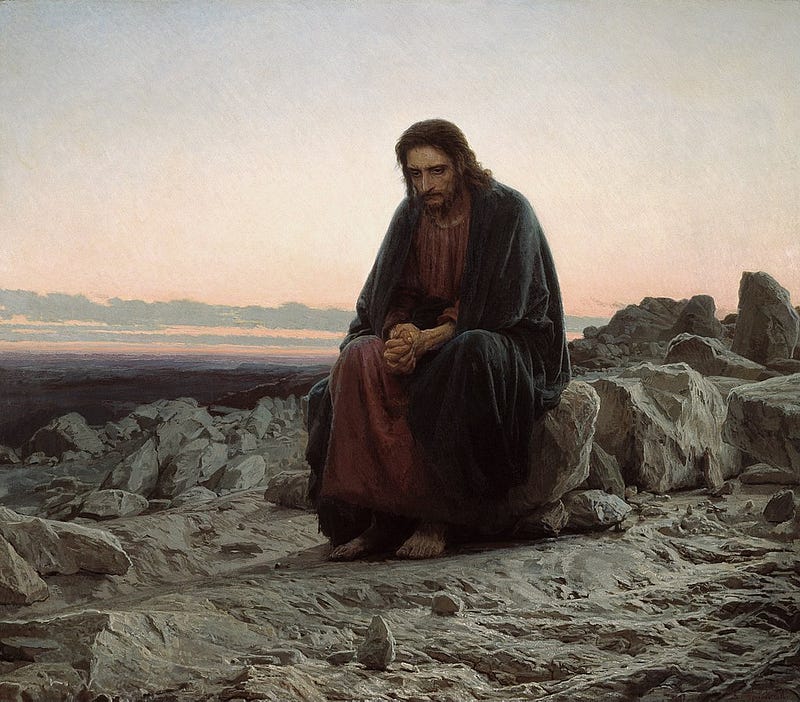
According to Christian tradition, Jesus Christ was the only incarnation of king energy. He was the final servant, the final sacrifice of God. However, during the medieval ages, European kings began to imagine themselves alongside the ancient ideal of kingship, believing that they were the chosen orator of God’s word. It was God who gifted the throne to the king and so, it was the king’s responsibility to serve the higher power of God, not the desires of his people. By serving this divine power, the king presents himself as an incarnation of the highest ideal and, as a symbol of the divine, he elevates his people towards the majesty of God.
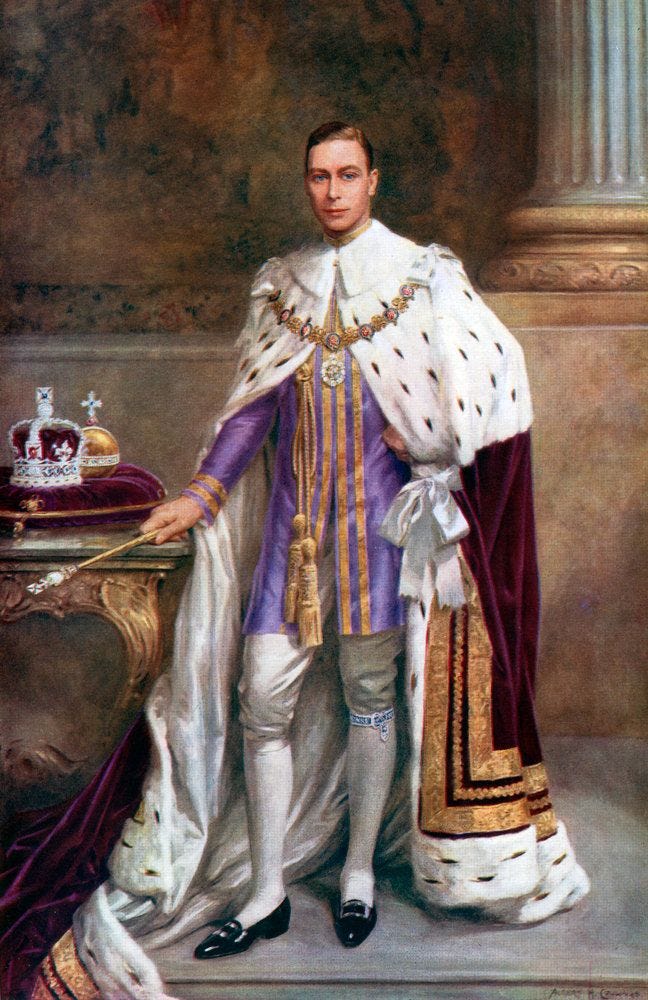
The mortal king himself, as Moore writes, was relatively unimportant. It was the king energy, the sacredness of kingship that scholars valued most. The expressions ‘Your Majesty’ and ‘God Save The King’, as is the tradition here in Britain, are a recognition of the standing monarch, but most importantly of the unchanging symbol that the monarch represents. Indeed, kings in the ancient world were killed if they failed to uphold the sacred archetype of kingship.
Therefore, the monarch sits beyond the earthly quarrels of politics and should restrain from any sentimental indulgences or declarations of opinion. For monarchy is a divine duty sent from God to provide the common man with an ideal to strive towards; the symbol should remain out of reach from the ordinary people in order to preserve its magnificence. The mortal monarch, then, must answer only to God, not the ordinary people.
The function of the king is to embody the peace, prosperity and order of his realm. It is not his duty to take to his people and demand principle and law, but rather to live law and order in his own life; he should only enforce order when necessary. Therefore, the focus of the king is the maintenance of harmony in the spiritual world, or rather the depths of his own unconscious.
If the king energy is not present within the mortal king, if the standing king is too weak or absent, then the world will give over to chaos and sickness. The mortal king is the middle way between heaven and earth. And as he brings the two, an explicit duality, together, he creates the third, an implicit unity — the harmony and balance of his kingdom. The kingdom is a reflection of the king’s inner world, and if his mind is troubled, then his people will be troubled also. It is the king’s responsibility to live according to the divine will of God, the ‘right order’ of nature — known as the Ma’at, meaning truth and balance, in ancient Egypt, or the Dharma, understood as the cosmic law and order, in Hinduism and Buddhism, or the Tao, which symbolises the ‘the way’ or ‘the path’ of the universe in China.
This image of the king can be found in most of the ancient scriptures across the world. To illustrate one example, in the New Testament, the disciples tell the story of when they saw Jesus walking across the sea towards their boat. In this story, water is the symbol of the unconscious, of the emotions that rise when one confronts the unknown. But by remaining still and calm, by having faith in the water, the stream of nature, by not allowing his emotions to overthrow his balance, Jesus was able to float and guide his disciples to safety. Here, the Bible shows Jesus as the king of the world, as the son of God who remains peaceful in a place of chaos so that he can negotiate the storm with reason and care.
Now, if one wishes to access the king energy, it must first be understood that it is a matter of conviction. A beast is led by his impulses, but a king is led by reason. And reason is the balance between the excesses. There are two extremes of men in this world: tyrants and cowards. In this age, cowards outnumber the tyrants, but they are also the most dangerous. A harmless man, as Dr Jordan Peterson writes, is one who has the devil within him under loose control, but once the rope snaps, and it will snap one day, the world turns upside down. A tyrant can be thrown in jail, but a coward is he who commits violence against himself — the greatest of all crimes. The thread that unites the two is fear — both the tyrant and the coward fear who they truly are.
The king, however, is not moved by fear. He is not carried by his emotions, he remains firm against the persuasion of the world. Nor does he waver or tremble in the presence of the feminine. For the masculine king is the consciousness, the presence of all that thrives and blossoms around him. To rise above emotions does not mean to repress them. Rather, it requires that one rotate through and confront all that rises to the surface — a king takes himself lightly, even though he may feel heavy, and he does not allow his heart to be overwhelmed by the quicksand of passion.
The king holds a deep, grounded sexuality; his masculine vitality is married with the earth — he does not bury his energy in apathy, nor does he allow it to soar into the sky and be taken by the wind. He is in firm control of his prehistorical nature and he gives his gift only when there is an opportunity for total and honest expression. True strength is never hysterical, destructive or uncontrollable — it is humble and forgiving. A man may feel desire for women other than his wife, but if he pursues this attraction, if he seeks fulfillment through the feminine, then the gift of his sexual energy will be partitioned and detached, rather than full and conscious. Acting upon the impulses turns man not into an animal, but a slave of desire and attachment.
The ideal of kingship maintains that the king is able to create order from mayhem and harmony from chaos. And this creative power is born from the king’s energetic balance between the masculine and the feminine, of the mind and the body, of consciousness and emotion — the fullness of the entire universe. The character of the king, then, is also a balance between the poles of the extreme. He carries an aggressive tenderness, a grounded enthusiasm and an unspoken intelligence. This balance is the source of creation; it is the force that pulls together the two elements in order to create the whole. And so, the king rises above the duality of the senses — he represents the union, the oneness of all existence.
The force of kingship does not move or even flinch under pressure, it remains still and watchful, like the Sun round which the planets of our Solar System orbits. The king simply allows himself to ‘be’, to exist without conflict, to be one with God, to flow with the Tao or the Dharma — to live alongside that which moves the moon and the stars. He understands himself to be whole and undivided and he has learnt that there is nothing he must do, nor anything — women, money, fame — that he needs in order to feel full. It must be noted, however, that it is the archetype of the king that serves as the Sun, the true centre of the system, not the mortal king. When the ego becomes its own priority and identifies itself with the king energy, the tyrant arises. Instead, men need to think of themselves as a ‘steward’ of the king energy. This creates a psychological distance from the king archetype.
Only a tyrant, a warrior, a real troublemaker tries to submit the world to his will. The king’s world is within, he does not need to reach out into the world, the world comes to him — he is the centre of the kingdom. And if he keeps himself present and stable, as the air and the water does, then the world around him will become orderly and peaceful too. For the king is the creator of the universe, he is the oxygen that breathes life, the magnetic force field that repels the immoral and attracts the moral. The king’s responsibility, then, is to trust a higher power, rather than his mind, which can only create problems. And by becoming a divine channel of goodness between heaven and earth, he in turn provides stewardship and order for his people.
Thank you, Harry J. Stead