

The Trial of God:
Elie Wiesel, Robert McAfee Brown (Introduction), Matthew Fox (Afterword)
Where is God when innocent human beings suffer? This drama lays bare the most vexing questions confronting the moral imagination.
Set in a Ukranian village in the year 1649, this haunting play takes place in the aftermath of a pogrom. Only two Jews, Berish the innkeeper and his daughter Hannah, have survived the brutal Cossack raids. When three itinerant actors arrive in town to perform a Purim play, Berish demands that they stage a mock trial of God instead, indicting Him for His silence in the face of evil. Berish, a latter-day Job, is ready to take on the role of prosecutor. But who will defend God? A mysterious stranger named Sam, who seems oddly familiar to everyone present, shows up just in time to volunteer.
The idea for this play came from an event that Elie Wiesel witnessed as a boy in Auschwitz: “Three rabbis–all erudite and pious men–decided one evening to indict God for allowing His children to be massacred. I remember: I was there, and I felt like crying. But there nobody cried.”
Inspired and challenged by this play, Christian theologians Robert McAfee Brown and Matthew Fox, in a new Introduction and Afterword, join Elie Wiesel in the search for faith in a world where God is silent.
About the author
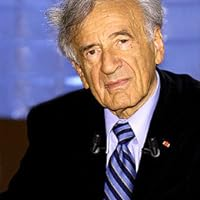
Elie Wiesel
Eliezer “Elie” Wiesel was a Romanian-born American writer, professor, political activist, Nobel laureate, and Holocaust survivor. He authored 57 books, written mostly in French and English, including Night, a work based on his experiences as a Jewish prisoner in the Auschwitz and Buchenwald concentration camps.
In his political activities Wiesel became a regular speaker on the subject of the Holocaust and remained a strong defender of human rights during his lifetime. He also advocated for many other causes like the state of Israel and against Hamas and victims of oppression including Soviet and Ethiopian Jews, the apartheid in South Africa, the Bosnian genocide, Sudan, the Kurds and the Armenian genocide, Argentina’s Desaparecidos or Nicaragua’s Miskito people.
He was a professor of the humanities at Boston University, which created the Elie Wiesel Center for Jewish Studies in his honor. He was involved with Jewish causes and human rights causes and helped establish the United States Holocaust Memorial Museum in Washington, D.C.
Wiesel was awarded various prestigious awards including the Nobel Peace Prize in 1986. He was a founding board member of the New York Human Rights Foundation and remained active in it throughout his life.
(Goodreads.com)