
Tertium Organum
P.D. Ouspensky
Ouspensky’s believed “Tertium Organum” was the third major philosophical synthesis, the previous being those of Aristotle and Bacon. With the publication of “Tertium Organum” in Russian, in 1912, Ouspensky became a widely respected author and lecturer on metaphysical questions. The American translation of Tertium Organum in 1922, won him widespread recognition in England, where he lived from 1921, and in America.
Ouspensky’s experimental efforts to enter higher states of consciousness proved to him that an entirely new mode of thought was needed by modern man, qualitatively different from the two modes (classical and positivistic) that have dominated Western civilisation for 2000 years. “Tertium Organum” is a clarion call for such thought, ranging brilliantly over the teachings of Eastern and Western mysticism, sacred art and the theories of modern science.
About the author
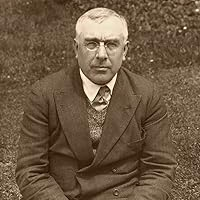
P.D. Ouspensky
Pyotr Demianovich Ouspenskii (known in English as Peter D. Ouspensky, Пётр Демья́нович Успе́нский; was a Russian mathematician and esotericist known for his expositions of the early work of the Greek-Armenian teacher of esoteric doctrine George Gurdjieff, whom he met in Moscow in 1915. He was associated with the ideas and practices originating with Gurdjieff from then on. He shared the (Gurdjieff) “system” for 25 years in England and the United States, having separated from Gurdjieff in 1924 personally, for reasons he explains in the last chapter of his book In Search of the Miraculous.
All in all, Ouspensky studied the Gurdjieff system directly under Gurdjieff’s own supervision for a period of ten years, from 1915 to 1924. His book In Search of the Miraculous is a recounting of what he learned from Gurdjieff during those years. While lecturing in London in 1924, he announced that he would continue independently the way he had begun in 1921. Some, including his close pupil Rodney Collin, say that he finally gave up the system in 1947, just before his death, but his own recorded words on the subject (“A Record of Meetings”, published posthumously) do not clearly endorse this judgement, nor does Ouspensky’s emphasis on “you must make a new beginning” after confessing “I’ve left the system”.
(Goodreads.com)