
by Terynn Boulton (gizmodo.com)
When someone is “blowing smoke up your arse” today, it is a figure of speech that means that one person is complimenting another, insincerely most of the time, in order to inflate the ego of the individual being flattered.
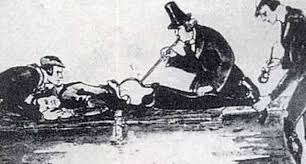
Smoke was blown up the rectum by inserting a tube. This tube was connected to a fumigator and a bellows which when compressed forced smoke into the rectum. Sometimes a more direct route to the lungs was taken by forcing the smoke into the nose and mouth, but most physicians felt the rectal method was more effective. The nicotine in the tobacco was thought to stimulate the heart to beat stronger and faster, thus encouraging respiration. The smoke was also thought to warm the victim and dry out the person’s insides, removing excessive moisture.
In 1745, Richard Mead was among the first known Westerners to suggest that administering tobacco via an enema was an effective way to resuscitate drowning victims.
By 1774, Doctors William Hawes and Thomas Cogan, who practiced medicine in London, formed The Institution for Affording Immediate Relief to Persons Apparently Dead From Drowning. This group later became the Royal Humane Society. Back in the 18th century, the society promoted the resuscitation of drowning people by paying four guineas (about £450 today by purchasing power, or $756) to anyone who was able to successfully revive a drowning victim.
Tobacco glyster (enema), breathe and bleed.
Keep warm and rub till you succeed.
And spare no pains for what you do;
May one day be repaid to you.
The practice of using tobacco smoke enemas on drowning victims quickly spread as a popular way to introduce tobacco into the body to treat an array of other medical conditions including: headaches, hernias, respiratory ailments and abdominal cramps, among many other things. Tobacco enemas were even used to treat typhoid fever and during cholera outbreaks when patients were in the final stages of the illnesses.
In fact, one of the earliest documented references of using such a tobacco enema to resuscitate someone came from someone using a smoking pipe in 1746. In this case, the man’s wife had nearly drowned and was unconscious. It was suggested that an emergency tobacco enema might revive her, at which point the husband of the woman took a pipe filled with burning tobacco, shoved the stem into his wife’s rectum and then covered the other end of the pipe with his mouth and blew. As one would imagine, hot embers of tobacco being blown up her rectum had the intended effect and she was, indeed, revived.
This practice quickly spread, reaching its peak in the early 20th century before, in 1811, English scientist Ben Brodie via animal testing discovered that nicotine was toxic to the cardiac system. Over the next several decades, the popularity of literally “blowing smoke up someone’s arse” gradually became a thing of the past. Figuratively, though, this practice is still alive and well.
First, thanks for the visit to the historical past. I know the phrase and have never even parsed it into a literal proposition of, If you do smoke blowing up the ass, then some outcome will occur, namely….? It was just a sort of nonsensical idiom to dis so and so for a certain kind of flattery or even a con job on one.
But, second, I wonder what the intermediate stage of semantic drift was that provided a transition between then and now?