All posts by Mike Zonta

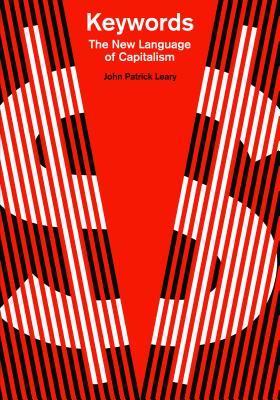
Book: “Keywords: The New Language of Capitalism”

Keywords: The New Language of Capitalism

Keywords: The New Language of Capitalism

by John Patrick Leary

Keywords: The New Language of Capitalism chronicles the rise of a new vocabulary in the twenty-first century. From Silicon Valley to the White House, from kindergarten to college, and from the factory floor to the church pulpit, we are all called to be innovators and entrepreneurs, to be curators of an ever-expanding roster of competencies, and to become resilient and flexible in the face of the insults and injuries we confront at work. In the midst of increasing inequality, these keywords teach us to thrive by applying the lessons of a competitive marketplace to every sphere of life. What’s more, by celebrating the values of gritcreativity, and passion at school and at work, they assure us that economic success is nothing less than a moral virtue.Organized alphabetically as a lexicon, Keywords explores the history and common usage of major terms in the everyday language of capitalism. Because the words in this book have successfully infiltrated everyday life in the English-speaking world, their meanings often seem self-evident, even benign. Who could be against empowerment, after all? Keywordsuncovers the unexpected histories of words like innovation, which was once synonymous with “false prophecy” before it became the prevailing faith of Silicon Valley. Other words, like best practices and human capital, are relatively new coinages that promise us a kind of freedom within a marketplace extending its reach across the public sector and into our private lives. The new language of capitalism burnishes hierarchy, competition, and exploitation as leadershipcollaboration, and sharing, modeling for us the habits of the economically successful person: be visionary, be self-reliant, and never, ever stop working.

Parisians gather outside burning Notre Dame to sing hymns


Guardian News
Published on Apr 15, 2019

Hours after a blaze engulfed the roof of the centuries-old Notre Dame Cathedral, distraught Parisians and stunned tourists lined the banks of the Seine River, gazing in disbelief. Christians sang liturgical songs such as Hail Mary and Ave Maria, as the inferno raged at the cathedral. Others knelt and prayed. Thousands of onlookers stopped at bridges over the Seine and along its embankments, held at a distance by a police cordon. Notre Dame sits on the Ile de la Cite, an island on the Seine River marking the very centre of Paris. The Paris prosecutor’s office said it had launched an inquiry into the fire. Several police sources said that they were working on the assumption for now that it was accidental.

Subscribe to Guardian News on YouTube ► http://bit.ly/guardianwiressub

How Eleanor Roosevelt Revolutionized Politics

By Maria Popova (brainpickings.org)

thesetruths_jilllepore.jpg?fit=320%2C482

“This country,” Margaret Fuller wrote in the middle of the nineteenth century as she considered what makes a great leader, “needs… no thin Idealist, no coarse Realist, but a man whose eye reads the heavens, while his feet step firmly on the ground, and his hands are strong and dexterous for the use of human implements… a man of universal sympathies, but self-possessed; a man who knows the region of emotion, though he is not its slave; a man to whom this world is no mere spectacle or fleeting shadow, but a great, solemn game, to be played with good heed, for its stakes are of eternal value.”

Like all great seers of truth, for all her genius, Fuller was still a product of her time and place. Even as she was laying the groundwork for women’s political and civic empowerment, she chose “man” as the universal pronoun depicting the ideal leader — hers, after all, was still a time when every woman was a “man.” But how thrilled Fuller would have been to know that, exactly a century later, a leader would emerge to embody these very qualities — and she would be a woman.

eleanorroosevelt.jpg?resize=680%2C900

Eleanor Roosevelt (Library of Congress)

Eleanor Roosevelt (October 11, 1884–November 7, 1962) entered the White House on March 4, 1933, as the wife of President Franklin Delano Roosevelt. By the time she exited it twelve years later, she could be said to have effected more enduring social change than her husband. She had championed science as a centerpiece of a thriving democratic society, stood up for integrity and nonconformity, empowered individual citizens to take the reins of reform, and redefined the role of the First Lady not as a social decoration to the President but as a position of substantive leadership.

Roosevelt’s lasting impact on culture comes alive in These Truths (public library) — Jill Lepore’s masterful and surprisingly poetic history of the United States.

EleanorRoosevelt_CoalMine.jpg?resize=680%2C877

Eleanor Roosevelt visits a coal mine in Bellaire, Ohio, May 1935. (From These Truths by Jill Lepore.)

Lepore writes:

2e292385-dc1c-4cfe-b95e-845f6f98c2ec.pngFDR’s election and the New Deal coalition also marked a turning point in another way, in the character and ambition of his wife, the indomitable Eleanor Roosevelt. Born in New York in 1884, she’d been orphaned as a child. She married FDR, her fifth cousin, in 1905; they had six children. Nine years into their marriage, Franklin began an affair with Eleanor’s social secretary, and when Eleanor found out, he refused to agree to a divorce, fearing it would end his career in politics. Eleanor turned her energies outward. During the war, she worked on international relief, and, after Franklin was struck with polio in 1921, she began speaking in public, heeding a call that brought so many women to the stage for the first time: she was sent to appear in her husband’s stead.

Eleanor Roosevelt became a major figure in American politics in her own right just at a time when women were entering political parties. It was out of frustration with the major parties’ evasions on equal rights that Alice Paul had founded the National Woman’s Party in 1916. Fearful that soon-to-be enfranchised female voters would form their own voting bloc, the Democratic and Republican Parties had then begun recruiting women. The Democratic National Committee (DNC) formed a Women’s Division in 1917, and the next year, the Republicans did the same, the party chairman pledging “to check any tendency toward the formation of a separate women’s party.” After the ratification of the Nineteenth Amendment in 1920, Carrie Chapman Catt, head of the League of Women Voters, steered women away from the National Woman’s Party and urged them to join one of the two major parties, advising, “The only way to get things in this country is to find them on the inside of the political party.” Few women answered that call more vigorously than Eleanor Roosevelt, who became a leader of the Women’s Division of the New York State Democratic Party while her husband campaigned and served as governor of the state. By 1928, she was one of the two most powerful women in American politics, head of the Women’s Division of the DNC.

Roosevelt rose to a role she never wanted, then rather than conforming to its existing template, she redefined it to suit her aptitudes and transfigured it into a platform for change — her kind of change, on her terms. Like Emily Dickinson, who revolutionized the written word and channeled infinities from the seventeen and a half square inches of her cherrywood writing desk, Roosevelt took the narrow parameters of her station and created from within them something unexampled and far-reaching. Lepore writes:

2e292385-dc1c-4cfe-b95e-845f6f98c2ec.pngEleanor Roosevelt, lean and rangy, wore floral dresses and tucked flowers in the brim of floppy hats perched on top of her wavy hair, but she had a spine as stiff as the steel girder of a skyscraper. She hadn’t wanted her husband to run for president, mainly because she had so little interest in becoming First Lady, a role that, with rare exception, had meant serving as a hostess at state dinners while demurring to the men when the talk turned to affairs of state. She made that role her own, deciding to use her position to advance causes she cared about: women’s rights and civil rights. She went on a national tour, wrote a regular newspaper column, and in December 1932 began delivering a series of thirteen nationwide radio broadcasts. While not a naturally gifted speaker, she earned an extraordinarily loyal following and became a radio celebrity. From the White House, she eventually delivered some three hundred broadcasts, about as many as FDR. Perhaps most significantly, she reached rural women, who had few ties to the national culture except by radio. “As I have talked to you,” she told her audience, “I have tried to realize that way up in the high mountain farms of Tennessee, on lonely ranches in the Texas plains, in thousands and thousands of homes, there are women listening to what I say.”

Eleanor Roosevelt not only brought women into politics and reinvented the role of the First Lady, she also tilted the Democratic Party toward the interests of women, a dramatic reversal. The GOP had courted the support of women since its founding in 1854; the Democratic Party had turned women away and dismissed their concerns. With Eleanor Roosevelt, that began to change. During years when women were choosing a party for the first time, more of them became Democrats than Republicans. Between 1934 and 1938, while the numbers of Republican women grew by 400 percent, the numbers of Democratic women grew by 700 percent.

In January 1933, she announced that she intended to write a book. “Mrs. Franklin D. Roosevelt, who has been one of the most active women in the country since her husband was elected President, is going to write a 40,000-word book between now and the March inauguration,” the Boston Globe reported, incredulous. “Every word will be written by Mrs. Roosevelt herself.”

It’s Up to the Women came out that spring. Only women could lead the nation out of the Depression, she argued — by frugality, hard work, common sense, and civic participation. The “really new deal for the people,” Eleanor Roosevelt always said, had to do with the awakening of women.

Complement this fragment of Lepore’s rigorous and riveting These Truths with Adrienne Rich on the antidote to the white male capitalist model, then revisit Eleanor Roosevelt’s breathtaking love letters to Lorena Hickok.

2 of the most dangerous misconceptions about the Bible

August 1, 2018 By alberto (relativelyinteresting.com)

For some, the Bible serves as a method to discern morality and immorality; a history lesson; and, in essence, a guide to “life” that is to be taken literally. To others, the bible is nothing more than a collection of stories, written by regular people, and loosely based on historical facts.

Two misconceptions about the bible – 1) that it is historically accurate, and, 2) that is the “word of God” – have fed religious persecution and religious wars. They have fueled racism, anti-female biases, anti-Semitism and homophobia. They have held back science and the explosion of knowledge. One only has to look at the history of Christianity and Judaism – amongst other religions – to see the negative implications of these simple misconceptions.

MISCONCEPTION 1: THE BIBLE ACCURATELY REFLECTS HISTORY

Contrary to biblical scholars, many people often assume the Bible accurately reflects history, even in the face of contradictory evidence:

– Abraham, the biblically acknowledged founding father of the Jewish people, whose story formed the earliest content in the Bible, died about 900 years before the first story of Abraham was written in the Old Testament.

– Moses died about 300 years before the first story of Moses entered the Bible. This means that everything we know about Moses in the Bible had to have passed orally through about 15 generations before achieving written form. Considering that a generation is generally approximately 25 years in length, that’s a total of 375 years. Do stories of heroic figures not grow, magnify, and become shrouded in mythology as the years go on? Is it not unlike an extended game of Broken Telephone?

– Jesus lived between the years 4 B.C. and A.D. 30. Yet, the gospels were written between the years 70 to 100 A.D., or 40 to 70 years after his crucifixion. The gospels were also written in Greek, a language that neither Jesus nor any of his disciples spoke or were able to write. Are the gospels then capable of being effective guides to history?

– If we line up the gospels in the time sequence in which they were written – that is, with Mark first, followed by Matthew, then Luke, and ending with John – we can see exactly how the story evolved between the years 70 and 100. For example, miracles aren’t attached to the story until the eighth decade. The virgin birth of Jesus is added in the 9th decade; the story of Jesus ascending into heaven is a 10th-decade narrative.

– In the first gospel, Mark, the risen Christ appears physically to no one, but by the time we come to the last gospel, John, Thomas is invited to feel the nail prints in Christ’s hands and feet and the spear wound in his side.

It’s seems clear, then, that the Bible interprets life from its own particular perspective and not from a factually correct, historical perspective.

MISCONCEPTION 2: THE BIBLE IS THE WORD OF GOD

richard dawkins quote

The second major misconception comes from the claim that the Bible is in any literal sense “the word of God.” The Bible, when read literally, calls for the execution of children who are willfully disobedient to their parents, for those who worship false gods, for those who commit adultery, for homosexual persons, and for any man who has sex with his mother-in-law –  to name a few! The Bible also commands slaves to be obedient to their masters and wives to be obedient to their husbands.

Can these acts of immorality ever be called “the word of God”? Over the centuries, texts like these, taken from the Bible and interpreted literally, have been used as powerful and evil weapons to support killing prejudices and to justify the cruelest kind of inhumanity.

The list goes on. In fact, the short list consists of 238 references to violence and unnecessary cruelty.

CONCLUSION

From a historical and moral perspective, the bible is full of inconsistencies and is, at times, morally questionable.

And so, we can conclude that the Bible is not to be taken literally as the “word of God”, or as historical fact. Rather, it should be used to reflect on our culture as a species, written from the point of view of regular people throughout the ages.

(Submitted by Richard Burns, H.W., M.)

Leonard Cohen – Hallelujah (Live In London)


LeonardCohen
Published on Oct 2, 2009
Leonard Cohen – Hallelujah (Live In London) (Official Video)
Listen on Spotify: http://smarturl.it/lc_spotify
Listen on Apple Music: http://smarturl.it/lc_apple
Amazon: http://smarturl.it/lc_amu
YouTube Music: http://smarturl.it/lc_ytm

Facebook: https://www.facebook.com/leonardcohen
Official Website: https://www.leonardcohen.com

Lyrics:

Now I’ve heard there was a secret chord
That David played, and it pleased the Lord
But you don’t really care for music, do you?
It goes like this, the fourth, the fifth
The minor fall, the major lift
The baffled king composing “Hallelujah”

Hallelujah, Hallelujah

Your faith was strong but you needed proof
You saw her bathing on the roof
Her beauty and the moonlight overthrew you
She tied you to a kitchen chair
She broke your throne and she cut your hair
And from your lips she drew the Hallelujah

Hallelujah, Hallelujah

Baby I have been here before
I know this room, I’ve walked this floor
I used to live alone before I knew you
I’ve seen your flag on the marble arch
Love is not a victory march
It’s a cold and it’s a broken Hallelujah

Hallelujah, Hallelujah

There was a time you let me know
What’s really going on below
But now you never show it to me, do you?
And remember when I moved in you
The holy dove was moving too
And every breath we drew was Hallelujah

Hallelujah, Hallelujah

You say I took the name in vain
I don’t even know the name
But if I did, well really, what’s it to you?
There’s a blaze of light in every word
It doesn’t matter which you heard
The holy or the broken Hallelujah

Hallelujah, Hallelujah

Maybe there’s a God above
But all I’ve ever learned from love
Was how to shoot at somebody who outdrew you
And it’s not a cry that you hear at night
It’s not somebody who’s seen the light
It’s a cold and it’s a broken Hallelujah

Hallelujah, Hallelujah

I did my best, it wasn’t much
I couldn’t feel, so I tried to touch
I’ve told the truth, I didn’t come to fool you
And even though it all went wrong
I’ll stand before the Lord of Song
With nothing on my tongue but Hallelujah

Hallelujah, Hallelujah

SUNDAY NIGHT TRANSLATION GROUP – 4/14/19

Translators:  Melissa Goodnight, Richard Branam, Mike Zonta, Hanz Bolen, Alex Gambeau

SENSE TESTIMONY:  Origin and mechanism of painful symptoms may be obscure or protectively hidden.

5th Step Conclusions:

1)  Truth is unprotected invulnerability, all that is happy in being all that is, whose symptoms can only be indicators of wholeness, oneness, and nonredundancy arisen.

2)  In the Light of the Eternal Truth, All is Whole and Complete.

3)  One Infinite Consciousness, is the everpresent original genesis, and unceasingly sustaining agency, of perfectly flawless unerring resolution — which illuminates and elucidates, the truly Singular identity of All there is.

4)  Truth Is Arisened: Constantly Renewing Invention, This Suberbly Enlightened Consciousness, this All Knowing, All Seeing, All Sensing Universally Principled Techni-Architect is the I Am Thou Androgynous Identity.

5)  Everpresent Clear Oversight and Guidance of All ONE MIND I AM, universally and instantaneously secretes unique powerful knowing present innate wisdom to each and every individuation of Being to fulfill all expression with sound strong health and harmonious Well Being. One Mind secretes unique wisdom to each individuation to express well being always.