
- By Troy Wolverton | Examiner staff writer |
- May 26, 2025 (SFExaminer.com)
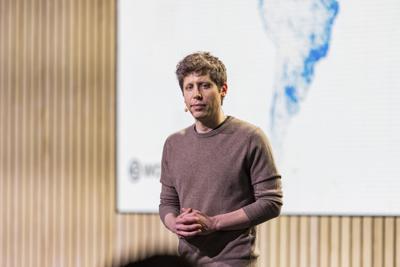
To hear some of the biggest boosters of artificial intelligence tell it, we shouldn’t dwell on how the technology’s development is producing large and growing greenhouse gas emissions, because AI itself will help us solve the climate-change crisis.
OpenAI CEO Sam Altman, Anthropic CEO Dario Amodei and former Google CEO Eric Schmidt have all articulated some version of this argument. But critics contend such assertions are misguided, noting that the kind of AI that’s largely driving the increase in emissions is not the same type that should be expected to address climate change.
Despite assertions by people like Schmidt and Altman, it’s not at all obvious that generative AI technologies like the large-language model that underlies ChatGPT are going to help solve climate change, said Alex de Vries, founder of Digiconomist, an online publication that focuses on technology’s environmental impact. Quite the opposite.
“I definitely wouldn’t count on these models to solve the problems of the world at the moment,” de Vries said.
But that’s precisely what people like Altman, Amodei and Schmidt are arguing generative AI will do. At an AI event in Washington, D.C., in October, Schmidt made the case most explicitly.
“We’re not going to hit the climate goals anyway because we’re not organized to do it,” Schmidt said at the event. “I’d rather bet on AI solving the problem, than constraining [its development] and having the problem [anyway].”
In a blog post last fall entitled “The Intelligence Age,” Altman contended that developers are only “a few thousand days away” from creating an AI “superintelligence” that will transform society for the better. Among the many benefits this advanced AI will provide will be “fixing the climate,” he said.
Similarly, in his own blog post around the same time entitled “Machines of Loving Grace: How AI Could Transform the World for the Better,” Amodei argued that the advent of what he called “powerful AI” will be a boon to humanity in a wide range of areas, including helping mitigate climate change.
Although he acknowledged that this powerful AI could come out of a different technology, Amodei argued it will likely develop out of large-language models, the generative AI technology that powers chatbots like ChatGPT and Anthropic’s own Claude.
That AI can be expected to help develop new clean energy technologies. systems for removing carbon from the atmosphere and more climate-friendly lab-grown meat, Amodei said.
“There’s good reason to think that AI-enhanced research will give us the means to make mitigating climate change far less costly and disruptive,” he said.
AI critics have raised numerous objections to these lines of argument. Advocates of it are willing to accept certain harm now — increasing temperatures, rising sea levels, drought, flooding and more factors are considered consequences of climate change, according to the scientific consensus — in favor of future benefits that are speculative at best, they note.
What’s more, reducing emissions and mitigating climate change don’t necessarily require new technological solutions, according to AI skeptics. Current and already widely available technologies such as solar panels, electric vehicles and heat pumps could dramatically reduce dependence on fossil fuels. There just needs to be the political and societal will to swap out older, more climate-harming technologies for them.
Claims of AI’s future potential for helping address climate change come as emissions related to AI are rapidly rising — and on track to continue to do so.
Large-language and other generative AI models require vast amounts of data and computing power to train. Developers such as OpenAI and Anthropic have bet that their systems will get ever better with more and more training data. But increased data leads to a rise in computing power needed to process it, which requires more energy use and is increasingly leading to more greenhouse emissions.
And that’s just in training the models. Running the models, such as when ChatGPT responds to a query, has an ongoing energy cost that also leads to more emissions.
The power needs for models from OpenAI, Anthropic, Meta, Apple and other tech giants has been reflected in the rapidly growing percentage of energy going to the data centers that run them. Data centers accounted for 3.7% of U.S. energy use in 2023, according to a report last year from McKinsey. The consulting firm expected that portion to grow to 4.3% last year, 5.2% this year and 11.7% in 2030.
Globally, data center energy use has grown by 12% a year since 2017 and accounted for 1.5% of total energy consumption last year, according to a report last month from the International Energy Agency. The agency forecast their energy consumption will more than double by 2030 and account for 3% of worldwide demand.
Altman and others in the AI sector have promoted the idea that nuclear power will help meet that growing energy demand and reduce the technology’s climate impact, but new nuclear plants are unlikely to come online anytime soon, power experts have said. Instead, to meet the rapidly growing power demands of generative AI, utilities are delaying the planned decommissioning of older coal plants and making plans to build new natural-gas plants.
As a result, big AI players including Microsoft, Google and Salesforce have warned that their emissions are increasing or backed off of their emissions reduction targets.
Some forms of artificial intelligence are already playing a role in the fight against climate change.
Scientists have long been using machine learning to model the climate and make predictions about climate-change impacts, said Jathan Sadowski, a senior lecturer in the Emerging Technologies Research Lab at Monash University’s Department of Human Centred Computing in Melbourne, Australia. Similarly, electric grid operators use machine-learning models to optimize and manage the distribution of energy, he said.
But those forms of artificial intelligence are distinct from the large-language models that power generative AI systems such as ChatGPT, Sadowski said. And, he and other critical experts say, they tend to be much more energy efficient.
When it comes to talking about how AI could help fight climate change, “there’s a real conflation by people really invested in … the generative AI form of machine learning,” he said. “They’re conflating what they’re invested in and what their business is with these other forms of machine learning.”
Similarly, types of artificial intelligence are already being used and could be used in the future in material science to analyze and try to identify materials that might be useful in making better batteries for energy energy storage or more efficient solar cells, he said. But the kinds of models that are useful in those cases are typically ones that are specifically designed for such tasks with data particular to that area of knowledge, he and other AI experts said.
Generative AI technologies like ChatGPT and video generators like OpenAI’s Sora may have some societal value, said Gary Marcus, an emeritus professor at New York University and author of “Taming Silicon Valley: How We Can Ensure That AI Works for Us.” But they come with what’s likely a serious climate cost and they’re prone to errors, he said.
“That’s not the kind of system that’s going to help with the climate,” Marcus said. “Chatbots are not reliable enough even to follow the rules of chess, let alone make some stunning new advance in material science or something like that.”
Altman wasn’t available for comment, and OpenAI representative Jason Deutrom declined to comment beyond Altman’s blog post. But he pointed to an announcement the company made in January that it had signed an agreement with the U.S. National Laboratories to provide its so-called reasoning models, which attempt to answer complex queries by breaking them down into separate parts, to help with such things as improving cybersecurity, finding treatments for diseases and basic science.
Representatives for Anthropic and Schmidt did not respond to requests for comment.
Much of the assertion that Altman and Schmidt make about generative AI helping with climate change is built on the notion that the technology underlying ChatGPT will soon get so smart, because of all the data it’s taking in, that it will surpass human intelligence and will be able to come up with ideas that humans couldn’t.
But such advocates don’t ever really explain how a technology that’s not sentient and doesn’t have any real notion of the actual physical world will somehow evolve into what they like to call artificial general intelligence, said Emily Bender and Alex Hanna, co-authors of the new book “The AI Con: How to Fight Big Tech’s Hype and Create the Future We Want.”
ChatGPT and similar LLM-based chatbots are designed to produce text that looks like it could have been written by a human, said Bender, a linguistics professor at the University of Washington who’s also on the faculty of that institution’s engineering and information schools. Based on the data they were trained on, they essentially predict what word would come next in a sentence.
Whatever sense users might have that ChatGPT is actually intelligent comes from the users themselves ascribing meaning to its output, Bender said. If you take away users’ meaning-making, “it’s clear that it’s basically the same thing as a Magic 8 ball,” she said.
“Are we going to have a Magic 8 ball solving climate change for us?” she asked. “I don’t think so.”