
From Wikipedia, the free encyclopedia
| Edna St. Vincent Millay | |
|---|---|
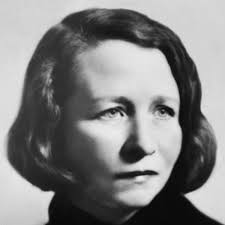
| Edna St. Vincent Millay, photographed by Carl Van Vechten, 1933 | |
| Born | February 22, 1892 Rockland, Maine, US |
| Died | October 19, 1950 (aged 58) Austerlitz, New York, US |
| Pen name | Nancy Boyd |
| Occupation | Poet |
| Nationality | American |
| Alma mater | Vassar College |
| Notable awards | Pulitzer Prize for Poetry (1923) Robert Frost Medal (1943) |

Edna St. Vincent Millay (February 22, 1892 – October 19, 1950) was an American lyrical poet and playwright.
Encouraged to read the classics at home, she was too rebellious to make a success of formal education, but she won poetry prizes from an early age, including the Pulitzer Prize in 1923, and went on to use verse as a medium for her feminist activism. She also wrote verse-dramas and a highly-praised opera The King’s Henchman. Her novels appeared under the name Nancy Boyd, and she refused lucrative offers to publish them under her own name.
Millay was a prominent social figure of New York City’s Greenwich Village, just as it was becoming known as a bohemian writer’s colony, and she was noted for her uninhibited lifestyle, forming many passing relationships with both sexes. A road accident in middle-age left her part-invalided and morphine-dependent for life.
Early life
Millay was born in Rockland, Maine, to Cora Lounella Buzelle, a nurse, and Henry Tolman Millay, a schoolteacher who would later become a superintendent of schools. Her middle name derives from St. Vincent’s Hospital in New York, where her uncle’s life had been saved just before her birth. The family’s house was “between the mountains and the sea where baskets of apples and drying herbs on the porch mingled their scents with those of the neighboring pine woods.”[1] In 1904, Cora officially divorced Millay’s father for financial irresponsibility and domestic abuse, but they had already been separated for some years. Henry and Millay kept a letter correspondence for many years, but he never re-entered the family. Cora and her three daughters, Edna (who called herself “Vincent”), Norma Lounella (born 1893), and Kathleen Kalloch (born 1896), moved from town to town, living in poverty and surviving various illnesses. Cora travelled with a trunk full of classic literature, including Shakespeare and Milton, which she read to her children. The family settled in a small house on the property of Cora’s aunt in Camden, Maine, where Millay would write the first of the poems that would bring her literary fame.Edna St. Vincent Millay in Mamaroneck,[2] NY, 1914, by Arnold Genthe.

The three sisters were independent and spoke their minds, which did not always sit well with the authority figures in their lives. Millay’s grade school principal, offended by her frank attitudes, refused to call her Vincent. Instead, he called her by any woman’s name that started with a V.[3] At Camden High School, Millay began developing her literary talents, starting at the school’s literary magazine, The Megunticook. At 14 she won the St. Nicholas Gold Badge for poetry, and by 15, she had published her poetry in the popular children’s magazine St. Nicholas, the Camden Herald, and the high-profile anthology Current Literature.
Millay entered Vassar College in 1913 when she was 21 years old, later than usual. Her attendance at Vassar became a strain to her due to its strict nature. Before she attended the college Millay had a liberal home life that included smoking, drinking, playing gin rummy, and flirting with men. Vassar, on the other hand, expected its students to be refined and live according to their status as young ladies.[4] She had relationships with many fellow students during her time there and kept scrapbooks including drafts of plays written during the period.[3][5] While at school, she had several relationships with women, including Edith Wynne Matthison, who would go on to become an actress in silent films.[6]
New York City
Edna St. Vincent Millay’s home in 1923–24 at 75 1⁄2 Bedford Street, Greenwich Village (2013 photo)

After her graduation from Vassar in 1917, Millay moved to New York City. She lived in a number of places in Greenwich Village, including a house owned by the Cherry Lane Theatre[7] and 75½ Bedford Street, renowned for being the narrowest[8][9] in New York City.[10] While in New York City, Millay lived an openly bisexual lifestyle.[4] The critic Floyd Dell wrote that the red-haired and beautiful Millay was “a frivolous young woman, with a brand-new pair of dancing slippers and a mouth like a valentine.”[1] Millay described her life in New York as “very, very poor and very, very merry.” While establishing her career as a poet, Millay initially worked with the Provincetown Players on Macdougal Street and the Theatre Guild. In 1924 Millay and others founded the Cherry Lane Theater “to continue the staging of experimental drama.”[11] Magazine articles under a pseudonym also helped support her early days in the Village.[1] During her stay in Greenwich Village, Millay learned to use her poetry in her feminist activism. She often went into detail about topics others found taboo, such as a wife leaving her husband in the middle of the night.[4]
Counted among Millay’s close friends were the writers Witter Bynner, Arthur Davison Ficke, and Susan Glaspell, as well as Floyd Dell and the critic Edmund Wilson, both of whom proposed marriage to her and were refused.[6][12] Millay had a way of wrapping men around her finger, even after she rejected them.[4] Edmund Wilson, for example, spoke of her highly because Millay took his virginity but she recanted of his advances and rejected his marriage proposal, but he remained a loyal friend.[4] She was inclined to fall out of love easily, bluntly answering a marriage proposal: “Never ask a girl poet to marry you.”[13]
Career
Millay’s fame began in 1912 when, at the age of 20, she entered her poem “Renascence” in a poetry contest in The Lyric Year. The poem was widely considered the best submission, and when it was ultimately awarded fourth place, it created a scandal which brought Millay publicity. The first-place winner Orrick Johns was among those who felt that “Renascence” was the best poem, and stated that “the award was as much an embarrassment to me as a triumph.” A second-prize winner offered Millay his $250 prize money.[14] In the immediate aftermath of the Lyric Year controversy, wealthy arts patron Caroline B. Dow heard Millay reciting her poetry and playing the piano at the Whitehall Inn in Camden, Maine, and was so impressed that she offered to pay for Millay’s education at Vassar College.[15]
After graduating from Vassar, Millay moved to Greenwich Village. A friend remembered seeing her red hair flying as she ran down MacDougal Street, “flushed and laughing like a nymph.”[13] Holed up in a small, unheated apartment, she began to write shorter, pithier poems.
Millay’s 1920 collection A Few Figs From Thistles drew controversy for its exploration of female sexuality and feminism.[16] In 1919, she wrote the anti-war play Aria da Capo, which starred her sister Norma Millay at the Provincetown Playhouse in New York City. Millay won the Pulitzer Prize for Poetry in 1923 for “The Ballad of the Harp-Weaver”;[17] she was the third woman to win the poetry prize, after Sara Teasdale (1918) and Margaret Widdemer (1919).[18]
Millay also wrote short stories for the magazine Ainslee’s – but she was a canny protector of her identity as a poet and an aesthete, and insisted on publishing this more mass-appeal work under a pseudonym, Nancy Boyd. As her fame grew and she became a household name, the publisher of Ainslee’s offered to double her fees if he could use her real name. She refused.
In January 1921, she went to Paris, where she met and befriended the sculptors Thelma Wood[19] and Constantin Brancusi, photographer Man Ray, had affairs with journalists George Slocombe and John Carter, and became pregnant by a man named Daubigny. She secured a marriage license but instead returned to New England where her mother Cora helped induce an abortion with alkanet, as recommended in her old copy of ”Culpeper’s Complete Herbal”.[20]
Possibly as a result, Millay was frequently ill and weak for much of the next four years.
After experiencing his remarkable attentions to her during her illness, in 1923 she married 43-year-old Eugen Jan Boissevain (1880–1949), the widower of the labor lawyer and war correspondent Inez Milholland, a political icon Millay had met during her time at Vassar.[21] A self-proclaimed feminist, Boissevain supported Millay’s career and took primary care of domestic responsibilities. Both Millay and Boissevain had other lovers throughout their 26-year marriage. For Millay, one such significant relationship was with the poet George Dillon, a student 14 years her junior, whom she met in 1928 at one of her readings at the University of Chicago. Their relationship inspired the sonnets in the collection Fatal Interview (published 1931).[22]Main house at Steepletop, where Millay spent the last 25 years of her life

In 1925, Boissevain and Millay bought Steepletop near Austerlitz, New York, which had once been a 635-acre (257 ha) blueberry farm.[23] They built a barn (from a Sears Roebuck kit), and then a writing cabin and a tennis court. Millay grew her own vegetables in a small garden.[23][24] Later, they bought Ragged Island in Casco Bay, Maine, as a summer retreat.[25] Frequently having trouble with the servants they employed, Millay wrote, “The only people I really hate are servants. They are not really human beings at all.”[26]
In the summer of 1936, Millay was riding in a station wagon when the door suddenly swung open, and Millay “was hurled out into the pitch-darkness…and rolled for some distance down a rocky gully”[27] The accident severely damaged nerves in her spine, requiring frequent surgeries and hospitalizations, at least daily doses of morphine. Millay lived the rest of her life in “constant pain”.[28] Despite this, she was sufficiently alarmed by the rise of fascism to write against it. During World War I, Millay had been a dedicated and active pacifist; however, in 1940 she advocated for the U.S. to enter the war against the Axis and became an ardent supporter of the war effort. She later worked with Writers’ War Board to create propaganda, including poetry.[29] Millay’s reputation in poetry circles was damaged by her war work. Merle Rubin noted, “She seems to have caught more flak from the literary critics for supporting democracy than Ezra Pound did for championing fascism.”[30] In 1942 in The New York Times Magazine, Millay mourned the destruction of the Czechoslovak town of Lidice. Nazi forces had razed Lidice, slaughtered its male inhabitants and scattered its surviving residents in retaliation for the assassination of Reinhard Heydrich. Millay wrote:
The whole world holds in its arms today
The murdered village of Lidice,
Like the murdered body of a little child.[1]
This article would serve as the basis of her 32-page poem, “Murder of Lidice“, in 1942[31] and loosely served as the basis of the 1943 MGM movie Hitler’s Madman.[32][circular reference] Douglas Sirk directed the movie. Harper and Brothers published the poem in 1942.[31]
In 1943, Millay was the sixth person and the second woman to be awarded the Frost Medal for her lifetime contribution to American poetry.
Despite the excellent sales of her books in the 1930s, her declining reputation, constant medical bills, and frequent demands from her mentally-ill sister Kathleen meant that for most of her last years, Millay was in debt to her own publisher.[33] Author Daniel Mark Epstein also concludes from her correspondence that Millay developed a passion for thoroughbred horse-racing, and spent much of her income investing in a racing stable of which she had quietly become an owner.[34] Boissevain died in 1949 of lung cancer, and Millay lived alone for the last year of her life.
More at: https://en.wikipedia.org/wiki/Edna_St._Vincent_Millay