
And how they relate to love, humanity, God, and truth
Brenden Weber · Dec 14, 2021 · Medium.com
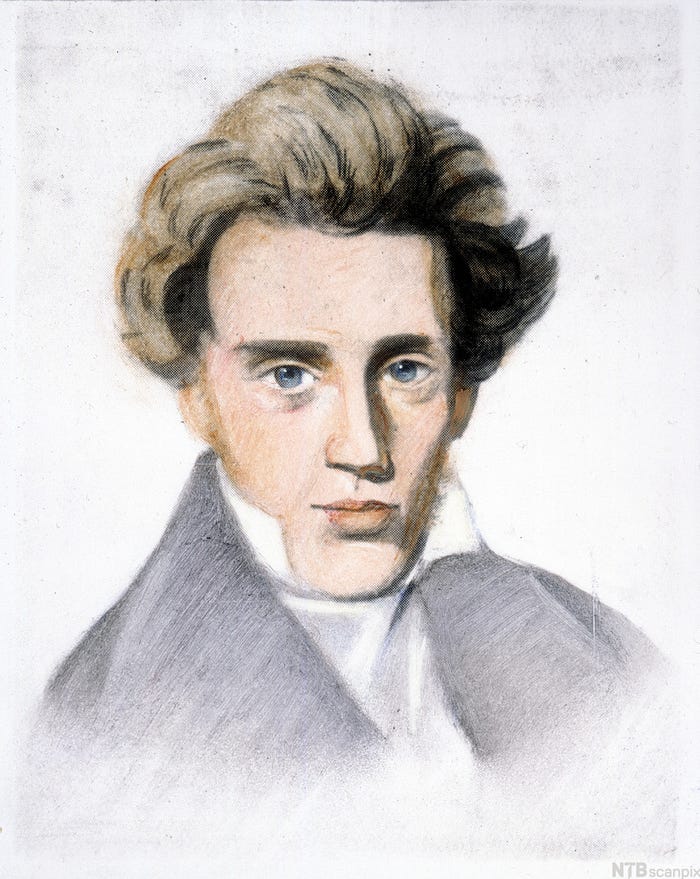
In this post, I’ve gathered some of my favorite quotes from the philosopher and writer, Soren Kierkegaard. He is commonly considered to be the first existential philosopher and he has many fascinating discussions on God, faith, truth, objective truth, and subjective experiences.
So, I’ve covered some of his most fascinating thoughts on what it is to be human.
And although I provide my interpretation for each quote, it is important to focus on what resonates within you and how it relates to your own projections, perceptions, and truth.
Enjoy!
“The function of prayer is not to influence God, but rather to change the nature of the one who prays.”—Soren Kierkegaard
I think many people will read this quote and take a different interpretation, but this makes it wonderful in my mind. For me, ‘prayer’ in this case is a form of ritual we partake in — be that meditation, your bible, sitting in silence, or taking a walk. It is this ritual, not necessarily what it is directed at, that changes us.
We develop a deeper understanding of ourselves, the world around us, and our significance or lack thereof when we use our preferred method of ritual. It simply emphasizes how little we comprehend about reality’s nature and our connection to it.
“Even though every individual possesses the truth, when he gets together in a crowd, untruth will be present at once, for the crowd is untruth.”—Soren Kierkegaard
I can’t help but think of the concept of ‘group-think’ when reading this quote. Our innate desire to be accepted and loved by others is so strong that we will often ignore our own thoughts or beliefs if it means not being abandoned. Everyone does this to some degree, most notably in our younger years, but it follows us our entire life.
We embrace the truths and traditions of the past because of our fear of being abandoned by…society.
It’s only when we can break away from the crowd and truly focus on individual thought that we can begin to develop an understanding of ourselves. It becomes easier to see the world for what it is, and not what we want it to be.
When we have a profound experience, we want others to validate that experience, so we conform to the perceptions of others, and then call them our own.
“Love is the expression of the one who loves, not of the one who is loved. Those who think they can love only the people they prefer do not love at all. Love discovers truths about individuals that others cannot see.”—Soren Kierkegaard
This quote begins expressing what psychoanalysts such as Jacques Lacan would later develop, such as the idea that those we come into loving become mirrors for us.
We may feel a pull from our inner sense of self, whether conscious or unconscious or a combination of both. And it’s this pull that occurs when someone we love makes us feel “seen,” it’s as though they are mirroring our own self-insight back to us.
So, this becomes the idea that our sense of self is derived from mirroring those we form relationships with. We create this concept of ourselves, a persona, and then reflect back to see if others reciprocate an insight or validation back to us. As a result, we enjoy the presence of individuals who represent qualities we have, but also those we are lacking in.
Thanks for reading!
Talk soon.
WRITTEN BY
Brenden Weber
Chaotically curious and tragically confused…welcome to my labyrinth. For my more personal stories… https://aphilosophersstone.substack.com/

A Philosopher’s Stone
A place for a discussion of the ideas all around us in society, culture, philosophy, and more.