
New Thinking Allowed with Jeffrey Mishlove Feb 2, 2026 Carl Abrahamsson is both a filmmaker and author. His most recent film is titled “Anton LaVey: Into the Devil’s Den”. Other films include “Poems Are Living Things” and “Cinemagician: Conversations with Kenneth Anger”. His most recent book is titled Occulture: The Unseen Forces That Drive Culture Forward. He also edits The Fenris Wolf, an annual anthology of occulture. His websites include https://www.carlabrahamsson.comhttps://carlabrahamsson.blogspot.com/https://store.trapart.net/https://vimeo.com/carlabrahamsson/vod…https://www.trapartfilm.com/ / highbrowlowlife https://highbrowlowlife.bandcamp.com/…http://highbrow-lowlife.com/ This far-ranging, open-ended conversation explores the role of intuitive consciousness as a cultural force. The discussion focuses on Sir Isaac Newton as a spiritual alchemist and archetypal materialist. Other topics include the role of psychic functioning as well the fear of psi, the Nietzschean emphasis on the “superman”, and even the possibility of psychedelic mushroom spores from outer space. New Thinking Allowed host, Jeffrey Mishlove, PhD, is author of The Roots of Consciousness, Psi Development Systems, and The PK Man. Between 1986 and 2002 he hosted and co-produced the original Thinking Allowed public television series. He is the recipient of the only doctoral diploma in “parapsychology” ever awarded by an accredited university (University of California, Berkeley, 1980). He is also the Grand Prize winner of the 2021 Bigelow Institute essay competition regarding the best evidence for survival of human consciousness after permanent bodily death. He is Co-Director of Parapsychology Education at the California Institute for Human Science. (Recorded on July 12, 2020)
Monthly Archives: February 2026
R.D. Laing on psychiatrists
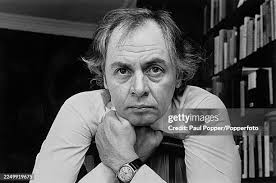
(Gettyimages.com)
“They will try and cure us. Maybe they will succeed. There’s still hope that they will fail.”
–R.D. Laing in The Politics of Experience
R. D. Laing
From Wikipedia, the free encyclopedia
| Ronald David Laing | |
|---|---|
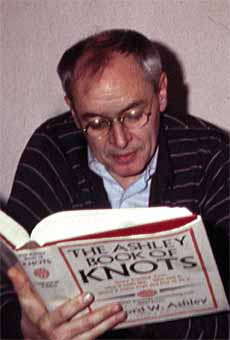
| Laing in 1983, perusing The Ashley Book of Knots (1944) | |
| Born | Ronald David Laing 7 October 1927 Govanhill, Glasgow, Scotland |
| Died | 23 August 1989 (aged 61) Saint-Tropez, France |
| Known for | Medical model |
| Spouse(s) | Anne Hearne(m. 1952; div. 1966) Jutta Werner(m. 1974; div. 1986) |
| Children | 10 |
| Scientific career | |
| Fields | Psychiatry |
Ronald David Laing (7 October 1927 – 23 August 1989), usually cited as R. D. Laing, was a British psychiatrist who wrote extensively on mental illness, particularly psychosis and schizophrenia.[1]
Laing’s views on the causes and treatment of psychopathological phenomena were influenced by his study of existential philosophy and ran counter to the chemical and electroshock methods that had become psychiatric orthodoxy. Laing took the expressed feelings of the individual patient or client as valid descriptions of personal experience rather than simply as symptoms of mental illness. Though associated in the public mind with the anti-psychiatry movement, he rejected the label.[2] Laing regarded schizophrenia as the normal psychological adjustment to a dysfunctional social context.[3]
Politically, Laing was regarded as a thinker of the New Left. He has been theatrically portrayed by Mike Maran, Alan Cox, Billy Mack and by David Tennant in the 2017 film Mad to Be Normal.
Early years
Laing was born in the Govanhill district of Glasgow on 7 October 1927, the only child of civil engineer David Park MacNair Laing and Amelia Glen Laing (née Kirkwood).[4] Laing described his parents — his mother especially — as being somewhat anti-social, and demanding the maximum achievement from him. Adrian, his biographer son discounted much of Laing’s published childhood account, and an obituary by an acquaintance of Laing asserted that about his parents – “the full truth he told only to a few close friends”.[5][6]
He was educated initially at Sir John Neilson Cuthbertson Public School and after four years transferred to Hutchesons’ Grammar School. Described variously as clever, competitive or precocious, he studied classics, particularly philosophy, including through reading books from the local library. Small and slightly built, Laing participated in distance running; he was also a musician, being made an Associate of the Royal College of Music. He studied medicine at the University of Glasgow. During his time in Glasgow, he set up a “Socratic Club”, of which the philosopher Bertrand Russell agreed to be president. Laing failed his final exams. In a partial autobiography, Wisdom, Madness and Folly, Laing said he felt remarks he made under the influence of alcohol at a university function had offended the staff and led to him being failed on every subject including some he was sure he had passed. After spending six months working in a psychiatric unit, Laing passed the re-sits in 1951 to qualify as a medical doctor.[7]
Career
Laing spent a couple of years as a psychiatrist in the British Army Psychiatric Unit at Netley, where, as he later recalled, those trying to fake schizophrenia to get a lifelong disability pension were likely to get more than they had bargained for as insulin shock therapy was being used.[8] In 1953, Laing returned to Glasgow, participated in an existentialism-oriented discussion group, and worked at the Glasgow Royal Mental Hospital.[9] The hospital was influenced by David Henderson‘s school of thought, which may have exerted an unacknowledged influence on Laing; he became the youngest consultant in the country.[10][7] Laing’s colleagues characterised him as “conservative” for his opposition to electroconvulsive therapy and the new drugs that were being introduced.[10]
In 1956, Laing went to train on a grant at the Tavistock Clinic in London, widely known as a centre for the study and practice of psychotherapy (particularly psychoanalysis). At this time, he was associated with John Bowlby, D. W. Winnicott and Charles Rycroft. He remained at the Tavistock Clinic until 1964.[11]
In 1965, Laing and a group of colleagues created the Philadelphia Association and started a psychiatric community project at Kingsley Hall, where patients and therapists lived together.[12] The Norwegian author Axel Jensen contacted Laing at Kingsley Hall after reading his book The Divided Self, which had been given to him by Noel Cobb. Laing treated Jensen, and subsequently, they became close friends. Laing often visited Jensen on board his ship Shanti Devi, which was his home in Stockholm.[13]
In 1967, Laing appeared on the BBC programme Your Witness, chaired by Ludovic Kennedy, on which, alongside Jonathan Aitken and G.P. Ian Dunbar, he argued for the legalisation of cannabis in the first live television debate on the subject.[14] In the same years, his views were explored in the television play In Two Minds, written by David Mercer.
In October 1972, Laing met Arthur Janov, author of the popular book The Primal Scream. Although Laing found Janov modest and unassuming, he considered him a “jig man” (someone who knows a lot about a little). Laing sympathized with Janov but regarded his primal therapy as a lucrative business—one which required no more than obtaining a suitable space and letting people “hang it all out”.[15]
Inspired by the work of American psychotherapist Elizabeth Fehr, Laing began to develop a team offering “rebirthing workshops” in which one designated person chooses to re-experience the struggle of trying to break out of the birth canal represented by the remaining members of the group who surround him or her.[16] Many former colleagues regarded him as a brilliant mind gone wrong.
Laing and anti-psychiatry
Laing was seen as an important figure in the anti-psychiatry movement, along with David Cooper, although he never denied the value of treating mental distress.
If the human race survives, future men will, I suspect, look back on our enlightened epoch as a veritable age of Darkness. They will presumably be able to savour the irony of the situation with more amusement than we can extract from it. The laugh’s on us. They will see that what we call “schizophrenia” was one of the forms in which, often through quite ordinary people, the light began to break through the cracks in our all-too-closed minds.
R.D. Laing, The Politics of Experience, p. 107
He also challenged psychiatric diagnosis itself, arguing that the diagnosis of a mental disorder contradicted accepted medical procedure: the diagnosis was made on the basis of behaviour or conduct of an examination and ancillary tests that traditionally precede the diagnosis of viable pathologies (like broken bones or pneumonia) occurred after the diagnosis of mental disorder (if at all). Hence, according to Laing, psychiatry was founded on a false epistemology: illness diagnosed by conduct but treated biologically.
Laing maintained that schizophrenia was “a theory not a fact”; he believed leading medical geneticists did not accept the models of genetically inherited schizophrenia being promoted by biologically based psychiatry.[17] He rejected the “medical model of mental illness“—according to Laing, diagnosis of mental illness did not follow a traditional medical model—and this led him to question the use of medication such as antipsychotics by psychiatry. His attitude to recreational drugs was quite different; privately, he advocated an anarchy of experience.[18]
Politically, Laing was regarded as a thinker of the New Left.[19]
Bad Bunny on ICE and love
Story: Going With the Flow

How Not to Be a Victim of Time: Rebecca West on Music and Life
By Maria Popova (themarginalian.org)

Time is the book we fill with the story of our lives. All great storytelling has the shape of music. All music is a shelter in time. In these lives hounded by restlessness, trembling with urgency, we need this shelter, need a place still enough and quiet enough to hear the story of our becoming, the song of life evolution encoded in our cells: “Life is exquisitely a time-thing, like music,” wrote the pioneering marine biologist Ernest Everett Just as he was revolutionizing our understanding of what makes life alive.
Rebecca West (December 21, 1892–March 15, 1983) offers an uncommonly insightful meditation on how music can help us befriend the fundamental dimension of our lives in her 1941 masterwork Black Lamb and Grey Falcon (public library), which I hold to be one of the past century’s great works of philosophy — her lyrical reckoning with art and survival lensed through three visits to Yugoslavia between the world wars, exploring what makes us and keeps us human.
Art by Kay Nielsen from East of the Sun and West of the Moon, 1914. (Available as a print and as stationery cards.)
West recounts a painful moment of political tension at a restaurant table, suddenly interrupted by a Mozart symphony flooding in from the radio box, making “an argument too subtle and profound to be put into words” — an argument for the breadth of time, for how it can hold and heal our longings and losses. With the touching humility of acknowledging the limitations of one’s gift and craft, she writes:
Music can deal with more than literature… Art covers not even a corner of life, only a knot or two here and there, far apart and without relation to the pattern. How could we hope that it would ever bring order and beauty to the whole of that vast and intractable fabric, that sail flapping in the contrary winds of the universe? Yet the music had promised us, as it welled forth from the magic box in the wall over our heads, that all should yet be well with us, that sometime our life should be as lovely as itself.
The greatest music offers something even greater than itself — an amelioration of the most subterranean struggle of human life: our anxiety about time. West writes:
One morning, West follows a waterfall up the river to its source across “a broad and handsome valley,” toward a lake that splits into two streams linked by a dilapidated village nestled in flowering trees. There, she encounters music wholly different from Mozart’s yet just as elemental, just as much a benediction of time in its syncopation of urgency and silence:
That may be what we can learn from music, what it means to have a harmonious relationship with time — training the mind to be unhurried, to halt the rush of certainty just enough to remain curious, to press an ear to the silence of the universe and listen for the clear sound of who and what we are.
Card from An Almanac of Birds: 100 Divinations for Uncertain Days.
What It’s Like to Touch the Bottom of the World
By Maria Popova (themarginalian.org)
The history of our species is the history of mistaking the limits of our imagination for the limits of the possible. It is salutary, I think, for us to be reminded regularly that this world is far wilder and more alien than we suppose it to be, that flowers are not what we supposed them to be, that eyes are not what we supposed them to be, that life and death are not what we supposed them to be, that a self is not what we supposed it to be.
We come to know a world the way we come to know a person — by learning its depths and its limits. It has always tugged at the human imagination to touch these extremes — to reach its poles, to conquer its peaks, to balance life on its sharpest edges. But it is the depths that have enticed and eluded us the longest.
Previously unknown giant dragonfish (Bathysphaera intacta) circling the Bathysphere by artist Else Bostelmann, 1934
At the end of the nineteenth century, upending the long-held dogma that no life existed below 300 fathoms, a series of landmark oceanographic expeditions plunged deeper and discovered the magnificent creatures of the deep, discovered how magnificently deeper the deep really was than imagined. And then, in 1875, the Challenger expedition let a weighted piece of rope drop and drop and drop into the South Pacific, until it sounded a depth of 4,475 fathoms — 8,184 meters. They didn’t realize the spot was part of an immense trench — an upside-down mountain range at the bottom of the world. Over the next century, more expeditions and better technologies continued and refined the measurements, until the bottom of the Mariana Trench was sounded at around 10,984 meters — half the Andes stacked atop Everest.
To touch such depths with the mind was already staggering beyond measure. To touch them with our animal sensorium seemed unimaginable. As a human foot fell on the dusty surface of another planetary body, the deep ocean remained more mysterious than the Moon. “Who has known the ocean? Neither you nor I, with our earth-bound senses,” Rachel Carson wrote in her pioneering essay Undersea. And yet when William Beebe plunged his Bathysphere into the deep, the unimaginable became possible — this, too, is the history of our species.
William Beebe inside the Bathysphere (Wildlife Conservation Society Photo Collection)
Nearly a century after Beebe, Scottish geoscientist Heather Stewart set a diving record with her 10-hour descent to the bottom of the Mariana Trench with the Bakunawa submersible, one of the most impressive and costly technologies humankind has created. On a fascinating episode of BBC’s In Our Time — my favorite radio program — she recounts, in words not dissimilar to astronaut Sally Ride’s exuberant description of what it’s like to launch into space, her experience:
All the while, she reflects, her brain is scrambling to parse this surreality and integrate it with her existing understanding of the world by putting it in a geological context, trying to form a working hypothesis of what kind of world might be the bottom of the world. But we are captives of our frames of reference and we habitually forget that the imagination of nature will always be greater than ours, because it imagined us: Suddenly, out of that blackest darkness — as in life — spring the most surprising colors:

Endpapers of the classic 1959 children’s book Little Blue, Little Yellow by Leo Lionni.
But one doesn’t need a $30-million submersible to taste the sublime strangeness of the deep. We have invented another technology to take us to those places hardest to reach. In this fragment of her sweeping five-part poem “The Depths” (translated by my mother), Natalia Molchanova, considered the greatest free-diver of all time, invites our earth-bound senses into the most alien depths of this world:
nonexistence.The speechlessness of eternal darkness
and its boundlessness.And I emerged from time,
it
poured into me,
And we grew
still.I lost my body between the waves.
And I reached emptiness,
peace,
touching the secret of the ocean —
a bottomless blue abyssI turn inward,
and remember
Self.
I — light.
And I gaze intently:
In the depths breath
is born.
I merge with it.
And I emerge into the world…
At the age of 53, Molchanova plunged into the sea off the coast of Spain and never emerged, touching, somewhere at the bottom of the world, the hardest thing for a human being to touch — peace, total and austere as pure spacetime.
The Purest Definition of Love, the Qualities of a Lasting Relationship, and the Salve for the Betrayals of Time
By Maria Popova (themarginalian.org)

Few things in life cause us more suffering than the confusions of love, all the wrong destinations at which we arrive by following a broken compass, having mistaken myriad things for love: admiration, desire, intellectual affinity, common ground.
This is why knowing whether you actually love somebody can be so difficult, why it requires the rigor of a theorem, the definitional precision of a dictionary, and the courage to weather the depredations of time.
In On the Calculation of Volume (public library) — her startlingly original reckoning with the bewilderments of time and love, partway between Einstein’s Dreams and Ulysses — Danish author Solvej Balle offers the best definition of love I’ve encountered since Iris Murdoch’s half a century ago:
Card from An Almanac of Birds: 100 Divinations for Uncertain Days, also available as a stand-alone print and as stationery cards, benefitting the Audubon Society.
Describing a couple united by this kind of love, Balle captures the essential qualities of a lasting relationship:
The future, however, can bring what the present can’t foresee, can’t bear to consider. People die. Lovers stop loving. Sudden and mysterious phase transitions of feeling take place without warning or explanation, they way the lava of one person’s passion can turn to stone overnight, leaving the other entombed in painful and lonely confusion. Because of this, to live with the fundamental fear of loss and love anyway may be the purest measure of our aliveness. What makes it possible — the only thing that makes it possible — is to refuse the glass-half-empty view of life, to see that death is a token of the luck of having lived and every loss a token of the luck of having had, that these are miracles that weren’t owed us but nonetheless prevailed over the laws of probability so we may live and love.
Art from An Almanac of Birds: Divinations for Uncertain Days. (Available as a print and as stationery cards, benefitting the Audubon Society.)
There are moments we remember this, moments that stagger us into this primal perspective — moments Balle describes as ones when “the ground under one’s feet falls away and all at once it feels as though all predictability can be suspended, as though an existential red alert has suddenly been triggered.” She writes:
It seems so odd to me now, how one can be so unsettled by the improbable. When we know that our entire existence is founded on freak occurrences and improbable coincidences. That we wouldn’t be here at all if it weren’t for these curious twists of fate. That there are human beings on what we call our planet, that we can move around on a rotating sphere in a vast universe full of inconceivably large bodies comprised of elements so small that the mind simply cannot comprehend how small and how many there are. That in this unfathomable vastness, these infinitesimal elements are still able to hold themselves together. That we manage to stay afloat. That we exist at all. That each of us has come into being as only one of untold possibilities. The unthinkable is something we carry with us always. It has already happened: we are improbable, we have emerged from a cloud of unbelievable coincidences… We have grown accustomed to living with that knowledge without feeling dizzy every morning, and instead of moving around warily and tentatively, in constant amazement, we behave as if nothing has happened, take the strangeness of it all for granted and get dizzy if life shows itself as it truly is: improbable, unpredictable, remarkable.
This, of course, is why to live is a probable impossibility and to love is to live against probability; it is why our moral obligation to the universe is to love one another while we are and because we are alive.
Martin Buber on redemption and embraceability
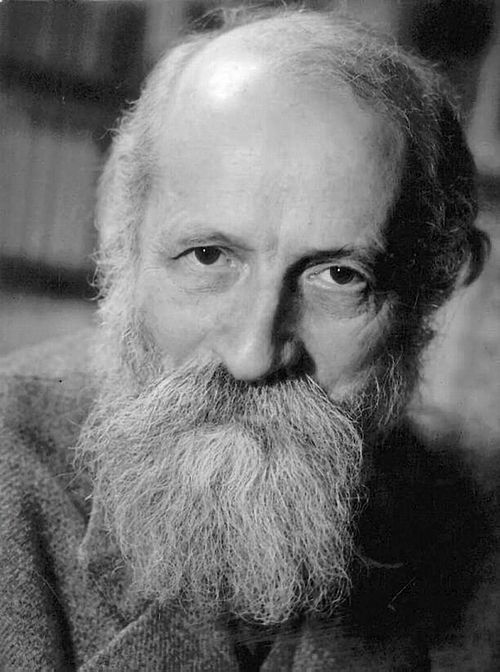
(Image from Wikipedia.org)
“We can be redeemed only to the extent to which we see ourselves.”
“The world is not comprehensible, but it is embraceable: through the embracing of one of its beings.”
~ Martin Buber
Martin Buber was an Austrian-Israeli philosopher best known for his philosophy of dialogue, a form of existentialism centered on the distinction between the I–Thou relationship and the I–It relationship. Wikipedia
Born: February 8, 1878, Vienna, Austria
Died: June 13, 1965
Langston Hughes and Gertrude Stein


Against Generative AI: Is Art the Last Refuge of Our Humanity?
Nick Ripatrazone on the Importance of the Creative Ego
Nick Ripatrazone January 15, 2026 (lithub.com)
None of this is supposed to be easy. Not writing, not life, not love.
Louise Glück’s debut, Firstborn, was published in 1968. One poem that didn’t make the cut was “The House on Marshland.” Glück said it was “terrible.” She grew up in Woodmere, Long Island, and wanted to write about her “marshy” surroundings. She had an idea: “The knowledge that houses, these structures which are supposed to be consoling and stable, were being built on land that was itself profoundly unreliable seemed to me very moving.” It should have been a good poem.
“I tried to write this poem over and over and over again.” She thought the poem “should be large and important,” and perhaps that ambition stifled her. She put aside the poem, but was haunted by the idea.
Then, in the spring of 1971, she started drafting a new poem. The first few lines “came intact and perfect.” Yet she struggled with the rest, and spent that summer “absolutely obsessed” with those lines of the poem, and could write “nothing else.” Each morning she woke and “heard” those lines. Only in late autumn of that year did she realize that she might use the detritus of her drafts for “The House on Marshland” for this new poem, “To My Mother.”
While it’s easy to fetishize the trope of the struggling artist, art results from failure overcome by determination.
The poem was the point, yes, but perhaps the struggle was also the point. When we create, we are deeply human. The emergence and evolution of generative AI is a threat to creativity. It is a threat to humanity.
*
Artistic ego is the best chance we have of battling against the rise of AI in creative spaces. When we write something and decide to share it with others, we are affirming the worth of our own words, which is an action of the ego. Although that art might be kenotic in nature, steeped in humility or in the passion to do good, we are also affirming that our voice is worth the time and attention of others.
Great art is impossible without some measure of ego.
Most writers, I think, are imperfect people like us. We can forgive them certain foibles and sins (as we might wish for similar grace ourselves) and recognize that their actions of ego are in service of a greater good; a collective catharsis. All of this is slow, mysterious work: the type of gestation that makes art.
AI tools like Sudowrite, Novelcrafter, and Squibler promise full-length books in minutes—or seconds. AI-produced books have begun to flood Amazon, and range from kids and coloring books to derivative novels and faux biographies repurposed from Wikipedia pages. It’s a mess, and it is only going to get worse.
One AI service claims users “can streamline the book creation process, from conception to publication, making it easier to bring your ideas to life and share them with the world.” Such rhetoric is gentle, inclusive, and misleading. Great art isn’t supposed to be easy. While it’s easy to fetishize the trope of the struggling artist, art results from failure overcome by determination. The artistic ego, in asserting itself, is a human action. When we cede creation to the machine, we are not making art.
Reddit posts abound in which people turn to AI to ease their writer’s block, as if it is a temporary inconvenience. The struggle, in fact, feeds the art. Joy Williams once wrote of Jane Bowles: “Each word is built, each step painful, each transition a rope bridge thrown over a chasm. She makes it look as hard as it is.” Williams could feel Bowles’s struggle, but it was a furnace of her creation. Reading Bowles, Williams concluded, “I am always enchanted and unnerved, a little sick, actually, with love for her gloomy waterfalls, her morbid gazebos, her ghastly picnics, her serious ladies and frail whores—her tortured, awkward, groping, uncompleted souls.”
There’s something powerful about the artistic ego; the stubborn belief that we—despite our cosmic insignificance—can create something original that makes others laugh, cry, and think.
In 1962, Tillie Olsen gave a largely extemporaneous talk at Harvard’s Radcliffe Institute. Although she revised the taped transcription into an essay that later appeared in Harper’s, her talk on silence is rangy and raw. “Substantial creative work demands time,” she claimed, and lamented how often women, their lives devoted elsewhere and to others, were consigned to “atrophy; unfinished work; minor effort and accomplishment; silences.”
Olsen also documents the “toil” inherent in great art. My favorite is the testimony she shares of Honoré de Balzac:
To pass from conception to execution, to produce, to bring the idea to birth, to raise the child laboriously from infancy, to put it nightly to sleep surfeited, to kiss it in the mornings with the hungry heart of a mother, to clean it, to clothe it fifty times over in new garments which it tears and casts away, and yet not revolt against the trials of this agitated life—this unwearying maternal love, this habit of creation—this is execution and its toils.
You may think, like Henry James, that Balzac sounds like “a Benedictine monk leading his life within the four walls of his convent.” Perhaps he was. James admired Balzac, for
his subject of illumination was the legends not merely of the saints, but of the much more numerous uncanonized strugglers and sinners, an acquaintance with whose attributes was not all to be gathered in the place of piety itself; not even from the faintest ink of old records, the mild lips of old brothers, or the painted glass of church windows.
Balzac transcended his room, his mind, through the difficult work of his art.
In 1904, the poet Rainer Maria Rilke wrote to a younger writer that “it is clear that we must hold to what is difficult; everything alive holds to it.” He said that “everything serious is difficult, and everything is serious.” In his 1950 Nobel Prize speech, William Faulkner lamented how younger writers of his time were (understandably) worried: “When will I be blown up?” They didn’t have access to AI, of course, but they had other distractions, and Faulkner worried that their art was missing “the old universal truths lacking which any story is ephemeral and doomed—love and honor and pity and pride and compassion and sacrifice.”
Being a good artist is no excuse for being a bad person. Faulkner’s genius doesn’t erase his vices. But there’s something powerful about the artistic ego; the stubborn belief that we—despite our cosmic insignificance—can create something original that makes others laugh, cry, and think. “I don’t think poetry is going to make anyone a better person, and it is not going to save you,” Rita Dove said in an interview. “But writing is a constant for me. There’s an edge that needs to be explored, the edge between being unconscious and then suddenly being so aware that the skin tingles.”
I have felt that electricity. It requires work, and patience, but what a glory when the words sing. “There is that moment in the writing of a poem when things start to come together, coalesce into a discovery.” It is not mere understanding, for “the more I write the less I know of myself.” Yet Dove affirms that “territory is being covered—excursions into the interior.” Art begins with “intimate revelation,” which must then be made “visible—palpable—for others.”
We owe it to ourselves, to our children, and to those who come after them—God willing—to write ourselves into eternity. AI is making most things easier, but not better; art can be our last refuge, a way to affirm that our humanity matters.
AI art artificial technology Balzac capitalism generative AI Henry James humanity Jane Bowles Joy Williams Louise Gluck Nick Ripatrazone poetry Rainer Maria Rilke Rita Dove technology Tillie Olsen William Faulkner writing

Nick Ripatrazone
Nick Ripatrazone is the culture editor at Image Journal, and a regular contributor to Lit Hub. He has written for Rolling Stone, Slate, GQ, The Atlantic, The Paris Review, and Esquire. His most recent book is The Habit of Poetry (2023). He lives in New Jersey with his wife and twin daughters.