
Thomas Hüb • Oct 25, 2024 • Thomas Hübl explores the transformative power of ancestral healing. Discover how addressing intergenerational patterns can unlock personal growth and contribute to global healing. Learn practical ways to access ancestral wisdom and resilience, while fostering a deeper connection with nature and future generations. 00:00 – Introduction: Overview of ancestral healing and its importance 00:59 – Intergenerational Patterns: Exploring how ancestral patterns affect individual behavior 02:36 – Ancestral Resilience: The resilience passed down through generations 08:46 – Trauma Transmission: How trauma is transmitted across generations 11:23 – Responsibility for Future Generations: The need to respond to future generations 16:21 – Integrating Healing and Spiritual Work: How spiritual and ancestral healing practices collaborate 18:55 – Psychotherapy and Ancestral Healing: Combining modern psychotherapy with ancestral healing
Monthly Archives: October 2024
“Four score and seven years ago…”
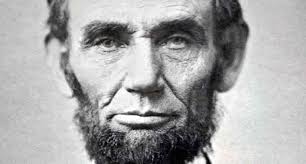
“On the site of the war’s bloodiest battle, Lincoln arrived at Gettysburg, Pennsylvania, in November 1863 for a dedication ceremony of a battlefield memorial. In his famously brief address, Lincoln began by implicitly changing the birth date of the country: not with the birth of the Constitution in 1787, but “four score and seven years ago”–the signing of the Declaration of Independence in 1776. In this way, the nation wasn’t conceived in a charter of compromise … but rather was “conceived in liberty, and dedicated to the proposition that all men are created equal.”
—The Presidents and the People: Five Leaders Who Threatened Democracy and the Citizens Who Fought to Defend It by Corey Brettschneider
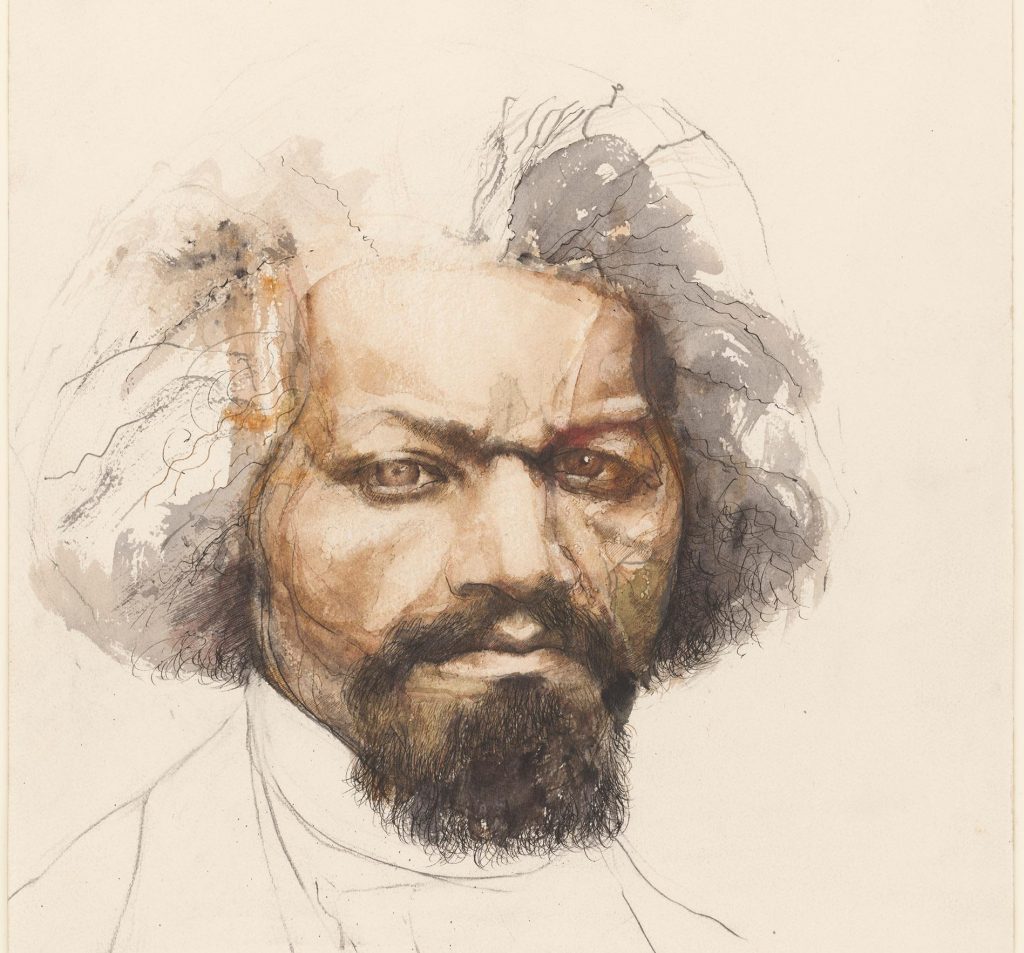
The Electoral College’s Racist Origins

WHY DO THE LOSERS WIN?
In 2000, Al Gore got 500,000+ more votes than did George Bush, and in 2016, Hillary Clinton got 2.9 million more votes than Trump. In every other Western democracy and republic, Gore and Clinton would have been elected because of the fact that they were more popular.
And why did the top vote getters in 2000 and 2016 not become Presidents? Because of the Electoral College, a racist, antiquated system of selecting the chief executive of the federal government. Out of the 191 countries in the world, only a few other countries use this perverse system to elect their top political leader: Botswana, Micronesia, the Marshall Islands, Nauru, South Africa, and Suriname.
If the United States elected its leader by a method that ALL other Western democracies and republics use, Trump’s three Supreme Court appointees would never have come into power. The Roe v. Wade law would not have been overturned. Abortion would still be fully legal in the United States.
+
Wilfred U. Codrington III writes: Commentators today tend to downplay the extent to which race and slavery contributed to the Framers’ creation of the Electoral College, in effect whitewashing history.
Of the considerations that factored into the Framers’ calculus, race and slavery were perhaps the foremost. https://tinyurl.com/RacistElectoralCollege
Another article about how slavery played a major role in creating the Electoral College: https://www.hnn.us/article/strange-political-bedfellows
+
Here’s one way we can work toward abolishing the Electoral College: https://www.nationalpopularvote.com
(Courtesy of Rob Brezsny)
Los Angeles Times editorials editor resigns after owner blocks presidential endorsement
OCTOBER 23, 2024 (CJR.org)
By SEWELL CHAN
Sign up for The Media Today, CJR’s daily newsletter.
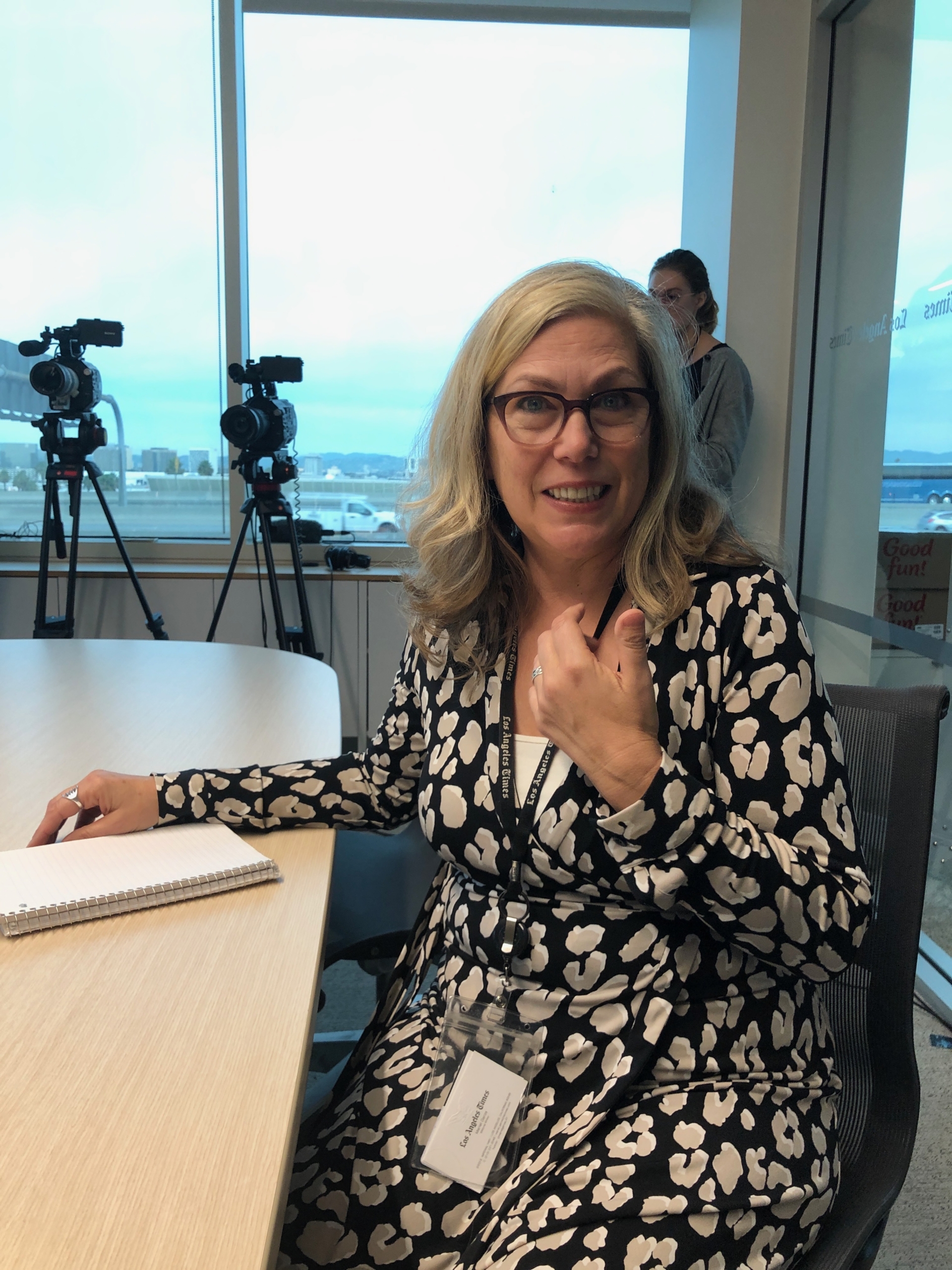
Mariel Garza, the editorials editor of the Los Angeles Times, resigned on Wednesday after the newspaper’s owner blocked the editorial board’s plans to endorse Vice President Kamala Harris for president.
“I am resigning because I want to make it clear that I am not okay with us being silent,” Garza told me in a phone conversation. “In dangerous times, honest people need to stand up. This is how I’m standing up.”
On October 11, Patrick Soon-Shiong, who bought the newspaper for $500 million in 2018, informed the paper’s editorial board that the Times would not be making an endorsement for president. The message was conveyed to Garza by Terry Tang, the paper’s editor.
The board had intended to endorse Harris, Garza told me, and she had drafted the outline of a proposed editorial. She had hoped to get feedback on the outline and was taken aback upon being told that the newspaper would not take a position.
“I didn’t think we were going to change our readers’ minds—our readers, for the most part, are Harris supporters,” Garza told me. “We’re a very liberal paper. I didn’t think we were going to change the outcome of the election in California.
“But two things concern me: This is a point in time where you speak your conscience no matter what. And an endorsement was the logical next step after a series of editorials we’ve been writing about how dangerous Trump is to democracy, about his unfitness to be president, about his threats to jail his enemies. We have made the case in editorial after editorial that he shouldn’t be reelected.”
So why was an endorsement needed?Sign up for CJR’s daily email
“It was a logical next step,” Garza told me. “And it’s perplexing to readers, and possibly suspicious, that we didn’t endorse her this time.”
Indeed, hours after Semafor reported on Tuesday that Soon-Shiong had blocked the endorsement, former president Donald Trump’s rapid-response team sent out an email calling the newspaper’s decision “the latest blow” for Harris.
“In Kamala’s own home state, the Los Angeles Times—the state’s largest newspaper—has declined to endorse the Harris-Walz ticket, despite endorsing the Democrat nominees in every election for decades,” the campaign said. “Even her fellow Californians know she’s not up for the job. The Times previously endorsed Kamala in her 2010 and 2014 races for California attorney general, as well as her 2016 race for US Senate—but not this time.”
(As is all too common, the Trump campaign got a fact wrong: the Times endorsed Republican Steve Cooley, not Harris, for attorney general in 2010.)
The Times was historically a Republican newspaper. It endorsed the GOP nominee in every election from its founding, in 1881, through Richard M. Nixon’s reelection campaign in 1972. By then, however, Southern California, in many ways the birthplace of modern conservatism, was becoming more politically diverse; the newspaper’s staff, thanks to heavy investment from the Chandler family that owned the paper, was growing in size and ambition. After Watergate, the 1972 endorsement was seen as an embarrassment. From 1976 through 2004, the Times did not endorse any candidate for president.
That changed in 2008, when the paper endorsed Barack Obama—the first Democratic nominee for president to win its support. It went on to endorse the Democratic nominee in 2012, 2016, and 2020.
I was the newspaper’s editorial page editor in 2020 and 2021, and presided over the board’s endorsement of Joe Biden in 2020. Months earlier, before I took the job, Soon-Shiong had stopped the editorial board from making an endorsement in the Democratic presidential primary. (The board wanted to support Senator Elizabeth Warren of Massachusetts.) Internal tension over that decision played a role in the departure of my predecessor, Nicholas Goldberg.
I have deep respect for the Soon-Shiong family, who rescued the paper from the doomed and recently bankrupt Tribune Company. He’s a decent and thoughtful person, and as the owner of the paper, it is ultimately up to him to set the editorial direction. I worked well with Soon-Shiong during my time running the opinion section, and when I left the Times to edit the nonprofit Texas Tribune, in 2021, it was on good terms.
Still, I believe Soon-Shiong could have better communicated his intentions—both in 2020 and now—and I worry that his decision has set off unnecessary speculation that California’s largest newspaper has serious doubts about Harris, who was formerly the state’s attorney general and then junior US senator.
While it’s reasonable to raise questions about how useful presidential endorsements are—and the outcome of the election in California is in little doubt—the Times’ assessment would have carried more weight than other publications’, because Harris is the first major-party nominee from California since Ronald Reagan.
Owning a newspaper carries great public responsibility. In my view, media proprietors should hire leaders they trust and then let them exercise their judgment. If the aim here was to insulate the Times from accusations of political bias, it seems this intervention may have had the opposite effect. Numerous staffers have told me about how pained, even embarrassed, they felt after Trump used the Times to score a political point.
On Wednesday evening, Soon-Shiong said on X that “the Editorial Board was provided the opportunity to draft a factual analysis of all the POSITIVE AND NEGATIVE policies by EACH candidate during their tenures at the White House, and how these policies affected the nation” and that “instead of adopting this path as suggested, the Editorial Board chose to remain silent and I accepted their decision.” Elon Musk, who is friendly with Soon-Shiong—they are both South African–born billionaire entrepreneurs—replied to that post: “Makes sense.”
Garza disputed Soon-Shiong’s account. “What he outlines in that tweet is not an endorsement, or even an editorial,” she said, adding that she had not received a request for such an analysis.
Garza, who is fifty-seven, is an outstanding and upstanding journalist. She joined the Times in 2015 from the Sacramento Bee, where she had been deputy editorial page editor. I promoted her to deputy editorial page editor of the Times in 2021. After I left the paper, Terry Tang, who had run the op-ed section, succeeded me. In April, after Tang was named the editor of the paper, following the resignation of Kevin Merida, Garza was promoted to editorials editor.
“Terry is not to blame,” Garza told me.
*****
The text of Garza’s resignation letter is below:
Terry,
Ever since Dr. Soon-Shiong vetoed the editorial board’s plan to endorse Kamala Harris for president, I have been struggling with my feelings about the implications of our silence.
I told myself that presidential endorsements don’t really matter; that California was not ever going to vote for Trump; that no one would even notice; that we had written so many “Trump is unfit” editorials that it was as if we had endorsed her.
But the reality hit me like cold water Tuesday when the news rippled out about the decision not to endorse without so much as a comment from the LAT management, and Donald Trump turned it into an anti-Harris rip.
Of course it matters that the largest newspaper in the state—and one of the largest in the nation still—declined to endorse in a race this important. And it matters that we won’t even be straight with people about it.
It makes us look craven and hypocritical, maybe even a bit sexist and racist. How could we spend eight years railing against Trump and the danger his leadership poses to the country and then fail to endorse the perfectly decent Democrat challenger—who we previously endorsed for the US Senate?
The non-endorsement undermines the integrity of the editorial board and every single endorsement we make, down to school board races. People will justifiably wonder if each endorsement was a decision made by a group of journalists after extensive research and discussion, or through decree by the owner.
Seven years ago, the editorial board wrote this in its series about Donald Trump “Our Dishonest President”: “Men and women of conscience can no longer withhold judgment. Trump’s erratic nature and his impulsive, demagogic style endanger us all.”
I still believe that’s true.
In these dangerous times, staying silent isn’t just indifference, it is complicity. I’m standing up by stepping down from the editorial board. Please accept this as my formal resignation, effective immediately.
MarielSewell Chan joined the Columbia Journalism Review as executive editor in 2024. Previously, he was editor in chief of the Texas Tribune from 2021 to 2024, during which the nonprofit newsroom won its first National Magazine Award and was a Pulitzer finalist for the first time. From 2018 to 2021, he was a deputy managing editor and then the editorial page editor at the Los Angeles Times, where he oversaw coverage that was awarded a Pulitzer Prize for editorial writing. Chan worked at the New York Times from 2004 to 2018, as a metro reporter, Washington correspondent, deputy op-ed editor, and international news editor. He began his career as a local reporter at the Washington Post in 2000.
“Salvia Dream”

“Salvia Dream” – Airbrush/Painted 1999 – Gwyllm Llwydd
Link to Gwyllm’s Substack: The Dreams – by Gwyllm Llwydd – Gwyllm’s Newsletter
Tesla, Vivekananda and Einstein’s Theory

The meeting of minds between Nikola Tesla, Swami Vivekananda, and the later ideas of Albert Einstein unveils a profound bridge between science and spirituality, a link that challenges us to rethink the very fabric of reality. Tesla, the visionary inventor, and Vivekananda, the spiritual teacher from India, encountered each other at a time when the boundaries between science and metaphysics were beginning to dissolve. Their interactions laid the groundwork for ideas that Einstein would later expand with his famous theory of relativity.
In the late 19th century, Tesla and Vivekananda shared a vision—one that sought to unite Eastern spiritual concepts with Western scientific inquiry. Vivekananda introduced Tesla to the ancient Vedic concept of prana, the life energy that flows through all things, and akasha, the fundamental substance from which all forms arise. Tesla, captivated by this view, believed that energy and matter were deeply connected, hinting at a unity that science was yet to reveal.
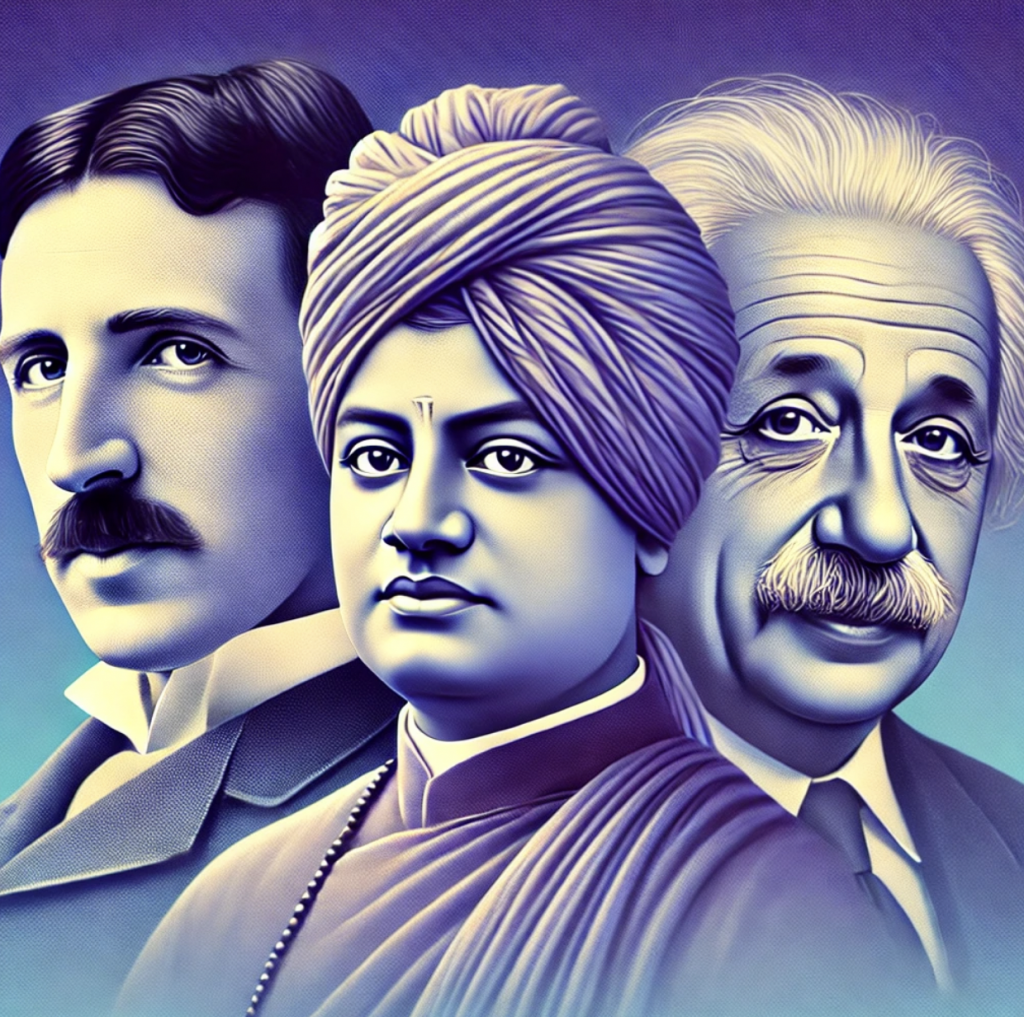
Years later, Einstein’s theory of relativity formalized this unity, demonstrating that energy and mass are indeed interchangeable, bound by the speed of light in the equation E = mc². In a way, Einstein’s theory provided scientific validation for the wisdom Vivekananda shared with Tesla—a wisdom that spoke of a universe interconnected through a singular, boundless force. This interplay of ideas echoes David Bohm’s view of an undivided wholeness, a vision where every element in the universe reflects and informs the whole.
What Tesla, Vivekananda, and Einstein represent is a convergence of paths. Tesla’s scientific curiosity, Vivekananda’s spiritual insight, and Einstein’s mathematical genius each contributed to a greater understanding of the cosmos as an interconnected unity, where consciousness and matter, energy and form, are inseparable.
Their story reminds us that the pursuit of truth is not confined to any one field, but flows freely between science, philosophy, and spirituality. It challenges us to open our minds, to see beyond isolated disciplines, and to embrace a view of reality that acknowledges both the measurable and the mysterious.
Stay safe, stay well, and stay connected to INFINITE POTENTIAL.
UC Berkeley scientists make groundbreaking climate discovery
By Tessa McLean,California Editor
Oct 25, 2024 (SFGate.com)
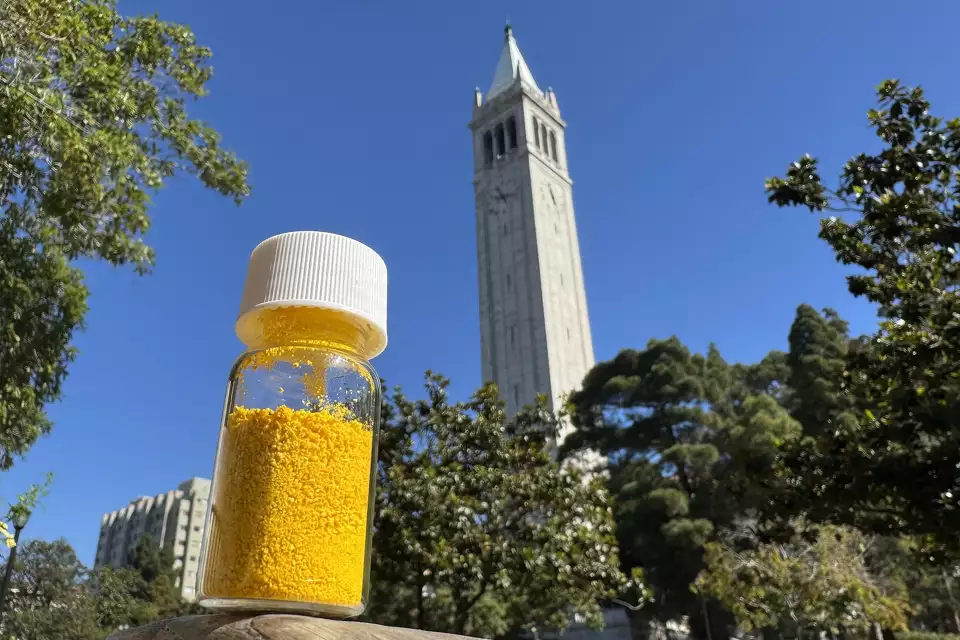
UC Berkeley scientists recently made a discovery that could help potentially mitigate the effects of climate change.Courtesy of Zihui Zhou, UC Berkeley
Trees have long done the heavy lifting of sequestering carbon dioxide from the atmosphere, but no matter how big the planting spree, nature won’t catch up to human impact on our warming planet. But UC Berkeley scientists recently made a discovery that could help potentially mitigate the effects of climate change, and it’s just the beginning of more work with the groundbreaking material.
The specially designed, porous yellow powder dubbed COF-999 the group created can capture carbon dioxide from the air, keeping it from being released until it can be moved underground or to a capture facility. Published this week in the journal Nature, the research details the unique substance and its potential uses to address climate change.
“We were so excited when we obtained such exceptional results from the experiments,” Omar Yaghi, a chemistry professor at UC Berkeley and the study’s lead author, told SFGATE via email. “This is a game-changer and COF-999 is essentially the best materials to date for direct carbon capture from open air.”
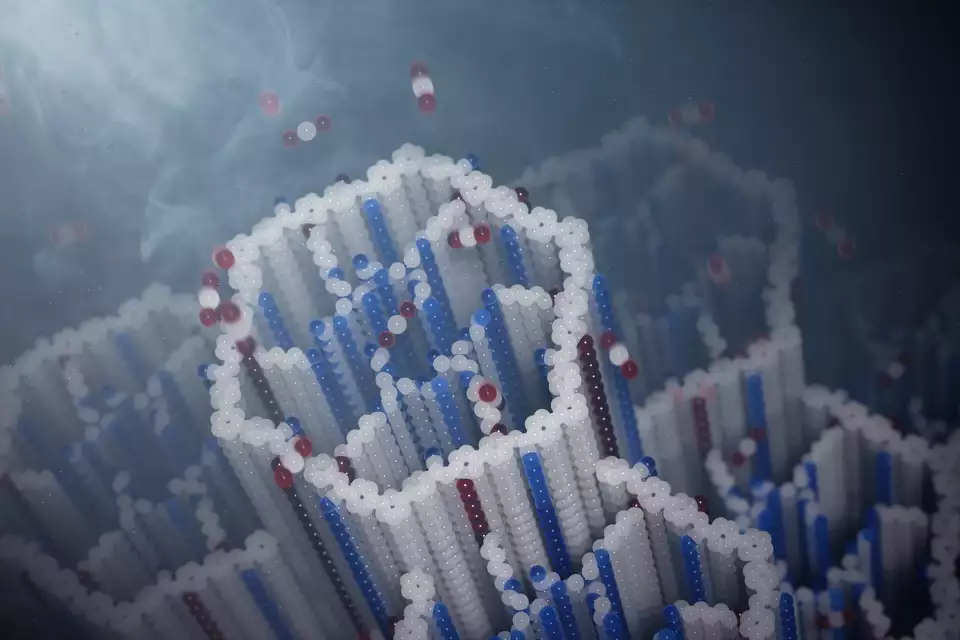
UC Berkeley scientists recently made a discovery that could help potentially mitigate the effects of climate change.Courtesy of Zihui Zhou, UC Berkeley
Yaghi’s lab has worked on carbon capture since the 1990s and began work on these crystalline structures in 2005. The innovative substance has lots of tiny holes, making it “great for storing gases or liquids, much like a sponge holds water,” Yaghi said.
Carbon dioxide is a greenhouse gas that has contributed to the planet’s overall warming, influencing extreme weather and having other adverse environmental effects.
COF-999 is incredibly durable and can be used again and again, as much as 100 times, without a degradation in its performance. While it could take one to two years for the powder to be usable in large-scale applications, Yaghi co-founded Atoco, an Irvine company, to commercialize his research and expand it beyond just carbon capture and storage. One potential use could be harvesting water from desert air for drinking water, using the same molecular structure.
“Another thing is that we need a strong determination among officials and industries to make carbon capture a high priority. Things have to change, but I believe that direct carbon capture from air is very doable,” Yaghi said about making a large impact with such a material.
Oct 25, 2024

CALIFORNIA EDITOR
Tessa McLean is the California editor for SFGATE. She joined the team in 2019, spending four years helming the local section. She now writes features with a statewide lens, telling stories about the issues, trends and news that matter in the Golden State. To submit tips, comments or messages about why you love California, please reach out to her at tessa.mclean@sfgate.com.
Huck Finn relying on Providence

“I went right along, not fixing up any particular plan, but just trusting to Providence to put the right words in my mouth when the time come; for I’d noticed that Providence always did put the right words in my mouth, if I left it alone.”
― Mark Twain, Adventures of Huckleberry Finn
Huckleberry “Huck” Finn is a fictional character created by Mark Twain who first appeared in the book The Adventures of Tom Sawyer and is the protagonist and narrator of its sequel, Adventures of Huckleberry Finn. He is 12 to 13 years old during the former and a year older at the time of the latter. Wikipedia
DCI Fred Thursday on staying buried
Edging (or gooning)
From Wikipedia, the free encyclopedia

Edging, sometimes also referred to as gooning[1][2][Note 1] or surfing,[3] is a sexual technique whereby an orgasm is controlled (that is, delayed or prevented). It is practiced alone or with a partner and involves the maintenance of a high level of sexual arousal for an extended period without reaching climax.[4] Orgasm control involves either sex partner being in control of the other partner’s orgasm, or a person delaying their own orgasm during sexual activity with a partner or through masturbation. Any method of sexual stimulation can be used to experience controlled orgasm.[5]
When the controlled orgasm is achieved, the physical sensations are greater as compared to conventional orgasm. Orgasm control has also been referred to as “slow masturbation” and “extended massive orgasm”.[6][3] When practiced by males, direct sexual stimulation without the refractory period after orgasm is sometimes possible.[7][disputed – discuss][better source needed]
Edging should not be confused with edgeplay, which is a sexual practice distinct from edging. It should also not be confused with premature ejaculation, retrograde ejaculation, or the inability to orgasm, all of which describe involuntary medical conditions.[5]
The terms edging and gooning have been adopted by Generation Alpha as brainrot terminology, gaining popularity on TikTok.[8][9]
In partnered sex
During intercourse or other forms of sexual stimulation with a partner, one person stimulates the other(s) and reduces the level of stimulation when approaching orgasm. Erotic sexual denial occurs when the partner who is in control of the other partner’s orgasm prolongs the orgasm to allow for an increased level of sexual tension.[5] When a partner eventually provides enough stimulation to achieve an orgasm, it may be stronger than usual due to increased tension and arousal that builds up during the extended stimulation.[10] An example of the use of orgasm control in partnered sex can be seen in BDSM; the partner whose orgasm is being controlled (sometimes referred to as the submissive partner) can be tied up.[10][11] (the activity is sometimes called tie and tease; if orgasm is denied, it is then known as tease and denial).[12]
In masturbation
When practicing alone in masturbation, orgasm control can heighten sexual pleasure. For a woman, the practitioner can enjoy direct sexual stimulation for longer periods, as well as increasing frequency and intensity. For a man, the speed of masturbation may vary to navigate right to the edge of ejaculation. With orgasm control, a male can experience a more intense orgasm, as well as a larger volume of semen expelled during his ejaculation.[13] One technique, commonly referred to as ‘edging’, involves masturbating up until the moment before reaching the plateau phase just before orgasm occurs, and then stopping suddenly before experiencing a climax. Repeating this technique many times during a single masturbation session may result in a stronger, more intense orgasm.[14]
More at: https://en.wikipedia.org/wiki/Edging_(sexual_practice)