
The Onion • Oct 28, 2024 The White House issued a new executive order aiming to deter migrants by stationing hundreds of socially awkward men at the southern border. Have a written record of society’s collapse. Become A Member. Get The Paper. https://membership.theonion.com/?camp…
Monthly Archives: October 2024
Tarot Card for October 29: The Ace of Swords

| The Ace of Swords This Ace brings clarity of vision, freedom from confusion, and clears obstacles and difficulties out of the way. It is a sweeping whirling energy – like a breath of fresh air. It blows away the cobwebs, washes away the red herrings, and generally allows us to see straight through to the core of any situation which requires our attention.Often when this card has influence, we will find ourselves able to make decisions which have confounded us before, often as a result of receiving new information or being able to remove distractions and mystifications.Every now and again, the Ace of Swords will come up as the Sword of Justice… the self-same one we see held by the figure on the Adjustment card. When you find yourself in this situation, be very careful about the judgements you make. To be just requires that you are totally balanced, and centred within yourself. This is the only way that you are able to make choices based on the actual issues at hand, without being swayed or influenced by irrelevancies.On a day ruled by the Ace of Swords, expect to cut to the central core of any situation. Your senses will be acute and analytical. And you will find it easy to shift perspective where necessary. You can get through a lot today!!Affirmation: “I see clearly to the far horizon.” |
Winston Churchill on the truth

Kafka’s Creative Block and the Four Psychological Hindrances That Keep the Talented from Manifesting Their Talent
By Maria Popova (themarginalian.org)

The most paradoxical thing about creative work is that it is both a way in and a way out, that it plunges you into the depths of your being and at the same time takes you out of yourself. Writing is the best instrument I have for metabolizing my experience and clarifying my own mind in such a way that I am no longer captive to it. All creative work is at bottom a means of self-liberation and a coping mechanism — for the loneliness, the despair, the chaos and contradiction within. It is the best means we have of transmuting that which gnaws at us into something that nourishes, and yet how little of that private ferment is visible in the finished work.
This is why I love diaries, with their rare glimpse of the inner worlds that lavish our own with beauty and truth, with nourishment of substance and sweetness that endures for epochs after the lives that made it are no more.
Of all the writers and artists who have kept a journal as a means of creative catalysis and a salve for self-doubt, no one has confronted the internal saboteur of creativity — those psychic hindrances that stand between the talented and the fruition of their talent — more pointedly than Franz Kafka (July 3, 1883–June 3, 1924).
Franz Kafka
“I won’t give up the diary again. I must hold on here, it is the only place I can,” he vows at the outset of his Diaries: 1910–1923 (public library) — the journal that became part creative sandbox, part metronome of discipline, part exorcism for self-doubt as Kafka was trying to live into his creative calling while working as an insurance salesman. “I want to write, with a constant trembling on my forehead,” he declares, and yet over and over he indicts himself for falling short of his desire, for thwarting his talent with insecurity and lack of discipline. “Wrote nothing,” he laments in entry after entry. “Have written nothing for three days,” he sulks as his creative block consumes him. “Bad,” he declares a perfect spring day for having produced no writing. By early summer, he is in despair:
Nothing written for so long. Begin tomorrow. Otherwise I shall again get into a prolonged, irresistible dissatisfaction; I am really in it already. The nervous states are beginning. But if I can do something, then I can do it without superstitious precautions.
The reasons for Kafka’s creative block are various: By turns he finds himself drowning in loneliness, enraged by distraction, physically fatigued and pained by the tuberculosis that would soon take his life, tortured by his era’s version of an overflowing inbox: heaps of unanswered letters. He feels his powers being wasted, feels himself “wretched, wretched, and yet with good intentions,” feels the “absolute despair” of trying and failing to write. The diary itself becomes his watering hole through the dry spells:
On its pages, universal patterns emerge: In his private and particular turmoils, Kafka touches again and again on what I consider the four great perils standing between us and our gifts — those psychic hindrances of which we may not always be consciously aware, but we which experience palpably and painfully as creative block.
Discus chronologicus — a German depiction of time from the early 1720s, included in Cartographies of Time. (Available as a print and as a wall clock.)
4. TIME-ANXIETY
Savaged by shame at his writing, Kafka regularly winces at his sentences, then reasons:
Baldwin would have had something to say about that excuse, which Kafka himself sees crumble: During a rare respite from his ordinary time-lament — that his day job at the insurance company is taking too much energy away from writing — he finds himself not using the windfall gain to write:
Such is the bi-polar nature of time-anxiety in creative work: Alongside the feeling of not having enough time is also the time-dilating experience of procrastination — the paradoxical paralysis many gifted people feel at the prospect of living up to and into their gifts. Kafka writes:
“Wasted day,” he groans in another entry. And yet he has the wisdom to recognize that procrastination — “the shameful lowlands of writing” — has a purpose:

Art from The Three Astronauts — Umberto Eco’s vintage semiotic children’s book about world peace
3. WORLD-ANXIETY
To be an artist is to feel life deeply, to tremble with the terrors of everything that trembles. As the first global war is painting the world around him black, Kafka sinks into an inner darkness, his anxiety rising to untenable heights:
The writing stalls again as he sorrows with the world’s sorrow:
Kafka would die of tuberculosis while the war is still raging.
One of Harry Clarke’s haunting 1925 illustrations for Goethe’s Faust
2. SELF-COMPARISON
Few things maim an artist’s confidence more savagely than self-comparison, which breeds the two most pernicious species of despair in creative work: insecurity and envy, always entwined in a singularly damaging form of learned helplessness. While working on what would become his first published short story, Kafka acquires a volume of Goethe’s conversations and finds himself completely blocked:
Nearly a month later, he is still immersed in and paralyzed by Goethe. After yet another “wrote nothing,” he records:

Art by Violeta Lópiz for At the Drop of a Cat
1. SELF-DOUBT
“I cannot believe that I shall really write something good tomorrow,” Kafka forebodes in one entry. In another, he declares himself “an almost complete failure in writing.” He is torn between determination and despair:
With his characteristic drama for metaphor, he writes in the winter of his twenty-eighth year:

Toupet tit / Gould. (Available as a print and as stationery cards, benefitting the Audubon Society.)
Like Audubon did with his bird paintings, Kafka regularly destroyed writing that dissatisfied him. With an eye to all he disavowed one particular year — a great deal more writing than he kept — he is suddenly seized by anxious self-doubt:
Preparing to visit his siblings and parents, and heavy with shame for having written nothing, he consoles himself grimly:
When his best friend does a reading of one of Kafka’s stories at a salon, Kafka finds himself feeling bitterly “isolated from everyone,” chin down in shame at the “disordered sentences” of his “story with holes into which one could stick both hands.” He agonizes:
He feels unable to write, and the little he does write feels “wrong.” In yet another dramatic metaphor — “metaphors are one among many things which make me despair of writing,” he would later rue — he reflects:
And then, swift as a whip, his self-doubt meta-flagellates the metaphor itself:
He doubts not only his talent but his motivation to manifest it:
Within months, he had published The Metamorphosis. And this indeed is the great consolation of his diaries: Over and over, Kafka discovers — as every artist eventually must — that the remedy for writer’s block is writing. A generation before Steinbeck observed in his own diary of self-doubt that “just a stint every day does it,” Kafka writes with an eye to the 1911 comet visible in the night sky above him:
Over and over, he discovers that he writes to save himself:
He discovers that writing, for him, is not a matter of art but of survival:
At its best, it is not merely survival, not salvation, but self-transcendence:
[…]
I will write in spite of everything, absolutely; it is my struggle for self-preservation.
He relishes “the strange, mysterious, perhaps dangerous, perhaps saving comfort that there is in writing… a seeing of what is really taking place.” What buoys him through all the doubt and despair is the deeper knowledge — a kind of profound self-trust — that writing is his calling, the great spiritual reward for which he would give up — and did give up — every earthly pleasure:
[…]
My development is now complete and, so far as I can see, there is nothing left to sacrifice; I need only throw my work in the office out of this complex in order to begin my real life in which, with the progress of my work, my face will finally be able to age in a natural way.
Complement with Bob Dylan on sacrifice, neuroscience founding father Santiago Ramón y Cajal on the six “diseases of the will” that keep the talented from reaching greatness, and the story of how Steinbeck used his diary as a tool of discipline and a hedge against self-doubt (that eventually won him the Pulitzer and paved the way for his Nobel), then revisit Kafka on the nature of reality, the power of patience, and his remarkable letter to his narcissistic father.
Everything Is Happening All the Time: Legendary Physicist John Archibald Wheeler on Death and the Life-Force
By Maria Popova (themarginalian.org)

“To die is different from what any one supposed, and luckier,” Walt Whitman writes in the prime of life.
“What happens when you get to the end of things?” four-year-old Johnny in Ohio asks his mother from the bathtub while Whitman’s borrowed atoms are becoming young grass in a New Jersey cemetery.
In his lifetime of nearly a century, John Archibald Wheeler (July 9, 1911–April 13, 2008) would go on revolutionize physics by posing this question to reality itself, emerging as a bridge figure between the world of relativity and the quantum world. The student of one Nobel laureate (Niels Bohr) and the teacher of another (Kip Thorne), he walked with Albert Einstein, shaped Stephen Hawking’s ideas about the singularity, and coined the term black hole. Four centuries after Leibniz launched the information age by developing binary arithmetic — the underlying logic of 1s and 0s, of yeses and nos, that constitutes all information — Wheeler posited that, at the fundamental level, reality is made of two things only: binary choices and a chooser. “All things physical are information-theoretic in origin and this is a participatory universe,” he wrote in his brilliant and brilliantly titled It from Bit theory. “Observer-participancy gives rise to information.” That he never received a Nobel Prize is a testament to Wheeler’s animating spirit — he was interested not in the answers for which it is awarded but in the questions that quicken the mind with participancy in the universe. Questions like what happens at the end — of space and time, of mass and energy, of life.
John Archibald Wheeler across life
The year he turned seventy, Wheeler became one of the artists and scientists whom Viennese psychologist Lisl M. Goodman, then in her early thirties, interviewed for her fascinating out-of-print book Death and the Creative Life (public library) — vibrant and overt affirmation of the elemental fact that all creative work, be it a theorem or a poem, is our best instrument for wresting meaning from our transient lives, the best way we have of bearing our mortality.
Wheeler addresses this directly when asked why he does what he does:
In consonance with Whitman’s proclamation that “what invigorates life invigorates death,” Wheeler adds:
Half a century after Rilke insisted that “death is our friend precisely because it brings us into absolute and passionate presence with all that is here, that is natural, that is love,” Wheeler considers the irrepressible vitality of the living here-and-now, the throbbing atom of eternity that is each passing moment, which would go pulseless if it were to become permanent:
Citing his love of Emily Dickinson — who wrote beautifully about “the drift called the infinite,” and who died at the peak of her powers — he auguries:
Perhaps death so fascinated Wheeler because it is the starkest subset of his greatest scientific obsession: time. Death is life having run out of time, the event horizon past which all happening ceases for the living observer. But in Wheeler’s physics, nothing happens at all — everything has already happened and is always happening, and past and present are not a function of time but of the observer’s vantage. “No phenomenon is a phenomenon until it is an observed phenomenon,” Wheeler wrote three years earlier with an eye to the famous double-slit experiments demonstrating how profoundly the quantum world violates our basic intuitions about reality:
At the peak of his ninety-seventh spring, death observed Wheeler and everything continued to happen, not happening at all.
“Thoughts, silent thoughts, of Time and Space and Death.” Art by Margaret C. Cook from a rare English edition of Walt Whitman’s Leaves of Grass. (Available as a print)
Couple with the poetic physicist Alan Lightman on what happens when we die, then revisit the mathematical prodigy William James Sidis, writing when Wheeler was still a boy, on how the quantum undoing of time and thermodynamics changes life and death.
Everything Is Happening All the Time: Legendary Physicist John Archibald Wheeler on Death and the Life-Force
“To die is different from what any one supposed, and luckier,” Walt Whitman writes in the prime of life.
“What happens when you get to the end of things?” four-year-old Johnny in Ohio asks his mother from the bathtub while Whitman’s borrowed atoms are becoming young grass in a New Jersey cemetery.
In his lifetime of nearly a century, John Archibald Wheeler (July 9, 1911–April 13, 2008) would go on revolutionize physics by posing this question to reality itself, emerging as a bridge figure between the world of relativity and the quantum world. The student of one Nobel laureate (Niels Bohr) and the teacher of another (Kip Thorne), he walked with Albert Einstein, shaped Stephen Hawking’s ideas about the singularity, and coined the term black hole. Four centuries after Leibniz launched the information age by developing binary arithmetic — the underlying logic of 1s and 0s, of yeses and nos, that constitutes all information — Wheeler posited that, at the fundamental level, reality is made of two things only: binary choices and a chooser. “All things physical are information-theoretic in origin and this is a participatory universe,” he wrote in his brilliant and brilliantly titled It from Bit theory. “Observer-participancy gives rise to information.” That he never received a Nobel Prize is a testament to Wheeler’s animating spirit — he was interested not in the answers for which it is awarded but in the questions that quicken the mind with participancy in the universe. Questions like what happens at the end — of space and time, of mass and energy, of life.
John Archibald Wheeler across life
The year he turned seventy, Wheeler became one of the artists and scientists whom Viennese psychologist Lisl M. Goodman, then in her early thirties, interviewed for her fascinating out-of-print book Death and the Creative Life (public library) — vibrant and overt affirmation of the elemental fact that all creative work, be it a theorem or a poem, is our best instrument for wresting meaning from our transient lives, the best way we have of bearing our mortality.
Wheeler addresses this directly when asked why he does what he does:
In consonance with Whitman’s proclamation that “what invigorates life invigorates death,” Wheeler adds:
Half a century after Rilke insisted that “death is our friend precisely because it brings us into absolute and passionate presence with all that is here, that is natural, that is love,” Wheeler considers the irrepressible vitality of the living here-and-now, the throbbing atom of eternity that is each passing moment, which would go pulseless if it were to become permanent:
Citing his love of Emily Dickinson — who wrote beautifully about “the drift called the infinite,” and who died at the peak of her powers — he auguries:
Perhaps death so fascinated Wheeler because it is the starkest subset of his greatest scientific obsession: time. Death is life having run out of time, the event horizon past which all happening ceases for the living observer. But in Wheeler’s physics, nothing happens at all — everything has already happened and is always happening, and past and present are not a function of time but of the observer’s vantage. “No phenomenon is a phenomenon until it is an observed phenomenon,” Wheeler wrote three years earlier with an eye to the famous double-slit experiments demonstrating how profoundly the quantum world violates our basic intuitions about reality:
At the peak of his ninety-seventh spring, death observed Wheeler and everything continued to happen, not happening at all.
“Thoughts, silent thoughts, of Time and Space and Death.” Art by Margaret C. Cook from a rare English edition of Walt Whitman’s Leaves of Grass. (Available as a print)
Couple with the poetic physicist Alan Lightman on what happens when we die, then revisit the mathematical prodigy William James Sidis, writing when Wheeler was still a boy, on how the quantum undoing of time and thermodynamics changes life and death.
Noam Chomsky on How America Sanitizes the Horror of Its Wars

The Author of “The Myth of American Idealism” Explores the Origins of America’s Hegemonic Foreign Policy
By Noam Chomsky
October 16, 2024 (lithub.com)
The basic principles of contemporary American strategy were laid out during World War II. As the war came to its end, American planners were well aware that the United States would emerge as the dominant power in the world, holding a hegemonic position with few parallels in history. During the war, industrial production in the US more than tripled; meanwhile, its major rivals were either severely weakened or virtually destroyed.
The US had the world’s most powerful military force. It had firm control of the Western Hemisphere—and of the oceans. High-level planners and foreign policy advisers determined that in the new global system the US should “hold unquestioned power” while ensuring the “limitation of any exercise of sovereignty” by states that might interfere with its global designs.
Winston Churchill captured the dominant sentiment when he said that “the government of the world must be entrusted to satisfied nations,” because rich countries had no “reason to seek for anything more,” whereas “if the world-government were in the hands of hungry nations there would always be danger.” Leo Welch of the Standard Oil Company expressed a similar aspiration when he said the US needed to “assume the responsibility of the majority stockholder in this corporation known as the world,” and not just temporarily, but as a “permanent obligation.”
From 1939 to 1945, extensive studies conducted by the Council on Foreign Relations and the State Department resulted in a policy they called “Grand Area” planning. The Grand Area referred to any region that was to be subordinated to the needs of the American economy and was considered “strategically necessary for world control.”
“The British Empire as it existed in the past will never reappear,” mused one planner, and thus “the United States may have to take its place.” Another stated frankly that the US “must cultivate a mental view toward world settlement.”
As the war came to its end, American planners were well aware that the United States would emerge as the dominant power in the world, holding a hegemonic position with few parallels in history.
The Grand Area had to include at least the Western Hemisphere, the Far East, and the former British Empire, which we were then in the process of dismantling and taking over. Ideally it would also include western and southern Europe and the oil-producing regions of the Middle East; in fact, it was to include everything, if that were possible. Detailed plans were laid for particular regions of the Grand Area and also for international institutions that were to organize and police it.
George Kennan, head of the State Department planning staff and one of the leading architects of the post-World War II order, outlined the basic thinking in an important 1948 planning document:
We have about fifty percent of the world’s wealth, but only 6.3 percent of its population in this situation, we cannot fail to be object of envy and resentment. Our real task in the coming period is to devise a pattern of relationships which will permit us to maintain this position of disparity We need not deceive ourselves that we can afford today the luxury of altruism and world-benefaction… We should cease to talk about vague and unreal objectives such as human rights, the raising of the living standards, and democratization. The day is not far off when we are going to have to deal in straight power concepts. The less we are then hampered by idealistic slogans, the better.
The planning staff recognized further that “the foremost requirement” to secure these ends was “the rapid fulfillment of a program of complete re-armament”—then, as now, a central component of “an integrated policy to achieve military and economic supremacy for the United States.”
This policy of military and economic supremacy is openly stated everywhere from the 1940s planning documents to the National Security Strategies put out by the George W. Bush, Obama, Trump, and Biden administrations. Implementing it has not just involved ignoring democracy and human rights, but often actively opposing them with tremendous ferocity.
The US planners specified the function that each part of the world was to have within the US-dominated global system. The “major function” of Southeast Asia was to be “a source of raw materials and a market for Japan and Western Europe,” in the words of Kennan’s State Department Policy Planning Staff in 1949. The Middle East was “a stupendous source of strategic power, and one of the greatest material prizes in world history,” as well as “probably the richest economic prize in the world in the field of foreign investment.”
That meant nobody else could interfere, and “nationalism” (the control of the country’s resources by its own people) was a serious threat. As a State Department memo put it in 1958, “in a Near East under the control of radical nationalism, Western access to the resources of the area would be in constant jeopardy.”
Policy in Latin America, CIA historian Gerald Haines explained, was designed “to develop larger and more efficient sources of supply for the American economy, as well as create expanded markets for US exports and expanded opportunities for the investment of American capital,” permitting local development only “as long as it did not interfere with American profits and dominance.”
With regard to Latin America, Secretary of War Henry Stimson said, “I think that it’s not asking too much to have our little region over here.” President Taft had previously foreseen that “the day is not far distant” when “the whole hemisphere will be ours in fact as, by virtue of our superiority of race, it already is ours morally.”
The Latin American countries advocated what a State Department officer described as “the philosophy of the New Nationalism,” which “embraces policies designed to bring about a broader distribution of wealth and to raise the standard of living of the masses.” Another State Department expert reported that “Latin Americans are convinced that the first beneficiaries of the development of a country’s resources should be the people of that country.”
These mistaken priorities ran directly counter to Washington’s plans. The issue came to a head in a February 1945 hemispheric conference, where the United States put forth its “Economic Charter of the Americas,” which called for an end to economic nationalism “in all its forms.”
The first beneficiaries of a country’s resources must be US investors and their local associates, not “the people of that country.” There can be no “broader distribution of wealth” or improvement in “the standard of living of the masses,” unless, by unlikely accident, that happens to result from policies designed to serve the interests of those with priority.
The basic missions of global management have endured to this day, among them: containing other centers of global power within the “overall framework of order” managed by the United States; maintaining control of the world’s energy supplies; barring unacceptable forms of independent nationalism; and keeping the U.S. domestic population from sticking their noses in.
*
The human costs of the pursuit of dominance are for the most part kept out of the press, or not dwelt upon, and thus do not reach most of the public. Wars are sanitized.
As Adam Smith pointed out, they can even become a kind of “amusement” for those who live far from the battlefield and only encounter conflicts as abstractions or collections of statistics. For those who safely inhabit “great empires,” Smith said, “reading in the newspapers the exploits of their own fleets and armies” is exciting, and peace can even be disappointing, because it “puts an end to their amusement, and to a thousand visionary hopes of conquest and national glory from a longer continuance of the war.”
Discussions of foreign policy are often cool, abstract, and antiseptic. Feminist scholar Carol Cohn, investigating the community of “defense intellectuals” who specialize in planning for nuclear war, was disturbed by “the elaborate use of abstraction and euphemism, of words so bland that they never forced the speaker or enabled the listener to touch the realities of nuclear holocaust that lay behind the words.”Americans are never shown what it actually looks like when a US drone strike hits a wedding party, or a child is crushed by a US tank.
She found the men “likeable and admirable,” but was “continually startled by…the bloodcurdling casualness with which they regularly blew up the world while standing and chatting over the coffee pot.” Abstraction and euphemism also protect us from having to look into the eyes of the victims. They are removed from our consciousness. They do not speak.
Those who see war up close know just how much worse it is than even terms like “horror” and “suffering” can convey. Ashleigh Banfield, who was ousted by NBC after speaking critically of the Iraq War, said in the lecture that got her fired that Americans did not understand what the war was really like because they were seeing curated images that didn’t show the reality of civilian casualties.
Journalists embedded with US troops, for instance, would show soldiers firing M16s into a building, but not “where those bullets landed” or what happens when a mortar explodes. “A puff of smoke is not what a mortar looks like when it explodes, believe me,” she said.
But the puff of smoke was what Americans saw, with the result that “there are horrors that were completely left out of this war.” Americans are never shown what it actually looks like when a US drone strike hits a wedding party, or a child is crushed by a US tank. They are rarely exposed to the accounts of those who have witnessed such gruesome spectacles, or to the voices of the family members who mourn the victims.
Chris Hedges, who spent decades as a war correspondent for The New York Times, writes:
If we really saw war, what war does to young minds and bodies, it would be harder to embrace the myth of war. If we had to stand over the mangled corpses of the schoolchildren killed in Afghanistan or Ukraine and listen to the wails of their parents, the clichés about liberating the women of Afghanistan or bringing freedom to the Afghan or Ukrainian people would be obscene Television reports give us the visceral thrill of force and hide from us the effects of bullets, tank rounds, iron fragmentation bombs, and artillery rounds. We taste a bit of war’s exhilaration, but are protected from seeing what war actually does, its smells, noise, confusion, and most of all its overpowering fear.
The casualties of war do not appear in US armed forces recruitment material, and Donald Trump infamously specified he didn’t want “wounded guys: in his military parade, because they wouldn’t look good. War must be scrubbed clean.
______________________________

From The Myth of American Idealism by Noam Chomsky and Nathan J. Robinson. Used with the permission of the publisher, Penguin Press, an imprint of Penguin Publishing Group, a division of Penguin Random House, LLC. Copyright © 2024 by Valéria Chomsky and Nathan J. Robinson.
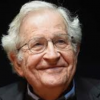
Noam Chomsky
Noam Chomsky is also one of the most influential public intellectuals in the world. He has written more than 100 books, his most recent being Requiem for the American Dream: The 10 Principles of Concentration of Wealth & Power.
Men Can HEAL
October 26, 2024

Richard V. Reeves is the founding president of the American Institute for Boys and Men (AIBM) and the author of Of Boys and Men: Why the Modern Male is Struggling, Why It Matters, and what to Do About It. He has been a long-time advocate of sex and gender equality. He says,
“There has been a successful campaign to get girls and women interested in STEM (Science, Technology, Engineering, and Math) professions. By contrast, the men-into-HEAL (Health, Education, Arts, and Literacy) movement is essentially non-existent.”
He goes on to say,
“Getting a good estimate of how much is being spent overall on getting more women into STEM jobs is impossible, not least because so many institutions are involved. But to give one specific example, the Society of Women Engineers has a headquarters staff of 36, about $19 million in assets, and an annual expenditure of $12 million.”
For me, I was lucky to get into one of the healthcare professions early on. After I graduated from U.C. Santa Barbara in 1965, I was accepted at U.C. San Francisco Medical School and was awarded a four-year full-tuition fellowship to attend. I hoped to eventually become a psychiatrist and help men like my father who had a “nervous breakdown” when I was five years old after he had become increasingly depressed when he couldn’t make a living to support his family.
Medicine was primarily a male profession when I first attended medical school and there were few women in my class. But I quickly felt what I was learning was too narrowly focused and lacked emotional engagement and sensitivity. I requested a transfer to the School of Social Welfare at U.C. Berkeley and was willing to give up my scholarship to get it. However, before I was allowed to leave I had to see a psychiatrist. Evidently, a male leaving medical school for a career in social work was seen as aberrant, if not downright crazy.
When I arrived, the other students in social work school were primarily women, with only a few men. But I loved the environment and felt at home in a community committed to helping people mentally, emotionally, and relationally. I also appreciated that we began helping people right away. My first-year placement was at a juvenile probation department. In my second year, I worked in a mental health facility. I earned my Master of Social Work degree in 1968 and have had a successful career ever since.
In Of Boys and Men, Reeves says,
“In broad terms, HEAL occupations can be seen as the opposite of STEM. They are more focused on people, rather than things, and they tend to require more literacy than numeracy skills.”
I found that to be true. I am definitely better suited to HEAL professions and social work has given me experience with people I never would have gotten had I continued in medical school.
The focus on literacy has also helped me to become a successful author with seventeen books available, including international bestsellers Looking for Love in All the Wrong Places: Overcoming Romantic and Sexual Addictions, Male Menopause, and The Irritable Male Syndrome: Understanding and Managing the 4 Key Causes of Depression and Aggression.
In recent years I have been training men who are interested in men’s health as a profession. Reeves says,
“There has been a striking drop in the share of men in mental health related caring professions. Men account for the minority of social workers (18%) and psychologists (22%), for example, and the gender imbalance is growing.”
Yes, Boys Can: An Action Approach For Now and For the Future
What’s to be done? Reeves offers a challenging proposal.
“As a society, we recognized the need to get more women into STEM jobs, and invested accordingly. Now the same is true of men and HEAL. I propose at least $1 billion national investment, over the next decade, in service of this goal. This money, from both government and philanthropy, should be spent in three ways:
- First, creating a pipeline of future male HEAL workers in schools and colleges.
- Second, providing financial support to male students and workers in HEAL.
- Third, running social marketing campaigns to make these career choices more appealing to boys and men.”
Reeves goes on to say,
“First, the pipeline. We need to get more boys and young men thinking about HEAL careers early.”
To that end Reeves has joined with Jonathan Juravich, the 2023 National Elementary Art Teacher of the Year to create a masterful new book, Yes, Boys Can: Inspiring Stories of Men Who Changed the World.
I had the opportunity to interview Richard and Jonathan for a recent podcast which you can watch here. We discussed their work, the creation of the book, and talked about some of the inspiring men who work in the fields of Health, Education, Arts, and Literacy.
You’ll learn about who of the fifty interesting men in the book: Social worker Preston Dyer and health nurse Sir Jonathan Elliott Asbridge.
As described in Yes Boys Can,
“Growing up, the only person that Preston really saw helping other people was the pastor of his church. Preston loved the idea of helping others; it was what drove him. He wasn’t excited about writing and preaching sermons for church services.”
It wasn’t easy, but Preston got into social work helping people with mental health needs. He struggled through school, but persevered. He and his wife, Genie, started marriage enrichment courses and began helping more people. In sum,
“Against all odds and hurdles, he ended up becoming one of the most influential social workers alive.”
Jonathan Elliott Asbridge was born in Cardiff, Wales.
“He had his first taste of nursing when he began work as a cadet with the St. John Ambulance Service in South Wales. He knew at a young age that he wanted to pursue nursing as a career, but his parents were less than excited and strongly fought back. This wasn’t the future they wanted for him.”
Many men are drawn to work in the HEAL professions but are discourage by others. Sometimes it is family members who discourage us. Other times it is teachers, friends, classmates, or the general sense we get from society that these are not manly jobs.
But Jonathan didn’t give up. Jonathan attended nursing school and continued schooling at university and began working in the field.
“Jonathan went from being a staff nurse to a charge nurse in a critical care unit, then an inpatient manager, a general manager, and the director of Clinical Care Services. Eventually he became a director of nursing.
He didn’t stop there. Jonathan continued work with further advocacy and professional advancement and was named the inaugural president of the Nursing and Midwifery Council of the United Kingdom.”
Since at least 1860, on the King’s or Queen’s birthday, individuals are awarded medals, decorations, and appointments. These recognitions celebrate the great works of citizens. As we learn in the book, “On June 17, 2006, Jonathan received such an honor. He was knighted for his dedication to the National Health Service and advancement of the nursing profession. Thankfully, his family’s reluctance about his career choice didn’t hold him back from pursuing his dream.”
If you, or someone you care about, may be interested in HEAL professions for men, I highly recommend Richard’s book, Of Boys and Men: Why the Modern Male is Struggling, Why it Matters, and What to Do about it.” I also recommend the new book, Yes, Boys Can! Inspiring Stories of Men Who Changed the World.
For more information about Richard’s work, visit him at the American Institute for Boys and Men: https://aibm.org/. You can also visit his website: https://richardvreeves.com/
You can learn about Jonathan’s work here:
https://theartofeducation.edu/author/jonathan-juravich
You can order Yes, Boys Can! From the publisher here:
https://quarto.com/books/9780760391952/yes-boys-can or from wherever books are sold.
I write regular articles about men’s mental, emotional, and relational health. You can visit me here: https://menalive.com/ and subscribe to my free weekly newsletter here: https://menalive.com/email-newsletter/

Jed Diamond
Founder and VHS (Visionary Healer Scholar) of MenAlive
Tarot Card for October 28: Success

| The Six of Disks The Lord of Success is a delicious card, indicating that we have achieved a natural state of inner balance and harmony which allows us to use our energies without diversion nor interference. More often than not, these energies are directed into practical channels – in the workplace, dealing with things in the home environment.This is because Disks are about the more mundane aspects of everyday life, and about home and family – some people see Disks as purely money-related, but this is a misunderstanding of their deep function. Rather than interpreting Disks purely in a financial context, we are better served by seeing them as relating to the basic nuts and bolts of security. This includes money and finances, of course, but also covers all sorts of other areas too – the basic trust and reliability of our friends and family, the nature of our home, the set of tasks which form our job. However, I digress ;-)On a day ruled by the Six of Disks, we need to be taking stock of our overall position in a practical sense. This is a day to sort out your bank accounts, check your credit card balance, look in your birthday book for upcoming important dates, check what food you have in the freezer, about those people closest to you and consider how they’ve been doing recently.It’s a practical, down-to-earth day where you look around and feel grateful for the things, creatures and people you have in your life. Everybody has something to be grateful for… and most of us have a lot to be grateful for. And on a day ruled by the Lord of Success it’s time to say thankyou!Affirmation: ” I am blessed with the bounty of life.” |
Sri Nisargadatta Maharaj: you are not the mind

I Sing The Body Electric
yaddayad Sep 2, 2009 Fame 1980 I do not own this video CAST: Eddie Barth … Angelo Irene Cara … Coco Lee Curreri … Bruno Laura Dean … Lisa Antonia Franceschi … Hilary Boyd Gaines … Michael Albert Hague … Shorofsky Tresa Hughes … Mrs. Finsecker Steve Inwood … François Lafete Paul McCrane … Montgomery Anne Meara … Mrs. Sherwood Joanna Merlin … Miss Berg Barry Miller … Ralph Jim Moody … Farrell Gene Anthony Ray … Leroy Maureen Teefy … Doris Debbie Allen … Lydia Richard Belzer … M.C. Frank Bongiorno … Truck Driver Bill Britten … Mr. England Eric Brockington … Plump Eric Nicholas Bunin … Bunsky Cindy Canuelas … Cindy Nora Cotrone … Dancer Mbewe Escobar … Phenicia Gennadi Filimonov … Violinist Victor Fischbarg … Harvey Finsecker Penny Frank … Dance Teacher Willie Henry Jr. … Bathroom Student Steve Hollander … Drama Student (as Steven Hollander) Sang Kim … Oriental Violinist Darrell Kirkman … Richard III Judith L’Heureux … Nurse Ted Lambert … Drama Student Nancy Lee … Oriental Student Sarah Malament … Dance Accompanist James Manis … Bruno’s Uncle Carol Massenburg … Shirley Isaac Mizrahi … Touchstone Raquel Mondin … Ralph’s Sister Alba Oms … Ralph’s Mother Frank Oteri … Schlepstein Traci Parnell … Hawaiian Dancer Sal Piro … Rocky Horror M.C. Lesley Quickley … Towering Inferno Student Ray Ramirez … Father Morales Loris Sallahian … Drama Student Ilse Sass … Mrs. Tossoff Dawn Steinberg … Monitor on Stairs Jonathan Strasser … Orchestra Conductor Yvette Torres … Ralph’s Little Sister F.X. Vitolo … Frankie (as Frank X. Vitolo) Stefanie Zimmerman … Dancer Teacher Tracy Burnett … Dancer Greg De Jean … Dancer (as Greg DeJean) Laura Delano … Dancer Michael DeLorenzo … Dancer Aaron Dugger … Dancer Neisha Folkes-LeMelle …Dancer (as Neisha Folkes) Karen Ford … Dancer Robin Gray … Dancer Hazel Green … Dancer Eva Grubler … Dancer Patrick King … Dancer Cynthia Lochard … Dancer Julian Montenaire … Dancer Holly Reeve … Dancer Kate Snyder … Dancer Meg Tilly … Dancer Louis Venosta … Dancer Philip Wright … Dancer Ranko Yokoyana … Dancer Adam Abeshouse … Musician Yvette D. Carrington … Musician Fima Ephron … Musician Anthony Evans … Musician Crystal Garner … Musician Lisa Herman … Musician Thais Hockaday … Musician Karen Hoppe … Musician Frankie Laino … Musician April Lang … Musician Richard Latimer … Musician Lisa Lowell … Musician Ann Marie McDermott … Musician Kerry McDermott … Musician Maureen McDermott … Musician Josh Melville … Musician Peter Rafelson … Musician Ann Roboff … Musician (as Anne Roboff) Boris Slutsky … Musician Alan Vetter … Musician Evan Weinstein … Musician Produced by: David De Silva …. producer Alan Marshall …. producer Original Music by Michael Gore