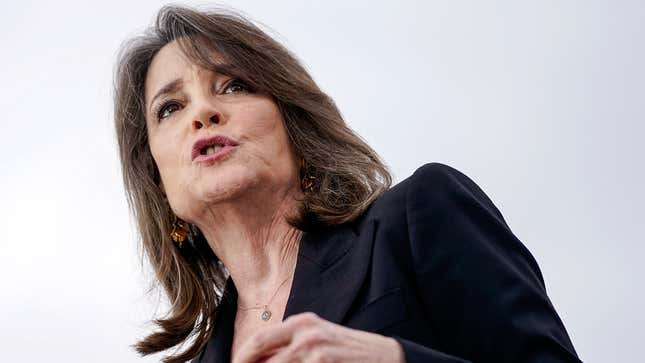
THE INFINITE—In a dominant electoral showing that stretched across the unified field of consciousness, author and politician Marianne Williamson successfully primaried President Biden Tuesday in all 63 counties of the Astral Plane, according to cosmic sources. “This win is sure to impact Williamson’s candidacy—not just on the Astral Plane, but on all theoretical planes of existence,” said 894Z0LP7, an ethereal projection of a political analyst from the Astral Plane, confirming that Williamson had far surpassed the votes for Biden, Rep. Dean Phillips (D-MN), and Zorbog the Blissful. “All the ballots of the outer dimension have been verified by the all-knowing cosmic egg, and the winner is clear: Williamson earned nearly 99% of the moons and stars from an amorphous population of transcendent souls, crushing the low-vibrating competition across the entire metaphysical vacuum. The incorporeal bodies have spoken—Williamson is the only presidential candidate who will enact real change in the quantum gap between being and nothingness. It’s a major upset for Biden, who will need to manifest a lot more focused psychic energy if he hopes to appeal to atmospheric demographics in the future.” At press time, Williamson’s campaign was attempting to downplay reports that she was polling behind Trump among both spiritual essences and disembodied flesh in the Bardo.
As a suit, Wands are direct, determined and connected to Will and its appropriate application. The Queen of Wands represents a woman who knows exactly what she wants out of life, and aims at her goals with great dedication.She is often a woman who has experienced conflict and trauma, and learned from these. She’s usually independent, forthright and self-motivated. As a friend she will be loyal and honest, though sometimes given to handing out unwelcome advice, and taking over.As a parent she can be quite dominant, claiming that she wants her off spring to be self-reliant and confident, but sometimes tending to become impatient, and do things on their behalf in her own way, rather than allowing her children to make up their own minds.She’s a fighter, who does not suffer fools gladly. She will support and assist those who are vulnerable and needy, offering unceasing energy and determination. She takes up causes readily, and proves herself a worthy adversary. However she has a tendency not to know when to stop, and enjoys being at the forefront of the battle, rather than beavering away on the more routine aspects of any campaign.This is a forceful and proud woman. She applies high standards to everything she becomes involved in. As a result, she can sometimes be somewhat intolerant of people who do things differently.So – The Queen of Wands – a fine ally, and a dangerous enemy!
• Have trouble paying attention and staying on task? • Suffer from disorganization, procrastination, or forgetfulness? • Have difficulty with restlessness or trouble managing strong feelings such as anger and frustration? • Struggle with self-doubt and difficulty following through? • In a way that causes problems in your relationships or your work?
If so, you may have Attention Deficit Hyperactivity Disorder (ADHD)—like an estimated 8 million adults in this country. Physician-researcher Dr. Lidia Zylowska has created an 8-step program for using mindfulness practice (attention and awareness training) to overcome the symptoms of ADHD. The program includes practices such as sitting meditation, body awareness, thoughtful speaking and listening, development of self-acceptance, mindful self-coaching, cultivation of a balanced view of thoughts and emotions, and more. Dr. Zylowska educates readers about ADHD, helping them to understand how their ADHD brain works and how they can use mindful awareness to work with their challenges. She also explains how the mindful approach can be combined with other treatments, including medications, to boost self-improvement.
This book is accompanied by an audio program of guided mindfulness exercises for successfully managing ADHD.
“The truly terrible thing is that everybody has their reasons.” ― Jean Renoir
Jean Renoir (September 15, 1894 – February 12, 1979) was a French film director, screenwriter, actor, producer and author. As a film director and actor, he made more than forty films from the silent era to the end of the 1960s. His films La Grande Illusion and The Rules of the Game are often cited by critics as among the greatest films ever made. Wikipedia
The Literary Arts • Jul 1, 2021 Presentation by Fred Dennehy, Ph.D. From a meeting of the Section of Literary Arts and Humanities, June 5, 2021. TheLiteraryArts.com Video by Bruce Donehower, Ph.D. May the viewer flourish!
NEW DAY = first time; fresh; novel. Day is when the sun is above the horizon
QUESTION: Are you ready for a brand new day?
STORY: Welcome to a brand new day! Yes, today and every day is brand new – and it is good for us to move forward into each new day with our mind open to our Innate Higher Self. You may identify your Higher Self as God or Universal Mind, Infinite Mind or Consciousness, SOUL, Spirit, Beingness. Whatever name works for you is best. Typically each day starts with a routine of opening the curtains, going to the bathroom, washing your face, drinking tea or coffee, taking the dog outside for a pee and maybe taking a shower. Today humanity is at a turning point. The fast roll-out of technology and Artificial Intelligence is requiring each of us to feel a connection with our Innate Higher Self. No one can do this for you. You can do it! Welcome to a brand new day!
QUOTES
“It is through gratitude for the present moment that the Spiritual Dimension of life opens up.” ~ Eckhart Tolle
“There is a fifth dimension, beyond that which is known to man. It is a dimension as vast as space and as timeless as infinity. It is the middle ground between light and shadow, between science and superstition.” ~ Rod Sterling
“I believe that hunger for a ‘lost dimension’ of experience is a natural yearning in all of us, and it doesn’t go away just because we ignore it. It is evidenced among other places in the millions of children and adults who obsessively read the ‘Harry Potter’ books. It is said that fiction is where someone gets to tell the truth.” ~ Marianne Williamson
EXERCISE
STOP.
Sit quietly. Assume an erect posture. Sense the breath.
Sit calmly and feel the energy of the new day flowing through you and through the world that is around you.
Get your pen and paper and write words or draw lines expressing this brand new energy of today.
Move forward into your day open to your Innate Higher Self.
Ch’ing, the chief carpenter was cutting wood into a stand for musical instruments. When finished, the work appeared to those who saw it as though of supernatural execution.
The Prince asked him, “What mystery is there in your art?”
“No mystery, Your Highness”, replied Ch’ing.
“When I am about to make such a stand, I allow my mind to become quiet. In this condition I become oblivious of any reward to be gained, I become oblivious to any fame to be acquired and I become unaware of my physical frame.“
“Then, with no thought of the Court in my mind, my skill becomes concentrated and all disturbing elements from without vanish. I enter a forest where I search for a suitable tree. I see the stand in my mind’s eye and begin work. Beyond that there’s nothing. I bring my own native capacity into relation with that of the wood. My work is due solely to this.”
Zhuang Zhou (369 BC – 286 BC) Chinese Philosopher
AN OPPORTUNITY FOR DAILY REFLECTION BROUGHT TO YOU BY THE SCHOOL OF PRACTICAL PHILOSOPHY
We don’t have to sacrifice our freedom for the sake of technological progress, says social technologist Divya Siddarth. She shares how a group of people helped retrain one of the world’s most powerful AI models on a constitution they wrote — and offers a vision of technology that aligns with the principles of democracy, rather than conflicting with them.
“An outlaw can be defined as somebody who lives outside the law, beyond the law and not necessarily against it.” –Hunter Thompson *
“All human advances occur in the outlaw area.” –Buckminster Fuller *
In the mid-1960s, network TV was suddenly awash in what scholars would later call “supernatural sitcoms.” My Favorite Martian featured an anthropologist from Mars who crash-lands in Los Angeles and hides out at a newspaper reporter’s apartment while he tries to repair his spacecraft. Mister Ed starred a talking horse who only speaks to his bumbling owner, Wilbur, and constantly gets him in trouble. Bewitched depicted a nose-twitching witch named Samantha who marries a nervous ad executive who insists she refrain from using her magical powers.
I Dream of Jeannie recounted the story of a genie named Jeannie who falls in love with an astronaut who finds her bottle when his space capsule splashes down near a deserted island. And The Addams Family concerned a macabre family with supernatural gifts who don’t understand why their neighbors think they are weird.
At the time, such shows were regarded as simple ditzy, escapist fun. Later, academics would argue that the sitcoms were products of the civil rights era of the day: They metaphorically examined the subjects of “mixed marriages” and integration; and in the case of Bewitched and I Dream of Jeannie they reflected growing tensions between empowered women and men who want them to just be ordinary, stay-at-home housewives.
In retrospect, those comedies can also be seen as portraits of outsiders trying to negotiate a path, in mid-twentieth-century America, between identity and assimilation, and the shifting attitudes of family, neighbors, and co-workers toward them. There are some cringe-inducing moments—Jeannie, in particular, can sound like a desperate-to-please geisha—but for the most part it’s the outsiders who come across as insightful and charming, possessed of both common sense and a resilient sense of humor, while their human counterparts emerge as uptight, dim-witted dolts, morally superior and comically self-deluded.In these shows, America is already a place where more and more people’s dreams are running aground.
For that matter, Americans have long had a fascination with outsiders. Though none were dangerous norm-busting conmen like Donald Trump, many U.S. presidents in recent decades ran as Washington outsiders—including Jimmy Carter, Ronald Reagan, Bill Clinton, and Barack Obama. And when it comes to entertainment, Americans have demonstrated an enduring love-hate affair with outlaws, renegades, and rebels with (and without) a cause. Think: James Dean, Marlon Brando, Humphrey Bogart, Montgomery Clift. Think: Bonnie and Clyde, The Graduate, Butch Cassidy and the Sundance Kid, Midnight Cowboy, Cool Hand Luke, Easy Rider, Edward Scissorhands, and, well, The Outsiders. Many classics from the great movie decade of the 1970s feature misfits, killers, and mavericks including Five Easy Pieces (1970), Klute (1971), The Godfather (1972), Badlands (1973), Serpico (1973), Mean Streets (1973), Dog Day Afternoon (1975), One Flew over the Cuckoo’s Nest (1975), Carrie (1976), and Taxi Driver (1976).
And it’s not just crazed killers like Travis Bickle, Tony Montana, and Marvel villains (and for that matter, some Marvel heroes) who live beyond the bounds of the law, but also cops like Harold Francis Callahan (a.k.a. Dirty Harry) and Max Rockatansky (a.k.a. Mad Max). The premise of many detective and private eye stories is that their unconventional hero or heroine is more adept, more observant than the bureaucrats in the police department: This dates back to PIs like Sam Spade and Philip Marlowe in hard-boiled classics, through generations of TV detectives from Columbo and Jim Rockford, to Jessica Fletcher (Murder, She Wrote) and Charlie ’s Angels and, more recently, Adrian Monk.
As we entered the new millennium, three daring TV series remade the television landscape, and they all featured a new breed of outsider: lawless, desperate, violent characters once unimaginable on the small screens in our living rooms. These antiheroes inhabit an America that’s lost its way—a broken world where institutions are corrupt, incompetent, or both—and people feel angry, trapped, and discouraged.
Indeed, the country depicted in The Sopranos (1999–2007), The Wire (2002–08), and Breaking Bad (2008–13) is recognizably the country that would elect Donald Trump a few years later—a place where, as David Chase’s mob boss Tony Soprano says, “things are trending downward,” where, in the words of a character in David Simon’s The Wire, “we used to make shit in this country. Build shit. Now we just put our hand in the next guy’s pocket.”
In these shows, America is already a place where more and more people’s dreams are running aground, where the poor and the middle class find it increasingly difficult to make ends meet, and where even the privileged feel a sense of emptiness and disappointment. No doubt this is one of the reasons viewership of The Sopranos on HBO’s streaming service surged 179 percent during the pandemic. The series spun off several popular podcasts, and thirteen years after ending its original run was hailed by GQ as “the hottest show of 2020.”
The legions of new Gen Z fans acquired by David Chase’s groundbreaking series no doubt understood Tony Soprano’s explanation for why he was feeling depressed. “It’s good to be in something from the ground floor,” the mob boss told his therapist, Dr. Melfi, in the show’s pilot. “I came too late for that, I know. But lately, I’m getting the feeling that I came in at the end. The best is over.” Thinking about his father, Tony adds, “He never reached the heights like me, but in a lot of ways he had it better. He had his people, they had their standards, they had their pride. Today, what do we got?”
As for Tony’s wayward son A.J., he becomes preoccupied with Yeats’s vision of things falling apart in “The Second Coming” and sums up his feelings about America this way: “This is still where people come to make it, it’s a beautiful idea.” But “what do they get? Bling? Come-on’s for shit they don’t need and can’t afford?”
Worries that the United States had entered a downward spiral aren’t new, of course. But for much of its history, America has been relentlessly forward-looking—convinced, like the early settlers who had left behind the Old World, that America was a New World where they could reinvent themselves, where, as Tocqueville observed, “everything is in constant motion, and every movement seems an improvement.”
But in recent years, the belief, as Scarlett O’Hara put it, that “tomorrow is another day” has dwindled, with studies showing that millennials—facing uncertain career prospects, saddled with college debt, and priced out of a rising housing market—are on track to be the first generation in the nation’s history that will fail to exceed their parents in income or job status.
And then there is Donald Trump: Whereas earlier presidents routinely invoked the future (whether it was the New Deal or building an interstate highway system or embarking on the race to space), Trump ran on a promise to “Make America Great Again”—which was really code for turning the clock back to the pre-civil-rights days, when white men made the rules and African Americans, women, Latinos, LGBTQ+ people, and immigrants were consigned to the margins.
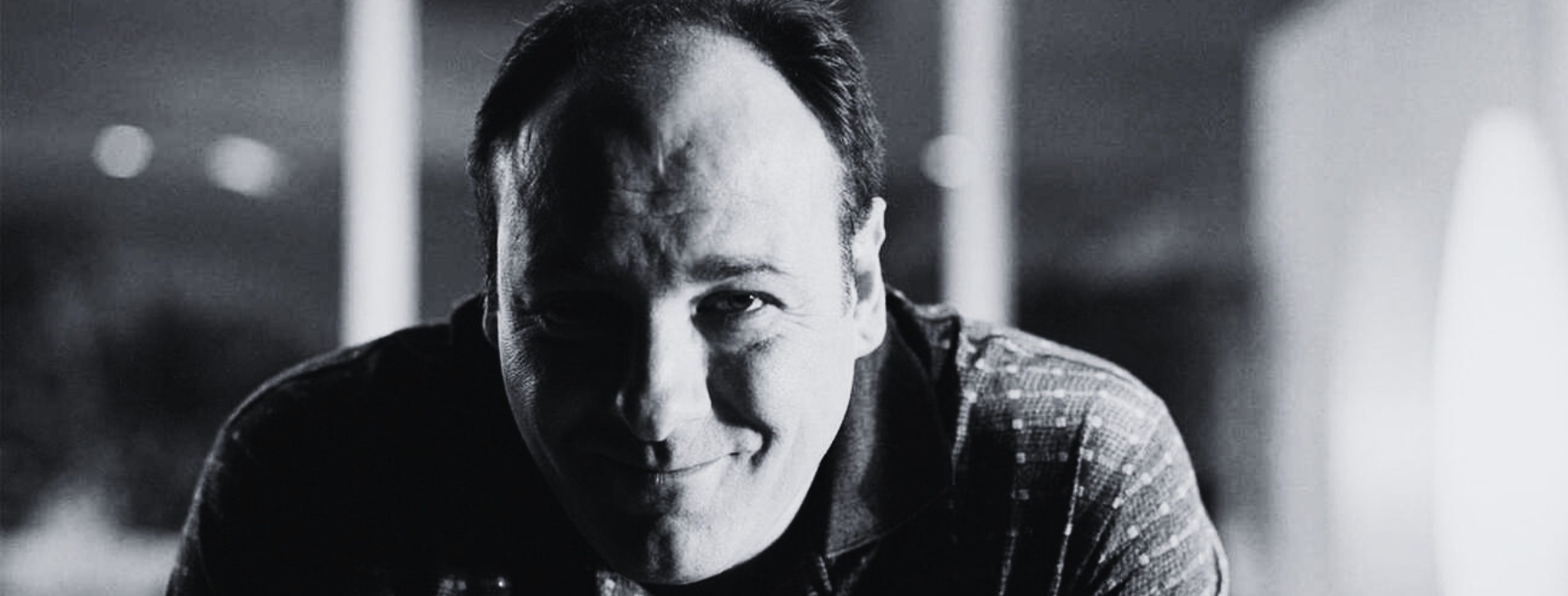
Because the great James Gandolfini invested his portrayal of Tony with such nuance and swaggering charm, because he made Tony’s frustrations with daily life so recognizable and real, audiences tended to identify with the mob boss—never mind that he killed eight people and presided over a ruthless gang of crooks and hit men. In his 2013 book, Difficult Men, Brett Martin argued that “no genre suited the baby boomers’ dueling impulses of attraction and guilt toward American capitalism as well as the Mob drama.
The notion that the American dream might at its core be a criminal enterprise lay at the center of the era’s signature works, from Bonnie and Clyde and Chinatown to The Godfather and Mean Streets”—and The Sopranos “yoked that story to one of postwar literature’s most potent tropes: horror of the suburbs,” which had come, in much postwar literature, “to represent everything crushing and confining to man’s essential nature.”
Breaking Bad, too, was a dark parable about American decline. Viewers started out feeling they could relate to Walter White, the high school science teacher who found himself diagnosed with cancer, unable to afford medical treatments, and worried about supporting his family. And some viewers continued to root for Walt, even as he metamorphosed, in the words of the show’s creator, Vince Gilligan, “from Mr. Chips into Scarface.”
Initially, Walt’s decision to use his knowledge of chemistry to start cooking meth is spurred by financial desperation: Given eighteen months to live, Walt wants to leave his pregnant wife and their disabled son a nest egg for when he is gone. Figuring out the cost of college for two kids, mortgage payments on the house, and the daily costs of living (adjusted for inflation), he calculates that he needs to make $737,000—an amount impossibly beyond his teacher’s salary, even when supplemented with pay from his second job at a local car wash.
And so, in a kind of dark twist on the American myth of the self-made man, Walt becomes a successful entrepreneur—a master meth cook and drug kingpin who goes by the name of Heisenberg. “I am not in danger, Skyler,” he tells his worried wife. “I am the danger. A guy opens his door and gets shot, and you think that’s me? No! I am the one who knocks!”The notion that the American dream might at its core be a criminal enterprise lay at the center of the era’s signature works.
The critic Alan Sepinwall (The Revolution Was Televised) makes the keen observation that The Sopranos and The Wire are both “shows about the end of the American dream,” but whereas the first “comes across as deeply cynical about humanity,” the latter “believes that any innate goodness within people eventually gets ground down by the institutions that they serve.” “The America of The Wire is broken,” Sepinwall goes on, “in a fundamental, probably irreparable way. It is an interconnected network of ossified institutions,” all of them “committed to perpetuating their own business-as-usual approach” and preserving the status quo regardless of the human costs.
A choral portrait of the city of Baltimore, The Wire introduces dozens of characters—cops and drug dealers, reporters, politicians, dockworkers, schoolkids, lawyers, gang members, businessmen, police informants, and junkies—and shows us how “all the pieces matter,” how decisions made by those with power or influence can have devastating fallout on the lives of those who have neither, those men and women who, in the words of the show’s creator, David Simon, were “left in the shallows” by the American economy: “unemployed and underemployed, idle at a West Baltimore soup kitchen or dead-ended at some strip-mall cash register.”
And those folks who aren’t jobless tend to work for organizations—whether the police department or a drug empire—that grind them down or get them killed. Not surprisingly, the series’ most captivating character is a quintessential outsider—Omar Little, played by the brilliant Michael K. Williams, a gay stickup man who works for no one and adheres to his own strict code of honor, a feared and fearless badass who can also be generous, tender, and loyal.
The Wire and The Sopranos changed television storytelling, made TV the hot, go-to medium, and opened the way to a host of new antiheroes, each darker than the next. In addition to Walter White, there was the crooked cop Vic Mackey (The Shield), the Machiavellian congressman Frank Underwood (House of Cards), the gangster/politician Nucky Thompson (Boardwalk Empire), the ruthless lawyer Patty Hewes (Damages), the serial killer Dexter Morgan (Dexter), the duplicitous Don Draper (Mad Men), the scheming Cersei Lannister (Game of Thrones), the money launderer Marty Byrde (Ozark), the drug lord Teresa Mendoza (Queen of the South), and the toxic media mogul Logan Roy in the iconic series of the Trump era, Succession.
In TheSopranosSessions, Steven Van Zandt, who played Tony’s consigliere Silvio Dante, told the book’s authors, Matt Zoller Seitz and Alan Sepinwall, that audiences often focus on “the romantic version of the criminal lifestyle” where the gangster is “the guy who breaks all the rules and gets away with it, at least for a while”; “it’s booze and broads and horses and dice and killing a guy if he gets in your way and not caring what anybody thinks of you.”
It wasn’t just the case with Mafia movies and TV shows, Van Zandt added: “It’s Cagney and Bogart movies, it’s Westerns. America seems to have some kind of fascination with outlaws in general. Maybe it’s because we were an outlaw nation to begin with. This nation was born of rebellion against authority, and in a weird way, that’s what these characters represent. That image is very attractive to Americans. It’s part of the national unconscious. It’s practically in our genetic code.”
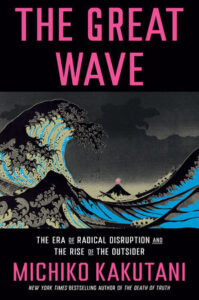
Michiko Kakutani, the former chief book critic of The New York Times, is the author of the 2018 bestseller The Death of Truth: Notes on Falsehood in the Age of Trump.
Consciousness, spirituality, biography, sexuality, androgyny, futurism, space, the arts, science, astrology, democracy, humor, books, movies and more