Attributed to both Pablo Neruda and Martha Medeiros
You start dying slowly if you do not travel, if you do not read, If you do not listen to the sounds of life, If you do not appreciate yourself.
You start dying slowly When you kill your self-esteem; When you do not let others help you.
You start dying slowly If you become a slave of your habits, Walking everyday on the same paths… If you do not change your routine, If you do not wear different colours Or you do not speak to those you don’t know.
You start dying slowly If you avoid to feel passion And their turbulent emotions; Those which make your eyes glisten And your heart beat fast.
You start dying slowly If you do not change your life when you are not satisfied with your job, or with your love, If you do not risk what is safe for the uncertain, If you do not go after a dream, If you do not allow yourself, At least once in your lifetime, To run away from sensible advice.
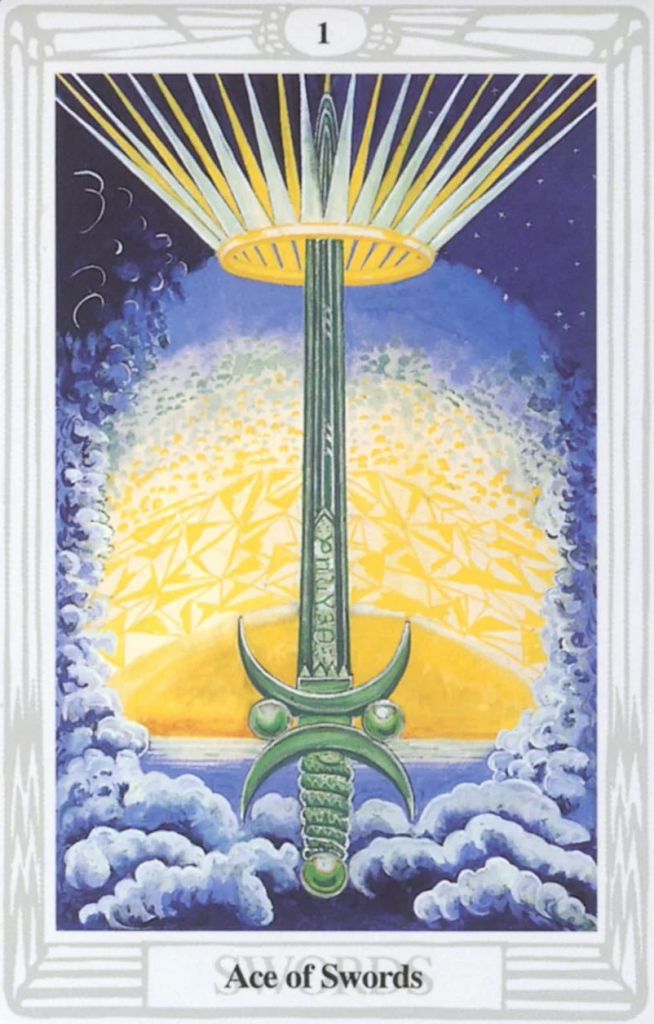
As a Suit, Swords are about thought, communication, and, sadly, often also about conflict and emotional turmoil. People often become confused about why that should be – this Suit contains more ‘bad’ cards than any of the others. But when you consider that one thing which inevitably happens when we are hurt and unhappy is that objectivity and clarity go out of the window, you might be able to understand why so many harsh cards turn up here.Aces are always about the beginning of something – usually related to the Suit they are from. From that you can see that the Ace of Swords is about the ability to see things from a clear perspective. When this card rules, we are able to cut away the rubbish and confusion which tends to cloud out major issues. We can see what is important and worth fighting for. And we can also identify the red herrings that keep us from seeing clearly.We become more able to make good decisions, more ready to see other points of view, more clear about what we really think about things. When this happens we often choose totally new directions for ourselves, reaching a point where we can transform and empower our experiences.So when this card comes up in a reading, or to rule a day, then it means that we need to step back, and think rationally about everything which crosses our path. We need to cut away rubbish and clutter, so we can see the inner truth we seek.There is a decisive and powerful energy which flows from this card, and engaging with it will allow us to understand ourselves, and others more thoroughly than before.In a spiritual sense the appearance of the Ace of Swords will often mark a turning point or breakthrough into new clarity and wisdom
New Thinking Allowed with Jeffrey Mishlove • Feb 1, 2024 Is time linear? Or does it move in cycles? Mark Twain purportedly said “history doesn’t repeat itself, but it likely rhymes.” Is America— and the world— in a cycle or “Fourth Turning” similar to the times of the American Revolution, the American Civil War and World War II? Neil Howe is author of “The Fourth Turning Is Here— What the Seasons of History Tell Us About How and When This Crisis Will End” and other books on generational theory lauded by both the left and right. In this conversation, Howe and Naughton address generational cycles and the four “turnings” that occur within an 80-90 year period, or the average length of a human lifetime. They explore the current fourth turning which is marked by crisis and conflict. It delves into the cyclical nature of history and the correlation between major wars and fourth turnings throughout the United States, England, Europe and beyond. The discussion also touches on the moral equivalent of war, a concept from William James, that explores alternative means of achieving the transformative effects of war without the violence and destruction. Howe and Naughton address how the consciousness revolution of the 1960s and 70s can guide us through the current millennial crisis. Howe explains how each turning is characterized by different social dynamics and values, and how they shape the generations that come of age during those times. 00:00 Introduction to Generational Cycles & Turnings 04:09 A “Great Gate in History” Generational Differences & Awakening Eras 13:45 Overview: the Four Turnings in Current History 19:55 The Third Turning: Unraveling 24:58 The Fourth Turning: Crisis and the Need for Order 33:30 Archetypes & Turnings 40:01 William James & the Moral Equivalent of War 47:06 The “Reckoning” of Today’s Polarization 51:14 The Cyclical Nature of History & Time 54:39 The Consciousness Revolution and the Fourth Turning Order Neil Howe’s most recent book “The Fourth Turning Is Here: What the Seasons of History Tell Us about How and When This Crisis Will End.” https://a.co/d/1FJhuAs New Thinking Allowed Guest Host Christopher Naughton is a former trial attorney and multiple Emmy® Award-winning host of The American Law Journal television program and former host of New World Radio. His website is ChristopherNaughton.com. He is the author of “America’s Next Great Awakening: What the Convergence of Mysticism, Religion, Atheism, and Science Means for the Nation. And You.” https://a.co/d/aaG8uve Naughton’s producer and editor is Valerie Jones, valerieajones.com. (Recorded on November 17, 2023)
This work has been selected by scholars as being culturally important, and is part of the knowledge base of civilization as we know it. This work is in the “public domain in the United States of America, and possibly other nations. Within the United States, you may freely copy and distribute this work, as no entity (individual or corporate) has a copyright on the body of the work. Scholars believe, and we concur, that this work is important enough to be preserved, reproduced, and made generally available to the public. We appreciate your support of the preservation process, and thank you for being an important part of keeping this knowledge alive and relevant.
The doctor looked ill-at-ease while making a jestful comment on Prime Minister Modi. I went to see him, suspecting a viral fever.
“If young fellows like you fall ill, what will happen to the nation? Look at our PM; at 73, he is surviving on coconut water and is sleeping on the floor, and you catch fever from drinking cold water after a game of squash.”
I’m not Modi, and I don’t idolize a politician for his religious quotient, I replied.
He was caught off-guard. The doctor was done listening to adulatory talks on Modi. And passed off back-handed compliments to elicit a response from visiting patients. That’s his way of talking about what he called “cultural corruption,” which is spoiling three generations.
What is this hysteria about the Ram Temple? He remarked avidly. He understood that I’m not a Modi-devotee.
State and religion shall never go together. The state has no role whatsoever in temple consecration. It’s a momentous occasion for all Hindus worldwide—a 500-year-old dream is coming true—but what is the role of an elected head of state to do with it?
People counter that he is also a practicing Hindu, so what’s wrong with professing one’s faith?
There’s nothing wrong, technically. The spirit of consecration in an unfinished temple is inconsistent with the prescription of Hindu scriptures. To not wait till the auspicious day of Ramnavami, the day when Ram was born, has electoral underpinnings. The elections are written boldly over the event.
The model code of conduct before general elections will come into play, and in April (on the occasion of Ramnavami), it can’t be done with so much political agenda on display.
The Making of a Legend
India, as a cultural consciousness, doesn’t differentiate between religion and politics. All our religious figureheads were scions, princes, or kings. Krishna, the incarnation of Lord Vishnu, was a king.
The Buddha and Mahavira, the founders of Buddhism and Jainism, were wealthy princes before they renounced wealth and possession and became monks.
Ram, the avatar of Lord Vishnu, was a prince who later became king.
This phenomenon has decidedly Hindu leanings. Christ was born to a poor shepherd mother; the Prophet was a commoner. We want to see our king as all-in-all, the one with divine bestowings—a blessed redeemer with no human failings.
This persona has been carefully crafted over the years. In 2014, larger-than-life imagery was shown to people: he brought a baby crocodile to his home, and he teaches math and physics to engineering aspirants. Each story has one and only object: to project him as a people’s man, a Rambo, and a great messiah.
One of 17 depicted in a 45- page comic book, Bal Narendra — Childhood Stories of Narendra Modi (released in 2014)
People ask, What’s wrong with that? When you start seeing a political leader as a divine being, you can’t ask critical questions. That’s the problem.
You then lose the capacity to judge based on delivery; you change goalposts to suit the hero ending. And that’s happening in India.
When demonetization failed to achieve it’s defined objectives, all sorts of digital India stories were successfully sold by the media; when COVID mismanagement brought the nation to its knees, people were blamed for not observing the protocols; when the state bungled up in the border conflict with China, we blamed Nehru and his concessions to China.
Anything good that happens becomes a feather in Modi’s crown—the bad is conveniently assigned to either the past mistakes of previous governments or some sort of local issue.
Say, for instance, that when petrol prices go down, he gets the credit, but when they shoot up, global factors and price deregulation become the cause. Some party intellectuals go overtime in convincing people that their contibution, by way of taxes, is shaping the nation’s destiny.
Malidives in Local Park
Three middle-aged people had come for a morning walk. They took a break, and a fellow was telling the other two what went wrong with our relationship with the Maldives.
He said Modi went to Maldip, and there he was abused by some ministers. He came back, and now India has decided to punish Maldip. And because they insulted our PM, the travel booking has crashed. The other guy said, If it has crashed, then buy it.
Then the reciter clarified that it’s not a stock. It’s an island country.
They didn’t understand the series of events, the international standoff, the China angle, or Maldives internal politics. What they understood was that someone challenged Modi ji, and we gave those bastards back their due.
People can’t analyse politics; they don’t have the bandwidth to study details. The clean takeaway usually is with our PM at the centerstage.
What’s wrong with this?
The doctor asked, Why are educated people falling into these marketing traps? I told him that there is a difference between educated and intellectual.
Being educated has little to nothing to do with seeing objective reality. An educated person has individual resistance; when you try to convince him of something, his knowledge will come in the way. He is, however, easily hypnotized with the mass — when he sees thousands of other believers, he gives in.
Therefore, the job of the state is cut short: do continuous propaganda, create hero imagery, and gradually people will start believing. And once a critical mass of believers has been attained, others will follow too.
His followers claim that if he is an astute politician and can sway the masses, then what’s wrong with that? And above all, he’s doing good work.
I ask one simple question: Tell me one thing that he did wrong in 10 years. And people fumble with answers.
The problem lies in our seeing—we see a person or a situation with a label—all good or all bad. We can’t see critically.
When politics get into religion or vice versa, people get fooled. That’s what happened in medieval Europe: church and state were inseparable, and all sorts of scientific inquiry were deeply throttled. You were allowed to say only what suits the narrative of the state.
In today’s India, the Central Bureau of Investigation, the Enforcement Directorate, and the Election Commission all play to the tune of the state. A politician can be harassed until he joins the BJP; once he comes to their fold, he gets a clean chit.
Several religious and other political leaders declined the invitation to the ceremony. One of the cult leaders said that if a married man is sitting in a consecration ritual, he should be accompanied by his wife. He was badly trolled and called anti-Modi, anti-Hindu, and a congressman.
He replied, If you have to counter me, cite scripture as I’m referring to. Throwing expletives at me is an admission of guilt.
A grand occasion for Hinduism has become a party’s agenda programme. The fallout of it is that another national-level political party announced a grand-scale recitation of Sundarkand (a chapter in Ramyana) in Delhi. The level of political rhetoric is falling continuously.
The biggest issue during elections can become: who is the greatest devotee?
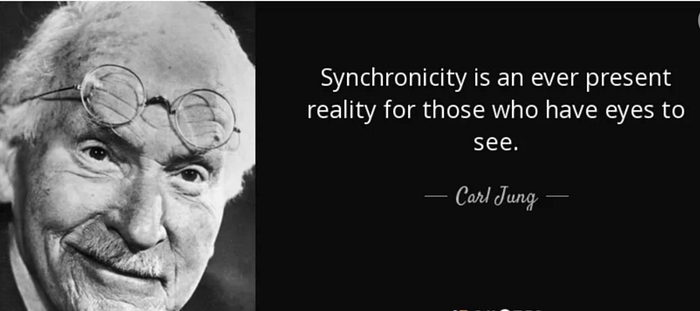
Carl Jung’s “mystical” psychological theories [see note 1] are often purely analogical in nature — at least when it came to the way in which he connected them to theories and ideas in quantum physics. Indeed, even in the case of the most positive accounts of Jung’s theories, everything still seems to be purely analogical. What’s more, Jung and his (positive) biographers never really denied (or played down) the analogical nature of his claims about synchronicity’s relation to theories and ideas within quantum physics.
(i) Introduction: Analogy (ii) Science and Analogy in Carl Jung’s Work (iii) Carl Jung on Synchronicity (iv) Carl Jung on Acausality (v) Synchronicity in a Wider Context (vi) …And, Finally, Entanglement
“Analogy is a comparison or correspondence between two things (or two groups of things) because of a third element that they are considered to share.”
Despite the title of this essay, it can be freely acknowledged that analogy plays an important role in explanation, conceptualisation, communication, problem solving, perception, argumentation, generalisation, memory, etc.
More relevantly, it can also be acknowledged that analogy can be of great help and importance when it comes to scientific theorising. (This is particularly the case in theoretical science and cosmology.) Specifically, analogies can be used in both the applied and the theoretical sciences, and they often take the form of simulationsand/or models.
Thus, analogies aren’t always (or particularly) a bad thing. Indeed, even if they were a bad thing in science and philosophy, human beings — including scientists — wouldn’t easily be able to give them up.
In terms of Carl Jung’s work, we can even see the word “analogy” inthefollowing passage:
“This [double-aspect theory] stands in close analogy to quantum physics, where complementary properties cannot be determined jointly with accuracy.”
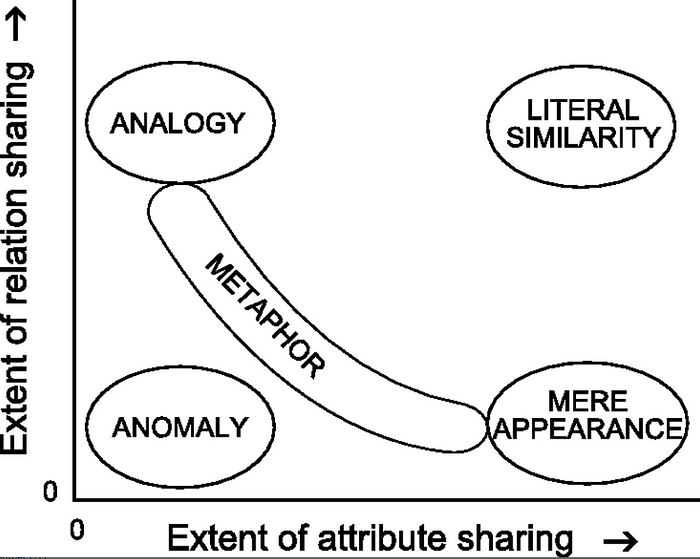
So when it comes to Carl Jung and Wolfgang Pauli using — and referring to — quantum theory, perhaps we can specifically refer to structure-mapping theory.
In this theory, analogy depends on the “mapping” of the elements of one thing, to another thing. What’s more, that mapping doesn’t only occur between different objects: it also occurs between the relations of these different objects.
However, using the technical term “structure-mapping theory” is perhaps giving Pauli’s and Jung’s analogies too much weight and meat (as we shall see). More importantly, it’s not even always clear if their analogies were meant to be (purely or merely) analogies in the first place.
Perhaps more relevantly to the case of Jung, we’ve had many analogies and metaphors in the philosophy of mind. For example, the mind and/or brain as seen as an aviary, blank slate, factory, telephone exchange, Watt Governor, and (dare I say) a computer.
But herein lies a warning.
Some of these philosophical analogies and metaphors led to long-running mistakes and confusions about the nature of mind. Indeed, many philosophers forgot that they were actually dealing with analogies and metaphors in the first place.
Science and Analogy in Carl Jung’s Work
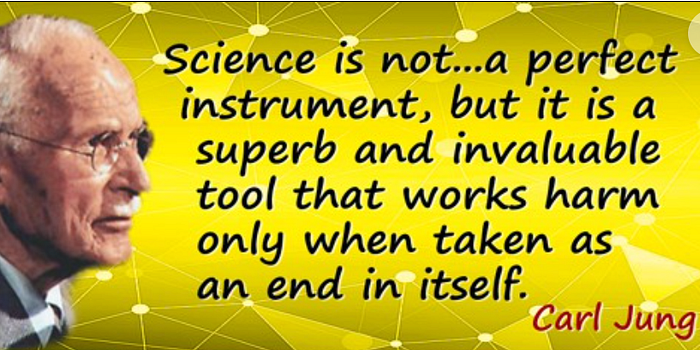
Thus, science has to also be taken within the wider context of Carl Jung’s very own mystical worldview? It’s not even clear what “tak[ing] science as an end in itself” means. Many of Jungians take Jung’s worldview as some kind of end in itself.
To most science-savvy outsiders, Carl Jung’s ideas don’t seem to be in the least bit scientific.
However, there are often confusions (or conflations) on this subject which are brought about for two main reasons:
(1) Jung saw what he was doing as being (at least partly?) scientific. (“[Jung’s]preference was to be seen as a man of science.”) (2) Jung often explicitly refers to science (specifically, in this case, to quantum mechanics).
Of course, Deepak Chopra is always referring to quantum physics too. And someIntelligent Designers often refers to physics, quantum physics, cosmology, and they also use lots of mathematics. You also have “quantum healers”, “quantum soccer players”, “quantum money-makers”, etc. who often refer to (artfully-selected parts of) science.
Added to that, Jung expressed himself in (as it were) scientese.
However, let’s firstly read Harald Atmanspacher expressing Jung’s and Wolfgang Pauli’s ideas in a (seemingly) scientific language. Thus:
“[Jung and Pauli] offered the radical and brilliant idea that the currency of these correlations is not (quantitative) statistics, as in quantum physics, but (qualitative) meaning.”
Is this really a “brilliant idea”? Alternatively, is it simply a brilliant analogy?
What’s more, the analogical nature of this passage just seems obvious.
“The application of statistical laws to processes of atomic dimensions in physics has a remarkable correspondence in psychology insofar as it pursues the foundations of consciousness to the point where they dim out into the inconceivable [].”
Jung uses the words “correspondence” in the passage above.
Now that’s a problematic word because it’s vague, and it can be interpreted in many different ways.
For a start, anything can be taken to correspond with anything else if mystics, theorists, popular authors, etc. indulge in enough mental gymnastics.
The obvious point to make here is that the “statistical laws [and] atomic dimensions in physics” aren’t said to be one and the same thing as anything in “the foundations of consciousness”.
So what about Carl Jung and his own words on synchronicities?
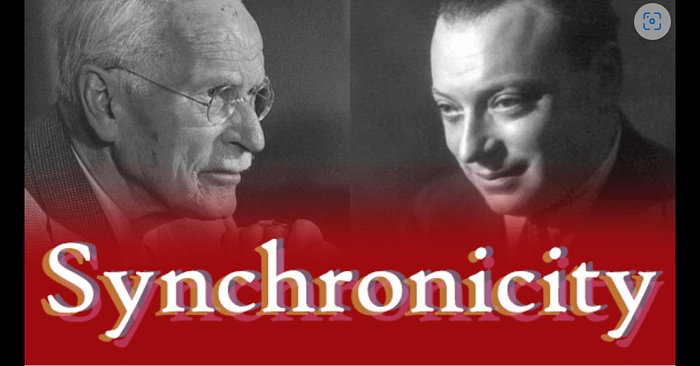
Carl Jung on Synchronicity
Definitions of “synchronicity” includethe following,which are all taken to be faithful to Jung’s own views. (The last definition is from Jung himself.) Thus:
Definition (1) doesn’t say what Jungian synchronicity is. It simply tells us that it has a role in terms of explanation.
Definition (2) is unhelpful. It only tells us that synchronicity is acausal. (Events in the past, numbers, etc. are also deemed to be acausal.)
In terms of (3) (“acausal parallelism” ) — that too is unhelpful. All sorts of things are parallel without needing to be deemed to be either causal or acausal.
For example, if John Smith was born in 1632 in Wigan, and died in 1701 in Barnsley, and Wang Zhang was born in 1632 in Beijing, and also died in 1701 in Shanghai, then is that a case of acausal parallelism?
Similarly, and to slightly change an example from David Hume (see here).
If every morning when a cock crows in Somerset, a man in Wilshire then has sex with his wife, then is that also a case of acausal parallelism?
“meaningful coincidence of two or more events where something other than the probability of chance is involved”.
The word “meaningful” (kinda) gives the game away here.
In other words, this has nothing to do with physics, consciousness, “objective reality”, acausality, etc. Yet this isn’t to deny the importance of meaningfulness. After all, psychologically, such “meaningful coincidences” may be very important for the individual human subjects who note them. However, what have they to do with physics, acausality, mysticism, the paranormal, etc?
Carl Jung on Acausality
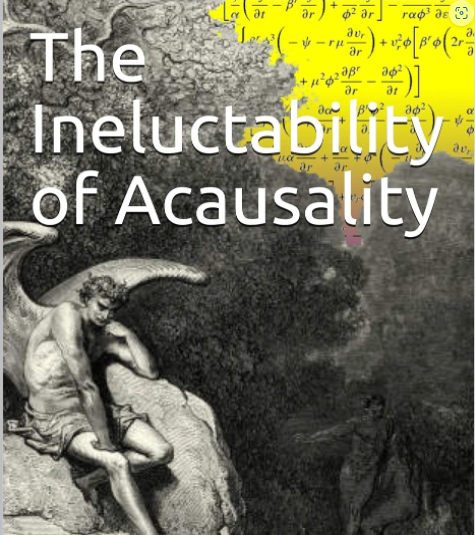
So many (mainly trivial) things are “acausal”, it’s no wonder that acausality is deemed to be “ineluctable”.
The term “acausal” doesn’t seem to do much work either — apart from it (as it were) casting suspicions on the primacy of causal relations, and hinting at the possibility that there is much else besides.
So all this hinges on what commentators mean by “acausality”.
Carl Jung’s notion of synchronicity states that there are “some unknown noncausal connections”.
This bald explanation, in itself, clearly shows why Jung fixed upon entanglement (see later). Yet what we don’t have in physics — not even in quantum physics! — is any talk about “meaningful connections” which are “acausal”.
Sure, there is some talk of acausality in physics, but not of meaningful connections. [See ‘Acausal’. There is ‘retrocausality’ in quantum mechanics too.]
Of course, not many physicists would ever claim that there aren’t any meaningful connections. However, most of them would simply say that such connections aren’t part of physics — or, perhaps, even part of science as a whole. In addition, they may also want to know what the words “meaningful connections” actually mean.
“Physicalists reject non-causal events entirely and explain them as coincidences []. To both Jung and Pauli this kind of reductionism could not account for the great accumulation of human experiences, especially what are considered ‘extreme experiences’ including the paranormal.”
[See note 1 on what Baron includes within the square brackets.]
This almost entirely depends on what is meant by “events”. After all, x may be (to use a vague word) connected to y, without that connection also being seen as an event — not even an acausal one — of any kind. Thus, neither causality nor acausality need be brought up here.
So a cock crowing in a farmyard in Totnes, and then a man making love to his wife in Bath, is some kind of connection in that one follows the other. (We can even accept the possibility that it always occurs!) Thus, event x is followed by y. However, x and y don’t make up the very same event. Indeed, x and y may even be“meaningfully connected”by a person (or even collectively connected by many persons), and still not constitute the same event.
However, we should take an example from Carl Jung himself here.
In his book Synchronicity: An Acausal Connecting Principle, Jung cited the example of a patient who dreamt about a scarab beetle, and who then found such a beetle on his desk the very next day.
“Physicalists” (whom Baron refers to) wouldn’t claim that this is either a causal or an acausal connection (or event)…
Except, that is, in the sense that the dream occurred within a physical and causal brain (which Baron may dispute), and the event of a beetle scurrying on the desk is both physical and causal. And, then, a connection was made between the dream and the beetle on the desk. This itself can be explained in terms of a connection between various Jungian ideas about beetles in dreams, and the physical sighting of a beetle scurrying along a desk.
However, let’s go into the specific notion of “meaningful coincidence”.
I can also “meaningfully relate” the death of a mouse to the Big Bang. I can also meaningfully relate being poor (or being rich) with being born on January the 22nd. However, these two meaningful relations don’t have anything to do with contradicting (or going against) causal connections, acausality, entanglement, physics, or even mysticism.
Such “meaningful coincidences” are just things which occur in my mind, your mind, and, perhaps, in more than one mind at once. However, even a “collective” connection between a dead mouse and the Big Bang doesn’t tell us much about either. Neither is the “coincidence” (or connection) mystical, paranormal or acausal.
So there’s no physical or acausal connection between the Big Bang and the mouse’s death. However, there is a physical connection between the ideas, images and concepts of that mouse dying, and the ideas, images and concepts of the Big Bang. Thus, the coincidence isn’t between the actual mouse and the actual Big Bang: it’s between the images, ideas and concepts of the mouse, and the images, ideas and concepts of the Big Bang. Thus, there’s nothing mystical or acausal here at all.
So in terms of accepting this as a “meaningful acausal connection”, readers would need to buy into the entire package (or mystical worldview) of Carl Jung’s psychology. (This isn’t to ignore the fact that psychologists — even Jungians — have taken Jung in new directions.) The story about a dream about a beetle being connected to a beetle on a desk wouldn’t make any sense at all outside a Jungian context.
That alone makes it all very unscientific.
In other words, in order to accept this supposedly acausal connection, one would also have to accept and endorse large parts of a single theorist’s (i.e., Jung’s) overall worldview. In other words, one would need to be a Jungian whoaccepts Jung’s “analytical psychology”.
Synchronicity in a Wider Context
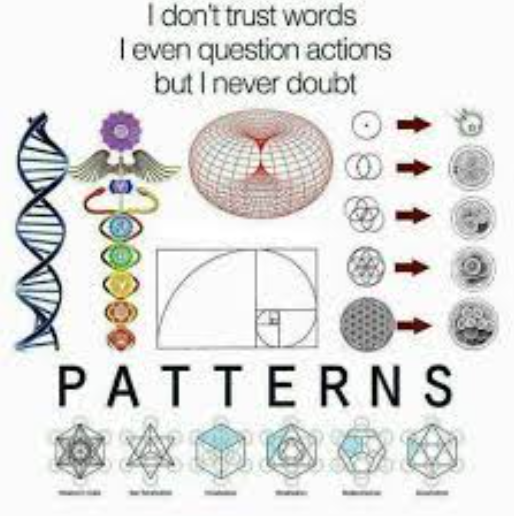
One could spot innumerable patterns and connections before each breakfast.
Yet, despite all the above, some readers who’re unfamiliar with Carl Jung’s notion of synchronicity may believe that the notion is hardly controversial — as least when taken without its (extra?) mystical and acausal baggage.
“[Carl] Jung used the concept of synchronicity in arguing for the existence of the paranormal.”
That just quoted, it can now be said the following descriptionof synchronicity is not in the least bit controversial, mystical or paranormal:
“In contemporary research, synchronicity experiences refer to one’s subjective experience that coincidences between events in one’s mind and the outside world may be causally unrelated to each other yet have some other unknown connection. Jung held that this was a healthy, even necessary, function of the human mind that can become harmful within psychosis.”
In a sense, we can compare this contemporary research to Daniel Dennett’s notion of heterophenomenology.
In heterophenomenology, the “verbal reports” of human subjects about their own “subjective experiences” are taken seriously. However, what such subjects say (or claim) about their subjective experiences isn’t (automatically) taken to be true, or to refer to anything actual (or factual) in the world outside their minds. Similarly, “contemporary researchers” analyse and account for selected subjects’ reports of their own subjective experiences. More relevantly, thisincludestheir own reports of what they may call “coincidences between events”, and which they also believe to have “some [acausal] unknown connection”.
However, not all psychologists are heterophenomenologists. More accurately, few counsellors and psychoanalysts are heterophenomenologists. Thus, the passage above continued in this manner:
“One study has shown that both counsellors and psychoanalysts were less likely than psychologists to agree that chance coincidence was an adequate explanation for synchronicity, while more likely than psychologists to agree that a need for unconscious material to be expressed could be an explanation for synchronicity experiences in the clinical setting.”
In other words, some (perhaps most) Jungian psychanalysts take such verbal reports at face value. They also believe that “chance coincidence” (at least in these cases) needs to be explained in terms of “unconscious material”. However, even here, only unconscious material is taken to be (as Jungians put it) “objective reality”…
Objective reality?
Both Jung and Pauli believed that synchronicities (sometimes?) reveal objective reality’s actual workings.
“Jung saw that the ‘inconceivable’ and largely unknowable world of the unconscious mind was a part of objective reality, while our conscious experience deriving in part from our unconscious was subjective.”
So something that is both “inconceivable” and “unknowable” can also be “part of objective reality”. This is an extremely odd use of the term “objective reality”, and it clashes will almost all other uses. (Many philosophers and physicists have a problem with all references to “objective reality”, let alone this Jungian one.) At first sight, it seems like a surreal position, or even a deliberate provocation.
In any case and to repeat: although some of the descriptions (or defences) of synchronicity don’t (on the surface at least) seem to be problematic, it’s still the case that these descriptions (such as the ones just quoted) don’t have anything at all to do with physics, monism, acausality, or even mysticism… except, again, at the level of analogy.
However, what about analogy when it comes to entanglement?
…And, Finally, Entanglement
No one need deny entanglement. Indeed, not many physicists do. However, it’s tying entanglement to “mystical” beliefs, theories and interpretations that’s the issue here. [See note 4.]
When you read the purely physics-based accounts of entanglement (or nonlocality generally), it’s hard to see how any of it can be tied to mystical matters…
Here readers should note the words “model” and “represents”.
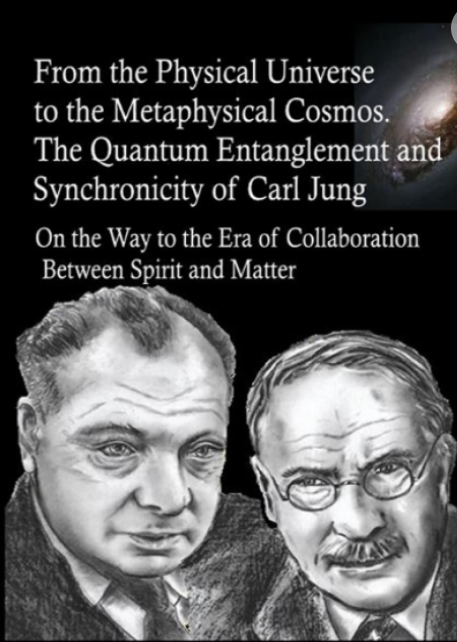
Thus, quantum entanglement was taken to be a model “for the relationship between mind and matter” in Jung’s theory. Put another way (as Thomas Filk himself does), quantum entanglement was deemed to “most closely” represent synchronicity.
This means that quantum entanglement has nothing to do with the relationship between mind and matter — except as a model of that relationship. Similarly, quantum entanglement has been used to represent Jungian synchronicity. However, quantum entanglement is not itself Jungian synchronicity. Inversely, Jungian synchronicity doesn’t involve quantum entanglement.
Notes
(1) The words “mystical” and “mystic” have been used throughout the essay above. So it’s worth noting that Carl Jung’s fans and followers have also classed him as a “mystic”. Yet, predictably, other fans and followers have argued that Jung wasn’t a mystic. [See the categorical ‘Carl Jung Was Not a Mystic’.] Indeed, Freud characterised Jung as a “mystic and a snob”.
(2) The square brackets occur around these words:
“[M]ere chance events made possible by a very large number of possible opportunities even if it means multiple universes are needed for a sufficient number of chances.”
I’m not sure how to make sense of that clause, or even if it is relevant to Gerald R. Baron’s overall context. Baron’s words are usually applicable to explaining “fine tuning”, and are about the values of the constants, the nature of the laws of the universe, etc.
(3) Interestingly enough, in the ‘Criticism’ section of the Wikipedia entry ‘Analytic psychology’, all the criticisms of Carl Jung’s views and theories come from fellow psychoanalysts, not from scientists or from philosophers. This hints at the possibility that Jungian psychology is largely ignored by nearly all scientists and philosophers.
(*) In future essays, I will tackle the role of analogy when it comes to Wolfgang Pauli’s and Carl Jung’s references to quantum nonlocality (already partially discussed), complementarity, and the observer effect.
You know those times when you’re all set to go somewhere or do something, but then something gets in the way? Maybe it’s a traffic jam, a missed train, or a canceled plan. It can be super frustrating in the moment, but have you ever thought that maybe, just maybe, it’s happening for a reason?
Maybe the missed train is preventing you from being in a certain place at a certain time, and it turns out that something not-so-great was happening there. It’s like a little nudge from the universe, saying, “Hold on, maybe this isn’t the right time.”
Delays can protect us from rushing into a situation that might not be good for us — like a shield, keeping us from something that could cause more trouble.
Roadblocks might actually be steering us clear of danger — also like a hidden shield protecting us from heading into situations that might not be the best for us.
It might not make sense at first, but looking back, you might just see that delays and roadblocks saved you from danger you didn’t even realize was lurking.
Ever had that feeling in your stomach that something just isn’t right?
It could be a signal, a little warning sign from your higher self, helping you avoid situations that might not be good.
These gut feelings are built-in safety radars, guiding us away from potential harm — like a little alarm bell going off inside us. They might be our own personal warning system, trying to protect us from an unfavorable circumstance.
It’s not always easy to listen to our gut feelings especially when we can’t exactly put our finger on what’s wrong, but you must take it as guidance from your inner self, saying, “Hey, maybe you should think twice about this.”
Getting sick or having an accident can really throw us off. It can be tough to see the silver lining in those moments, but sometimes these tough times are a much-needed wake-up call.
They might be protecting us from an even worse fate.
Sure, it’s no fun to be down with a cold or dealing with an injury, but maybe it’s our body’s way of hitting the pause button. Maybe it’s giving us a chance to rest and heal, preventing us from facing even bigger problems down the road. Or maybe it’s trying to alert us of a hidden medical issue that is developing.
Looking back, we might just see that a sickness or accident kept us from something even worse.
It’s frustrating and exhausting, but maybe a sleepless night tossing and turning is trying to tell us something. It could be a signal that something needs attention.
Maybe it’s our mind’s way of telling us to stay up and think about something truly important — a gentle tap on the shoulder, saying, “Hey, there’s something that needs to be sorted out.”
Insomnia gives us a chance to reflect and maybe even avoid something that could trouble us later.
It might not feel like a gift at 3 AM when you’re wide awake, but maybe it’s allowing you to get to the bottom of something important.
These signs, as tough as they may seem, could be little blessings in disguise. Therefore, we must consider them all joy, as we don’t know what we are being saved from.
Delays and roadblocks, sickness and accidents, unsettling gut feelings and even a sleepless night might just be helping us avoid something worse.
There is a reason behind many things that happen. If only you could see into the unseen, you’d see the universe’s hand in protecting you.
It starts with a low hum that adheres itself to the underbelly of the hours like another dimension. Gradually, surreptitiously, the noise swells to a bellowing bass line, until it drowns out the symphony of life.
If you are lucky enough, if you have the right aids of science, social support, and chance, one day you look over the shoulder of time and, like the poet Jane Kenyon, gasp in grateful incomprehension: “What hurt me so terribly all my life until this moment?” But until that moment comes, as William Styron so vividly observed in his classic bridge of empathy, “the gray drizzle of horror induced by depression takes on the quality of physical pain.”
Among the legion of us soaked by the drizzle is one of the most beloved artists of our epoch, whose music has made life brighter and more livable for generations.
Bruce Springsteen driving cross-country in 1987. (Photograph from Born to Run.)
In his memoir, Born to Run (public library), Bruce Springsteen writes about his father’s “long, drawn-out depressions,” often so debilitating that he could not rise from bed for days, and about his own tumble toward the edge of the abyss quarried by his genetic inheritance and the darknesses of his childhood, and about what kept him from falling. “God help Bruce Springsteen when they decide he’s no longer God,” John Lennon reflected in his most personal interview, but no outside “they” — no critic, no cry from the public — ever measures up to the inner chorus of anguish that most cruelly lowers an artist from the pedestal of their creative power and into the pit of depression.
In a particularly vivid vignette from the period just before he finally sought help, Springsteen writes:
My depression is spewing like an oil spill all over the beautiful turquoise-green gulf of my carefully planned and controlled existence. Its black sludge is threatening to smother every last living part of me.
Even Springsteen’s favorite books reflect this lifelong undertone of black. But it is in his BBC Desert Island Discs appearance that he opens up most candidly about his experience of depression and his life-honed coping mechanisms for it. He reflects:
I’ve developed some skills that help me in dealing with it, but still — it is a powerful, powerful thing that really comes up from things that still remain unexplainable to me.
Bruce Springsteen. (Photograph: BBC.)
After noting that much of it is pure biochemistry, and can therefore be greatly salved by biochemical interventions, he considers the psychological skills that have helped him temper the onslaught and offers a Buddhist-like strategy of unresistant presence with the flow of experience on its own terms, laced with a gentle admonition against the trap of blamethirsty projection:
Just naming it [helps]… What most people tend to want to do is, when they feel bad, the first thing you want to do is to name a reason why you feel that way: “I feel bad because…” and you’ll transfer that to someone else “…because Johnny said this to me,” or “this happened.” And, sometimes, that’s true. But a lot of times, you’re simply looking to name something that’s not particularly nameable and if you misname it, it just makes everything that much worse.
So my “skill” is sort of saying, “Okay, it’s not this, it’s not that — it’s just this. This is something that comes; it’s also something that goes — and maybe something I have to live with for a period of time.”
But if you can acknowledge it and you can relax with it a little bit, very often it shortens its duration.
Silicon Valley has its own ascendant political ideology. It’s past time we call it what it is. (photo: AFP)
31 january 24 (RSN.org)
Silicon Valley has its own ascendant political ideology. It’s past time we call it what it is.
If you had to capture Silicon Valley’s dominant ideology in a single anecdote, you might look first to Mark Zuckerberg, sitting in the blue glow of his computer some 20 years ago, chatting with a friend about how his new website, TheFacebook, had given him access to reams of personal information about his fellow students:
zuckerberg: Yeah so if you ever need info about anyone at Harvard
zuckerberg: Just ask.
zuckerberg: I have over 4,000 emails, pictures, addresses, SNS
friend: What? How’d you manage that one?
zuckerberg: People just submitted it.
zuckerberg: I don’t know why.
zuckerberg: They “trust me”
zuckerberg: Dumb fucks.
That conversation—later revealed through leaked chat records—was soon followed by another that was just as telling, if better mannered. At a now-famous Christmas party in 2007, Zuckerberg first met Sheryl Sandberg, his eventual chief operating officer, who with Zuckerberg would transform the platform into a digital imperialist superpower. There, Zuckerberg, who in Facebook’s early days had adopted the mantra “Company over country,” explained to Sandberg that he wanted every American with an internet connection to have a Facebook account. For Sandberg, who once told a colleague that she’d been “put on this planet to scale organizations,” that turned out to be the perfect mission.
Facebook (now Meta) has become an avatar of all that is wrong with Silicon Valley. Its self-interested role in spreading global disinformation is an ongoing crisis. Recall, too, the company’s secret mood-manipulation experiment in 2012, which deliberately tinkered with what users saw in their News Feed in order to measure how Facebook could influence people’s emotional states without their knowledge. Or its participation in inciting genocide in Myanmar in 2017. Or its use as a clubhouse for planning and executing the January 6, 2021, insurrection. (In Facebook’s early days, Zuckerberg listed “revolutions” among his interests. This was around the time that he had a business card printed with i’m ceo, bitch.)
And yet, to a remarkable degree, Facebook’s way of doing business remains the norm for the tech industry as a whole, even as other social platforms (TikTok) and technological developments (artificial intelligence) eclipse Facebook in cultural relevance.
To worship at the altar of mega-scale and to convince yourself that you should be the one making world-historic decisions on behalf of a global citizenry that did not elect you and may not share your values or lack thereof, you have to dispense with numerous inconveniences—humility and nuance among them. Many titans of Silicon Valley have made these trade-offs repeatedly. YouTube (owned by Google), Instagram (owned by Meta), and Twitter (which Elon Musk insists on calling X) have been as damaging to individual rights, civil society, and global democracy as Facebook was and is. Considering the way that generative AI is now being developed throughout Silicon Valley, we should brace for that damage to be multiplied many times over in the years ahead.
The behavior of these companies and the people who run them is often hypocritical, greedy, and status-obsessed. But underlying these venalities is something more dangerous, a clear and coherent ideology that is seldom called out for what it is: authoritarian technocracy. As the most powerful companies in Silicon Valley have matured, this ideology has only grown stronger, more self-righteous, more delusional, and—in the face of rising criticism—more aggrieved.
The new technocrats are ostentatious in their use of language that appeals to Enlightenment values—reason, progress, freedom—but in fact they are leading an antidemocratic, illiberal movement. Many of them profess unconditional support for free speech, but are vindictive toward those who say things that do not flatter them. They tend to hold eccentric beliefs: that technological progress of any kind is unreservedly and inherently good; that you should always build it, simply because you can; that frictionless information flow is the highest value regardless of the information’s quality; that privacy is an archaic concept; that we should welcome the day when machine intelligence surpasses our own. And above all, that their power should be unconstrained. The systems they’ve built or are building—to rewire communications, remake human social networks, insinuate artificial intelligence into daily life, and more—impose these beliefs on the population, which is neither consulted nor, usually, meaningfully informed. All this, and they still attempt to perpetuate the absurd myth that they are the swashbuckling underdogs.
Comparisons between Silicon Valley and Wall Street or Washington, D.C., are commonplace, and you can see why—all are power centers, and all are magnets for people whose ambition too often outstrips their humanity. But Silicon Valley’s influence easily exceeds that of Wall Street and Washington. It is reengineering society more profoundly than any other power center in any other era since perhaps the days of the New Deal. Many Americans fret—rightfully—about the rising authoritarianism among MAGA Republicans, but they risk ignoring another ascendant force for illiberalism: the tantrum-prone and immensely powerful kings of tech.
the shakespearean drama that unfolded late last year at OpenAI underscores the extent to which the worst of Facebook’s “move fast and break things” mentality has been internalized and celebrated in Silicon Valley. OpenAI was founded, in 2015, as a nonprofit dedicated to bringing artificial general intelligence into the world in a way that would serve the public good. Underlying its formation was the belief that the technology was too powerful and too dangerous to be developed with commercial motives alone.
But in 2019, as the technology began to startle even the people who were working on it with the speed at which it was advancing, the company added a for-profit arm to raise more capital. Microsoft invested $1 billion at first, then many billions of dollars more. Then, this past fall, the company’s CEO, Sam Altman, was fired then quickly rehired, in a whiplash spectacle that signaled a demolition of OpenAI’s previously established safeguards against putting company over country. Those who wanted Altman out reportedly believed that he was too heavily prioritizing the pace of development over safety. But Microsoft’s response—an offer to bring on Altman and anyone else from OpenAI to re-create his team there—started a game of chicken that led to Altman’s reinstatement. The whole incident was messy, and Altman may well be the right person for the job, but the message was clear: The pursuit of scale and profit won decisively over safety concerns and public accountability.
Silicon Valley still attracts many immensely talented people who strive to do good, and who are working to realize the best possible version of a more connected, data-rich global society. Even the most deleterious companies have built some wonderful tools. But these tools, at scale, are also systems of manipulation and control. They promise community but sow division; claim to champion truth but spread lies; wrap themselves in concepts such as empowerment and liberty but surveil us relentlessly. The values that win out tend to be the ones that rob us of agency and keep us addicted to our feeds.
The theoretical promise of AI is as hopeful as the promise of social media once was, and as dazzling as its most partisan architects project. AI really could cure numerous diseases. It really could transform scholarship and unearth lost knowledge. Except that Silicon Valley, under the sway of its worst technocratic impulses, is following the playbook established in the mass scaling and monopolization of the social web. OpenAI, Microsoft, Google, and other corporations leading the way in AI development are not focusing on the areas of greatest public or epistemological need, and they are certainly not operating with any degree of transparency or caution. Instead they are engaged in a race to build faster and maximize profit.
None of this happens without the underlying technocratic philosophy of inevitability—that is, the idea that if you can build something new, you must. “In a properly functioning world, I think this should be a project of governments,” Altman told my colleague Ross Andersen last year, referring to OpenAI’s attempts to develop artificial general intelligence. But Altman was going to keep building it himself anyway. Or, as Zuckerberg put it to The New Yorker many years ago: “Isn’t it, like, inevitable that there would be a huge social network of people? … If we didn’t do this someone else would have done it.”
technocracy first blossomed as a political ideology after World War I, among a small group of scientists and engineers in New York City who wanted a new social structure to replace representative democracy, putting the technological elite in charge. Though their movement floundered politically—people ended up liking President Franklin D. Roosevelt’s New Deal better—it had more success intellectually, entering the zeitgeist alongside modernism in art and literature, which shared some of its values. The American poet Ezra Pound’s modernist slogan “Make it new” easily could have doubled as a mantra for the technocrats. A parallel movement was that of the Italian futurists, led by figures such as the poet F. T. Marinetti, who used maxims like “March, don’t molder” and “Creation, not contemplation.”
The ethos for technocrats and futurists alike was action for its own sake. “We are not satisfied to roam in a garden closed in by dark cypresses, bending over ruins and mossy antiques,” Marinetti said in a 1929 speech. “We believe that Italy’s only worthy tradition is never to have had a tradition.” Prominent futurists took their zeal for technology, action, and speed and eventually transformed it into fascism. Marinetti followed his Manifesto of Futurism (1909) with his Fascist Manifesto (1919). His friend Pound was infatuated with Benito Mussolini and collaborated with his regime to host a radio show in which the poet promoted fascism, gushed over Mein Kampf, and praised both Mussolini and Adolf Hitler. The evolution of futurism into fascism wasn’t inevitable—many of Pound’s friends grew to fear him, or thought he had lost his mind—but it does show how, during a time of social unrest, a cultural movement based on the radical rejection of tradition and history, and tinged with aggrievement, can become a political ideology.
In October, the venture capitalist and technocrat Marc Andreessen published on his firm’s website a stream-of-consciousness document he called “The Techno-Optimist Manifesto,” a 5,000-word ideological cocktail that eerily recalls, and specifically credits, Italian futurists such as Marinetti. Andreessen is, in addition to being one of Silicon Valley’s most influential billionaire investors, notorious for being thin-skinned and obstreperous, and despite the invocation of optimism in the title, the essay seems driven in part by his sense of resentment that the technologies he and his predecessors have advanced are no longer “properly glorified.” It is a revealing document, representative of the worldview that he and his fellow technocrats are advancing.
Andreessen writes that there is “no material problem,” including those caused by technology, that “cannot be solved with more technology.” He writes that technology should not merely be always advancing, but always accelerating in its advancement “to ensure the techno-capital upward spiral continues forever.” And he excoriates what he calls campaigns against technology, under names such as “tech ethics” and “existential risk.”
Or take what might be considered the Apostles’ Creed of his emerging political movement:
We believe we should place intelligence and energy in a positive feedback loop, and drive them both to infinity …
We believe in adventure. Undertaking the Hero’s Journey, rebelling against the status quo, mapping uncharted territory, conquering dragons, and bringing home the spoils for our community …
We believe in nature, but we also believe in overcoming nature. We are not primitives, cowering in fear of the lightning bolt. We are the apex predator; the lightning works for us.
Andreessen identifies several “patron saints” of his movement, Marinetti among them. He quotes from the Manifesto of Futurism, swapping out Marinetti’s “poetry” for “technology”:
Beauty exists only in struggle. There is no masterpiece that has not an aggressive character. Technology must be a violent assault on the forces of the unknown, to force them to bow before man.
To be clear, the Andreessen manifesto is not a fascist document, but it is an extremist one. He takes a reasonable position—that technology, on the whole, has dramatically improved human life—and warps it to reach the absurd conclusion that any attempt to restrain technological development under any circumstances is despicable. This position, if viewed uncynically, makes sense only as a religious conviction, and in practice it serves only to absolve him and the other Silicon Valley giants of any moral or civic duty to do anything but make new things that will enrich them, without consideration of the social costs, or of history. Andreessen also identifies a list of enemies and “zombie ideas” that he calls upon his followers to defeat, among them “institutions” and “tradition.”
“Our enemy,” Andreessen writes, is “the know-it-all credentialed expert worldview, indulging in abstract theories, luxury beliefs, social engineering, disconnected from the real world, delusional, unelected, and unaccountable—playing God with everyone else’s lives, with total insulation from the consequences.”
The irony is that this description very closely fits Andreessen and other Silicon Valley elites. The world that they have brought into being over the past two decades is unquestionably a world of reckless social engineering, without consequence for its architects, who foist their own abstract theories and luxury beliefs on all of us.
Some of the individual principles Andreessen advances in his manifesto are anodyne. But its overarching radicalism, given his standing and power, should make you sit up straight. Key figures in Silicon Valley, including Musk, have clearly warmed to illiberal ideas in recent years. In 2020, Donald Trump’s vote share in Silicon Valley was 23 percent—small, but higher than the 20 percent he received in 2016.
The main dangers of authoritarian technocracy are not at this point political, at least not in the traditional sense. Still, a select few already have authoritarian control, more or less, to establish the digital world’s rules and cultural norms, which can be as potent as political power.
in 1961, in his farewell address, President Dwight Eisenhower warned the nation about the dangers of a coming technocracy. “In holding scientific research and discovery in respect, as we should,” he said, “we must also be alert to the equal and opposite danger that public policy could itself become the captive of a scientific-technological elite. It is the task of statesmanship to mold, to balance, and to integrate these and other forces, new and old, within the principles of our democratic system—ever aiming toward the supreme goals of our free society.”
Eight years later, the country’s first computers were connected to ARPANET, a precursor to the World Wide Web, which became broadly available in 1993. Back then, Silicon Valley was regarded as a utopia for ambitious capitalists and optimistic inventors with original ideas who wanted to change the world, unencumbered by bureaucracy or tradition, working at the speed of the internet (14.4 kilobits per second in those days). This culture had its flaws even at the start, but it was also imaginative in a distinctly American way, and it led to the creation of transformative, sometimes even dumbfoundingly beautiful hardware and software.
For a long time, I tended to be more on Andreessen’s end of the spectrum regarding tech regulation. I believed that the social web could still be a net good and that, given enough time, the values that best served the public interest would naturally win out. I resisted the notion that regulating the social web was necessary at all, in part because I was not (and am still not) convinced that the government can do so without itself causing harm (the European model of regulation, including laws such as the so-called right to be forgotten, is deeply inconsistent with free-press protections in America, and poses dangers to the public’s right to know). I’d much prefer to see market competition as a force for technological improvement and the betterment of society.
But in recent years, it has become clear that regulation is needed, not least because the rise of technocracy proves that Silicon Valley’s leaders simply will not act in the public’s best interest. Much should be done to protect children from the hazards of social media, and to break up monopolies and oligopolies that damage society, and more. At the same time, I believe that regulation alone will not be enough to meaningfully address the cultural rot that the new technocrats are spreading.
Universities should reclaim their proper standing as leaders in developing world-changing technologies for the good of humankind. (Harvard, Stanford, and MIT could invest in creating a consortium for such an effort—their endowments are worth roughly $110 billion combined.)
Individuals will have to lead the way, too. You may not be able to entirely give up social media, or reject your workplace’s surveillance software—you may not even want to opt out of these things. But there is extraordinary power in defining ideals, and we can all begin to do that—for ourselves; for our networks of actual, real-life friends; for our schools; for our places of worship. We would be wise to develop more sophisticated shared norms for debating and deciding how we use invasive technology interpersonally and within our communities. That should include challenging existing norms about the use of apps and YouTube in classrooms, the ubiquity of smartphones in adolescent hands, and widespread disregard for individual privacy. People who believe that we all deserve better will need to step up to lead such efforts.
Our children are not data sets waiting to be quantified, tracked, and sold. Our intellectual output is not a mere training manual for the AI that will be used to mimic and plagiarize us. Our lives are meant not to be optimized through a screen, but to be lived—in all of our messy, tree-climbing, night-swimming, adventuresome glory. We are all better versions of ourselves when we are not tweeting or clicking “Like” or scrolling, scrolling, scrolling.
Technocrats are right that technology is a key to making the world better. But first we must describe the world as we wish it to be—the problems we wish to solve in the public interest, and in accordance with the values and rights that advance human dignity, equality, freedom, privacy, health, and happiness. And we must insist that the leaders of institutions that represent us—large and small—use technology in ways that reflect what is good for individuals and society, and not just what enriches technocrats.
We do not have to live in the world the new technocrats are designing for us. We do not have to acquiesce to their growing project of dehumanization and data mining. Each of us has agency.
No more “build it because we can.” No more algorithmic feedbags. No more infrastructure designed to make the people less powerful and the powerful more controlling. Every day we vote with our attention; it is precious, and desperately wanted by those who will use it against us for their own profit and political goals. Don’t let them.
Consciousness, spirituality, biography, sexuality, androgyny, futurism, space, the arts, science, astrology, democracy, humor, books, movies and more












 My depression is spewing like an oil spill all over the beautiful turquoise-green gulf of my carefully planned and controlled existence. Its black sludge is threatening to smother every last living part of me.
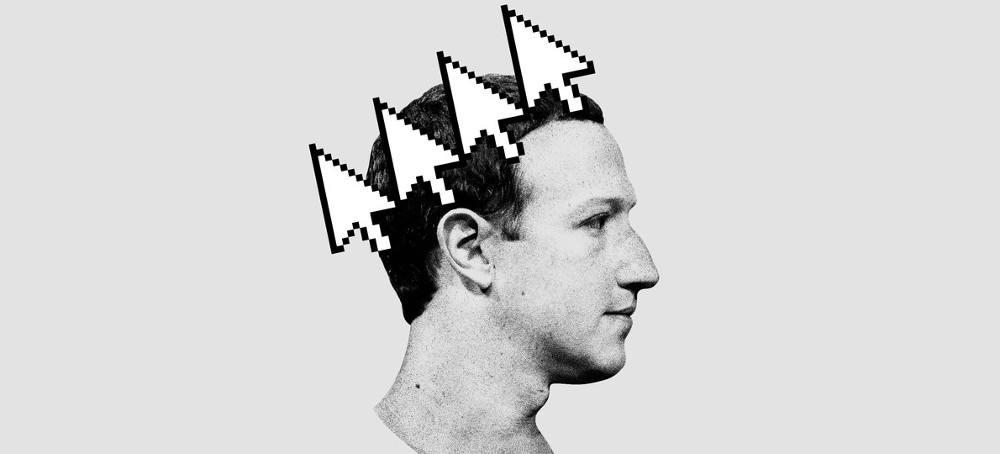 Silicon Valley has its own ascendant political ideology. It’s past time we call it what it is. (photo: AFP)