Discussing Reparations and Repair at Memphis’ Lorraine Motel
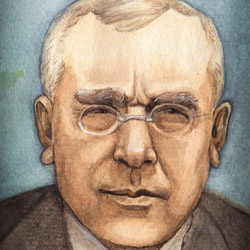
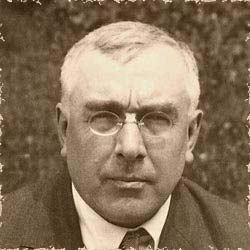
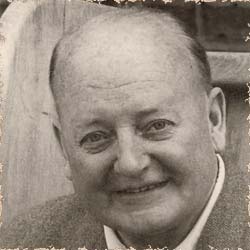
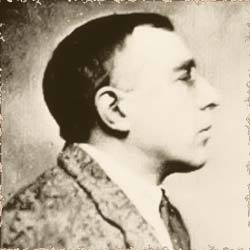
Left to right: William Sturkey, Andre E. Johnson, Ken Lum, and Robin Rue Simmons.
by JACKIE MANSKY | AUGUST 24, 2023 (Zocalopublicsquare.org)
The Lorraine Motel in downtown Memphis, just blocks away from Beale Street, the city’s historic African American commercial center, first opened as a whites-only establishment in the 1920s. But just two decades later, when it was bought and repurposed by Black business owners, it went from an institution that banned African American patrons to one that was embraced as a safe haven by those very same travelers seeking dignified lodgings in the Jim Crow South.
People like Aretha Franklin, Ray Charles, and Nat King Cole found hospitality there. So did Dr. Martin Luther King, Jr., who was shot and killed there while working on the Poor People’s Campaign in 1968. Today, Memphis locals have turned the Lorraine into the National Civil Rights Museum, a living monument to the twin legacies of racism and resistance its walls have witnessed over the last century.
Zócalo came to the Lorraine this week to hold the third public program in our two-year events and editorial series, “How Should Societies Remember Their Sins?,” presented in partnership with the Mellon Foundation.
“We are gathered at a site of history,” historian and series moderator William Sturkey said, addressing the audience in Memphis and those watching around the world on the live stream.
“We remember MLK and other leaders of this movement.” But memory is not enough, he also noted, pointing to deep divides in the nation.
During the night, panelists, who included a reparations leader, an artist, and a rhetorician, considered this question: “Why isn’t remembering enough to repair?”
Their answers spoke to reckonings the United States still needs to face—but also spoke to progress: The country’s most oppressed peoples are reclaiming historical narratives, and engaging in an emerging reparations movement that, panelists argued, can help the whole nation heal.
Sturkey began the night by asking the group to assess the state of public memory in America.
“Memory is highly fractured right now,” said artist Ken Lum, chair of fine arts at the University of Pennsylvania’s Weitzman School of Design and co-founder of the Monument Lab, a public art and history project based in Philadelphia. “There’s no consensus even how history unfolded and even how history should be written about.”
But that’s a good thing, Lum said, “because history is written by those with power over the subjugated.” Today, as the groups most dominated and exploited are in positions to tell their versions of events, longstanding historical myths are being challenged. It’s this moment of transition—however painful it is—that allows for greater truths to surface.
Robin Rue Simmons, founder and executive director of the nonprofit First Repair, which promotes local reparations policies around the country to help Black Americans secure financial redress, agreed. “Although we have so much to be discouraged about” she said, when it comes to “what we’re seeing in school systems and legislatures,” she takes attempts by extremists to silence the most subjugated voices as “evidence we’re pushing the needle and making progress.”
“I’ll remain encouraged and hopeful,” Simmons said.
Andre E. Johnson, the Benjamin W. Rawlins Professor of Communication at the University of Memphis, observed that many people are not misremembering but “actively trying to resist” the historical narrative. That’s the problem, he said. “How do we move from remembering to repair if we cannot come to grips with the history if we actively refuse to accept it and live in it? We’ll always be right here spinning our wheels.”
“Who needs repair? Who deserves repair after the sins committed by our society?” asked Sturkey.
“Who is due,” said Simmons. “If you were harmed in America by this government then you are due reparations.”
“All people who did not get due process because it was baked in the law,” Johnson agreed.
“There are basic statistics that tell you,” said Lum. “Who was not able to bestow assets to the next generations? Which areas have seen persistent disinvestment going back centuries? … Poor people, Black people, brown-skinned people… statistically, all of that is available in quantitative measures.”
“Let’s hope and dream,” Sturkey ventured next. “What are the most important elements of repair in our society? What would that look like?
“For me, reparations would end in joy,” said Simmons. “Whatever joy is. Rest, empowerment, legacy. In my case rooted around land and access to housing and education.” But it is for Black residents in each locality to think about what it should be, she added. “If I had it my way, Black folks would prescribe how to repair.”
Simmons, who led the first government-funded reparations legislation in her hometown of Evanston, Illinois, spoke about the huge psychological benefit Black residents in Evanston felt when the city recently passed its reparations initiative. “To actually be able to give a resident a check for $25,000 and an apology, what we hear from them—I can’t get through talking about it without crying.”
That’s the gift economy, said Lum. It’s a positive for everyone—not only people who receive reparations. For communities funding these programs, “you’re becoming a part of the community, showing concern for others. You’re gifting because you’ve been gifted by others who were enslaved.”
To advance this, Lum calls for a “wholesale reinvigoration of public schools” that will help build an empathetic, critical-thinking populace. “This is a generational process that starts with proper education.”
Finally, Johnson, who is both a rhetoric professor and a pastor, spoke about being able to live in “safe, shalom communities.” The Hebrew word shalom stands for health, safety, prosperity, peace, friendship, and well-being. “That’s what we’re talking about right here in Memphis,” he said. “People just want to go to sleep peacefully.”
Sturkey asked Johnson if he had a strategy to affect change through speech today. Johnson said that history has shown that there isn’t one. “There are some audiences you will never persuade,” he said. “Once you accept that, you are free. You are free to work with the allies you have.”
During the end of the program, panelists answered audience questions, including one from a doctoral student in philosophy, who asked, how do we deal with the overarching myths that become the enemies to repair?
Myths are always changing, said Lum, but the one thing that doesn’t change is that myths are there to maintain power structures. That’s what we’re working against, he said.
Oshan Jarow is a Future Perfect fellow, where he focuses on economics, consciousness studies, and varieties of progress. Before joining Vox, he co-founded the Library of Economic Possibility, where he led policy research and digital media strategy.
This story is part of a group of stories called
Finding the best ways to do good.
Meditation has taken two divergent paths through the Western mind. For many, it’s a few quick, calming breaths, perhaps timed with a smartphone app, in search of a stress tonic that can soften anxiety’s edges. Along a less-traveled route, meditation remains what it long was: a deeply transformative pursuit, a devoted metamorphosis of the mind toward increasingly enlightened states.
But this bifurcated view of meditation as a relaxing practice for the masses and a life-changing practice for the committed few is deeply misleading. A spectrum runs between them, harboring experiences that are far more interesting and powerful than what the growing mindfulness industry advertises, and more accessible to average people than what tropes of arcane states like enlightenment suggest.
Given that wealthy countries like the US aren’t exactly riding trend lines toward new peaks of mental health (depression rates in American adults are at an all-time high, while young people appear in the grips of a mental health crisis), scalable ways of not just mindfully soothing, but completely re-creating psychological experiences for the better should set off sirens of general, scientific, and funding intrigue.
For the past two decades, the growing science of meditation has roughly followed the same split that ignores this middle path. Most research studies basic mindfulness as a health intervention in novice meditators, where modestly positive results have led to comparisons like exercise for the mind, or mental flossing. On the other end, researchers will occasionally strap EEG electrodes to the scalp of Tibetan monks, offering a glimpse inside the unusual brain activity of an advanced meditator.
A new band of researchers, however, is finding that you don’t need 10,000 hours in a monastery before meditation can upend your entire psychology — and yet, the current body of meditation research has had surprisingly little to say about this middle ground between stress relief and enlightenment.
As the number of meditating Americans has more than tripled in recent years, an onslaught of apps, books, and seminars helped mold the public image of meditation around the simpler and more sellable idea of mindfulness as a form of stress reduction. That image is paying off: The broader mindfulness industry was valued at $97.6 million in 2021 and is projected to triple in value by 2031. Critics call it “McMindfulness,” a capitalist perversion of meditation that deals with stress by focusing inward on the breath, rather than outward on the social structures that cause so much of that stress. Regardless of how you package it, “mindfulness programs only scratch the surface of meditation,” Matthew Sacchet, a neuroscientist, professor of psychiatry, and director of Harvard’s Meditation Research Program, told me.
Sacchet is part of a recent turn in meditation research that is putting the fuller, stranger range of meditative experiences under the scrutiny of laboratory conditions. Rather than evaluating meditation in the same way that we do therapy or drug trials, new theories from cognitive science (like predictive processing) along with new tools — such as machine learning models that read more deeply into neural activity than humans can alone — are shifting the science of meditation in the direction of grasping after the nature of the mind and the ways we might transform it for the better.
“There was this initial focus on meditation as attention and emotional regulation practices,” said Ruben Laukkonen, an assistant professor at Southern Cross University. “But over time, there’s been a recognition that in contemplative traditions, that’s not really the goal. These are side effects. When you talk to people who really take this stuff seriously, you find that there’s these layers of experience that unfold that are much deeper.”
Research labs and private companies are already developing technologies they hope can democratize access to meditation’s deep-end experiences. From psychedelics to brain stimulation, the hunt is on for ways to cut the time it usually takes to begin experiencing more profound effects. “Ultimately, our mission is to understand advanced meditation to scale advanced meditation, and we believe that this will have profound impact on individual well-being and the collective health of society,” said Sacchet.
Scaling access to the benefits of advanced meditation could offer something a little stronger (or a lot stronger, depending on how the tech fares) to the more than 100 million users who turn to mindfulness apps like Calm or Headspace in search of a psychological balm. In a world hell-bent on hacks for everything from emails to nutrition, why not consciousness, too? If deeper states of meditation can go beyond calming the mind and transform its fundamental habits in ways that dissolve stress and raise well-being, then making the process faster and more user-friendly could pay major dividends.
But concerns abound. Even if profoundly altered states of consciousness are amenable to hacking (an unsettled debate), there’s hardly any evidence that today’s generation of tools is up to the task. Worse, if it is, what if accelerating the process of pulling up and shifting around the roots of consciousness just short-circuits millions of minds? And yet, without serious shortcuts, how many people will realistically devote a meaningful chunk of their daily lives to sitting quietly, doing nothing?
On one hand, the Western study of consciousness has been hamstrung since Galileo cleaved sensory experience from the scientific method, and I can think of few things more worthy of deep research. Just as studying the extremes of particle physics (say, smashing atoms of gold together to create temperatures in excess of 7.2 trillion degrees Fahrenheit) can reveal generalizable principles about all matter, the extremes of conscious experience are probably a good place to look for a better understanding of all minds. We have a lot more to learn about how to raise well-being, which, at its core, is a property of consciousness.
As far as defiling ancient practices with shiny new technologies or the perils of swapping gurus for algorithms, these are the fascinating, messy, indeed dangerous, and perhaps extraordinarily wonderful examples of how the dharma — the Buddha’s teachings — is adapting to a new environment. We should support this process as wisely as we can, not turn away. And how could we? The future of our minds may depend on it.
How mindfulness defined the first wave of contemplative studies
What we now call contemplative science is the interdisciplinary study of how practices like meditation, prayer, and psychedelic use affect the mind, brain, and body. Its American roots go back to at least the 1960s, when the inflow of Buddhist ideas enchanted a generation of, as the Beat poet Allen Ginsberg put it, “angelheaded hipsters burning for the ancient heavenly connection to the starry dynamo in the machinery of night.” But it wasn’t just poets and hipsters; the likes of scientists and lawyers also started meditating.
Back then, there were no mindfulness apps or corporate “Zen booths” offering meditation as a reprieve to stressed-out workers. The point of meditation, as taught by transplanted Asian teachers of the time like Japan’s D. T. Suzuki and Tibet’s Chogyam Trungpa Rinpoche, was a deep transformation of consciousness — the full force of awakening. Suzuki described Zen, which derives from the Sanskrit word for meditation, as “the art of seeing into the nature of one’s own being … it points the way from bondage to freedom.”
The idea of meditation as a means of awakening flared up and then began fading out along with the counterculture itself. The hippies’ rejection of the soulless, sexless mainstream failed to build an alternative that could last, leaving their gusto for higher levels of consciousness adrift, sailing out to the cultural fringes. In the light of modern science, the quest for higher vibrations has come to appear essentially unserious — a New Age trope. But one of those scientists-turned-meditators, Jon Kabat-Zinn, had a vision for how to bring it back into the mainstream.
Jon Kabat-Zinn, professor of medicine and creator of the Stress Reduction Clinic, which gave rise to mindfulness-based stress reduction.
The son of a biomedical scientist and a painter, Kabat-Zinn earned a PhD in molecular biology in 1971. Having already established a daily meditation practice in 1966, he spent his early years at the University of Massachusetts Medical School stewing over what his “karmic assignment,” or life’s work, should be. Then, during a two-week meditation retreat in the woods west of Boston, he saw it in a 10-second vision, “an instantaneous seeing of vivid, almost inevitable connections and their implications,” as he put it. Simply: “Why not make meditation so commonsensical that anyone would be drawn to it?”
Shortly after, in 1979, he founded the Stress Reduction Clinic at the medical school, which eventually became the eight-week course known as Mindfulness-Based Stress Reduction (MBSR), and served as the format for the mindfulness boom to come. In this interpretation, mindfulness is a simple instruction: pay attention to the present moment, on purpose, without judgment. Secular and testable, MBSR offered a form of meditation fit for accountants and clinical trials, rather than hippies and communes.
Kabat-Zinn authored a few studies on MBSR in the 1980s, but it wasn’t until the early 2000s that mindfulness research really took off. At the 2005 Society for Neuroscience annual meeting, the Dalai Lama told a crowd of 14,000 conference participants (some of whom were upset by the presence of a religious leader at a scientific affair — one online petition to withdraw his invitation received nearly 800 signatures) that Buddhism and cognitive science share deep similarities. “I believe a close cooperation between these two investigative traditions can truly contribute toward expanding the human understanding of the complex world of inner subjective experience that we call the mind,” he said.
Shortly after, scientists picked up on the already existing construct of MBSR, publications on mindfulness began erupting, and the field of contemplative science sprang to life.
“For 20 years, there were a lot of single-arm trials [without controls like placebo groups or randomization] showing MBSR, in its various forms, can actually help improve health outcomes,” said David Vago, a founding neuroscientist at the International Society for Contemplative Research.
Now, as the research matures into controlled studies and meta-analyses, meditation is losing a bit of its luster. It’s beginning to look more like just another decently effective medical intervention. A 2021 systematic review of 44 meta-analyses found that mindfulness was mostly on par with cognitive behavioral therapy or antidepressants in terms of treatment effects (mindfulness was superior in a few categories, however, including treating depression and substance abuse).
That’s still good news, but it’s hard to see how something that works about as well as Prozac or a therapist offers the “seeds of a necessary global renaissance in the making,” as Kabat-Zinn has written, let alone the end of suffering, as the Buddha taught.
“So we’re left with this big question,” Vago said. “Is the goal of meditation to reduce our perceived stress or symptoms of anxiety? Are those the true goals of the practice? I would say not. But that’s how the medical model has been used to test the efficacy of meditation.”
Everyone I spoke to agreed that there’s more to meditation than just another somewhat effective health intervention. But discovering what more, exactly, will require a different set of questions and tools than what delivered the current generation of mindfulness research. And the past few years have seen a proliferation of precisely that.
The next generation of contemplative science is here
Just as the mindfulness era began with the establishment of a university center, a contemplative science focused on psychological transformation is growing its own institutions.
Sacchet is expanding the Meditation Research Program into a larger operation — the Center for the Science of Meditation — that aims to conduct gold-standard research on the deep end of meditation experiences. “These types of experiences are often described as transformative,” Sacchet explained, “that is, as laying the foundations for new ways of being, which may include updated understandings of meaning in life, and increased capacities for joy, happiness, and general well-being.”
Laukkonen, who focuses on the cognitive neuroscience of meditation, said that ”we have new theoretical frameworks that can capture contemplative effects. That’s a huge shift because it’s really hard to appreciate states that don’t fit into your theoretical paradigm.” Adding to the new theories are new scientific tools and gizmos. “The analytical techniques are getting more sophisticated, which allows you to ask questions that you couldn’t ask before. All these things feed into each other.”
He described how ongoing research is using machine learning models to decode and measure meditative “depth” or the “expertise” of one’s practice, opening a new frontier of understanding. Rather than simply studying the outcomes of mindfulness practice, they’re peering into the real-time processes.
In a 2021 paper, Laukkonen and his colleague Heleen Slagter suggested that one way to think about the depth of meditation is the degree to which the mind is engaged in abstractions or conceptual thought. They describe meditation as a process of deconstructing engrained habits of mind “until all conceptual processing falls away, unveiling a state of pure awareness.”
On that basis, by training machine learning models on brain activity across a variety of tasks that involve conceptual thinking, Laukkonen hypothesizes that we could teach the algorithms to recognize the neural signatures of conceptual thought in general. Then, we could use those models to measure the degree of conceptual thought present in any brain state, such as during meditation. The rough idea is: the less conceptual thinking (or abstraction), the deeper the meditation. “That’s where the field is moving toward, trying to identify mechanisms or biomarkers for change and progress. We’re starting to map that out,” Vago said.
Tibetan monk Yongey Mingyur Rinpoche, left, and Richard Davidson, who founded and chairs the Center for Healthy Minds at the University of Wisconsin-Madison
Alongside new theories and technologies, ancient claims of unbelievable meditative states are being observed under the scrutiny of scientists in controlled settings for the first time. A few thousand years ago, the Mahāvedalla Sutta (a scripture of Theravada Buddhism) described one such state that advanced meditators could enter at will — nirodha samāpatti, or cessation attainment. Think of cessation, also scripturally described as the “non-occurrence of consciousness,” like voluntarily inducing the effects of general anesthesia. Consciousness switches off without a trace, while the basic homeostatic operations of the body — temperature, heartbeat, breathing — remain online.
The scripture says meditators can predetermine a length of time to “go under” merely by setting an intended duration, like an internally fashioned alarm clock. That duration is said to be able to stretch up to seven days, provided their body can last that long. After setting the intention, they settle into meditation, and the light of consciousness switches off. When it returns, meditators were said to emerge crisp and refreshed, with elevated senses of clarity and vitality (decidedly unlike the woozy return from anesthesia).
Laukkonen, Sacchet, and their colleagues met someone who claimed they could enter cessation on command and was willing to do so in a lab. While they’re still processing the data, a preliminary publication of their findings suggests nirodha samāpatti — at least for 90-minute stretches — may not be as outlandish as it sounds.
In a recent but separate pilot study conducted by Sacchet, he found that right before an advanced meditator has micro-cessations — referred to in the ancient texts as “nirodha” without the samāpatti — the alpha band of brain activity (the major rhythm of brain activity in typical, waking adults) begins winding down. It’s at its lowest immediately following the nirodha, which only lasts maybe a second or two. Then alpha activity begins climbing again, returning to normal levels in less than a minute.
The preliminary data on the full nirodha samāpatti found the same pattern. Leading up to cessation, alpha activity began dropping. It bottomed out during cessation and rose again afterward. While these patterns aren’t enough to confirm the full account of cessation, they do look like a plausible neural correlate for temporarily extinguishing consciousness.
Being able to train one’s mind to manually switch off consciousness for some predetermined period does not weave seamlessly into conventional understandings of human psychology. Maybe, like bears, there is some evolutionary value in short periods of mental hibernation. Or maybe, buried in the deeper folds of consciousness, there are capabilities unrelated to survival that can help improve well-being anyway.
If the ordinary egoic sense of consciousness evolved for environments where a constant hum of fight or flight mentality helped keep us alive, advanced meditation may offer a way of reprogramming some of these inherited tendencies that no longer serve us in our comparatively new evolutionary environments, like discarding clothes that no longer fit. The same goes for psychedelics.
Advanced meditation for everyone?
“My hope is that ultimately, this work will contribute to bringing advanced meditation out of the monastery,” Sacchet said, describing its “incredible promise for moving beyond addressing mental health issues, toward helping people thrive.”
To do that, meditation probably needs to reach more than a sliver of humanity, which could be a problem: Many people do not like to meditate. One infamous study found that many participants would rather administer electric shocks to themselves than sit quietly doing nothing for 15 minutes. And 15 minutes is on the low end of meditation periods, even for basic mindfulness. Although unusual states can arise at any point in one’s practice, it’s common for those endeavoring toward the deep end to spend an hour a day or more in meditation. Some devote entire lifetimes. Multiple, even, if you’re into reincarnation. Who’s got time for that?
But if American culture is obsessed with anything, it’s optimization. Can we get the same or more outputs from fewer inputs? Can we automate any part of the process? Research labs and venture capitalists alike are already exploring whether the more transformative fruits of contemplative practice may be had quicker, easier, and more efficiently than through decades of patient meditation.
One label for this optimization effort is “spirit tech,” a mixed bag consisting mainly of brain stimulation, neurofeedback, and psychedelics. This isn’t new, precisely — mantras, monasteries, and robes are forms of spirit tech that have been used for generations. But today’s emerging options seem closer than ever to making a meaningful dent in the barriers that have kept the masses from experiencing advanced meditative states for themselves.
A young woman meditating with the aid of virtual reality goggles.
One of the spirit tech frontiers is transcranial ultrasound stimulation, a method Jay Sanguinetti, an assistant professor, and Shinzen Young, a celebrated meditation teacher, are working on as co-directors of the SEMA Lab (Science Enhanced Mindful Awareness) at the University of Arizona. In prior research, they showed that targeted bursts of ultrasound can alter brain connectivity. Now, they’re exploring whether sonicating — the fun word for targeting ultrasound waves — a brain into configurations known to correlate with deeper states of meditation can accelerate the process.
Standing at the precipice of democratizing access to sudden bursts of deep meditation experiences is exciting. The less glamorous risks that might come with a shortcut to the depths of contemplative practice, not as much. While very rare, these can range from anxiety spikes to psychotic breaks. Young told a meditation student about “falling into the Pit of the Void,” one of the ways Buddhist tradition describes how intense experiences can go wrong. Until the professor of psychiatry Willoughby Britton’s research on adverse meditation experiences, or “dark nights of the soul” (later rebranded as the varieties of contemplative experience study), there was little clinical support for those suffering from negative meditation experiences.
Even now, Daniel Ingram, a former emergency room physician and author of Mastering the Core Teachings of the Buddha, cautioned, “there’s basically a long, slow trainwreck happening between people getting into these experiences and the clinical mainstream just not understanding them.”
Notably, in a promotional video for their research, Young narrates: “If you’ll pardon my French, we are scared shitless of this technology.” And yet, as in the world of AI, they’re building it anyway. The hope is that they’re able to do so in a more prudent manner than others — profit-seeking companies, especially — who are eager to rush their brain-zapping technology to market before carefully assessing the risks.
Vago told me that support systems help to navigate these experiences. Once you zap — or sonicate — someone into a brain state associated with deep-end meditation, enlightenment doesn’t simply lock into place. He said that “psychedelics and brain stimulation technology will get us there fast, but you have to know what to do with it. If you don’t have the proper setup, and you didn’t do any meditation to stabilize the mind, you could have adverse effects that leave you feeling dissociated and lonely. It takes scaffolding.”
There are also questions of efficacy. Even if you can quickly techno-boost someone into a sudden burst of enlightenment-like states, are they really experiencing the same thing as someone who patiently meditated for years to get there? Should meditators seek to enter some predefined brain state by any means possible, or does the path you take make a difference?
“If you get people into these states, then you give them the impression that that is the goal state. Then they come into their meditation practice with a complete misunderstanding of what the purpose is according to any of the classical instructions, and they spend their meditation trying to get into a state, which prevents all of the interesting and useful transformations from happening. So it’s a paradox,” as Laukkonen put it.
In his view (held by many others I spoke with), contemplative traditions do not describe meditation as a practice for getting into funky states of mind; these are side effects. Instead, meditation is about deep transformations in the ordinary ways that consciousness operates, developing altered traits rather than merely altered states, as others in the field have put it. Still, maybe certain altered states are more conducive to finding and stabilizing altered traits than others.
Contemplative traditions have embraced paradox as a central element of their teachings. Optimizing around a paradox, however, is tricky business. You might wind up reinforcing the very construct of the self that meditation aims to deconstruct. Laukkonen still approved of research into spirit tech from a basic scientific perspective. But, he added: “It’s really about freedom and liberation. And what is liberating about chasing different states of consciousness, and not enjoying the one that you have?”
Contemplative science needs scalable bureaucracy
Whether the widening field of contemplative science will drum up an American desire for freedom and liberation, who knows? “What people want,” said Ingram, “is a long, happy, good life most of the time. The problem is that we don’t actually know what leads to that.” We’ve done large, multigenerational studies on heart disease, and deep, epidemiological inquiries into diet and nutrition. But major spiritual experiences that leave people forever transformed, that pull up suffering from its roots in deep psychological habits? We don’t have much peer-reviewed research on those.
As contemplative scientists are now diving in, Ingram hopes that public health officials will follow. Alongside deeper scientific knowledge that could help scale interest in advanced meditation, supporting those already having these experiences requires better clinical support. Ingram, Sacchet, and Vago are all members of the Emergent Phenomenology Research Consortium (EPRC), a network of scholars and practitioners aiming to foster deeper dialogue between clinical care, public health, and the deep end of human experience. Their vision is deeply bureaucratic, that unholy road into the heart of modern institutions. They want new diagnostic codes, updated medical textbooks, more informed public health guidelines, and insurance reimbursement procedures.
More broadly, Ingram emphasized that spreading the knowledge contemplative scientists may glean from studying advanced meditation will require better packaging. We have ideas like biological taxonomies and genetics that provide a shared basis for cross-cultural understanding and exploration of universally relevant fields. “We need that for the deep end of spiritual experience,” he said. “What works as well in Riyadh, as Rome, as Rio, as rural Alabama? What’s the functional, scalable essence?”
It’s possible that what matters most in the murky terrain of advanced meditation will forever elude scientific measurement, mass uptake, and bureaucratic integration, at least to some degree. But the growing field of contemplative science is poking around to see where the boundaries may lie. As the best spiritual teachers all emphasize, rather than taking anyone’s word for it, we should find out for ourselves.
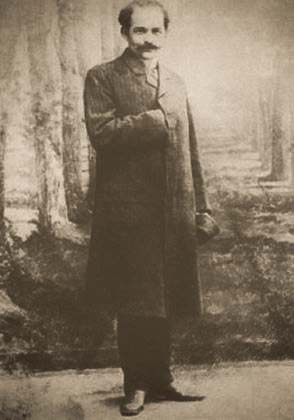
Piotr Demianovich Ouspensky (March 4, 1878–October 2, 1947) was a Russian philosopher who rejected the science and psychology of his time under the strong suspicion that there had to exist superior systems of thought. In his youth, he studied mysticism and esotericism and traveled extensively in search of ancient wisdom, sensing that past ages knew more than his present one. “I felt that there was a dead wall everywhere,” he commented in one of his early biographical notes. “I used to say at that time that professors were killing science in the same way as priests were killing religion.”
When Ouspensky met George Gurdjieff and was introduced to the Fourth Way in 1915, he realized that the barrier towards knowledge lay in oneself; one couldn’t find the truth without simultaneously laboring to live the truth. Real knowledge could only come with sufficient preparation for receiving it. Ouspensky spent the rest of his life laboring to make the Fourth Way principles his own and to share them with like-minded people. In so doing, he became an agent of truth for his age, carrying the wisdom of the pre-World War era into the middle of the twentieth century.
OUSPENSKY’S EARLY YEARS
Ouspensky was born in Moscow in 1878 in a middle class household that was fond of the arts. In his autobiographical accounts he describes himself as atypical, a disinterest in behaving like other children, and an early inclination towards more mature topics like the natural sciences. His lucid memory of these very early years extended to even before the age of two:
Peter Ouspensky
[MAURICE NICOLL] But I am sure that you remember your life far better than I remember mine, and that your life has had more meaning.
[OUSPENSKY] Yes, but not quite in the way you mean. I have noticed how much you have forgotten. In my case, as a child I did not play with toys. I was less under imagination. I saw what life was like at a very early stage.i
Maurice Nicoll
These precocious qualities appear to have crystallized in his youth both a steadfast dissatisfaction with the schooling system and, later in his adolescence, an unwavering sense of disapproval towards the academic and scientific establishment. The impulse to take personal ownership of his studies began to be apparent as early as the age six, with Ouspensky choosing to be self-taught in the sciences instead of pursuing formal education, with a particular fascination with the theory of the fourth dimension.
Behind this impulse, however, lay the more indelible mark left on his psyche in repeated experiences of déjà vu between Ouspensky and his younger sister, then five and three years of age, in which he recounts how they were able to remember small events before them having yet occurred.
[OUSPENSKY] How can you speak to mother, grandmother, about former lives even when you learn to talk? They will lock you up. I remembered very well. I was very lonely. I had to wait for sister to be born and then to learn to speak, three, four years perhaps, before I had someone to talk to.
Then it used to happen often like this: she used to look out of window and tell me about people she saw. There was very good combination in our street, policeman first, then postman, like that. She used to know who would come round corner because she remembered.
She would say (only we used our own baby language), “Now there will be policeman.” I say, “And now will come tax collector,” and he came. When we did this often I said to her, “Shall we tell mother, grandmother?” And little sister would say, “What use to tell mother, grandmother? They don’t know, they don’t understand anything.” Just think, I was five, she was three.ii
Ouspensky in Childhood
These experiences undoubtedly contributed to the very early conviction in the young Ouspensky of the existence of a veiled reality behind which stood a much different world with radically different meanings towards life than what was ordinarily understood by the adults around him. It was the inherent seed in him that expressed itself in later years of studies and personal development, and never in fact ceased.
OUSPENSKY’S SEARCH
The theory that we live and repeat the same life over and over again represented to the young Ouspensky a living truth, and was inextricably linked and energized by his fascination with higher dimensions. By the age of 27, he wrote a novel titled A Strange Life of Osokin which encapsulated his understanding of the laws governing eternal recurrence and the possibility of change.
Two years later, Ouspensky discovered Theosophy and was introduced to the many branches of esotericism, with entirely new approaches to the pursuit of higher realities. His study of Theosophical literature drew him into psychology, personal experiments, and exotic travels, all of which was conveyed in a series of publications and lectures on topics including the Tarot and Yoga, attracting a considerable audience.
[OUSPENSKY] I discovered the idea of esotericism, found a possible angle for the study of religion and mysticism, and received a new impetus for the study of “higher dimensions”. iii
Ouspensky’s acclaim reached new heights with the publication of Tertium Organum, hailed as a masterpiece in addressing the problem of higher dimensions, and established the now 34 year old as a preeminent philosopher. However, these worldly achievements always appeared to be of secondary interest to him, as the deeper yearning ingrained in his character since childhood made it impossible to settle for the commonplace. Throughout his life, Ouspensky would constantly insist on reaching for nothing short of direct access to the miraculous.
Ouspensky in 1912
Ouspensky’s literary success did not blind him to the fact that experiencing higher dimensions was altogether superior to writing a bestseller on them. He resolved to seek out the miraculous in actual practice, by coming in direct contact with schools that possessed knowledge and practical methods. And so his search continued.
[OUSPENSKY] When I went away I already knew I was going to look for a school or schools. I had arrived at this long ago. I realized that personal, individual efforts were insufficient and that it was necessary to come into touch with the real and living thought which must be in existence somewhere but with which we had lost contact. This I understood; but the idea of schools itself changed very much during my travels and in one way became simpler and more concrete and in another way became more cold and distant. I want to say that schools lost much of their fairy-tale character.iv
MEETING GURDJIEFF
From 1913 to 1914, Ouspensky traveled in search of a school, the majority of this time devoted to India, and while he was successful in obtaining a better understanding of the types of schools that existed, he remained no closer to discovering one suitable to his search. He had planned to continue his search in the Middle East when the trip was cut short by the outbreak of the First World War, requiring him to return home.
Soon after his return to a politically-turbulent Russia, Ouspensky organized lectures to share what he had discovered in India with the aim of gathering like-minded people who were interested in his spiritual pursuits. At one such lecture, held in Moscow, he was approached by two of Gurdjieff’s pupils, who informed him of a group engaged in occult investigations and experiments. They invited him to meet their teacher. While Ouspensky had a poor first impression about the prospect and responded with disinterest, he agreed to the meeting after some insistence by one of the pupils.
Gurdjieff (1908-1910?)
[OUSPENSKY] In the spring of 1915 I met in Moscow a strange man who had a kind of philosophical school. This was George I. Gurdjieff. He and his ideas produced a very great impression on me. Very soon I realized that he had found many things for which I had been looking in India. I realized that I had met with a completely new system of thought surpassing all I knew before. This system threw quite a new light on psychology and explained what I could not understand before in esoteric ideas and ‘school principles’. iii
[OUSPENSKY] In his explanations I felt the assurance of a specialist, a very fine analysis of facts, and a system which I could not grasp, but the presence of which I already felt because Gurdjieff’s explanations made me think not only of the facts under discussion, but also of many other things I had observed or conjectured. iv
[OUSPENSKY] I saw without hesitation that in the domain [psychology] which I knew better than any other and in which I was really able to distinguish the old from the new, the known from the unknown, Gurdjieff knew more than all European science taken as a whole. v
Gurdjieff and Ouspensky Circa 1915
Ouspensky immediately recognized in Gurdjieff the quality of teacher and school that had eluded him throughout all his personal study and seeking abroad. He soon helped form the early St. Petersburg group that Gurdjieff would regularly travel to from Moscow, and became a member of Gurdjieff’s inner circle for several years, playing a key role in establishing the school from the Russian Revolution up until the formation of the institute at Fontainebleau.
Ouspensky’s recollection of this period has been meticulously documented in his book In Search of the Miraculous: Fragments of an Unknown Teaching, published posthumously, and widely held to serve as a masterful introduction to the teachings of Gurdjieff.
Fight or flight is a well-known stress response that occurs when hormones are released in your body, prompting you to stay and fight or run and flee danger. If your body perceives itself to be in trouble, your system will work to keep you alive.
Fight, flight, freeze, and fawn are a broader collection of natural bodily reactions to stressful, frightening, or dangerous events. This sympathetic nervous system response dates back to our ancestors coming face-to-face with dangerous animals.
What Is Fight, Flight, or Freeze?
Fight, flight or freeze are the three most basic stress responses. They reflect how your body will react to danger. Fawn is the fourth stress response that was identified later.
The fight response is your body’s way of facing any perceived threat aggressively. Flight means your body urges you to run from danger. Freeze is your body’s inability to move or act against a threat. Fawn is your body’s stress response to try to please someone to avoid conflict.
The goal of the fight, flight, freeze, and fawn response is to decrease, end, or evade danger and return to a calm, relaxed state.
What Is Fight or Flight?
In fight or flight mode, your brain is preparing for a physical response.
Fight. When your body feels that it is in danger and believes you can overpower the threat, you’ll respond in fight mode. Your brain releases signals to your body, preparing it for the physical demands of fighting.
Flight. If your body believes you cannot overcome the danger but can avoid it by running away, you’ll respond in flight mode. A surge of hormones, like adrenaline, give your body the stamina to run from danger longer than you typically could.
Signs of a flight response include:
Excessive exercising
Feeling fidgety, tense, or trapped
Constantly moving your legs, feet, and arms
Restless body
Feeling of numbness in your arms and legs
Dilated, darting eyes
What Is Freeze and Fawn?
Freeze and fawn are also stress responses that don’t involve decisive actions.
Freeze. This stress response causes you to feel stuck in place. This response happens when your body doesn’t think you can fight or flight.
Fawn. This response is used after an unsuccessful fight, flight, or freeze attempt. The fawn response occurs primarily in people who grew up in abusive families or situations.
Signs of a fawn response include:
Over-agreement
Trying to be overly helpful
Primary concern with making someone else happy
What Causes the Fawn Response?
The fawn response often covers up distress and damage you’re feeling inside due to trauma. Fawning is a common reaction to childhood abuse. The fawn response is your body’s emotional reaction that involves becoming highly agreeable to the person abusing you.
The fawn response can cause confusion and guilt if you have PTSD. Even if you’re being treated poorly, your instinct drives you to soothe your abuser instead of resorting to the flight or fight response.
Signs of fawning behavior include:
Overdependence on the opinions of others
Little to no boundaries
Vulnerability to narcissists
Being easily controlled and manipulated
The fawn response is believed to occur in people who grew up with narcissistic parents. You may have been neglected or rejected constantly as a child. Being helpful and agreeable was the only means of survival.
The problem with the fawn response is that it can cause codependent adults and make you lose your sense of identity.
What to Know About the Acute Stress Response
Many different reactions are happening in your body during an acute stress response. Some of these reactions occur during any type of stress response, and some are specific to the type of response. The following can be parts of a stress response:
Heart rate and blood pressure increase
Pale or flushed skin
Temporary loss of blunt pain response
Dilated pupils
Feeling of being on edge
Distorted memories of the event
Tenseness or trembling
Involuntary control of your bowels or bladder
Whether you’re in physical danger or psychological danger, your body will start triggering a stress response. This reaction starts in your amygdala, which is the section of your brain responsible for fear.
The amygdala transmits signals to your hypothalamus, stimulating the autonomic nervous system. Then, your sympathetic system stimulates your adrenal glands to trigger adrenaline and noradrenaline hormones.
How to Control the Fight or Flight Response
Anxiety disorders can trigger your fight or flight response even during situations that don’t put you in danger. Unfortunately, there are detrimental effects of this chronic stress. The problem that triggers a stress response varies from person to person. However, some environmental or health conditions can be associated with the response.
Stress management is an integral part of improving your overall health. Identifying your psychical, emotional, and behavioral signs of stress can help you analyze and work to overcome them. This will help you determine if you’re truly facing a threat or if your nervous system is overreacting.
If stress impacts your quality of life, you can talk to your doctor. They may recommend therapy, medication, or other stress management techniques. Managing stress is a daily struggle that cannot be solved with a quick fix.
The Exegesis on the Soul is one of the ancient texts found at Nag Hammadi, in Codex II. The text emphasizes the importance of prayer and repentance. It states that prayer should be done not just with words but with the spirit, which comes from within, and should involve confessing sins, recognizing past deception, mourning past actions, and even hating oneself. The beginning of salvation is repentance, and the Father is good and loving, and will hear the soul that calls out to him. The text references Biblical passages and stories from Greek mythology to illustrate its points, such as the story of Odysseus and Helen, and the Psalms. It is said that through repentance and sighing, God will have pity on the soul and restore it to its original state. The text concludes by emphasizing God’s mercy and His willingness to hear the prayers of those who truly repent.
According to Irenaeus, this teaching was a foundational pillar of the doctrine of Simon Magus, which Simon viewed as so important that he actually married a prostitute and elevated her in society in order to demonstrate the point. Hence, it is possible that the text was written by the Simonian school of Gnostics.
The text quotes copiously from the Old Testament prophets, from the New Testament gospels, and from the epistles of Paul. The text also quotes from Homer’s Odyssey, which is given equally authoritative weight.[1] These quotes indicate that the author viewed Greek legend and mythology as a type of scripture, just as the author also viewed large portions of the Old and New Testaments as scripture.
The author and date are not certain, however is likely from between the 1st century AD and the 4th century AD.[original research?] Although it is silent concerning the typical Gnostic cosmology, its placement in the same codex with such texts as the Apocryphon of John, Hypostasis of the Archons, and On the Origin of the World indicate that it may well have been produced by a school which accepted Gnostic cosmology. In this context, the female personification of the soul resembles the passion of Sophia, which is a theme pervasively found in Gnostic cosmology. Also, the text’s placement toward the back of the codex may indicate that it was written later and/or was of relatively lesser importance than the other texts in the codex.
Summary
The opening describes the soul as having a feminine nature, with a womb, and initially being in an androgynous form while alone with her father. However, when the soul fell into a body and entered this life, it was taken advantage of by various men and became a whore. Despite attempting to leave these relationships, the soul found herself in a helpless and desolate state, with offspring from the adulterers being disturbed. The soul then called out to her father for help and was deemed worthy of his mercy due to her afflictions from abandoning her house.
The text continues to address the issue of the prostitution of the soul, which is seen as a major issue. The holy spirit is said to prophesy about this in different places, such as in the prophets Jeremiah, Hosea, and Ezekiel. The messengers of the savior command to guard against both the prostitution of the body and especially the soul, as Paul wrote to the Corinthians about avoiding association with whores.[2] The greatest struggle is said to be the prostitution of the soul, which is not against flesh and blood but against the world rulers of darkness and evil spirits.[3]
Discussion of the prostitution of the soul continues with how it leads to the troubles and punishment of the soul. The text explains that when the soul perceives her troubles and repents, the father will cleanse her and turn her womb inward. This is her baptism, which involves regaining her original nature and becoming pure again. The father then sends down the firstborn, who is the bridegroom, to be with the bride, who has cleansed herself in the bridal chamber. She no longer engages in promiscuous behavior, but instead waits for the true groom and dreams of him.
The text then describes a spiritual marriage between the soul and her true love and master, who is sent down to her by the father. This marriage is different from carnal marriage and reunites the soul with her true love and master, bringing her back to her former happiness. The soul recognizes her true love and adorns herself so that he may be pleased to stay with her. She is told to turn away from her former people and the gang of adulterers, to devote herself to her king and remember her father in heaven. The soul is encouraged to leave her earthly ties and kin and to forget her father’s house.
The writing continues with a description of the soul’s journey towards spiritual renewal and salvation. The soul is compared to a bride who must turn away from her past promiscuity and be cleansed, waiting for her true love (the divine). This true love then comes to her in the bridal chamber and they make love, producing the seed (life-giving spirit). This union is the soul’s rejuvenation and leads to her salvation, which is not dependent on human efforts or knowledge but rather a gift from a merciful God. The soul will eventually rise, praising the father and her brother, who rescued her, and be saved through rebirth. This is the soul’s resurrection from the dead, ransom from captivity, and ascent to heaven and the father. Salvation only comes through the grace of God, who draws people to the savior, who will raise them on the last day.
Prayer and repentance are important in achieving salvation. It is emphasized that prayer should be made from within, with the soul and not just with the lips. Repentance, which is seen as the beginning of salvation, should come from distress and sorrow. The text mentions that the father is good and loves humankind and will hear the soul that calls him. It cites passages from scripture that emphasize the importance of returning to the father and sighing, so that one may be saved. The text mentions that the lord will have pity on those who lament and that those who deceive will not be able to harm those who have repented.
The text encourages people to pray to God night and day, with sincerity and without hypocrisy, so that they can be worthy of salvation. God examines their inner selves and bottom of their hearts to see who is worthy. The soul needs to turn away from the deception and return to its perfect husband by sighing and repenting. The example of Israel is given, which was brought out of the land of Egypt and house of bondage by sighing to God and weeping about its oppressive labors. If people repent, God will hear them and help them, because he is merciful.[4]
New Thinkin Aug 26, 2023 This video is a special release from the original Thinking Allowed series that ran on public television from 1986 until 2002. It was recorded in about 1992. June Singer, PhD, an analytic psychologist, was author of Seeing Through the Visible World: Jung, Gnosis and Chaos; A Gnostic Book of Hours; and Boundaries of the Soul. Here she discusses Gnosticism as a practice that involved a fusion of Judaism, Christianity and Manicheanism. The Gnostic texts found in the Nag Hamadi scrolls appear to satirize traditional Judeo-Christian myths. The Gnostics believed in the direct apprehension of a spiritual reality that was beyond all definition. Now you can watch all of the programs from the original Thinking Allowed Video Collection, hosted by Jeffrey Mishlove. Subscribe to the new Streaming Channel (https://thinkingallowed.vhx.tv/) and watch more than 350 programs now, with more, previously unreleased titles added weekly. Free month of the classic Thinking Allowed streaming channel for New Thinking Allowed subscribers only. Use code THINKFREELY.
On August 23rd, the Sun left Leo and entered the earth sign of Virgo.
Leo to Virgo season is one of the most tangible shifts from one sign to the next.
Leo is bubbly and fiery. Virgo is sensible and pragmatic. Leo likes to play. Virgo likes to work. Leo is the arts. Virgo is the crafts. Leo is performance. Virgo is execution.
People from all areas of life – and across the world – go on holidays in the Leo season. This is regardless of weather – although of course, the high temperatures in August in the Northern hemisphere are definitely inducive of fun and play.
And then, as soon as the Sun moves into Virgo, the mood completely changes. September (the Virgo season) is when we get back to work, back at school, and roll up our sleeves to get.some.work.done.
Many people wish their lives were ongoing holidays… but the seasons and the 12 monthly cycles in a year (the 12 signs) suggest otherwise. We would get bored of a 365-day holiday. It’s not a good idea to skip holidays either. Each season has its purpose.
And this is the magic of astrology. When we understand these astrological cycles, we work with nature, rather than against it. We get in sync with the universe.
Mercury Retrograde In Virgo – August 23rd – September 15th
Sun’s ingress into Virgo coincided with Mercury’s retrograde station. This is very interesting because Virgo is ruled by Mercury!
On the one hand, we have an intensification of Mercury energy. We are bombarded by thoughts, reminders, messages, texts, communication. Yet, since Mercury goes retrograde, there is a sense of unfinished business.
It’s like we got back from holidays to a total mess. All those loose ends. The errands. The pile of letters. The unanswered emails. Depending on what’s going on in your chart, the Virgo/Mercury retrograde might have triggered quite a bit of anxiety.
Venus Morning Star – Venus Reappears In The Sky
Thankfully, Venus, while still retrograde, finally made her re-appearance in the sky, this time as a morning star. Venus’ heliacal rising is excellent news! The Goddess of beauty and love is no longer in the underworld – she has made her way out.
We are now ready to claim our New Venus Self: “This is who I am, and this is what I want.” Things will only get better by September 4th, when Venus will resume her direct motion, but we can already feel the shift.
Emotionally, we have more clarity, since Venus is now visible again and ready to move direct. On a mental planet though we may feel anxious and confused, since Mercury has just turned retrograde.
While we may know what we want (Venus’ heliacal rising), we may be nowhere near certain about how to get there (Mercury retrograde).
On the one hand, we have Venus in Leo, royally proclaiming: “This is who I am, and this is what I want”. On the other hand, we have Mercury in Virgo: “What about that thing you still need to fix?”. “There’s still work to do to get there!”.
And it’s true, there’s still work to do.
We may not like to hear Mercury in Virgo’s nags.
But instead of dismissing them as “limiting beliefs” – we may want to pay attention to what this overly-attentive Mercury has to tell us, because he really knows what he’s talking about. Mercury in Virgo is the only placement that has both its domicile and in exaltation in the same sign.
This first week of the Virgo season is an excellent time to get back to the drawing board and get more clarity about the practical steps you need to take (Sun and Mercury in Virgo) so you can get what you want (Venus soon-to-go-direct in Leo).
And while the journey to get there may seem hard and full of obstacles (Sun opposite Saturn in Pisces) keep in mind that everything – absolutely everything – your heart desires is a seed waiting to bloom. If you truly want it, you will find your way to it!
Save the date: Astro Butterfly Wings Natal Chart Reading Program
On September 27th, 2023 we launch our ‘Astro Butterfly Wings‘ 10-week natal chart reading certification program.
This is our top rated astrology program that has helped hundreds of students learn how to read charts or become professional astrologers. We offer 2 learning tracks, one for beginner and intermediate students, and one for upper intermediate and advanced students.
If you are interested, make sure you pencil the date on your calendar.
SomerClinic Mar 1, 2021 “Flashback” is an 80-minute feature documentary that dramatically reveals the science behind the long-standing controversy of ‘recovered memory’ of child sexual abuse. Exclusive footage brings the social history of the conflict to life as world-class, renowned experts come together at key flashpoints over the years to passionately and eloquently spar over whether or not you can, as Elizabeth Loftus challenges, “be molested every night for a 10 year period and then totally repress it until it comes out in therapy 20 years later.” Dramatic, compelling research from emerging brain science and the moving, engrossing stories from victims of child sexual abuse and amnesia punctuate the story of the evolving evidence and bring it to a logically convincing conclusion. World-class brain/mind researchers and clinicians featured include: Bessel van der Kolk (Traumatic Stress); Judith Herman (Trauma and Recovery); Elizabeth Loftus (The Myth of Repressed Memory); Richard McNally (Remembering Trauma); Onno van der Hart (The Haunted Self); Chris Brewin (PTSD: Malady or Myth?); Joseph LeDoux (The Emotional Brain); Daniel Siegel (The Developing Mind); Eli Somer (the University of Haifa, past president of ISSTD); J.D. Bremner (Trauma, Memory, and Dissociation; Does Stress Damage the Brain?); Lenore Terr (Too Scared to Cry; Unchained Memories); John Briere (Principles of Trauma Therapy; Child Abuse Trauma); Roland Summit (Child Abuse Accommodation Syndrome); Pamela Freyd (founder of FMSF), and others About Wendy Anson: Producer/writer Wendy Anson, Ph.D., received an EMMY award for her role as producer on the PBS series on child development, “Time to Grow.” She worked as a researcher and line producer on Tony Kaye’s recent award-winning documentary on abortion, “Lake of Fire,” and as producer and researcher/writer in the science and society department of KCET-TV. She worked as a researcher/writer on many projects for Adrian Malone, the executive producer of COSMOS with Carl Sagan. Anson earned her PhD in educational psychology and technology from the Rossier School of Education, USC. She recently won an Annenberg Multimedia Scholar in Multimedia fellowship where she developed a multimedia post-traumatic stress disorder tool designed for both pre-schoolers and war veterans. She is also a producer of distance education, working with streaming video and cable TV.
Consciousness, spirituality, biography, sexuality, androgyny, futurism, space, the arts, science, astrology, democracy, humor, books, movies and more


/cdn.vox-cdn.com/uploads/chorus_image/image/72566123/Vox_Meditation.0.jpg)
:no_upscale()/cdn.vox-cdn.com/uploads/chorus_asset/file/24858830/GettyImages_486753275.jpg)
:no_upscale()/cdn.vox-cdn.com/uploads/chorus_asset/file/24858759/GettyImages_1093075636.jpg)
:no_upscale()/cdn.vox-cdn.com/uploads/chorus_asset/file/24858787/GettyImages_1427518984.jpg)