Do birds dream?

Birds dream

06-25-2023 (Earth.com)

By Eric Ralls

Earth.com staff writer

Sleep is a universal experience that encompasses complex biological functions. For us humans, it is divided into different phases – rapid eye movement (REM) and non-REM sleep. These sleep phases have unique associations with our physiology, brain activity, and cognition. 

During REM sleep, our brain activity peaks and ushers in vivid, peculiar, and emotional dreams. Meanwhile, non-REM sleep, a time of metabolic slowdown, enables the brain to flush out waste products. This cleaning mechanism plays a vital role in preventing neurological disorders like Alzheimer’s disease.

Despite the clarity in understanding human sleep, the question of whether birds undergo similar processes during sleep has been a mystery. However, new research led by Professor Onur Güntürkün, head of the Biopsychology Department at Ruhr University Bochum, has recently uncovered fascinating insights into avian sleep patterns.

What is happening in pigeon brains while they sleep?

“Birds and mammals share a common evolutionary ancestor dating back about 315 million years, yet their sleep patterns, including both REM and non-REM phases, are remarkably alike,” said Güntürkün.

Muscadine wine has anti-aging properties and is proven to make faces look younger

“Fairy circles” mystery is finally solved — maybe

Common protein in milk could revolutionize wound healing

Simple brain hack: Switching to curious mode can improve learning

Ant honey may hold the secret for powerful new antibiotics

Read more…

In order to further investigate the intricacies of bird sleep, the research team combined cutting-edge technologies, namely infrared video cameras and functional magnetic resonance imaging (fMRI). They trained 15 pigeons to sleep under these experimental conditions, and closely observed their sleeping and wakeful states.

The video recordings revealed interesting details about avian sleep. “We observed whether one or both eyes were open or closed, tracked eye movements and changes in pupil size through the transparent eyelids of the pigeons during sleep,” explained Mehdi Behroozi, a member of the Bochum team.

Simultaneously, the fMRI recordings delivered insights about brain activation and cerebral spinal fluid flow in the ventricles.

Do pigeons dream of flying?

“During REM sleep, we observed strong activity in brain regions responsible for visual processing, including those areas analyzing the movement of a pigeon’s surroundings during flight,” said Behroozi. In addition, areas processing signals from the body, especially the wings, were also active.

Based on these observations, Behroozi suggests that birds may dream during REM sleep, possibly even reliving their flight experiences in their dreams.

Another intriguing finding was the activation of the amygdala during REM sleep. This implies that birds, like humans, may experience emotional content in their dreams.

“Pigeons’ dreams might include emotions as well,” said Gianina Ungurean from the Avian Sleep Group at the Max Planck Institute for Biological Intelligence. This theory is further supported by the birds’ rapid pupil contraction during REM sleep, similar to their reactions during courtship or aggressive behaviors.

How REM sleep helps birds

Just like in humans, non-REM sleep in pigeons is a period of enhanced cerebral spinal fluid flow through ventricles. However, a ground-breaking discovery was made: for the first time in any species, the researchers found that this fluid flow diminished significantly during REM sleep.

Niels Rattenborg, head of the Avian Sleep Group, explained this phenomenon: “The increased influx of blood into the brain during REM sleep, which supports the heightened brain activity, might obstruct the cerebral spinal fluid from moving from the ventricles into the brain. This implies that REM sleep and its functions might come at the cost of waste removal from the brain.”

Despite this, the team is contemplating that REM sleep might aid in waste removal in unexpected ways. “The surge of blood at the onset of REM sleep increases vessel diameter. This could push cerebral spinal fluid that entered the space during non-REM sleep into the brain tissue, promoting outflow of waste-laden fluids,” said Ungurean.

This cleaning process might be particularly critical for birds due to their higher neuronal density compared to mammals. As such, they might need more efficient, or more frequent flushing cycles to remove waste products. 

Birds’ sleep consists of more, but shorter REM phases compared to mammals. The frequent surges of blood associated with these REM phases might be instrumental in keeping their densely packed brains free of harmful waste products.

What the future holds for bird sleep research

The experts are enthusiastic about future research possibilities. They plan to delve further into the potential role of REM sleep in waste removal. Additionally, they hope to decode the content of a pigeon’s dream.

“We hope to train birds to report if and what they just saw upon awakening from REM sleep. That would be a crucial step towards confirming whether they dream,” said Ungurean.

Without the detailed analysis of bird dreams, these new findings already enhance our understanding of sleep’s role in birds and humans. The research, published in the journal Nature Communications, underscores the significance of sleep in sustaining a healthy brain and averting cognitive decline. It also suggests that dreaming, this peculiar yet universal phenomenon, has a deeply-rooted evolutionary history.

More about REM sleep

Rapid Eye Movement (REM) sleep is one of the five stages of the human sleep cycle, named for the characteristic rapid movement of the eyes that occurs during this phase. REM sleep is distinct from the four stages of non-REM sleep, characterized by unique physiological, neurological, and psychological features.

Physiologically

REM sleep is fascinating. While the brain shows activity levels similar to wakefulness, most of the body’s voluntary muscles are paralyzed. This phenomenon, known as REM atonia, is believed to be a protective mechanism that prevents us from acting out our dreams. Heart rate and blood pressure tend to fluctuate, and breathing can become irregular.

Neurologically

REM sleep is a period of high brain activity. Brain waves during this stage resemble those during wakefulness, which is why REM sleep is sometimes referred to as paradoxical sleep. Several neurotransmitters play pivotal roles in modulating REM sleep, including acetylcholine, which is particularly active, and monoamines (serotonin, norepinephrine, and histamine), which are almost completely inactive.

Psychologically 

REM sleep is the stage when the most vivid dreaming occurs. This is thought to be related to the high brain activity and the function of certain brain regions during REM sleep. The exact purpose of dreams is still a topic of ongoing scientific debate, but theories suggest they may help with processing emotions, consolidating memory, and learning.

Additionally, REM sleep is believed to play a crucial role in brain development. Infants, for instance, spend much of their sleep time in the REM phase. It’s also during REM sleep that proteins are synthesized, contributing to brain repair and growth.

Though it’s known that REM sleep is important, as evidenced by its conservation across many animal species and the negative health impacts linked to its deprivation, many aspects of REM sleep remain a mystery. Sleep, in general, is an active area of research as scientists continue to unveil its many complexities.

More about dreaming 

Dreaming is a fascinating and complex phenomenon that occurs during sleep, particularly during the Rapid Eye Movement (REM) phase, but also during certain stages of non-REM sleep. While we often associate dreams with vivid visual or auditory experiences, dreams can involve any of the senses and a wide range of emotions. Dream content can range from mundane daily activities to bizarre or surreal scenarios.

While everyone dreams, not everyone recalls their dreams. The ability to remember dreams varies greatly among individuals and can be influenced by a variety of factors including sleep stages, interruptions in sleep, stress, and certain lifestyle factors. Some people remember multiple dreams per night, while others recall their dreams infrequently.

There are many theories about why we dream, and understanding the purpose of dreams has been a subject of debate in the scientific and philosophical community for thousands of years. Here are a few key theories:

Emotional processing 

Some believe dreams are a way for the brain to process emotions and experiences from the day. This might explain why certain events or feelings from waking life often recur in dreams.

Memory consolidation

Another theory proposes that dreams play a role in consolidating and processing information gathered during the day, integrating it into long-term memory.

Problem-solving

Some theories suggest that dreams are a space where the brain can work on solving problems encountered during waking hours, without the constraints of reality.

Neural pathway stimulation

Dreams might serve as a means for the brain to stimulate and develop neural connections, especially during infancy and early childhood when brain development is most active.

Psychodynamic (Freudian) interpretation

Psychoanalyst Sigmund Freud posited that dreams are a reflection of repressed desires and unconscious thoughts. While this theory has been influential, it is not widely accepted in contemporary neuroscience.

It’s important to note that while these theories offer different perspectives, they’re not mutually exclusive, and the true purpose of dreams may encompass elements from each theory or be something yet undiscovered.

A relatively new field of research, dream science, employs various technologies such as electroencephalography (EEG) and functional magnetic resonance imaging (fMRI) to better understand the neurological underpinnings of dreaming. 

Despite advancements in this area, much about the nature and purpose of dreams remains enigmatic and continues to captivate both scientists and the general public.

The study represents the collective efforts of various researchers including the Bochum Biopsychology team, the Max Planck Institute for Biological Intelligence, the Max Planck Institute for Neurobiology of Behaviour, the Neurophysiology Department at Ruhr University Bochum, and the Université Claude Bernard Lyon. This cross-institution collaboration adds further robustness and breadth to these intriguing insights into avian sleep processes.


‘The Climate Change Bomb Has Gone Off,’ Says Jay Inslee Amid Extreme Heat

Washington Gov. Jay Inslee

Democratic Washington Gov. Jay Inslee speaks prior to U.S. President Joe Biden at Green River College in Auburn on April 22, 2022.

 (Photo: Karen Ducey/Getty Images)

“What the scientific community is telling us now, is that the Earth is screaming at us,” said the Washington governor. “We need to stop using fossil fuels. That is the only solution to this massive assault on humanity.”

JESSICA CORBETT

Jul 23, 2023 (CommonDreams.org)

As record-shattering heat persists from Phoenix, Arizona to southern Europe, Democratic Washington Gov. Jay Inslee highlighted on Sunday that humanity already knows how to combat climate chaos: ditch planet-warming fossil fuels.

With tens of millions of Americans under heat alerts, Inslee—who ran a climate-focused 2020 presidential campaign—appeared on ABC‘s “This Week” to discuss current conditions and solutions with co-anchor Martha Raddatz.

“Look, the climate change problem, the fuse has been burning for decades, and now the climate change bomb has gone off,” Inslee said. “The scientists are telling us that this is the new age. This is the age of consequences because whatever we thought of climate change last year, we now understand that the beast is at the door. We knew this beast of climate change was coming for us, but now, it’s pounding on the door.”

“What the scientific community is telling us now, is that the Earth is screaming at us, and that is the situation,” he added. “I talked to a leading international scientist the other day who told me that we knew this was going to happen to us, but it’s happening to us maybe two decades earlier than we really thought could be in the realm of the possible.”

“We have to dramatically increase our efforts. That is necessary.”

Scientists have long warned that driving up the global temperature will make heatwaves worse—with dangerous consequences, including for the world’s food system. Last month was the hottest June on record and the trend is expected to continue during what Malta residents are calling the “summer of hell.”

Already, July has seen the warmest day and week ever recorded, and much of the Northern Hemisphere is still enduring extreme heat. Campaigners held an international day of action on Saturday as the “Climate Clock” dropped below six years, a warning of how close humanity is to using up the carbon budget and likely killing any hope for the Paris agreement’s 1.5°C limit for global temperature rise this century.

Greek authorities said Sunday that roughly 19,000 people were evacuated from the island of Rhodes due to wildfires. Reutersreported that “thousands spent the night on beaches and streets during what Greece said was its biggest safe transport of residents and tourists in emergency conditions.”

— (@)

“We have to dramatically increase our efforts. That is necessary,” Inslee said of action to cut emissions. “There’s good news here. We can do this. Look, we’re electrifying our transportation fleet. We’re electrifying our homes. This is a solvable problem, but we need to stop using fossil fuels. That is the only solution to this massive assault on humanity.”

The governor argued that the United States needs to lead on a global scale but also emphasized that “this is not just something for the federal government. States can act. Our state is acting. We have 23 states in the U.S. Climate Alliance. And this is necessary.”

“We’ve had tremendous action under President [Joe] Biden’s leadership with the Inflation Reduction Act. And, unfortunately, the Republicans are trying to repeal that now,” Inslee noted. “But we need to go further and faster. And states can go further and faster. And we are doing that.”

https://abcnews.go.com/video/embed?id=101587752

Biden, who is now seeking reelection in 2024, campaigned on bold climate pledges going into the 2020 contest. While he has taken some of those promised actions, the president has also faced criticism from green groups, voters, and some Democratic lawmakers for backing fossil fuel initiatives—from the Mountain Valley Pipeline to the Willow oil project—and so far declining to declare a climate emergency.

Meanwhile, many Republican lawmakers and presidential candidates—including former President Donald Trump and Florida Gov. Ron DeSantis—are pushing policies even more hostile to the climate and friendly to the fossil fuel industry.

Kyle Jones of the Center for Policy Advocacy at the Natural Resources Defense Council said earlier this week that legislation marked up by the GOP-controlled U.S. House Appropriations Committee “reads like a ‘how-to’ manual for destroying the planet.”

Raddatz asked how to convince people to care given that there are “candidates out there like Donald Trump, who mock the idea of climate change, and there are a vast number of Americans who ignore it, don’t care about it, or don’t believe it.”

Inslee insisted that “we can’t wait for Donald Trump to figure this out. We don’t have time to mess around to wait for this knucklehead to figure this out. We just got to make sure he’s not in office. And the way we do this is vote against climate deniers.”

“Vote against people who refuse to assist this moral and economic crisis that we have,” he advised. “You can’t wait for these folks, you’ve just got to make sure they’re not in office where they can do damage. Let them go off and play golf. We’ll solve this problem. It’s a solvable problem if we work together.”

“And people are coming around to this very, very rapidly because their homes are burning down. They’re choking on smoke from the Canadian fires,” he said. “When Ron DeSantis wants to go swimming, he can’t because the water is like a sauna, like a hot tub off his beaches. We’ve just got to make sure those folks are not in office. We don’t have the luxury of allowing these people to destroy the planet.”

This post has been updated with reporting on conditions in Greece.

Our work is licensed under Creative Commons (CC BY-NC-ND 3.0). Feel free to republish and share widely.

JESSICA CORBETT

Jessica Corbett is a senior editor and staff writer for Common Dreams.

Word-Built World: messiah

(wsmith@wordsmith.org)

messiah

PRONUNCIATION: (muh-SAH-uh) 

MEANING: noun: A savior, liberator, or leader of a group or a cause.

ETYMOLOGY: From Latin messias, from Greek messias, from Hebrew mashia (anointed), from Aramaic masiah (the anointed one), from masah (to anoint). Ultimately from the Semitic root msh (to anoint), which also gave us massage and masseur. Earliest documented use: 450.

NOTES: Someone anointed is one on whom a liquid is smeared, literally speaking. The word anoint is from unguere (to smear), which also gave us ointment and unctuous. In a religious context, the liquid is typically some plant-based oil applied to a person to consecrate them or make them sacred. In Christianity, the Messiah or the anointed one is Jesus Christ (from Greek christos: anointed). In Judaism, it’s a king sent by God to save the Jews — notably, King David. In MAGAism, the anointing is done with a fake sprayed-on tan in a bright orange.

Holy Anointing Oil, $140
“Made to the exact specifications of God”

Image: Amazon

Why Threads will never be the new Twitter

Twitter logo with the threads logo in its mouth like a worm
Threads doesn’t have any of the magic that made Twitter popular in the first place. 

Paris Marx

Paris Marx

Jul 23, 2023, 3:04 AM PDT (BusinessInsider.com)

Threads, the newest social-media app from Meta, rocketed past 100 million users less than a week after it went live. The explosive start from Mark Zuckerberg’s latest brainchild made it the fastest-growing app in history and took a significant bite out of Twitter’s traffic, according to the tracking company Cloudflare. The app has since been hailed as the Twitter replacement people have been clamoring for since Elon Musk’s takeover — and bungling — of the platform.

While Threads does look eerily similar to Twitter, there are critical differences. The search experience is limited to finding accounts, with no ability to find people’s posts or search by topic. There is no trending page, making it impossible to see what issues are dominating the discourse. The notifications are also a mess, there are no direct messages, and there’s no option to see posts from only people you follow. Adam Mosseri, Instagram’s head, says many of those features are in the works, but even as the app evolves, it’s becoming clear that it will never truly replace Twitter. 

That’s because Meta isn’t trying to fill the shoes of its competitor. While Twitter became popular as a place to stay informed and get access to critical information, Meta wants Threads to be a hangout space for lifestyle brands and influencers. Instead of a newsstand, Meta is building a new wing of its multiplatform mall. That might sound great to advertisers, but it’s hard to imagine people will want to be confined to the vapid topics that do best on Instagram.

Why Twitter became popular

Twitter was never the biggest social-media platform, and the company was pretty bad at making money. But it managed to leverage its unique experience in such a way that it became a major part of news and current affairs throughout the 2010s. Politicians, journalists, and other newsmakers flocked to the platform, providing unprecedented insight into their influential roles, while giving them a more direct connection to regular people, and vice versa. Some high-profile users, such as President Donald Trump, became almost unavoidable — his tweets shaped news cycles and public policy. And when big events happened around the world or locally, Twitter was the first place to turn to for real-time updates from reporters, public agencies, and average people documenting events for themselves.

That was Twitter’s magic: While there were plenty of influential people on the platform, there were far more regular users sharing whatever came to their minds, spouting off about topics they were passionate about and getting into discussions (or fiery arguments) with one another. The platform gave regular people a degree of collective power. If someone — whether an airline, a celebrity, or just some random person — said or did the wrong thing, users could band together and make the offender address the issue. Twitter allowed people to both know when their train was late and yell at the train service about it. That made it both useful and somewhat addictive. 

The platform gave regular people a degree of collective power.

Monetizing the chaotic stream of consciousness was always difficult for Twitter. It was estimated that 90% of its revenue came from advertising in 2021, but even then, it was barely enough to cover its costs. These problems could have been addressed by a new leader with a clear vision to shake up the business. Instead, Twitter got a chaos agent: Musk. Instead of drilling down on ways to boost what made Twitter special, he laid off most of the staff, changed up how the platform worked, and inspired an exodus of advertisers. As the meltdown has gotten worse, the race to absorb Twitter’s disaffected user base — and advertisers — has heated up.

Enter: Threads

In a Threads post, Mosseri said that the company’s goal “isn’t to replace Twitter” but “to create a public square for communities on Instagram that never really embraced Twitter and for communities on Twitter (and other platforms) that are interested in a less angry place for conversations.” In other words, Threads isn’t targeting the entire Twitter user base, just a segment of it. In particular, Mosseri said that Meta wanted to welcome people interested in “sports, music, fashion, beauty, entertainment, etc.” who want to have “a vibrant platform without needing to get into politics or hard news.”

On some level, Threads’ aversion to Twitter’s free-flowing conversation makes sense — discourse on Twitter can get pretty toxic. But before Musk took over, the platform was trying to crack down on the worst of it. Now, Musk has allowed a large number of previously barred right-wing extremists to return to the platform. And Musk’s content-moderation policies and his own frequent boosting of conspiracy theories and anti-trans posts have incensed many users, while scaring off advertisers

Meta has had its own problems with hate speech on Facebook and continues to be under scrutiny for the harm caused by its ineffective content moderation. But Meta’s solution to toxic debate, it seems, is to shut it off any debate at all. This isn’t a new idea for the company: Last year, Meta changed the name of Facebook’s main timeline from “News Feed” to simply “Feed,” which was partially explained by the company “de-emphasizing its investment in news content” and reducing the resources it invested in its news products. In 2021, it briefly pulled news in Australia as the government began to force Google and Facebook to compensate local media. And it’s now threatening to do the same in response to similar plans in Canada and California.

The message from Meta is: News content isn’t as lucrative as it once was, or it just isn’t worth the trade-offs. Ultimately, advertisers want to stay away from controversy, especially at a moment when almost anything can become a culture-war issue. And after the failure of the metaverse, Meta is looking for its next cash cow.

Creating a sanitized space

In 1996, Jennifer S. Light, a technology historian, compared the growth of commercial online communities to the shopping malls that sprung up across the US through the second half of the 20th century. Shopping malls were an attempt to provide a downtown, Main Street-style space for people who had fled to the suburbs. But since malls were privately owned spaces geared toward persuading customers to spend their cash, they weren’t very welcoming to people who were not deemed ideal customers — such as people of color and homeless people. Even with our nostalgia-tinted view of these dying spaces, it’s safe to say that malls are not the ideal community space. They weren’t designed for people; they were designed to make money for the businesses inside them. 

They weren’t designed for people; they were designed to make money for the businesses inside them.

As the web took off in the ’90s, it was seen initially as a public space where people from all over the world would be able to come together and interact. Despite the early excitement, Light wrote, the rush to make money from the new technology meant that the web was quickly commodified like a shopping mall. As advertising became one of the central business models of the web, platforms were incentivized to limit what people could or couldn’t do on them to make them more appealing spaces for advertisers to spend their dollars. 

On the one hand, this had a valuable moderating effect. Major companies don’t want their ads to be placed alongside explicit material, hate speech, or violent imagery, so if platforms can’t moderate these types of content, the business side will suffer. The flip side of this desire for clean spaces is that brands also don’t want to put up with debates on sensitive political issues, conversations that expose their bad behavior, or even nude images, which have long been banned on Meta’s platforms.

This push to oversanitize and limit conversations to benign, lowest-common-denominator discussion turned the internet from a common, public market where everyone could hang out on equal footing into a commodified, poorly lit mall designed to cater to people who had the most to spend.

Threads is unlikely to be the future

The balancing act between providing a place for free expression and catering to advertisers is at the core of the Threads-Twitter fight.

While Twitter had long been used for informative purposes, it was also a place where people could post fairly freely — and that occasionally caused some problems. There was always a tension about how much to moderate content, not just by users who wanted hate speech cleaned up but also by advertisers who wanted less risk to their brands. Instead of solving these issues while preserving what made it unique, Musk has pushed Twitter further into the free-for-all direction. Musk directly cited attempts to increase moderation as one of the reasons he chose to acquire the company and remake it as a “free speech” platform. But, as I already mentioned, that isn’t going well for the business side of things. 

As advertisers have fled Twitter in response to Musk’s changes, Meta is learning from Musk’s mistakes and trying to create the shopping-mall-ified, brand-friendly version of Twitter that the bird site could never succeed at turning itself into. Threads aims to build on the success of Instagram, which has been thriving amid Facebook’s decline. Instagram’s visual nature and strict content moderation make it great for advertising, and now Threads will provide those same brands and creators an additional space to promote their products. This is already clear in how Threads prioritizes users: Influencers and celebrities got early access to the app and have been relentlessly promoted by its algorithm. To jump-start engagement, these accounts started by asking their followers questions like their favorite color or whether they liked cookies — but that’s not the level of discussion that will keep people engaged for very long.

It’s hard to say exactly how successful Threads will be. Some analysts are estimating it could add $8 billion to Meta’s annual revenue by 2025. But after the rush of initial sign-ups, tracking firms are already finding a significant drop in user engagement. Ultimately, how Threads does will be determined by whether users actually want a Twitter-like platform that puts vapid consumption above substantive, useful, and occasionally heated discussion. If Threads does succeed, it won’t be the Twitter replacement people are hoping for. In its bid for a cash-cow app, Threads is foregoing everything that made Twitter special — no political debate, no train updates, no crowdsourcing breaking news.

So will there ever be another Twitter? As its disintegration has continued, no app has succeeded in taking its place. Perhaps that’s because Twitter is a relic of a waning era in online communication, where trading data for access may not be enough anymore. In a moment where platforms are being forced to prove their business bona fides much quicker, an online mall may be the most realistic option.


Paris Marx is a tech writer and host of the Tech Won’t Save Us podcast. He also writes the Disconnect newsletter and is the author of Road to Nowhere: What Silicon Valley Gets Wrong about the Future of Transportation.

Tarot Card for July 26: The Two of Cups

The Two of Cups

And here we have the Lord of Love, a card of bliss, deep joyous love reciprocated fully and with great enthusiasm, a card of reconciliations and new growth! Here we see harmonious and contented exchanges of emotion, which vibrate with an ecstatic undercurrent of passion and heat.

Because this card is a reflective and receptive one, there’s an issue that people sometimes forget when reading it – to be truly loved, deeply treasured, valued highly by others, we must first and foremost strive to feel those things for ourselves. When we work toward loving ourselves, we hold our inner nature in high regard, treating it with deference and proper respect. When we see ourselves in that light, other people cannot help but respond to our personal sense of value.

Furthermore, when we work to love ourselves, we release so many areas of self-doubt and uncertainty that we become infused by a new energy – and this we can lavish on others. The Two of Cups is about engaging in a caring and tender fashion with our own needs, first and foremost.

It isn’t so much about achieving self-love, as about, in every single day of our lives, striving towards self-love. That action leads us into a positive, self-supportive and accepting approach to life. And also, when we stop wasting energy telling ourselves what’s wrong with us, we have lots more energy to enjoy being who we are.

When this card comes up in a reading, if it relates to the inner journey, then it tells you to put your attention in the moment, to leave the past behind, and to let yourself be free to enjoy everything that comes your way.

If it relates to outer events, it may point to a forthcoming reconciliation in a relationship where there has been pain and disappointment – this need not be a love affair, it can cover many different types of loving relationship.

It might point up a new relationship which has recently begun and which will grow into a deep and lasting friendship or affair.

And finally, it may reassure you that the meaningful relationship in your life will strengthen and grow, developing into exactly what you need it to be!!

The Two of Cups

(via angelpahts.com and Alan Blackman)

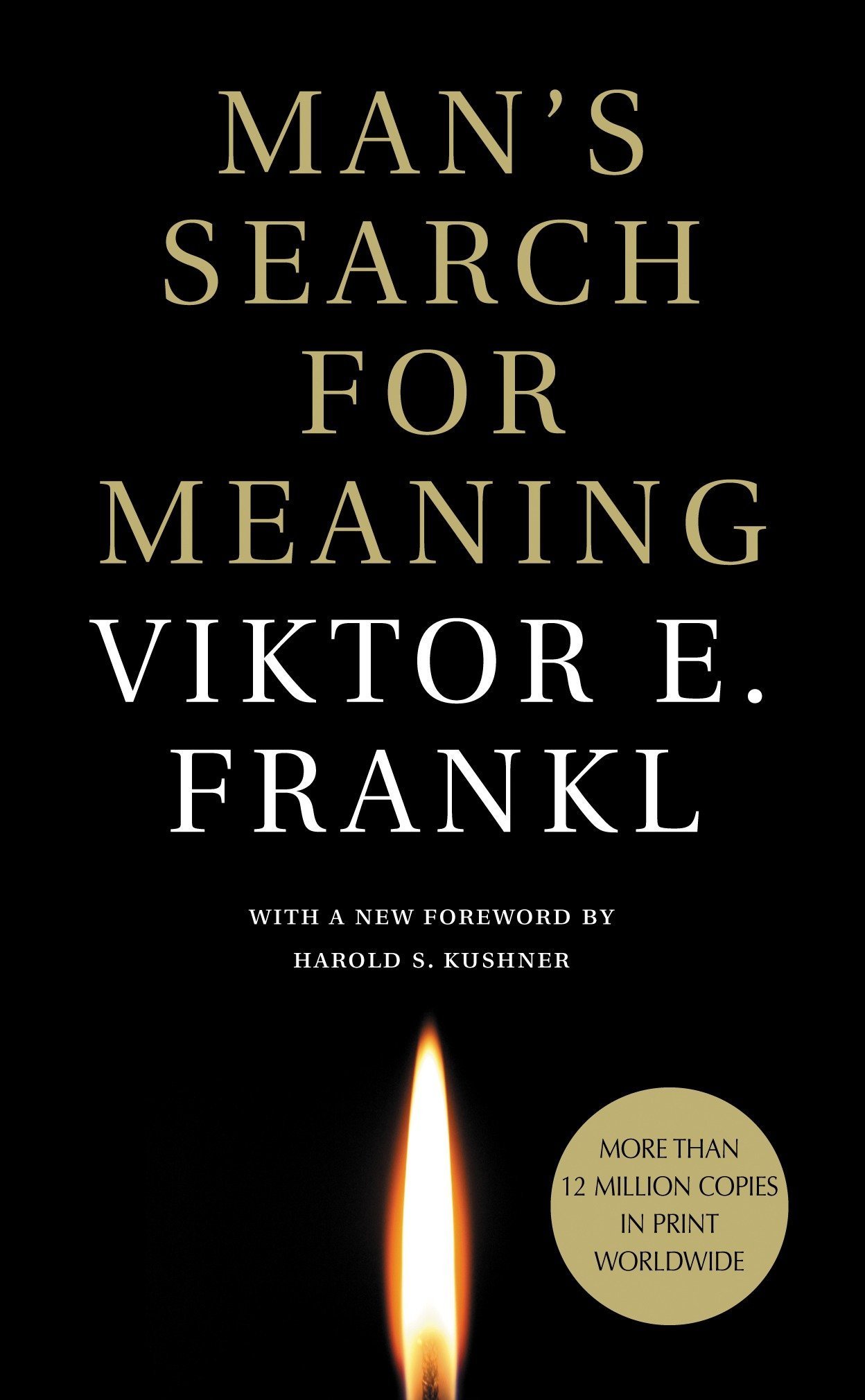
Book: “Man’s Search for Meaning”

Man’s Search for Meaning

Viktor E. FranklHarold S. Kushner (Foreword)William J. Winslade (Afterword) …more

Psychiatrist Viktor Frankl’s memoir has riveted generations of readers with its descriptions of life in Nazi death camps and its lessons for spiritual survival. Based on his own experience and the stories of his patients, Frankl argues that we cannot avoid suffering but we can choose how to cope with it, find meaning in it, and move forward with renewed purpose. At the heart of his theory, known as logotherapy, is a conviction that the primary human drive is not pleasure but the pursuit of what we find meaningful. Man’s Search for Meaning has become one of the most influential books in America; it continues to inspire us all to find significance in the very act of living.

(Goodreads.com)

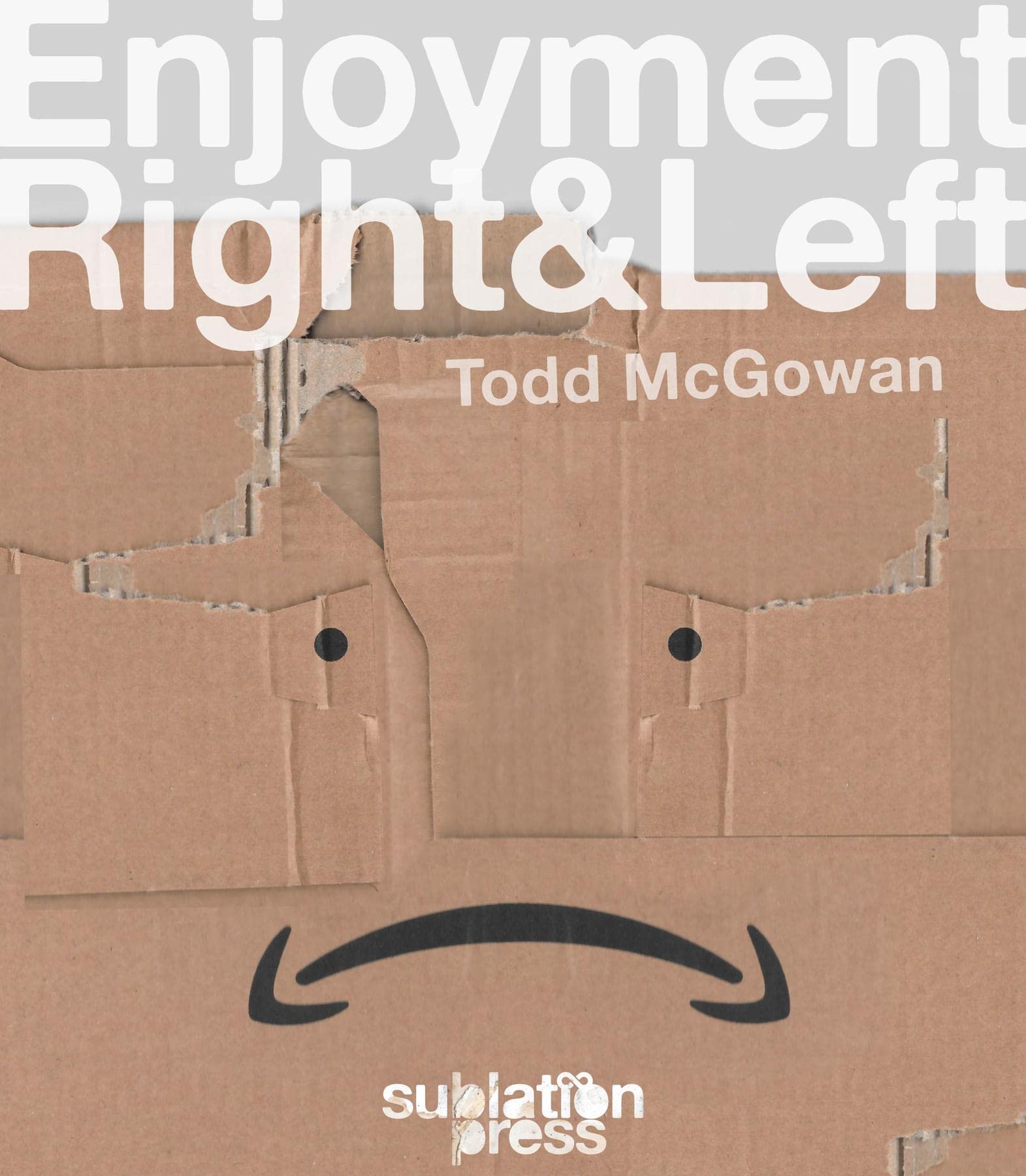
Book: “Enjoyment Right & Left”

Enjoyment Right & Left

Todd McGowan

While understanding the psychic structure of pleasure and desire might seem to be unrelated to grasping our current political crisis, Todd McGowan argues that the intrinsically excessive nature of enjoyment is critically important to this effort. In a world that appears completely divided between right and left, McGowan calls for a universal form of enjoyment that unites people in an egalitarian project. Todd McGowan’s previous books include  Emancipation After Hegel ,  Capitalism and Desire , and  The Impossible David Lynch , among others. He teaches theory and film at the University of Vermont. 

(Goodreads.com)

COME ON BARBIE, LET’S SELL BARBIES

American Toy Companies, Led by Mattel, Have Entwined Marketing and Entertainment for Over Half a Century

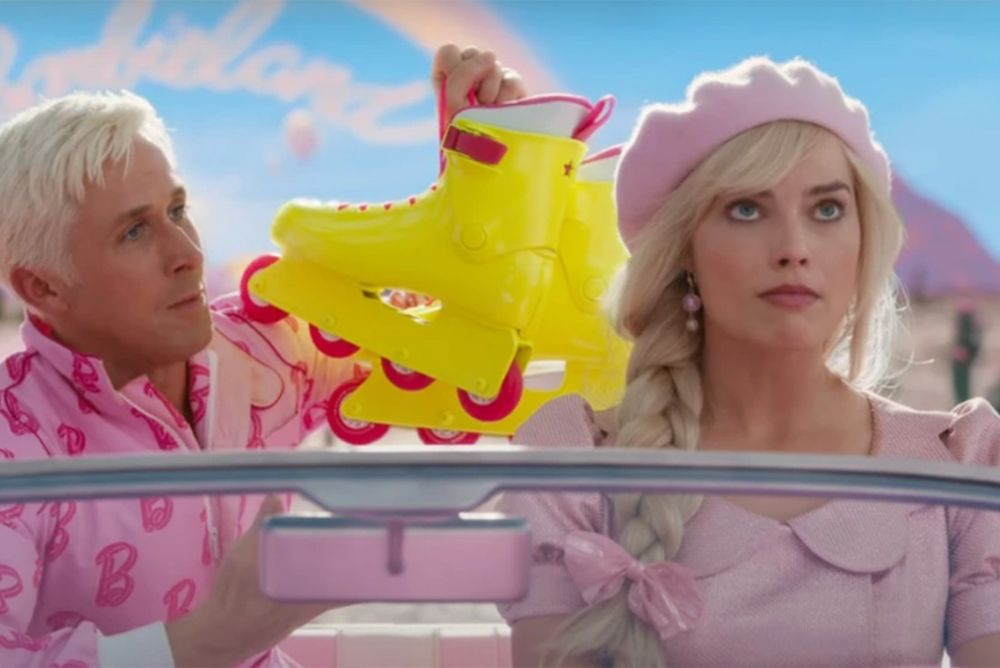
It’s a Barbie world, and we’re all buying in. Columnist Jackie Mansky traces how the 2023 Barbie film (above) fits into the larger Mattel playbook to sell us on the plastic life. Courtesy of Warner Bros.

by JACKIE MANSKY | JULY 21, 2023 (ZocaloPublicSquare.org)

The year was 1997.

“Un-Break My Heart” by Toni Braxton dominated the radio waves. Wallet chains and JNCO jeans were red-carpet staples. And plastic? It was fantastic.

Cool Shoppin’ Barbie wasn’t just made of plastic, she was the first ever doll to come with her very own piece of it. She came equipped with a cash register, bar code scanner, credit card reader, and two credit cards—a life-sized cardboard Mastercard, and a doll-sized plastic one.

In a year where a record 1.35 million Americans filed for personal bankruptcy, and the director of the nonprofit Consumer Federation of America was warning Americans in the red to “consider spending only what they can afford to pay off in a month or two”—or better yet, “make purchases by cash, check, or debit card”—Mattel, the toy company behind Barbie, used her to sell consumers on the fantasy of limitless shopping. Push a button, and the doll could say the magic words: “credit approved.”

“It’s so a child can really pretend,” said a spokesperson for Mattel at the time, in defense of its partnership with Mastercard International. “We thought it would be fun for her to run the card through the scanner.”

Cool Shoppin’ Barbie had a short run, which now makes her, among a certain set, a collector’s item. But today, the doll best serves as a particularly blunt object in the long history of Mattel’s marketing strategy to sell not the doll itself, but the lifestyle she promises.

In the lead-up to the first-ever live-action Barbie movie, Mattel has drilled this message home again and again, partnering with over 100 brands to sell us everything from Barbie burgers to Barbie toothbrushes. Life, Mattel wants to remind us, is better in Barbie pink. But the biggest way Mattel is signaling this message is through the high-profile summer tentpole itself. The first of Mattel’s new film arm, which can be seen as a feature-length commercial for Barbie, is a big gamble for the toy company. But it’s one that it has made before. From the very beginning, Mattel has made its name, and Barbie an icon, by selling her lifestyle to us directly on the screen.

As the story goes, after World War II, husband-and-wife team Ruth and Elliot Handler and their friend Harold “Matt” Matson began building doll furniture, and then toys, from scraps of leftover wood from their picture frame business. Early on, the company, a fusion of Matt and Elliot’s names, gained a reputation for selling musical toys, like the Uke-A-Doodle, a plastic ukulele. But Mattel really took off in 1955, when it had the opportunity to buy advertising on a new national children’s program, Walt Disney’s The Mickey Mouse Club. No one had used a major campaign to speak right to kids before. There had been national ad pushes, with the Erector Set becoming the first to get a major newspaper treatment in 1913. But unlike today, where companies spend nearly $17 billion a year marketing to kids and young adults, postwar marketers were only just beginning to treat children themselves as consumers. Becoming a commercial sponsor for a year would cost Mattel $500,000 upfront, but it meant directly reaching kids all across the country. It was a pricy gamble, but one that paid off big. That October, children tuning into ABC to watch “M-I-C-K-E-Y-M-O-U-S-E” were hit with advertisements for Mattel’s new Thunder Burp toy machine gun. The frenzy that followed created an epoch shift.

The first of Mattel’s new film arm, which can be seen as a feature-length commercial for Barbie, is a big gamble for the toy company. But it’s one that it has made before. From the very beginning, Mattel has made its name, and Barbie an icon, by selling her lifestyle to us directly on the screen.

As Sydney Ladensohn Stern and Ted Schoenhaus put it in Toyland, their history of American toy companies, “Mattel’s decision to advertise toys to children on national television 52 weeks a year so revolutionized the industry that it is not an exaggeration to divide the history of the American toy business into two eras, before and after television.”

Were it not for The Micky Mouse Club, Barbie herself may never have become a phenomenon. Buyers had expressed little interest when Mattel brought its prototype to the 1959 American International Toy Fair. But the response was completely different when Mickey Mouse Club viewers got their first look at the 11-inch doll. As ad footage of Barbie and her accessories paraded across the screen, a woman’s voiceover said, “Barbie, beautiful Barbie, I’ll make believe that I am you.”

From the start, Barbie, in particular, was selling children not on a doll, but on an idea: You, yes you, could be Barbie. Kids demanded a Barbie of their very own to play out their fantasies, and Mattel sold more than 300,000 dolls that first year.

Mattel continued to find new ways to use television to reach its target demographic. In 1969, Bernard Loomis, a toy developer and marketer at the company, had the idea of looking beyond regular advertising and turning Mattel’s newest toy, Hot Wheels, into a Saturday morning cartoon. The strategy was an early attempt to channel what Loomis later famously referred to as “toyetics”—a media property’s power to create and sell toys.

Loomis understood that companies would one day sell toys through branded, popular entertainment, but he was ahead of the times. After the Federal Communications Commission received a complaint from a rival toy company against the Hot Wheels animated show, it concluded that it was a “program-length commercial,” under the rationale that the programming was woven “so closely with the commercial message that the entire program must be considered commercial.” The FCC required ABC to log parts of the show, including the theme song and audio and video references to the words “Hot Wheels,” as commercial advertising, and the program was soon canceled.

It took until the 1980s for toyetics to be fully unleashed when FCC deregulation opened the doors for what one member of Congress termed the “video equivalent of a ‘Toys-R-Us’ catalog” to hit TV screens. The term toyetics was, at this point, already in circulation. Loomis is said to have coined it while discussing merchandising rights for Close Encounters of the Third Kind. He’d decided to pass because he said the film wasn’t “toyetic” enough. What was toyetic enough? George Lucas’ new space opera.

Extending the Star Wars experience out of the movie theater and into the toy store opened the door for intellectual property to march its way into Hollywood. And now, with the launch of Mattel Films, Mattel is hoping to use Barbie to try and write the next chapter of this history.

From the dizzying heights of ’90s Barbie mania (Cool Shoppin’ Barbie, incidentally, came out during the year Barbie sales were at their zenith), Barbie’s cultural capital sagged in the 21st century. Like with The Mickey Mouse Club gamble, Mattel is hoping the new Barbie film will directly reach, and sell, a new generation on her story. But this time around, the company is hoping not just kids, but also adults buy into the idea of Barbie. In the long list of promotional collaborations, Mattel has been going after older age groups, partnering with brands such as the dating app Bumble to expand its customer base. The movie, too, is being marketed for all ages. “Everybody can have their own experience, and that’s the beauty of it. It’s kind of for everyone,” Ryan Gosling, who plays Ken, told Reuters, during the L.A. world premiere.

Early reports seem to suggest that Mattel’s bet will once again pay off. According to box office estimates, Barbie is on pace to take in at least $130 million over the weekend. Even in a moment when Americans are spending less, it seems Barbie is still able to sell us on the plastic life.

JACKIE MANSKYis senior editor at Zócalo Public Square.