de·on·tol·o·gy/ˌdēänˈtäləjē/Learn to pronouncenounPHILOSOPHYnoun: deontology
- the study of the nature of duty and obligation.
Origin

early 19th century: from Greek deont- ‘being needed or necessary’ (from dei ‘it is necessary’) + -logy.

de·on·tol·o·gy/ˌdēänˈtäləjē/Learn to pronouncenounPHILOSOPHYnoun: deontology
Origin
early 19th century: from Greek deont- ‘being needed or necessary’ (from dei ‘it is necessary’) + -logy.
 |
 TRANSLATION One of Thane’s Foundation Classes Live Zoom Class Sat/Sun March 12 & 13  Translation is the application of divine perception to your human experience. Our view of science is based on “cognito ergo sum”: I think therefore I exist. For you and I to try to identify as pure consciousness or being is the only basis on which we can know what we are. This is the only premise or basis on which we can translate.Live instruction by Rick Thomas H.W., M. Two full days (10 – 4 Pacific) of class on this weekend. Class fees: $150 New to class / $75 Review Class details with Zoom link will be emailed to you. Register NOW |
What do you get when you combine decades of experience and endless time to experiment? The best sex of your life

Emine Saner@eminesanerWed 9 Mar 2022 (TheGuardian.com)
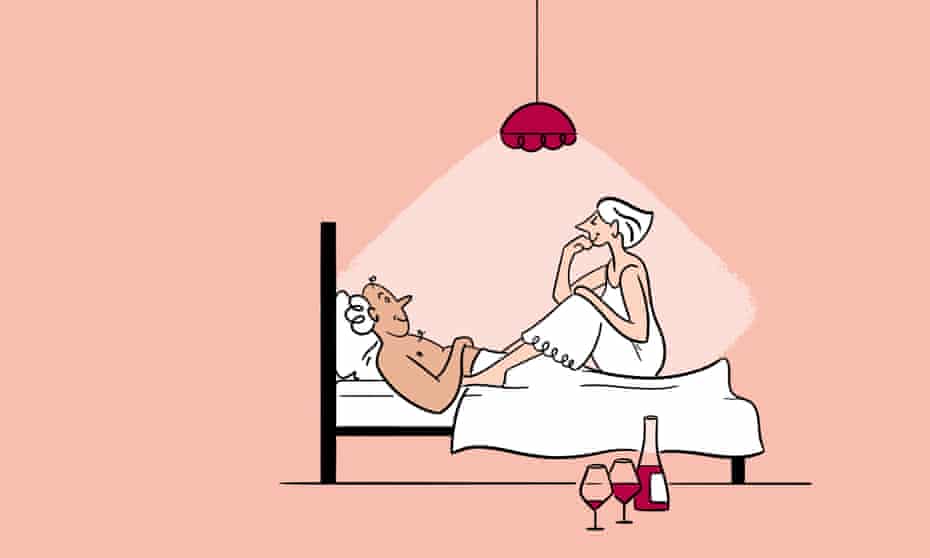
Waving a bright pink vibrator, Sylvia worries about one of her neighbours walking past the window. She is 81, and she and her husband, Paul, who is 73, started to use sex toys about 10 years ago, mainly because Sylvia needed a bit more stimulation to become aroused. The pink vibrator is new. “I haven’t really, to coin a phrase, got to grips with it,” she says, laughing. We speak one evening over Zoom, Sylvia and Paul sitting close together in their living room. They have been married for 32 years, and sex has remained important to them. Paul stresses that he prefers to call it “making love”. “We don’t do ‘sex’ – sex is purely physical – we are genuinely sharing our love for each other,” he says. The first time they made love, he says, “it was a remarkably intense physical and emotional experience.”
Sylvia rolls her eyes: “He’s much more romantic than I am.” She has always, she says, “had a very lively libido”. They used to have sex most days, but Sylvia is still feeling the effects of Covid, so it’s down to every 10 days or so. She has, she says, “an arthritic knee, which is a bit of a nuisance”, and arthritis in her wrists can make some previous positions harder. “I think it’s been well over a year since you were on top of me, and it’s a position we both like,” says Paul to Sylvia. “That’s the age impact,” she says. But both agree that their connection, their intimacy, is deeper now. “Over 30-odd years, we’ve learned what works, what doesn’t,” says Paul. “We have a real sense of intimacy.”
In the most recent National Survey of Sexual Attitudes and Lifestyles, 39% of men in the 65-74 age bracket (the oldest people the researchers surveyed) had been sexually active in the previous four weeks; for women of that age, it was 23%. Meanwhile, a 2018 study of older adults, with an average age of 65, found those who had reported any kind of sexual activity within the last 12 months had better wellbeing and a higher enjoyment of life.
“We have, for a very long time, focused on sexuality as something to do with youth and it’s just not true and not helpful,” says psychosexual therapist, Kate Moyle. It is also changing: a recent piece in the New York Times said that sex experts predict that “as baby boomers, who grew up during the sexual revolution of the 1960s and 1970s, age – the oldest are about 75 – they will demand more open conversations and policies related to their sex lives”. Desire, says Moyle, “is something that we can have across the lifetime. What we might see is that there is an interruption in the way that arousal used to previously function, the body’s physical ability; but we can adapt.”
Kate, 71, says she is having the best sex of her life. She met her partner, Lindy, nearly two years ago. “There is no more pretence any more,” she says. “All the bumps and bruises of our lives, all the experiences, it’s like a fire that burns off all the unnecessary stuff. I think it’s the understanding that this really is the last bit, and to make the very best of it.”
After her second divorce at the age of 65, she never thought she would fall in love – or have a sex life – again, until she met Lindy. It’s about, she says, “keeping your heart open and being willing to do things you didn’t even know you wanted to do before.” They have experimented with sex toys, she says, and her partner has discovered a love of dressing up. “Let’s have fun, say what we want, let’s be honest with each other. I think older people are often the most brutally honest.”
She thinks, she says with a laugh, they are having “way better sex than my kids or her kids. They seem very tired – kids and careers. Lindy and I just kind of skip around.” They have sex three or four times a week. “Something that never happened before is you get tired, so the idea of late night [sex] is out. Daytimes are great. Lindy’s a terrific cook, but sex after eating is too much. So sex before a big meal is great.” They use, she says, “mountains of lube”. Because it can take longer “to feel momentum”, anticipation has become more important – they will send saucy texts and photos to each other. “We both have hip issues, there are better sides and worse sides. It takes longer to have an orgasm for me. Lindy, not at all – she’s like a racehorse, bang! You just have to be honest and if you don’t have a sense of humour, you might as well pack it in anyway. We laugh a lot.”
What has surprised her most about sex at this stage in her life? “That it was still available. That there were women who thought this was valuable and fun, and willing to jump back in – and, if it didn’t work out, have a laugh about it. The good nature of it all has really surprised me. It’s friendly.” We need to be having more conversations about it, she adds. The idea that people in the last decades of their life need to forego sex is wrong. “In care homes, why are you treating these old people like it’s wrong? ‘Here are some tranquillisers and sleep medication’. Also, for many older gay people, you want to go to a care home? Then you can go back in the closet. It’s cruel.”
“The need for intimacy and connection doesn’t age,” says Moyle, who also advises the sexual wellness brand LELO: in a recent survey of 1,000 people, it found that although most respondents over the age of 50 were having less sex than when they were younger, nearly a third said the sex they do have is better. There are experiences associated with getting older that can make sex more challenging, she says: “Sex hormones decrease with age.” For women, this can mean vaginal dryness, or reduced elasticity, which can make sex uncomfortable. For men, erectile dysfunction can be a symptom of several issues such as heart conditions or prostate problems, or a side-effect of medication. For some people, it might mean an end to penetrative sex but, says Moyle, that “doesn’t mean that it’s less meaningful. There are plenty of ways to achieve sexual enjoyment – it’s about finding the ways that work for you and it might be about having to think about ways in which that could be achieved differently.” She suggests that lubricant would help many couples and that “with a reduction in sexual arousal, things like foreplay might take longer. You might find, for example, that someone who has difficulties with arthritis, or hip pain, simple things like positioning the body differently, or using cushions for support, can make sex more enjoyable.” Because we don’t get to see representations of older people with an enjoyable sex life, it can, she says, make “people feel like they shouldn’t.” (For those who are meeting new partners, safe sex is just as important, as the rise of STIs in older people shows.)
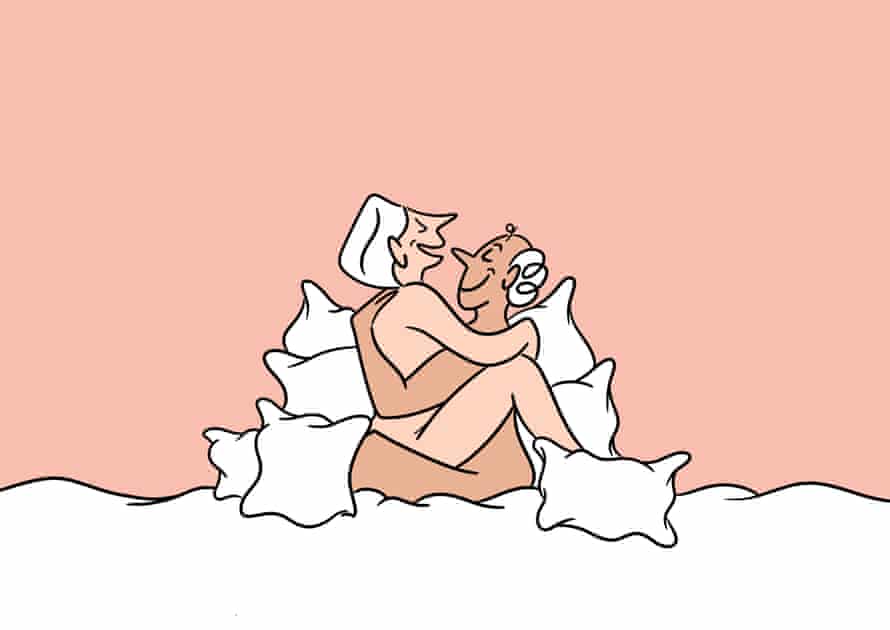
Steve, 72, and Sandra, 73, have been married for 52 years. Both their sex drives have “quietened down” he says, but not by much – they have sex around three times a week, whereas it used to be more like five. What has changed is what they perceive sex to be. Sandra had a hysterectomy, and penetrative sex became more of an effort and not always pleasurable. “We enjoy cuddling and rubbing each other, and lots of massage,” says Steve. “The other thing, as you get older, and certainly for me, is you need a lot more stimulation to get erect. We find that mutual masturbation is better for us than penetrative sex.”
Lovemaking sessions can either end with an orgasm or a cup of tea
It has meant they are probably less adventurous than they used to be, he says. They enjoyed outdoor sex when they were younger, and although they still sometimes manage it, because it takes him longer to get going it’s not as easy. Sex in their 70s, he says, is “different. It’s not worse, but I do miss being able to get rapid erections. It’s just a factor of getting older. About every month or so we’ll do out the bedroom with candles and make it into a pleasure palace. I’ll give Sandra a nice slow, sensual massage, and that tends to culminate in big orgasms for both of us.” But, he adds, an orgasm is no longer the aim in the way it was when they were younger. “It’s nice when it happens but it doesn’t matter if it doesn’t. You need a lot more stimulation to get to orgasm, and sometimes you think, ‘I quite like this as it is’,” he says of their aimless, long, lovemaking sessions that either end with an orgasm, or a cup of tea.
“I don’t expect to orgasm as much as I would have done,” says Penny, 79. She and her husband, who is 74, have been married for more than 40 years. “But when I do, it’s better.” When she masturbates, “I can achieve a better orgasm. I think you get to know your own body, but my generation still suffers a bit from shame, and masturbation wasn’t considered a good thing.” They have adapted their positions. “We do a lot more spooning, he would be behind – that’s very easy for us. I need him on top for a good orgasm for me, and that is not quite so easy for either of us now as it once was. Joints and backache,” she says, with a laugh. “I might sit on top of him, and he enjoys that, but it wouldn’t work like it might once have done.”

As a therapist, Moyle has seen people in their 70s and over who have anxiety around sex, particularly with a new partner after divorce or bereavement. “They might have had sex with one person for a very long time, and changed a lot during that time,” she says. Her advice is to talk openly about it, though she acknowledges this can feel awkward “because we don’t have a lot of conversations around how the want and need for intimacy and connection doesn’t age. But it’s likely that [your new partner] might have the same kind of anxieties that you do.”
For Ronald, married for the third time after the deaths of his two previous wives, being open to a new relationship has paid off – he is having the best sex of his life at 81. “After two bereavements, I could have given up at that point, but to have found a loving relationship at my age, and after a lifetime that was relatively humdrum, is a great bonus,” he says. There wasn’t much sex in his first marriage, which lasted 48 years. “It was a different generation. I think my wife sort of thought, ‘well, I’ve had children and that’s the end of that’,” he says. “I would describe it as mutually unsuccessful.” Ronald gained sexual confidence and experience with his second wife, although, sadly, she became ill. His third wife enjoys sex, and so does Ronald. “I’m accused now of being a bit like a teenager and I don’t think that’s unreasonable. I have somebody with whom I like making love and they like making love with me, and that’s tremendous, so you tend to do it quite often.”
Viagra has helped. “I don’t know what happened, whether it was psychological or physical, but getting an erection became a problem, which is more or less resolved,” he says. “The only problem is it has taken the spontaneity out.” Does he feel sad he missed out on sex for all those years? “Yes,” he says. “I could say I’ve wasted a great many years, but I’m very happy with where I am. I’m also quite proud that, given two bereavements, I’m still functioning and able to relate to other people. I haven’t given up on life.”
I’m like a teenager. I have somebody with whom I like making love and they like making love with me, and that’s tremendous!
Rosemary knows, she says, “a number of women who stopped sexual relations, when a partner died or the relationship broke up and decided that was it.” She met her boyfriend a few years ago on a dating site and says it was quite daunting to meet someone new, but she likes being in a relationship so it was worth it. They are both in their 70s and she says she is enjoying sex more at this stage of her life. “I’m more comfortable in my own skin,” she says. “This is who I am. If you like it, let’s enjoy things, and if you don’t, well, we shouldn’t be together. I’m just much more relaxed, happier in my body, and also much more able to say what I want. I think that gets easier when you’re older – you know yourself better.”
Sex has become slower, she says – sometimes they will stay in bed all day, with the help of (sometimes, but not always) wine, lube and Viagra. “There isn’t the tyranny of the nightly double bed,” she says. “We can have sex in the morning or in the afternoon, when you feel like it.” When she was working and raising children, sometimes the thought of sex at the end of a busy day was one more thing to worry about. “We don’t have that. We can be together whenever we want. Lunch can wait.”
They explore comfortable positions, she says. “We still enjoy penetrative sex but we spend much more time just enjoying each other’s bodies,” she says. “There are moments where we’ve just been naked, just cuddled, and for whatever reason, we haven’t had penetrative sex.” It’s partly as a result of getting older, but, she says, it’s also about “learning more about what is pleasurable and moving away from a kind of Hollywood representation. You see sex scenes on TV or films and think, ‘he’s instantly erect? She’s instantly available? Come on.’ Does sex even work like that in your 20s?”
Another couple who spend all day in bed, now their children have grown up and are safely out of the house, is Jennifer, 62; her husband is 72. “We have the time,” says Jennifer. “We can spend the whole afternoon at it, no one’s going to disturb us. When we were younger, you’ve got children, you’ve got work, it has to be fitted in, and it’s all very tense, but it’s lovely when you can take your time. We haven’t done that since before we were married, so you sort of come full circle.” Not having to think about contraception makes it “a lot more spontaneous than it used to be”, although, she adds, “there might be slight adaptations: ‘Ooh, my back’s aching a bit today’, joint pains and things. You may take it a bit slower; more foreplay.” After lovemaking, she says with a laugh, they’ll have a cup of tea. Sex, for her, she says, “is an expression of your love for somebody, and, just because I’m older, it doesn’t make my feelings any less.”
Some names have been changed.
The Russian artist – who spent two years in a Siberian jail for singing an anti-Putin ‘punk prayer’ – is using NFTs to fight the dictator, raising $7m in five days. At a time like this, she says, only activism will keep you sane


@zoesqwilliamsTue 8 Mar 2022 15.13 GMT (TheGuardian.com)
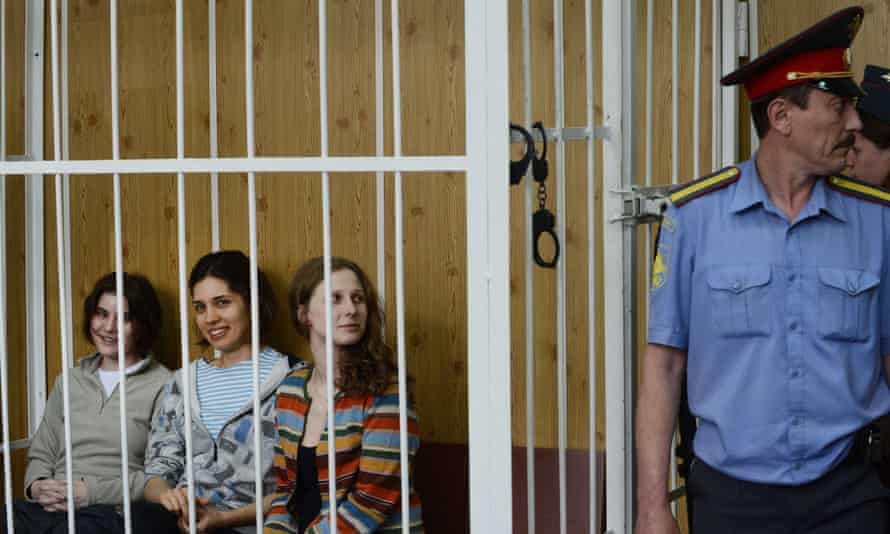
Nadya Tolokonnikova is in a geographically undisclosed location, speaking to me on Zoom, in a Pussy Riot T-shirt, looking purposeful, driven and singleminded. Her feminist protest art has been deadly serious since its inception, when she founded Pussy Riot in 2011. The watching world may have been entertained by its playful notes, the guerrilla gigs in unauthorised places, culminating in the event for which she was prosecuted, in Moscow’s Cathedral of Christ the Saviour, when she sang Punk Prayer: Mother of God, Drive Putin Away.
But the consequences have always been seismic and severe. Tolokonnikova, along with two other members of Pussy Riot, were sentenced to two years in prison for hooliganism in 2012, separated from their very young children, went on hunger strike, endured unimaginably harsh conditions and were named prisoners of conscience by Amnesty International.
Tolokonnikova is “nomadic by nature”, she says. “This planet is my home. I’ve always been an anarchist. I’m not really a big fan of borders or nation states.” But beneath those abstracts there are concrete dangers. She was declared a “foreign agent” by the Kremlin in December, as was the independent news outlet she founded upon her release from prison, Mediazone.

Advertisementhttps://9328516dce56e32f8e5c471bff47d38f.safeframe.googlesyndication.com/safeframe/1-0-38/html/container.html
“Putin just signed a law that said you’re going to get 15 years in jail for even discussing the war in Ukraine,” she says matter-of-factly. “You cannot even call it a war, you have to call it a special military operation.” The jeopardy of being a known Russian dissident is greater now than it has been in decades, and nobody understands that more keenly than Tolokonnikova, who was born in 1989, too young to remember Perestroika.
Yet her focus is anything but self-protective. When Putin invaded Ukraine on 24 February, she and various collaborators from the world of cryptocurrency launched the Ukraine DAO (decentralised autonomous organisation). It was a 1/1 non-fungible token (NFT) of the Ukrainian flag, and the group invited people to bid for collective ownership of the image, raising $7.1m in five days.
“We felt, me and my friends in crypto, that we had to react somehow. I’m personally convinced that in situations like this, activism is the only thing that can keep you sane. Just looking at disasters and tragedies and not doing anything about it is really detrimental for the world, but also it slowly destroys you and makes you feel helpless.” The money has already been distributed to the organisation Come Back Alive, which has been mobilising support for the Ukrainian army since 2014 with medical care, ammunition, training and defence analytics.
If you fight with a dictator like Putin, you have to show them that you are ready to die – and I was
Tolokonnikova is devastated by the invasion of Ukraine. “I’m in a panic, I’m crying every day. I don’t think it was in any sense necessary, I don’t think it was in any sense logical. It wasn’t something that had to happen, it’s a disaster that will end thousands of people’s lives. I’m freaking out.” Yet she never had the luxury of complacency about what Putin was capable of. “The global community was extremely complacent, and I see two reasons: hypocrisy, based on greed. People would make statements that they did not support Putin’s politics, and his oppression of the political opposition, and the wars that he started – this isn’t the first war by any means. But at the same time they would continue doing business with him.” Nobody was interested in following the money; asking how the oligarchs coming out of Russia, fetching up in Europe and Miami, had come upon their vast wealth.
“Stupidity,” she continues, bluntly. “This is the second reason. People underestimate how dangerous dictators are. In 2014, we spoke to the UK parliament, we spoke at the Senate in the US, we were asked by a lot of people how they should talk to Putin, how they should frame the conversation, and I always advised that they should be as strict as they could. You cannot play nice with Putin.” This wisdom was won, not so much by her arrest for offending the thin-skinned leader but during her time in prison. “Dictators act a lot like prison wardens. They treat kindness as weakness.”

Advertisement
During her sentence and following her release in 2014, Tolokonnikova campaigned in ways that political prisoners throughout history would recognise. First, with a hunger strike. “Starting that, I was pretty much ready to die. If you fight with a dictator, you have to show them that you are ready to fight to the end. I think this is why Ukraine is actually winning: they might lose some cities but they are willing to fight to the end, and that is not the case for the Russian army.”
She gained support worldwide, and from figures such as Madonna and Hillary Clinton. She began to exchange letters with the Slovenian philosopher Slavoj Žižek which were subsequently turned into a book, Comradely Greetings. What she remembers now, though, was the concrete impact on prison conditions. A week into her hunger strike, Putin’s right-hand man on human rights called her personally, in prison, to discuss the brutal conditions she was protesting against: 18-hour days of labour with only one day off every six weeks; very little sleep; horrific violence at the hands of guards and other inmates.
“This was fairly insane. I was the lowest person on the social ladder and he had to call me.” Later, the prison director and architect of this slave labour system, Yury Kupriyanov, was convicted for it and served a suspended two-year sentence, and the Russian correctional headquarters “had to make a statement. They named me and said I was right.”
Everything I’m doing is to be a greater pain in the arse to Putin
Tolokonnikova’s sentence left its mark: “I was traumatised by prison. I was barely functional when I got released. I suffered from a really severe depression in 2014. I’m still on medication for depression caused by PTSD.” The daughter from whom she was separated while she was imprisoned is now 14. “She’s a social democrat,” Tolokonnikova says approvingly, if wryly. “She says that in her generation, people want greater equality.”Advertisement
Her experience hasn’t blunted her activism, which is now concentrated at the frontier of technological possibility. She originally thought cryptocurrencies were just a toy for rich techies but their potential for activists – being independent of central banks and governments, immune to corporate takeover – dawned on her in early 2021, and since then she has raised: “Quite substantial sums for different charitable causes. We raised money for a shelter for victims of domestic violence. We were able to move dozens of women from a really dangerous place in Russia, outside of Russia. We raised money in August of last year for political prisoners in Russia.”
Besides that, today she is helping to launch the UnicornDAO, a crypto fund whose mission is to buy artworks from female and LGBTQ+ artists. “It’s not going to be just buying up their works of art; we’re going to be working with them, helping them in various ways to have stable and sustainable careers.” Unicorn’s first purchase was by the Russian-born, New York-based artist Olive Allen.
Advertisement
“I feel like the NFT world is a great way to redistribute money,” Tolokonnikova says, “but we see these old patterns being repeated. Misogyny doesn’t go anywhere, it just migrates over to digital artwork. Women account for only 5% of all NFT sales. It’s so much more difficult to prove there is value in your words if you happen to be a woman.”
These explorations in crypto can sound mercurial, one minute driving cultural change, the next raising money, the next trying to create democratic agency independent of nation states – and it’s by no means clear what that would look like – but Tolokonnikova’s reading of Russian politics, and what it would take to force change, is entirely practical. It would take “a mass uprising, millions of people coming to the streets and refusing to leave until Putin is gone. That is obviously incredibly dangerous. Putin is insane, so he might open fire at his own people. I definitely understand why everybody is not already on the streets.”
Alongside that, “another force of change may come from Putin’s closet circle. I honestly think Putin is digging his own grave now. The number of oligarchs who are close to him, who have publicly supported Ukraine and are standing against the wa is significant, and that hasn’t happened in 20 years.”
She sees a worthy successor to Putin in opposition leader Alexei Navalny. “Better social programmes, and redistribution, that’s all part of his programme. I’ve known him since 2007 – it has been really interesting to witness his platform become more and more social democratic, even though he doesn’t describe himself as that. He doesn’t use labels. I think it’s smart. He doesn’t want to divide people.” And as she recalls her own time in prison, Tolokonnikova urges the world not to forget that Navalny still languishes in jail. Her own work, specifically the UnicornDAO, “is not connected to Putin directly anyhow. But everything I’m doing is to be a greater pain in the arse to Putin because it’s so personal to me.”
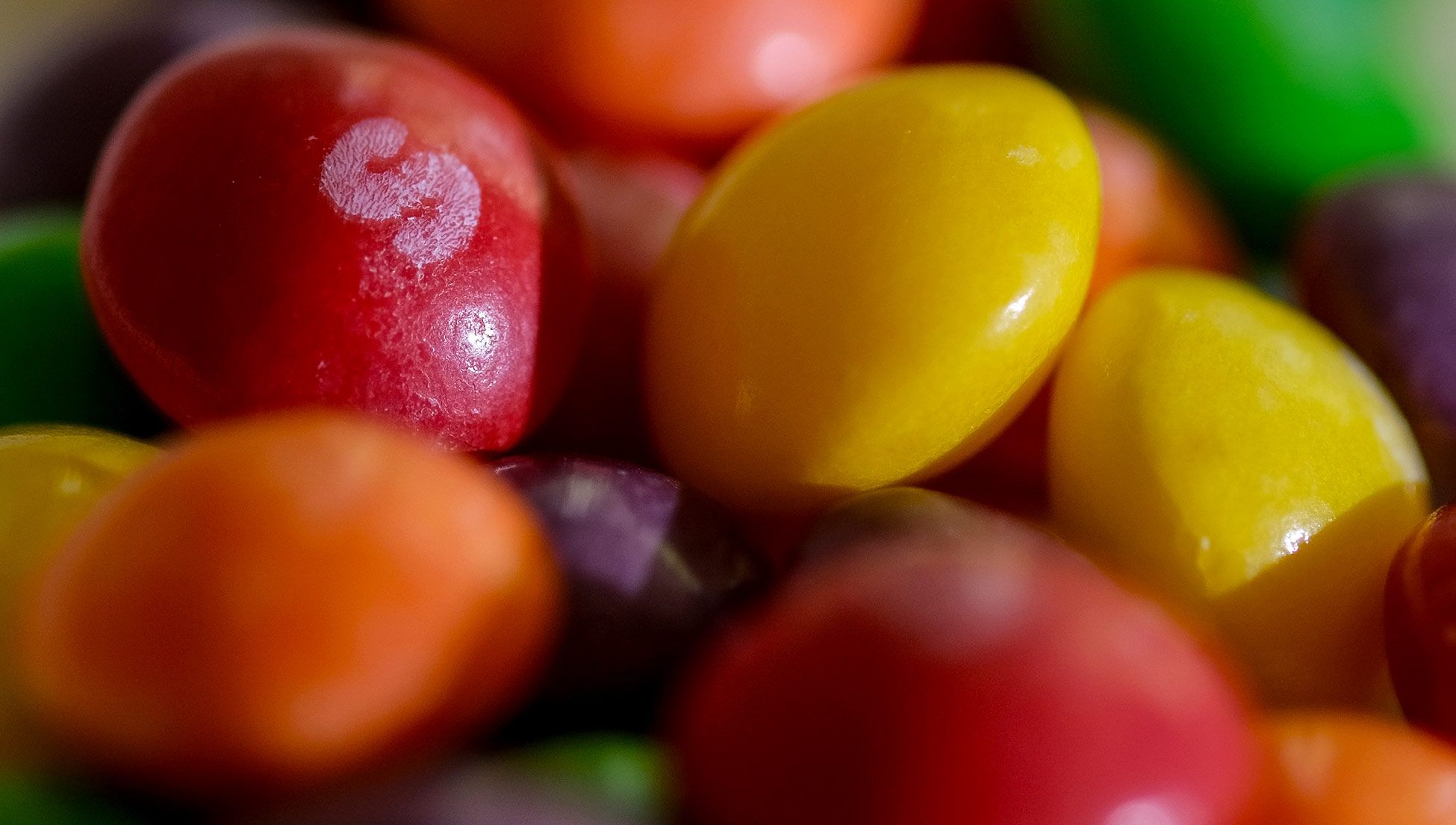
Magic Skittles. Photo by Yuriko Nakao/Getty
Darwin A Guevarrais a postdoctoral scholar at the University of California, San Francisco. He is broadly interested in emotional wellbeing, how to improve it, and its implications for psychological and physical health. He continues to pursue work on placebo effects and how they can be leveraged to improve emotional wellbeing interventions.
Kari A Leibowitzis a health psychologist, speaker and writer. She received her PhD from Stanford University, where she conducted research in the Stanford Mind and Body Lab to harness mindsets to improve health and wellbeing. She delivers workshops on the power of mindset to international audiences, and her writing has appeared in The Atlantic and The New York Times, among others. She lives in San Francisco.
Edited by Christian Jarrett
9 March 2022 (psyche.co)
In 2014, the American footballer Marshawn Lynch – a former NFL running back nicknamed ‘Beast Mode’ because he bulldozed and ran over would-be tacklers – signed an endorsement deal with Skittles. This was more than business. To Lynch, Skittles aren’t just Skittles. Since he was young, the button-shaped candies have been his secret weapon.
As a rising football star in high school, Lynch was often struck by anxiety in advance of his games. It was often so extreme it caused an intense upset stomach. Young Lynch tried several over-the-counter remedies, but nothing seemed to work. Then one day, his mother, Delisa Lynch, told him that Skittles would settle his stomach. Not only that, but she said the Skittles would also make him play better: ‘They’re going to make you run fast, and they’re going to make you play good.’ And, somehow, they did.
No offence to Skittles lovers, but there’s nothing special about them. They’re mostly sugar, corn syrup and artificial flavours. Yet, throughout his college football and illustrious NFL career, Lynch held on to the belief that Skittles helped his game, and he always ate them before taking the field. You might assume that the Skittles were, for him, just a silly pre-game ritual. But by eating the Skittles and believing that they helped improve his performance, Lynch was taking advantage of a very real phenomenon: the placebo effect.
The placebo effect occurs when someone experiences a benefit due primarily to the belief that something they are doing – taking a medication, engaging in a ritual, or getting treatment – will have a beneficial effect. Placebos are far more powerful than most people realise. They’ve been shown in research trials to help reduce anxiety, depression, pain, asthma, the motor symptoms of Parkinson’s disease, and recovery from osteoarthritis of the knee. It’s worth noting that these benefits aren’t just seen in terms of how people feel, although that alone is important, but also in terms of measurable physiological improvements.
The power of the placebo effect is such that new drugs are required to demonstrate that they have additional benefits, above and beyond a placebo, before they can go to market. Most drug and behavioural intervention trials fail this test – not because the drugs or interventions don’t work, but because the placebo effect is so strong.
Even though the placebo pills contained no active ingredients, and despite the patients knowing they’d been taking placebos, they reported fewer IBS symptoms
Given that placebos are such a powerful treatment on their own, we might ask ourselves: why are they not being used as a treatment more widely?
One of the biggest barriers is an ethical dilemma. On the one hand, placebos are highly effective for certain symptoms and conditions, and can have a real therapeutic effect. On the other hand, to benefit from placebos, the predominant thinking has been that people need to be misled into believing they’re taking an active treatment. Since most medical authorities worldwide have agreed – for good reasons – that lying to patients isn’t a best practice, this reliance on deception has prevented the widespread use of placebos as treatments in and of themselves.
But what about the case of Marshawn Lynch? Of course, he knows that Skittles don’t really have magical powers. He also knows the actual ingredients of Skittles can’t make him run faster or play better. And yet, he continues taking them, believing in and apparently enjoying their beneficial effects.
Lynch’s experience reflects an emerging research trend to study the possible beneficial effects of placebos given without deception, also known as ‘open-label placebos’ or ‘non-deceptive placebos’. In a foundational study in 2010, researchers at Harvard Medical School randomised patients experiencing irritable bowel syndrome (IBS) symptoms into either an open-label placebo group or a no-treatment control group – and crucially, all the patients knew which group they were in. The researchers told patients in the open-label placebo group that the placebo effect is powerful, that the body can respond automatically to taking placebo pills (similar to the classic conditioning example of Pavlov’s dogs, who salivated at the sound of the dinner bell), that a positive attitude helps but is not required, and that it is vital to take the pills faithfully for the entire 21-day study period, regardless of their belief in the pills. By the end of the study, even though the placebo pills contained no active ingredients, and despite the patients knowing they’d been taking placebos, they reported fewer IBS symptoms and more improvement in overall quality of life than patients in the no-treatment control group.
This paradigm of giving non-deceptive placebo pills as treatment has been repeated, including a recent replication of the benefit for IBS, while other trials have shown benefits for patients with ADHD and hay fever. Unsurprisingly, further research suggests that open-label placebos can also work in non-clinical settings. Together with colleagues, one of us (Darwin) showed in 2020 that an open-label placebo nasal spray reduced the distress provoked by looking at emotionally upsetting images. Like Lynch’s Skittles, the open-label placebo we used helped our volunteers manage their feelings and anxiety, an effect that was even visible in their electrical brain activity.
So what’s really going on here? It’s not the sugar pill itself that leads to these changes in psychology and physiology, and it’s not magic either. Research in medicine and psychology on both traditional and open-label placebos suggests several mechanisms at play.
Patients who also took the open-label placebo pills consumed approximately 30 per cent less daily morphine in the days after surgery
One is people’s expectations, or the positive belief that a treatment might have beneficial effects. In open-label placebo studies, including Darwin’s nasal spray study mentioned above, people are often told that a belief in the placebo isn’t necessary, but they are encouraged to keep an open mind. Some of the clinical studies have involved volunteers for whom many other treatments have failed, and so they have added reason to hope that this experimental, slightly unorthodox treatment might work for them. Emerging research suggests that this belief might be partially responsible for the benefits. For example, a study one of us (Kari) ran as part of her PhD showed that open-label placebos led to a reduction in allergic response from a histamine skin-prick test, but only for those volunteers who believed strongly in the beneficial power of placebos.
Another possible mechanism is conditioning, in which the body learns to associate beneficial effects with an action or ritual. Many of us have had repeated experiences of taking pills that help reduce our symptoms – ibuprofen for a headache, NyQuil for a cold, or Pepto Bismol for an upset stomach. Over time, the body may learn to associate taking a pill with symptom relief. So the very act of taking a pill itself can catalyse the body’s own capacity for healing.
This conditioning is sometimes done explicitly in research with open-label placebos. In one clinical study, researchers asked patients recovering from spine surgery to pair their active pain medication with open-label placebos and also to take the placebo pills on their own. The placebo pills began exerting their own pain relief. Compared with the control group who received treatment as usual, patients who also took the open-label placebo pills consumed approximately 30 per cent less daily morphine in the days after surgery.
There are also other, less well-studied mechanisms that may be at play in open-label placebo effects. For example, when someone starts taking a treatment – placebo or not – they often begin paying closer attention to their own minds and bodies. Most conditions and symptoms fluctuate over time. For example, when we are experiencing a headache, even if we don’t take any medication or other action, the severity of that headache will naturally decrease over time. People who take open-label placebo pills may hope for improvement, making them more attuned to times when their symptoms subside. Other research shows that medical rituals – whether that’s taking a pill, getting an injection, or merely having a cup of tea and taking a hot bath – can evoke both expectations for healing and a conditioned response. Thus, the act of taking pills faithfully can become a healing medical ritual in and of itself.
The pharmaceutical industry has no incentive to promote this kind of medication over patented, privatised medications
Now that we are seeing an accumulation of evidence that open-label placebos might be helpful, researchers and clinicians are starting to think about how to apply them in practice to benefit patients. For certain conditions, particularly those such as IBS that have already been studied, open-label placebos could be an effective treatment on their own. As the American footballer Marshawn Lynch has known for years, and new research is demonstrating, open-label placebos could also be used for reducing stress and anxiety to help people get in the zone before exams or games. And as research continues combining open-label placebos with existing medications, we may find them useful for tapering or decreasing doses of medications that have side-effects, such as pain medications or medications for disorders such as ADHD.
Current and future research is continuing to shed light on which conditions open-label placebos might be best-suited to. As the field grows, a debate must follow: will open-label placebos ever become part of mainstream medicine? Is it better to focus efforts on convincing doctors (and patients) that open-label placebos can be effective, or should we better understand the mechanisms of open-label placebo effects and try to harness those mechanisms in conjunction with active medications and treatments, such as by boosting patient expectations? Will open-label placebos ever be more than a semi-fringe last resort for conditions and patients for whom most other treatments have failed?
Of no small consideration is the fact that, with little money to be made from prescribing sugar pills, the influential pharmaceutical industry has no incentive to promote this kind of medication over patented, privatised medications and treatments. In many ways, research on open-label placebos is still in its infancy. The next 10 years may determine the ultimate impact of this research. As the field progresses, one of us (Darwin) plans to continue to investigate and optimise open-label placebo effects on stress, anxiety and depression in both clinical and non-clinical settings.
On an individual level, while taking open-label placebos – or Skittles – isn’t a substitute for seeking medical advice or treatment, if you’re trying to be like Marshawn Lynch, you could begin to think about how you might use open-label placebos in your own life. As a starting point, when you take a real medication, such as Tylenol (paracetamol), you could try to boost some of the relevant mechanisms – such as expectations and conditioning – for example, by reminding yourself of the benefits you expect. You could consider using some of your own open-label placebos for minor issues that don’t require medical intervention, such as aches and minor pains, stress and anxiety, difficulty sleeping, or mild upset stomach. You can drink tea (reminding yourself that lots of herbal teas do actually contain active healing ingredients), take a hot bath (which can also have medical benefits), or do other rituals that help you feel better while deliberately focusing on their healing benefits. Try finding your own version of an open-label placebo to help you in times of need. The science says it just might work.

Photo by Jocelyn Michel/Getty
Art Funkhouseris a Jungian psychotherapist based in Bern, Switzerland. He trained at the C G Jung Institute, and has published research on dream analysis, precognition, and déjà experiences. He is responsible for the Deja Experience Research website.
Edited by Cameron Allan McKean
9 March 2022 (psyche.co)
I was 16, and it was the spring of 1956. I remember the new leaves were beginning to sprout on the elm trees near where we lived in Oklahoma. I recall how happy we were that the road outside our home had finally been paved – it was now a lot quieter when cars drove past (and less dusty, too). And I remember that the high-school ‘sock hop’ dances had begun, where DJs played Elvis Presley’s first hit ‘Heartbreak Hotel’. But what I remember most from that spring was my first unsettling encounter with the impossible.
It started with a game. My friends and I decided to play hide-and-seek on our bicycles. One of us rode off to hide and, after some time, the rest fanned out throughout the neighbourhood trying to find him. This was in a small town on the northwest edge of Oklahoma City, which consisted mainly of small suburban homes with fenced yards, car garages and sheds, as well as trees and bushes that provided ideal camouflage. It didn’t take long until we decided that searching was hopeless: there were just too many places where he could be hiding. We gave up. But while riding back, an image appeared in my mind’s eye: I saw our quarry laying down his bicycle in the front yard of my house. We couldn’t have seen this directly because the yard was blocked by other houses. And yet, as we rounded the corner, I saw exactly what I’d pictured: our friend laying down his bicycle in the grass. I had seen it before seeing it – and in exquisite detail!
This experience, and others like it, contradicted everything I thought I knew about how reality functions and launched me on a quest that continues to the present day. At first, in the late 1950s and early ’60s, no one around me had any idea what I was talking about when I tried to explain these experiences. It wasn’t until 1970, while at the library of the National Institutes of Health near Washington, DC, that I finally found a knowledgeable librarian who knew that such experiences are called déjà vu, a French phrase meaning ‘already seen’. I learned that many others had had similar impossible experiences, too. I was not alone. This whetted my appetite. But my discovery of déjà vu led only to more questions. The deeper I delved, the more complex it became. ‘Déjà vu’ was not one thing. In fact, it was a better understood as a variety of experiences: ‘déjà experiences’.
For me, the defining features of a true déjà experience are sudden shock and bafflement, accompanied by the unsettling conviction that what one is experiencing is impossible – and yet it’s happening. This is different to feelings of vague familiarity with things that remind you of something from your past, or someone you know or have known. Such experiences are not uncommon. In 1992, the researcher John W Fox had a study published on ‘reported paranormal experiences’, including déjà vu. Out of a sample of 3,885 US adults, around 65 per cent said that déjà vu had happened to them, from once or twice to often. Roughly the same percentage has been found by surveys in other cultures as well.
Historically, ‘déjà vu’ has been used as an umbrella term to describe a range of possible déjà experiences. In his book The Deja Vu Experience (2004), Alan S Brown lists 32 phrases that have been used to describe déjà vu, 53 different definitions for it, and has devoted several whole chapters to the hypotheses put forward to explain it. Physiologists, for instance, have opined that its origin lies in delayed communication between the cerebral hemispheres; psychologists figure these experiences must be due to memory glitches (that the person has seen something in his or her past, and a present situation recalls it); neurologists say they are often caused by temporal lobe epilepsy; and some parapsychologists say they may arise from precognitive dreams. Others prefer reincarnation as an explanation.
The term déjà vécu (‘already lived’) would have been a better choice because such experiences entail all the senses, not just vision
The earliest mention of a déjà experience that I’ve found appears in the novel Guy Mannering; or, The Astrologer (1815) by the Scottish historian Walter Scott. While wandering through a ruined castle, the protagonist muses about a ‘shadowy recollection’ of events that have not yet taken place, and unfamiliar places ‘not entirely strange to me’:
[W]hy is it that some scenes awaken thoughts which belong as it were to dreams of early and shadowy recollection, such as my old Brahmin Moonshie would have ascribed to a state of previous existence? Is it the visions of our sleep that float confusedly in our memory, and are recalled by the appearance of such real objects as in any respect correspond to the phantoms they presented to our imagination? How often do we find ourselves in society which we have never before met, and yet feel impressed with a mysterious and ill-defined consciousness that neither the scene, the speakers, nor the subject are entirely new; nay, feel as if we could anticipate that part of the conversation which has not yet taken place!
Some years later, Charles Dickens reflected on a similar sensation in David Copperfield (1850):
We have all some experience of a feeling, that comes over us occasionally, of what we are saying and doing having been said and done before, in a remote time – of our having been surrounded, dim ages ago, by the same faces, objects, and circumstances – of our knowing perfectly what will be said next, as if we suddenly remembered it!
Toward the turn of the century, many terms were used to designate these experiences. So how did one term come to serve a proxy for this wider suite of uncanny sensations? It seems ‘déjà vu’ first entered the scientific literature in 1876. Émile Boirac, a professor of philosophy at a classical high school in the French city of Poitiers, had a letter published in the Révue Philosophique in which he described ‘le sentiment du déjà vu’. He shared his own experiences and classified them as one type of illusionary memory. However, his use of the terminology was forgotten or ignored. ‘Déjà vu’ didn’t appear again until 1893, when the French philosopher André Lalande and others were credited with using it.
The term was officially proposed in 1896 when the Société Medico-Psychologique met in Paris to designate the phenomenon. The French psychiatrist Francois-Léon Arnaud objected to the other suggested terms, such as ‘false recognition’, ‘false memory’, ‘paramnesia’ and ‘reminiscence’, because they were too broad. He felt that ‘already seen’ more neatly fitted the experience (and was also more neutral from a theoretical point of view). Not everyone agreed. As several authors insisted, déjà vécu (‘already lived’) would probably have been more accurate and a better choice because such experiences entail all the senses, not just vision. However, déjà vécu and other alternatives never gained wide acceptance and ‘already seen’ was taken up by several writers, including the pioneering psychologist Pierre Janet, who had been present at that 1896 meeting. The term quickly entered popular parlance and, as a result, a panoply of unsettling experiences collectively gained the name ‘déjà vu’.
The problem here is that real progress – a deeper understanding of the phenomenon – will be possible only once more accurate terminology is developed and used in a well-differentiated way. With better terms, we can be more precise about the experiences that are out there and the conditions that surround their occurrence.
Déjà visité is when you find yourself in a place you know you’ve never been before, but you still somehow know your way around
In his 1981 doctoral thesis, the South African neuropsychiatrist Vernon Neppe, now director of the Pacific Neuropsychiatric Institute in Seattle, enumerated 21 variants of déjà vu. Among them were the aforementioned déjà vécu, as well as déjà visité (‘already visited’), déjà rêvé (‘already dreamt’), déjà entendu (‘already heard’), déjà senti (‘already smelt’), and déjà lu (‘already read’). It was Neppe, in fact, who first proposed that we place the various types under the heading ‘déjà experiences’.
Each form may well have its own cause and explanation. In my research, I have concentrated on the two forms of déjà experience that I believe are the most prevalent: déjà visité and déjà vécu. Déjà visité is when you find yourself in place you know you’ve never been before, but you still somehow know your way around or it seems amazingly familiar. Déjà vécu is when a person relives a situation for the second time – the most common déjà experience people describe. They’re what the former Time magazine journalist James Geary in 1997 described as ‘Been There, Done That’. In terms of explanation, some instances of déjà visité could be understood through theories of reincarnation. However, these wouldn’t explain déjà vécu because the clothes people are wearing and many of the things they talk about would not have been present in a previous lifetime.
As part of the search for other explanations, several attempts have been made to reproduce déjà experiences and, in some of them, feelings of familiarity have been evoked but, as far as I know, none were accompanied by strong feelings of startle and bafflement. Some general characteristics of déjà experiences, though, are known and/or agreed upon. For most people, they occur sporadically and are unpredictable. Some people have them often and others have them rarely. They tend to be more frequent and intense when the person is young, say between 15 and 25, and taper off and lose intensity as they get older. They usually don’t last very long. Since, like dreams, déjà experiences cannot be reliably reproduced in the laboratory, all theories are necessarily ad hoc, and it may well be that many of them are true, depending on which form of déjà experience the person has had.
I myself explain my déjà vécu experiences as arising from precognitive dreams that were not remembered until they ‘came true’. I am far from saying that every instance of déjà vécu or déjà visité is caused by a preceding precognitive dream, but many are. When I have given lectures about it, I usually ask the audience how many are convinced their déjà experiences come from dreams they’ve had. About one-third have raised their hands, so I’m certainly not alone.
Some just find the experiences an intriguing quirk, something fun to think about and ponder. Then there are those who find them scary: they’re afraid everything is predetermined and that they have no free will. Some say they find it reassuring – it suggests that they’re on the right track in life. For others, the precognitive element opens them up to metaphysical and non-materialistic views of reality. I’ve been so intrigued by these encounters that I’ve wanted to learn as much as I can.
And yet, despite all the hypotheses that have been put forward, we’re still no closer to explaining how these arise than when they were first described in Scott’s novel. No closer to explaining my encounter that day in the spring of 1956; no closer to explaining the sudden shock, the bafflement, the unsettling conviction that I was experiencing something impossible – and yet, it was happening. I find that exciting. There’s still a lot to be done.
QuakerSpeak What can you expect in a Quaker Worship Service? This is a guide for newcomers on the basics: what to expect in Quaker Meeting for Worship. Quaker Speak is a weekly video series. Subscribe so you never miss a video! http://QuakerSpeak.com/subscribe Filmed and Editing by Jon Watts www.JonWatts.com Music from this episode: www.JonWattsMusic.com Thanks to Downingtown Friends Meeting for allowing us to film there! http://downingtownfriendsmeeting.org/ More Videos on Quaker Meeting for Worship: http://youtu.be/H5GWZWSn6zY?list=PL-r… Explore the Quaker Way: http://www.fgcquaker.org/explore Read Friends Journal to see how other Friends describe the substance of Quaker spirituality http://www.FriendsJournal.org Come worship with Friends! Find Quakers near you on QuakerFinder and Friends Journal’s meeting listings http://www.fgcquaker.org/connect/quak…http://www.friendsjournal.org/meeting… Music: “Steamboat” by How How http://freemusicarchive.org/music/How…

We make things and seed them into the world, never fully knowing — often never knowing at all — whom they will reach and how they will blossom in other hearts, how their meaning will unfold in contexts we never imagined. (W.S. Merwin captured this in the final lines of his gorgeous poem “Berryman.”)
Today I offer something a little apart from the usual, or sidelong rather, amid these unusual times: A couple of days ago, I received a moving note from a woman who had read Figuring and found herself revisiting the final page — it was helping her, she said, live through the terror and confusion of these uncertain times. I figured I’d share that page — which comes after 544 others (here are the first), tracing centuries of human loves and losses, trials and triumphs, that gave us some of the crowning achievements of our civilization — in case it helps anyone else.
“Planetary System, Eclipse of the Sun, the Moon, the Zodiacal Light, Meteoric Shower” by Levi Walter Yaggy from Geographical Portfolio, 1887. (Available as a print, as a face mask, and as stationery cards.)
Meanwhile, someplace in the world, somebody is making love and another a poem. Elsewhere in the universe, a star manyfold the mass of our third-rate sun is living out its final moments in a wild spin before collapsing into a black hole, its exhale bending spacetime itself into a well of nothingness that can swallow every atom that ever touched us and every datum we ever produced, every poem and statue and symphony we’ve ever known — an entropic spectacle insentient to questions of blame and mercy, devoid of why.
In four billion years, our own star will follow its fate, collapsing into a white dwarf. We exist only by chance, after all. The Voyager will still be sailing into the interstellar shorelessness on the wings of the “heavenly breezes” Kepler had once imagined, carrying Beethoven on a golden disc crafted by a symphonic civilization that long ago made love and war and mathematics on a distant blue dot.
But until that day comes, nothing once created ever fully leaves us. Seeds are planted and come abloom generations, centuries, civilizations later, migrating across coteries and countries and continents. Meanwhile, people live and people die — in peace as war rages on, in poverty and disrepute as latent fame awaits, with much that never meets its more, in shipwrecked love.
I will die.
You will die.
The atoms that huddled for a cosmic blink around the shadow of a self will return to the seas that made us.
What will survive of us are shoreless seeds and stardust.

MARCH 8, 2022 AT 7:00 AM BY ROB BREZSNY (newcity.com)
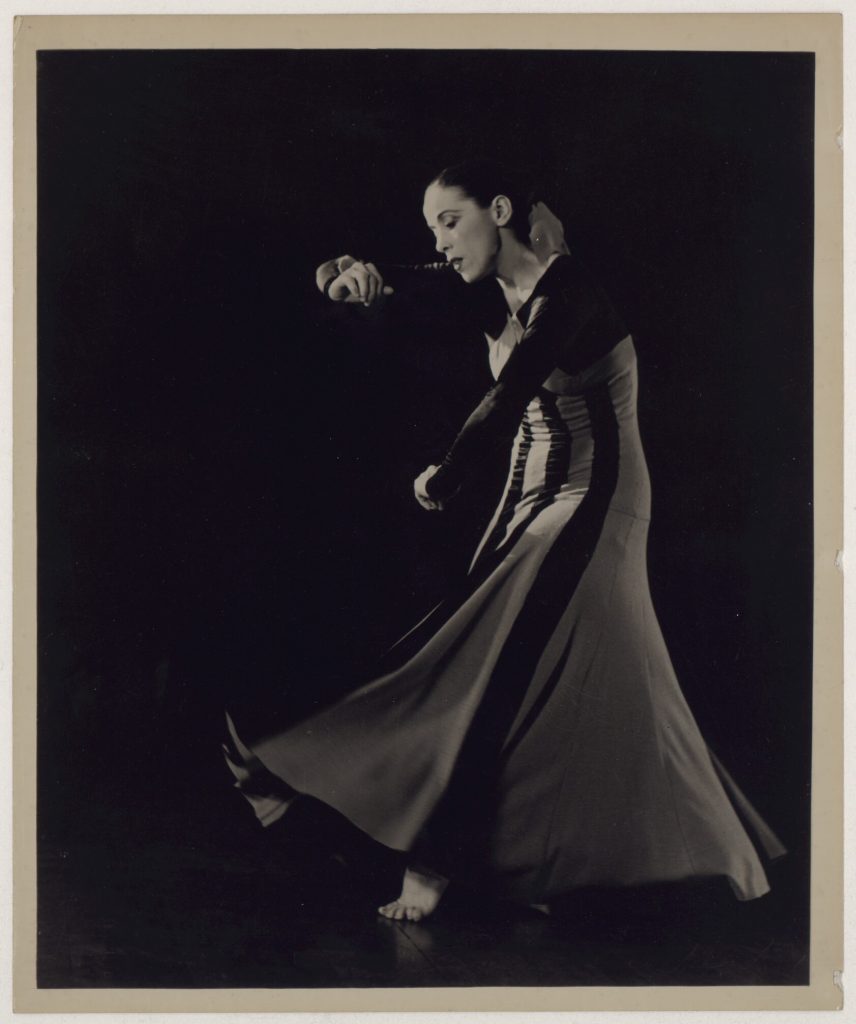
Martha Graham performs “Deep Song”/Photo: Barbara Morgan, Library of Congress, Music Division
ARIES (March 21-April 19): Aries author Isak Dinesen defined “true piety” as “loving one’s destiny unconditionally.” That’s a worthy goal for you to aspire to in the coming weeks. I hope you will summon your deepest reserves of ingenuity and imagination as you cultivate a state of mind in which you adore your life just as it is. You won’t compare it negatively to anyone else’s fate, and you won’t wish it were different from what it actually is. Instead, you will be pleased and at peace with the truth of exactly who you are right now.
TAURUS (April 20-May 20): As author Mary Ruefle points out, “In the beginning, William Shakespeare was a baby, and knew absolutely nothing. He couldn’t even speak.” And yet eventually, he became a literary superstar—among history’s greatest authors. What happened in between? I’m not exaggerating when I attribute part of the transformation to magic. Vast amounts of hard work and help and luck were involved, too. But to change from a wordless, uncoordinated sprout to a potent, influential maestro, Taurus-born Shakespeare had to be the beneficiary of mysterious powers. I bring this up, Taurus, because I think you will have access to comparable mojo during the next four weeks.
GEMINI (May 21-June 20): As talented and financially successful as Kanye West is, the Gemini singer-songwriter experiences a lot of emotional suffering. But no one lives an ideal life, right? And we can learn from everyone. In any case, I’ve chosen quotes by Kanye that are in rapt alignment with your astrological omens. Here they are: 1. “I’m in pursuit of awesomeness; excellence is the bare minimum.” 2. “You’re not perfect, but you’re not your mistakes.” 3. “I’m not comfortable with comfort. I’m only comfortable when I’m in a place where I’m constantly learning and growing.” 4. “Everything I’m not makes me everything I am.”
CANCER (June 21-July 22): “Any real ecstasy is a sign you are moving in the right direction,” wrote philosopher Saint Teresa of Avila, who was renowned for her euphoric spiritual experiences. So is there any such thing as “fake ecstasy,” as she implies? Maybe fake ecstasy would be perverse bliss at the misfortune of an enemy, or the trivial joy that comes from realizing your house keys aren’t missing. Real ecstasy, on the other hand, might arise from a visceral sense of the presence of God, or the rapture that emerges as you make love with a person you care for, or the elation you feel when you commune with your favorite animal. Anyway, Cancerian, I predict that in the coming days, you will have an extra rich potential for the real kinds of rhapsodic delight and enchantment.
LEO (July 23-Aug. 22): Leo actor Jennifer Lawrence portrayed a rugged, fierce, resourceful champion in “The Hunger Games” film trilogy. In real life, however, she has few resemblances to that stalwart hero. “I have the street smarts and survival skills of a poodle,” she has confessed. But I’ve got potentially good news for her and all the rest of you Leos. The coming months will be a favorable time for you to cultivate the qualities of a rugged, fierce, resourceful champion. And right now would be an excellent time to launch your efforts.
VIRGO (Aug. 23-Sept. 22): Each of us periodically has to deal with conflict. There come times when we must face the fact that a specific situation in our lives isn’t working well and needs to be adjusted, fixed or transformed. We might prefer to pretend the problem doesn’t exist. We may be inclined to endure the stressful discomfort rather than engage with its causes. But such an approach won’t be right for you in the coming days, dear Virgo. For the sake of your mental and spiritual health, you have a sacred duty to bravely risk a struggle to improve things. I’ll provide you with advice from novelist John Fowles. He said, “I must fight with my weapons. Not his. Not selfishness and brutality and shame and resentment.” Fowles goes on to say that he will offer generosity and gentleness and no-shame and forgiveness.
LIBRA (Sept. 23-Oct. 22): A blogger named MysteryOfWhat expressed appreciation for her errors and wrong turns. “I love all my mistakes!” she exclaimed. “I had fun!” She has a theory that she would not have been able to completely fulfill her interesting destiny without her blunders and her brilliant adjustments to those blunders. I won’t encourage you to be quite so boisterously unconditional in celebrating your fumbles and miscues, Libra. My inclination is to urge you to honor them and feel grateful for them, but I’m not sure I should advise you to shout out, “I love all my mistakes! I had fun!” But what do you think?
SCORPIO (Oct. 23-Nov. 21): Scorpio poet Norman MacCaig wrote, “Ask me, go on, ask me to do something impossible, something freakishly useless, something unimaginable and inimitable like making a finger break into blossom or walking for half an hour in twenty minutes or remembering tomorrow.” I hope people say things like that to you soon, Scorpio. I hope allies playfully nudge you to stretch your limits, expand your consciousness, and experiment on the frontier. To encourage such a development, you could do the same for your beloved allies: nudge them to stretch their limits, expand their consciousness, and experiment on the frontier.
SAGITTARIUS (Nov. 22-Dec. 21): “Look at your body not as a source of physical attraction but as a shrine,” wrote teacher Sobonfu Somé. Personally, I have no problem if you regard your body as a source of physical attraction—as a gorgeous, radiant expression of your life energy, worthy of inspiring the appreciation of others. But I agree with Somé that you should also treat your body as a sacred sanctuary deserving of your reverence—especially now. Please boost your intention to provide your beloved organism with all the tender care it needs and warrants.
CAPRICORN (Dec. 22-Jan. 19): “It’s surprising how much memory is built around things unnoticed at the time,” writes author Barbara Kingsolver. Yes! I agree. And by providing you with this heads-up from her, I’m hoping that the subtly potent events unfolding for you in the coming weeks will not go unnoticed. I’m hoping you will be alert for seemingly small but in fact crucial developments—and thereby give them all the focus and intelligence they deserve. Later, you’ll remember this delicately pivotal time with amazed gratitude.
AQUARIUS (Jan. 20-Feb. 18): What’s more important: to learn or to unlearn? The answer, of course, is they are equally important. But sometimes, the most crucial preparation for a new learning phase is to initiate a surge of unlearning. That’s what I’m recommending for you right now. I foresee you embarking on a series of extravagant educational experiences in a couple of weeks. And the best way to ensure you take maximum advantage of the available lessons is by dumping useless knowledge and irrelevant information and numbing habits.
PISCES (Feb. 19-March 20): Singer-songwriter Jill Scott has earned one platinum and two gold records. She approaches her craft with diligence and intensity. On one occasion, she was frying a burger at her boyfriend’s house when she sensed a new song forming in her imagination. Abandoning the stove, she ran into the next room to grab pen and paper. Soon she had transcribed the beginning of a melody and lyrics. In the meantime, though, the kitchen caught on fire. Luckily, she doused it. Later Jill testified, “His cabinets were charred, and he was furious. But it was worth it for a song.” I don’t think you’ll have to make as big a sacrifice as hers in the coming days, Pisces. But you should respond robustly whenever inspiration arrives.
Homework: Every day for three days, seek out three experiences that will make you laugh a lot. Report results: Newsletter.FreeWillAstrology.com
Stephen McElvain According to Wikipedia: “You Never Even Call Me by My Name” is the title of a song written and recorded by Steve Goodman and John Prine, and later recorded as “You Never Even Called Me by My Name” by country music singer David Allan Coe, produced by Ron Bledsoe. It was the third single release of Coe’s career, included on his album Once Upon a Rhyme. The song was Coe’s first Top Ten hit, reaching a peak of number eight on the Billboard country singles charts.
(Contributed by Alan Blackman)
