
Katie Halper Marianne Williamson explores the connection between the personal and political and leads a meditation! Part of the #RadicalSelfCareforAll series that Katie Halper is doing because she is tired, in general, and also tired of self care being something for only the rich and famous. ***Please support The Katie Halper Show *** On Patreon https://www.patreon.com/thekatiehalpe… Follow Katie on Twitter: https://twitter.com/kthalps
Monthly Archives: August 2021
Female hummingbirds ‘dress’ like males to avoid being harassed
Sarah Knapton Thu, August 26, 2021, 7:11 AM (yahoo.colm)

Female hummingbirds can “dress” like males to avoid being harassed, allowing them to get more food, a new study suggests.
Male white-necked Jacobin hummingbirds of Panama have bright and flashy colors, with iridescent blue heads, bright white tails, and white bellies, while females tend to be drabber, with muted green grey or black colours that help them blend into the environment.
However, US researchers discovered that one in five of the adult females kept their juvenile flashy colours even when they reached reproductive age.
Researchers were puzzled why they would select for a trait that made them less attractive to the opposite sex and therefore less able to reproduce.
To find out, they designed an experiment in which stuffed female hummingbirds were placed on feeders to see how their plumage affected how real birds interacted with them.
The team discovered that the flashier females were left alone with the food while the more drab birds were pecked and body slammed by the males.

Previously, plumage colour was always thought to be linked to mating, but the researchers believe that it can also be connected to competition for food resources.
And they think such an adaptation may be more useful for hummingbirds because they have such fast metabolisms and so need a lot of energy.
Writing in the journal Current Biology, the authors from Cornell University and the Smithsonian Tropical Research Institute concluded: “(Male mimicking) females avoid harassment while feeding, enabling them to access food more than those with non-ornamented plumage.
“For species with the highest mass-specific demands of any vertebrate, selection traits that maximise feeding in the face of intense resource competition for any other bird may explain why (the adaptation) has evolved so often in hummingbirds yet so rarely in other avian species.”
Dr Jay Falk, now at the University of Washington in the United States, added: “Hummingbirds are such beloved animals by many people, but there are still mysteries we have not noticed or studied.”
(Contributed by Janet Cornwell, H.W., m.)
A Course in Miracles: Lesson 34
Ladies and Gentlemen… Mr. Leonard Cohen
A trip to Montreal with Leonard Cohen in 1965 is a glimpse into a singular poetic mind
In 1965, the celebrated Canadian writer Leonard Cohen (1934-2016) took a trip from Greece, where he then lived, to his home city of Montreal. There, he visited friends and family, gave readings at a series of engagements and, more generally, renewed his ‘neurotic affiliations’. The Canadian directors Donald Brittain and Don Owen chronicled Cohen’s visit for their documentary Ladies and Gentlemen… Mr Leonard Cohen. The film finds Cohen – who, at just 30, is already an established and celebrated literary voice – drifting between live performances, snowy streets, bistros and the cheap hotels where he takes refuge. With their informal and engaging portrait, Brittain and Owen provide a riveting glimpse into Cohen’s life as an artist, centred on channelling ‘hypersensitivity and an enormous curiosity’ into witty, penetrating and often enigmatic poetry and prose.
Directors: Donald Brittain, Don Owen
Website: National Film Board of Canada22 April 2021
Book: “Negative Cat”

Negative Cat
Two-time Caldecott winner Sophie Blackall spins a winning tale about Max, a feline whose behavior doesn’t win any raves, except from the boy who believes in him and finds a way to turn a negative into a positive.
When a boy is FINALLY allowed to get a cat, he has no doubts about which one to bring home from the shelter. But Max the cat isn’t quite what the family expected. He shuns the toy mouse, couldn’t care less about the hand-knitted sweater, and spends most of his time facing the wall. One by one, the family gives up on Max, but the boy loves his negative cat so much, he’ll do anything to keep him. Even the thing he dreads most: practicing his reading. Which, as it turns out, makes everything positive!
(Goodreads.com)
Leonard Bernstein on Cynicism, Instant Gratification, and Why Paying Attention Is a Countercultural Act of Courage and Resistance
By Maria Popova (brainpickings.org)

Composer and conductor Leonard Bernstein (August 25, 1918–October 14, 1990) remains one of the most irrepressible creative minds and largest spirits of the past century. He was awarded twenty-three Grammy Awards, ten Emmy Awards, and twenty-two honorary degrees. For Bernstein, his life and his work, his art and his political convictions, coexisted inseparably within the vast container of his unrelenting idealism. During the Hoover administration, the FBI had a file on him almost seven hundred pages long. When JFK was assassinated, Bernstein delivered a remarkable speech about the only true antidote to violence, which has only grown in poignancy and timeliness in recent years. He met tragedy and turmoil with tireless resolve for betterment. “We must believe, without fear, in people,” he wrote in his largehearted personal credo, and he enacted that belief in every realm of his life — but nowhere more so than in his work with children, whom he educated and nurtured into a creative life for more than four decades through his Young People’s Concerts, television specials, books, and lectures.
Leonard Bernstein making notes at the piano, 1955 (Photograph: Al Ravenna / Library of Congress)
On November 20, 1989 — less than a year before his death — Bernstein, who was otherwise averse to interviews, invited into his home longtime Rolling Stone contributing editor Jonathan Cott for a long dinner conversation. A decade after conducting Susan Sontag’s most dimensional interview, Cott took Bernstein by the hand and walked the maestro across the landscape of his own life as Bernstein reflected on everything from music to education to love.
Their beautifully layered and symphonic conversation was eventually published as Dinner with Lenny: The Last Long Interview with Leonard Bernstein (public library).
Cott casts his subject:
Leonard Bernstein adamantly, and sometimes controversially, refused to compartmentalize and separate his emotional, intellectual, political, erotic, and spiritual longings from the musical experience.
[…]
Above all, in every aspect of his life and work, Bernstein was a boundless enthusiast. In the course of my dinner conversation with him, he informed me that the word “enthusiasm” was derived from the Greek adjective entheos, meaning “having the god within,” with its attendant sense of “living without aging,” as did the gods on Mount Olympus.
Bernstein’s greatest point of enthusiasm was his lifelong devotion to enamoring young people with music. He understood that love and learning are inextricably linked, that learning is a kind of love and love a kind of learning, and used his robust and radiant enthusiasm as a force of illumination. He tells Cott:
As we grow up and learn to be cynical, Bernstein argues, we gradually stifle this inherent love of learning, turn off our curiosity, and become calcified. Out of that cynicism springs the impulse for instant gratification — the very opposite of the pleasurably protracted challenge of learning. A generation before the incessant input feed of the Internet gave us continuous quick fixes of on-demand approval and outrage, Bernstein considers the cultural and civilizational conditions that have contributed to this epidemic of instant gratification:
[…]
You can’t “do” the Sistine Chapel instantly — you have to lie on your back and look up at that ceiling and contemplate. And we’ve already lost a whole generation of kids who are blind to anything constructive or beautiful, who are blind to love, love, LOVE — that battered, old, dirty four-letter word that few people understand anymore.

Leonard Bernstein in his final years
But rather than despairing over this nascent orientation of spirit, which would itself be an act of cynicism, Bernstein turns to the reasons for hope — hope he devoted his life to seeding and seeing bloom. (Active hope, lest we forget, is the antidote to cynicism.) He tells Cott:
[…]
No subject is too difficult to talk to the kids about. You just have to know where the pain is.
When Cott brings up the Hasidic Rabbi Dov Baer’s assertion that “each person consists of a certain song of existence, the one by which our innermost being was created and is defined,” Bernstein responds:
Echoing the great cellist Pau Casals — who, at the age of 93, wrote beautifully about how working with love prolongs one’s life and called on us to “make this world worthy of its children” — Bernstein reflects on his life’s greatest passion:
[…]
There is so much inherent goodness in people that if they aren’t inhibited by traumas and are given half a chance, it shines through.
Bernstein died eleven months later, having handed this great chance-giving gift to generations through the power of music and the infectiousness of his enthusiasm.
Complement the electrifying and elevating Dinner with Lenny with Bernstein on why we create, how art fortifies our mutual dignity, his stirring tribute to JFK, and his touching letter of gratitude to his mentor, then revisit Cott’s conversation with Susan Sontag about love, sex, and the world between and how cultural polarities like young vs. old, male vs. female, and intuition vs. intellect imprison us.
Free Will Astrology for week of Aug. 26, 2021

“Better than any argument is to rise at dawn and pick dew-wet red berries in a cup,” said writer Wendell Berry. (Shutterstock)
Aquarius, now is not the time to consider delicate issues that may lead to a dispute
- ROB BREZSNY
- Aug. 26, 2021 1:30 a.m. (SFExaminer.com)
- FEATURES
ARIES (March 21-April 19): Aries mythologist Joseph Campbell advised us to love our fate. He said we should tell ourselves, “Whatever my fate is, this is what I need.” Even if an event seems inconvenient or disruptive, we treat it as an opportunity, as an interesting challenge. “If you bring love to that moment, not discouragement,” Campbell said, “you will find the strength.” Campbell concludes that any detour or disarray you can learn from “is an improvement in your character, your stature, and your life. What a privilege!” Few signs of the zodiac are inclined to enthusiastically adopt such an approach, but you Aries folks are most likely to do so. Now is an especially favorable time to use it.
TAURUS (April 20-May 20): The brilliant Taurus dancer and choreographer Martha Graham spoke of “a vitality, a life force, a quickening that is translated through you into action,” adding that “there is only one of you in all time.” She added, “It is not your business to determine how good it is, nor how it compares with other expressions. It is your business to keep it yours clearly and directly, to keep the channel open.” But even if you do this very well, Graham said, you will nevertheless always feel “a divine dissatisfaction, a blessed unrest” that will fuel you. This is the perfect message for you Tauruses to embrace in the coming weeks.
GEMINI (May 21-June 20): There’s growing scientific evidence that we make ourselves stupid by complaining too much—or even by listening to other people complain a lot. Excessive negative thoughts drain energy from our hippocampus, a part of our brain that’s essential to problem-solving. This doesn’t mean, of course, that we should avoid dealing with difficult issues. But it does suggest we should be discerning about how many disturbing and depressing ideas we entertain. According to my reading of the omens, all this will be especially useful advice for you in the coming weeks.about:blankabout:blank
CANCER (June 21-July 22): Your brain contains one hundred billion nerve cells. Each cell has the potential to be linked with tens of thousands of others. And they are always busy. Typically, your gray matter makes a million new connections every second. But I suspect your number of connections will increase even beyond that in the coming weeks. Your most complex organ will be working with greater intensity than usual. Will that be a bad thing or a good thing? It depends on whether you formulate an intention to channel your intelligence into wise analysis about important matters—and not waste it in careless fussing about trivial details.
LEO (July 23-Aug. 22): “You should have a sticky soul,” counsels author Elizabeth Berg. “The act of continually taking things in should be as much a part of you as your hair color.” I especially endorse that attitude for you during the next four weeks, Leo. Your task is to make yourself extra magnetic for all the perceptions, experiences, ideas, connections and resources you need most. By Sept. 23, I suspect you will have gained an infusion of extra ballast and gravitas.
VIRGO (Aug. 23-Sept. 22): “I sing like the nightingale whose melody is crowded in the too narrow passage of her throat,” wrote author Virginia Woolf. That was an insulting curse for her to fling at herself. I disapprove of such behavior—especially for you in the coming weeks. If you hope to be in alignment with cosmic rhythms, don’t you dare say nasty things about yourself, even in the privacy of your own thoughts. In fact, please focus on the exact opposite: flinging praise and appreciation and compliments at yourself.
LIBRA (Sept. 23-Oct. 22): The blogger at www-wlw.tumblr.com says the following are the top tender actions. 1. Fastening clothes or jewelry for your companion. 2. Letting them rest their head on your shoulder. 3. Idly playing with their hands. 4. Brushing a leaf out of their hair. 5. Locking pinkies. 6. Rubbing their back when you embrace. 7. Both of you wearing an item that belongs to the other. Dear Libra, I hope you will employ these tender actions with greater frequency than usual in the coming weeks, Libra. Why? In my astrological opinion, it’s a ripe time to boost your Affection Quotient with the allies you care for the most.
SCORPIO (Oct. 23-Nov. 21): Naturalist Henry David Thoreau wrote in his journal, “I feel slightly complimented when nature condescends to make use of me without my knowledge—as when I help scatter her seeds in my walk—or carry burs and cockles on my clothes from field to field. I feel as though I had done something for the commonweal.” I mention this, Scorpio, because the coming weeks will be an excellent time for you to carry out good deeds and helpful transformations in nature’s behalf. Your ability to collaborate benevolently with plants and animals and elemental forces will be at a peak. So will your knack for creating interesting connections between yourself and all wild things.
SAGITTARIUS (Nov. 22-Dec. 21): You may have never heard of Sagittarian artist Baya Mahieddine (1931–1998). At age 16, she experienced a splash of acclaim with a show in Paris. Famous artists Pablo Picasso, Henry Matisse and George Braques came. They drew inspiration from Mahieddine’s innovative use of color, elements from her Algerian heritage and her dream-like images. Picasso even invited her to work with him, exulting in the fresh perspectives she ignited. But her art never received the full credit it warranted. In accordance with astrological omens, this horoscope is a small way of providing her with the recognition and appreciation she deserves. It also authorizes you to go out and get the recognition and appreciation you deserve but have not yet fully received.
CAPRICORN (Dec. 22-Jan. 19): “Who knows what is unfolding on the other side of each hour?” asked Capricorn poet Juan Ramón Jiménez (translated by Capricorn poet Robert Bly): “How many times the sunrise was there, behind a mountain. How many times the brilliant cloud piling up far off was already a golden body full of thunder!” Your assignment, Capricorn, is to imagine what is unfolding just beyond your perception and understanding. But here’s the twist: You must steer your mind away from inclinations to indulge in fear. You must imagine that the events in the works are beautiful, interesting or redemptive. If you’re not willing to do that, skip the exercise altogether.about:blankabout:blank
AQUARIUS (Jan. 20-Feb. 18): “Better than any argument is to rise at dawn and pick dew-wet red berries in a cup,” wrote author Wendell Berry. I mostly agree with that sentiment, although I will also put in a good word for certain kinds of arguments. There are moments when it’s crucial for your psychological and spiritual health that you initiate a conversation about delicate issues that might lead to a dispute. However, I don’t think this is one of those times, Aquarius. In my astrological opinion, picking dew-wet red berries is far more sensible than any argument. For further inspiration, read this testimony from actor Natasha Lyonne: “I definitely would rather take a nap than get angry.”
PISCES (Feb. 19-March 20): For painter Vincent van Gogh, love wasn’t primarily a sentimental feeling. Nor was it an unfocused generalized wish for health and happiness in those he cared for. Rather, he wrote, “You must love with a high, serious, intimate sympathy, with a will, with intelligence.” His love was alert, acute, active and energized. It was animated with a determination to be resourceful and ingenious in nurturing the beloved. For van Gogh, love was always in action, forever moving toward ever-fresh engagement. In service to intimacy, he said, “you must always seek to know more thoroughly, better, and more.” I hope you’ll make these meditations a top priority during the next seven weeks.
Homework: This is what I do to earn a living. Let me know what you do. Newsletter@FreeWillAstrology.com
Tarot card for August 26: The Five of Disks
The Five of Disks
The Lord of Worry is most aptly titled, for when this card comes up in a reading, there looks to be financial, material or domestic trouble on the horizon. Something poses a threat to your overall security. This might be an unexpected expense, or job worries, or maybe even a disturbance in your family life.
There will always be something to worry about, when the Five of Disks comes up. But there’s one important thing to bear in mind – whatever is causing the problem is much more of a threat than it is a reality. Worrying about it might just make it worse than it needs to be!
When the Lord of Worry is about, anxiety is the emotion of the moment. We look to the future and we see something nasty ahead. Then we sit and worry about it. Try to remember – what you put your attention on grows. So if you worry about your overdraft, it will get bigger! That’s not, of course, to say you should not do all you are able to DO, in an awkward situation – just that once you have, there’s no point in worrying about it.
Sometimes we go through a stage in our lives where we feel as though, whatever good comes to us, it is bound to be undermined and darkened by negativity and sadness, that we cannot help but be disappointed. Yet just by holding that view, we invite negativity in, to add to the real problems we already had.
It isn’t easy to try to be accepting and positive and trusting when life is giving us a hard time – but accept we must, if we don’t want to make things worse!
So – the Five of Disks indicates a possible threat to our security. It is important not to feed that possibility with our own fear. Fear is a powerful emotion. It can rule if we let it. When this card comes up, remember that disturbance is possible – not probable. Do all you can to avert it.
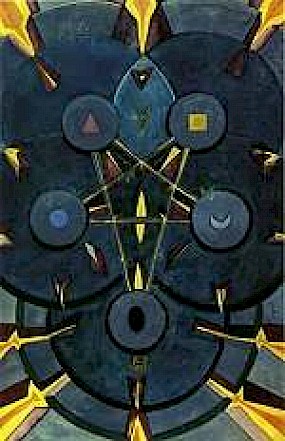
(via angelpaths.com and Alan Blackman)
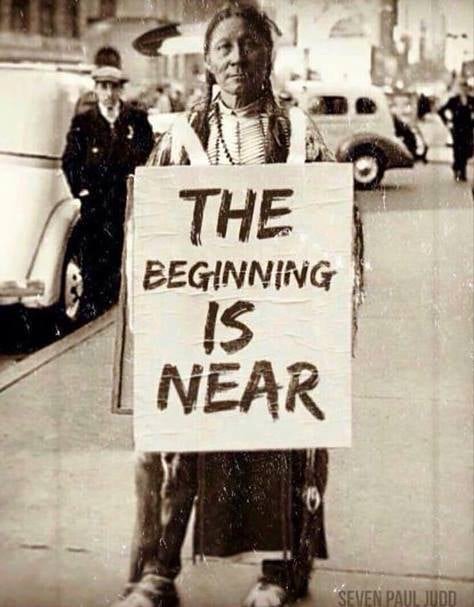
“The Beginning is Near”

The Uncertainty Principle | Genius
National Geographic18.3M subscribersSUBSCRIBEEinstein disagrees with his friend and fellow physicist Dr. Niels Bohr about a fundamental concept of quantum physics. ➡ Subscribe: http://bit.ly/NatGeoSubscribe ➡ Watch all Genius Clips here: http://bit.ly/2WatchGenius About Genius: From Executive Producers Brian Grazer and Ron Howard, National Geographic’s first scripted anthology series, GENIUS, will focus on Nobel Prize-winning physicist Albert Einstein. The all-star cast includes Geoffrey Rush, Johnny Flynn, and Emily Watson. Get More National Geographic: Official Site: http://bit.ly/NatGeoOfficialSite Facebook: http://bit.ly/FBNatGeo Twitter: http://bit.ly/NatGeoTwitter Instagram: http://bit.ly/NatGeoInsta About National Geographic: National Geographic is the world’s premium destination for science, exploration, and adventure. Through their world-class scientists, photographers, journalists, and filmmakers, Nat Geo gets you closer to the stories that matter and past the edge of what’s possible. The Uncertainty Principle | Genius https://youtu.be/9mXJK86GCsI National Geographic https://www.youtube.com/natgeo