Here’s a post about robot cars that developed into the realization that I was not taking global warming into account. Now that I have looked at this I am speechless. I hope my real-time discovery makes sense as written, but if not please let me know.
I don’t think the prospects for robot cars are that favorable just because I think this level of robotics will be out of reach for a long time, say more than 15 years. BTW, this also means that once it is in reach global warming will have become a problem that even Federal politicians and government agencies can no longer ignore. I believe that the problems of coping with global warming will necessitate drastic policies that try to cope with more social chaos and greater survival issues like more damaging storms everywhere and less gasoline and oil for cars. Robot cars will not be on people’s minds.
Aside: When I started this post I was just thinking about the report I linked to below. But as soon as I reviewed what I’d written I noticed a vague statement claiming that robot cars will be out of reach “for a long time.” What was I thinking?: 100 years, 10 years, what? As soon as I filled this in I realized that in 15 or 20 years global warming will be much more of a problem, and that government and industry would be impacted: I think long supply chains of goods and raw materials from marginally developed countries (or even China which fits into no single category of development), will be intermittently disrupted or even hugely disrupted. This means that the supply of batteries and computer chips, just for starters, will begin to decline, and eventually this will cause the failure of some of the systems that rely on current supply conditions.
Now I’m way out of my depth. Life on planet Earth can’t be as bad as what I’m imagining right now—I have no perspective on how humans and systems will adapt, and not enough facts. So, back to the fantasy that life as we know it is going to be with us indefinitely.
Reasonable minds can differ on these issues, and those who think that robot cars are coming in the next five years or so have all sorts of reasons to claim that such cars will reduce traffic, reduce fatalities and basically save the world from the evils of gridlock and the gasoline engine. What to make of these claims?
Here is a well-researched report that assumes robot cars are coming in some form and then looks at the pros and cons: http://www.ptua.org.au/myths/robotcar/.
Based on this report I think that the common scenario for robot cars, that people will have them instead of current cars, will not happen because it will make urban congestion worse. The report examines many scenarios I had not thought of, and I offer it as a kind of primer on the proposal.
“Love words, agonize over sentences. And pay attention to the world.”
BY MARIA POPOVA (brainpickings.org)
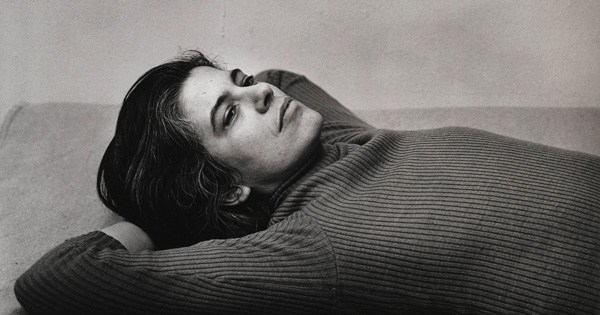
Susan Sontag (January 16, 1933–December 28, 2004) spent a lifetime contemplating the role of writing in both the inner world of the writer and outer universe of readers, which we call culture — from her prolific essays and talks on the task of literature to her devastatingly beautiful letter to Borges to her decades of reflections on writing recorded in her diaries. But nowhere did she address the singular purpose of storytelling and the social responsibility of the writer with more piercing precision than in one of her last public appearances — a tremendous lecture on South African Nobel laureate Nadine Gordimer titled “At the Same Time: The Novelist and Moral Reasoning,” which Sontag delivered shortly before her death in 2004. The speech is included in and lends its title to the endlessly enriching posthumous anthology At the Same Time: Essays and Speeches (public library), which also gave us Sontag on beauty vs. interestingness, courage and resistance, and literature and freedom.
Sontag begins with the quintessential question asked of, and answered by, all prominent writers — to distill their most essential advice on the craft:
I’m often asked if there is something I think writers ought to do, and recently in an interview I heard myself say: “Several things. Love words, agonize over sentences. And pay attention to the world.”
Needless to say, no sooner had these perky phrases fallen out of my mouth than I thought of some more recipes for writer’s virtue.
For instance: “Be serious.” By which I meant: Never be cynical. And which doesn’t preclude being funny.
With the disclaimer that “descriptions mean nothing without examples,” Sontag points to Gordimer as the “living writer who exemplifies all that a writer can be” and considers what the South African author’s “large, ravishingly eloquent, and extremely varied body of work” reveals about the key to all great writing:
A great writer of fiction both creates — through acts of imagination, through language that feels inevitable, through vivid forms — a new world, a world that is unique, individual; and responds to a world, the world the writer shares with other people but is unknown or mis-known by still more people, confined in their worlds: call thathistory, society, what you will.
She cautions that despite all the noble uses of literature, despite all the ways in which it can transcend the written word to achieve a larger spiritual purpose — William Faulkner’s conviction that the writer’s duty is “to help man endure by lifting his heart” comes to mind — storytelling is still literature’s greatest duty:
The primary task of a writer is to write well. (And to go on writing well. Neither to burn out nor to sell out.) … Let the dedicated activist never overshadow the dedicated servant of literature — the matchless storyteller.
To write is to know something. What a pleasure to read a writer who knows a great deal. (Not a common experience these days…) Literature, I would argue, is knowledge — albeit, even at its greatest, imperfect knowledge. Like all knowledge.
Still, even now, even now, literature remains one of our principal modes of understanding.
[…]
Everybody in our debauched culture invites us to simplify reality, to despise wisdom. There is a great deal of wisdom in Nadine Gordimer’s work. She has articulated an admirably complex view of the human heart and the contradictions inherent in living in literature and in history.
Nearly half a century after E.B. White proclaimed that the writer’s duty is “to lift people up, not lower them down,” Sontag considers “the idea of the responsibility of the writer to literature and to society” and clarifies the terms:
By literature, I mean literature in the normative sense, the sense in which literature incarnates and defends high standards. By society, I mean society in the normative sense, too — which suggests that a great writer of fiction, by writing truthfully about the society in which she or he lives, cannot help but evoke (if only by their absence) the better standards of justice and of truthfulness that we have the right (some would say the duty) to militate for in the necessarily imperfect societies in which we live.
Obviously, I think of the writer of novels and stories and plays as a moral agent… This doesn’t entail moralizing in any direct or crude sense. Serious fiction writers think about moral problems practically. They tell stories. They narrate. They evoke our common humanity in narratives with which we can identify, even though the lives may be remote from our own. They stimulate our imagination. The stories they tell enlarge and complicate — and, therefore, improve — our sympathies. They educate our capacity for moral judgment.
Illustration by Jim Stoten from ‘Mr. Tweed’s Good Deeds.’ Click image for details.
Every writer of fiction wants to tell many stories, but we know that we can’t tell all the stories — certainly not simultaneously. We know we must pick one story, well, one central story; we have to be selective. The art of the writer is to find as much as one can in that story, in that sequence … in that time (the timeline of the story), in that space (the concrete geography of the story).
[…]
A novelist, then, is someone who takes you on a journey. Through space. Through time. A novelist leads the reader over a gap, makes something go where it was not.
[…]
Time exists in order that everything doesn’t happen all at once … and space exists so that it doesn’t all happen to you.
[…]
The work of the novelist is to enliven time, as it is to animate space.
Repeating her memorable assertion that criticism is “cultural cholesterol,” penned in her diary decades earlier, Sontag considers the reactive indignation that passes for criticism:
Most notions about literature are reactive — in the hands of lesser talents, merely reactive.
[…]
The greatest offense now, in matters both of the arts and of culture generally, not to mention political life, is to seem to be upholding some better, more exigent standard, which is attacked, both from the left and the right, as either naïve or (a new banner for the philistines) “elitist.”
Writing nearly a decade before the golden age of ebooks and some years before the epidemic of crowdsourced-everything had infected nearly every corner of creative culture, Sontag once again reveals her extraordinary prescience about the intersection of technology, society, and the arts. (Some decades earlier, she had presaged the “aesthetic consumerism” of visual culture on the social web.) Turning a critical eye to the internet and its promise — rather, its threat — of crowdsourced storytelling, she writes:
Hypertext — or should I say the ideology of hypertext? — is ultrademocratic and so entirely in harmony with the demagogic appeals to cultural democracy that accompany (and distract one’s attention from) the ever-tightening grip of plutocratic capitalism.
[But the] proposal that the novel of the future will have no story or, instead, a story of the reader’s (rather, readers’) devising is so plainly unappealing and, should it come to pass, would inevitably bring about not the much-heralded death of the author but the extinction of the reader — all future readers of what is labeled as “literature.”
Illustration by Tom Seidmann-Freud, Sigmund Freud’s niece, from ‘David the Dreamer’ (1922). Click image for more.
Returning to the writer’s crucial task of selecting what story to tell from among all the stories that could be told, Sontag points to literature’s essential allure — the comfort of appeasing our anxiety about life’s infinite possibility, about all the roads not taken and all the immensities not imagined that could have led to a better destination than our present one. A story, instead, offers the comforting finitude of both time and possibility:
Every fictional plot contains hints and traces of the stories it has excluded or resisted in order to assume its present shape. Alternatives to the plot ought to be felt up to the last moment. These alternatives constitute the potential for disorder (and therefore of suspense) in the story’s unfolding.
[…]
Endings in a novel confer a kind of liberty that life stubbornly denies us: to come to a full stop that is not death and discover exactly where we are in relation to the events leading to a conclusion.
[…]
The pleasure of fiction is precisely that it moves to an ending. And an ending that satisfies is one that excludes. Whatever fails to connect with the story’s closing pattern of illumination the writer assumes can be safely left out of the account.
A novel is a world with borders. For there to be completeness, unity, coherence, there must be borders. Everything is relevant in the journey we take within those borders. One could describe the story’s end as a point of magical convergence for the shifting preparatory views: a fixed position from which the reader sees how initially disparate things finally belong together.
There is an essential … distinction between stories, on the one hand, which have, as their goal, an end, completeness, closure, and, on the other hand, information, which is always, by definition, partial, incomplete, fragmentary.
Illustration by Edward Gorey from ‘The Shrinking of Treehorn’ (1971). Click image for more.
For Sontag, these two modes of world-building are best exemplified by the dichotomy between literature and the commercial mass media. Writing in 2004, she saw television as the dominant form of the latter, but it’s striking to consider how true her observations hold today if we substitute “the internet” for every mention of “television.” One can only wonder what Sontag would make of our newsfeed-fetishism and our compulsive tendency to mistake the latest and most urgent for the most important. She writes:
Literature tells stories. Television gives information.
Literature involves. It is the re-creation of human solidarity. Television (with its illusion of immediacy) distances — immures us in our own indifference.
The so-called stories that we are told on television satisfy our appetite for anecdote and offer us mutually canceling models of understanding. (This is reinforced by the practice of punctuating television narratives with advertising.) They implicitly affirm the idea that all information is potentially relevant (or “interesting”), that all stories are endless — or if they do stop, it is not because they have come to an end but, rather, because they have been upstaged by a fresher or more lurid or eccentric story.
By presenting us with a limitless number of nonstopped stories, the narratives that the media relate — the consumption of which has so dramatically cut into the time the educated public once devoted to reading — offer a lesson in amorality and detachment that is antithetical to the one embodied by the enterprise of the novel.
Indeed, this notion of moral obligation is what Sontag sees as the crucial differentiator between storytelling and information — something I too have tussled with, a decade later, in contemplating the challenge of cultivating wisdom in the age of information, particularly in a media landscape driven by commercial interest whose very business model is predicated on conditioning us to confuse information with meaning. (Why think about what constitutes a great work of art — how it moves you, what it says to your soul — when you can skim the twenty most expensive paintings in history on a site like Buzzfeed?)
In storytelling as practiced by the novelist, there is always … an ethical component. This ethical component is not the truth, as opposed to the falsity of the chronicle. It is the model of completeness, of felt intensity, of enlightenment supplied by the story, and its resolution — which is the opposite of the model of obtuseness, of non-understanding, of passive dismay, and the consequent numbing of feeling, offered by our media-disseminated glut of unending stories.
Television gives us, in an extremely debased and untruthful form, a truth that the novelist is obliged to suppress in the interest of the ethical model of understanding peculiar to the enterprise of fiction: namely, that the characteristic feature of our universe is that many things are happening at the same time. (“Time exists in order that it doesn’t happen all at once… space exists so that it doesn’t all happen to you.”)
Illustration by Dasha Tolstikova for ‘The Jacket’ by Kirsten Hall. Click image for more.
And therein lies Sontag’s greatest, most timeless, most urgently timely point — for writers, and for human beings:
To tell a story is to say: this is the important story. It is to reduce the spread and simultaneity of everything to something linear, a path.
To be a moral human being is to pay, be obliged to pay, certain kinds of attention.
When we make moral judgments, we are not just saying that this is better than that. Even more fundamentally, we are saying that thisis more important than that. It is to order the overwhelming spread and simultaneity of everything, at the price of ignoring or turning our backs on most of what is happening in the world.
The nature of moral judgments depends on our capacity for paying attention — a capacity that, inevitably, has its limits but whose limits can be stretched.
But perhaps the beginning of wisdom, and humility, is to acknowledge, and bow one’s head, before the thought, the devastating thought, of the simultaneity of everything, and the incapacity of our moral understanding — which is also the understanding of the novelist — to take this in.
Paul Tillich is widely regarded as one of the most influential theologians of the twentieth century, if not the most influential.
Originally published more than fifty years ago, his The Courage to Be (1952) has become a classic, designated one of the Books of the Century by the New York Public Library. It describes the dilemma of modern man, especially the problem of anxiety.
The 2014 edition includes a new introduction by Harvey Cox, author of The Secular City. Cox situates the book within the theological conversation into which it first appeared and conveys its continued relevance in the current century.
Comments on the book:
“The Courage to Be changed my life. It also profoundly impacted the lives of many others from my generation.”–Robert N. Bellah, University of California, Berkeley
“The brilliance, the wealth of illustration, and the aptness of personal application . . . make the reading of these chapters an exciting experience.”―W. Norman Pittenger, New York Times Book Review
“A lucid and arresting book.”―Frances Witherspoon, New York Herald Tribune
“Clear, uncluttered thinking and lucid writing mark Mr. Tillich’s study as a distinguished and readable one.”―American Scholar
Excerpts from The Courage to Be:
THE RISE OF MODERN INDIVIDUALISM AND THE COURAGE TO BE AS ONESELF
Individualism is the self-affirmation of the individual self as individual self without regard to its participation in the world. As such it is the opposite of collectivism, the self-affirmation of the self as part of a larger whole without regard to its character as an individual self. Individualism has developed out of the bondage of primitive collectivism and medieval semicollectivism. It could grow under the protective cover of democratic conformity, and it has come into the open in moderate or radical forms within the Existentialist movement….
THE LIMITS OF THE COURAGE TO BE AS ONESELF
…But man is finite, he is given to himself as what he is….. Man can affirm himself only if he is not an empty shell, a mere possibility, but the structure of being in which he finds himself before action and nonaction. Finite freedom has a definite structure, and if the self tries to trespass on this structure it ends in the loss of itself…. He cannot escape the forces of his self…. When [the revolutionary movements] broke down, these people turned either to the neocollectivist system, in a fanatic-neurotic reaction against the cause of their disappointment, or to a cynical-neurotic indifference….
If carried through radically, the courage to be as a part leads to the loss of self in collectivism and the courage to be as oneself leads to the loss of the world….
COURAGE AND LIFE
…Being-itself [lies] above the split between subjectivity and objectivity…. Being as being transcends objectivity as well as subjectivity. But in order to approach it cognitively one must use both….
THE MEANING OF NONBEING
…Being “embraces” itself and nonbeing. Being has nonbeing “within” itself as that which is eternally present and eternally overcome….
THE ANXIETY OF FATE AND DEATH
Fate would not produce inescapable anxiety without death behind it…. Nonbeing is omnipresent and produces anxiety even where an immediate threat of death is absent…. We are driven…without a moment of time which does not vanish immediately. [Death] stands behind…insecurity…. It stands behind…weakness, disease, and accidents…. The human situation as such [produces] anxiety.
NONBEING OPENING UP BEING
…Being includes nonbeing but nonbeing does not prevail against it…. Being embraces itself and that which is opposed to it, nonbeing. Nonbeing belongs to being, it cannot be separated from it. We could not even think “being” without a double negation: being must be thought as the negation of the negation of being….
THE LOSS OF THE EXISTENTIALIST POINT OF VIEW
“I am”… is more than mere cogito (consciousness)…. [We exist] in time and space and under the conditions of finitude and estrangement…. Where there is nonbeing there is finitude and anxiety…. Finitude and anxiety belong to being-itself….
THE ANXIETY OF GUILT AND CONDEMNATION
Nonbeing…threatens man’s moral self-affirmation. Man’s being…is…also demanded of him. He is responsible for it; literally, he is required to answer, if he is asked, what he has made of himself…. This situation produces the anxiety which, in relative terms is the anxiety of guilt; in absolute terms, the anxiety of self-rejection or condemnation…. He is asked to make of himself what he is supposed to become, to fulfill his destiny…. Even in what he considers his best deed nonbeing is present and prevents it from being perfect. A profound ambiguity between good and evil permeates everything he does, because it permeates his personal being as such…. The awareness of this ambiguity is the feeling of guilt….
THE COURAGE TO ACCEPT ACCEPTANCE
The courage which takes this threefold anxiety into itself must be rooted in a power of being that is greater than the power of oneself and the power of one’s world…. Everything that is participates in being itself, and everybody has some awareness of this participation…. the ground of being as source of the courage to be…. courage to be as key to the ground of being….
GUILT AND THE COURAGE TO ACCEPT ACCEPTANCE
In the center of the Protestant courage of confidence stands the courage to accept acceptance in spite of the consciousness of guilt… The courage to be is the courage to accept oneself as accepted in spite of being unacceptable….. This, however, does not mean acceptance by oneself as oneself. [In] the psychoanalytic situation…this objective power works through the healer in the patient. Of course, it must be embodied in a person who can realize guilt, who can judge, and who can accept in spite of the judgment…. A wall to which I confess cannot forgive me. No self-acceptance is possible if one is not accepted in a person-to-person relation… Being accepted does not mean that guilt is denied. The healing helper who tried to convince his patient that he was not guilty would do him a great disservice…. He accepts the patient into his communion without condemning anything and without covering up anything.
Religion…asks for God…. The courage of confidence…emphasizes…trust in God and rejects any other foundation for his courage to be, not only as insufficient but as driving him into more guilt and deeper anxiety….
One can become aware of the God above the God of theism in the anxiety of guilt and condemnation…. The “father-image” [that] once was the power in those symbols can still be present and create the courage to be in spite of the experience of an infinite gap between who we are and what we ought to be…. Courage returns…in terms of the absolute faith which says Yes although there is no special power that conquers guilt….
Governments of the Industrial World, you weary giants of flesh and steel, I come from Cyberspace, the new home of Mind. On behalf of the future, I ask you of the past to leave us alone. You are not welcome among us. You have no sovereignty where we gather.
We have no elected government, nor are we likely to have one, so I address you with no greater authority than that with which liberty itself always speaks. I declare the global social space we are building to be naturally independent of the tyrannies you seek to impose on us. You have no moral right to rule us nor do you possess any methods of enforcement we have true reason to fear.
Governments derive their just powers from the consent of the governed. You have neither solicited nor received ours. We did not invite you. You do not know us, nor do you know our world. Cyberspace does not lie within your borders. Do not think that you can build it, as though it were a public construction project. You cannot. It is an act of nature and it grows itself through our collective actions.
You have not engaged in our great and gathering conversation, nor did you create the wealth of our marketplaces. You do not know our culture, our ethics, or the unwritten codes that already provide our society more order than could be obtained by any of your impositions.
You claim there are problems among us that you need to solve. You use this claim as an excuse to invade our precincts. Many of these problems don’t exist. Where there are real conflicts, where there are wrongs, we will identify them and address them by our means. We are forming our own Social Contract. This governance will arise according to the conditions of our world, not yours. Our world is different.
Cyberspace consists of transactions, relationships, and thought itself, arrayed like a standing wave in the web of our communications. Ours is a world that is both everywhere and nowhere, but it is not where bodies live.
We are creating a world that all may enter without privilege or prejudice accorded by race, economic power, military force, or station of birth.
We are creating a world where anyone, anywhere may express his or her beliefs, no matter how singular, without fear of being coerced into silence or conformity.
Your legal concepts of property, expression, identity, movement, and context do not apply to us. They are all based on matter, and there is no matter here.
Our identities have no bodies, so, unlike you, we cannot obtain order by physical coercion. We believe that from ethics, enlightened self-interest, and the commonweal, our governance will emerge. Our identities may be distributed across many of your jurisdictions. The only law that all our constituent cultures would generally recognize is the Golden Rule. We hope we will be able to build our particular solutions on that basis. But we cannot accept the solutions you are attempting to impose.
In the United States, you have today created a law, the Telecommunications Reform Act, which repudiates your own Constitution and insults the dreams of Jefferson, Washington, Mill, Madison, DeToqueville, and Brandeis. These dreams must now be born anew in us.
You are terrified of your own children, since they are natives in a world where you will always be immigrants. Because you fear them, you entrust your bureaucracies with the parental responsibilities you are too cowardly to confront yourselves. In our world, all the sentiments and expressions of humanity, from the debasing to the angelic, are parts of a seamless whole, the global conversation of bits. We cannot separate the air that chokes from the air upon which wings beat.
In China, Germany, France, Russia, Singapore, Italy and the United States, you are trying to ward off the virus of liberty by erecting guard posts at the frontiers of Cyberspace. These may keep out the contagion for a small time, but they will not work in a world that will soon be blanketed in bit-bearing media.
Your increasingly obsolete information industries would perpetuate themselves by proposing laws, in America and elsewhere, that claim to own speech itself throughout the world. These laws would declare ideas to be another industrial product, no more noble than pig iron. In our world, whatever the human mind may create can be reproduced and distributed infinitely at no cost. The global conveyance of thought no longer requires your factories to accomplish.
These increasingly hostile and colonial measures place us in the same position as those previous lovers of freedom and self-determination who had to reject the authorities of distant, uninformed powers. We must declare our virtual selves immune to your sovereignty, even as we continue to consent to your rule over our bodies. We will spread ourselves across the Planet so that no one can arrest our thoughts.
We will create a civilization of the Mind in Cyberspace. May it be more humane and fair than the world your governments have made before.
Because God is all that is, everything He creates is actually an extension of Himself. God is perfect, therefore the “true self” of every created being is perfect as well.
That true self goes by many names. To some it is the Christ, to some the Buddha Mind, to some the Shekinah, and so forth. The light of this true self cannot be altered, modified, or uncreated. Free will gives us the freedom to choose whether or not to express that self, but its light cannot be uncreated; it can only be unchosen.
If I behave like a jerk in any given moment, my true self was not un-created through my loveless behavior. My choice of how to act does not alter God’s creation. My true self, in such a moment, was simply like a file in a computer that I chose not to download.
I am not, however, able ever to delete the file of my true self. For what God created cannot be uncreated, and we always have the chance to return to our goodness in any moment when we have strayed. That is the meaning of atonement—that we can choose again, and download the light at the center of who we are even if it had not been our choice to do so previously.
This is the journey of forgiveness, redemption, and enlightenment. It is the path of choosing—time after time after time—to express the self of which we are capable, the self which God created, even in a sometimes very confusing world.
The miracle is the choice to replace the fear of the ego mind with the love of the spirit mind. It is not always easy, but it is always life-changing.
Your tireless quest for better aerodynamics goes horribly awry when you sand three of your friends to death.
Sagittarius | Nov. 22 to Dec. 21
Due to conditions beyond fate’s control, Sagittarius will be required to repeat February 1992.
Capricorn | Dec. 22 to Jan. 19
Explosive flatulence is not always a good way to break the ice on a first date.
Aquarius | Jan. 20 to Feb. 18
Uncertainty looms over Aquarius this week. Stock up on gum, kerosene, and matches.
Pisces | Feb. 19 to March 20
Become a softer, gentler person. Stop filing your teeth to razor-sharp points.
Aries | March 21 to April 19
Your triumphant exit from the worst job you’ve ever had is spoiled when a wino drenches you in flammable vodka vomit and sets you on fire with a menthol cigarette.
Taurus | April 20 to May 20
You are a person of uncommon vision. No matter who attempts to dissuade you, hold fast to your belief that your genitals are cramped and need to roam free.
Gemini | May 21 to June 20
The stars are peeved that you didn’t renew your subscription to Sky & Telescope magazine, so expect a fat, painful cyst on your ass.
Cancer | June 21 to July 22
Take comfort that your funeral next Friday will set attendance records at Radio City Music Hall, as all of New York celebrates.
Leo | July 23 to Aug. 22
A financial windfall comes your way this week when all your relatives perish in a whorehouse fire, leaving you as sole heir.
Virgo | Aug. 23 to Sept. 22
Poor quality control and lack of attention to detail force Consumer Reports to rate Virgo 12th out of 12 star signs.
Libra | Sept. 23 to Oct. 22
A drunken Father Time will appear at your doorstep this week, ask you how much time you think you have left, and laugh uproariously at your guess.
I came upon this quote which I found interesting. The author is a long time 4th Way student who studies personally with J. de Saltzman. This is an excerpt from a talk given at the University of Toronto.
–Richard Burns, H.W., M.
“Maybe what we need is a new department or faculty in this and other great Universities to focus the growing interest in holistic transdisciplinary studies: in von Bertalanffy’s “system of systems,” or anything looking in that direction. We might call it a Chair or a School of Ontological Studies, in recognition of the central place of being in the whole. It may sound strange to you now, but no stranger than a Department of Psychology, when that was first proposed. At the same time you realize the danger, if such a Chair falls into the hands of “empire builders.” They will claim everything as part of their whole.”
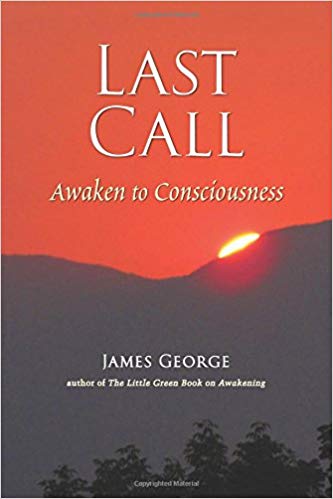
George, James (2016). Chapter 2: Knowledge, Being, Transformation. In his book – Last Call: Awaken to Consciousness, pp. 49.
Billye Talmadge passed today [October 24, 2018] at 7:25 a.m. in Portland, Oregon. You may not know her name but you know her work. She was one of the founders of Daughters of Bilitis, She, Del Martin, Phyl Lyons, Helen Sandoz and more were at the forefront of LGBT liberation in the 50s and 60s. They sheltered young lesbians, hired an attorney to help extricate lesbians from jail (it was a jail-able offense in most states to be a lesbian). Held private gatherings in their homes so lesbians had a safe place to meet. Her wise counsel helped many young women to accept them self. With two Ph.D.s in education she was at the foremost a teacher. She won the Golden Apple award for her work with blind and deaf children. Anyone who ever heard her speak will never forget her velvet voice and ability to reach the very soul of those who would hear.
Peaceful crossing Billye… Thank you for all you gave us.
Episode #050
OnOctober 20, 2018
On today’s episode of Under The Skin I’m joined by author Charles Eisenstein to discuss alternative economic systems, find out what’s wrong with the current climate change narrative and how we can actually change the world, challenge the powerful and empower the powerless.
There is a certain grandeur to the October Full Moon in Taurus, the sign in which it is traditionally considered to be “exalted.” Taurus relates to security and good living, with an emphasis on comfort and the feel-good factor. Moon in Taurus mothers typically ensure that there is plenty of food in the kitchen cupboards, and everyone is well clothed and otherwise cared for. If we have the Moon here natally, we may crave this kind of care or wish to offer it to others. This Moon naturally has a lot going for it! Yet it can be quite emotionally loaded, especially at Full Moon, along with being colored by the presence of other planets with which it is closely configured.
First, the Moon conjoinsUranus, accentuating individual needs with a touch of innovation and eccentricity. This can mean that what we expect as “usual” Taurus-type behavior will manifest as anything but usual. Sometimes, where Uranus makes a mark, there is a division to be grappled with. Therefore, decisions may have to be made about protecting personal comforts, whilst also surrendering a form of security. For instance, some with Taurus strongly accentuated in the birth chart may be considering leaving a job, home, or relationship, perhaps to protect their peace of mind or physical health.
The Full Moon always opposes the Sun but, on this occasion, also Venus in Scorpio. The theme of envy is often linked with Scorpio. In this case, we may envy someone else’s physical appearance. Will it motivate us enough to take steps to emulate that appearance? Or will we settle with what feels easier and more comfortable? The answer to this may reside in the position of the lunar nodes, which fall across the Leo–Aquarius axis. The nodes sit in early degrees and thereby make up a strong configuration with the Moon–Uranus and Sun–Venus, known as a grand cross. Visually, the grand cross is similar to the central spokes of a wheel, or the section of a fruit press, which, in an orchard, would get turned around with some force, in order to extract apple juice. It might take some effort, but the extracted nectar will be quite delicious!
Considering the wheel analogy, we may think of a bicycle: It takes effort and poise to manage riding a bike, but this can provide great health benefits, as well as a means of transport. In both cases, we may be willing to put in the effort to get closer to what is most desired. So, the potential is there, with this nodal grand cross (which consists of four internal square aspects), to find the impetus, strength, and momentum to drive forward on any goals that matter to us.
Since Uranus is involved, this does have an extra, personal touch; the goal is perhaps set aside in order to keep someone else happy. Or, given the opposition of the Moon to Venus, the goal may be pursued in reaction to what someone else wants. The inner tension of the oppositions involved around this Full Moon could drive both sets of people forward to achieve greater things, whilst not necessarily being able to offer direct support to one another.
The Taurus Moon also trinesSaturn in Capricorn, adding a grounding quality. Despite the wild-card accent of the Uranus conjunction, it might be well to observe a few rules. Another way to put this is: If we are branching out in new directions, we will soon get a sense of where the limits lie. There will be only so much that we can achieve alone and get away with, but if we overstep the mark, we’ll likely know about it fairly promptly. This may be no bad thing, though — Saturn is in his own sign, adding strength and dignity. We can trust that rules or traditions have developed for a good reason, and we would be wise to follow them.
There is room to move out of the established mould with this Moon and attend to individual needs and desires, but it makes sense to pay respect to some of the wisdom of the past as well. Wherever we may not fully succeed with the new, we can still find a solid path by leaning back on tried and tested methods. This push–pull momentum, echoed in the lunar nodes, reminds us that the well-trodden path and existing talents can be just as valuable as the pathway of further growth and exploration.
Written by Diana McMahon Collis for the Mountain Astrologer Magazine
A Full Moon symbolizes the fulfillment of the seeds planted at a previous New Moon or some earlier cycle. Each Full Moon reminds us of the seeds that may be coming to maturity, to their fullness, to fruition, to the place where the fruits or gifts are received. It may seem that fulfillment of our goals takes a long time. Some intentions may manifest within the two week phase prior to the next New or Full Moon. Some however, depending on their complexity, may take a much longer time. Just remember that our thoughts and emotions set Universal Action in motion and much work takes place behind the scenes as everything is orchestrated for fulfillment. Keep visualizing your goals as though you have already attained them and they will eventually manifest. Do not concern yourself with current conditions or worry about controlling it. The universe takes care of those details. Just keep seeing what you want, and move in that direction with your actions, and give no energy to what you don’t want. Patience is required.
Consciousness, spirituality, biography, sexuality, androgyny, futurism, space, the arts, science, astrology, democracy, humor, books, movies and more