Every Black Hole Contains Another Universe

Every Black Hole Contains Another Universe, Study Suggests

March 19, 2018

Like part of a cosmic Russian doll, our universe may be nested inside a black hole that is itself part of a larger universe. In turn, all the black holes found so far in our universe—from the microscopic to the supermassive—may be doorways into alternate realities.

According to a mind-bending new theory, a black hole is actually a tunnel between universes—a type of wormhole. The matter the black hole attracts doesn’t collapse into a single point, as has been predicted, but rather gushes out a “white hole” at the other end of the black one, the theory goes.

Related image

In a recent paper published in the journal Physics Letters B, Indiana University physicist Nikodem Poplawski presents new mathematical models of the spiraling motion of matter falling into a black hole. His equations suggest such wormholes are viable alternatives to the “space-time singularities” that Albert Einstein predicted to be at the centers of black holes.

According to Einstein’s equations for general relativity, singularities are created whenever matter in a given region gets too dense, as would happen at the ultradense heart of a black hole. Einstein’s theory suggests singularities take up no space, are infinitely dense, and are infinitely hot—a concept supported by numerous lines of indirect evidence but still so outlandish that many scientists find it hard to accept.

If Poplawski is correct, they may no longer have to. According to the new equations, the matter black holes absorb and seemingly destroy is actually expelled and becomes the building blocks for galaxies, stars, and planets in another reality.

Wormholes Solve Big Bang Mystery?

The notion of black holes as wormholes could explain certain mysteries in modern cosmology, Poplawski said. For example, the big bang theory says the universe started as a singularity. But scientists have no satisfying explanation for how such a singularity might have formed in the first place.

If our universe was birthed by a white hole instead of a singularity, Poplawski said, “it would solve this problem of black hole singularities and also the big bang singularity.” Wormholes might also explain gamma-ray bursts, the second most powerful explosions in the universe after the big bang.

Related image

Gamma-ray bursts occur at the fringes of the known universe. They appear to be associated with supernovae, or star explosions, in faraway galaxies, but their exact sources are a mystery.

Poplawski proposes that the bursts may be discharges of matter from alternate universes. The matter, he says, might be escaping into our universe through supermassive black holes—wormholes—at the hearts of those galaxies, though it’s not clear how that would be possible.

“It’s kind of a crazy idea, but who knows?” he said.

Related image

There is at least one way to test Poplawski’s theory: Some of our universe’s black holes rotate, and if our universe was born inside a similarly revolving black hole, then our universe should have inherited the parent object’s rotation. If future experiments reveal that our universe appears to rotate in a preferred direction, it would be indirect evidence supporting his wormhole theory, Poplawski said.

Wormholes Are “Exotic Matter” Makers?

The wormhole theory may also help explain why certain features of our universe deviate from what theory predicts, according to physicists. Based on the standard model of physics, after the big bang the curvature of the universe should have increased over time so that now—13.7 billion years later—we should seem to be sitting on the surface of a closed, spherical universe.

But observations show the universe appears flat in all directions. What’s more, data on light from the very early universe show that everything just after the big bang was a fairly uniform temperature. That would mean that the farthest objects we see on opposite horizons of the universe were once close enough to interact and come to equilibrium, like molecules of gas in a sealed chamber.
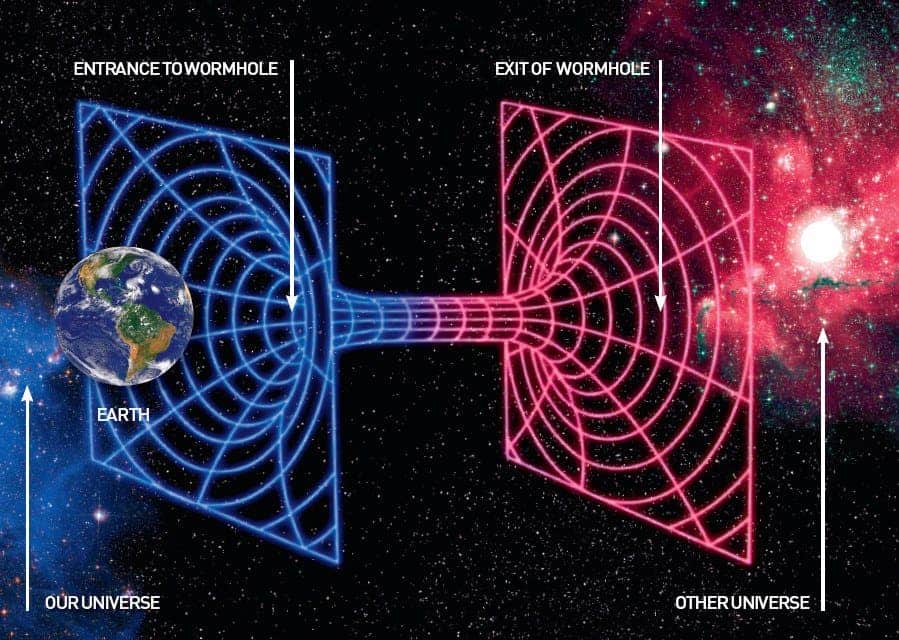
Image result for wormholes

Again, observations don’t match predictions, because the objects farthest from each other in the known universe are so far apart that the time it would take to travel between them at the speed of light exceeds the age of the universe. To explain the discrepancies, astronomers devised the concept of inflation.

Inflation states that shortly after the universe was created, it experienced a rapid growth spurt during which space itself expanded at faster-than-light speeds. The expansion stretched the universe from a size smaller than an atom to astronomical proportions in a fraction of a second. The universe, therefore, appears flat, because the sphere we’re sitting on is extremely large from our viewpoint—just as the sphere of Earth seems flat to someone standing in a field.

Related image


Inflation also explains how objects so far away from each other might have once been close enough to interact. But—assuming inflation is real—astronomers have always been at pains to explain what caused it. That’s where the new wormhole theory comes in. According to Poplawski, some theories of inflation say the event was caused by “exotic matter,” a theoretical substance that differs from normal matter, in part because it is repelled rather than attracted by gravity.

Based on his equations, Poplawski thinks such exotic matter might have been created when some of the first massive stars collapsed and became wormholes.

“There may be some relationship between the exotic matter that forms wormholes and the exotic matter that triggered inflation,” he said.

Wormhole Equations an “Actual Solution”

The new model isn’t the first to propose that other universes exist inside black holes. Damien Easson, a theoretical physicist at Arizona State University, has made the speculation in previous studies.

Image result for wormholes

“What is new here is an actual wormhole solution in general relativity that acts as the passage from the exterior black hole to the new interior universe,” said Easson, who was not involved in the new study. “In our paper, we just speculated that such a solution could exist, but Poplawski has found an actual solution.”

Nevertheless, the idea is still very speculative, Easson said in an email:

“Is the idea possible? Yes. Is the scenario likely? I have no idea. But it is certainly an interesting possibility.”

Future work in quantum gravity—the study of gravity at the subatomic level—could refine the equations and potentially support or disprove Poplawski’s theory, Easson said.

Wormhole Theory No Breakthrough

Overall, the wormhole theory is interesting, but not a breakthrough in explaining the origins of our universe, said Andreas Albrecht, a physicist at the University of California, Davis, who was also not involved in the new study. By saying our universe was created by a gush of matter from a parent universe, the theory simply shifts the original creation event into an alternate reality. In other words, it doesn’t explain how the parent universe came to be or why it has the properties it has—properties our universe presumably inherited.

Related image

“There’re really some pressing problems we’re trying to solve, and it’s not clear that any of this is offering a way forward with that,” he said.

Still, Albrecht doesn’t find the idea of universe-bridging wormholes any stranger than the idea of black hole singularities, and he cautions against dismissing the new theory just because it sounds a little out there.

“Everything people ask in this business is pretty weird,” he said. “You can’t say the less weird [idea] is going to win, because that’s not the way it’s been, by any means.”

http://www.thescinewsreporter.com/2018/03/every-black-hole-contains-another.html


“A New Life” from the musical “Jekyll & Hyde”


BwayDreamer1128

Published on Aug 27, 2011

“A New Life” from the Original Broadway Cast Recording of “Jekyll & Hyde”A New Life
Colm Wilkinson, Linda Eder

What I wouldn’t give to have a new life
One thing I have learned as I go through life
Nothing is for free along the way
A new start
That’s the thing I need to give me new heart
Half a chance in life to find a new part
Just a simple roll that I can play
A new hope
Something to convince me to renue hope
A new day
Bright enough to help me find my way
A new chance
One that maybe has a touch of romance
Where can it be?
The chance for me
A new dream
I have one I know that very few dream
I would like to see that over-due dream
Even though it never may come true
A new love
Though I know there’s no such thing as true love
Even so, although I never knew love
Still I feel that one dream is my due
A new world
This one…

Book: “The Science Delusion: Feeling the Spirit of Enquiry”

Front Cover

Freeing the Spirit of Enquiry

The Science Delusion is the belief that science already understands the nature of reality. The fundamental questions are answered, leaving only the details to be filled in. In this book (published in the US as Science Set Free), Dr Rupert Sheldrake, one of the world’s most innovative scientists, shows that science is being constricted by assumptions that have hardened into dogmas. The ‘scientific worldview’ has become a belief system. All reality is material or physical. The world is a machine, made up of dead matter. Nature is purposeless. Consciousness is nothing but the physical activity of the brain. Free will is an illusion. God exists only as an idea in human minds, imprisoned within our skulls.

Sheldrake examines these dogmas scientifically, and shows persuasively that science would be better off without them: freer, more interesting, and more fun.

In The God Delusion Richard Dawkins used science to bash God, but here Rupert Sheldrake shows that Dawkins’ understanding of what science can do is old-fashioned and itself a delusion.

‘Rupert Sheldrake does science, humanity and the world at large a considerable favour.’
The Independent

‘Certainly we need to accept the limitations of much current dogma and keep our minds open as we reasonably can. Sheldrake may help us do so through this well-written, challenging and always interesting book.’
Financial Times

(Google Books)

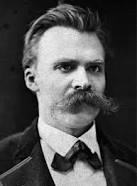
Nietzsche on crowd sourcing

“You will never get the crowd to cry Hosanna until you ride into town on an ass”.

–Friedrich Wilhelm Nietzsche (October 15, 1844 – August 25, 1900) was a German philosopher, cultural critic, composer, poet, philologist, and Latin and Greek scholar whose work has exerted a profound influence on Western philosophy and modern intellectual history. Wikipedia

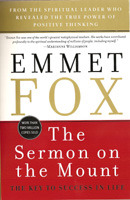
Book: “The Sermon on the Mount” by Emmet Fox

The Sermon on the Mount: The Key to Success in Life
 The Sermon on the Mount: The Key to Success in Life

by Emmet Fox

What did Jesus teach? Distilled from years of study and lecture, affirmed by nearly a million readers over the last fifty years, Emmet Fox’s answer in The Sermon on the Mount is simple. The Bible is a “textbook of metaphysics” and the teachings of Jesus express–without dogma–a practical approach for the development of the soul and for the shaping of our lives into what we really wish them to be. For Fox, Jesus was “no sentimental dreamer, no mere dealer in empty platitudes, but the unflinching realist that only a great mystic can be.”

In his most popular work, Emmet Fox shows how to: Understand the true nature of divine wisdom. Tap into the power of prayer. Develop a completely integrated and fully expressed personality. Transform negative attitudes into life-affirming beliefs. Claim our divine right to the full abundance of life.

(Goodreads.com)

Hannah Arendt on Action and the Pursuit of Happiness

By Maria Popova (brainpickings.org)

“What is happiness, anyhow? … so impalpable — a mere breath, an evanescent tinge,” Walt Whitman wondered in his diary exactly one hundred years after the Founding Fathers wove the pursuit of that evanescent tinge into the fabric of what Whitman considered America’s “democratic vistas.”

The notion of “the pursuit of happiness” has been with us long enough to have become normalized — not merely an item of the American Constitution, but a concept permeating the world’s popular culture in an infinite array of guises. And yet, as a political aim, it is highly unusual — odd, even, with the oddness of squinting to discern a stroke of genius from a stroke of foolishness, unsure which it is we are perceiving.

The origin and consequences of that singular, epoch-making oddity is what the great German political theorist Hannah Arendt (October 14, 1906–December 4, 1975) examines in a 1960 piece titled Action and “the Pursuit of Happiness,” found in the posthumous Arendt anthology Thinking Without a Banister: Essays in Understanding, 1953–1975 (public library).

Hannah Arendt by Fred Stein, 1944 (Photograph courtesy of the Fred Stein Archive)

Arendt, herself a refugee in America, writes:

Among the many surprises this country holds in store for its new citizens… there is the amazing discovery that the “pursuit of happiness,” which the Declaration of Independence asserted to be one of the inalienable human rights, has remained to this day considerably more than a meaningless phrase in the public and private life of the American Republic. To the extent that there is such a thing as the American frame of mind, it certainly has been deeply influenced, for better or worse, by this most elusive of human rights, which apparently entitles men, in the words of Howard Mumford Jones, to “the ghastly privilege of pursuing a phantom and embracing a delusion.”

Writing two years before her landmark treatise on the opposite — the politically driven normalization of evil — Arendt examines the origin of this American promise of the ultimate good, the basic human right to happiness:

The grandeur of the Declaration of Independence… consists… in its being the perfect way of an action to appear in words. And since we deal here with the written and not with the spoken word, we are confronted by one of the rare moments when the power of action is great enough to erect its own monument.

What is true for the Declaration of Independence is even truer for the writings of the men who made the revolution. It was when he ceased to speak in generalities, when he spoke or wrote in terms of either past or future actions that Jefferson came closest to appreciating at its true worth the peculiar relationship between action and happiness.

Art by Maira Kalman from And the Pursuit of Happiness

Like Whitman, who believed that literature is the seedbed of democracy, the Founding Fathers were greatly inspired by the literature and philosophy of the Renaissance — particularly by the “men of letters” of eighteenth-century France. Arendt traces the chain of ideological influence across time, space, and culture to the French Revolution and its ideal of “public happiness,” which Jefferson appropriated. In a paper penned two years before The Declaration of Independence, he argued that the ancestors who had left Europe for America had enacted “a right which nature has given all men… of establishing new societies, under such laws and regulations as to them shall seem most likely to promote public happiness.” He then incorporated this insistence on happiness into his blatantly obvious yet somehow stealthy revision of The Declaration of Independence, changing the formulation of inalienable rights from “life, liberty and property” to “life, liberty and the pursuit of happiness.”

That such a subtle one-word revision of language can effect so profound a revolution in ideology may be strange, but not nearly as strange, Arendt points out, as the fact that it was undebated in Jefferson’s day and went practically unnoticed as it reoriented the entire national ethos for the centuries that followed.

Art by JooHee Yoon from The Tiger Who Would Be King by James Thurber

With an eye to the French Revolution and the ideals that informed and inspired Jefferson’s, she explores how the eighteenth-century understanding of tyranny and freedom shaped the political insistence on happiness as a public and private good:

Tyranny, according to ancient, pre-theoretical understanding, was the form of government in which the ruler had monopolized for himself the right of action and banished the citizens from the public realm into the privacy of the household where they were supposed to mind their own, private business. Tyranny, in other words, deprived men of public happiness and public freedom without necessarily encroaching upon the pursuit of personal interests and the enjoyment of private rights. Tyranny, according to traditional theory, is the form of government in which the ruler rules out of his own will and in pursuit of his own interests, thus offending the private welfare and the personal liberties of his own subjects. The eighteenth century, when it spoke of tyranny and despotism, did not distinguish between these two possibilities, and it learned of the sharpness of the distinction between the private and the public, between the unhindered pursuit of private interests and the enjoyment of public freedom or of public happiness, only when, during the course of the revolutions, these two principles came into conflict with each other.

Drawing on this cross-cultural lineage and building on her previous writings on action as an indelible form of thought, Arendt illuminates the clear relationship between action and happiness:

Every modern theory of politics will have to square itself with the facts brought to light in the revolutionary upheavals of the last two hundred years, and these facts are, of course, vastly different from what the revolutionary ideologies would like us to believe.

[…]

The rediscovery of action and the reemergence of a secular, public realm of life may well be the most precious inheritance the modern age has bequeathed upon us who are about to enter an entirely new world.

Thinking Without a Banister is an intellectually exhilarating read in its entirety, exploring the intersection of politics and human life from angles as varied as the imagination, war crimes, Emerson’s legacy, the meaning of revolution, and the relationship between private rights and public good. Complement this particular portion with Elizabeth Barrett Browning on happiness as a moral obligation, then revisit Arendt on how tyrants use isolation as a weapon of oppressionlying in politicsthe power of being an outsiderthe life of the mind, and the difference between how art and science illuminate the human condition.

Sunday Night Translation Group — March 18, 2018

Translation  is a 5-step system of syllogistic reasoning using words and their meanings and histories to transform the testimony of the senses and uncover  the underlying timeless reality of Being/Consciousness.

Translators:  Hanz Bolen, Melissa Goodnight, and Richard Branam.

Sense testimony:

Lack of empathy causes manipulation and deception which harms others.

Conclusions:

1)  One Infinite, Consciousness Beingness,  That I AM,  is perfectly reflecting and mirroring,  the mutually shared singular identification, that rightly utilizes complete Truth, to effect wholeness and soundness for All.
2)  Truth Being I am Consciousness, Essentially Autismical structuring, pure functional manufacturing, exactly sure emanationally self creating passionate mindfulness, indivisible managerial Captivation, exponentially capacious ownership , individuated omniscience this empathetic Kingdom of universally principled Causational Splendor.
3)  Clear Radiant Truth is the only Cause, the milk of all Being, clearly abundantly nurturing, proudly valuing, honoring all in sound healthy fully present agreement.

The Sunday Night Translation Group meets at 7pm Pacific time via Skype. There is also a Sunday morning Translation group which meets at 7am Pacific time via GoToMeeting.com.  See Upcoming Events on the BB to join, or start a group of your own.