Aries Full Moon, October 5, at 11:40 am PDT at 13 degrees

The energies of this Full Moon can be destructive and explosive. The element of Fire is in play and volatility is the main watchword. This Full Moon is in a square to Pluto which brings out the shadow and our subconscious programming, which for some can be quite disturbing. If you are feeling more irritable than usual, practice patience to avoid sudden explosions of temper. Remember too, that the conditions and energies of this Moon will be more powerful for those whose charts are within orb of the Full Moon. We may feel more anger than usual which is a good indicator of where one is being triggered. Remember you are responsible for your responses.

This Harvest Full Moon can bring us to an emotional peak. Feelings can run high and hot in Aries. Aries energy is naturally impatient and impulsive, and goes to anger easily. Shake off any lack of vitality and use this strong fire to ignite your passion and joy in life instead. This Aries Full Moon also represents our ability to be courageous and to step outside of our normal comfort zone to become active in meaningful areas of community service and political events. How can you be a positive participant? How can you work with others to make a difference in this chaotic world?

Aries–Libra represents the relationship between self and other. Libra tends to sacrifice for relationship and after a time of selfless giving, Libra can become resentful and angry. Check your boundaries and seek harmony and balance. Be your own best friend.

Mercury is also in Libra and in opposition to the Aries Moon. It is a good time to speak our truth, using compassion and kindness with Libra diplomacy. Always remember that tact and patience is power, not weakness.

Pluto in Capricorn is squaring this Full Moon polarity. Capricorn in a square represents hardening and clinging to old structures for security. Think about where you may be too rigid in your thinking, where you need to be more flexible and open to new ideas, and what you need to embrace to own your power and to change with grace.

For the past year, Jupiter and Uranus have inspired radical change in many scattered directions. Our world is rapidly changing and these changes are not arbitrary. They are meaningful and purposeful, however challenging and painful. All Astrological aspects are designed to wake us up, to help us evolve.

Mars and Venus, the rulers of Aries and Libra, are conjunct at 19° Virgo and square Saturn at 22° Sagittarius. Patience, dedication, and right timing are needed to carefully navigate and integrate this Full Moon. Saturn brings awareness to what is and isn’t working so we may receive insights about how to be more effective agents of service through the chaos.

Written by Wendy Cicchetti

Full Moon symbolizes the fulfillment of the seeds planted at a previous New Moon or some earlier cycle. Each Full Moon reminds us of the seeds that may be coming to maturity, to their fullness, to fruition, to the place where the fruits or gifts are received. It may seem that fulfillment of our goals takes a long time. Some intentions may manifest within the two week phase prior to the next New or Full Moon. Some however, depending on their complexity, may take a much longer time. Just remember that our thoughts and emotions set Universal Action in motion and much work takes place behind the scenes as everything is orchestrated for fulfillment. Keep visualizing your goals as though you have already attained them and they will eventually manifest. Do not concern yourself with current conditions or worry about controlling it. The universe takes care of those details. Just keep seeing what you want, and move in that direction with your actions, and give no energy to what you don’t want. Patience is required.

Vortex of Thought in Consciousness, by Ben Gilberti

 I’ve lost interest in the old philosophers and prefer a fresh approach . . . . best reflected in the Process Philosophy of Alfred North Whitehead.  Whitehead’s thought is similar to the foundations of Quantum Physics.  In fact, I can write a short description that applies equally to both:

Whereas Newtonian physics proposes actual physical particles in which various characteristics inhere, Quantum Physics and Process Philosophy propose that particles are occasions of characteristics that arise mutually with their environment. This is also David Bohm’s view in his Implicate and Explicate order (Wholeness and The Implicate Order), the explicate being the appearance of a particle, the implicate being the omnipresent field from which the explicate arises, leading ultimately to the theory of the universe as holographic (Michael Talbot)
But I believe that all of the above consists of and emerges from consciousness, each being a unique vortex of thought in consciousness, which, if brought into alignment and harmony with principle (of which mathematics is only one facet) is revealed to be Infinite Intelligence or Infinite Mind (New Thought) which altogether can result in a transformation in what appears to be external and material. There is no matter, all simply being either what arises from erronious beliefs in separation and limitation, or what arises from the realization of infinite oneness; usually being some mixture of the two.
.
That’s it. It’s pretty much my whole philosophy, over and above what I write about in my book Ontological Mysticism.
.

Lieutenant General Silveria on Dignity and Respect

I understand that this speech by Lieutenant General Jay Silveria, Superintendent* of the United States Air Force Academy, has pretty much gone viral, so many among the readership are probably already familiar with it. Still, I think it deserves a place on the BB, plus it certainly bears re-viewing:

A couple of remarks:

First, while I was in California during my training, I remember being in a group being briefed just before some project by Stan Rosen†, and being floored and delighted by his ability to strip things down to a concise presentation that covered all the important points while keeping everything very simple and clear.  In Taoism, as I understand it (and in that anyone can be said to understand such a subtle philosophy), this kind of focus is the primary attribute of the Warrior.  And the Sage must incorporate such attributes into him or her self – in other words, the Sage “contains” the Warrior. And what do we aspire to but sagacity?

Second, looking back over those California days, I feel that we, the Prosperos, were true pioneers of diversity.  Now, I had been brought up in academia, and American universities of the post-WWII era were themselves laboratories of diversity (about which contention, more to come, at some later time…).  In addition, my parents encouraged me to have as many contacts with people from as many different social strata as possible under our circumstances – though they always called this “being democratic” rather than using the current terminology.  But then, a bit later, when I got to California, it was as if the School were engaged in taking that enterprise to a whole new level, and I embraced this project as best I could. During that period, as I recall, Thane’s term for the underlying approach we should aspire to in dealing with each other, and with other people in general, was “Agape”, but I think “Dignity and Respect” comes pretty close to being the same thing…

*Commander and Senior Officer; analogous to a university president.

†I did a search for Stan Rosen on line, and found this.  I think it’s the same guy…

Ralph Waldo Emerson on getting caught up into the life of the Universe

Ralph Waldo Emerson

“It is a secret which every intellectual man quickly learns, that, beyond the energy of his possessed and conscious intellect, he is capable of a new energy (as of an intellect doubled on itself), by abandonment to the nature of things; that, beside his privacy of power as an individual man, there is a great public power, on which he can draw, by unlocking, at all risks, his human doors, and suffering the ethereal tides to roll and circulate through him: then is he caught up into the life of the Universe, his speech is thunder, his thought is law, and his words are universally intelligible [to] plants and animals.”

–from “The Poet” by Ralph Waldo Emerson

“Wooden Skyscrapers Are Set to Transform Our Cities” by Brad Jones

October 3, 2017 (futurism.com)

IN BRIEF:  Naturally Wood 

Wooden skyscrapers are cropping up in cities all around the world. Thanks to cross-laminated timber, these structures are just as resilient as buildings made from steel, and put much less of a strain on the environment.

BACK TO BASICS

For centuries, wood was the building material of choice for buildings around the world. During periods of industrial revolution, steel and concrete have taken its place. In more recent history, however, we’re seeing something of a resurgence of interest in wood as a competitive construction material.

In 2012, the Forte residential block in Melbourne, Australia set the record for the world’s tallest building made from timber at ten stories. Less than two years later, it was outdone by The Treet, a fourteen-story construction in Central Bergen, Norway. The Treet has since been outdone by Canada’s eighteen-story Brock Commons.

Cross-laminated timber is the material that allows these structures to be built without safety concerns. It’s made from sheets of two-by-fours that are layered together and bound by fire-resistant glue. The grain of each layer is rotated 90 degrees, and as such, the material’s structural strength is comparable to that of steel.

ECOLOGICAL EDIFICE

If we can make building materials from wood that are as strong as steel, its other advantages make it a very appealing prospect. The first and not least of which are its major benefits in terms of the environment.

Estimates published by the U.S. Green Building Council state that as much as 39 percent of carbon emissions in the U.S. are the result of the construction of buildings and their usage. Wood is far lighter than steel, which makes it easier to transport to a construction site, and the foundations for buildings don’t have to be as deep. Both of these factors would serve to cut down on emissions.

Of course, there are challenges, too. While wood is a renewable resource, it’s critically important that we don’t use it irresponsibly, and continue reforestation efforts so we don’t exhaust our supplies. Still, wooden buildings offer up some promising opportunities for more ecologically sound construction, so long as the proper considerations are made.

“Is the Time of Learning Over?” – Rev. Tony Ponticello (ACIM)


Community Miracles Center
Published on Oct 2, 2017

The current ACIM Workbook lessons tell us to anticipate moving into a consciousness when the time for learning will be over. I, Rev. Tony, used to interpret this as meaning when God takes the final step and translates us from the Real World into Heaven. However my thoughts on this are changing. This idea is talked about extensively in A Course of Love which I am also reading. ACOL also says that along with learning being over, we no longer will need the intermediary of Holy Spirit. Join me as I talk about how I am reconciling these teachings and making them practical in my life.

The Critical Inner Voice (from siteofcontact.net)

Two surprising similar pieces of writing generated on 21 September 2017, by the Long Beach Library Coffeehouse Writers – Bob Biddle and author MarniSpencer-Devlin. The writing prompt ‘Critical Inner Voice,’  gives us a peek at how our pass regulates our present moment.

writing pad.jpg

The Library Coffee writers group of Long Beach, CA., write from prompts. We get a prompt,  we give ourselves, individually 15 minutes to come up with and write a story from the prompt, then with the group we will share what we came up with and the story we wrote..  Below are the stories Bob and Marni made from the prompt – Critical Inner Voicethat gave the instruction to turn the prompt into a character, or tell what does it look like, smell like, etc.

Critical Inner Voice. by Bob Biddle

It’s always in the background.  It nags at me.  Taunts me.  Ridicules me.  I can’t remember a time when that little voice praised me.

I smell the scent of Pumpkin Spice.  Of Halloween.  God, it’s only mid-September.  What’s all the nonsense about Pumpkin Spice anyway?

It’s my mother.  Yes.  That’s who my little voice is.  My mother.  Well, thank you God for that one!  Why couldn’t it be Tom Selleck or Chad Everett?  Why is my mother constantly interjecting herself into my thoughts?  Didn’t she and I resolve this oh so many years ago?

All I see is a small, blonde and beautiful woman of about 30 years of age.  I see her almost like Julie Andrews at the beginning of the movie, “Sound of Music.”  You know, the part where she spins around an Austrian hilltop to the music of “The Hills are Alive.”

Yep!  That’s it—that’s my German mother in just another idiotic incantation.  Actually, now that I think about it, I’m glad it’s her and not my father.

Second hand smoke.jpg

Both of them were bullies, you know, if the truth were told.

I see her now staring back at me from her small chair in my childhood living room.  Her Winston cigarette has been puffed down to a nub and the smoke lingers right at the level of my head.  I was always breathing second-hand smoke.’ 

The Taunting Inner Voice by Marni Spencer-Devlin

Better stick with me. If anyone knew how you really are they would all hate you. I know how you really are, how weird, how lazy, how slovenly, how dumb but I am your mother.

Mother Daughter dynamics.jpg

I can’t walk away no matter how hard you make it sometimes. You are my burden to carry. I never wanted you, mind you.

My boys were enough for me. And I never wanted to have kids from different fathers – just another burden you visited upon me.

She had been my constant companion for the better part of my years, It wasn’t immediately apparent how brutal she was, seeing how she cloaked herself in seeming caring and protection. She seemed warm, safe, and she smelled so good. Mama always made it seem like she was on my side. It took me years to figure out why I always felt like someone had taken a knife to my soul.

But then, one day, I just woke up. I realized it wasn’t her. It had never been her. It had always been me. That bitter voice had been mine. I just gave it a face. But it was all illusion. Virtual reality. And I could stop it anytime. And so I did.

(Courtesy of Calvin Harris, H.W,. M.)

The Passionate Pursuit (by Robert McEwen, H.W., M.)

The Passionate Pursuit
STAR TRENDS
by Robert McEwen, H.W., M.

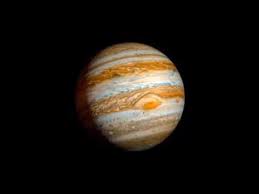
JUPITER IN SCORPIO

For One Year.  Take the zodiac  sign of Scorpio is about pro-creation, planting, birth-death-and rebirth.  Sexual energy and birth are the archetypal pattern of the Scorpio.  Also relates do transformation a metamorphic in nature.

Scorpio lends itself to visions of the mystical.  The ways of Shamanism. Time to explore this for a year! Also, finances expand in Scorpio.  So does passion and exploring the mystical secrets of ontological principles. The invisible nature of beingness is very relevant starting October.  Debts get paid off, or new debt is accumulated.Watch that passion and if you are buying as an investment that is sound, or just ego desires?  Forgiving others is important with this transit, so you don’t expand your resentments.

Thank you for your attention to this, and do note “healing” is sped up with this on all levels: psychological, physical, spiritual, and mundane daily life decisions.  We can talk much more about how it affects your life if you decide to get your chart done, and see where it is transiting in your chart. Knowing where this falls in your natal horoscope is  advantageous at this time.

A few helpful question, somewhat like a detective, ask yourself, “what really has deep meaning that I might even die for?  Ask yourself what purpose are you living?  If you do a thorough investigation into this matter, then that is what will expand!  Jupiter is the planet of expansion, and in Scorpio, it has to be something that you would live or die for?  Ask these deep questions and you will be using this Jupiter in Scorpio to the highest and most powerful cause.

I encourage some journaling on this subject, self exploration of your deepest drives in your life.  This primal energy needs the perspective of the “eagle” which is use of the archetype to have vision for your primal energies.  The eagle has universal vision not based on greed or power, but what is best for everyone and for the planet? Please think about this and feel free to converse with me on this deep expansion of your purpose.  I can be reached at robbystarman@aol.com.

For your private astrological consultation contact me with your birth, date, time, and place.

You can text it to my phone at:  503-706-0396.

Email: robbystarman@aol.com.  I am on Face Book as well: Robert McEwen.  I have 35 years professional experience and served over 5,000 clients with their astrological understanding and application in their lives.

1 Hour session:  $75
30 minutes is:    $50
paypal: robbystarman@aol.com
503-706-0396

“Is a Life Without Struggle Worth Living?” by Adam Etinson

Branch Hill Pond, Hampstead by John Constable Credit Bridgeman Images

October 2, 2017 (NYTimes.com)

In the autumn of 1826, the English philosopher John Stuart Mill suffered a nervous breakdown — a “crisis” in his “mental history,” as he called it.

Since the age of 15, Mill had been caught firmly under the intellectual spell of his father’s close friend, Jeremy Bentham. Bentham was a proponent of the principle of utility — the idea that all human action should aim to promote the greatest happiness of the greatest number. And Mill devoted much of his youthful energies to the advancement of this principle: by founding the Utilitarian Society (a fringe group of fewer than 10 members), publishing articles in popular reviews and editing Bentham’s laborious manuscripts.

Utilitarianism, Mill thought, called for various social reforms: improvements in gender relations, working wages, the greater protection of free speech and a substantial broadening of the British electorate (including women’s suffrage).

There was much work to be done, but Mill was accustomed to hard work. As a child, his father placed him on a highly regimented home schooling regime. Between the ages of 8 and 12, he read all of Herodotus, Homer, Xenophon, six Platonic dialogues (in Greek), Virgil and Ovid (in Latin), and kept on reading with increasing intensity, as well as learning physics, chemistry, astronomy, and mathematics, while tutoring his younger sisters. Holidays were not permitted, “lest the habit of work should be broken, and a taste for idleness acquired.”

Not surprisingly, one of the more commonly accepted explanations of Mill’s breakdown at the age of 20, is that it was caused by cumulative mental exhaustion. But Mill himself understood it differently. In his autobiography, he wrote:

I was in a dull state of nerves, such as everybody is occasionally liable to: unsusceptible to enjoyment or pleasurable excitement; one of those moods when what is pleasure at other times, becomes insipid or indifferent… In this frame of mind it occurred to me to put the question directly to myself, ‘Suppose that all your objects in life were realized; that all the changes in institutions and opinions which you are looking forward to, could be completely effected at this very instant: would this be a great joy and happiness to you?’ And an irrepressible self-consciousness distinctly answered, ‘No!’ At this my heart sank within me: the whole foundation on which my life was constructed fell down. All my happiness was to have been found in the continual pursuit of this end. The end had ceased to charm, and how could there ever again be any interest in the means? I seemed to have nothing left to live for.

In the wake of this episode, Mill slipped into a six-month-long depression.

There is something comical about Mill’s self-implosion; it’s as if he had spent years looking forward to a sailing trip only to suddenly realize, upon embarkation, that he hated boats.

It is also strangely relatable. We have all lost faith in a deeply held project at one time or another. And, politically, we are in an age of upheaval; faith in old ideals seems to be dying out, creating a vacuum. Perhaps we can learn something about ourselves, and our political moment, by peering into Mill’s own crisis of faith.

Why on earth wouldn’t Mill want to achieve his life goals?

It wasn’t because he thought he had the wrong goals. Mill never did abandon utilitarianism, though he later modified Bentham’s doctrine in subtle ways. Instead, Mill tells us that his crisis was born in a concern about whether happiness is really possible in the perfect world he sought to achieve — a world without struggle:

[T]he question was, whether, if the reformers of society and government could succeed in their objects, and every person in the community were free and in a state of physical comfort, the pleasures of life, being no longer kept up by struggle and privation, would cease to be pleasures.

Mill is not at all clear about his line of thought here. But we can speculate. One possibility is that he is worried that, if we ever were to achieve an ideal social world, we would quickly take it for granted, or become “spoiled.” It’s a familiar tale: the child that always gets what he or she wants ends up forever unsatisfied and always wanting more (psychologists call this the hedonic treadmill). And perhaps Mill thought the same is true for adults — that facing a degree of “struggle and privation” in life is essential to happiness, because it provides us with a vivid reminder of how lucky we are when we have it good.

Or was Mill concerned that, in a perfect world, with nothing more to strive for, we might simply grow bored? As the 19th century German philosopher Arthur Schopenhauer once upliftingly put it, “life swings back and forth like a pendulum between pain and boredom.” When we are not consumed by the desire to achieve something (food, shelter, companionship, wealth, career, status, social reform, etc.), we are tortured by boredom.

Schopenhauer’s vision of life is sensationally pessimistic — indeed, entertainingly so. But there is some evidence that Mill was in a Schopenhaueristic mood in 1826 (though he almost certainly hadn’t yet read him). Mill writes that, during his crisis, he was “seriously tormented by the thought of the exhaustibility of musical combinations” — an anxiety he says was highly characteristic of “the general tone” of his mind at the time.

“The octave consists only of five tones and two semitones,” he explains. By the laws of mathematics, there is only a finite number of possible tonal combinations. What will happen to music (and, indeed, composers) when there are no more combinations to be discovered? And what will life be like when the work of social reform is done? What will consume us then? How will we escape boredom? These are suffocating thoughts.

Somehow new music continues to be written. And, realistically, the work of improving human life and social conditions will never be “done.” Still, it is easy to sympathize with Mill’s anxiety. Some part of us prefers to struggle or quest after an ideal, rather than attain it. Retirement seems to function in this way for many people: as an orienting goal but a disorienting reality.

Also, there is something disconcertingly alien about a “perfect” world. It is part of the human condition, as that condition is normally understood, that there is some gap between how the world is and how we think it ought to be, what we have and what we want, who we are and who we would like to be. We try to narrow this gap. But its ongoing presence is part of life as we know it. And within certain limits, we even embrace it.

In movies and literature, for instance, our favorite protagonists tend to be flawed or troubled in some way. In “Edward Scissorhands,” it is the monster and the disenchanted teenager that we root for, not the creepily perfect suburbanites. And in music, many prefer the “human” — that is, soulful but imperfect — composition or performance over its technically flawless counterpart. In its early forms at least, rock music certainly cultivated this kind of ethos.

Did Mill, who admits to being something of a “reasoning machine” throughout his teenage years, suddenly grow weary of mechanistic perfection? Perhaps he was disturbed by the imagined inhumanity of a world without struggle or privation — by the possibility that it might lack the romantic charms of human failure and frailty.

It took Mill two years to find a way out of his crisis. It was only after he began reading, not philosophy, but the poetry of William Wordsworth, that he was fully convinced he had emerged.

What was it about Wordsworth’s romantic poetry — intensely emotional (often melancholy), solitary, autobiographical, and infused with bucolic English imagery — that had such a profound healing effect on Mill? He explains:

What made Wordsworth’s poems a medicine for my state of mind, was that they expressed, not mere outward beauty, but states of feeling, and of thought coloured by feeling, under the excitement of beauty. They seemed to be the very culture of the feelings, which I was in quest of. In them I seemed to draw from a source of inward joy, of sympathetic and imaginative pleasure, which could be shared in by all human beings; which had no connexion with struggle or imperfection, but would be made richer by every improvement in the physical or social condition of mankind. From them I seemed to learn what would be the perennial sources of happiness, when all the greater evils of life shall have been removed… I needed to be made to feel that there was real, permanent happiness in tranquil contemplation. Wordsworth taught me this…

Mill was searching for a reliable source of joy, one that could survive the unbearable goodness of the world he sought to achieve. He was looking for a happiness that could stave off incursions of dissatisfaction or boredom once the ultimate battle is won, and (at last!) tranquility reigns. The answer, he discovered through reading Wordsworth, is to take refuge in a capacity to be moved by beauty — a capacity to take joy in the quiet contemplation of delicate thoughts, sights, sounds, and feelings, not just titanic struggles.

This discovery is convenient for a philosopher. Mill was trained, from a very young age, to think: to be a quiet contemplator. So, it’s no surprise that he was desperate to make sure he could still take joy in his allotted craft, once the hard labor of social reform was done. But, as Mill says, imaginative pleasures are available to “all human beings,” not just poets and philosophers.

I hope, and suspect, that Mill is right about this: that we all have the ability to find some durable joy in quietude, normalcy and contemplation. In our personal lives, and in our political lives too, it would be nice if we could escape Schopenhauer’s pendulum: to simply enjoy where we are, at times; to find some peace in the cessation of motion.

If we can do that, then a perfect world might not be so bad after all.

“If the Universe Was a Symphony, Here’s What Saturn Would Sound Like” by PAUL RATNER

Article Image
The orbital periods, scaled frequencies, and musical notes of Saturn’s major moons. Credit: SYSTEM Sounds/NASA/JPL-Caltech/Elisabetta Bonora/Marco Faccin


August 31, 2017 (BigThink.com)

Astrophysicists from the University of Toronto used the natural patterns of Saturn’s moons and rings to compose two pieces of music.

They did it to celebrate the upcoming end of the Cassini probe, which after twenty years will be decommissioned next month by being crashed into Saturn while gathering more data.

The team included astrophysicist Matt Russo, who along with fellow postdoctoral researcher Dan Tamayo, created the music and played the million-kilometer-long intergalactic instrument. They were joined in the project by the musician Andrew Santaguida. 

To accomplish the feat, the scientists relied on the data of orbital resonances from Saturn’s moons and the trillions of particles floating in its ring system, as gathered by Cassini. Orbital resonances reflect the gravitational influences exerted by celestial bodies when they move past each other. The repeating patterns can be transformed into musical harmonies.

“Wherever there is resonance there is music, and no other place in the solar system is more packed with resonances than Saturn,” said Russo.

His partner Tamayo explained the grandiosity of their giant space instrument:

“Saturn’s magnificent rings act like a sounding board that launches waves at locations that harmonize with the planet’s many moons, and some pairs of moons are themselves locked in resonances,” said Tamayo.

Janus

The orbital periods of the six 1st order resonances of Janus that affect the ring system. Credit: SYSTEM Sounds/NASA/JPL/Space Science Institute

For the first piece, which follows Cassini’s demise as it plunges towards Saturn, the researchers generated musical notes by increasing (by 27 octaves) the orbital frequencies of Saturn’s six large inner moons. What we essentially hear in the piece are the real frequencies of the moons but “shifted into the human hearing range” as says Russo. Every time a moon would complete an orbit, a computer simulation of the moon system would play corresponding notes.

A moon system would have two orbital resonances which essentially provide a structure to what would be a droney, lullaby-like melody otherwise. The moons Mimas and Tethys, for example, are locked in a 2:1 resonance, meaning that Mimas orbits two times for every one orbit of Tethys. Moons Enceladus and Dione have the same relationship. As the rhythms are combined, the resulting musical patterns fall in and out of synchronicity in fascinating ways.

“Since doubling the frequency of a note produces the same note an octave higher, the four inner moons produce only two different notes close to a perfect fifth apart,” explained Russo, himself a trained musician. “The fifth moon Rhea completes a major chord that is disturbed by the ominous entrance of Saturn’s largest moon, Titan.”

The music happens as increasing orbital frequencies of the rings are turned into a rising pitch, while the volume goes up and down in correspondence to the brightness and darkness of the band of the rings. The very ending – the death of Cassini – is inspired by a major chord in the song “A day in the Life” by The Beatles, according to the musically-inclined scientists.

 Check out the piece here:

The second piece, also honoring the last few months of Cassini’s mission, shows off the scales as performed by the moons Janus and Epimethus – two small moons that orbit outside Saturn’s main ring system. They are locked in a 1:1 resonance – the only such pair in the solar system. They basically swap places every four years. The music reflects their relationship by a unison drone with a constantly shifting but repeating rhythm. Russo played a C# note on the guitar for every orbit. A cello plays the note for each resonance in the rings.

Each ring is like a circular string, being continuously bowed by Janus and Epimetheus as they chase each other around their shared orbit,” ” said Russo. “Saturn’s dancing moons now have a soundtrack.“

Check out that piece here:

The group also recently completed a similar musical mission with respect to the Trappist-1 planetary system.

Saturn's moons

A wood carving of Saturn’s main ring system designed for the visually impaired. Credit: SYSTEM Sounds.

Consciousness, sexuality, androgyny, futurism, space, the arts, science, astrology, democracy, humor, books, movies and more