

DEMOCRACY IS FLATLINING AROUND THE GLOBE. A SECOND TRUMP TERM WOULD FINISH THE JOB
TUE, 2/6/2024 – BY CARL GIBSON (Occupy.com)
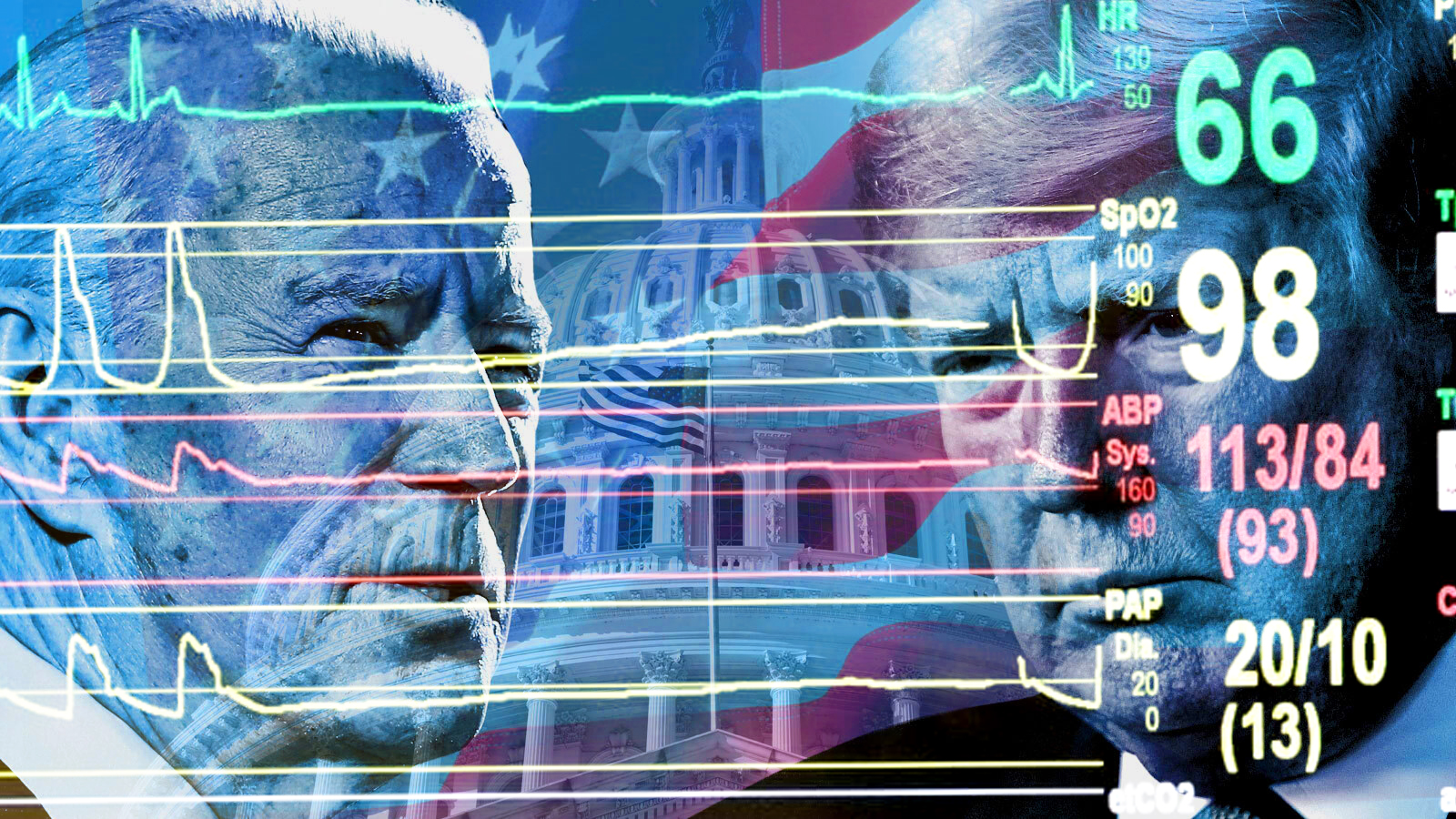
The future of democracy — not just in the United States, but around the globe — may very well hinge on whether former President Donald Trump is elected or defeated this November.
It’s important to understand that Trump is not an aberration, but rather the American iteration of the global far-right project to replace democracy with authoritarianism throughout the world. His brand of hyper-nationalism combined with the intense consolidation of executive power follows the same playbook as fascistic leaders in other countries, like Narendra Modi in India, Vladimir Putin in Russia, Viktor Orban in Hungary, Recep Tayyip Erdogan in Turkey, Abdel Fattah al-Sisi in Egypt, Giorgia Meloni in Italy, and Javier Milei in Argentina, among others.
Trump, however, presents a unique threat to democracy as a whole that the world leaders in the aforementioned paragraph do not. If elected to lead the third-largest country, the largest economy, and the most well-funded military in the world, Trump’s election to a second term would be a green light to fascists around the world that the era of democracy has come to an end. It would embolden the worst elements of society throughout the world and mobilize fascists to further entrench themselves in their respective countries’ governments.
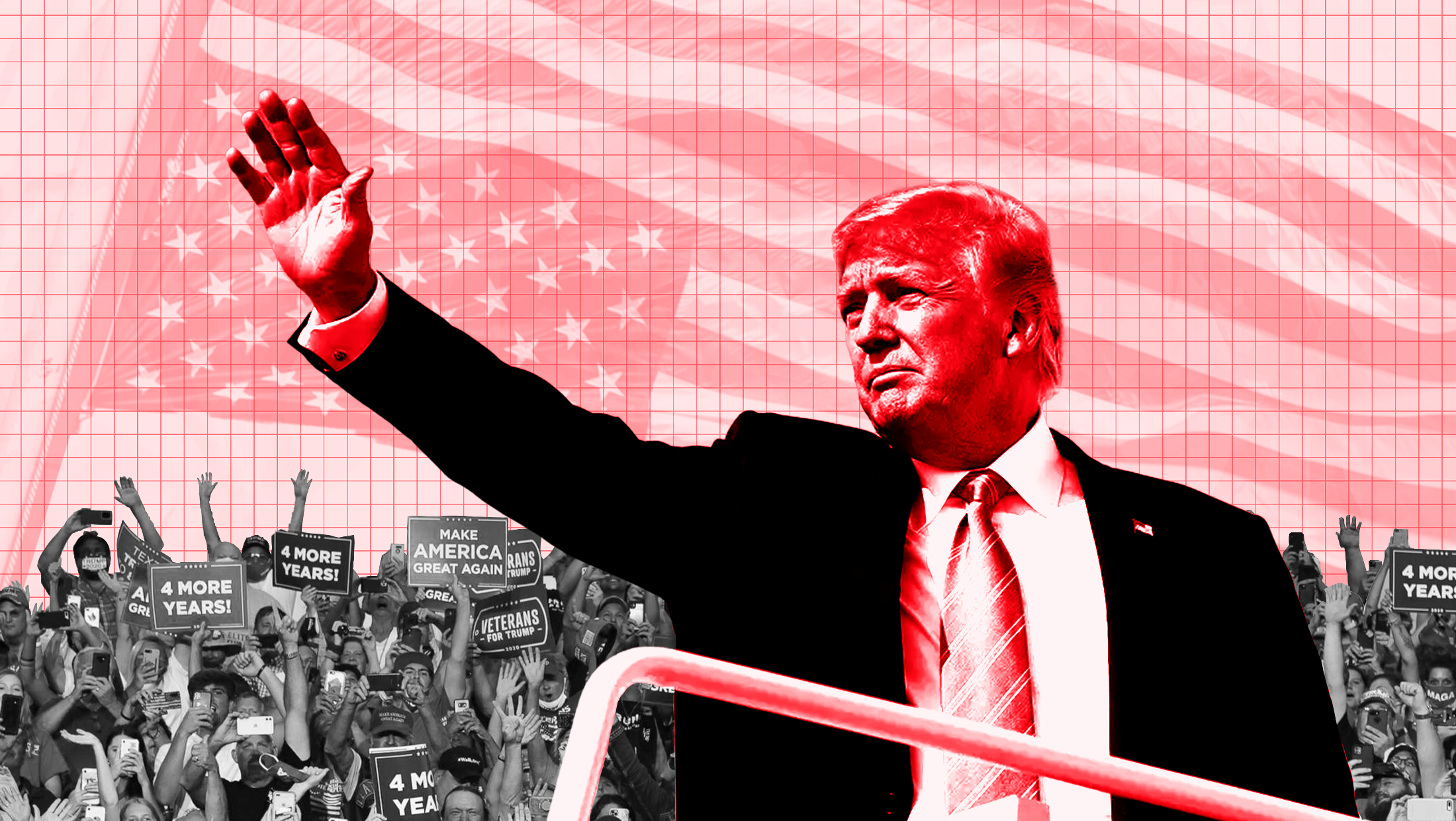
TRUMP 2.0 WOULD EFFECTIVELY RE-ESTABLISH MONARCHY
In 1787, as the US Constitution was being assembled, Philadelphia socialite Elizabeth Willing Powel asked Benjamin Franklin, “Well, Doctor, what have we got? A republic or a monarchy?” Franklin famously replied, “A republic, if you can keep it.” While electing Donald Trump to a second term wouldn’t abolish the Constitution outright, he has already signaled he would be in favor of “termination” of articles of the Constitution. Franklin’s response to Powel signaled that he knew transitioning from monarchy to democracy would require constant effort, and that monarchy could once again become the dominant form of government without a vigilant public.
Trump’s quip that he would govern as a dictator “but only on day one” is uncharacteristic of dictators, who typically cling to power as long as possible and frequently alter the nature of their governments to ensure their rule in perpetuity. Like other far-right authoritarian leaders around the world, Trump would have the title of president, but would rule as a king. He has a multitude of contemporary examples to draw from.
In 2017, for example — just a year after a failed coup attempt — Turkey’s voters narrowly approved a referendum Erdogan pushed for that changed Turkey’s government from a parliamentary democracy to an executive presidential system. In 2018, he became the first president with new sweeping executive powers. He was recently elected to another five-year term last year, extending his rule to more than two decades.
Vladimir Putin has done the same in Russia, where a constitutional change in 2020 allowed him to reset the two-term limit for presidents back to zero. Rather than stepping down this year as planned, Putin could remain in office until at least 2036. And Chinese President Xi Jinping’s party eliminated presidential term limits in 2018, paving the way for Xi to potentially remain in office for the rest of his life. The 69-year-old won a third term in office last year, making him the longest-tenured Chinese head of state since Mao Zedong.
Should he win the November election, Trump would take the presidential oath of office at age 78, so him remaining in office for multiple terms would be unlikely given his advanced age. However, the profound damage that a second Trump term would do to democracy would be felt for decades — particularly by racial minorities.
A SECOND TRUMP TERM COULD END MULTIRACIAL DEMOCRACY IN THE US
It’s important to establish that American democracy in particular has been only for the privileged few for most of the United States’ existence, as the genocide of Native Americans proved along with the enslavement of Black people. Even after the end of the Civil War, the right of Black people to have a say in government was routinely denied and curtailed — often by force — by both white supremacist vigilantes and government officials.
The passage of the Civil Rights Act and the Voting Rights Act and the eventual election of the first Black president still hasn’t ended the assault on democratic rights that many Black Americans today still face by law enforcement and state legislatures. As this publication has previously explored, Nazi Germany borrowed many ideas from the antebellum-era United States to create the framework for an aryan ethnostate.
Trump himself has not said anything about rolling back gains for African Americans, but his allies have started to test the waters of an anti-civil rights campaign in earnest. During a 2023 gathering of more than 20,000 far-right activists dubbed “America Fest,” Turning Point USA founder Charlie Kirk attacked both Dr. Martin Luther King Jr. and the Civil Rights Movement.
“MLK was awful,” Kirk said at the gathering, which was headlined by figures like Donald Trump Jr., former Fox News anchor Tucker Carlson, and Rep. Matt Gaetz (R-Florida). “He’s not a good person. He said one good thing he didn’t actually believe.”
“I have a very, very radical view on this, but I can defend it and I’ve thought about it,” he continued. “We made a huge mistake when we passed the Civil Rights Act in the 1960s.”
The United States’ status as a multiracial democracy makes it one of just a small few around the world, as many Western democracies are ethnically homogeneous. And even in ethnically homogenous democracies, fascism has proven its resilience when countries are faced with an influx of new residents who don’t look like the majority racial group.
After the Syrian refugee crisis of 2015, for example, Germany and Sweden set themselves apart by accepting more refugees than most of their European neighbors, taking in more than one million refugees and over 100,000 refugees, respectively. Denmark accepted more than 35,000 refugees from Syria. A 2020 study found that many of the refugees settled in Germany are thriving, with roughly half of them finding a job by late 2020 and support for immigration high among the German populace.
But in recent years, the diversification of those countries has led to racist and nationalist backlash. In Germany, the Nazi-adjacent Alternative für Deutschland (AfD) party recently held a meeting with neo-Nazis and other white nationalist groups to discuss mass deportation plans. The Guardian reported that some participants in that meeting included members of Austria’s Identitarian Movement, which subscribe to the racist “Great Replacement theory” that immigrants are being deliberately sent to “replace” whites as the dominant racial demographic. That meeting prompted mass protests across the country. One protest was even joined by German Chancellor Olaf Scholz.
In Sweden, a nascent fascist movement rooted in anti-immigrant fervor has also been steadily building power. The Sweden Democrats, which has roots in neo-Nazi organizing in the 1980s and 1990s, has gone from a fringe group to a legitimate political party, winning gains in Sweden’s 2022 parliamentary elections. While Moderate Party leader Ulf Kristersson was elected Prime Minister in 2022, his coalition depends on the support of the Sweden Democrats.
Meanwhile, Denmark’s racism has become apparent when contrasting its treatment of predominantly white Ukrainian refugees with how it treated Syrian refugees. Denmark’s government implemented a policy of seizing gold and jewelry from migrants who came from war-torn Middle Eastern countries like Syria and Iraq, but exempted Ukrainian refugees from that law. This prompted condemnation from human rights watchdog group Euro-Med Monitor.
While examples like these are still few and far between, electing Donald Trump to the presidency could help strengthen and enable other racist politicians around the world who seek to implement racial hierarchies in other western democracies.
One stark contrast between Trump and Biden is Biden’s commitment to multiracial democracy. His campaign has emphasized the importance of diversity as a strength, not only with respect to his decision to make a Black woman his vice president and his appointment of a Black woman to the Supreme Court for the first time in US history, but in other actions as well.
As a Democratic president, Biden exercised his power over the Democratic National Committee to elevate South Carolina — which has a sizable population of Black voters — above the predominantly white states of Iowa and New Hampshire in the presidential primary process. He’s used his presidential pardon powers to clear the records of thousands of people with small marijuana convictions (a crime for which Black people have been disproportionately prosecuted), helping them obtain jobs and housing and rebuild their lives. And despite the Supreme Court tossing out his $400 billion plan to forgive up to $20,000 in federal student debt per borrower, Biden has found other pathways to implement debt cancellation. This has a profound impact particularly on Black Americans, who are more likely than whites to have to borrow money to pay for college given the generational wealth gap.
The 2024 election isn’t just about whether Americans truly want to live in a multiracial democracy as opposed to a monarchy with a racial hierarchy — it’s about whether we want to live in a world where democracy and equal rights for people of all backgrounds is respected. The results of November’s election will have a rippling effect for years to come, if not decades.
Carl Gibson is a journalist whose work has been published in CNN, USA TODAY, the Guardian, the Washington Post, the Houston Chronicle, Barron’s, Business Insider, the Independent, and NPR, among others. Follow him on Bluesky @crgibs.bsky.social.
Putin Used Tucker Carlson to Wipe The Kremlin’s Floor
Nikki Mccann Ramirez/Rolling Stone
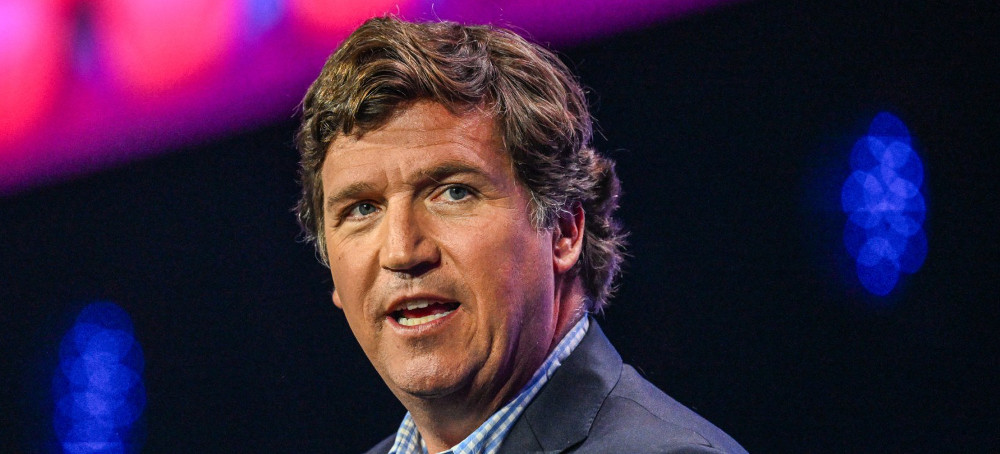 Tucker Carlson speaks at the Turning Point Action USA conference in West Palm Beach, Florida, on July 15, 2023. (photo: Giorgio Viera/AFP)
09 february 24 (RSN.org)
In an interview with Tucker Carlson, the Russian president barely broke a sweat, conceded little, and controlled the conversation from its beginning
Tucker Carlson’s interview with Russian President Vladimir Putin went exactly how everyone expected, as not so much of an interview, but a demonstration by Putin of the ease with which he could utterly overpower one of the United States’ most prominent media figures.
Carlson opened the interview by directly addressing viewers, stating that he felt Putin was “sincere” in his belief that “Russia has a historic claim” to the portions of Ukraine he wishes to seize through military might.
“Are we having a talk show or a serious conversation?” Putin asked Carlson in their very first exchange, after denying that he’d justified his incursion into Ukraine to prevent a “surprise attack” by the U.S. and NATO against allies.
Putin then launched into a 30-minute lecture on Russian and Ukrainian history, starting in 862, through the creation and fall of the Soviet Union, and to the modern era. Carlson stared blankly and nodded along as Putin claimed Ukraine had no independent national identity to justify its sovereignty, a claim historians and Russian propaganda experts have categorically rejected. Carlson halfheartedly attempted to move Putin onto another topic, only to be brushed off by the autocrat who — one must assume — is not particularly receptive to being told what to do.
“It’s not boring; I just don’t know how it’s relevant,” Carlson said.
“Good,” Putin replied, before resuming his oral report.
The exchange was representative of the more than two-hour-long interview as a whole; Putin barely broke a sweat, conceded little when directly questioned, and seemed to control the tone and pace of the conversation from its beginning. He felt so comfortable that he even made fun of Carlson for getting rejected by the CIA before beginning his career in media.
In making his interviewer play by his rules — and in Carlson relinquishing the reigns of the dialogue — Putin used Carlson as the vehicle to ship his carefully crafted state propaganda to American audiences.
The interview continued to center around the ongoing war between Russia and Ukraine. The Russian president reiterated many of the arguments he’s already made regarding his motives for invading their neighbor — with little critical pushback from Carlson.
Putin spoke at length about his wish to bring “de-Nazification” to Ukraine, and while the nation does have a dark history of association with Nazism and neo-Nazi factions, particularly in the context of WWII, experts widely agree this is a propaganda ploy used as justification for the invasion.
Putin at one point told Carlson that the United States had better things to do than help Ukraine fight a war. “Thousands of miles away from your national territory, don’t you have anything better to do?” Putin said. “You have issues on the border, issues with migration, issues with the national debt … you have nothing better to do, so you fight in Ukraine?”
It comes as no surprise to anyone who’s watched Carlson’s coverage of Ukraine that the line of argument overlapped almost completely with the former Fox News host’s own view on the matter. Carlson was among the first public advocates to push Republicans to make aid to Ukraine contingent on increased resources for border enforcement.
The overlap is likely why Carlson didn’t respond or engage further with Putin on the question, instead pivoting to questioning the president about who blew up the Nord Stream pipeline.
“You, for sure,” Putin joked.
Carlson countered that he was busy that day.
“You may personally have an alibi, but the CIA has no such alibi,” the Russian president replied, reiterating his claims that the blast that crippled the major natural gas pipeline was likely orchestrated by the U.S. and its NATO allies. Investigations have yet to determine who was behind the sabotage, but in 2022 Carlson publicly hinted at his belief that the U.S. may have been responsible for the pipeline’s destruction. The comments were notable enough that last year, Russian state TV attempted to link Carlson’s firing from Fox News to his coverage of Nord Stream.
Carlson announced on Tuesday that he would be releasing an interview with the Russian autocrat he has long defended. The former Fox News host claimed that English-speaking news outlets are too “corrupt” and “lie” too often to be trusted to accurately portray Russia’s leader — not that Carlson has ever lied to his audience.
The announcement was immediately controversial, in great part because of the ongoing crackdown against journalistic freedom within Russia, including the detainment of foreign reporters by Russian authorities.
One such journalist is Evan Gershkovich, a Wall Street Journal reporter who was detained by Russian authorities while on assignment in Russia last year. Gershkovich has been held in the notorious Lefortovo prison since March 2023 on trumped-up charges of espionage.
Toward the end of the interview, Carlson finally found his spine, asking Putin about Gershkovich’s imprisonment, and proposing that the president — in a show of his “decency” — release Gershkovich into the custody of Carlson’s team, who would return him to the United States.
“The guy is obviously not a spy, he’s a kid, and maybe he was breaking your law in some way, but he’s not a super-spy and everyone knows that, and he’s being held hostage,” Carlson said.
Putin refused to commit to Gershkovich’s release and maintained the Russian government’s allegations that the reporter had been illegally collecting confidential information constituting espionage. “We’ve done so many gestures of goodwill, out of decency, that I think we’ve run out of them,” Putin said, adding that he would entertain the possibility of Gershkovich’s release when he saw “reciprocal” actions from the U.S.
On Tuesday, Carlson asserted that “not a single Western journalist has bothered to interview the president of” Russia since the nation launched its offensive against Ukraine in February 2022. The lie was so blatant that even the Kremlin felt the need to address it.
“Mr. Carlson is not correct,” Kremlin spokesperson Dmitry Peskov said in a statement on Wednesday, adding that they have received “numerous requests for interviews with the president, but mostly, as far as countries in the collective West are concerned, these are from major network media: traditional TV channels and large newspapers.”
CNN chief international anchor Christine Amanpour responded to the claim on X (formerly Twitter). “Does Tucker really think we journalists haven’t been trying to interview President Putin every day since his full-scale invasion of Ukraine?” she wrote.
Other prominent journalists echoed the sentiment. “It is most striking to see Carlson justify his interview with Putin and trip to Russia as the work of a journalist at a time when Western journalists are literally sitting in jail for having done nothing wrong other than seeking to report independently in Putin’s Russia, not to mention the many Russian journalists who face imprisonment or exile in the effort to continue their work,” New York Times writer and former Washington Post Moscow Bureau Chief Susan Glasser told CNN.
Russian journalist Yevgenia Albats wrote on X that the situation is “unbelievable,” adding that she — like many other Russian journalists — “have had to go into exile to keep reporting about the Kremlin’s war against Ukraine. The alternative was to go to jail. And now this SoB is teaching us about good journalism, shooting from the $1000 Ritz suite in Moscow.”
According to the Moscow Times, an independent Russian news outlet that was forced to leave the country in 2022 and whose articles are censored within territorial Russia, more than 1,000 independent journalists have been forced to flee the country as Putin’s regime cracks down on freedom of the press.
So how on earth did Carlson land an interview with Putin amidst the Russian government’s full-frontal assault on journalistic freedom? It’s a moment years in the making for the former Fox News host, who across large swaths of his career has acted as the propagandist for Putin — with particular emphasis on the Russia-Ukrainian war.
Carlson has a long history of espousing pro-Russian talking points regarding the war, even going so far as to claim in 2019 that he was actively “[rooting] for Russia” as tensions escalated between the two nations.
Days before Russia launched the invasion, Carlson told Fox News viewers that Americans had no good reason to “hate” Putin, and attempted to link President Joe Biden’s support for Ukraine to unproven allegations that the president accepted millions of dollars from the Ukrainian nationals.
As the war unfolded, Carlson ramped up his pro-Kremlin rhetoric and criticism of support for the Ukrainian government, to the point that his broadcasts were repeatedly lauded by Russian state television. In March 2022, Mother Jones obtained a Kremlin memo that encouraged state-controlled media outlets to “use as much as possible fragments of broadcasts of the popular Fox News host Tucker Carlson, who sharply criticizes the actions of the United States [and] NATO, their negative role in unleashing the conflict in Ukraine, [and] the defiantly provocative behavior from the leadership of the Western countries and NATO towards the Russian Federation and towards President Putin, personally.”
Aside from his track record espousing pro-Russian propaganda, Carlson has established a reputation among autocratic heads of state as a soft interviewer. In his quest to develop a conservative ideological exchange between American conservatives and international right-wing governments, Carlson has given friendly, lauding interviews to Hungary’s Viktor Orbán, El Salvador’s Nayib Bukele, and Argentina’s Javier Milei.
In his interviews and coverage of these right-wing political leaders, Carlson often lauds the use of executive power to reshape nations toward conservative principles — regardless of the methods implemented and the cost to civil society and democratic institutions. It’s clear that Carlson’s fascination with these figures reflects his long-professed desires to implement similar transformation within the United States. With Putin now added to his roster, Carlson has solidified his position as the main access point between the propaganda of autocrats and the American public.
Book: “The Cloud of Unknowing”

The Cloud of Unknowing
Anonymous, Tim Farrington (Foreword), James Walsh (Translator)
Widely considered a hallmark of Western literature and spirituality, The Cloud of Unknowing is an anonymous English monk’s sublime expression of what separates God from humanity. Originally written in the 14th century, now part of the HarperCollins Spiritual classics series, this beautiful contemplative resource, has been embraced for hundreds of years for its simple, engaging style and spiritual truths. As the unknown author assures us, “if you are to experience Him or to see Him at all, insofar as it is possible here, it must always be in this cloud.” —The Cloud of Unknowing.
(Goodreads.com)
Metaphysics and Consciousness with Mario Varvoglis
New Thinking • Feb 8, 2024 Mario Varvoglis, PhD, has been president of the Institut Métapsychique International in Paris, France, since 1997. He is the author of several books aimed at the French speaking market. He is also the creator of the “Psi Explorer” CD ROM. Here he addresses many issues concerning the history of parapsychology and psychical research in France, as well as the metaphysical implications of this research. 00:00:00 Introduction 00:03:48 Paranormal research in France 00:11:00 Defining the paranormal 00:17:54 Theism vs. atheism 00:25:32 Postmortem survival and materialism 00:37:53 Tolerance of ambiguity 00:43:03 The “hard problem” of consciousness 00:54:06 Mathematics and metaphysics 01:01:26 Conclusion New Thinking Allowed host, Jeffrey Mishlove, PhD, is author of The Roots of Consciousness, Psi Development Systems, and The PK Man. Between 1986 and 2002 he hosted and co-produced the original Thinking Allowed public television series. He is the recipient of the only doctoral diploma in “parapsychology” ever awarded by an accredited university (University of California, Berkeley, 1980). He is also the Grand Prize winner of the 2021 Bigelow Institute essay competition regarding the best evidence for survival of human consciousness after permanent bodily death. (Recorded on January 25, 2024)
William Fennie on the 4th Way tradition
  SUNDAY MEETING February 11, 2024 11:00 am Pacific William Fennie, H.W., M.  |
| The Prosperos and the Fourth Way What does it mean to participate in a School that follows a Fourth Way tradition? The rich heritage of the Fourth Way provides many resources for Self discovery. The Prosperos’ curriculum draws upon this awesome lineage while transforming some of the practices, drawing upon 20th century psychology and the Advanced Practice of Ontology (Translation®). This presentation will outline some of the ways that Fourth Way practice has been integrated in our 21st Century suite of transformational tools and experiences – and some of the ways it has not. Zoom link : https://us02web.zoom.us/j/332275676 Join us this Sunday for this talk by William Fennie, H.W., M. 11:00 am Pacific/Noon Mountain/1:00 Central/2:00 Eastern These talks are presented by contribution. Everyone from fundamentalists to atheists are welcome! |
Dancing plague of 1518
From Wikipedia, the free encyclopedia

The dancing plague of 1518, or dance epidemic of 1518 (French: Épidémie dansante de 1518), was a case of dancing mania that occurred in Strasbourg, Alsace (modern-day France), in the Holy Roman Empire from July 1518 to September 1518. Somewhere between 50 and 400 people took to dancing for weeks. There are many theories behind the phenomenon, the most popular being stress-induced mass hysteria, suggested by John Waller.[1][2] Other theories include ergot and religious explanations. There is controversy concerning the number of deaths.[3]
History
Events
The outbreak began in July 1518 when a woman called Frau Troffea began to dance fervently in a street in Strasbourg.[1] Troffea kept up the constant dancing for a week. Soon, three dozen others joined in.[4] By August, the “dancing plague” had claimed 400 victims.[4] Dancers were beginning to collapse. It is said some even died from a stroke or heart attack.[4] No one knew what caused this reaction, which meant no one understood how to remedy it. By early September, the outbreak began to subside,[5] when the dancers were sent to a mountain shrine to pray for absolution.[4]
Historical documents, including “physician notes, cathedral sermons, local and regional chronicles, and even notes issued by the Strasbourg city council” are clear that the victims danced;[1] it is not known why. Historical sources agree that there was an outbreak of dancing after a single woman started dancing,[6] and the dancing did not seem to die down. It lasted for such a long time that it even attracted the attention of the authorities; until the council gave up authority to the physicians, who prescribed the afflicted to “dance themselves free of it.”[3] There are claims that guild halls were refurbished to accommodate the dancing, as well as musicians and strong people to help keep those dealing with the dancing mania to stay upright.[3] This backfired, and the council was forced to ban public dancing as people danced in fear it was a punishment from Saint Vitus; and to be “free of sin” many joined in on the dancing epidemic.[3] The council went as far as to ban music, as well.[3] Those who danced were then ordered to go to the shrine of Saint Vitus, wore red shoes that were sprinkled with holy water and had painted crosses on the tops and soles.[3] They also had to hold small crosses in their hands; and incense and Latin incantations were part of this “ritual.”[3] Apparently “forgiven by Vitus,” word was spread of a successful ritual and the Dancing Plague had ended.[3]
Events similar to this are said to have occurred throughout the medieval age including 11th century in Kölbigk, Saxony, where it was believed to be the result of demonic possession or divine judgment.[7] In 15th century Apulia, Italy,[8] a woman was bitten by a tarantula, the venom making her dance convulsively. The only way to cure the bite was to “shimmy” and to have the right sort of music available, which was an accepted remedy by scholars like Athanasius Kircher.[9]
Contemporaneous explanations included demonic possession and overheated blood.[5]
Veracity of deaths
Controversy exists over whether people ultimately danced to their deaths. Some sources claim that for a period the plague killed around fifteen people per day,[2] but the sources of the city of Strasbourg at the time of the events did not mention the number of deaths, or even if there were fatalities. There do not appear to be any sources related to the events that make note of any fatalities.[10] Ned Pennant-Rea also claims that the final death toll is not known, but if the claims of fifteen people dying per day were true then the toll could be “into the hundreds.”[3]
The main source for the claim is John Waller, who has written several journal articles on the subject and the book A Time to Dance, a Time to Die: The Extraordinary Story of the Dancing Plague of 1518. The sources cited by Waller that mention deaths were all from later accounts of the events. There is also uncertainty around the identity of the initial dancer (either an unnamed woman or “Frau Troffea”) and the number of dancers involved (somewhere between 50 and 400). Of the six chronicle accounts, four support Lady Troffea as the first dancer.[7]
More at: https://en.wikipedia.org/wiki/Dancing_plague_of_1518
John Muir on silence and connection

Word-Built World: Nothingburger

A.Word.A.Daywith Anu Garg
nothingburger
PRONUNCIATION:
MEANING:
noun: Someone or something that turns out to be inconsequential.
ETYMOLOGY:
From the metaphorical use of a burger missing a patty. Coined by Hollywood gossip columnist Louella Parsons. Earliest documented use: 1942.
Artificial Intelligence vs The Power of Consciousness | Schwartz Report Part 1
Schwartz Rep Feb 2, 2024 This is part one of AI and human consciousness when using creativity and innovation. AI threatens to dominate human culture’s ability to access nonlocal consciousness and is becoming more and more important. Stay tuned for part two where I will teach you how to express your creativity and innovation through nonlocal consciousness. Thank you for listening. References to further explore today’s episode: https://bit.ly/49eXVHKhttps://bit.ly/3HOODX4