100 life quotes from: Man’s Search for Meaning

Mary Mpembee

Mary Mpembee

Jul 28, 2023 (marympembee.medium.com)

He who has a why to live for can bear almost any how — Friedrich Nietzsche

Photo by Zac Durant on Unsplash

Victor Frankl was an Austrian psychiatrist, neurologist, and Holocaust survivor. He is best known for his influential book “Man’s Search for Meaning,” which explores his experiences in concentration camps and the importance of finding purpose and meaning of life.

Here are my best 100 quotes from his book:

1. If a book has one passage, one idea with the power to change a person’s life, that alone justifies reading and re-reading it and finding room for it on one’s shelves. This book has several such passages.

2. Life is not primarily a quest for pleasure, as Freud believed, or a quest for power, as Alfred Adler taught, but a quest for meaning.

3. Forces beyond your control can take away everything you possess except one thing, your freedom to choose how you will respond to the situation.

4. You cannot control what happens to you in life, but you can always control what you will feel and do about what happens to you.

5. The man, whose self-esteem had always depended on the respect of others, is emotionally destroyed.

6. Don’t aim at success — the more you aim at it and make it a target, the more you are going to miss it. For success, like happiness, cannot be pursued; it must ensue, and it only does so as the unintended side-effect of one’s dedication to a cause greater than oneself or as the by-product of one’s surrender to a person other than oneself.

7. We were unable to clean our teeth, and yet, in spite of that and a severe vitamin deficiency, we had healthier gums than ever before.

8. If someone now asked of us the truth of Dostoevski’s statement that flatly defines man as a being who can get used to anything, we would reply, “Yes, a man can get used to anything, but do not ask us how.”

9. There are things which must cause you to lose your reason or you have none to lose.

10. An abnormal reaction to an abnormal situation is normal behaviour.

11. It is not the physical pain which hurts the most (and this applies to adults as much as to punished children); it is the mental agony caused by the injustice, the unreasonableness of it all.

12. What did the prisoner dream about most frequently? Of bread, cake, cigarettes, and nice warm baths.

13. It is well known that humor, more than anything else in the human make-up, can afford an aloofness and an ability to rise above any situation, even if only for a few seconds.

14. No man should judge unless he asks himself in absolute honesty whether in a similar situation he might not have done the same.

15. I generally answered all kinds of questions truthfully. But I was silent about anything that was not expressly asked for. If I were asked my age, I gave it. If asked about my profession, I said “doctor,” but did not elaborate.

16. “Listen, Otto, if I don’t get back home to my wife, and if you should see her again, then tell her that I talked of her daily, hourly. You remember. Secondly, I have loved her more than anyone. Thirdly, the short time I have been married to her outweighs everything, even all we have gone through here.”

17. At times, lightning decisions had to be made, decisions which spelled life or death. The prisoner would have preferred to let fate make the choice for him.

18. We found out just how uncertain human decisions are, especially in matters of life and death.

19. The consciousness of one’s inner value is anchored in higher, more spiritual things, and cannot be shaken by camp life. But how many free men, let alone prisoners, possess it?

20. The experiences of camp life show that man does have a choice of action. There were enough examples, often of a heroic nature, which proved that apathy could be overcome, irritability suppressed.

21. Man can preserve a vestige of spiritual freedom, of independence of mind, even in such terrible conditions of psychic and physical stress.

22. Everything can be taken from a man but one thing: the last of the human freedoms — to choose one’s attitude in any given set of circumstances, to choose one’s own way.

23. Even though conditions such as lack of sleep, insufficient food and various mental stresses may suggest that the inmates were bound to react in certain ways, in the final analysis it becomes clear that the sort of person the prisoner became was the result of an inner decision, and not the result of camp influences alone.

24. Dostoevski said once, “There is only one thing that I dread: not to be worthy of my sufferings.”

25. An active life serves the purpose of giving man the opportunity to realize values in creative work, while a passive life of enjoyment affords him the opportunity to obtain fulfillment in experiencing beauty, art, or nature.

26. But not only creativeness and enjoyment are meaningful. If there is a meaning in life at all, then there must be a meaning in suffering.

27. Instead of taking the camp’s difficulties as a test of their inner strength, they did not take their life seriously and despised it as something of no consequence.

28. “Life is like being at the dentist. You always think that the worst is still to come, and yet it is over already.” Varying this, we could say that most men in a concentration camp believed that the real opportunities of life had passed. Yet, in reality, there was an opportunity and a challenge.

29. Emotion, which is suffering, ceases to be suffering as soon as we form a clear and precise picture of it.

30. Those who know how close the connection is between the state of mind of a man — his courage and hope, or lack of them — and the state of immunity of his body will understand that the sudden loss of hope and courage can have a deadly effect.

31. Woe to him who saw no more sense in his life, no aim, no purpose, and therefore no point in carrying on. He was soon lost.

32. It did not really matter what we expected from life, but rather what life expected from us.

33. We needed to stop asking about the meaning of life, and instead to think of ourselves as those who were being questioned by life — daily and hourly.

34. Life ultimately means taking the responsibility to find the right answer to its problems and to fulfill the tasks which it constantly sets for each individual.

35. The meaning of life, differ from man to man, and from moment to moment. Thus it is impossible to define the meaning of life in a general way.

36. No man and no destiny can be compared with any other man or any other destiny. No situation repeats itself, and each situation calls for a different response. Sometimes the situation in which a man finds himself may require him to shape his own fate by action.

37. Sometimes man may be required simply to accept fate, to bear his cross.

38. Every situation is distinguished by its uniqueness, and there is always only one right answer to the problem posed by the situation at hand.

39. There was no need to be ashamed of tears, for tears bore witness that a man had the greatest of courage, the courage to suffer.

40. When the impossibility of replacing a person is realized, it allows the responsibility which a man has for his existence and its continuance to appear in all its magnitude.

41. A man who becomes conscious of the responsibility he bears toward a human being who affectionately waits for him, or to an unfinished work, will never be able to throw away his life.

42. The immediate influence of behavior is always more effective than that of words. But at times a word was effective too, when mental receptiveness had been intensified by some outer circumstances.

43. I quoted from Nietzsche: “Was mich nicht umbringt, macht mich stärker.” (That which does not kill me, makes me stronger.)

44. I had no intention of losing hope and giving up. For no man knew what the future would bring, much less the next hour.

45. What you have experienced, no power on earth can take from you.

46. All we have done, whatever great thoughts we may have had, and all we have suffered, all this is not lost, though it is past; we have brought it into being. Having been is also a kind of being, and perhaps the surest kind.

47. Human kindness can be found in all groups, even those which as a whole it would be easy to condemn.

48. From all this we may learn that there are two races of men in this world, but only these two — the “race” of the decent man and the “race” of the indecent man. Both are found everywhere; they penetrate into all groups of society.

49. Life in a concentration camp tore open the human soul and exposed its depths. Is it surprising that in those depths we again found only human qualities which in their very nature were a mixture of good and evil?

50. No one has the right to do wrong, not even if wrong has been done to them.

51. Apart from the moral deformity resulting from the sudden release of mental pressure, there were two other fundamental experiences which threatened to damage the character of the liberated prisoner: bitterness and disillusionment when he returned to his former life.

52. During psychoanalysis, the patient must lie down on a couch and tell you things which sometimes are very disagreeable to tell.

53. Now, in logotherapy the patient may remain sitting erect but he must hear things which sometimes are very disagreeable to hear.

54. Logotherapy focuses rather on the future, that is to say, on the meanings to be fulfilled by the patient in his future.

55. According to logotherapy, this striving to find a meaning in one’s life is the primary motivational force in man.

56. This meaning is unique and specific in that it must and can be fulfilled by him alone; only then does it achieve a significance which will satisfy his own will to meaning.

57. Man, however, is able to live and even to die for the sake of his ideals and values!

58. Not every conflict is necessarily neurotic; some amount of conflict is normal and healthy.

59. Suffering is not always a pathological phenomenon; rather than being a symptom of neurosis, suffering may well be a human achievement, especially if the suffering grows out of existential frustration.

60. Mental health is based on a certain degree of tension, the tension between what one has already achieved and what one still ought to accomplish, or the gap between what one is and what one should become.

61. I consider it a dangerous misconception of mental hygiene to assume that what man needs in the first place is equilibrium or, as it is called in biology, “homeostasis,” i.e., a tensionless state.

62. What man actually needs is not a tensionless state but rather the striving and struggling for a worthwhile goal, a freely chosen task.

63. What matters, therefore, is not the meaning of life in general but rather the specific meaning of a person’s life at a given moment.

64. Man should not ask what the meaning of his life is, but rather he must recognize that it is he who is asked.

65. Logotherapy tries to make the patient fully aware of his own responsibleness; therefore, it must leave to him the option for what, to what, or to whom he understands himself to be responsible.

66. The more one forgets himself — by giving himself to a cause to serve or another person to love — the more human he is and the more he actualizes himself.

67. The meaning of life always changes, but that it never ceases to be.

68. According to logotherapy, we can discover this meaning in life in three different ways: (1) by creating a work or doing a deed; (2) by experiencing something or encountering someone; and (3) by the attitude we take toward unavoidable suffering.

69. Love is the only way to grasp another human being in the innermost core of his personality.

70. In logotherapy, love is not interpreted as a mere epiphenomenon of sexual drives and instincts in the sense of a so-called sublimation. Love is as primary a phenomenon as sex.

71. When we are no longer able to change a situation — just think of an incurable disease such as inoperable cancer — we are challenged to change ourselves.

72. It is one of the basic tenets of logotherapy that man’s main concern is not to gain pleasure or to avoid pain but rather to see a meaning in his life.

73. But let me make it perfectly clear that in no way is suffering necessary to find meaning. I only insist that meaning is possible even in spite of suffering — provided, certainly, that the suffering is unavoidable.

74. To suffer unnecessarily is masochistic rather than heroic.

75. The burden of unavoidable unhappiness is increased by unhappiness about being unhappy.

76. Some of the people who nowadays call on a psychiatrist would have seen a pastor, priest or rabbi in former days.

77. Procreation is not the only meaning of life, for then life in itself would become meaningless, and something which in itself is meaningless cannot be rendered meaningful merely by its perpetuation.

78. Ironically enough, in the same way that fear brings to pass what one is afraid of, likewise a forced intention makes impossible what one forcibly wishes.

79. The more a man tries to demonstrate his sexual potency or a woman her ability to experience orgasm, the less they are able to succeed.

80. Pleasure is, and must remain, a side-effect or by-product, and is destroyed and spoiled to the degree to which it is made a goal in itself.

81. I also bear witness to the unexpected extent to which man is capable of defying and braving even the worst conditions conceivable.

82. Man does not simply exist but always decides what his existence will be, what he will become in the next moment.

83. Man is capable of changing the world for the better if possible, and of changing himself for the better if necessary.

84. Man has both potentialities within himself; which one is actualized depends on decisions but not on conditions.

85. After all, man is that being who invented the gas chambers of Auschwitz; however, he is also that being who entered those gas chambers upright, with the Lord’s Prayer or the Shema Yisrael on his lips.

86. Optimism is not anything to be commanded or ordered. One cannot even force oneself to be optimistic indiscriminately, against all odds, against all hope. Faith and love cannot be commanded or ordered either.

87. But happiness cannot be pursued; it must ensue. A human being is not one in pursuit of happiness but rather in search of a reason to become happy,

88. Once an individual’s search for a meaning is successful, it not only renders him happy but also gives him the capability to cope with suffering.

89. People have enough to live by but nothing to live for; they have the means but no meaning. To be sure, some do not even have the means.

90. As soon as they could fill their abundant free time with some sort of unpaid but meaningful activity — their depression disappeared although their economic situation had not changed and their hunger was the same. The truth is that man does not live by welfare alone

91. A strong meaning orientation plays a decisive role in the prevention of suicide.

92. Study the lives of people who seem to have found their answers to the questions of what ultimately human life is about as against those who have not.

93. I know that without the suffering, the growth that I have achieved would have been impossible.

94. As for the concept of collective guilt, I personally think that it is totally unjustified to hold one person responsible for the behavior of another person or a collective of persons.

95. Live as if you were living for the second time and had acted as wrongly the first time as you are about to act now.

96. In the past, nothing is irretrievably lost, but rather, on the contrary, everything is irrevocably stored and treasured.

97. One may see that there is no reason to pity old people. Instead, young people should envy them. Instead of possibilities in the future, they have realities in the past — the potentialities they have actualized, the meanings they have fulfilled, the values they have realized — and nothing and nobody can ever remove these assets from the past.

98. Nihilism does not contend that there is nothing, but it states that everything is meaningless.

99. But everything great is just as difficult to realize as it is rare to find.

100. The world is in a bad state, but everything will become still worse unless each of us does his best.

Photo by Pop & Zebra on Unsplash
Mary Mpembee

Written by Mary Mpembee

I write bookish content mpembeemary@gmail.com

How Do You Know That You Love Somebody? Philosopher Martha Nussbaum’s Incompleteness Theorem of the Heart’s Truth, from Plato to Proust

By Maria Popova (themarginalian.org)

“The state of enchantment is one of certainty,” W.H. Auden wrote in his commonplace book. “When enchanted, we neither believe nor doubt nor deny: we know, even if, as in the case of a false enchantment, our knowledge is self-deception.” Nowhere is our capacity for enchantment, nor our capacity for self-deception, greater than in love — the region of human experience where the path to truth is most obstructed by the bramble of rationalization and where we are most likely to be kidnapped by our own delicious delusions. There, it is perennially difficult to know what we really want; difficult to distinguish between love and lust; difficult not to succumb to our perilous tendency to idealize; difficult to reconcile the closeness needed for intimacy with the psychological distance needed for desire.

How, then, do we really know that we love another person?

That’s what Martha Nussbaum, whom I continue to consider the most compelling philosopher of our time, examines in her 1990 book Love’s Knowledge: Essays on Philosophy and Literature (public library) — the sandbox in which Nussbaum worked out the ideas that would become, a decade later, her incisive treatise on the intelligence of emotions.

Martha Nussbaum

Devising a sort of incompleteness theorem of the heart’s truth, Nussbaum writes:

We deceive ourselves about love — about who; and how; and when; and whether. We also discover and correct our self-deceptions. The forces making for both deception and unmasking here are various and powerful: the unsurpassed danger, the urgent need for protection and self-sufficiency, the opposite and equal need for joy and communication and connection. Any of these can serve either truth or falsity, as the occasion demands. The difficulty then becomes: how in the midst of this confusion (and delight and pain) do we know what view of ourselves, what parts of ourselves, to trust? Which stories about the condition of the heart are the reliable ones and which the self-deceiving fictions? We find ourselves asking where, in this plurality of discordant voices with which we address ourselves on this topic of perennial self-interest, is the criterion of truth? (And what does it mean to look for a criterion here? Could that demand itself be a tool of self-deception?)

With an eye to Proust’s In Search of Lost Time and its central theme of how our intellect blinds us to the wisdom of the heart, Nussbaum contemplates the nature of those experiences “in which the self-protective tissue of rationalization is in a moment cut through, as if by a surgeon’s knife”: Proust’s protagonist, Marcel, has rationally convinced himself that he no longer loves his beloved, Albertine, but is jolted into confronting the falsity of that rationalization upon receiving news of her death; in the shock of his intense sorrow, he instantly gains the knowledge, far deeper and more sinewy than the intellect’s, that he did, in fact, love Albertine.

In a testament to Proust’s assertion that “the end of a book’s wisdom appears to us as merely the start of our own,” Nussbaum writes:

Proust tells us that the sort of knowledge of the heart we need in this case cannot be given us by the sciences of psychology, or, indeed, by any sort of scientific use of intellect. Knowledge of the heart must come from the heart — from and in its pains and longings, its emotional responses.

Art by Egon Schiele, 1913

Such a conception of love’s knowledge, to be sure, stands radically against the long intellectual tradition of rationalism stretching from Plato to Locke like an enormous string of reason that plays only one note, deaf to the symphonic complexity of the emotional universe. The Proustian view calls for a restoration of lost nuance. Pointing to “the pseudotruths of the intellect,” Nussbaum revisits Marcel’s predicament, wherein the intellect has imposed an illusory sense of order and structure upon the entropy of the emotions:

The shock of loss and the attendant welling up of pain show him that his theories were forms of self-deceptive rationalization — not only false about his condition but also manifestations and accomplices of a reflex to deny and close off one’s vulnerabilities that Proust finds to be very deep in all of human life. The primary and most ubiquitous form of this reflex is seen in the operations of habit, which makes the pain of our vulnerability tolerable to us by concealing need, concealing particularity (hence vulnerability to loss), concealing all the pain-inflicting features of the world — simply making us used to them, dead to their assaults. When we are used to them we do not feel them or long for them in the same way; we are no longer so painfully afflicted by our failure to control and possess them. Marcel has been able to conclude that he is not in love with Albertine, in part because he is used to her. His calm, methodical intellectual scrutiny is powerless to dislodge this “dream deity, so riveted to one’s being, its insignificant face so incrusted in one’s heart.” Indeed, it fails altogether to discern the all-important distinction between the face of habit and the true face of the heart.

Nussbaum considers how our over-reliance on the intellect for clarity about love produces instead a kind of myopia:

Intellect’s account of psychology lacks all sense of proportion and depth and importance… [Such a] cost-benefit analysis of the heart — the only comparative assessment of which intellect, by itself, is capable — is bound, Proust suggests, to miss differences of depth. Not only to miss them, but to impede their recognition. Cost-benefit analysis is a way of comforting oneself, of putting oneself in control by pretending that all losses can be made up by sufficient quantities of something else. This stratagem opposes the recognition of love — and, indeed, love itself.

[…]

To remove such powerful obstacles to truth, we require the instrument that is “the subtlest, most powerful, most appropriate for grasping the truth.” This instrument is given to us in suffering.

Half a century after Simone Weil made her compelling case for why suffering is a greater clarifying force than intellectual discipline, Nussbaum examines this antidote to the intellect’s self-delusion by quoting directly from Proust:

Our intelligence, however lucid, cannot perceive the elements that compose it and remain unsuspected so long as, from the volatile state in which they generally exist, a phenomenon capable of isolating them has not subjected them to the first stages of solidification. I had been mistaken in thinking that I could see clearly into my own heart. But this knowledge, which the shrewdest perceptions of the mind would not have given me, had now been brought to me, hard, glittering, strange, like a crystallised salt, by the abrupt reaction of pain.

Central to this method of truth-seeking is what Nussbaum calls catalepsis — “a condition of certainty and confidence from which nothing can dislodge us.” To be cataleptic — from the Greek katalēptikē, derived from the verb katalambanein, meaning “to apprehend,” “to firmly grasp” — is to have a firm grasp of reality. But, of course, the implied antinomy is that because reality is inherently slippery, either the firmness of such catalepsis or its conception of reality is false.

Noting the pre-Socratic Greek philosopher Zeno’s view that we gain knowledge of the heart’s truth through powerful impressions that come directly from reality, Nussbaum returns to Proust’s Marcel:

The impression [that he loves Albertine] comes upon Marcel unbidden, unannounced, uncontrolled… Surprise, vivid particularity, and extreme qualitative intensity are all characteristics that are systematically concealed by the workings of habit, the primary form of self-deception and self-concealment. What has these features must have escaped the workings of self-deception, must have come from reality itself.

We notice, finally, that the very painfulness of these impressions is essential to their cataleptic character. Our primary aim is to comfort ourselves, to assuage pain, to cover our wounds. Then what has the character of pain must have escaped these mechanisms of comfort and concealment; must, then, have come from the true unconcealed nature of our condition.

Detail from Musikalische Unterhaltung by Hans Makart, 1874.

And yet there exists another, more dimensional possibility. Nussbaum writes:

For the Stoic the cataleptic impression is not simply a route to knowing; it is knowing. It doesn’t point beyond itself to knowledge; it goes to constitute knowledge. (Science is a system made up of katalēpseis.) If we follow the analogy strictly, then, we find that knowledge of our love is not the fruit of the impression of suffering, a fruit that might in principle have been had apart form the suffering. The suffering itself is a piece of self-knowing. In responding to a loss with anguish, we are grasping our love. The love is not some separate fact about us that is signaled by the impression; the impression reveals the love by constituting it. Love is not a structure in the heart waiting to be discovered; it is embodied in, made up out of, experiences of suffering.

[…]

Marcel is brought, then, by and in the cataleptic impression, to an acknowledgment of his love. There are elements of both discovery and creation here, at both the particular and general levels… Before the suffering he was indeed self-deceived — both because he was denying a general structural feature of his humanity and because he was denying the particular readiness of his soul to feel hopeless love for Albertine. He was on a verge of a precipice and thought he was safely immured in his own rationality. But his case shows us as well how the successful denial of love is the (temporary) extinction and death of love, how self-deception can aim at and nearly achieve self-change.

We now see exactly how and why Marcel’s account of self-knowledge is no simple rival to the intellectual account. It tells us that the intellectual account was wrong: wrong about the content of the truth about Marcel, wrong about the methods appropriate for gaining this knowledge, wrong as well about what sort of experience in and of the person knowing is. And it tells us that to try to grasp love intellectually is a way of not suffering, not loving — a practical rival, a stratagem of flight.

Art by Salvador Dalí for a rare edition of Dante’s Divine Comedy

Noting the contrast between the mutuality of love and the asymmetry of infatuation — after all, Marcel’s confrontation of his feelings for Albertine doesn’t require her participation at all and can be conducted as a wholly solitary activity — Nussbaum adds:

What Marcel feels is a gap or lack in himself, an open wound, a blow to the heart, a hell inside himself. Is all of this really love of Albertine?

[…]

The heart and mind of another are unknowable, even unapproachable, except in fantasies and projections that are really elements of the knower’s own life, not the other’s.

Proust’s protagonist arrives at this conclusion himself:

I understood that my love was less a love for her than a love in me… It is the misfortune of beings to be for us nothing else but useful showcases for the contents of our own minds.

And yet this conclusion, Nussbaum argues, is but a form of self-protection — in denying one’s porousness to the other and instead painting love as a curious relationship with oneself, it bolsters the illusion of self-sufficiency as a hedge against the suffering which love entails. Such a conception is ultimately a form of self-delusion masking the true nature of love and what Nussbaum calls its “dangerous openness.” Reflecting on Proust’s ultimate revelation, she writes:

Love … is a permanent structural feature of our soul.

[…]

The alternations between love and its denial, suffering and denial of suffering … constitute the most essential and ubiquitous structural feature of the human heart. In suffering we know only suffering. We call our rationalizations false and delusive, and we do not see to what extent they express a mechanism that is regular and deep in our lives. But this means that in love itself we do not yet have full knowledge of love — for we do not grasp its limits and boundaries. Sea creatures cannot be said to know the sea in the way that a creature does who can survey and dwell in both sea and land, noticing how they bound and limit one another.

Love’s Knowledge is a revelatory read in its totality. Complement it with Adam Phillips on the interplay between frustration and satisfaction in love, Erich Fromm on mastering the art of loving, Alain de Botton on why our partners drive us mad, and Esther Perel on the central paradox of love, then revisit Nussbaum on anger and forgivenessagency and victimhoodthe intelligence of the emotions, and how to live with our human fragility.

Alone Together: An Illustrated Celebration of the Art of Shared Solitude

By Maria Popova (themarginalian.org)

“One can never be alone enough to write,” Susan Sontag lamented in her diary. “Oh comforting solitude, how favorable thou art to original thought!” the founding father of neuroscience exulted in considering the ideal environment for creative breakthrough.

All creative people, however public or performative their work may be, yearn for that contemplative space where the mind quiets and the spirit quickens. The ongoing challenge of the creative life is how to balance the outward sharing of one’s gift with the inward stewardship of the soul from which that gift springs.

How to master that delicate balance is what Dutch author-illustrator duo Marc Veerkamp and Jeska Verstegen explore in Bear Is Never Alone (public library), translated by Laura Watkinson.

In the middle of the forest, Piano Bear is performing for a rapt and ravenous audience insatiable for his music.

As all the creatures’ delight in his gift for beautiful music metastasizes into a demand, Piano Bear begins yearning for stillness and solitude. But everywhere he turns, the other animals follow with their incessant incantation of “MORE!”

Finally, pushed to his limits, Piano Bear startles the forest with a great big roar of exasperation, then immediately curls up into a ball of shyness.

Just as he thinks he is at last alone, Piano Bear notices a quiet presence that has been there in the crowd all along — a lone zebra striped with her own gift: words.

As a token of gratitude for all the beautiful music she has been silently enjoying, the zebra offers to read Piano Bear a story. Cautious at first of another intrusion, he comes to see that there is great joy in a shared solitude — a testament to Rilke’s insistence that the highest task of a bond between two souls is for each to “stand guard over the solitude of the other.”

Couple Bear Is Never Alone with Maya Angelou on our responsibility to our gifts, then revisit Hermann Hesse on solitude as the path to destiny and May Sarton’s lovely ode to the art of being alone.

How to Apologize: Reflections on Forgiveness, Self-Forgiveness, and the Paradox of Doing the Right Thing

By Maria Popova (themarginalian.org)

“An honorable human relationship… in which two people have the right to use the word ‘love,’” Adrienne Rich wrote, “is a process, delicate, violent, often terrifying to both persons involved, a process of refining the truths they can tell each other.”

And yet if the two pillars of friendship and loving relation are truth and tenderness, as Emerson believed, something terrible and irreconcilable happens when the truth itself is untender — it becomes impossible to discern the honorable thing to do, the loving thing to do, the correct shape of loyalty. Cornered between two imperfect options, one is forced to weigh the agony of hurting a beloved soul against the agony of duplicity, that pernicious poison of trust — a cruel reminder of how much pain human beings can inflict in just trying to be good, how altogether difficult it is to be a human being in tender and trusting relation to other human beings in a world rife with paradoxes, moral ambiguities, and impossible choices.

Art by Marianne Dubuc from The Lion and the Bird

To tell the truth despite its untenderness — “it is important to do this,” Adrienne Rich reminds us, “because we can count on so few people to go that hard way with us” — is to be savaged by the unequaled soul-ache of having caused hurt while trying to do the right thing.

In the wake of it, trembling with desire for forgiveness and self-forgiveness, one longs for an apology so vast and powerful as to subsume the impossibility of the choice — an apology grand enough to allay all the vulnerabilities of being human, fallible, and famished for connection.

That longing comes alive in a consolation of a poem by Ellen Bass:

HOW TO APOLOGIZE
by Ellen Bass

Cook a large fish — choose one with many bones, a skeleton
you will need skill to expose, maybe the flying
silver carp that’s invaded the Great Lakes, tumbling
the others into oblivion. If you don’t live
near a lake, you’ll have to travel.
Walking is best and shows you mean it,
but you could take a train and let yourself
be soothed by the rocking
on the rails. It’s permitted
to receive solace for whatever you did
or didn’t do, pitiful, beautiful
human. When my mother was in the hospital,
my daughter and I had to clear out the home
she wouldn’t return to. Then she recovered
and asked, incredulous,
How could you have thrown out all my shoes?
So you’ll need a boat. You could rent or buy,
but, for the sake of repairing the world,
build your own. Thin strips
of Western red cedar are perfect,
but don’t cut a tree. There’ll be
a demolished barn or downed trunk
if you venture further.
And someone will have a mill.
And someone will loan you tools.
The perfume of sawdust and the curls
that fall from your plane
will sweeten the hours. Each night
we dream thirty-six billion dreams. In one night
we could dream back everything lost.
So grill the pale flesh.
Unharness yourself from your weary stories.
Then carry the oily, succulent fish to the one you hurt.
There is much to fear as a creature
caught in time, but this
is safe. You need no defense. This
is just another way to know
you are alive.

Couple with Maimonides’s framework of repentance, repair, and what true forgiveness takes, then revisit Ellen Bass’s perspectival poem “The Big Picture.”

“How to Apologize” originally appeared in The New Yorker and is published here with the poet’s permission.

Tarot Card for December 4: The Nine of Cups

The Nine of Cups

This is a lovely card, known as Lord of Happiness. It talks about a sense of inner fulfilment and bliss, which radiates outward to touch everybody with whom you come into contact.At a spiritual level, we’re talking about inner harmony, contentment and tranquillity – an appreciation of the High Powers, feeling at one with the Universe. This feeling leads to feeling that we are blessed by life.On an everyday level, the card will often come up to mark periods of high achievement, and the resulting sense of pleasure and satisfaction. It will also come up to acknowledge joy and happiness in an emotional relationship.When this card appears in your reading, it’s important to make the time to simply enjoy your own feelings, to revel in your sense of calmness and joy.

When You Evolve, You Realize How Dysfunctional Everything Is

And you don’t want to keep playing your part in the dysfunction

Patrícia Williams

Patrícia Williams

Published in Mystic Minds

5 days ago (Medium.com)

Photo by Alexander Ramsey on Unsplash

Yesterday, I found myself reflecting on how much I’ve changed in these past years. It’s like looking back at an old photo and realizing you’re not the same person smiling back at the camera.

If you had told me four years ago that I’d leave the city I’ve lived in my whole life, buy a house in the countryside, and work online instead of in a normal office job, I’d have told you that you were out of your mind. Or, if you had told me my family was filled with dysfunctional patterns, and I, too, was carrying those patterns in my relationships… I’d have flat-out laughed at you.

It’s funny how life unfolds, revealing layers we never knew existed.

Like most people, I was programmed to follow a script — the conventional narrative that society deems as the “right” path. I was programmed to have a certain job, follow a certain timeline, and have a certain lifestyle. It was as if everything was already planned and defined for me, and all I had to do was play my part.

I can’t pinpoint the exact moment when the shift began, but somewhere along the line, my mind opened to the idea that maybe, just maybe, there was another way to live.

Maybe, just maybe, the script I was handed was merely a suggestion, and I held the pen to write my own story.

I’m incredibly grateful for all the changes I’ve experienced. However, something I’m still learning is how to navigate the world once we realize how dysfunctional everything is.

I mean, how do we keep moving forward when the curtain has been pulled back, revealing the messy truth behind the polished performance we once thought was reality?

When you embark on the journey of inner work, peeling back the layers of your psyche, you begin to uncover a complex array of elements that have remained hidden.

Within yourself, you find the scars of past wounds, the remnants of coping mechanisms developed over time, the echoes of fears that have shaped your actions, and the insecurities that have silently influenced your choices. You begin to connect the dots between events and emotions, understanding why certain triggers evoke specific responses and recognizing the roots of your relational patterns.

Finally, everything makes sense. You understand how your past has shaped you, and why you are the way you are.

Then, as the layers of your own psyche become clearer, you begin to see those same layers in others. It’s like gaining a new set of lenses through which you view the world — lenses that reveal the intricacies and complexities that lie beneath the surface of every individual.

You observe the friend who habitually people-pleases, unable to utter the word “no”. You recognize their internal struggle, and you see how desperate they are for acceptance and validation.

You also observe the family member who reacts with anger every time you attempt to set healthy boundaries. You notice the emotional turbulence beneath the surface — suddenly, it’s clear that their inability to deal with your assertiveness stems from their inability to be honest with themselves.

As time goes by, you realize the dance of fears, wounds, and insecurities is not exclusive to your own story; it’s a universal ballet performed by every person you encounter.

This realization doesn’t stop at the personal level — it extends to societal dynamics.

The more you notice how people act together, follow the same rules, and share the same worries and fears, the more you see something’s not quite right. It’s like we’re all reading from the same script, even if it doesn’t make much sense.

As this awareness sinks in, you start questioning the so-called “normal” way of doing things.

Do I really have to live this way? Do I really have to keep friendships that drain me, or work a job that leaves me exhausted? Do I really need to drink alcohol to socialize? Do I really need to have an enmeshed relationship with my family, ignoring my well-being and personal boundaries?

Then, you go deeper.

Is there any possibility that I can choose a different path? Is there any possibility to cultivate relationships that uplift me and work in a job that aligns with my well-being? Is there any possibility to redefine my family dynamics and set healthy boundaries?

In asking these questions, a door opens to the prospect of crafting a life that is more authentic, fulfilling, and in harmony with your true self. You realize the possibility of choosing a different path isn’t just a theoretical concept… It’s a tangible, inviting reality waiting to be explored.

As you make those changes, you stop playing your part in the dysfunction. Instead, you start redefining the narrative of your life, steering it in a direction that resonates with your values and authenticity.

However, when you make a conscious choice to break the dysfunction, many people around you won’t understand the shifts you’re making. Some may even criticize you or suggest there’s something wrong with you. When that happens, here’s what I want you to know: their responses don’t speak to the validity of your choices— they’re a reflection of their own insecurities and unmet needs.

The only reason they react the way they do is because the changes you’re implementing act as a mirror, reflecting back the dysfunction they are entrenched in. The dysfunction that used to be entrenched in you too.

We all need validation. In their case, the way they receive that validation is by seeing others live in dysfunctional patterns. Your decision to veer off this path doesn’t validate them— it challenges them. It reminds them of the choices they could make but haven’t. It reminds them of the discomfort they’re not ready to confront within themselves.

So, don’t take it personally. Instead, remind yourself that your choices are about your journey, not theirs.

When we evolve, it’s tempting to believe we can inspire others, share our journey with them, and help them see the new reality in front of us.

However, more often than not, that’s not the case.

While change and growth are accessible to anyone, some people are simply not ready to embrace the unfamiliar terrain of transformation. And that’s okay. Each person has their own pace, and their own path to navigate.

The best we can do is continue our journey authentically, hoping that our evolution might spark curiosity and courage in those around us, planting seeds of change that may bloom in their own time.

Patrícia Williams

Written by Patrícia Williams

·Writer for Mystic Minds

Relationships, Psychology, Mental Health and Spirituality ✧ https://linktr.ee/patriciaswilliams

The Early History of Conservatism

The modern right-wing has its roots in a particular historical event

Douglas Giles, PhD

Douglas Giles, PhD

4 days ago (dgilesphilosopher.medium.com)

An excerpt from my forthcoming book, Left Wing, Right Wing, People, and Power.

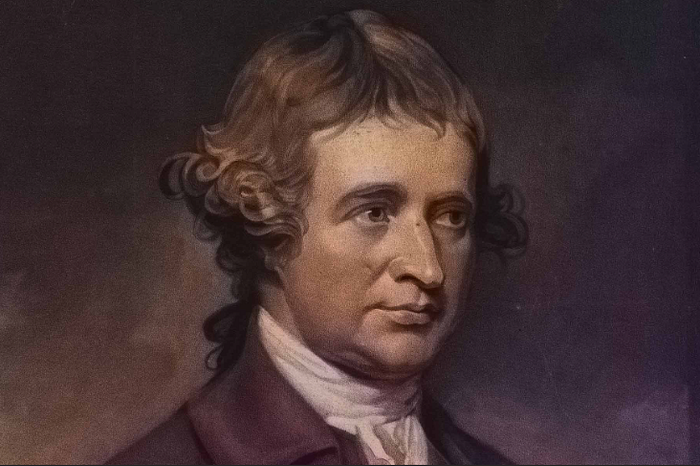
Burke, Edmund Burke, stirred but not shaken

The earliest uses of “Left” and “Right” in politics did not reflect political philosophies or ideologies. Instead, they indicated support for or opposition to a particular government. “Left” and “Right” as relative terms came from their first uses in the days of the French Revolution. In 1789 in the French Legislative Assembly, supporters of the king chose to group themselves sitting to the right of the assembly president, and opponents of the king sat opposite them on the left. The French newspapers of the time used the terms “the Left” and “the Right” to describe the opposing sides, and the usage spread throughout Europe.

Political groups in the 1790s used “Left” and “Right” to express common ground with one or the other side during the French Revolution. Before long, all political movements opposed to a sitting government were called “the Left,” with “the Right” referring to those who supported that government.

The French Legislative Assembly members who, in 1791, sat to the right of the assembly president were united by a common cause to maintain the position of the king, Louis XVI. On the one hand, their politics were a continuation of an old order that had been in place for centuries. On the other hand, their politics were a response to new events unfolding in their nation. Out of a blend of old ideas and new realities was crafted the philosophy of conservatism, the precursor to the various movements today that can be classified as right-wing.

There are three main trajectories of right-wing thought — conservatism, reactionism, and libertarianism. They are at times starkly different, but they share a fundamental belief on how power should be structured. I will discuss reactionism and libertarianism later, but first, I will address the philosophy that preceded the other two, conservatism.

The Father of Conservatism

Edmund Burke (1729–1797) is widely regarded as the father of conservative thought because of his philosophical attack on the French Revolution. He was English, but he sympathized with the French right-wingers and their cause. Burke was no absolutist, though. As a member of Parliament, he supported laws to curtail the power of the English king. His concerns were to conserve what he saw as the proper political power structure and the validity of the status and hierarchy of the aristocracy.

In Reflections on the Revolution in France (1790), Burke condemned the French revolutionary attempts to tear down the old traditional power structure and replace it with a new power structure based on rationality. Burke responded that no single generation has the right to destroy what has been built by many earlier generations. He advocated a balanced view that rulers should be responsive to the views and needs of its subjects and to the reality of social change, but that there must be a connection to tradition. The proper way to address change is to apply the values embodied in tradition to new circumstances. A nation’s traditions, Burke argued, are the repository of civilization, the source of ethical life, and the arbiter even of reason itself.

Burke’s appeal was not to, as Hobbes had appealed, the power of a sovereign, but to the broader power structure of the aristocracy. Burke’s claim was that the aristocratic institutional system of prescriptive rights and customs, had grown out of a process cultivated by learned men of the past. We should thus, with devotion akin to religion, revere this product of generations of collective intelligence and adapt it to present circumstances. We should, he insisted, presume in favor of any settled scheme of government against any untried project, because we have long existed and flourished within traditional methods and institutions.

The revolutionaries’ demand for a new power structure horrified Burke, especially in the violent manner in which they were trying to achieve it. Burke believed in citizens’ political involvement, but in the context of a body politic that delineates social ranks. A social hierarchy, he thought, was necessary for the wiser to be able to enlighten the weaker and less knowledgeable. He saw democracy as a dangerous abstract rule of mere numbers. A nation and its decision-making must be guided by the responsible rule of a hereditary aristocracy. Institutions can change and grow, but only in response to tangible social needs, never because of novel ideas or desires, and change should only happen gradually within the spirit of the nation’s tradition.

The Burkean Worldview

Burke’s rebuttal to the revolutionaries’ demands for changes in the power structure set the philosophical tone for the right-wing worldview regarding change. Central to the conservative worldview is the preference for tradition. Conservatism includes, if not requires, a resistance to principles outside of and especially contrary to established traditions and cultural realities.

The conservative worldview motivates people to political actions that seek to conserve that are viewed as tried and tested traditions. It rests on what Burke called the “latent wisdom” of prejudice — customary judgments which have accumulated over the generations. In this context, prejudice is not bigotry, though it may degenerate into it. It is a pre-judgment — the attitude that the truth has already been found, the answer has already been given, there is no need to discuss it further.

Also inherent to the worldview of Burkean conservatism is the notion that communities are held together not by independent thinking and acting but by an acceptance of membership and duty. Unity comes from one feeling that one has a place in the community even though it be but a lowly one. Being a member of a community, and being a citizen of a nation, obligates one to carry the moral burdens that one’s status traditionally imposes.

There is in Burkean conservatism a form of quietism, of knowing one’s place and accepting it. According to John Gray,

conservatism’s fundamental insight is that persons’ identities cannot be matters of choice, but are conferred on them by their unchosen histories, so that what is most essential about them is…what is most accidental. The conservative vision is that people will come to value the privileges of choice…when they see how much in their lives must always remain unchosen.”[1]

This insight reflected the traditional feudal power structure of sovereign, nobles, and serfs. It is certainly the case that one’s freedom of choice is limited by life circumstances, but conservatism gave a rational justification for an attitude of resignation to circumstances.

In all fairness, Burke placed the moral burden of accepting one’s unchosen history on the upper class, not just on the lower classes. Clearly, the aristocracy was more privileged than the working classes, but with that privilege came the obligation to use one’s position in service of the nation. The good of the nation was what was important, and this was the good that all classes should serve.

Burke stated that rulers needed to take into consideration the interests of the citizenry, but he considered interests as belonging, not to individuals, but to social groups such as the merchant class and the landowner class. The primary social group is the nation itself. An elected representative to government, Burke said, represents not the interests of a geographical area but of the common good of the nation. A representative in Parliament, of which Burke was one, should not be bound to the interests and inclinations of individual constituencies, because “government and legislation are matters of reason and judgment, and not of inclination.”[2]

It could be said that Burke and those who followed his conservative ideas on the social hierarchy are guilty of falling on the wrong side of the is-ought problem. David Hume identified the is-ought problem by separating empirical realities from value judgments. Hume stated that we cannot argue from descriptive statements of what is to prescriptive statements of what ought to be. Our ethical judgments cannot legitimately be derived from observation of how things are in the world.[3]

Contrary to Hume’s admonition, because conservatism places its faith in tradition as received wisdom, it is inclined to accept what is as what ought to be. The Burkean worldview accepts the values embodied in tradition and the need to consent to one’s unchosen history, one’s place in society. In practice, conservatism was and is a rejection of changes to the power structure, appealing to presence of tradition as the ethical verification for the rejection.

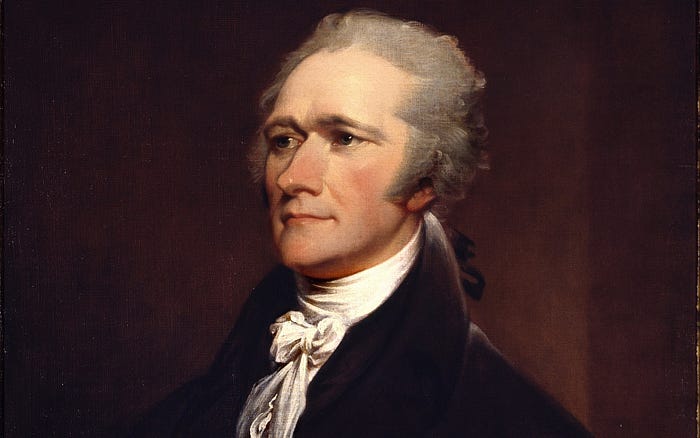
Alexander Hamilton. The real one did not sing.

The Federalists

When the American colonies fought a war seeking succession from Great Britain in the 1770s, Burke largely approved. For Burke, the American revolt was fundamentally different than the later French Revolution, and this speaks to the heart of conservative thinking. Whereas the French revolutionaries wanted to dismantle the old power structure and replace it, the American rebels sought a much less radical restructuring. Burke saw the colonies’ revolt not as a radical innovation but as a restoration of the rights and privileges of the wealthy class in those colonies. He had for the same reason approved of England’s so-called Glorious Revolution of 1688 that had replaced the legitimate sovereign, King James II, with one more agreeable to the interests of the aristocracy.

The Federalists in the newly formed United States were a group of wealthy landowners and merchants who supported the American War of Independence. They were successionists who thought that King George III and the British Parliament had too much power over the colonies, sidelining and ignoring their interests. Most Federalists were anti-monarchists, not just opposed to George III’s method of rule, but against the idea of a political structure of a single sovereign.

After the colonies won the war and gained independence, the Federalists as a political faction advocated for a political structure for the new country in which a federal government united the former colonies under the general sovereignty of a Federal government. States maintained some autonomy but were not sovereign states. Importantly, the new government would not be headed by a hereditary monarch. Equally important, the new government would be representative of the geographical territories of the states, though the representatives would be selected by the upper class. The Federalists were aristocrats in all but name, and wanted to increase the power of their class, not to the “lower” classes.

Leaders of the Federalist faction were Alexander Hamilton, John Jay, and James Madison, who later left the Federalist faction. As political thinkers, they wrote the Federalist Papers, published in 85 volumes in 1787 and 1788. In those publications, they argued for a central government of sufficient strength to safeguard the good of the nation. Its primary topic was a detailed defense of the provisions of the new US Constitution, aiming to persuade voters in the states to ratify the Constitution. A common secondary topic was to warn against the dangers from foreign intervention, dissention between the states, and domestic insurrection. Consistent throughout the Federalist Papers was the conservative idea that power should primarily be held by a central government. As described by John Jay in the “Federalist №2” publication.

Nothing is more certain than the indispensable necessity of government, and it is equally undeniable, that whenever and however it is instituted, the people must cede to it some of their natural rights in order to vest it with requisite powers.[4]

On the one hand, the American experiment of founding a new nation was novel, but on the other hand it was conservative in that its innovations were grounded within a valuing of traditional power structures.

Like Burke, the Federalists favored the wealthy class as more capable of ruling the nation, and thus rejected democracy, widespread suffrage, and open elections. Forming a political party, the Federalists were a dominant force in Congress and advanced a legislative agenda based on their conservative principles. Most notably, they passed the Alien and Sedition Acts in 1798 that restricted freedom of speech and freedom of the press, ostensibly to protect the nation from enemies.

Consistently, the Federalists, as political thinkers and political party, advocated a conservative agenda of a power structure of national over state government, and policies that favored banks, manufacturers, and protectionism of American business. During the Federalist era — the first years of the US nation, 1789 to 1800 — the Federalist faction consciously attempted to establish a new tradition for the new country. Their vision was a social power structure based on conservative principles of tradition and hierarchical power applied to the circumstances of the new nation. It is no surprise that Burke did not object. The Federalist Party fell into the minority after the election of 1800, but their legacy of conservatism remains foundational to the United States to this day.

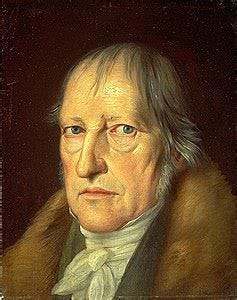
Hegel, what have you done?

The Right Hegelians

The events of the French Revolution were a catalyst for a great deal of philosophical discussion in Europe. There were those who were inspired by the idea of the revolutionaries, and there were those, like Burke, who were repelled by the prospect of the overthrow of existing traditions and institutions.

The most influential continental European philosopher who defended traditional power structures was Georg Wilhelm Friedrich Hegel (1770–1831). Hegel’s philosophy was broad and obscure, easily interpreted in various ways as philosophers took what they liked from Hegel’s ideas. Interpretations of Hegel’s political philosophy fell into two camps — the Left Hegelians and the Right Hegelians, reflecting how they applied Hegel’s insights into a Left or Right view of political power structures. The most famous of the Left Hegelians are Friedrich Engels and Karl Marx. None of the Right Hegelians ever reached prominence, it was more of a general movement that influenced later German political philosophy.

Foundational to Hegel’s political philosophy is his notion of historicism. For Hegel, the history of the world and society is to be understood as the working of an objective, rational order. Hegel observed that we can only understand events after they occur. Human reason and freedom are historical achievements, each generation dependent on earlier ones. Only through studying objective history can we know ourselves and understand how the nation should be structured. For Hegel, rationally realizing one’s role as a cog in the machine of history is the realization of freedom, and the fullest realization of this is understanding one’s role in the political nation-state.

Hegel did not advocate absolutism, as Hobbes had. Instead, Hegel called for a constitutional monarchy — the rule of a sovereign possessing power but bound to the law of the constitution and the interests of the aristocracy. All institutions and individuals are to obey the law of the land, which is Sittlichkeitthe ethical order. For Hegel, Sittlichkeit is “ethical behavior grounded in custom and tradition and developed through habit and imitation in accordance with the objective laws of the community.”[5]

Hegel’s historicist system is clearly a defense of the nation and its existing power structures. In that, it is a right-wing political philosophy. In Hegel’s view, the nation is the result of a rationally ordered system of historical development. The power of the nation is its Sittlichkeit, which provides the parameters of human rights and freedoms. Individuals can think and act freely, but only within the parameters of the ethical order.

Hegel’s insight that freedom exists within the framework of an ethical order is profound and clearly accurate. It’s an insight that has significantly inspired philosophy and the social sciences, in particular, clarifying the need to see the rule of law as the means for people’s both positive and negative freedoms. The right-wing interpretation of Hegel’s philosophy extended the notions of historical inevitability and a hierarchical rational order as the basis of the social power structure. Right Hegelians also emulated Hegel’s strong strain of nationalism and the idea of German society as superior, a bulwark to radicalism.

This chapter is by no means an exhaustive account of right-wing thought. It serves as a background for the assertions and actions made today by adherents to right-wing ideas. Conservatism is in essence a positivist standpoint — what is ought to be — that is skeptical of novel ideas to change existing power structures. Conservatism’s worldview puts trust instead in heritage and the social hierarchy.

[1] John Gray, Gray’s Anatomy: Selected Writings, Penguin. 2010. 159.

[2] Edmund Burke, Speech to the Electors of Bristol, in The Works of the Right Honourable Edmund Burke. 6 vols. London: Henry G. Bohn, 1854–56. 1774. Retrieved from The University of Chicago Press at http://press-pubs.uchicago.edu/founders/documents/v1ch13s7.html,

[3] David Hume, A Treatise of Human Nature. 1739.

[4] John Jay, “Federalist №2” in Federalist Papers: Primary Documents in American History. retrieved from Library of Congress at https://guides.loc.gov/federalist-papers/text-1-10.

[5] Georg Wilhelm Friedrich Hegel, Phenomenology of Spirit, Motilal Banarsidass Publishers. 1998. 266.

Douglas Giles, PhD

Written by Douglas Giles, PhD

Philosopher by trade & temperament, professor for 21 years, bringing philosophy out of its ivory tower and into everyday life. https://linktr.ee/dgilesphd

Finding a Moral Center in This Era of War

Talk Nov. 28, 2023 (NYTimes.com)

By David Marchese Photograph by Mamadi Doumbouya

Phil Klay, as both a participant and a writer, has been thinking deeply about war for a long time. In his two acclaimed works of fiction, the book of short stories “Redeployment,” which won a 2014 National Book Award, and the novel “Missionaries” (2020), and in the nonfiction collection “Uncertain Ground: Citizenship in an Age of Endless, Invisible War” (2022), Klay has interrogated, to profound effect and with a deeply humane and moral sensibility, what war does to our hearts and minds, individually and collectively, here and abroad. “I’m interested in the kinds of stories that we tell ourselves about war,” says Klay, who is a 40-year-old veteran of the Iraq war. “I’m interested in the uncomfortable ones, but also in the ones that feel too comfortable and need to be told alongside other types of stories that make it more troubling.”about:blank

War, understandably and probably necessarily in some ways, flattens thinking. But trying to hold on to a morally expansive perspective on war, one in which multiple things could be true at the same time — that the Hamas attack on Oct. 7 was an undeniable atrocity and also that Israel’s military response has been cruelly disproportionate — also seems necessary. Can you talk about that moral tension? There are people who feel like you cannot acknowledge, or shouldn’t acknowledge too much, horrors that are not ideologically convenient. This is why you’ll have the Palestinian National Initiative on CNN, speaking thoughtfully about the suffering of Palestinians but then denying that Hamas targets civilians,1 

1
This is a reference to an interview that aired on CNN on Oct. 8. Responding to a question from the network’s Fareed Zakaria, Mustafa Barghouti, a Palestinian legislator and the general secretary of the Palestinian National Initiative political party, said it was “not true” that Hamas targets Israeli civilians, which it clearly has.

which is an insane thing to say. There was a debate in Dissent, the left-wing publication, about whether Israeli casualties should be considered “pregrieved” because their deaths will be used as a justification for whatever actions the I.D.F.2 

2
The Israel Defense Forces.

takes. At the same time, if you listen to more neoconservative commentators, they feel aggrieved that the mainstream media is covering the widespread deaths of Palestinian civilians — as if that’s not a valid news story. People urgently want you to feel the moral horror of what is happening, but within a circumscribed circle. I think that is morally blinkered.about:blank

Why? The father searching for his children under rubble that had been his home in Gaza; a parent and child who were bound together and burned to death by Hamas3 

3
This is a reference to reporting that appeared in The Media Line on Nov. 6 and has not been verified by The New York Times.

— to think about the horror of that in a serious way means not immediately transmuting it into ideological fodder. You can make strong moral and political arguments, but if in making those you feel like you must obscure or ignore atrocity and horror, that’s corrupt intellectually and morally. It prevents you from actually understanding the complexity of the situation which you’re attempting to speak to and in the long term will make you less effective in whatever you want to do. Out of basic humanist principles, the idea that we must close our eyes to suffering that is not ideologically useful is morally degrading to ourselves. It’s repugnant.about:blank

This is maybe overly cynical, but why do you think that having a less ideologically rigid point of view is more effective in the long term than the opposite? In the long term, if you blinker yourself to reality, it limits your ability to formulate positions that are based in reality and therefore formulate positions that will achieve something lasting and moral. You need to be open to complexity because whatever narrow thing that you want to achieve in the real world will, if it gets put into practice, be put into practice in the real world. Not in the ideologically antiseptic world that you’ve created in your head.about:blank

What might crack open in someone that they’re able to see the suffering of civilian others as just as grave a human concern as the suffering of civilians on the side they support ideologically? In war, there’s a primary experience: a terrified father in Gaza as bombs are falling, unsure of whether he can protect his family; or the Israeli soldier trying to deal with Hamas’s tunnel network. There is a responsibility when you’re thinking these things through to sit with some of those primary experiences to the extent that you can, and think about them without immediately seeking to churn them into something politically useful. Because they mean more than whatever policy cash-out we get from them.about:blank

We’ve entered this awful period, with the Russian invasion of Ukraine and then the conflict between Israel and Hamas, when war is present in many people’s minds in a way that, perhaps, it hasn’t been before. But has this moment changed anything fundamental in how we think about war? I think that Ukraine represents not a good war — because the closer you get to war, the more obvious it is that a phrase like “a good war” has no valid meaning — but rather a necessary war. The clear moral case for Ukraine is about as straightforward a case of a just defense against a vicious aggressor as you could find. There is a certain appeal for that, especially for Americans accustomed to interminable, murky operations where military activities were ranging from trying to strengthen host nations to counterterrorism as well as more straightforward combat. Here is a war with a clear front line with a clear moral imperative. That, I think, has shifted people’s perceptions.about:blank

How? Because Ukraine’s ability to resist Russia is dependent upon support from the broader international community, of which America is the leader. After the fall of Kabul,4 

4
The Taliban capture of Afghanistan’s capital in August 2021. It followed President Biden’s announcement, in April of that same year, of plans for a complete withdrawal of U.S. troops. The Trump administration had negotiated a withdrawal agreement with the Taliban in February 2020.

the betrayal of Afghans who relied on us and whom we didn’t do enough to bring to safety, there was much more cynicism toward that American role around the world, especially when it came to warfare. Ukraine offered a counterexample which suggests that America’s ability to provide allies with not just material support but also intelligence and targeting could be put in service for a cause which seems more morally clear. That was a shift. Then, in terms of Israel and Palestine, there’s a circumstance that has some parallels with 9/11. You had this horrific attack that seemed to demand a military response. If you’re an Israeli and you’re looking across the border at Hamas, which has been trying to kill Israeli civilians for a long time, what is new is a sense of they actually do have the capacity, if the circumstances are right, to kill, torture and rape people in large numbers; they have no intention of stopping, and they’re right there across the border, and that is an intolerable situation about which we don’t see a diplomatic situation. At the same time, that political license to take military action is being afforded to a leader for whom there can only be the gravest questions about competence, foresight and the basic morality of his government. America, when it had a similar urgency for action that was translated into policy by a leader5 

5
Former President George W. Bush.

not up to the task in terms of foresight, competence or morals — the torture program was the exemplar of the moral corruption that came from that. That is a very dry way of mentioning that I don’t think the Netanyahu government puts enough value on Palestinian life. Which is a problem if you’re waging a campaign that will lead to mass slaughter.about:blank

In one of your essays, you write, “I’m not antiwar.” Are you pro-peace? What does it mean to say you’re not “antiwar”? I think that there are necessary wars and that there are places where U.S. military presence can do good. Where, if there isn’t a U.S. presence, that doesn’t necessarily mean that you have peace in that region — it means another actor moves in. That’s the reality. A straightforward pacifist line is insufficient. To go back to the war on Ukraine: America arming Ukraine with the support of European allies — the result of that was Ukraine being able to hold Russians off from further territorial gains, and that is a way of saying there are a lot less cities totally obliterated. There were a lot less civilian casualties. There were a lot less people who faced the possibility of suffering the things that people in Bucha6 

6
A Russian military unit killed dozens of civilians — some found with their hands bound and gunshot wounds to their heads — in Bucha, Ukraine, in March 2022.

suffered. When there’s a force like that, you need to respond to it with force, or, in many cases, the result is horror.about:blank

You’ve written about the need for soldiers to be able to connect their missions to the broader values of their society. How might that apply to American soldiers today, given that there seems to be less and less consensus about our shared values? The debate over what America means is nothing new. To me, the crucial aspect of American identity is a certain embrace of change. I think of American identity as being like Heraclitus’ river that you can never step in twice. It doesn’t mean that there are no riverbanks. It’s not an amorphous pool of water spilling out in all directions. Nevertheless, a certain degree of turbulence is important for growth and allows for necessary changes to come about.about:blank

But my question is more about whether that widespread contention over our values has bearing on how the military might operate. I had the opportunity of asking Donald Trump a question.7 

7
Klay asked this question at a September 2016 event that was hosted by Iraq and Afghanistan Veterans of America and held at the U.S.S. Intrepid in New York City. This event was attended by the presidential candidates Donald Trump and Hillary Clinton.

He said he had a plan to defeat ISIS. I said, What is your plan for after you defeat ISIS? He gave an incoherent answer where he said we should have taken the oil. The answer was bad in terms of, is it a coherent policy that makes any sense? No. It was also bad because there was no moral value to it. To say that we should have taken the oil is purely transactional. If you’re talking about military action, where you’re asking young people to sacrifice, possibly, their lives, evacuating that of any moral content other than narrow self-interest is pathetic. So, yeah, there are aspects of the public discussion where instead of articulating a different moral vision for America, it’s an immoral vision of America, and when it comes to the military, it’s not worth dying for.about:blank

I ask this next question knowing it’s clichéd, but that doesn’t diminish my sincere interest in your answer. You didn’t walk away from a belief in God8 

8
Klay is Catholic.

— or a just God — after seeing and experiencing the things you saw and experienced during your time in Iraq.9 

9
Klay is a veteran of the U.S. Marine Corps. He served as a public affairs officer in the Iraq war and has written about witnessing, among other horrors, children injured in war.

How do you see God in a war zone? How do you not see God in a war zone? The God I believe in was tortured and died in agony on the cross. God is there when I see another human being and see something of infinite worth and value. God is there in this infinite horror and majesty of the world. The idea to me that all of this beauty and all of this horror is nothing but mere matter seems ridiculous, and I can’t disentangle my sense of horror from my sense of the beauty and value of what is being destroyed in war. I spoke with a veteran who talked about how when he came back from Afghanistan, he said: “I stopped believing in God because it made it easier. It meant that there were questions I didn’t have to ask.” I feel that very acutely. You have God’s answer to Job,10 

10
Job 38-41, in which God answers Job’s demand for an explanation of his suffering with a series of questions of his own. E.g., “Where were you when I laid the foundation of the Earth?”; “Have you entered into the springs of the sea, Or walked in the recesses of the deep?”

which is the majesty of the world — a world which is complex and beautiful and blood-soaked and infinitely generative. I feel the power of that vision. I’m also deeply convicted by the sense that there’s a God whose ultimate experience was to suffer and die, and yet that’s not the totality of the story: That is a central image in the idea of forgiveness and unearned redemption. It is deeply, deeply important to me. I don’t know what other option there is.about:blank

You mean as far as belief? I don’t know what other option there is than on a personal level to get on one’s knees and beg for forgiveness. We’re so unequal to responding to the challenges of the world that we nevertheless have a responsibility to. I mean, we’ve been talking about the current conflict, and don’t you just feel stupefied by the horror of it?about:blank

It’s completely shattering. It is.about:blank

This interview has been edited and condensed for clarity from two conversations.

(Contributed by Michael Kelly, H.W.)

The black hole at the center of the Milky Way is spinning so fast, it’s squishing space-time down like a football

Grace Eliza Goodwin 

Nov 29, 2023, 8:29 AM PST (businessinsider.com)

milky way galaxy with zoomed in section on black hole
A cross-section showing Sagittarius A* at the center of the Milky Way galaxy. 
  • Scientists found that the black hole at the center of our galaxy is spinning so fast its dragging space-time along. 
  • Don’t worry. The distortion won’t affect us.
  • But it will help scientists learn more about how galaxies form and evolve.
Insider Today

A team of scientists has discovered that the black hole at the center of the Milky Way galaxy is spinning so fast that it’s squishing space-time.

Using NASA’s Chandra X-ray Observatory telescope, a team of physicists calculated the speed at which the supermassive black hole, Sagittarius A*, is spinning, publishing their findings last month in the Monthly Notices of the Royal Astronomical Society.

They found that Sagittarius A* — located 26,000 light-years away from Earth, according to NASA — is spinning so fast that it’s actually dragging surrounding space-time along with it, squishing it down like a football, CNN reported.

“With this spin, Sagittarius A* will be dramatically altering the shape of space-time in its vicinity,” Ruth Daly, the lead author on the study, told CNN. “We’re used to thinking and living in a world where all the spatial dimensions are equivalent — the distance to the ceiling and the distance to the wall and the distance to the floor … they all sort of are linear, it’s not like one is totally squished up compared to the others.”

Advertisement

“But if you have a rapidly rotating black hole, the space-time around it is not symmetric,” Daly said, according to CNN. “The spinning black hole is dragging all of the space-time around with it … it squishes down the space-time, and it sort of looks like a football.”

That may sound alarming, but don’t worry; the black hole is way too far away to affect us here on Earth.

But, Daly said, understanding how black holes function can help scientists learn more about the formation and evolution of galaxies like our own.

What Carl Jung’s Most Important Book Tells Us: “Answer to Job”

Essentia Foundation • Oct 29, 2023 As part of our book club on YouTube, Hans Busstra has made a book review of ‘Answer to Job’ by Carl Gustav Jung. Interviewees: Dr. Hans van den Hooff, Jungian psychoanalyst and Bernardo Kastrup PhD, philosopher and director of the Essentia Foundation. Regarded by Jung as his most important work, Answer to Job is a tour de force in which classical Christian doctrine is turned upside down: Jung argued that the incarnation of Christ was not to redeem humanity for its sins against God, but to redeem God for his sin against Job. In the Book of Job it became clear to Jung that Yahweh, though omniscient, had not consulted his own omniscience, remaining ‘unconscious’ of a dark side within himself—i.e. his fallen son Satan. In the language of analytic idealism: mind at large is not meta-cognitive. In almost all of Christian theology the Book of Job is analyzed as an example of God’s mysterious ways, his unfathomable masterplan for the universe. Ergo, Job suffers purposefully, but will never be able to grasp the higher divine reason of his suffering. Yet, Jung concluded exactly the opposite: Yahweh does not have a full picture, he is an amoral force of nature ‘that cannot see its own back.’ Job is morally superior to Yahweh as he does see the inner antinomy within Yahweh. According to Jung, if held up to his own standards, Yahweh had sinned against Job, and Job subtly confronted Yahweh with this fact. This made the incarnation of Christ not a story about the redemption of humanity for its sins against God, but a redemption of God for his sin against Job. To Hans Busstra, who has a Christian background, this ‘blasphemous’ analysis of Jung made a deep impact, in a positive sense. Though it is highly unlikely that the Church will ever accept Jung’s reading, the new depth he saw in Christian mythology makes the tradition urgently relevant again for this day and age. Nature, God, Mind at Large becomes meta-cognitive through us, and this makes the human experience of crucial importance in our universe. 00:00 Intro 01:21 Did Jung believe in God? 03:33 Jung predicted the rise of the Nazi’s through studying the unconscious 05:28 Brief summary of the Book of Job 07:09 God’s unsatisfying answer to Job 10:31 The interaction between the Ego and the Self 13:33 God has no morality 17:59 The seminal importance of Job’s interaction with Yahweh 18:59 Jesus died for God’s sins… 22:42 God’s dark side and the incongruity in Christianity 26:54 The clinical take-away from Answer to Job 29:47 What it means to Hans personally 32:15 The importance of Answer to Job according to Bernardo Kastrup 34:14 How Jung vindicate his father through this book 35:39 This is the book that can save Christianity! 37:12 What does Jung mean when he talks about Yahweh? 38:09 How Job made Yahweh more conscious 41:13 Satan, Yahweh and the work of Hegel 43:03 The evolution of Satan 44:31 On the feminine side of God: Sophia,Wisdom 51:02 The male versus the female archetype when it comes to God 54:24 The importance of Answer to Job to this day and age 1:00:20 Jung’s idealist metaphysics 1:02:25 Closing remarks: how this book can save Christianity Copyright © 2023 by Essentia Foundation. All rights reserved.

Consciousness, sexuality, androgyny, futurism, space, the arts, science, astrology, democracy, humor, books, movies and more