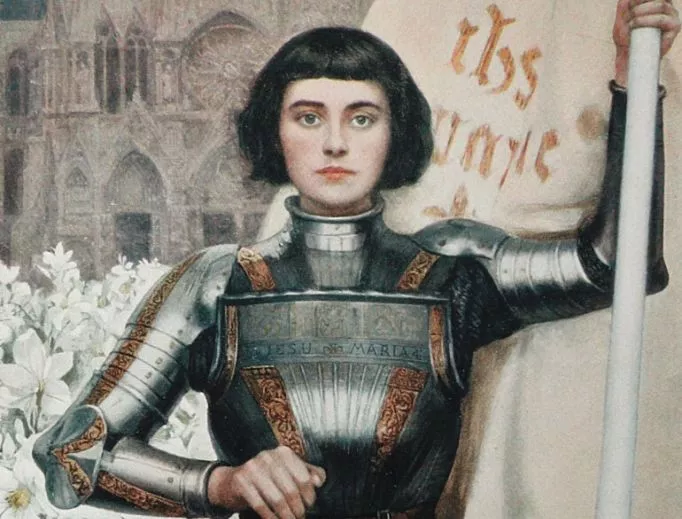
Above, this 1903 engraving of St. Joan of Arc by Albert Lynch was featured in Figaro Illustre magazine. (photo: Public domain/Wikimedia Commons)
French King Charles VII: “Oh, your voices, your voices. Why don’t the voices come to me? I am king, not you.”
Joan: “They do come to you, but you do not hear them. You have not sat in the field in the morning, listening for them. When the angelus rings you cross yourself and have done with it; but if you prayed from your heart and listened to the thrilling of the bells in the air after they stop ringing, you would hear the voices as well as I do.”
Gramsci is best known for his theory of cultural hegemony, which describes how the state and ruling capitalist class — the bourgeoisie — use cultural institutions to maintain power in capitalist societies. In Gramsci’s view, the bourgeoisie develops a hegemonic culture using ideology rather than violence, economic force, or coercion. He also attempted to break from the economic determinism of orthodox Marxist thought, and so is sometimes described as a neo-Marxist.[9] He held a humanistic understanding of Marxism, seeing it as a philosophy of praxis and an absolute historicism that transcends traditional materialism and traditional idealism.
“My great-grandmother always taught us that you should die healthy ‘so you can party on the other side.’ She didn’t really believe that you had to be sick to die. She didn’t connect sickness and death. For her, death was like your time is up, and sickness is just something you may have to go through.
“In her mid-nineties, and in good health. It’s funny story: one evening she told everyone that she was going to die that night. And she said, ‘It’s my time. My time i sup.’ Then my mother who was trying very hard to be modern, said, ‘Nonsense, you’re very healthy.’ ‘That has nothing to do with dying,’ my great-grandmother replied. And in the morning, she was dead.”
ARIES (March 21-April 19): In 1849, Harriet Tubman escaped from enslavement on a plantation in Maryland. She could have enjoyed her new freedom in peace, but instead resolved to liberate others. During thirteen bold forays into enemy territory, she rescued seventy enslaved people and ushered them to safety. She testified that she relied on her dreams and visions to help her carry out her heroic acts. They revealed to her the best escape routes to take, the best times to proceed, and information about how to avoid the fiendish “slave catchers.” In alignment with astrological omens, I invite you to be like Tubman and seek practical guidance from your dreams in the coming weeks—to solve problems or seek bliss.
TAURUS (April 20-May 20): Jack Nicholson has often played mavericks and anti-heroes in his movies. His life away from the silver screen has also been less than steady and predictable. For example, he has fathered six children with five different women. His fellow actor, Carrie Fisher, said Jack was “fun because he doesn’t make sense.” A person with casual knowledge of astrology might be surprised that Nicholson is a Taurus. Your tribe isn’t typically renowned for high eccentricity. But in his natal chart, Nicholson has the brash planet Uranus near his sun in Taurus, indicating he’s quirky. Aside from that, I have known plenty of Tauruses whose commitment to being uniquely themselves makes them idiosyncratic. These themes will be in play for you during the coming weeks. (PS: Taurus musician David Byrne starred in the concert film, “Stop Making Sense.”)
GEMINI (May 21-June 20): The platitude says that if life gives us lemons, we should make lemonade. I’ve got a variation on this theme. Consider the Neva River in northwestern Russia. It freezes every winter. During the frigid months of 1739-1740, Empress Anna Ioannovna ordered her workers to cut huge blocks of ice and use them to construct a magnificent palace on the riverbank. She filled the place with furniture and art, making it a hub of festivities celebrating Russia’s triumph over the Ottoman Empire. I bring these themes to your attention, Gemini, because I suspect that in the coming weeks, you will have substantial redemptive power. Whether you make lemonade from lemons or a palace from a frozen river is up to you.
CANCER (June 21-July 22): “If the world were merely seductive, that would be easy,” wrote Cancerian author E. B. White. “If it were merely challenging, that would be no problem. But I arise in the morning torn between a desire to improve the world and a desire to enjoy the world. This makes it hard to plan the day.” According to my astrological analysis, your fate in recent weeks has been more challenging than seductive. You’ve been pressed to work on dilemmas and make adjustments more than you might like. But this rhythm is about to change. Up ahead, life is seductive, welcoming and appealing. Are you prepared to drop any unconscious attachment you have to your interesting discomfort so you can smoothly make the transition to more ease?
LEO (July 23-Aug. 22): I want to prepare you for the delights of the coming days. I want to make sure you are fully alert for them and primed to appreciate them. So I give you the thoughts of Leo psychologist Carl Jung. “It is important to have a secret, a premonition of things unknown,” he said. “We must sense that we live in a mysterious world—that things happen and can be experienced that remain inexplicable; that not everything can be anticipated; that the unexpected and incredible belong in this world. Only then is life whole.”
VIRGO (Aug. 23-Sept. 22): Have you taken a refreshing break lately? Maybe even a soothing sabbatical? Have you treated yourself to a respite from the gritty grind? If not, please do so soon. And while you are recharging your psychic batteries, I ask you to give your fantasy life ample room to wander wildly and freely. In my astrological opinion, your imagination needs to be fed and fed with gourmet food for thought. For the sake of your soul’s health, I hope you dream up fantastic, unruly, even outrageous possibilities.
LIBRA (Sept. 23-Oct. 22): My Uncle Ned advised me, “The best gift you can compel your ego to accept is to make it your servant instead of your master.” An early Buddhist teacher sounded a related theme when she told me, “The best things in life are most likely to come your way if you periodically shed all hope and practice being completely empty.” The girlfriend I had when I was twenty-three confided, “You may get more enjoyment from the witty ways I confound you if you don’t try to understand them.” I offer these three ideas to you, Libra, because you’re in a phase when the moral of your story is that there is no apparent moral to your story—at least until you surrender your notions of what the moral of your story is.
SCORPIO (Oct. 23-Nov. 21): I believe you Scorpios are the zodiac sign most likely to benefit from being empathetic. By that I mean you have substantial power to thrive by reading other people’s moods and feelings. You are often able to figure out angles that enable you to gather what you want while helping others to gather what they want. You are potentially a genius at doing what’s best for everyone and getting paid and rewarded for it. According to my analysis of the astrological omens, this knack of yours will soon be operating at peak levels.
SAGITTARIUS (Nov. 22-Dec. 21): Egyptian Pharaoh Tutankhamun died over 3,300 years ago. When his mournful entourage placed him in his tomb, the treasures they left included a pot of honey, which was meant to sweeten his travels in the afterlife. In the early twentieth century, archaeologists excavated the ancient site. They dared to sample the honey, finding it as tasty and fresh as if it had just been made. Amazingly, this same longevity is a characteristic of most honey. I propose we use this as a metaphor for your life. What old resources or experiences from your past might be as pure and nurturing as they were originally? And could they be of value now?
CAPRICORN (Dec. 22-Jan. 19): Screenwriter John Patrick Shanley writes, “Life holds its miracles, good erupting from darkness chief among them.” I predict a comparable miracle for you, Capricorn, though I suspect it will arise out of confusion or inertia rather than darkness. My advice: Don’t be so bogged down in the muddle that you miss the signs that a great awakening is nigh. Start rehearsing how you will feel when deliverance arrives.
AQUARIUS (Jan. 20-Feb. 18): Before he reached the height of fame as a novelist, Aquarian Charles Dickens experienced financial instability. When he was thirty-one, the situation got desperate, and he resolved to take extreme measures. For six weeks, beginning in October 1843, he obsessively worked on writing the story “A Christmas Carol.” It was published on December 19 and sold out in a few days. Within a year, thirteen editions were released. Dickens’ economic worries were over. Dear Aquarius, I think the near future will be a favorable time for you, too, to take dramatic, focused action to fix a problem you’re having.
PISCES (Feb. 19-March 20): Many religious people believe God can hear their prayers and intervene in worldly affairs. Other religious folks think God can hear their prayers but may not intervene. Then there are the non-religious folks who don’t believe in God and think praying is useless. Wherever you might be on the spectrum, Pisces, I’m pleased to reveal that you will have extra access to support and benefaction in the coming weeks—whether that’s from God, fate, nature or other humans. So seek out blessings and assistance with alacrity. Be receptive to all potential helpers, even unlikely ones.
Homework: My new book has inspirations and prompts akin to what you read in my horoscopes: https://bit.ly/AstrologyReal
After the glorious accident of having been born at all, there are myriad ways any one life could be lived. The lives we do live are bridges across the immense river of possibility, suspended by two pylons: what we want and what we make. In an ideal life — a life of purpose and deep fulfillment — the gulf of being closes and the pylons converge: We make what we want to see exist.
This interplay is what Octavia Butler (June 22, 1947–February 24, 2006) explores throughout Parable of the Talents (public library) — the second part of her oracular Earthseed allegory, which also gave us Butler’s acutely timely wisdom on how (not) to choose our leaders.
Octavia Butler by Katy Horan from Literary Witches — an illustrated celebration of women writers who have enchanted and transformed our world.
Self is body and bodily perception. Self is thought, memory, belief. Self creates. Self destroys. Self learns, discovers, becomes. Self shapes. Self adapts. Self invents its own reasons for being. To shape God, shape Self.
[…]
All prayers are to Self And, in one way or another, All prayers are answered. Pray, But beware. Your desires, Whether or not you achieve them Will determine who you become.
Butler’s sentiment is only magnified by knowing that the word desire derives from the Latin for “without a star,” radiating a longing for direction. It is by wanting that we orient ourselves in the world, by finding and following our private North Star that we walk the path of becoming.
Artist Margaret C. Cook’s illustration for a rare 1913 edition of Walt Whitman’s Leaves of Grass. (Available as a print.)
If you want a thing — truly want it, want it so badly that you need it as you need air to breathe, then unless you die, you will have it. Why not? It has you. There is no escape. What a cruel and terrible thing escape would be if escape were possible.
To want what you want so fiercely, to love it so absolutely, is not a personal indulgence in hubris or delusion — it is, Butler affirms, the mightiest antidote to the terrors of being alive and, in consequence, the fuel for your most generous contribution to the world:
Love quiets fear. And a sweet and powerful Positive obsession Blunts pain, Diverts rage, And engages each of us In the greatest, The most intense Of our chosen struggles.
Enlivening as this notion might be, even more enlivening is its manifestation in the shared struggle — for at its best, the art born of these private obsessions in the crucible of the Self goes on to touch other Selves, dissolving the isolating illusion of separateness and aloneness to furnish, in Iris Murdoch’s lovely phrase, “an occasion for unselfing.”
Butler first posited the notion of “positive obsession” in Parable of the Talents (public library) — the first part of her Earthseed allegory — placing it at the heart of genius:
Prodigy is, at its essence, adaptability and persistent, positive obsession. Without persistence, what remains is an enthusiasm of the moment. Without adaptability, what remains may be channeled into destructive fanaticism. Without positive obsession, there is nothing at all.
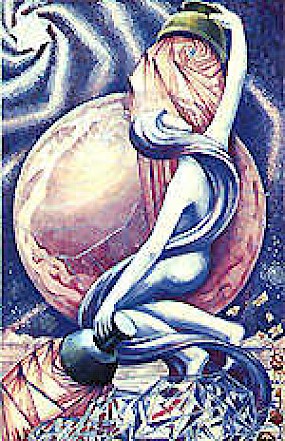
The Star (or Daughter of the Firmament) is numbered seventeen and is probably the most optimistic and beautiful card in the deck. A beautiful young woman, often naked, is depicted pouring water from a jug into the ground or into a pool by her feet. There are stars in the sky above her.
Stars have long been seen as symbols of hope, regeneration, vision and new life. When this card appears, you know somehow that life is just about to become easier and brighter. Life’s forces combine to assist rather than hinder.
Here is the truth about our power – we can join the solid earth of material existence with the flowing waters of spirit and create within ourselves a Universe. We have removed self-criticism and concentrated instead on our skills and strengths. When we regard ourselves with love, humour, tenderness and sympathy, we access the God and Goddess within and we are transformed.
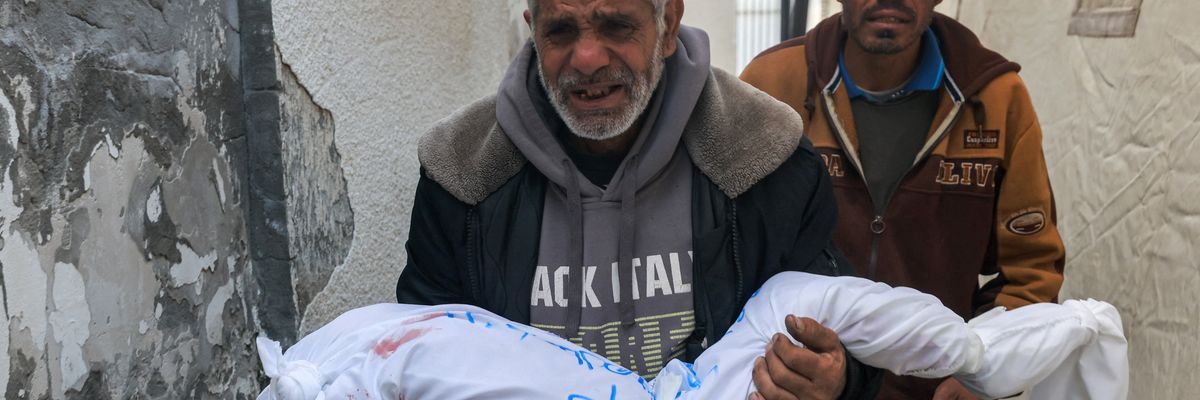
A Palestinian from Khan Yunis follows his father, who is carrying the wrapped body of his daughter,who died overnight while sleeping in a tent from a shrapnel fragment that hit her in the head following Israeli bombardment in the southern Gaza Strip on December 12, 2023.
(Photo: Mohammed Abed/AFP via Getty Images)
“Humanity has prevailed,” said Egyptian Ambassador Osama Abdel Khalek. “The Israeli aggression on Gaza must end. This bloodshed must stop.”
The United Nations General Assembly on Tuesday passed a resolution demanding “an immediate humanitarian cease-fire” in Israel’s two-month war on Gaza after the U.S. last week used its permanent member status to veto a similar Security Council measure.
The resolution also demands “that all parties comply with their obligations under international law, including international humanitarian law, notably with regard to the protection of civilians,” as well as “the immediate and unconditional release of all hostages, as well as ensuring humanitarian access.”
The final vote during the General Assembly’s emergency special session in New York was 153-10 with 23 abstentions.
“Humanity has prevailed,” declared Egyptian Ambassador to the U.N. Osama Abdel Khalek after the vote. “This resolution must be implemented immediately. The Israeli aggression on Gaza must end. This bloodshed must stop.”
Tuesday’s meeting came after Egypt and Mauritania invoked Resolution 377A (V), which states that “if the Security Council, because of lack of unanimity of the permanent members, fails to exercise its primary responsibility for the maintenance of international peace and security in any case where there appears to be a threat to the peace, breach of the peace, or act of aggression, the General Assembly shall consider the matter immediately.”
As current Chairs of the #Arab & #OIC Groups, I sent a letter, with Amb Sidi M. Laghdaf, PR of @MauritaniaUN, to the @UN_PGA requesting the resumption of the #UNGA Tenth Emergency Special Session #ESS10, following the veto on a draft resolution calling for a ceasefire at the… pic.twitter.com/51M3VfXdOx
— Egypt PR to the UN in New York (@EgyptPRNewYork) December 10, 2023
Last week’s U.S. veto came after United Nations Secretary-General António Guterres invoked Article 99, a rarely used section of the U.N. Charter empowering him to bring to the attention of the Security Council “any matter which in his opinion may threaten the maintenance of international peace and security,” for the first time in his tenure.
Noting Guterres’ message to the council as well as a recent letter from the commissioner-general of the United Nations Relief and Works Agency for Palestine Refugees in the Near East, the General Assembly resolution expresses “grave concern over the catastrophic humanitarian situation in the Gaza Strip and the suffering of the Palestinian civilian population,” and emphasizes that “the Palestinian and Israeli civilian populations must be protected in accordance with international humanitarian law.”
Israeli Ambassador Gilad Erdan on Tuesday had urged member states to oppose the resolution, arguing that it would amount to “voting in favor of a genocidal jihadist organization” and hamper Israel’s ongoing operation to destroy Hamas.
“A cease-fire is a death sentence,” claimed Erdan, who said the effort to pass the resolution made the United Nations “a moral stain on humanity.”
Israel’s assault on Gaza has killed at least 18,412 Palestinians and injured over 50,100 more, according to local health officials. The war has also devastated civilian infrastructure and displaced 85% of the besieged enclave’s 2.3 million residents.
Urging the assembly to support the resolution, Francesca Albanese, the United Nations special rapporteur for the occupied Palestinian territories, said Tuesday that “the Israeli army is fighting everyone and everything in Gaza—including the U.N.”
Ahead of the UNGA vote for a ceasefire today, we reiterate our call for an immediate ceasefire in the OPT and Israel to halt civilian bloodshed and to curb devastating humanitarian suffering in Gaza. Sign our petition for a ceasefire now https://t.co/fcOYkb1Msrpic.twitter.com/lfrxAakRB5
U.S. Ambassador Linda Thomas-Greenfield told the General Assembly that the United States agrees with some “aspects” of the resolution, including that conditions in Gaza are dire, people in the Palestinian territory need more aid, and hostages must be released. However, she also claimed that “any cease-fire right now would be temporary at the best and dangerous at worst.”
The United States—which voted against the resolution on Tuesday— gives Israel $3.8 billion in annual military aid and Congress is now considering a new $14.3 billion package.
“Today the majority of the world stood together to demand an end to this bloodshed and suffering in Gaza. The United States has once again voted to allow the carnage against civilians in Gaza to continue,” said Avril Benoît, executive director of Doctors Without Borders/Médecins Sans Frontières USA, after the vote.
“Today the U.S. failed to show compassion or leadership in the face of continued bombardment of human beings who are trapped in Gaza without food, water, shelter, or access to proper medical care,” Benoît continued. “The U.S. is increasingly isolated in its steadfast support of a war that seems to have no rules and no limits, a war that Israel claims is focused on rooting out Hamas but that continues to kill large numbers of Palestinian civilians, mostly women, and children.”
“The U.S. is increasingly isolated in its steadfast support of a war that seems to have no rules and no limits.”
“Israel has continued to indiscriminately attack civilians and civilian structures, impose a siege that amounts to collective punishment for the entire population of Gaza, force mass displacement, and deny access to vital medical care and humanitarian assistance. The U.S. continues to provide political and financial support to Israel as it prosecutes its military operations regardless of the terrible toll on civilians. It is impossible to deliver humanitarian aid at scale in Gaza under current circumstances,” she stressed. “For humanitarians to be able to respond to the overwhelming needs, we need a cease-fire now.”
In addition to the resolution, the General Assembly on Tuesday considered two amendments—one from the United States condemning “the heinous terrorist attacks by Hamas” on October 7 and the taking of hostages, and another from Austria to add language about Hamas to the line calling for the release of hostages.
Neither amendment got the two-thirds majority support needed to pass. The Austrian amendment vote was 89 in favor and 61 opposed with 20 abstentions while the U.S. amendment vote was 84-62 with 25 abstentions.
The General Assembly’s previously approved resolution on Gaza, passed in late October, called for “an immediate, durable, and sustained humanitarian truce leading to a cessation of hostilities.”
This post has been updated with comment from Doctors Without Borders.
Our work is licensed under Creative Commons (CC BY-NC-ND 3.0). Feel free to republish and share widely.
Schwartz Rep • Premiered Dec 8, 2023 American democracy is at risk and that is something that should disturb you. Democracy requires having a fair elections including every citizen having the right to vote, and every vote actually being counted, it is up to us to decide whether we keep democracy in this country in place.
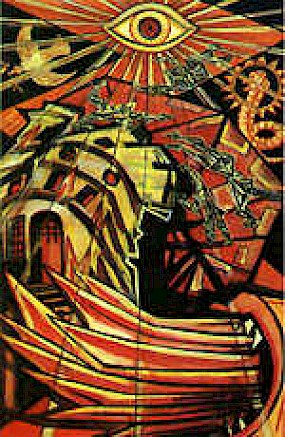
The Tower is numbered sixteen and shows a tower struck by lightning, with raging fires within and the top of the tower falling. There are usually figures falling, head-first, from the ruins.
The Tower shows us a basic fact of spiritual life – the power of the Gods can strike unexpectedly to break down all the long-established patterns and assumptions that we have taken for granted for so long.
Sometimes our limited vision of reality blocks our understanding and perception of truth. We begin to believe that the Tower – which we have been building higher and higher in order to reach the Gods – is the only reality. A cataclysmic force is needed to destroy this fantasy so as to allow us to recognise the powers which surround us. When this happens we must react with hope, letting go of our fears. The highest truths can now be realised.
Once upon a time, our wholeness was lost to us when our all-star team of inner friends—Guilt, Self-Hatred, Suppression, Denial, and the rest—came aboard to keep us safe. We were barely involved in the hiring process, and mostly we didn’t notice them as they went about their business. Like a cadre of reality-TV design experts, they set about remodeling our personalities so that we’d make it out of childhood in one piece: beautifying certain rooms and boarding up others, installing alarms, locking the cellar door. But their success at keeping us intact required that we emerge into adulthood withcore parts of ourselves walled off. They were good at their jobs.
After many years of living in this stuffy, segmented home, we came to long for a more spacious, better-ventilated existence. So we thanked the experts for their service, and sent them out for a well-deserved sandwich. And we devoted ourselves gently but diligently to a new task, the literal antidote to the psychic dismemberment required of us long,long ago: the task of remembering ourselves.
—The Myth of Normal by Gabor Maté with Daniel Maté
Consciousness, sexuality, androgyny, futurism, space, the arts, science, astrology, democracy, humor, books, movies and more



 Self is.