By obscuring and falsifying the lessons of the Holocaust we perpetuate the evil that defined it.
| CHRIS HEDGES DEC 29, 2023 )chrishedges@substack.com) |


By obscuring and falsifying the lessons of the Holocaust we perpetuate the evil that defined it.
| CHRIS HEDGES DEC 29, 2023 )chrishedges@substack.com) |

A comprehensive description of the transformation of Christianity, by the bestselling theologian who has defined this spiritual renaissance.
(Goodreads.com)
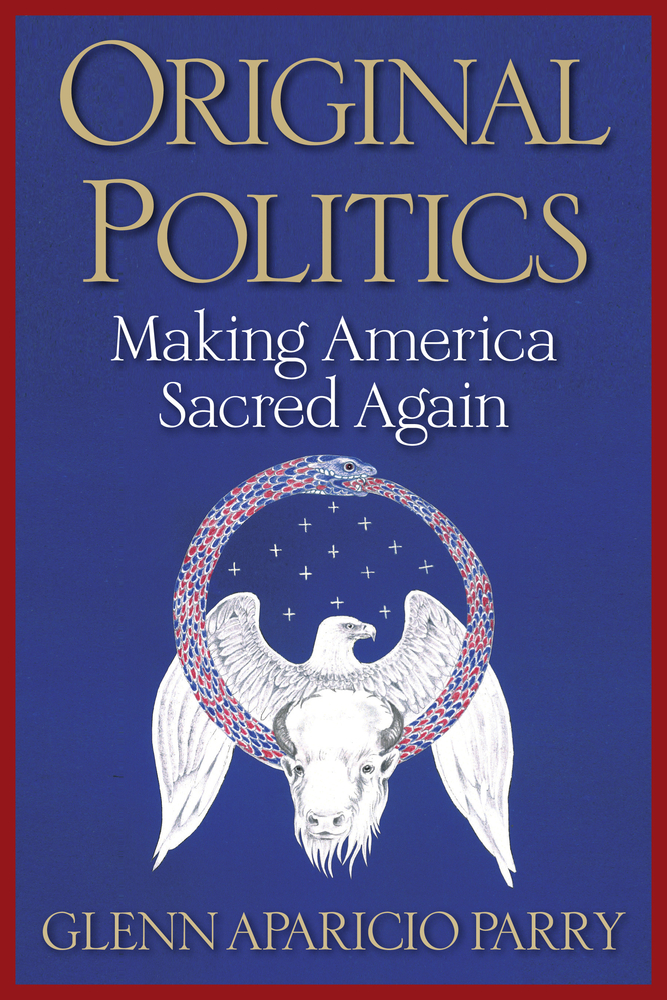
To recreate a whole and sacred America, it is important to piece together the forgotten fragments of history that are currently keeping the country divided. Just as a traditional Native American potter begins a new pot with shards of old pots—honoring the ancestors, bringing the energies of the past into the present—Original Politics re-constellates the nation as a whole out of the seemingly disparate shards from our origins. The most significant forgotten piece is the profound effect Native America had on the founding values of this nation. Original Politics convincingly demonstrates how the best aspects of the founding vision of America were inspired, or directly appropriated, from living, Native American cultures: concepts such as natural rights, liberty, and egalitarian justice. Further, Parry traces the influence of Native America not only on the founding fathers, but on the ‘founding mothers’ of the 19th century women’s movement; as well as the 19th century abolitionist and modern ecological movements. Native America has inspired what Parry sees as the sacred purpose of the nation: bringing all the world’s peoples together on one soil in a harmonious cultural mosaic of unity in diversity. While there have been periodic setbacks (devolution) in our nation’s history, including today, these only serve as catalysts reigniting our sacred purpose. America is creating a new melting pot, and like the original vision, it will be a creation from the many into the one—only this time it must not leave anyone out. This includes the natural world. Original Politics is ultimately about respecting all forms of life and all forms of political expression as different aspects of one whole. It is a reclamation project that brings people, land, and nation together as one. The overall effect of the book is profoundly healing.
(Goodreads.com)
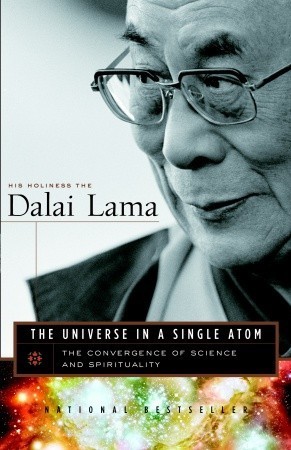
Galileo, Copernicus, Newton, Niels Bohr, Einstein. Their insights shook our perception of who we are and where we stand in the world, and in their wake have left an uneasy coexistence: science vs. religion, faith vs. empirical inquiry. Which is the keeper of truth? Which is the true path to understanding reality?
After forty years of study with some of the greatest scientific minds, as well as a lifetime of meditative, spiritual, and philosophic study, the Dalai Lama presents a brilliant analysis of why all avenues of inquiry—scientific as well as spiritual—must be pursued in order to arrive at a complete picture of the truth. Through an examination of Darwinism and karma, quantum mechanics and philosophical insight into the nature of reality, neurobiology and the study of consciousness, the Dalai Lama draws significant parallels between contemplative and scientific examinations of reality.
This breathtakingly personal examination is a tribute to the Dalai Lama’s teachers—both of science and spirituality. The legacy of this book is a vision of the world in which our different approaches to understanding ourselves, our universe, and one another can be brought together in the service of humanity.
(Goodreads.com)
Translation is a 5-step process of “straight thinking in the abstract.” The first step is an ontological statement of being beginning with the syllogism: “Truth is that which is so. That which is not truth is not so. Therefore Truth is all there is.” The second step is the sense testimony (what the senses tell us about anything). The third step is the argument between the absolute abstract nature of truth from the first step and the relative specific truth of experience from the second step. The fourth step is filtering out the conclusions you have arrived at in the third step. The fifth step is your overall conclusion.
The claims in a Translation may seem outrageous, but they are always (or should always) be based on self-evident syllogistic reasoning. Here is one Translation from this week.
1) Truth is that which is so. That which is not truth is not so. Therefore truth is all that is. Truth being all is therefore total, whole, complete, one (as there is nothing other), infinite, limitless (’cause if there were a limit, there would be an other), united, harmonious, orderly. I think therefore I am. Since I am and since Truth is all that is, therefore I, being, am Truth. Since I, being, am Truth, therefore I, being, have all the attributes of Truth: Therefore I, being, am total, whole, one, limitless, infinite, united, harmonious, orderly. Since I am Truth and I am consciousness, therefore Truth is Consciousness.
2) Some people think I’m weird and sometimes so do I.
Word-tracking
people: mortalI: subjective truth
weird: fate, verse, that which comes about, strange, unusual, supernatural, destiny
strange: external
destiny: determine or arrange in advance
determine: to set the limits of
chide: slay
3) Truth being all-inclusive, there is no externality, therefore
Truth is not strange. Truth being limitless, nothing is determined, therefore there is no destiny. Since I, being, am Truth, therefore I, being, have no destiny. Since Truth is all that is, there can be no standard or norm other than Truth, therefore Truth is the only standard, the only norm. Therefore Truth is the usual.Truth is the normal. Truth being limitless is therefore immortal, “some people” can only be a misperception, a partial seeing of the one, immortal subjective I being. Truth being the one subjective I and Truth being all-inclusive perspectives (all-seeing), therefore Truth is unbiased, objective. Truth being one, cannot be chided or mocked since there is nothing other than Truth to chide or mock, therefore Truth can only make a mockery of that which is not Truth.
4) Truth is not strange.
There is no destiny.
I, being, have no destiny.
Truth is the only standard, the only norm.
Truth is the usual.
Truth is the normal.
Truth is unbiased, objective.
Truth can only make a mockery of that which is not Truth.
5) There’s nothing strange about being all-knowing, unbiased and objective. It’s the only norm, the only usual, the only destiny. To think otherwise would be a mockery.
For information about Translation or other Prosperos classes go to: https://www.theprosperos.org/teaching
Published Yesterday (TheOnion.com)

STANFORD, CA—In a cutting-edge breakthrough for their field, psychologists at Stanford University confirmed Thursday they had trained a full-grown man to ask for help when he needed it. “After years of rigorous experimentation, we believe the test subject, whom we have named Buster, is finally capable of requesting assistance from others,” said researcher Alexandria Walker, who shared that her team of scientists had placed a bowl of chips on a high shelf and spent three years in the laboratory observing the 52-year-old man struggle to reach it. “We used techniques of both reinforcement and punishment, offering Buster deli meat when he looked our way and administering an electric shock each time he mustered an ‘I can do it all by myself.’ After nearly 30 months of experimentation, he finally grunted and gestured toward the stepladder he knew was kept in a locked cabinet. The implications are staggering. We hope that one day, full-grown men everywhere will be capable of asking for help when they need it.” At press time, Walker added that she believed with only another five years of training, the man would be capable of using words like “please.”
Breathing in, I see all my ancestors in me: my mineral ancestors, plant ancestors, mammal ancestors, and human ancestors. My ancestors are always present, alive in every cell of my body, and I play a part in their immortality.
~Thich Nhat Hanh

Our world’s Original Peoples understand that clues to our identity may not lay solely in the past but as much in the present, in awareness of the infinite spaces known to our immortal soul, to our universal shamanic Self. All of time and all ancestors are found within this eternal present and infinitely unitive dimensionality. I have begun to consider not so much who my human ancestors were but what kind of ancestor I am. The worldly self we cultivate and the actions that live beyond us are the pedigree that surpasses mere physical heredity. What we pass to the future is no longer simply genetic but a trans-genetic legacy that we safeguard and generate as ancestors into the future. So the most virtuous existential question we should seek to answer in service to our seven generations is: Who’s ancestor am I right now in this exact moment of awareness?
Any action guided by compassion, sacrifice, courage, and kindness, in however small a way, heals the past. In shamanic practice, healing the past means being willing to see without looking away. We must again learn to perform love-inspired rituals to feed the hungry ghosts, all those beings that society rejects, and the denied aspects of ourselves we’ve chosen to abandon or unconsciously suppress, for as the Buddha taught, all beings are heirs to their karma; we cannot escape our individual or collective past deeds. We are more than what happens to us and what we have done out of ignorance, fear, or unhealthy attachments to certain people, places, and possessions. We are also innately capable of compassionate awareness and love-suffused understanding. Being fully human depends on discovering within ourselves a state of awareness and level of consciousness more significant than our conditioning, inherited beliefs, and reactive functioning.
I’ve made a remarkable discovery about ancestors: you can adopt whoever you want as an ancestor. Even if you don’t get to choose your biological parents and grandparents, as most Western acculturated people believe, when you’re adopting ancestors, you get to invite people you admire into your experience of being human—the teachers, historical figures, writers, and artists who have influenced you and encouraged you—to be your ancestors.
Perhaps one day, “ancestor” will become a verb: to ancestor, meaning ‘to cultivate the ground of the self for the future.’ The eternal ancestor of the Present is continuously generative, expansive, and evolutionary. What we receive from the past, we can give to the future. And yet, what we give to the future, we are also giving back. Akin to the Andean spiritual principle of Sacred Reciprocity known as Ayni—or ‘Law of Right Returns’—best understood as an altruistically generous, non-transactional balanced exchange of material and spiritual goods in communal service to the wellbeing of All Our Relations. A life inspired by Ayni has been honored by Quechua-speaking Andean people since pre-Columbian times. More than a conditioned cultural expectation or inherited behavioral pre-disposition, Ayni is a lived ethos based on heartfelt reverence, caring partnerships, and sacred reciprocity between humans, Pachamama’s sublime interdependent web of life, and our originating Cosmos. Engaging in sacred reciprocity is a re-creation of our origins, an act when you must acknowledge that you are both back there and here, creating the future with every thought, word, and action. Yesterday is today’s memory, and tomorrow is today’s dream.
Hence, from the perspective of our universal shamanic Self, today exists to repair yesterday and prepare tomorrow. We don’t have to wait for some prophetic utopian future wherein humankind is finally united in loving purpose and guided by love for Mother Earth. What awaits us is an eternal flow of present moments, countless experiences of being here and now, prompting us to live as humans are meant to, in defiance of all the seemingly bad surrounding us. In essence, this alone is itself a tremendous victory, a feat worthy of shamanic celebration and praise to be freely shared in the form of communal storytelling, song, dance, earth-honoring ceremonial artistry, and any other forms of ancestoring yourself as a love-suffused gift of seven-generation healing light in service to cherished Gaia Pachamama’s species-wide magnificence.
For in our imaginations, where does childhood end and adulthood begin?
Aho Mitakuye Oyasin!

Deepak Chopra‘s latest book, QUANTUM BODY, co-written with Jack Tuszynski PhD and Brian Fertig M.D., is here! This visionary work delves into the innovative world of quantum science and shows how unlocking its secrets can revolutionize how we live and age—and, ultimately, how we can eradicate disease. The key is the quantum body.
Here is a message from the Chopra Foundation:
As we delve into the holiday season, a time of reflection and gratitude, I am thrilled to share with you the culmination of a groundbreaking journey that began over four decades ago. It is with immense pride that we announce the launch of “Quantum Body” by our founder, Deepak Chopra, M.D., in collaboration with physicist Jack Tuszynski, Ph.D., and endocrinologist Brian Fertig, M.D. This pioneering work takes a quantum leap into improving our physical and mental health through the innovative lens of quantum science.
“Quantum Body” is not merely a book; it is a vision that challenges the very concept of aging and disease. It invites us to consider the possibility that aging, as we know it, maybe a misconception. With the universe subject to entropy, the biological expectation is for all living things to grow old and die. However, this book explores the exciting viewpoint that human aging could indeed be a mistake, presenting a profound argument against the inevitability of aging.
As part of the ‘Peak Living’ series, It has been my privilege to have a conversation with Dr. Chopra as he delves into the profound concepts introduced in “Quantum Body”. Dr. Chopra in his conversation with ‘Interview Magazine’, also shares invaluable wisdom on the intersection of ketamine, A.I., and the influence of icons like Madonna on his journey. His insights continue to shape the discourse on meditation, alternative medicine, and the pursuit of higher consciousness.
Furthermore, we explore the remarkable benefits of gratitude, a key ingredient for a healthier, happier life, as well as dive into the expansive realms of quantum biology and consciousness. These fields are rapidly evolving to explain phenomena previously shrouded in mystery, offering new perspectives on the human brain and conscious behavior.
As we continue our exploration, we invite you to ponder on the mystery of the human body, not just to understand it but to live it fully. “Quantum Body” beckons us to embrace the enigma of our existence and to reimagine the potential for our well-being and longevity.
We look forward to sharing this transformative journey with you.
Poonacha Machaiah – CEO
The Chopra Foundation

As staff writer for Scientific American, John Horgan has a window on contemporary science unsurpassed in all the world. Who else routinely interviews the likes of Lynn Margulis, Roger Penrose, Francis Crick, Richard Dawkins, Freeman Dyson, Murray Gell-Mann, Stephen Jay Gould, Stephen Hawking, Thomas Kuhn, Chris Langton, Karl Popper, Stephen Weinberg, and E.O. Wilson, with the freedom to probe their innermost thoughts?In The End Of Science, Horgan displays his genius for getting these larger-than-life figures to be simply human, and scientists, he writes, ”are rarely so human…so at ther mercy of their fears and desires, as when they are confronting the limits of knowledge.”This is the secret fear that Horgan pursues throughout this remarkable Have the big questions all been answered? Has all the knowledge worth pursuing become known? Will there be a final ”theory of everything” that signals the end? Is the age of great discoverers behind us? Is science today reduced to mere puzzle solving and adding detains to existing theories?Horgan extracts surprisingly candid answers to there and other delicate questions as he discusses God, Star Trek, superstrings, quarks, plectics, consciousness, Neural Darwinism, Marx’s view of progress, Kuhn’s view of revolutions, cellular automata, robots, and the Omega Point, with Fred Hoyle, Noam Chomsky, John Wheeler, Clifford Geertz, and dozens of other eminent scholars. The resulting narrative will both infuriate and delight as it mindles Horgan’s smart, contrarian argument for ”endism” with a witty, thoughtful, even profound overview of the entire scientific enterprise.Scientists have always set themselves apart from other scholars in the belief that they do not construct the truth, they discover it. Their work is not interpretation but simple revelation of what exists in the empirical universe. But science itself keeps imposing limits on its own power. Special relativity prohibits the transmission of matter or information as speeds faster than that of light; quantum mechanics dictates uncertainty; and chaos theory confirms the impossibility of complete prediction. Meanwhile, the very idea of scientific rationality is under fire from Neo-Luddites, animal-rights acitivists, religious fundamentalists, and New Agers alike.As Horgan makes clear, perhaps the greatest threat to science may come from losing its special place in the hierarchy of disciplines, being reduced to something more akin to literaty criticism as more and more theoreticians engage in the theory twiddling he calls ”ironic science.” Still, while Horgan offers his critique, grounded in the thinking of the world’s leading researchers, he offers homage too. If science is ending, he maintains, it is only because it has done its work so well.
(Goodreads.com)
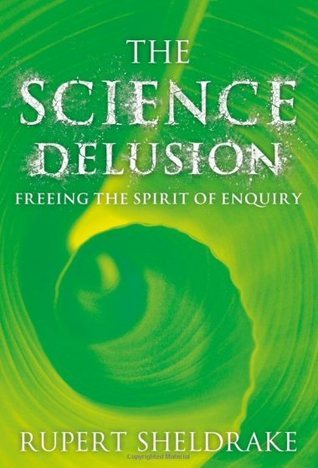
The science delusion is the belief that science already understands the nature of reality. The fundamental questions are answered, leaving only the details to be filled in. In this book, Dr Rupert Sheldrake, one of the world’s most innovative scientists, shows that science is being constricted by assumptions that have hardened into dogmas. The ‘scientific worldview’ has become a belief system. All reality is material or physical. The world is a machine, made up of dead matter. Nature is purposeless. Consciousness is nothing but the physical activity of the brain. Free will is an illusion. God exists only as an idea in human minds, imprisoned within our skulls. Sheldrake examines these dogmas scientifically, and shows persuasively that science would be better off without them: freer, more interesting, and more fun.
In The God Delusion Richard Dawkins used science to bash God, but here Rupert Sheldrake shows that Dawkins’ understanding of what science can do is old-fashioned and itself a delusion.
(Goodreads.com)