
New Thinkin • Dec 26, 2023 Peter Russell is a highly regarded philosopher, author, and futurist known for his pioneering work on bridging the gap between science and spirituality. With a background in mathematics, theoretical physics, experiential psychology and computer science, he has dedicated his career to exploring profound questions about the nature of the human mind and our relationship to the mounting planetary crises. Peter has authored several books that explore consciousness, spirituality and the nature of reality including, The Global Brain: The Awakening Earth in a New Century; Waking Up in Time: Finding Inner Peace in Times of Accelerating Change and From Science to God: A Physicists’s Journey into The Mystery of Consciousness. Through his books, lectures, and interviews, Peter has challenged conventional thinking, inspiring individuals to explore the depths of their own consciousness and envision a more harmonious future for humanity. In 2005, Leanne Whitney had the unique opportunity to conduct an interview with Peter on his boat nestled in the coastal town of Sausalito, California. They delved into a wide range of topics including; exploring the nature of consciousness, self-reflection, emotion, psychic abilities and the possibility of experiencing inner peace amidst the chaos of modern life. Leanne Whitney, PhD, is author of Consciousness in Jung and Patanjali. She is a transformational coach and also teaches yoga philosophy to yoga teachers. Her website is https://leannewhitney.com/. Peter Russell Interview Northern California Crew Camera: Jason Neff Camera Assistant: Megumi Nishikura Sound: Jason Neff Editor: Greg Yung Assistant Editor: Elena McNally Footage owned and provided by August Moon Entertainment, Inc.
Record Low in U.S. Satisfied With Way Democracy Is Working

STORY HIGHLIGHTS
- 28% are satisfied, down from the prior low of 35% after Jan. 6 Capitol riot
- 38% of Democrats, 17% of Republicans are satisfied
- Americans with less formal education are less satisfied
January 5, 2024 (news.gallup.com)
WASHINGTON, D.C. — A new low of 28% of U.S. adults are satisfied with the way democracy is working in the country. The current figure is down from the prior low — 35% measured shortly after the Jan. 6, 2021, attack on the U.S. Capitol by rioters trying to prevent Congress from certifying Joe Biden’s victory in the 2020 presidential election.
The latest results are based on a Dec. 1-20, 2023, survey.
Gallup has asked Americans about their satisfaction with U.S. democracy nine times since 1984. The high point came in the first reading, when 61% of Americans were satisfied with the way democracy was working. It was nearly as high, at 60%, in 1991.
However, Americans’ satisfaction showed signs of deterioration in 1992 — often referred to as the year of the “angry voter” — in the wake of an economic recession and congressional scandals exemplified by members writing scores of bad checks from the House bank. By June 1992, when insurgent third-party candidate Ross Perot led presidential preference polls, 36% of Americans were satisfied with the way democracy was working. Later that year, incumbent President George H.W. Bush was defeated for reelection, and the reelection rate for members of the U.S. House was one of the lowest in the past 50 years.
American satisfaction rebounded in 1994-1998 surveys, including 52% satisfied in 1998 after the U.S. House of Representatives voted to impeach then-President Bill Clinton. The increase may have reflected greater satisfaction with the way things were going in the country, generally, during a period of strong economic growth.
Gallup did not ask the question again until 2021, though two CNN surveys from 2010 and 2016 each showed 40% satisfaction ratings. These results suggest Americans in the 2010s were once again disillusioned with the way democracy was working, perhaps due to continued gridlock in Washington amid growing budget deficits, ongoing gun violence, racial tensions and illegal immigration.
The more recent declines of the past two years (to varying degrees for different partisan groups) may reflect economic unease amid higher prices, disapproval of the jobs President Joe Biden, Congress and the Supreme Court are doing, increasing hostility between the political parties, former President Donald Trump’s persistent political strength, and concerns about election security, voting rights and the independence of the courts and the justice system.
Republicans Least Satisfied With Democracy
Among major U.S. subgroups, Republicans (17%) are least likely to say they are satisfied with the state of democracy, and Democrats (38%) are most likely. Political independents fall about midway between the two party groups, at 27% satisfaction.
All three party groups are less satisfied now than they were in 2021, when 47% of Democrats, 21% of Republicans and 36% of independents were satisfied shortly after Biden took office.
Typically, partisans have been more satisfied with the way democracy is working when a president from their preferred party has been in office. Between 1984 and 1992, spanning the Ronald Reagan and George H.W. Bush administrations, Republicans expressed greater satisfaction than Democrats in each of the four surveys conducted.
All of the more recent surveys have been conducted in years when a Democratic president was in the White House. Democrats have been more satisfied than Republicans in all of those except one: the 1998 survey conducted after the Republican-led House impeached Clinton.
Satisfaction with democracy also differs sharply by education. Americans with postgraduate education tie Democrats as the subgroup most likely to be satisfied, at 38%. Meanwhile, roughly three in 10 adults who attended college, but not graduate school, are satisfied, and 21% of those who did not attend college are.
Americans without a college education show the steepest decline in satisfaction since 2021 among key subgroups, dropping 15 percentage points from 36%.
In past surveys, Americans with no college education have typically been the least satisfied with U.S. democracy.
Bottom Line
Americans are preparing to elect the next president at a time when they are less happy about the state of U.S. democracy than at any point in at least 40 years. The 2024 election is expected to match a historically unpopular incumbent president with a former president whom voters previously rejected for a second term. While conditions seem ripe for a successful third-party challenger, it remains unclear whether such a candidate can win within the U.S. electoral system.
To stay up to date with the latest Gallup News insights and updates, follow us on X.
Learn more about how the Gallup Poll Social Series works.
Iowa school principal was shot trying to distract shooter so students could flee, his daughter says
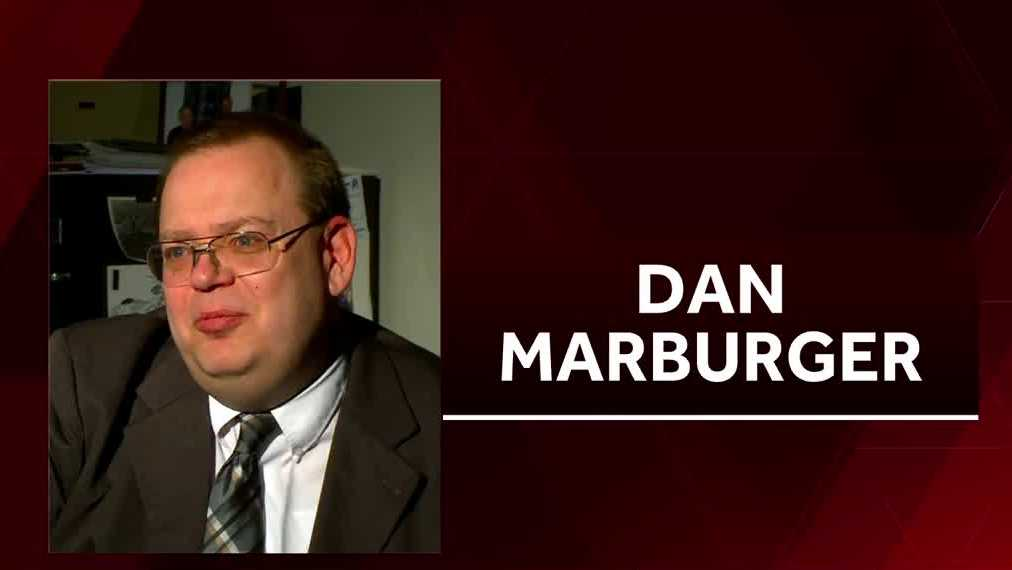
Photo by kcci.com
By Kerry Breen
Updated on: January 5, 2024 / 6:08 PM EST / CBS News
The principal of Iowa’s Perry High School tried to distract the teenage shooter who killed one student and injured seven others
on Thursday, his daughter said on social media.
The shooting began early in the morning, before most students were at the school, officials said Thursday. Police received reports of the shooting at 7:37 a.m. and were on the site within seven minutes to find students and faculty sheltering in place and fleeing the building.
One sixth-grader — later identified as 11-year-old Amir Jolliff, a student at Perry Middle School — was killed, according to the Iowa Department of Public Safety. Four other students and three school staff members were injured, the agency said Friday. Officials had initially reported a total of five injured.
Among those wounded was Perry High School Principal Dan Marburger, who remained hospitalized in critical condition Friday along with two other students, Iowa DPS said.
The shooter, identified as 17-year-old Dylan Butler — a student at the high school — died of a self-inflicted gunshot wound, authorities said.
Claire Marburger said in a lengthy Facebook post that her father had been in surgery after the shooting and was in stable condition when she wrote the post late Thursday night. She did not elaborate on his injuries, but said they had been sustained while trying to talk down the shooter.
“As I heard of a gunman, I instantly had a feeling my Dad would be a victim as he would put himself in harms way for the benefit of the kids and his staff,” Claire Marburger wrote. “It is absolutely zero surprise to hear he tried to approach and talk (the shooter) down and distract him long enough for some students to get out of the cafeteria. That’s just Dad.”
Claire Marburger described her father as a “gentle giant” and “amazing person” who would be “devastated about what happened” at Perry High School.
“Its things like this that he takes personally.. what more could he do, what did he not do that he could have… he’d be extremely saddened (by) the trauma and negative memories that are associated with his building and school now for many,” she wrote.
Marburger asked that people share “positive memories” about the school, community or her father. She also asked that people express their well-wishes to the other victims’ families, and to “show grace” to the family of the shooter.
Investigators are continuing to search for a motive for the shooting.

Kerry Breen is a reporter and news editor at CBSNews.com. A graduate of New York University’s Arthur L. Carter School of Journalism, she previously worked at NBC News’ TODAY Digital. She covers current events, breaking news and issues including substance use.
What Happened When Zora Neale Hurston Studied Voodoo in Haiti?
The renowned author and anthropologist went to the island nation in search of its religion—and its zombies
January 6, 2023 | Kirstin Butler (pbs.org)
FROM THE COLLECTIONS: WOMEN IN AMERICAN HISTORY | THE AFRICAN AMERICAN EXPERIENCE

When author and anthropologist Zora Neale Hurston arrived in Port-au-Prince, Haiti in September 1936, she wasted no time penning a letter of thanks to her sponsor. “I can’t tell you how much this chance means to me,” she wrote to the Guggenheim Foundation of the fellowship that would allow her to travel to Haiti for six months. A year earlier, Hurston had abandoned a doctoral program in anthropology at Columbia University when funding fell through. Now, the Guggenheim grant would allow her to do the work she was unable to pursue under formal academic auspices. “I am straining every nerve to the goal,” she vowed.
By then a celebrated figure of the Harlem Renaissance, Hurston was going to the island nation to study and write about voodoo practices. Western audiences held only the most salacious stereotypes of vodou, a folk religion originated by the enslaved, then escaped African diaspora of the Caribbean. For many Americans, their introduction to voodoo was The Magic Island, a 1929 book by white journalist William Seabrook. Seabrook’s bestseller traded in cliché; in a representative description of a voodoo ceremony The Magic Island described “screaming, writhing Black bodies, blood-maddened, sex-maddened, god-maddened.” Hurston wanted to reach the same general readers, but understood voodoo’s complex spirituality as deserving of serious ethnographic inquiry.
She quickly established a homebase for herself in the Port-au-Prince suburbs and dove into her research. Hurston began by gaining the trust of houngans, the voodoo priests and community leaders who presided over the rituals and observances of their faith. Song, dance, healing, possession, raising of the dead—under the island’s most renowned houngans and chief priestesses, Hurston went straight to the heart of voodoo culture.
She learned about the loa, or gods, whose spirits animated Haitian life, and who went by different names and symbols throughout the country. Shepracticed the signatures, or symbols, of Damballah and his female counterpart, Erzulie Freida—who headed up the Rada, or good deities—until she had committed them to memory. And Hurston witnessed, at every level of Haitian society, the intertwining of a seemingly infinite voodoo entourage with Jesus, Mary, Joseph and the more familiar Christian saints, all of them forming a unique syncretic whole.

Within three months, the enormity of her undertaking became apparent. “I realize the task is huge, so huge and complicated,” she wrote to the Guggenheim Foundation, imploring them to renew her fellowship. Trying to summarize voodoo, Hurston said, was “like explaining the planetary theory on a postage stamp.” She impressed upon her sponsor the religion’s sophistication: “it is as formal as the Catholic church anywhere.”
Hurston also wrote that she had already accomplished one of the main goals of her research—collecting first-hand evidence of what Haitian Creole called zonbi. If white audiences viewed voodoo with, alternately, scorn and titillation, zombies were the embodiment of the sinister exoticism that foreigners believed permeated the island’s life. “What is the truth about zombies?” Hurston would later ask in Tell My Horse, the book that came of her time as a voodoo initiate. “I do not know,” she answered herself, “but I know that I saw the broken remnant, relic, or refuse of Felicia Felix-Mentor in a hospital yard.”
Hurston learned of Felix-Mentor in November 1936, directly from the director-general of Haiti’s ministry of health. Doctors at the hospital in Gonaives, to the north of Port-au-Prince, told Hurston that Felix-Mentor had been brought to them a month earlier after police came upon her naked along the road—29 years after being buried by her husband and son.
The doctors believed a bocor, a priest practiced in dark magic, had administered a poison that made Felix-Mentor appear to be dead, before surreptitiously returning later to “resurrect” her with an antidote. Bocor ensnared their victims, Hurston had learned, in order to put them to work as thieves, or on plantations as laborers.
When Hurston met her, Felix-Mentor cowered near a fence enclosing the hospital yard, trying to shield herself from light and attention. She uttered only broken sounds; likely the toxin she had ingested caused brain damage that left her without the power of speech. Eventually, with the doctors’ assistance, Hurston took Felix-Mentor’s photo, which shortly thereafter was published in LIFE magazine as the first known photograph of a zonbi.
How should one understand these revenants, returned from the grave, without ability to exercise independent thought or free will? In Tell My Horse, Hurston did not equivocate about the phenomenon’s existence. She had inarguably seen, with her own eyes, “the relic” of a once whole person. Neither, though, did she sensationalize. What Hurston did do was apply her protean talents, as a practitioner of both literary art and ethnographic science, to lay out the mystery of zombies; namely, by explaining how that mystery was understood by Haitians themselves.
“[Haitian] ceremonies were both beautiful and terrifying,” Hurston would later write in her memoir Dust Tracks on a Road. “I did not find them any more invalid than any other religion. Rather, I hold that any religion that satisfies the individual urge is valid for that person. It does satisfy millions, so it is true for its believers.”
The Guggenheim Foundation demonstrated its confidence in Hurston’s work by offering her a second fellowship, but after suddenly falling ill she decided to return to the United States earlier than planned. It was possible, she allowed in a letter to the Foundation explaining her decision to come home, that she had been overzealous in her efforts to delve deeper into the unknown. “[T]here have been repercussions,” she wrote. “It seems that some of my destinations and some of my accessions have been whispered into ears that heard.”
A Gonaives doctor, when she interviewed him about Felix-Mentor’s troubling case, had expressed a desire to know what constituted the drug behind Haiti’s zonbi. Hurston immediately offered her services to seek out its source, prompting an admonition against going too far to learn more of voodoo’s secrets. “Many Haitian intellectuals have curiosity,” the doctor said ominously, “but they know if they go to dabble in such matters, they may disappear permanently.” Not knowing Hurston well, the doctor could not have understood it would take more than a stern warning to scare her away. She persisted with her fieldwork in Haiti, not relenting until her health was compromised.
It wasn’t the first time that Hurston’s work had brought her close to danger. Such risk, she believed, was necessary for great reward. “Research is formalized curiosity,” Hurston said in Dust Tracks, writing what might have doubled as a personal raison d’être. “It is poking and prying with a purpose. It is a seeking that he who wishes may know the cosmic secrets of the world and they that dwell therein.”
Petco Introduces New Self-Service Spay Or Neuter Stations
Published Friday (TheOnion.com)

SAN DIEGO, CA—Emphasizing that the new facilities would be quick, clean, and easy to use, Petco introduced new self-service spay or neuter stations Friday in all of its stores nationwide. “Starting today, customers will be able to go to any Petco and reserve a plastic, semiprivate enclosure in which to sterilize their dog, cat, or other small animal,” said CEO Ron Coughlin, adding that the self-service stations would be first come, first served, and would include access to scalpels, surgical scissors, and a sealed bin in which to dispose of loose testicles, ovaries, or fallopian tubes. “Now, instead of going to an expensive vet and paying hundreds of dollars, you can take your pet to Petco and remove their reproductive organs for just $20. Plus, rubber gloves, face masks, and scrubs are included at no extra cost. At the end of the day, no one knows their way around your pet’s genitals better than you.” At press time, Petco had reportedly been forced to shut down many of the self-service spay or neuter stations after customers failed to clean up the blood, hair, and viscera, tracking it all over the inside of the stores.
Value in Science with Arthur M. Young (1905 – 1995)
New Thinking Allowed with Jeffrey Mishlove • Jan 5, 2024 This video is a special release from the original Thinking Allowed series that ran on public television from 1986 until 2002. It was recorded in about 1989. It will remain public for only one week. Consciousness, rather than being a property which “emerges” at higher orders of complexity, is a basic principle intrinsic to every level of creation, according to this stimulating program with philosopher Arthur M. Young. Inventor of the Bell Helicopter and founder of the Institute for the Study of Consciousness, Young’s books include The Reflexive Universe and Which Way Out. Now you can watch all of the programs from the original Thinking Allowed Video Collection, hosted by Jeffrey Mishlove. Subscribe to the new Streaming Channel (https://thinkingallowed.vhx.tv/) and watch more than 350 programs now, with more, previously unreleased titles added weekly. Free month of the classic Thinking Allowed streaming channel for New Thinking Allowed subscribers only. Use code THINKFREELY.
Israel’s ‘refuseniks’: ‘I will never justify what Israel is doing in Gaza’
from our special correspondent in Israël – On December 26, Israel’s first conscientious objector since the start of its war against Hamas, Tal Mitnick, was sent to prison after refusing to serve in the army. Mitnick, however, is not alone. A small group of Israelis are refusing to take part in the “oppression of the Palestinians” by refusing to serve in the Gaza conflict. FRANCE 24 met with some of them in Israel.
Issued on: 06/01/2024 – France24.com

By:Assiya HAMZA
Young people refusing to serve in the Israel Defense Forces (IDF) are known as “refuseniks” in Israel. The term dates from the Soviet era and once referred to Jews denied the right to emigrate to Israel from the Soviet bloc.
Although military service in the Jewish state is compulsory for both men and women – with many seeing it as an important part of their national identity – the refuseniks are increasingly speaking out.
“On February 25th (my enlistment date) … I will refuse to enlist and go to military jail for it,” Sofia Orr, an 18-year-old Israeli woman, told FRANCE 24 in the Pardes Hanna-Karkur municipality of the Haifa district.
“I refuse to take part in the violent policies of oppression and apartheid that Israel enacted upon the Palestinian people, and especially now with the war,” Orr said in English. “I want to fight to convey the message that there is no military solution to a political problem, and that is more apparent than ever now. And I want to be part of the solution and not the problem.”
Orr’s words echo those of her friend Tal Mitnick, the jailed 18-year-old who was sentenced on January 2 to 30 days in prison by a military court.
In a statement published on social media before his incarceration, Mitnick said that a lasting solution will not come from the army. “Violence cannot solve the situation – neither by Hamas, nor by Israel. There is no military solution to a political problem. Therefore, I refuse to enlist in an army that believes that the real problem can be ignored, under a government that only continues the bereavement and pain.”
Full statement from Tal Mitnick, the Israeli 18-year-old sentenced to prison for refusing to enlist:
— Prem Thakker (@prem_thakker) December 26, 2023
"I do not want to take part in the continuation of the oppression and the continuation of the cycle of bloodshed, but to work directly for a solution, and therefore I refuse." pic.twitter.com/TbkCTAPieR
“I’m very proud of him (Mitnick) and also inspired by his courage,” Orr said. “Everyone has different beliefs. But in the general sense, yes, I absolutely stand behind his open letter and behind his stand.”
She said the political situation in Israel has made it harder than ever to conscientiously object.
“Right now, it’s more difficult than ever to refuse and to take this stand, because the political environment in Israel has gotten way tougher since the war started. There has been a strong shift to the right, and the entire political sphere has become a lot more violent and aggressive,” Orr said.
The Israeli army relies almost exclusively on reservists. Men are required to enlist for 32 months and women for 24, after which they can be mobilised until their 40th and 38th birthdays, respectively.
Following Hamas’s surprise attacks on October 7 that left more than 1,100 Israelis dead, the army mobilised more than 360,000 reservists, about 4 percent of the country’s population of 9.8 million, representing Israel’s largest mobilisation since the 1973 Yom Kippur War.
‘A politically motivated decision’
Orr, who describes herself as an “activist” and a “political person”, said it was already clear to her that she would conscientiously object at the age of 15. And she has not wavered since.
“The 7th of October changed nothing in either direction,” she said. “It should have been expected, because when you put people under extreme violence, extreme violence will rise back at you. It’s inevitable.”
She said the attacks in southern Israel “only made me surer in my decision”.
“Since the war started, and the horrible violence that is enacted on the Gazans in Gaza and the destruction of the whole place, it made me surer that we must fight for a different option and that this will never solve anything. And that I have to resist this cycle of bloodshed or it will never end,” Orr said.
The Israeli army rarely accepts refusals to enlist on grounds of pacifism or ethics.
Apart from the ultra-Orthodox and Israeli Arabs, who are automatically exempt from military service, only young Israelis suffering from physical or mental problems can be declared unfit after a medical examination.
Exemption was, however, out of the question for Orr.
“I choose to be part of the rare few who do have political motivations behind [not serving] … more than that, [who] choose to make it public [as] a public statement and a political statement,” she said. Orr chooses “to resist” and to do so publicly, “to raise awareness for the situation as a whole”.
With the support of her parents and sister, Orr is convinced that she can make a difference.
When a classmate rallied to her cause, Orr said, it “made me believe that I can change things, and that as small an impact that I have, it’s still an impact and it’s still worth it”.
Violence only leads to more violence
Seeking to bring the plight of Palestinians to public attention in Israel, Orr travelled to the West Bank to meet Palestinians.
“I went to the West Bank and talked to settlers, and then went and talked to Palestinians. And I think it’s an important experience, to see for yourself … how the settlers live and how the Palestinians live, what the settlers say and what the Palestinians say,” Orr said.
“We’ve seen for the past 70 years that the military using military means leads us nowhere. The only progress we’ve ever made on this piece of land has been by political means and negotiations and trying to make peace. So again, there is no military solution to a political problem. And this problem is both political and humanitarian. And the military does not solve either of those things,” she said.
Surprisingly mature and filled with conviction, Orr has stuck by her words and refused to abandon her beliefs even though talk of peace in Israel has mostly been silenced since the October 7 massacres.
“Israel’s attempts to eradicate Hamas is only making Hamas stronger, because if you offer no alternative to the Palestinians and they think that violent resistance is the only way … and [if they think] it’s the only language that Israel knows how to speak and … their only chance at freedom … Then, yes, of course they will join Hamas and try violent resistance,” Orr said.
The violence wrought by Hamas was also counter-productive, she said. “I don’t think that the horrible attack on October 7 made any progress for the Palestinian cause.”
But Israel’s war on Gaza pushes any hopes for a solution farther away.
“I will never justify what Israel does right now in Gaza. Violence only leads to more violence. So I think the only way to really weaken the violent resistance is to offer an alternative. And that has to come from inside Israel, and that has to come from Israel, because Israel is a much stronger side in the equation,” Orr said, adding that both Israelis and Palestinians should try to make peace amid the increasingly brutal Gaza war.
“It’s the only viable solution.”
While Orr’s words have, for the most part, fallen on deaf ears in Israel, some have resorted to calling her a “traitor” and a “self-hating Jew” while others even threatened to murder or rape her.
Orr said she has also suffered other consequences of her choice to go public, whether while job hunting or in the social sphere.
“People aren’t supposed to ask if you went to the army – and definitely not why you didn’t, if you didn’t,” she said. But of someone Googles her, her decision not to serve comes up.
“It can have consequences,” she acknowledged. “The biggest consequences are social because it’s a very militaristic society, and I’m very publicly not a militaristic person … but I believe that it’s worth it no matter what … I will endure [the consequences].”
When asked if she’s afraid of going to prison, Orr, who planned on studying literature after serving her sentence, didn’t equivocate. “It’s scary. I know it will be hard … but it’s part of the whole thing. I’ve made peace with it long ago.”
Avital Rubin, a young Israeli, has already served a total of four months in prison. Then 19, Rubin was sentenced for refusing military service in 2021.
Quietly seated on the terrace of a café in Haifa, Rubin said he was born into a family that he described as “dovish Zionist” – both liberal and conciliatory in their attitude.

“I remember as a kid, my mother bought me these mini biographies of Martin Luther King and Mahatma Gandhi and Nelson Mandela. And I always viewed these people as heroes. But the moment [Donald] Trump won, there was this shift on the internet and it all of a sudden became much more right-winged or much more bigoted, homophobic, sexist. And so I had to find places that I felt comfortable being … I had to [find] more and more leftist places,” Rubin said.
Rubin, who currently works in IT, educated himself by watching videos of Noam Chomsky and calls himself “anti-Zionist”.
Rubin took part in 2021 demonstrations by Jews and Arabs in Sheikh Jarrah, a neighbourhood in East Jerusalem that has been the centre of a heavy legal battle over the past 20 years between Palestinian families and Israeli settlers.
Without knowing how to exempt himself from military service, Rubin hesitated on whether to enlist.
‘Each time, the solution is to bomb Gaza’
Rubin was introduced to a member of Mesarvot – “Those who refuse” in Hebrew – at one of the group’s gatherings.
The NGO informs and advises young people without necessarily discouraging them from joining the army.
Like Mitnick and Orr, Rubin saw that it was possible to refuse military service on political grounds.
Mesarvot provided him with legal support and even visited him in prison.
“I’m happy I didn’t do it (military service) and I refused. Not because I’m a pacifist, but because I always grew up viewing the occupation and the Nakba (“Catastrophe” in Arabic; Nakba refers to the forced exodus of Palestinians in 1948) with disgust. And so to be part of the IDF would be to be part of this thing. And I think that is what, more than anything, pushed me away from enlisting in the military,” Rubin said.
While clearly disapproving of Israel’s occupation of Palestinian territories, Rubin admitted to having discovered the realities of the West Bank only when he was 16.
“When I was in prison, and I told people I’m refusing because of the occupation … they were like, ‘what is the occupation?’ I said, you know, over the Green Line (the pre-1967 border from before the Six-Day War). And they were like, what is the Green Line? Honestly, I didn’t blame them because three years prior to that, I didn’t know what the Green Line was either,” he said.
Rubin has since chosen to isolate himself, likening his isolation to the mark of Cain, a visible mark placed by the Abrahamic God on the biblical figure Cain’s forehead, so that others would recognise him as the murderer of his brother Abel.
This self-isolation has allowed Rubin to distance himself from the Nakba and Israel’s occupation of Palestinian territories.
“The only thing I actually sacrificed was an easy job because, if I enlisted, I would have gone to some intelligence [unit], done like three years – maybe signed for an extra two years – then I would have left and found some cushy job in high tech and gotten paid like six figures for doing nothing. Which is basically what all my high school friends are going to do,” he said.
Rubin said his family and friends didn’t try to persuade him otherwise, as they saw that he stood by his convictions, which remained unchanged even after the October 7 attacks.
“Israel has this spectacular capability of never learning from anything. It’s like, for 100 years, we’ve been bombing and murdering and occupying, and then a massacre happens, and then we bomb and occupy and kill. Then a massacre happens. But every time something happens, the solution is to bomb Gaza. This time it will work. This time it will be different … And that’s what people say,” Rubin said.
“[The PLO] committed acts of terror and massacres, but ultimately they wanted, at the beginning, a one-state secular democratic solution, then a two-state solution. And then, in the 80s, Israel didn’t want to deal with the PLO. So we invaded Lebanon to try to push PLO [out] and instead we got Hezbollah, which is like a million times worse. And then Israel didn’t want to deal with the PLO in the occupied territories in Gaza. So it helped raise Hamas, which is a million times worse … The history of Israel is just like [a series of] military solutions that just make the situation worse time and time and time again,” he said.
When asked about the future, Rubin didn’t attempt to hide his pessimism.
“I think the situation is going to become noticeably worse. Israel is in a death spiral … There’s no room left for personal agency in Israel. I feel it has all been determined by by the currents of history. The same way that the earth revolves around the sun and slowly sinks into it – the same way that Israel cannot help but fulfill its historic destiny,” Rubin said, adding that even a change in premiership wouldn’t bring about a significant change in Israel.
“It doesn’t matter who is the next prime minister – who will it be? Probably [Israeli opposition leader Yair] Lapid or no, probably Benny Gantz most likely,” referring to the MP and onetime challenger to Prime Minister Binyamin Netanyahu.
“But it doesn’t matter. He’s the same as Binyamin Netanyahu,” he said.
Despite his pessimistic outlook, Rubin said he would remain in Israel.
Citing Oskar Schindler, the German industrialist who saved hundreds of Jews from Nazi extermination camps, Rubin said he hoped to sacrifice himself in some way to save others.
“That’s the most heroic thing a man can do. The most correct thing a man can do. And that’s what matters for me most. And there’s no other place in the world where I can actually do it, other than Israel. So I will. My place will always be here,” he said.
This article has been translated from the original in French.
Every book I read in 2023, with commentary

6 days ago (elisagabbert.medium.com)
Here we are again, down another year. It’s been a wild one for us, with wild highs and lows and lots of change. John’s memoir came out. We bought a condo in Providence. We have plants, and art, and a nice big kitchen with a little back deck, and books in every room. Isn’t it cozy?

I taught at Bread Loaf for the first time. I started writing poems again, this fall, after 2+ years of poemlessness. (In a gap like that, it always feels like you’ll never write a poem again, but the poems are getting smarter, in the gap.) The first six months of 2023 were probably the hardest of my life so far. There’s no good way to talk about that here. I’m happy now, though — not okay forever, there’s no such thing — but happy to be alive, and possibly better at being alive.
I read somewhat less than usual this year, due to the difficulties — I remember, in the summer, a fit of particularly childish self-pity, when I was very tired and started crying because I didn’t have time to read a book I wanted to read. I’m starting to get back into a good rhythm, though; I read what I can in the time I have.
Here are the usual bookkeeping notes: This list (which is organized into fiction, nonfiction, and poetry, each list in the order that I read them, from January to December) only includes books I read in full. I read parts of a lot of books that I don’t finish — not necessarily because I don’t like the books; sometimes I just don’t feel the need to read the whole thing at that juncture, or ever. On the other hand, if I finished a book, I probably liked it or at least found it interesting to think about, which is almost as good.
Here are my lists from 2022, 2021, 2020, 2019, 2018, 2017, and 2016.
Let’s get into it. As always, I’ll share favorites at the end.
FICTION

1. Jude the Obscure by Thomas Hardy (1896) — Lots of writers I love have written about Hardy (Yiyun Li, Tillie Olsen, Ted Hughes), and John loves him too, though he didn’t think this one was quite the one to start with. Alas, it’s the one that wasn’t still packed up in a box in January. It has that Victorian atmosphere of abject misery, for sure, but also a sense of humor about it — as when, at the end of Part I, Jude considers drowning himself by walking out onto a frozen lake and jumping up and down on the ice, which cracks but doesn’t give. When he fails at this, he decides he’s too ignoble for suicide (“Peaceful death abhorred him as a subject, and would not take him”) and gets drunk instead. I’ll remember this forever! Nothing prepared me for just how disturbing the tragedy toward the end of the novel is. C.H. Sisson, in his good but somewhat snotty introduction, writes: “It is intolerable; it is sentimental and grotesque; in the end one has to take it.” Indeed — poor Jude!
2. Ripe by Sarah Rose Etter (2023) — A fast, fun read, with surrealist, even fairy-tale-like elements, about a woman working at a hustle-culture Bay Area startup while wildfires rage and a deadly virus starts to make headlines. The narrator is followed everywhere she goes by a black hole, a menacing or tantalizing void that shrinks and grows and occasionally spins or winks. Bleak, sardonic, but not at all unfeeling. Made me think of Blaise Pascal, who had a recurring hallucination, possibly related to migraines, of a void on his left side. His friends called it “Pascal’s abyss.”
3. An Artist of the Floating World by Kazuo Ishiguro (1986) — On the first or second day of the year, I took a walk in the woods with John and we talked about that thing that happens when you read too many books by the same author and stop feeling the magic. I worry I might be at that point with Ishiguro; I can’t really feel the strangeness of his work anymore, because the strangeness is familiar; I just start comparing each book to the other novels of his I’ve read. To make matters worse I read this during a period of high anxiety and had some trouble concentrating. It’s good, of course, I just felt I wasn’t bringing my best self to the task of reading it. It’s got all the usual Ishiguro concerns: unreliability, memory, self-conception and self-deception, youth remembered in old age . . . I liked it, I just kind of saw where it was going. It’s not it, it’s me.

4. Checkout 19 by Claire-Louise Bennett (2022) — I liked Pond but wasn’t completely convinced that it felt like a book; I know that is vague but I can’t figure out how else to say it. I had high hopes for this one, and parts of it are really, really great, with such a strong, distinctive voice, but for me it was, again, a bit of a mixed grill. (“Mixed grill” is how I think of books that mix fictive and nonfictive pieces, or poetry and memoir, or whatever, in such a way that feels a little uneven.) (The one time I went to Europe, my friend Robo ordered a mixed grill platter for lunch that turned out to be two or three times more expensive than he thought it was, and it was only okay, and he skipped dinner in protest.) I loved the first-person parts that feel like a kind of intellectual history, a Kunstlerroman, if you will. I liked less so the more fictive parts which I sometimes found tediously whimsical and exasperating. It’s not it, it’s me! (I found myself thinking, I wish she’d write a book of essays — but maybe what I really wish is that I would write a novel.)
5. Calling Ukraine by Johannes Lichtman (2023) — I like Lichtman’s writing — it’s very approachable, funny and humble, with cute dialogue, and authentic moral engagement, by which I mean, the moral questions are actually part of the point of the book; they’re not sort of layered on aesthetically. This novel is stranger and more ambitious, or at least more provocative, than Such Good Work, but that isn’t fully apparent until you finish it. It’s mostly told in the first-person POV of an American working temporarily and semi-illegally in Ukraine, but there are two important shorter sections in third, which shift perspective to other characters, and these sections really elevate the whole book, sort of in the way that the Monika section in Red Pill elevates that novel. Also as in Red Pill, the protagonist is maybe sort of implausibly obtuse. (But who knows? I have a friend who couldn’t believe a college student could be as clueless as Selin in The Idiot, but that didn’t bother me at all.) Anyway, lots of good, interesting writing in here, particularly about culture shock, power dynamics, grief, and self-worth. “Like most of the conversations I’d had in Ukraine, either there were no rules or I didn’t know the rules. The downside was constant anxiety, but the upside was being able to say pretty much whatever popped into your head.” “The only way to describe physical pain was through other physical pain… Physical pain was just pain, insistent and without poetry. Yet when it was present, it was all there was. How frustrating to be consumed by something so uninteresting.”

6. The Infatuations by Javier Marias, translated by Margaret Jull Costa (2013) — I deeply enjoyed this novel as a vessel for interesting thinking, on life and death, truth and belief, contingency and inevitability, fear and hope, desire and frustration (it was perfect to read at the same time as Adam Phillips’ Missing Out) via meditative monologues presented as dialogue or presented as thought, a nonrealist style that almost approaches literary criticism (there is much discussion of Macbeth, Balzac’s La Colonel Chabert, The Three Musketeers and so forth) and introduces a kind of unreliability I always think of as Cuskian or Sebaldian, where all speech is reported via a first-person narrator and therefore everyone sounds like the narrator or is bent through the narrator’s prism. I love the way Marias’s novels quote themselves, and the way he handles work — the narrator here, Maria, works in “the idiotic world of publishing,” which enables Marias to get in many jabs at writers. “We cannot know what time will do to us with its fine, indistinguishable layers upon layers, we cannot know what it might make of us.” One of my favorite writers. They should have given him the Nobel prize!
7. A Children’s Bible by Lydia Millet (2020) — I mostly really liked this. It feels like an update on A High Wind in Jamaica (one of my favorite books) or maybe Peter Pan (I’ve never read Peter Pan), a story about youth without adult protection, the threat and the freedom. It’s semi-post-apocalyptic, semi-allegorical. It gets a little simplistic and cheap here and there in the second half. I’m not sure how I feel about all this climate fiction that depicts the world basically as it is (doomed or near-doomed) but with some unconvincing gestures toward hope at the end. Still, overall, it’s funny, sweet, compelling.
8. The Perfect Nanny by Leila Slimani, translated by Sam Taylor (2016) — The English translation of the title (originally Chanson Douce) is very airport-trash-thriller, but I was hoping for something more literary-noir, or akin to the only semi-realist horror of Days of Abandonment. Unfortunately, this did nothing for me. Relies too much on types and summary; I found it humorless and unsurprising.
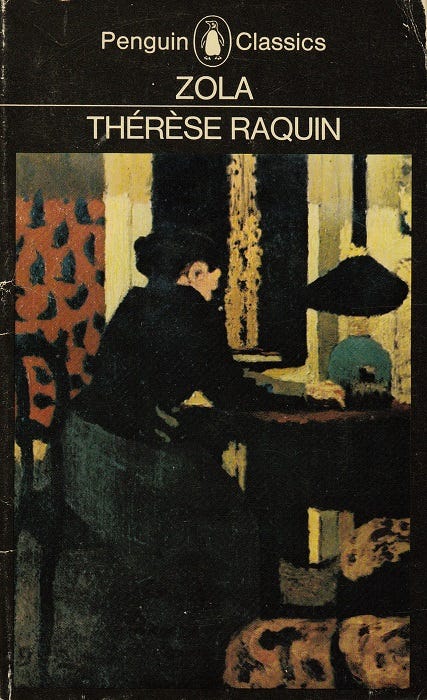
9. Therese Raquin by Emile Zola, translated by Leonard Tancock (1867) — What an utterly ridiculous novel, just hilariously over the top. It’s about two lovers who drown the woman’s husband and make it look like an accident, then bide their time until they can get married two years later. But they’re haunted by his water ghost and spend the rest of their lives in torment. Things are always as miserable and torturous as they could possibly be, driving all to the brink of madness and suicide — and then, somehow, it gets even worse! Despite its essential silliness, there’s an interesting psychology of character going on, a surprising attention to the unconscious. Just when it would start to get tiresome, it always won me back. “She was still the indomitable creature who had been prepared to struggle with the Seine and who had flung herself headlong into adultery, but now she also realized the meaning of goodness and gentleness; she understood the meek face and passive attitude of Olivier’s wife, and knew it was possible to be happy without killing your husband.” I have to love the novel that makes that sentence possible.
10. The Guest Lecture by Martin Riker (2023) — A very charming novel, in the vein of The Mezzanine, in which all the action as such takes place in the mind of the narrator during a brief window: in a hotel bed, the night before she, an economist, is mean to deliver a lecture on Keynes and utopias, and is beset by anxious insomnia. She uses the time to sort-of rehearse her lecture, but the mind, of course, wanders, and questions all its previous decisions. A mix of essay and flashback, and the structure makes it work.
11. Lucy by Jamaica Kinkaid (1990) — A short novel about a year in the life of a young woman from the West Indies working as an au pair, thinking about her past and America and art and sex, more of a character portrait than anything else. Enjoyable.

12. Vertigo by W.G. Sebald, translated by Michael Hulse (1990) — I’ve been reading Sebald’s novels out of order; this was his first, my third. I think it might be my favorite. I find his voice so funny here, but of course also beautiful and uncanny. It just zipped along. A total pleasure.
13. Bitter Water Opera by Nicolette Polek (2024) — A very short, strange little novel with magical/witchy qualities like Lolly Willowes or Leonora Carrington, but also so much to say about the life of the artist, about how we can, or can’t, choose to live. Spiritual/philosophical and lush in its language.
14. My Death by Lisa Tuttle (2004) — Another Weird Novella, this kind of reminded me of Robert Aickman, not horror per se but rather a “strange tale.” A good book for a short flight, though the end rushes up on you a little. It’s about a writer and includes some insider publishing gossip as a bonus.

15. Hard Rain Falling by Don Carpenter (1964) — I absolutely loved the first two-thirds of this novel about the crummy, crime-ridden life of an orphan named Jack Levitt, his misadventures and philosophies. At times it’s beautiful, existential, full of tragic insight. I’ll never forget the passage about solitary confinement. I was less enamored with the third part, where Jack gets out of San Quentin on parole, falls in love, gets married, has a baby. Here, the novel’s woman-hating tendencies got to be a little much; it’s doing a kind of Rabbit, Run, everyone’s trapped thing, but Rabbit, Run does that so much better. (I don’t think Updike could write about prison as well as Don Carpenter, to be very clear.) Still, worth it.
16. My Phantoms by Gwendoline Riley (2021) — There’s plenty of good writing in here, but I don’t know; for me it’s kind of a structural failure. The first hundred pages are pretty much a woman complaining about her parents; there’s no real-time action, really, just examples of obnoxious behavior. This is all mean but sharp and interesting; it has potential. Then things start to happen in a way that feels more like a novel per se, but it’s not until the end that it really feels complicated enough to be a novel, like it’s more than a character seeking pity/revenge. I don’t care for that trick where a book tries to get much better at the end. You know? I just think really good books are good all the way through.
17. Be Brief and Tell Them Everything by Brad Listi (2022) — A work of autofiction that feels extremely real and direct; I listen to his podcast and could hear this in his voice to the point that it almost felt like listening to an audiobook. Highly readable and enjoyable.

18. The Hole by Hiroko Oyamada, translated by David Boyd (2014) — Weird Novella. This was reasonably interesting. I found the prose kind of awkward and unconvincing, maybe a translation problem.
19. To the Friend Who Did Not Save My Life by Herve Guibert, translated by Linda Coverdale (1990) — A very striking novel, structured as 100 little diary entries or vignettes, about a circle of friends and lovers (writers, artists, intellectuals) dying of AIDS in the 1980s. The first half revolves around the death of the narrator’s friend Muzil, who seems to be based on Foucault (Guibert’s close friend). The second half is a slow fuck you to the titular “friend,” a man who made promises to Herve, the author/narrator, he couldn’t or never intended to keep. It’s a book about itself, about writing and awareness of death, full of surprising and profound thoughts, sometimes cryptic — it gives the impression of having been written in a state of desperate, almost false clarity, a spasm of elegant grief, self-grief. “I was probably wobbly in the legs but I wanted to run, to run like I never had before; a horse in a slaughterhouse, hanging suspended in midair with its throat cut, keeps galloping in the void.” “When I’d learned I was going to die, I’d suddenly been seized with the desire to write every possible book — all the ones I hadn’t written yet, at the risk of writing them badly: a funny, nasty book, then a philosophical one — and to devour these books almost simultaneously in the reduced amount of time available, and to devour time along with them, voraciously, and to write not only the books of my anticipated maturity but also, with the speed of light, the slowly ripened books of my old age.” “I was afraid this new pact with fate might upset the slow advance — which was rather soothing, actually — of inevitable death. Jules had once said to me, at a time when he didn’t believe we were infected, that AIDS was a marvelous disease. And it’s true that I was discovering something sleek and dazzling in its hideousness, for though it was certainly an inexorable illness, it wasn’t immediately catastrophic, it was an illness in stages, a very long flight of steps that led assuredly to death, but whose every step represented a unique apprenticeship. It was a disease that gave death time to live and its victims time to die, time to discover time, and in the end to discover life.” “Subtext: I wanted to choose between the medication and suicide, between one or two new books written during the treatment and thanks to the reprieve it would give me, or suicide, to keep from writing them, those dreadful books.” “There’s a point in misfortune, even if you’re an atheist, when the only thing you can do is pray, or fall completely to pieces.” Great.
NONFICTION
1. How to Be Alone by Jonathan Franzen (2002) — A bit of a mixed bag — there’s some fluffy magazine writing in here — but some of these essays are truly great. I think he’s best when he’s sad (grieving, depressed, even despairing) or otherwise negatively engaged (furious, irrationally and perversely annoyed, intolerant). It’s so refreshing how he doesn’t even try to be a likeable person; he is so fundamentally unchill! My favorites were “My Father’s Brain” (about dementia), “Sifting the Ashes” (about smoking), and “Meet Me in St. Louis” (about revisiting his hometown during his book tour for The Corrections). The two long critical pieces he wrote for Harper’s are also really interesting; I read “Mr. Difficult” years ago but it was better than I remembered.

2. Missing Out: In Praise of the Unlived Life by Adam Phillips (2012) — I really loved this. Adam Phillips is so good, with such a distinctive style, I can just imagine him fighting with copy editors — like in this line, he must have had to stet this so hard: “if we can’t let ourselves feel our frustration — and, surprisingly, this is a surprisingly difficult thing to do…” (I can’t even guess why he needed “surprisingly” twice, but I believe he had a reason.) So many good thoughts about disappointment, expectation, satisfaction, etc., and the idea of frustration as a form of faith — in that it depends on a belief that you know what you want, that what you want is even possible! “The fact that there are frustrations seems to imply, of course, that there are satisfactions, real or otherwise. The fact of frustration has, that is to say, something reassuring about it. It suggests a future.” “In the psychoanalytic story, if we don’t feel frustration we don’t need reality; if we don’t feel frustration we don’t discover whether we have the wherewithal to deal with reality.” “In order to free ourselves from certain things we have to fake an omniscience about the future …” (we have to pretend we know what it would be like in a counter-reality) … “We live as if we know more about the experiences we haven’t had than about the experiences we have had.” This is great midlife crisis reading. (I read parts of Four Thousand Weeks at the same time, and it’s pretty good but doesn’t compare well.)
3. Stranger Faces by Namwali Serpell (2020) — Compelling meditations on the role of the face in art, literature, culture, nature, etc. I especially liked the writing on film (Psycho, Grizzly Man). “The filmic face is a fetish for a sense of human presence and material reality.” “This mop in Psycho — let’s call it ‘the second mop’ — sits just like this, on the cusp between the random and the meaningful … is it a clue or an error?” (This reminded me of the chapter in Missing Out on “not getting it”: “What Zizek calls ‘the attitude of overinterpretation’ is a self-cure for the fear of what I am calling ‘not getting it’. Overinterpretation is getting it with a vengeance.” It relies on a belief or an insistence, an insisted belief, that Hitchcock, Shakespeare, etc., got everything right, they always knew what they were doing, and thus everything can be interpreted.)
4. The Built, the Unbuilt and the Unbuildable: In Pursuit of Architectural Meaning by Robert Harbison (1991) — I think this is one of the most interesting books I’ve ever read. Incredibly rich and stylish writing on gardens, ruins, monuments, castles, fantasy cities and spaces, architectural paintings. It’s full of fascinating photos and figures and I had to keep stopping to google more images. “Uselessness is the most sublime of all human constructs.” “How sure of themselves yet how entirely fictional most monuments are.” “Ruins are ideal: the perceiver’s attitudes count so heavily that one is tempted to say ruins are a way of seeing.” “Such tininess is a form of alienation.” Made me wish for another life!

5. The Hatred of Poetry by Ben Lerner (2016) — I had read chunks of this monograph before, but not the whole thing. It’s very enjoyable, an essay on the gap between capital-P Poetry and “actual poems,” which can never meet our hopes, expectations, desires, because Poetry is heavenly and poets are mortals.
6. Heart Berries by Terese Marie Mailhot (2018) — One for the category I call in my mind the literature of despair. This has a very distinctive, paratactical style that is not very linear, not at all flowery, a little bit vague, but interesting and effective. It often reminded me more of a theatrical monologue, like Wallace Shawn or something, than typical memoir writing. “I lacked form and technique,” she writes at one point, and it certainly doesn’t feel overworked and overwrought, but in a good way.
7. The Method: How the Twentieth Century Learned to Act by Isaac Butler (2022) — Another one of those very rich books that keeps sending you outside it on covert assignments — I loved stopping while I was reading to find clips of scenes on YouTube or to watch whole movies. The detailed ekphrastic, if we can call them that, passages on individual acting performances were my favorite part, but there’s also lots of great stuff about what makes art good in general, stuff that feels like accidental writing advice. For example — on justification: “Instead of asking, ‘Why does the character behave this way?’ Vakhtangov wanted actors to ask ‘What do I need to motivate me to behave this way in the scene?’ The actor can thus justify various actions within the play in ways that do not have to relate to the text at all, or even make sense to anyone else.” I feel this way about certain strong writing moves, like changing the subject without a transition — you don’t have to put your justification in the text, as long as you have a reason.

8. Watch Your Language: Visual and Literary Reflections on a Century of American Poetry by Terrance Hayes (2023) — Kind of a wild book of prose, a mix of traditional essays and much more formally playful stuff, lists of questions, illustrations, and little biographies of poets in the form of prose poems. Released simultaneously with a collection of poems; I wrote about both in my column.
9. Attachments by Lucas Mann (2024) — Lucas Mann’s essays are so good! So funny and endearing and relentless in their self-examination. These are mostly about fatherhood but you wouldn’t need to be a father to find it interesting. (Duh, I’m not.)

10. Sink by Joseph Earl Thomas (2023) — I loved this memoir of childhood/adolescence, written mostly in the third person, in highly fictive vignettes, a really interesting and successful move that allows Thomas to write about some fucked up stuff without having to impose an adult perspective that might justify or moralize, as so many memoirs do. Touching and very funny.
11. Woman Pissing by Elizabeth Cooperman (2022) — Named after a translation of a Picasso painting (La Pisseuse), this is like a commonplace book of failure, collections of quotes and notes about self-doubt and self-loathing, creative blocks, ambition, beauty and error. A record of the author’s own struggle to produce this book as well as an indirect defense of the slow, painful process of creation. I found it comforting, in the way of writers’ journals that reveal all their vanity and wretchedness, and very interesting. “It’s clear to me now that nothing can save us from the crisis of beginning.” “When in doubt, cross it out, says the Artist. He finds that the things you doubt just get worse and worse. My response would be, Don’t the things you don’t doubt also get worse and worse?”
12. Daughterhood by Emily Adrian (2024) — A very moving memoir/family portrait, often piercingly, painfully honest and true, about how to be a good parent, or a good child, about risk and faith, feelings of inadequacy, the disappointments of aging (that is to say, life). It’s also about writing, about how other people help us know ourselves, about falling in love, and about how to let the people we love be, and change — to honor them this way. “It doesn’t matter what we’re capable of doing. It only matters what we do.”
13. Learning to Die in the Anthropocene: Reflections on the End of a Civilization by Roy Scranton (2015) — An interesting essay on foregone conclusions and how we make peace with them. I’m kind of glad I read this after writing The Unreality of Memory, because we seem to have absorbed similar books and come to similar conclusions. Which makes it somewhat less revelatory for me. Still, worth reading.
14. The Cambridge Introduction to Art: The Eighteenth Century by Stephen Jones (1985) — An interesting little monograph about the prevailing styles in Western Europe: Rococo, neoclassicism in architecture, the contrivance of English gardens, etc.

15. Winter Solstice by Nina MacLaughlin (2023) — Gorgeous language in these pieces about light and seasons, ritual and change. “Fat sheep made small clouds against green hills, river had sky on it, I couldn’t speak for a while.” “Winter reminds us: the dark was first.”
POETRY
1. Judas Goat by Gabrielle Bates (2023) — What an impressively assured debut, with that good Rilkean mix of Things and pain and desire. I love the poem “Sabbath,” which I read when it was published in Image and found so striking. “I’ve missed / feeding all my thoughts through that revolving blade / so thin it could only be felt.” “I knew God listened. And I knew where to aim. / All the time, every second. I lacked / but with aim.”
2. Girls That Never Die by Safia Elhillo (2022) — Some really great poems in here. “My mother is almost my mother now.” “how dare i love a word without knowing it in arabic.” “I do not want any of what I’ve lost. / I want only what I have now, to keep it.”
3. Star Lake by Arda Collins (2022) — This was great, full of a sense of wonder (I don’t like the word wonder, but that’s what it is) and a kind of placelessness in time and space, a mind/imagination that can roam through nature, fiction, the past, and many good death poems, e.g. “My Mother’s Face”: “I am afraid / a very strict rule / will come out of somewhere / that says, ‘Now that your mother is dead, / you’re no longer permitted to imagine her face.’” Or “Afternoon”: “We can’t believe it, / how we’re here together; / then we talk about eternity / when the whole thing is, is / we’re already in it: this / is eternity. The air / doesn’t separate us / from anything.”
4. Door in the Mountain: New and Collected Poems, 1965–2003 by Jean Valentine (2004) — I read this whole volume, which includes nine full books, from front to back, slowly, over a couple of months. The first book and last book (chronologically) are just incredible. Valentine’s poems have this quality that always makes me want to read them again; they are short, but so mysteriously elusive, with an almost unfinished quality that transfers — it feels like you can’t ever be done reading them. I also loved The River at Wolf. “Once or twice, someone comes along / and you stand up in the air / and the air rises up out of the air.” “You know how in dreams you are everyone: / awake too you are everyone.” Love, friendship, being, death, connection. “I have lived in your face. / Have I been you?” “I heard your voice on the radio / thirty years dead / and got across the kitchen to / get next to you / breath and breath / two horses // But it wasn’t you back then / I was liquid to, / it was my life: / I wanted to be you.”

5. Door by Ann Lauterbach (2023) — Doors again! Makes me think of Bachelard’s line, “A door is an entire cosmos of the half-open.” Or as Lauterbach writes: “The files are / useful; neither fully open nor shut.” Sometimes poetry serves as a catalog of examples of things you can do with language, of possible effects of language. E.g.: “the temporal scansion / is as uninhabitable as a rainbow.” “The long rain of men keeps raining.” “I suspect the delirious omen.” “There is nothing behind the door; there is only / door, a condition, a prospect.” “Waiting is a form of thought.”
6. Little Poems, edited by Michael Hennessey (2023) — A pocket anthology of short poems from antiquity to nowabouts. Very amusing. I wrote more about it, and short poems in general, here.
7. None of It Belongs to Me by Elizabeth Clark Wessel (2024) — I was sent this book to blurb, and I loved it! I read it two days before moving and I’d had too much coffee and it made me cry. “I want it to be over, but also want time to slow down.” “This is the order of things. / First one thing, and then the other. / It’s taken me a long time to understand this.”
8. Childcare by Rob Schlegel (2023) — I loved these poems about family life, time and fear, uncanny, mournful, but soothing and full of the terrible, terribly funny things children say. “I learn to love the blade / By mourning what it cuts.” “I leave when I think he’s asleep. / Minutes later he’s in my room with a journal. / Can you write in this for me, he says, / But no poetry.”
9. Extraordinary Tides by Pattie McCarthy (2023) — Such a lovely little chapbook. Taught me the word “neap,” useful in Spelling Bee!
10. Ablation by Danika Stegeman LeMay (2023) — A book of collage and mixed forms, a “grief box,” written in the wake of her mother’s death, quiet yet visceral. “I recall how it felt to be a person with a mother, but I no longer recognize that person as myself.” “If I’m haunted, then I’m loved.”

11. April by Sara Nicholson (2023) — I liked this very much, especially the ekphrastic poems, their method of slow attention, description, reflection (“Therefore Leda’s story / Is the story of interpretation itself”). There’s a sort of essay-poem on poetry, humility, and self-sufficiency that reminds me of Anne Carson, formally, or Wallace Stevens in its aphoristic mode: “Saints and poets have always weaponized their humility.” “Find an obscure subject and learn everything you can about it. Tell no one.” I want to keep these around for re-reading, “divine reading.”
12. So to Speak by Terrance Hayes (2023) — I wrote about this here!
13. I Do Everything I’m Told by Megan Fernandes (2023) — Some really good sounds in these, phrases I wanted to repeat to myself: “epileptic / Dostoyevsky in Siberia.” “It returns, the velvet livingness.” “So okay, I did it. I went for the walk.” I love the poem “Sonnet for the Unbearable.”
14. Fierce Elegy by Peter Gizzi (2023) — Lovely, vibey, wistful, slightly beat/mystical. “I saw a better life, it was far off, / sun on moss next to a friend, / the softening air, the dandelion fluff. / It was kinda real, and kinda not. / Can’t see it today.” “Come into / the intimate distance / of the picture field.” “When the thing itself / becomes the thing itself.”
15. Auction by Quan Barry (2023) — The image on the cover, a sort of translucent sculpture of a toilet by Do Ho Suh, seems appropriate: art not out of crap, but despite of crap? Informed by crap? The crap of the world, I mean, the crap of existence. There is pain and disgust here, and fear and awe, salvation. At moments borderline offensive. I loved it. “Dreamscape after dreamscape, each one / vivid as actual living.” “Then everything becomes a game.” “Who keeps us safe? / We keep us safe.”
16. From From by Monica Youn (2023) — A rich book with lots of different approaches, studies of figures from myth, art, and history, a long fabulist series on magpies, a longer essay-like poem about shark teeth, caterpillars, quantization and quantification, desire and hatred, passivity/complicity, whiteness, poetry, so much. All shot through with a bitter, delicious irony.

17. The Thomas Salto by Timmy Straw (2023) — These poems blew me away. Beautiful, shivery, eerie, they have a kind of surgical precision of sound, used to convey the vast mystery in an image (“A sun sets in a mirror, sets / in a killed sheep’s eye”), to dismantle time. These are poems about power, powerlessness, and the possibility of forgiveness (“Forgiveness, the three-legged chair”) that sound absolutely sure and final, like vessels for a god voice; they filled me with awe and something like a holy terror. Let me just quote from it extensively. “As when robber baron wives / feel at their throats for the cameo, // touch the world now in any place / and a pale sand shows through. // A painting licks a thing to its beginning. / A poem grows outward to all edges like a self.” “The world is in its message today. / The world is in its keys.” “And there are things that must be said, I know, / awful and simple as children yelling out / our mother is dead.” “Occasionally, / our freedom intrudes on us // like real sunlight thru a snowglobe / like real sunlight on a painted sun.” “To drink a coke is good and cruel / and readymade // as a white swan / in the mind.” “In summer two kids carry a wading pool / across the grass, eyeing the water // as it wobbles, trying for no reason not / to get their bare feet wet. // The wave that will take us is very small / is hiding in the word itself.” (The word!) “A truck downshifts on the freeway, / a shift whistle blows, / someone else’s emergency makes the poem hold.” “The audience is crowded together like husbands in a canoe / none of whom know each other / though they are all married to the same wife. / She cooks with fenugreek. / When she dies, it will be quiet / enough to hear pollen falling.” “Have the / world, it’s yours: rivers so abstract / only the poor drown in them.” (!!!) “Some say / the world ends in incarnation / but if ever // I ate the apple — green the / circle in the / green dark” … “I sing the fact backwards. / Mother make my bed soon.” Buy this book!
18. Negro Mountain by C. S. Giscombe (2023) — This fascinating book explores (wanders, climbs?) the idea of the titular mountain, the highest point in Pennsylvania, so named because of “‘an incident’ that took place there in the 1750s,” as Giscombe writes in a brief preface, when a slave known as Nemesis was killed in a skirmish between English speculators and Native Americans. It opens with a sequence of seven dream poems that begin to introduce the themes and images that recur throughout the book: the mountain, movement, place, wolves or the idea of wolves, the role of the wolf. There are levels of framing: In “Second Dream,” he writes, “Typically, I dreamed and at the same time watched the dream … as if from a car at a drive-in movie.” So the dream is already in quotes in the dream, and now again in the poem. Giscombe’s “speaker” (another idea he interrogates) glides between dream self and now self, between the scene and “real — that is, waking — life.” There are “several types of argument.” These early, long-lined poems have a bardish musicality that reminds me of Nathaniel Mackey (“there was statuary, there was / a mild nausea which, dreaming, / I’d mistaken for evil, and / also a jaguar”) … (“Voice can get you to it, voice / is wolfish, sugar”). Later pieces are much more like essays, but still a combination of poetic elision and more prosaic rhetoric, block quotes and citations, gestures like “as noted above.” The sections all comment and expand on each other, a multi-vocal text interrupting itself (“The mountain intervenes”) with sudden shifts that unsettle and destabilize — small landslides. “What else might a Negro speaker ask?” Giscombe writes, and on the opposite page, “you — meaning the speaker and the reader as well.” Elsewhere, he writes, “the wolves, the Negro ‘speaker,’ and the mountain are not one.” And yet, they overlap, in the “transgressing moment.” “We don’t have to go to Negro mountain to see that.” (In the final section, “Notes on Region,” Giscombe writes that Nemesis sounds like “a pet’s name,” not a pet name but “the ironic name of an animal.” Yet then he quotes from the OED: “Nemesis was ‘the goddess of retribution or vengeance, who reverses excessive good fortune, checks presumption, and punishes wrongdoing.’” Oh hey.)
19. A Film in Which I Play Everyone by Mary Jo Bang (2023) — It’s funny — I read like two poems by Mary Jo Bang in my first year of grad school and then wrote like her for three years. There’s something about her ear, the tautness of her lines, the interest in meta-cognition, and the highly visual nature of her poetic vision that appealed so much to me. She’s still really good! These do all feel like miniature movie sets or mechanical music boxes (“a quasi-auditory / interior ticking so precise it seems mechanistic,” she writes, of the aura before a trip). The obsessions here are late-life obsessions: the end of being, the end of everything. I love her ambiguities: “The machine’s incessant // needle mimed in and out. For me it was like fucking air.” The way that fucking can be read as a transitive verb or a modifier on air (“I eat men like fucking air”) is so good!

20. Brother Poem by Will Harris (2023) — Poems addressed to a fictional brother, a “fecund other” as I once heard my friend Kathleen say: “The point of writing is to address / you,” he writes. Quietly beautiful. “A noun is an imperfect substitute for a pronoun.” “All past is equally past. It is simply the opposite of future.”
21. Phantom Pain Wings by Kim Hyesoon, translated by Don Mee Choi (2023) — Kim Hyesoon is so metal. This reads like a variety of horror, grotesque, cutesy-meets-evil, death-soaked, in a time with no future (“Future doesn’t exist since farewell has already begun”), utterly visionary. It begins with a sequence of poems in which the speaker is or becomes or does a bird: “This book is not really a book / It’s an I-do-bird sequence” … “Poetry ignores / the I-do-bird-woman sequence.” It’s a way of escaping the sick world of people, perhaps, but still an involuntary way, like death. “I end up doing I-do-bird even if I resist doing it.” “I take a step toward where I don’t exist.” I love the way scale works in this book; both largeness and smallness can be forms of power, both loudness and silence (“it’s time, for the thunderous applause to fade / for the cymbals of silence to crash, to announce time’s funeral”). The tiny and the epic. Large as in the book’s title poem: “My night feathers are infinitely, infinitely large” … “I told you not to cut me off” … “I lift my head as I walk / I shit blood as I walk” … “I walk because my bird house is smaller than me” … “There’s no place for me to hide here! // Please push me off the cliff!” … “Tonight, there’s no place for me to put down my poem.” Or in “Tyrannus Melancholicus”: “I’ll say it again. The woman who’s wearing the skirt as big as the shadow of my entire country is me.” And small as in “Smell of Wings”: “I can even be born through a sweat pore.” or “Little Poem,” from the sequence called “I Sharpen the Forest and Write a Letter”: “The little story is so little that even though it thinks that it is speaking, it’s the same as not speaking at all” … “The little story is so little that it just keeps piling up like dust on the postwoman’s desk, so if you want to read the story I mailed, you’ll need a dictionary smaller than a speak of dust” … “You say that you can bash my story whenever you want because it’s so little, that you’ll write my story instead, that my story is like an animal too small to be seen” … “but my little story crosses many bridges inside your brain” … “it walks for a long time and sets up house on top of your seahorse and in every dream you scream — that’s how little my story is.” (Another thread is her meta-poetics, her spitting at critics!)
22. I Love Information by Courtney Bush (2023) — Enjoyed these poems which have a riffy, out-of-hand quality like drunken conversation, a little of the appealing self-aggrandizement that I miss from my youth, and interesting thoughts about poetry/art/living. “I don’t think language can fail / Fail to do what”

23. With My Back to the World by Victoria Chang (2024) — Victoria’s last book was a long engagement with Merwin; this one engages with the art of Agnes Martin. I love how she makes these intimate relationships with other artists a kind of formal constraint. Sad and insightful. “Agnes said her grids came / from the innocence of / trees. I’ve always / thought trees were guilty.” “My solitude is like the grass. I become so aware of its presence that it too begins to feel like an audience.” “I betray her brushstrokes by looking at the lines. I betray the lines by looking at the brushstrokes.” “Suddenly, I remember that there is a middle of the day.”
24. Ascent of the Mothers by Noelle Kocot (2023) — A narrow little book of short, intense poems. Very good. “I’m not afraid, / And yet, // My shroud vanishes / In these lines, // I am so wept / Past weeping.” “The unglazed windows, / An afterthought out of perspective, // This is what’s left, / Something difficult, a fragment.” “Now, unguarded, // There is something / I can’t know, // But know.”
FAVORITES!
My most beloved reads of 2023:
Favorite fiction: The Infatuations, To the Friend Who Did Not Save My Life, and Vertigo
Favorite nonfic: Missing Out and The Built, the Unbuilt, and the Unbuildable
Favorite poetry: Timmy Straw and Jean Valentine

Written by Elisa Gabbert
Poet and essayist. Author of The Unreality of Memory, The Word Pretty, and other books. On Twitter at @egabbert. More info at http://www.elisagabbert.com/
God made Trump
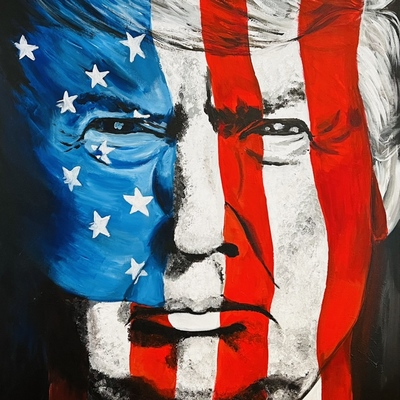
Link to video: https://truthsocial.com/@realDonaldTrump/111703421569603715/embed
(Courtesy of Gwyllm Llwydd)
