If You Only Read A Few Books In 2024, Read These

Ryan Holiday

Ryan Holiday

5 days ago (ryanholiday.medium.com)

One of my favorite quotes — enough that I have it inscribed on the wall across the back of my bookstore — comes from the novelist Walter Mosley. “I’m not saying that you have to be a reader to save your soul in the modern world,” he said. “I’m saying it helps.”

2024 promises us nothing but the same craziness as last year and every year before it. Maybe even new and worse ones. Almost half the world is going to vote for new leaders this year. Who will they choose? Conflicts simmer, which ones will explode? The only certainty about this upcoming year is uncertainty. Good things will happen. Bad things will happen. Things will happen.

What are you going to do about it? Will you be ready? Can you handle it?

Books are an investment in yourself — investments that come in many forms: novels, nonfiction, how-to, poetry, classics, biographies. They are a way to learn about what’s happened in the past. They’re a way for you to learn about people and human nature. They help you think more clearly, be kinder, see the bigger picture, and improve at the things that matter to you. Books are a tradition that stretches back thousands of years and stretches forward to today, where people are still publishing distillations of countless hours of hard thinking on hard topics. Why wouldn’t you avail yourself of this wisdom?

With that in mind, here are a bunch of books — some new, some old — that will help you meet the goals that matter for 2024, that will help you live better and be better. You can also get this collection at my bookstore, The Painted Porch.

The Greek Way by Edith Hamilton

Marcus Aurelius’ life was changed by a single book. In book 1 of Meditations, Marcus thanks his philosophy teacher Rusticus “for introducing me to Epictetus’s lectures — and loaning me his own copy.” In Rusticus handing Marcus a book and Marcus reading that book — the arc of history was changed. The Greek Way is another in the category of loaned books that changed the arc of history. On a ski vacation in 1964, Robert Kennedy was loaned a copy of The Greek Way and ended up spending most of the trip in his room reading it. It’s a wonderful little discussion of what made the Greeks so special, what they can teach us, and how they thought about life. Anyone who has a gift for communicating ancient ideas in a modern context is a hero in my eyes — and in this case, Edith Hamilton proved why. By writing about the Greeks in such an accessible and inspiring way she ended up changing the political trajectory of the entire Kennedy family.

Meditations by Marcus Aurelius

For this piece two years ago, I recommended this new annotated edition by Robin Waterfield. I’m a champion of the Gregory Hays translation, but reading a new translation of a book you’ve read (or love) is a great way to see the same ideas from a new angle…or find new ideas you missed on the previous go-arounds. Marcus, like Heraclitus, believed we never step in the same river twice. More recently, I had a similar experience. Since my 16-year-old (nearly) completely marked-up copy was starting to get a little worse for wear, I created a premium edition designed to stand the test of time, just like the content inside. That’s the amazing thing about reading Marcus — whichever translation you go with — year after year, he feels both incredibly timely and incredibly timeless. There’s a reason this book has endured for almost twenty centuries (here are some lessons from me having read Meditations more than 100 times). If you haven’t read Marcus Aurelius or if you have…you should read this book and then read it again.

The 48 Laws of Power by Robert Greene

There are some awful people and awful movements on the march around the world. This feels new, but of course it’s not–these people have always existed. The problem is they are just not well understood. Worse, good people are not often armed with the tools (or the cunning) to defeat or to effectuate change. If you want to live life on your terms, climb as high as you know you’re capable, and avoid being controlled by others — you need to read this book. You’ll leave not just with actionable lessons, but an indelible sense of what to do in many trying and confusing situations. You also have to check out the 25th anniversary edition. It’s one of the coolest designed books I’ve ever seen (and the 48 Laws of Power was already beautifully designed). If you flip the gold pages one direction, you see Machiavelli’s hidden face…and if you flip them the other direction, Robert’s face appears. It’s an amazing version of an amazing book which I continue to think everyone needs to read. Is there a darkness to this book? Yes. But there is a darkness to life, too. You have to understand it and be able to defend against it. If you don’t want to read it because you think it’s ‘immoral,’ well then you definitely need to read it, as I explain in this video.

The Choice: Embrace the Possible by Dr. Edith Eva Eger

I told Dr. Edith Eger I felt guilty about someone I had lost touch with and only recently reconnected with. She cut me off and told me she could give me a gift that would solve that guilt right now. “I give you a sentence,” she said, “One sentence — if I knew then what I know now, I would have done things differently.” That’s the end of that, she said. “Guilt is in the past, and the one thing you cannot change is the past.” Dr. Eger is a complete hero of mine. At 16-years-old, she’s sent to Auschwitz. And how does this not break a person? How do they survive? How do they endure the unendurable? And how do they emerge from this, not just not broken, but cheerful and happy and of service to other people? The last thing Dr. Eger’s mother said to her before she was sent to the gas chambers was that very Stoic idea: even when we find ourselves in horrendous situations, we can always choose how we respond to them, who we’re going to be inside of them, what we’re going to hold onto inside of them. Dr. Eger quotes Frankl, who she later studied under, “Everything can be taken from a man but one thing: the last of the human freedoms — to choose one’s attitude in any given set of circumstances, to choose one’s own way.” It was this idea that allowed Dr. Eger to not only endure unimaginable suffering, but to find meaning in it. She went on to become a psychologist and survives to this day, still seeing patients and helping people overcome trauma. I’ve had the incredible honor of interviewing Dr. Eger twice (here and here) and the joy and energy of this woman, this 95-year-old Holocaust survivor, is just incredible.

Be Useful: Seven Tools for Life by Arnold Schwarzenegger

Arnold’s life is the American dream, and his book, to me, is an important corollary to that dream–you have to pay back the gift by being of service, being useful to others. I really enjoyed this book and was lucky enough to interview him twice for it, once in Los Angeles in his Bavarian-themed office (listen to the episode here or watch it on YouTube) and then again on stage at the 92nd Street Y in New York City (listen here). He’s had an incredible life. Seriously, it’s a great book. We could use more useful people this year.

Good Inside: A Guide to Becoming the Parent You Want to Be by Dr. Becky Kennedy

My wife recommended Dr. Becky’s work. I should know by now to put such books at the very top of my to-read pile, but this one took a while to get to. I regret that because WOW this book is good! I could only make it a couple pages at a time before I had to just stop and think. And then to go back through it for my notecard system took equally long, there was just so much stuff I had to get down. I’ve already written close to a dozen Daily Dad emails about lessons from the book — from parenting anxieties and frustrations to being present and asking tough questions. But as much as this is a parenting book, it’s also just classic Stoic principles — because what is parenting but stress, situations you don’t control, worry, anxiety, fear, fatigue and frustration? I took so much out of this bookI interviewed Dr. Becky, too but you just HAVE to read this book.

The Storm Before The Storm by Mike Duncan

One of my reading rules is: If you want to understand current events, don’t rely on breaking news. Find a book about a similar event in the past. To understand the things we must be so careful about in our own politics today, why norms must be respected, why problems can’t be kicked down the road, why populism is so dangerous — read this book. The overthrow of the Roman Republic didn’t just happen. It wasn’t just Julius Caesar, it wasn’t just one man’s ambition that undid some 450 years worth of work. As Duncan writes (and talks about in our podcast episode together), many events in the decades prior contributed to the republic’s fall. And we must understand those events so that we don’t repeat them.

It Can’t Happen Here by Sinclair Lewis

Like I said, we understand what’s happening now by understanding what has happened in the past. It’s also true that fiction helps us understand the human heart and the events of history more than nonfiction can. This book is one that will make you so uncomfortable you’ll probably pick it up and put it down several times. It almost shocks you that this exists, that it’s not some work of fiction pretending to be 80 years old. But no. In fact, one of America’s most famous writers wrote a bestselling novel about an appalling populist demagogue who won the presidency of the United States. Life imitates art. Change the dates, places and names and it’s no longer fiction, it’s real. Fiction is best when it puts a mirror up to us. This book does that. If you don’t read the book, at least please read about it. Because you need to know. It can happen here.

Leadership: In Turbulent Times by Doris Kearns Goodwin

This is an absolutely incredible book. I think I marked up nearly every page. The book is a study of Abraham Lincoln, Theodore Roosevelt, FDR and Lyndon Johnson. It is so clearly the culmination of a lifetime of research… and yet somehow not overwhelming or boring. Distillation at its best! I have read extensively on each of those figures and I got a ton out of it. Even stuff I already knew, I benefited from Goodwin’s perspective. This is the perfect book to read right now — a timely reminder that leadership matters. Or, as the Stoics say: character is fate. Or, as I wrote about in this piece about leadership during the plague in ancient Rome: when things break down, good leaders have to stand up.

The Creative Act by Rick Rubin

There is perhaps no one better qualified than Rick Rubin to help people tap into their creativity. I think it will quickly become one of those The War of Art type of books — one that artists keep close by and return to routinely. I wrote quite a bit about Rubin in Perennial Seller and no doubt would have sourced from this book if it had existed back then. But my basic summary of this book is: Instead of trying to be creative, try to get an environment/a mindset/a practice that is conducive to creativity and let things happen. It’s like Zen in the Art of Archery. You let the arrow fall like ripe fruit. I interviewed Rick Rubin on The Daily Stoic Podcast, listen here.

The Daily Pressfield by Steven Pressfield

I’ve always loved the “daily read” format. I’ve recommended some of my favorites here before, I’ve been lucky enough to publish two of my own (here and here), and now I feel even luckier to have this new collection by one of my writing heroes, Steven Pressfield. No matter what you’re trying to do this year, you’ll almost certainly battle The Resistance in pursuit of it. This is a great book to help you in that battle. Even though I’ve read and reread all of Steven’s books, this book has not left my desk since I got my copy (which adds to my regular practice of re-reading The War of Art before every project I start). I was very glad to have him out to interview him about the book, too. You can listen to our conversation here (or watch on YouTube).

Excellent Advice for Living: Wisdom I Wish I’d Known Earlier by Kevin Kelly

This book of advice is a great one for any professional, parent, or person. Kevin Kelly always thinks about things in a unique way and manages to distill a lot of experience down into a memorable, actionable bit of wisdom. I enjoyed this…and I wish more smart people wrote books like this. It was a real treat to get to interview him in person in the new Daily Stoic podcast studio (here’s a clip of him and I talking about why reading is so important).

The Expanding Circle by Peter Singer

Even though Stoicism is a ruggedly individual philosophy, at the core of it is this idea of “the circles of concern.” Our first concern, the Stoics said, is ourselves. Then our family, our community, our country, our world, all living things. The work of philosophy is to draw these concerns inward — to learn to care about as many people as possible, to do as much good as possible. When I had Peter Singer on the podcast, he mentioned this book. He chanced on a similar metaphor, not knowing its Stoic origins. I ended up getting The Expanding Circle, about expanding our focus on the welfare of family and friends to include, ultimately, all of humanity — animals, the environment, all of it.

Atomic Habits by James Clear

It’s when things are chaotic and crazy, when the world feels like it’s falling apart, that we most need to develop good habits. I think about James Clear’s concept of atomic habits on a regular basis. To me, this is a sign of a great book — that even just thinking about the title has an impact on you. I love the double meaning of the word atomic — not just meaning explosive habits, but also focusing on the smallest possible size of habit, the tiniest step you can take to start the chain reaction that can in fact lead to explosive results.

Zen in the Art of Archery by Eugen Herrigel and The Way of Baseball: Finding Stillness at 95 mph by Shawn Green

These are ultimately not books about archery or baseball, but about zen and the mastery of the soul. Both are great, accessible books about peace and peak performance that don’t hit you over the head with Buddhism, yoga, meditation, or any of that. The Way of Baseball is about how Shawn Green struggled as a major league baseball player and through repetitive, simple practice turned himself into one of the best home run hitters in the game. Even if you don’t like sports, I promise you will get a lot out of them.

Gift From The Sea by Anne Morrow Lindbergh

I always associated Charles Lindbergh with Hawaii because when I was a kid, I visited his grave at the end of the road to Hana in Maui. I was totally surprised to find this book at one of my favorite bookstores, Sundog Books, in one of my favorite places in the world, 30A in Florida. It’s a beautiful philosophical book about rest and relaxation. For each chapter, Lindbergh takes a shell from the beach as the starting point for a meditation on topics like solitude, love, happiness, contentment, and so on. For a 67-year-old book, it feels surprisingly modern — especially, I would think, for women. The only thing I didn’t like about this book is that I didn’t read it when I was writing Stillness is the Key as I almost certainly would have quoted it many times. In any case, pair Lindbergh’s book with Stillness. Because the future belongs to those with the ability to focus, be creative, and think at a high level. And that’s what stillness is — that quiet moment when inspiration hits you, that ability to step back and reflect, that ability to make room for gratitude and happiness regardless of what’s going on around you. It’s one of the most powerful forces on earth. We will all need stillness in 2024 and beyond.

As I have published different versions of this piece over the last couple of years (201820192020202120222023), I made one final recommendation worth repeating: Pick 3–4 titles that have had a big impact on you in the past and commit to reading them again. Seneca talked about how you need to “linger among a limited number of master thinkers, and digest their works, if you would derive ideas which shall win firm hold in your mind.”

We never read the same book twice. Because we’ve changed. The perceptions about the book have changed. What we’re going through in this very moment is new and different. So this year, go reread The Great Gatsby. Give The Odyssey another chance. Sit with a few chapters from The 48 Laws of Power. See how these books have stood the test of time and see how you’ve changed since you’ve read them last.

It can be some of the best time you spend with a book this year. Happy reading!
Ryan Holiday

Written by Ryan Holiday

Bestselling author of ‘Conspiracy,’ ‘Ego is the Enemy’ & ‘The Obstacle Is The Way’ http://amzn.to/24qKRWR

Sentimentality and Being Mortal: Poet Mark Doty on the Passionate Fragility of Our Attachments

By Maria Popova (themarginalian.org)

How beautiful and unbearable that only one of each exists — each lover, each child, each dog; that this particular chance-constellation of atoms has never before existed and will never again recur in the history of the universe. The fact of each such singularity is a wonder beyond why, as mysterious and irrefutable as the reason you love one and not another. The feeling trembling beneath the fact — the brutal knowledge that everything we love is irreplaceable yet will be lost: to dissolution and death, to rejection and indifference, to our own return to stardust — is the hardest thing to bear, the thing for which we have devised our most elaborate theaters of denial.

Among those coping mechanisms is the invention of sentimentality. “Sentimentality is a superstructure covering brutality,” Carl Jung wrote. Its strange psychological machinery is what the poet Mark Doty explores with uncommon insight and sensitivity in a passage from his wonderful memoir Dog Years (public library).

He writes:

The oversweetened surface of the sentimental exists in order to protect its maker, as well as the audience, from anger. At the beautiful image refusing to hold, at the tenderness we bring to the objects of the world — our eagerness to love, make home, build connection, trust the other — how all of that’s so readily swept away. Sentimental images of children and of animals, sappy representations of love — they are fueled, in truth, by their opposites, by a terrible human rage that nothing stays. The greeting card verse, the airbrushed rainbow, the sweet puppy face on the fleecy pink sweatshirt — these images do not honor the world as it is, in its complexity and individuality, but distort things in apparent service of a warm embrace. They feel empty because they will not acknowledge the inherent anger that things are not as shown; the world, in their terms, is not a universe of individuals but a series of interchangeable instances of charm. It is necessary to assert the insignificance of individuality to make mortality bearable. In this way, the sentimental represents a rage against individuality, the singular, the irreplaceable. (Why don’t you just get another dog?) The anger that lies beneath the sentimental accounts for its weird hollowness. But it is, I supposed, easier to feel than what lies beneath rage: the terror of emptiness, of waste, of the absence of meaning or value; the empty space of our own death, neither comprehensible nor representable.

Art by Margaret C. Cook for a 1913 edition of Walt Whitman’s Leaves of Grass. (Available as a print.)

Of course, our fury at entropy is the great motive force of our creativity — we make art to make meaning out of our mortality, to counteract its brutality with beauty. Every creative act is an act of consolation for our transience, for our despair about our transience. A century after Albert Camus insisted that “there is no love of life without despair of life,” Doty contemplates this fundamental equivalence of existence:

Despair, I think, is the fruit of a refusal to accept our mortal situation. Perhaps it’s less passive than it may seem; is despair a deep assertion of will? The stubborn self saying, I will not have it, I do not accept itFine, says the world, don’t accept it. The collective continues; the whole goes on, while each part slips away. To attach, to attach passionately to the individual, which is always doomed to vanish — does that make one wise, or make one a fool?

Complement with Annie Dillard on how to bear your mortality and D.H. Lawrence on the best lifelong preparation for death, then revisit Doty’s magnificent Whitman-lensed reflection on the courage to love despite the certitude of loss.

Virginia Woolf on being a modern or a conservative

“Once you begin to take yourself seriously as a leader or as a follower, as a modern or as a conservative, then you become a self-conscious, biting, and scratching little animal whose work is not of the slightest value or importance to anybody.”

–Virginia Woolf

Adeline Virginia Woolf (January 25, 1882 – March 28, 1941) was an English writer. She is considered one of the most important modernist 20th-century authors and a pioneer in the use of stream of consciousness as a narrative device. Wikipedia

Lighten Up: It’s Time for a Great Awakening

BY MARIE JONES

ART BY CAMERON GRAY, PARABLEVISIONS.COM

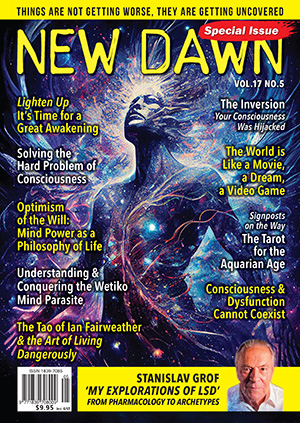
From New Dawn Special Issue Vol 17 No 5 (Oct 2023)

No problem can be solved from the same level of consciousness that created it.
– Albert Einstein

A radical inner transformation and rise to a new level of consciousness might be the only real hope we have in the current global crisis brought on by the dominance of the Western mechanistic paradigm.
– Stanislav Grof

Darkness cannot drive out darkness: only light can do that. Hate cannot drive out hate: only love can do that.
– Martin Luther King Jr

We are a world at war. This is the first time in history that the war has not been fought on battlefields, or in the air, or on the water, for territories or principalities or rights to land and resources, for conquering other cultures and peoples, but for the mind, the heart, the soul, and the collective consciousness of humanity.

This war is an insidious and invisible all-out assault on individual freedom, thought, choice, and self-expression. What happens to the individual spreads like a pebble in a pond to everyone with whom the individual comes in contact. Humanity’s future is at stake, but no number of guns or tanks or nuclear weapons can win this war.

The outcome of this war will be determined by our ability, alone and together, to open our eyes, awaken to truth, and move from dark to light on a whole different battlefield – human consciousness.

We have been through this before – revolutions of consciousness that catapulted humanity out of quagmire. We have experienced cultural, political, and societal revolutions that propelled history forward. We have fallen prey to totalitarianism, fascism, and communism, but never on the scale we now face. It’s like we are battling a cult of massive proportions, one that may include those we love and care for.

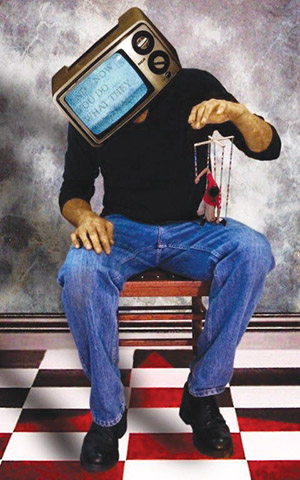
Whether it’s the World Economic Forum’s Great Reset, the United Nations’ Agenda 2030, or the government push for digital wallets and enforced medical procedures, it’s all about control and the puppet masters are wealthier, more powerful, and more determined than ever to take control over every aspect of our lives: from what we eat to what we drive to where we live and what we spend our money on.

One thing that eludes their control is consciousness. Consciousness is the great mystery of existence. We know what it means – to be internally and externally aware of one’s existence. But we know little about its source and how it operates with the human brain to manifest perceptions and levels of awareness. Is consciousness outside the brain? Does it reside within the brain? Are our brains acting as transceivers of consciousness, taking in signals and sending them out?

Do we have an individual consciousness that is part of a larger collective consciousness and how much influence over that collective do our thoughts, actions, and behaviours have? While philosophers, religious leaders, and scientists debate these questions, we all agree that we perceive our world according to our own perspectives and from a greater perspective that is true for us all. We might all look at a horse and react to it differently based on our individual past experiences with horses, but we all agree it’s a horse.

Psychic Epidemics – The Fall Before the Rise

Indeed it is becoming more obvious that it is not famine, not earthquakes, not microbes, not cancer but man himself who is man’s greatest danger to man, for the simple reason that there is no adequate protection against psychic epidemics, which are infinitely more devastating than the worst of natural catastrophes.
– Carl Jung, The Symbolic Life

Revolutions in higher consciousness are always predicated by periods of darkness and despair. The collective psyche must become so damaged it feels compelled to take action, break out of chains and through boundaries often imposed by external forces, and decide unequivocally to heal from an epidemic that, if not healed from, will destroy the host.

Belgian clinical psychologist Mattias Desmet is recognised as the world’s leading expert on the theory of mass formation psychosis as it applied to the COVID-19 pandemic. In his book The Psychology of Totalitarianism, he deconstructs the societal conditions that allow this collective psychosis to take hold.

During the recent COVID lockdowns, the work of Belgian clinical psychologist Mattias Desmet on ‘mass formation’ psychosis took centre stage as a way to explain the global insanity of the last few years. Desmet presented his theories about how free-floating fear and discontent serve to breed the kind of fear-based environment where common sense and cognitive functioning fly right out the window, replaced by a desperate need to find a common enemy upon which people could project that fear.

The article, “Mass Psychosis – How an Entire Population Becomes Mentally Ill,” which appears on the Academy of Ideas website, describes this condition as “an epidemic of madness and it occurs when a large portion of a society loses touch with reality and descends into delusions. Such a phenomenon is not a thing of fiction.”

The article puts forth two historical examples: the American and European witch hunts of the 16th and 17th centuries and the rise of totalitarianism in the 20th century. “When a mass psychosis occurs, the results are devastating.” Many have seen this unfold in their personal lives and on the global stage, when common sense and logic no longer exist, and you are either in the cult or you are the enemy.

Killing of the Mind

This psychological warfare has what are called psychogenic triggers, the most common being a flood of negative emotions such as fear, anger, or anxiety that “drives an individual into a state of panic.” Sometimes this leads to a psychotic break and a literal “re-ordering of one’s experiential world which blends fact and fiction, delusion and reality, in a way that helps end the feelings of panic,” notes the Academy of Ideas. In other words, those afflicted by this epidemic adapt by becoming delusional, and no amount of fact or logic will wake them from their trance-like condition.

This non-stop attack on the individual psyche also infects society as a whole, and totalitarianism becomes the next easy step for those seeking ultimate power and control. With much of the populace operating in disempowered states of consciousness, controlling and manipulating them is easy.

Arthur Versluis in The New Inquisitions says: “Totalitarianism is the modern phenomenon of total centralised state power coupled with the obliteration of human rights; in the totalised state, there are those in power, and there are the objectified masses, the victims.”

This objectification leads to menticide, a “killing of the mind,” notes psychoanalyst Joost Meerloo in his book, The Rape of the Mind, an analysis of brainwashing techniques and thought control in totalitarian states.

“Menticide is an old crime against the human mind and spirit but systemised anew. It is an organised system of psychological intervention and judicial perversion through which [a ruling class] can imprint [their] own opportunistic thoughts upon the minds of those [they] plan to use and destroy,” writes Meerloo.

Meerloo expounds on the presence, at this point in time, of effective means to manipulate society: cell phones, social media, the Internet, propaganda-spreading bots, and censorship algorithms.

The addictive nature of these technologies means that many people voluntarily subject themselves to propaganda with remarkable frequency. Think Stockholm Syndrome and capture-bonding of the masses. Add to this social isolation, as we saw with COVID lockdowns (we now possibly face ‘climate change’ lockdowns & blackouts), and the human being becomes a remote-controlled robot.

Clearing Muddy Waters

The collective consciousness is coloured by the energy we each and all put into the world around us when faced with increasing chaos, disorder, crises, and challenges. The Chinese word for ‘crisis’ comprises two Chinese characters meaning ‘danger’ and ‘opportunity’. There’s an opportunity to create a new order in times of chaos. But, of course, the puppet masters want to keep their power in any “new order.”

A Great Awakening and new consciousness revolution is pushing things forward in an accelerated manner. Its ultimate aim is to seek the light, but first, the shadows and darkness propel it from a point of stasis to the light at the end of a tunnel. That tunnel might be a long way off and involve a lot of suffering and pain, but the light is the key attractor point.

Our awareness as individuals in the body of humanity is rapidly changing and – though many members of that body grasp onto the ways of old – enough of us are tipping the scales in the other direction. We seek that light by our very nature because we know it lifts us. But only when we courageously break free of the capture-bonding to embrace our shadow selves can we truly become whole to advance the larger positive agenda of the consciousness revolution.

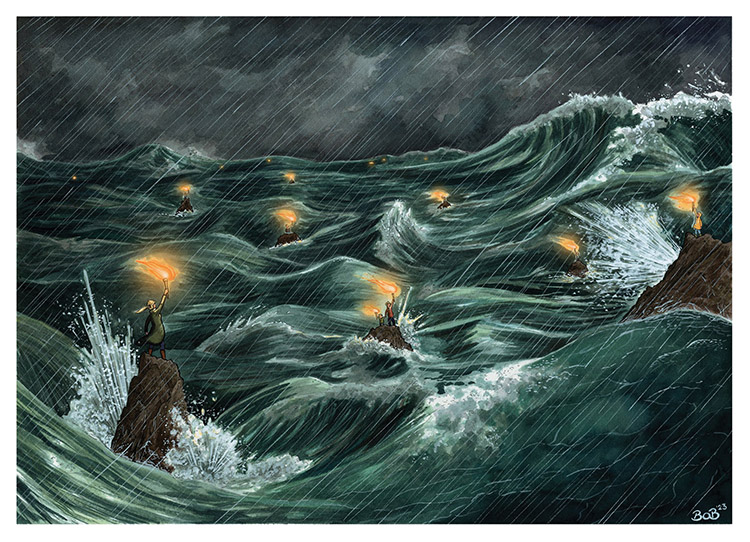
Credit:  Beacons by Bob Moran. bobmoran.co.uk

Shadow To Light

According to Jungian psychology, the shadow self is an archetype of the darker side of the unconscious mind composed of repressed ideas, weaknesses, desires, instincts, and shortcomings. When we ignore, deny, or avoid our shadow self, we project it onto others. That projection becomes the reality we exist within, made up of all the personality traits and emotions we find hard to accept because they don’t fit our egoic self-conception. It’s like each of us throwing poison into a pool we will all drink from, then each denying we threw in our share.

When we work with and embrace the shadow we can transform it into something beneficial for wisdom and growth – but only if we are courageous enough to undergo the alchemical process of intense self-examination. In today’s social media world, attention spans have diminished to the point of five-second video clips. Yet the idea of conscious evolution suggests that we all have the ability to become willing participants in the growth and expansion of culture, of society, of life itself.

We must become aware of the patterns of belief and behaviour that shape our internal and external worlds. These keep us from evolving out of our current state, one we might describe as a comfort zone of conscious awareness because we feel safe there, we know its stink and circumstance. We must do a lot of hard excavating work, like excising a cancerous tumour.

Moscow-born musician and writer Tessa Lena writes: “We, modern people, are very much like cells that are born into a body overtaken with metastatic cancer. We only know how to be a part of a sick body and, based on our immediate practical experience, we ascribe our starved state to ‘just how things are.’ But no. This is only how things are for a cell that exists in a body overtaken by metastatic cancer. This is not how things are by default. This is how they are now. And we are in a journey. We are swimming through sewage collectively, and we’ll get to our destination faster if we keep swimming forward…”

When we open our eyes and see the way things really are, including the dirt and muck we are currently swimming in, we can consciously choose to make effective and revolutionary change.

Levels of Consciousness

Dr. David R. Hawkins, author of the seminal Power Vs. Force: The Hidden Determinants of Human Behavior, writes of the 17 levels of human consciousness we experience throughout our lives.

From lowest to highest, these levels of consciousness are shame, guilt, apathy, grief, fear, desire, anger, pride, courage, neutrality, willingness, acceptance, reason, love, joy, peace, enlightenment. Few ever achieve the top level. We are told that one person operating at the highest level can offset the damage done by millions operating below. But we don’t have to all be Buddhas to change the world to that degree. Small ripples have big results, too.

Sadly, too many people operate in the realms of shame, guilt, and other lower-level vibrations, not realising they affect other people and energy fields around them and thus, the collective.

Those who seek to keep us down in the dirt will never shine any light on this truth. Once we learn and see, we cannot unlearn or unsee. That alone is the biggest threat to totalitarians poised to imprison us in fifteen-minute cities, control our behaviour through trackable digital currencies, or new insidious schemes to depopulate the planet of “useless eaters.”

Lessons from the Quantum Field

Max Planck, the father of quantum physics, stated: “All matter originates and exists only by virtue of a force. We must assume behind this force the existence of a conscious and intelligent Mind. This Mind is the matrix of all matter.”

The bizarre world of quantum physics indicates that we are part of this intelligent Mind that creates the matrix of matter. An act of observation affects a particle’s trajectory and behaviour.

Quantum entanglement posits that two particles that come in contact with one another will continue to affect each other’s ‘spin’ even across vast distances. Could this be applied to life on a grander, cosmic scale? If we, too, are entangled, then we are all a part of the web of connectivity, and this does not exclude our enemies. Our individual level of consciousness influences everyone around us, as theirs does everyone around them, and so on and so on. Raise enough individuals up the scale to higher consciousness and we offset the damage of many who vibrate lower.

We cannot rely only on the high-vibers to save us. We must find our inner light and let it shine brightly right where we are. Two powerful flashlights can light up a dark room. A million or more can light up the entire world.

Get the issue this article appears in

The Great Awakening: Higher Self, Higher World

Writer, artist, and journalist Martin Geddes writes succinctly of the times at hand and what is required to rise to their challenges in his book, Open Your Mind to Change: A Guidebook to the Great Awakening.

Geddes unravels the forces behind the emergence of the ‘Great Reset’ – a plan offered up by the technocratic elite to maintain power – and the concurrent Great Awakening.

“The unacknowledged reality is that there is a spiritual war raging around us, and it can be seen in classical terms of light versus dark. The good news is that the light is winning, as it always eventually must. For however you describe and define it, the universe fundamentally is interconnected and seeks unity. Evil always collapses under its conceit that it can maintain separateness. It is like a physics of morality: it takes non-linear energy to compartmentalise us and resist the unifying power of love.”

Geddes refers to his own experiences during modern crises such as COVID, the 2020 US election, vaccine mandates, and the Ukraine conflict. A personal revolution of consciousness led him to a more illumined perspective on the ongoing spiritual war, and he is both hopeful and realistic:

“It took us 6,000 years to get into this mess, so fixing it won’t be quick or painless. However, just as there is a negative ‘occult’ power in the world that enslaves us, there are also unseen positive forces for good.”

Perhaps we cannot fight against what we don’t want. The “fighting against” creates resistance to the expansion of consciousness. It is negative energy, tight and constricted. It adds low-level vibratory energies into the collective quantum field, which is then shaped to become external reality.

Now is the time to awaken and choose a higher path that does not involve “warring against” but “welcoming into.”

Imagine duelling lighthouses so engrossed in trying to outshine each other in a “battle of the beams” that they forget to shine their lights outward to the sea and end up causing untold ships to crash against the rocky shores. Both are at fault because their focus was on trying to control the other, to suppress or oppress, rather than to combine energies and save a lot of lost souls.

We should strive to attain a higher state of consciousness, to grow and become and seek and speak truth, and to emit light and counter shadow. We don’t become the darkness we dissipate. Instead, we become the light that – when shined into the darkness – dissipates it.

If enough of us do this, there will be little darkness left to fight and dissipate. The Great Awakening is at hand. 

This article was published in New Dawn Special Issue Vol 17 No 5.

If you appreciate this article, please consider subscribing to help maintain this website.

Sources

academyofideas.com/2021/08/mass-psychosis-how-an-entire-population-becomes-mentally-ill/
Martin Geddes, Open Your Mind to Change: A Guidebook to the Great Awakening.
David Hawking, Power vs. Force: The Hidden Determinants of Human Behavior, Hay House, 2014.
tessa.substack.com/p/swimming-with-zombies-how-to-protect
verywellmind.com/what-are-jungs-4-major-archetypes-2795439

© New Dawn Magazine and the respective author.

© Copyright New Dawn Magazine, www.newdawnmagazine.com. Permission granted to freely distribute this article for non-commercial purposes if unedited and copied in full, including this notice.

© Copyright New Dawn Magazine, www.newdawnmagazine.com. Permission to re-send, post and place on web sites for non-commercial purposes, and if shown only in its entirety with no changes or additions. This notice must accompany all re-posting.

Upcoming Class Releasing The Hidden Splendour™ on February 17 & 18

Releasing The Hidden Splendour™️

“Within each person is a unique goodness that will come forth”

February 17 and 18, 2024
Mara Pennell H.W., Monitor

Emotional blocks present us with challenges that can lead to the most profound insights. Releasing the Hidden Splendour™ teaches how to trade in painful or unpleasant feelings for insight and freedom by practicing the Joseph Technique™. Employing the principles of Ontology in a practice of loving and thoughtful self reflection we come to release the past and embrace our true heritage of freedom and grace.

Register Today !


For further information, contact Mara.Pennell@theprosperos.org

Tarot Card for January 22: The Five of Disks

The Five of Disks

The Lord of Worry is most aptly titled, for when this card comes up in a reading, there looks to be financial, material or domestic trouble on the horizon. Something poses a threat to your overall security. This might be an unexpected expense, or job worries, or maybe even a disturbance in your family life.There will always be something to worry about, when the Five of Disks comes up. But there’s one important thing to bear in mind – whatever is causing the problem is much more of a threat than it is a reality. Worrying about it might just make it worse than it needs to be!When the Lord of Worry is about, anxiety is the emotion of the moment. We look to the future and we see something nasty ahead. Then we sit and worry about it. Try to remember – what you put your attention on grows. So if you worry about your overdraft, it will get bigger! That’s not, of course, to say you should not do all you are able to DO, in an awkward situation – just that once you have, there’s no point in worrying about it.Sometimes we go through a stage in our lives where we feel as though, whatever good comes to us, it is bound to be undermined and darkened by negativity and sadness, that we cannot help but be disappointed. Yet just by holding that view, we invite negativity in, to add to the real problems we already had.It isn’t easy to try to be accepting and positive and trusting when life is giving us a hard time – but accept we must, if we don’t want to make things worse!So – the Five of Disks indicates a possible threat to our security. It is important not to feed that possibility with our own fear. Fear is a powerful emotion. It can rule if we let it. When this card comes up, remember that disturbance is possible – not probable. Do all you can to avert it.

Story: It Will Pass

It Will Pass 
A student went to his meditation teacher and said, “My meditation is horrible! I feel so distracted, or my legs ache, or I’m constantly falling asleep. It’s just horrible!”

“It will pass,” the teacher said matter-of-factly.

A week later, the student came back to his teacher. “My meditation is wonderful! I feel so aware, so peaceful, so alive! It’s just wonderful!”

“It will pass,” the teacher replied matter-of-factly.

Author Unknown 

 AN OPPORTUNITY FOR DAILY REFLECTION BROUGHT TO YOU BY THE SCHOOL OF PRACTICAL PHILOSOPHY

Consciousness, sexuality, androgyny, futurism, space, the arts, science, astrology, democracy, humor, books, movies and more