I covered the Jonestown massacre. Donald Trump is giving me flashbacks

Opinion//Open Forum

As the anniversary of Jonestown approaches, I can’t help but see ominous echoes of Jim Jones in Trump

Peoples Temple founder Jim Jones speaks at San Francisco’s Glide Church in 1975. On Nov. 18, 1978, Jones led more than 900 of his followers in a horrifying ritual of murder and suicide in Jonestown, Guyana.Janet Fries/Getty Images

By Don Lattin, Contributor Nov 15, 2025 (SFChronicle.com)

Gift Article

Donald Trump has long given me flashbacks.

When I was a young reporter in the 1970s and 1980s, I covered the “cult wars” of that era. I followed the controversies surrounding the South Korean evangelist Sun Myung Moon and the ill-fated saga of the Rev. Jim Jones.

The most notorious cult leader of the 1970s, Jones ran the San Francisco’s Peoples Temple, which fled the city to a remote South American jungle compound in Guyana named Jonestown. On Nov. 18, 1978, he led more than 900 followers in a horrifying ritual of murder and suicide. 

As we approach the anniversary of that massacre, I can’t help but see ominous echoes of Jim Jones in Trump.

U.S. military personnel unload bodies of Jonestown massacre victims from a helicopter at the Georgetown, Guyana, airport on Nov. 23, 1978. Associated Press

Those echoes first surfaced in my mind when Trump became a serious presidential contender. They only got louder in his subsequent runs. That’s when Trump offered his “I was indicted for you” defense to his MAGA base. “In 2016, I declared: I am your voice. Today, I add: I am your warrior. I am your justice. And for those who have been wronged and betrayed, I am your retribution.” 

Many people forget that for most of Jones’ life, he was not considered a “crazy cult leader.” An ordained minister in the Disciples of Christ church, he was seen as a respected — albeit feared — progressive political force in San Francisco. 

Like Trump, the Peoples Temple leader had undeniable messianic tendencies. Jones compared himself to God or Jesus Christ. He preached a left-wing message of “apostolic socialism.” Only he could save his followers from the CIA and the cruelties of a corrupt capitalist regime. 

To my ears, that paranoid, grandiose message sounds like the political flip side of Trump’s constant boasts that only he can save his aggrieved right-wing base from the oppressions of the “deep state” and its corrupt left-wing politicians. 

Trump and some of his key supporters increasingly see the hand of God in the president’s authoritarian crusade for social salvation, often citing how he barely survived last year’s assassination attempt in Butler, Pa.  

“Many people have told me that God spared my life for a reason,” the MAGA savior said. “And that reason was to save our country and to restore America to greatness.” 

Trump strategist Steve Bannon recently predicted that — despite the constitutional ban against it — Trump will be chosen to serve a third term in 2028. 

“He’s very imperfect,” Bannon told the Economist. “He’s not churchy. But he’s an instrument of divine will.” 

Election Day 2028, as it happens, falls on the same month as the 50th anniversary of Jonestown. 

* * * 

I’m not the only one with knowledge of the cult wars who sees these parallels.

Jonestown Institute founder Fielding McGehee told me he got numerous calls and emails from former Peoples Temple members back in 2016 when Trump famously declared, “I could stand in the middle of Fifth Avenue and shoot somebody, and I wouldn’t lose any voters.” 

“The message that they repeated over and over again was, ‘I just heard the voice of Jim Jones,’” McGehee said. 

Former Peoples Temple member Jordan Vilchez is also among those who see frightening similarities between Jones and Trump. 

She noted in a 2021 essay that temple members publicly espoused principles of freedom yet slavishly obeyed a leader who “spewed cynicism and disdain” toward anyone who opposed him. “We were browbeaten and filled with fear and despair rather than a vision of vibrant possibility and hope.” 

Both Trump and Jones, Vilchez wrote, obsessed with power over others, sowed division and confusion, crushed dissenters, exploited the shadow side of followers, cultivated a persecution complex and shaped a cult-like following. 

Anti-cult activist Steve Hassan, a former member of Moon’s Unification Church, also told me he has Trump-induced flashbacks from his time as a “Moonie.” 

Hassan, founder of the Freedom of Mind Resource Center, recalled an infamous moment early in Trump’s first term, when television cameras recorded his cabinet members heaping slavish praise upon the great leader. “We thank you for the opportunity and the blessing to serve your agenda,” Chief of Staff Reince Priebus said

The scene reminded Hassan of private meetings with Moon back in the 1970s.

“All of us in the room understood how blessed we were to be in Moon’s presence,” he wrote in his book “The Cult of Trump.” “We adored him as the greatest man who ever lived. If we had doubts or criticisms, we were taught to block, or ‘thought stop,’ them. If we dared disagree or point out inconsistencies, we would be kicked out.” 

America had a four-year break from the messianic madness of Donald J. Trump, but his volatile mix of politics, prophecy and self-promotion has continued with the Second Coming of his Presidency. 

It reached a fever pitch following the Sept. 10 assassination of Charlie Kirk, the influential Christian nationalist, Trump ally and instant martyr for the religious right. 

Trump plays with fire as he seeks to inspire Christian nationalists and other like-minded sects who see an apocalyptic war between the forces of good and evil. 

Rev. Moon died in 2012, long after declaring himself to be the new Christian messiah. 

Today, his son, Hyung-Jin “Sean” Moon, runs a Unification Church splinter group called Rod of Iron Ministries. Headquartered in Newfoundland, Pa., he and his followers worship with AR-15 rifles and proudly wear crowns of golden bullets. They seek alliances with MAGA and other right-wing nationalist sects and hold militia-type trainings in the rolling hills of a state founded by Quakers preaching a message of brotherly love. 

We’ve seen in recent years how outbursts of violence can come from the radical right, the far left or from people so deranged that it’s hard to place them on the political spectrum. 

Trump immediately responded to Kirk’s murder by turning up the temperature and declaring war on “left-wing lunatics.” 

Where we go from here is anyone’s guess. But, in my experience, when you throw apocalyptic prophecy and “spiritual warfare” into the political mix, don’t expect calm from troubled disciples. 

Don Lattin wrote about the Peoples Temple for the San Francisco Examiner in 1978 and was the Chronicle’s religion writer from 1988 to 2006. This piece is drawn from his new Substack series, “Messiahs I Have Known.” 

Nov 15, 2025

Don Lattin
An Open-Ended Conversation with Chris Bache

New Thinking Allowed with Jeffrey Mishlove Nov 16, 2025 Chris Bache, PhD, is professor emeritus in the department of Philosophy and Religious Studies at Youngstown State University in Ohio where he taught for 33 years. He is also adjunct faculty at the California Institute of Integral Studies, Emeritus Fellow at the Institute of Noetic Sciences, and on the Advisory Council of Grof Legacy Training. Chris is the author of Lifecycles: Reincarnation and the Web of Life; Dark Night, Early Dawn; The Living Classroom: Teaching and Collective Consciousness; and LSD and the Mind of the Universe: Diamonds from Heaven. His website is chrisbache.com. Chris shares the transformative insights gained from his twenty-year journey with high-dose LSD sessions. He reflects on the evolution of human consciousness, reincarnation, and the collective psyche as part of a larger cosmic unfolding. Bache explores how psychedelic experiences illuminate the nature of compassion, individuality, and humanity’s shared spiritual destiny. 00:00:00 Introduction: awakening compassion and the bodhicitta vow 00:02:00 Early years: from Catholic seminary to spiritual exploration 00:07:00 Reincarnation: evidence and implications for consciousness 00:11:00 Entering LSD research: influence of Stan Grof and Ian Stevenson 00:17:00 Collective psyche: encountering humanity’s shared suffering 00:23:00 No private karma: the interwoven field of consciousness 00:31:00 Archetypes: beyond human forms to cosmic structures 00:40:00 The diamond soul: fusion of all lifetimes into radiant unity 00:49:00 Integration: lessons on transcendence, embodiment, and teaching 01:08:00 Conclusion: serving humanity through expanded consciousness New Thinking Allowed host, Jeffrey Mishlove, PhD, is author of The Roots of Consciousness, Psi Development Systems, and The PK Man. Between 1986 and 2002 he hosted and co-produced the original Thinking Allowed public television series. He is the recipient of the only doctoral diploma in “parapsychology” ever awarded by an accredited university (University of California, Berkeley, 1980). He is also the Grand Prize winner of the 2021 Bigelow Institute essay competition regarding the best evidence for survival of human consciousness after permanent bodily death. He is Co-Director of Parapsychology Education at the California Institute for Human Science. (Recorded on Sunday, October 26, 2025)

What is anocracy?

  • Google AI Overview

An anocracy is a hybrid government that combines features of both democracy and autocracy, meaning it is neither fully democratic nor fully autocratic. These regimes are often in a state of transition and are characterized by a mix of democratic institutions and authoritarian practices, which can lead to political instability. 

  • Hybrid system: An anocracy has elements of both systems. For example, it may have competitive elections but lack government accountability or have limited political freedoms. 
  • Transitional phase: An anocracy can be a transitional phase between democracy and autocracy or vice versa. 
  • Vulnerability: These hybrid regimes are often vulnerable to political instability and may have high levels of political violence. 
  • Examples: Countries like Libya, Egypt, and Yemen are sometimes cited as examples of anocracies, particularly after the Arab Spring, as they retained many authoritarian practices despite democratic reforms. 
  • Instability: Some studies have found that countries with more democratic features than autocratic ones are at a higher risk of civil war and instability. 

What is HeartMath?

  • Google AI Overview

HeartMath is a science-based practice and program that teaches techniques for managing stress and improving emotional balance by creating coherence between the heart, brain, and nervous system. It uses tools like heart-focused breathing and emotional self-regulation to help people reduce stress responses, increase resilience, and improve overall well-being. The practice is based on the idea that the heart’s physical and electromagnetic signals provide intuitive guidance, and by learning to synchronize with these signals, individuals can make better decisions.  

How it works

  • Heart-focused breathing: A core technique that uses a specific breathing pattern to help quickly shift from a stress response to a calm state. 
  • Emotional self-regulation: Learning to shift emotional states and manage stress in the moment through the use of focused techniques. 
  • Coherence: The goal is to achieve a state of “coherence,” where the heart, brain, and nervous system are synchronized and working together harmoniously. This is achieved through a combination of techniques, including emotional shifts that create a smooth, “sine-wave-like” pattern in heart rate variability (HRV). 
  • Biofeedback: HeartMath offers technology, such as sensors, that provides real-time feedback on your heart’s rhythms, helping you learn to control your physiological state. 

Benefits

  • Reduced stress levels
  • Improved emotional balance and resilience
  • Increased clarity, focus, and cognitive performance
  • Enhanced creativity and intuition
  • Better sleep and overall mood improvement 

(Inspired by John Atwater, H.W.)

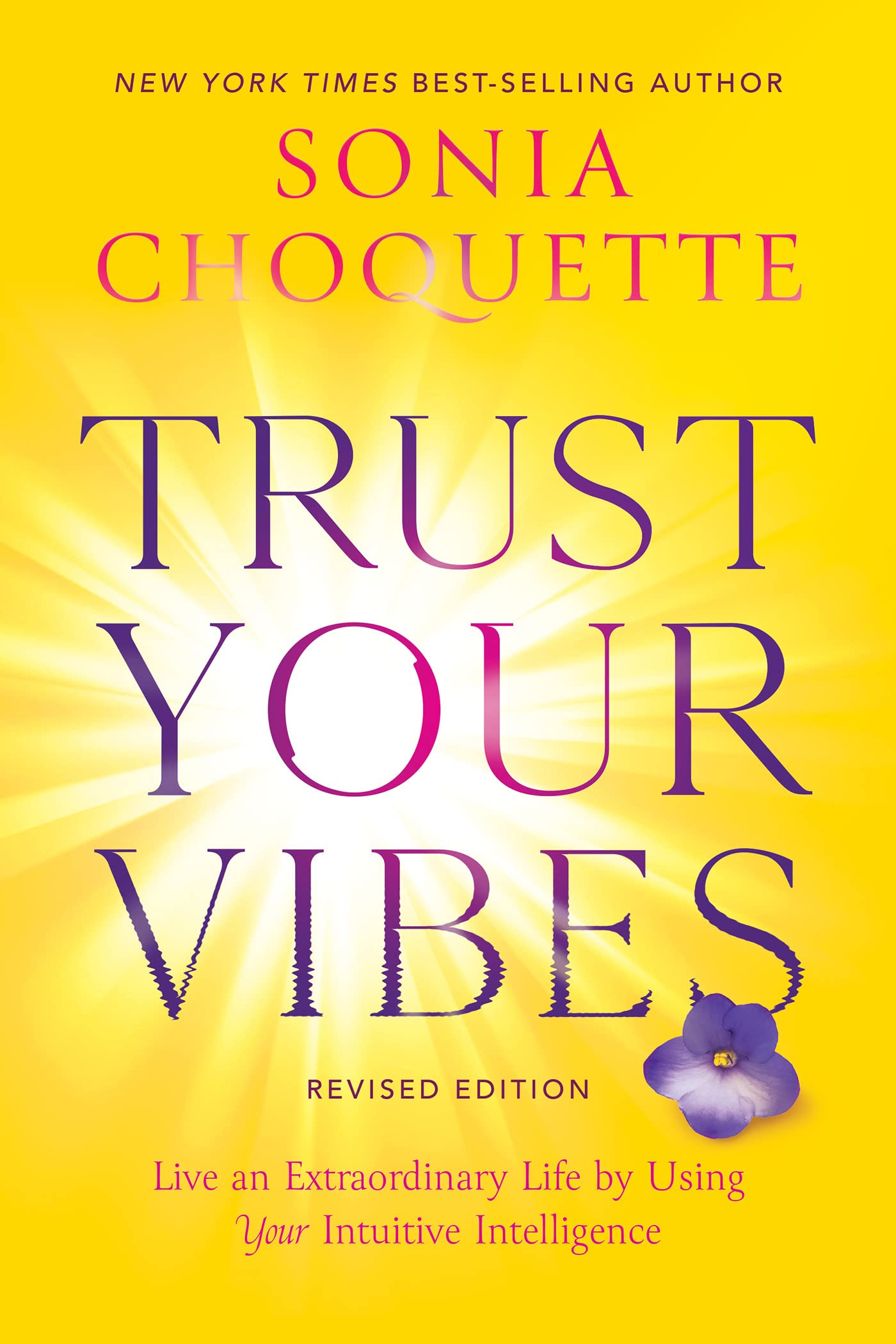
Book: “Trust Your Vibes (Revised Edition): Live an Extraordinary Life by Using Your Intuitive Intelligence”

Trust Your Vibes (Revised Edition): Live an Extraordinary Life by Using Your Intuitive Intelligence

Sonia Choquette

Awaken your intuition, trust your vibes, and create your best life with this revised and updated edition of the self-help classic by spiritual teacher Sonia Choquette.If you want an easier, more energetically uplifting, and satisfying way of life-it all comes down to trusting your vibes.Originally published in 2004, best-selling author, speaker, and spiritual teacher Sonia Choquette has updated the book to share new stories and tools used by those who learned to tap in to their intuition and positively change their lives.Your intuition supports your creativity, helps heal your emotional wounds, and calms your anxious and uncertain heart. It brings you peace of mind and shows you how to live in a higher, more harmonious way. To fully enjoy your life and to access the innate sense of security, confidence, and courage you deserve, trust your vibes.”Trust your vibes and read this book! The straightforward, practical advice will show you how to use your most valuable asset-your sixth sense.”- Cheryl Richardson, the New York Times best-selling author of The Art of Extreme Self-Care

About the author

Sonia Choquette

Global author and speaker, Sonia Choquette is a highly regarded expert in the field of intuition. She is a world-renowned intuitive guide and spiritual teacher.

Author of 27 New York Times or International best sellers, her books have been published in 37 languages and 40 countries and have been read by over one million people.

Sonia’s work has been featured on Hay House radio, Oprah radio, Inc., ABC, FOX, Shape, Gaiam, and Wall Street Journal Live. Her teachings have attracted the love and admiration of social media followers across youtube, instagram, facebook and on her intuition-themed podcast “It’s All Related”, which she co-hosts with her daughters, Sonia & Sabrina Tully.

Sonia currently resides in France, and enjoys bringing all of her intuitive experience and human understanding to help her global audience reconnect with their Spirit, Guides, and inner vibes. Her mission is to help others feel whole by using all of their senses to create a life that is intuitively guided, empowered, authentic, and meaningful.

(Goodreads.com)

(Recommended by John Atwater, H.W.)

Book: “Modern Mystics: An Introduction”

Modern Mystics: An Introduction

Bernard McGinn

Mysticism is not just a phenomenon of the past, but has been alive and flourishing in Chistianity, Judaism, and Islam over the past century, as well as in many of the other religious traditions. Best understood as a search for the transforming presence of God, the mystical tradition has necessarily undergone changes and developments as it has confronted modernity and its frequently anti-religious stance. Making use of ten exemplary mystics of the 20th century, including Catholic, Protestants, and Jews, this book argues for the continued importance of mysticism in the modern world and studies its ongoing transformations.

About the author

Bernard McGinn

Bernard McGinn, the Naomi Shenstone Donnelley Professor Emeritus at the University of Chicago Divinity School, is widely regarded as the preeminent scholar of mysticism in the Western Christian tradition. He has also written extensively on Jewish mysticism, the history of apocalyptic thought, and medieval Christianity.

A cum laude graduate of St. Joseph’s Seminary and College in Yonkers, NY, he earned a doctorate in theology from the Pontifical Gregorian University in Rome in 1963 and a PhD in history from Brandeis University in 1970. After teaching theology for a year at The Catholic University of America, he joined the Chicago faculty in 1969 as an instructor in theology and the history of Christianity and was appointed a full professor nine years later. Dr. McGinn was named to the Donnelley chair in 1992. He retired in 2003.

The recent recipient of a Mellon Foundation Emeritus Grant, he also has held a Fulbright-Hays Research Fellowship, an American Association of Theological Schools research award, two research fellowships for work at the Institute for Advanced Study at Hebrew University in Jerusalem, a research fellowship at the Institute for Ecumenical and Culture Research at St. John’s University, and a Lily Foundation Senior Research Fellowship.

Dr. McGinn has delivered invited lectures at some one hundred colleges and universities in North America, Europe, and Israel. He is a fellow of the American Academy of Arts and Sciences and of the Medieval Academy of America.  Past-president of the International Society for the Promotion of Eriugenean Studies, the American Society of Church History, and the American Catholic Historical Association, he is member of the board of The Eckhart Society. He served as editor-in-chief of the Paulist Press series Classics of Western Spirituality and currently serves as a member of the editorial boards of Cistercian Publications, The Encyclopedia of World Spirituality, The Collected Works of Bernard Lonergan, and Spiritus.

(Inspired by John Atwater, H.W.)

The Mythicist Perspective on Jesus and Christianity with David Fitzgerald

The Funny Thing About Religion Oct 5, 2025This is the full interview with David Fitzgerald recorded for the film BATMAN & JESUS    • BATMAN & JESUS – Determining Canon in Comi…   in 2015. Topics of Discussion: 00:00 Evidence for a Historical Jesus 00:32 Evolution of Christianity 02:33 Mystery Cults 03:53 Roots of Christianity 05:02 Effect of the Gospel of Mark 07:00 The Infancy Gospels 07:51 The Synoptic Problem 09:42 The Jesus Paradox 10:44 Historical Inaccuracy 11:35 Jesus and Barabbus 13:29 Historicists vs. Mythicists 15:35 Evolution of Jesus 16:48 Kryptonite for Christianity 17:34 Skepticism 18:19 Bullshit Is the Enemy 18:39 Reinventing Jesus 20:21 Medieval and Renaissance Depictions of Jesus 20:52 The Holy Trinity 21:49 Rejection of Mythicism by Atheists 22:48 Paradigm Shifts in Biblical Studies 24:32 Historicity of the Prophets 25:21 Conflating Truths 25:54 Cut and Paste Jesus 26:13 Choose Your Own Jesus 26:45 Humility 27:26 Biblical Historians and Jesus Mythicism 28:04 I Don’t Know, and Neither Do You David Fitzgerald is a prominent mythicist author, historical Jesus researcher, public speaker, and atheist activist, with more than two decades of experience scrutinizing the question of Jesus’s historicity. A graduate of California State University, Fresno, and former associate member of CSER (Committee for the Scientific Examination of Religion), he has lectured globally at universities, secular conferences, and religious forums. He’s appeared on The Atheist Experience and in documentaries like Batman & Jesus, My Week in Atheism, and Marketing the Messiah . David’s most influential works include NAILED: Ten Christian Myths That Show Jesus Never Existed at All, which presents ten foundational arguments against a historical Jesus , and the expansive three‑volume series Jesus: Mything in Action, part of The Complete Heretic’s Guide to Western Religion series . His writing has received accolades from scholars like Richard Carrier, Robert M. Price, and Frank R. Zindler . A committed secularist, David has served on boards of San Francisco Atheists and the Center for Inquiry – San Francisco, and has co-founded secular cultural events including San Francisco’s first Atheist Film Festival and Evolutionpalooza, the Bay Area’s oldest Darwin Day celebration For more visit: https://www.davidfitzgerald.org/

Tolstoy on falling in love

Tolstoy in 1908

“We are asleep until we fall in Love!”

~ Tolstoy in War and Peace

Count Lev Nikolayevich Tolstoy, usually referred to in English as Leo Tolstoy (September 9, 1928 – November 20, 1920), was a Russian writer. He is regarded as one of the greatest and most influential authors of all time. Source: Wikipedia

Leo Tolstoy at age 20, c. 1848

Book: “Our Polyvagal World: How Safety and Trauma Change Us”

Our Polyvagal World: How Safety and Trauma Change Us

Stephen W. PorgesSeth Porges

The creator of the Polyvagal Theory explains the principles in simple terms that are accessible to all. Since Stephen Porges first proposed the Polyvagal Theory in 1994, its basic idea―that the level of safety we feel impacts our health and happiness―has radically shifted how researchers and clinicians approach trauma interventions and therapeutic interactions. Yet despite its wide acceptance, most of the writing on the topic has been obscured behind clinical texts and scientific jargon. Our Polyvagal World definitively presents how Polyvagal Theory can be understandable to all and demonstrates how its practical principles are applicable to anyone looking to live their safest, best, healthiest, and happiest life. What emerges is a worldview filled with optimism and hope, and an understanding as to why our bodies sometimes act in ways our brains wish they didn’t. Filled with actionable advice and real-world examples, this book will change the way you think about your brain, body, and ability to stay calm in a world that feels increasingly overwhelming and stressful.

(Goodreads.com)

(Contributed by John Atwater, H.W.)

Who Does This Work?

(oldnewmethod.com)

Those who gather the courage to take the next step and join this work discover something unexpected: despite their differences, they forge the closest friendships. What brings them together runs deeper than age, culture, or circumstance, for it is rooted in the very core of their being.

Through the years, I’ve marveled at the wide variety of people drawn to this work. It defies all expectations. Science attracts analytical minds, poetry attracts lovers of language, law attracts those who think in rules—but this work transcends such categorization. I’ve watched engineers and artists tackle it with equal passion, entrepreneurs and monks, teenagers and retirees, the religious and the skeptical, the successful and the struggling. I’ve traveled this path alongside those looking up from hardship with hunger as well as those looking down from privilege with hollowness. Their backgrounds always proved irrelevant. Despite their differences, each arrived at the same impasse, a point where neither their own efforts nor any conventional knowledge could help them break through. In search of a way out, they came from the farthest corners of human experience to the same gateway.

Take a young man newly-graduated from school, faced with the daunting prospect of charting his future. He watches his peers make consequential decisions with enviable certainty. One pursues a finance degree, another plans a backpacking trip through South America, and a third joins an ashram in India. He’s baffled at their confidence and feels paralyzed by indecision. The finance path seems soulless, the travel aimless, the spiritual quest pretentious. As the pressure to take his next step mounts, he realizes with growing despair that he lacks the tools to navigate these pivotal choices. His education has prepared him for exams, not for real life decisions. How can he know himself and use that knowledge to navigate through life? Through the door of this frustration, he arrives at this work.

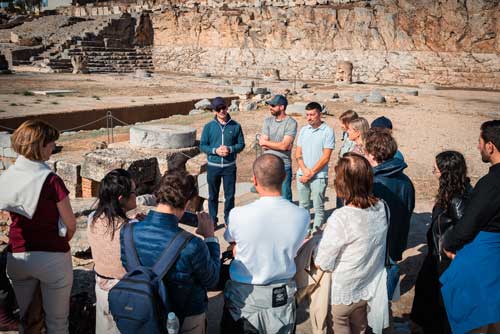
ONM Students in Eleusis

Old New Method practitioners visiting Eleusis, Greece

Or take a mother yelling at her five-year-old daughter for spilling juice—the very same reaction her own parents had in similar incidents and which she loathed as a child. The realization hits her like a physical blow. As she watches her daughter’s tears mirroring her own childhood pain, she experiences a desperate desire to be different. Years of therapy hadn’t prevented her from repeating the very patterns she’d sworn she would break. But there must be a way to break free from the grip of these habitual behaviors, to stop them making decisions on her behalf. Through a different doorway, she arrives at the same threshold.

In quite different circumstances, a man in mid-life finds himself sitting in a cold prison cell. The drug smuggling job was supposed to be his ticket out of poverty, a one-time risk for a lifetime of financial stability. Instead, it’s landed him a year-long sentence and a criminal record that will haunt him forever. As he stares at the gray walls, he replays the sequence that led him here: the dead-end jobs, the mounting debts, the desperation that made an illegal shortcut seem justifiable. How can he escape being constantly dragged along by circumstances? How can he learn to respond rather than react? This painful epiphany, born in the stark reality of his confinement, opens yet another doorway.

Or take an ambitious executive who had rushed to the hospital to see her dying father. He had been hit by a car and suffered injuries from which he wouldn’t survive. His last words—”Is this all life has to offer?”—echo in her mind as she drives home, sobbing. The shock triggers a self-questioning she’d repressed till now. Who is she sobbing for? Her father, who no longer feels pain, or herself? And don’t his dying words put her entire life in question? The relentless climb up the corporate ladder, the carefully curated education for her children, the meticulously planned family vacations—she’s followed society’s blueprint for success to the letter, yet her father’s final doubts suggest a fundamental flaw in this approach. As she pulls into her driveway, the sight of her perfect suburban home suddenly feels hollow. What does life really have to offer? She finds yet another doorway.

As another example, take a retired man sorting through his belongings, trying to thin out what he’s accumulated. He finds a photo of himself in his prime—confident, ambitious, full of dreams. The gulf between that vibrant figure and his current self opens like a chasm. How did all those dreams amount to so little? Where did all the years go? And what can be done with the little time remaining? His awakening isn’t too late. From this soil may yet grow something that couldn’t come any other way. He, too, finds himself with the others—the graduate, the mother, the prisoner, the executive, at the same threshold.

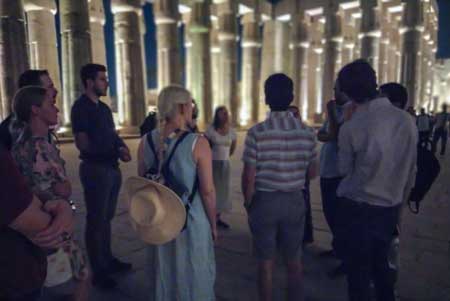
ONM Students in Luxor

Old New Method practitioners visiting Luxor, Egypt

Those who gather the courage to take the next step and join this work discover something unexpected: despite their differences, they forge the closest friendships. What brings them together runs deeper than age, culture, or circumstance, for it is rooted in the very core of their being. And in this shared effort, the diversity that might have separated them becomes their greatest asset. The artist sees what the engineer cannot; the retiree recognizes what the teenager overlooks. They become, for one another, both mirror and guide. Despite having come from the farthest extremes of human experience—despite having suffered the isolation of their search—once they enter, they no longer walk alone.

← Previous Post

Eleusis Ruins Panoramic

About the Founder

Asaf Braverman is the founder of the Old New Method, a worldwide community of people dedicated to self-development.

Consciousness, sexuality, androgyny, futurism, space, the arts, science, astrology, democracy, humor, books, movies and more