Author Frankie Frankeny, with John Casey, Foreword by Jim Obergefell and Evan Wolfson
Celebrating the history of the LGBTQ+ community’s marriage equality movement from the 1950s until today, this triumphant journey is presented in compelling stories of the pioneering couples, along with winning photographs.
This beautiful, moving tome honors the brave LGBTQ+ couples, activists, and allies who fought for and ultimately gained the right to marry. The chronological presentation of 100 inspiring stories of these dauntless partners up to the strategists of today, recount how they were instrumental in bringing about this basic civil right. Beginning in the pre-1970s era when gay couples were nearly invisible, the story then shifts to the growing activism of the 1980s and 1990s, continues with the landmark Supreme Court ruling in 2015, which granted full marriage equality across the nation, and concludes with an exploration of current issues. These moving profiles, along with archival images, feature couples from major court cases, such as Jim Obergefell and John Arthur, along with well-known personalities whose narratives helped draw attention to marriage equality, including Cynthia Nixon and Christine Marinoni, George and Brad Takei, and Ellen DeGeneres and Portia de Rossi.
About The Authors
Frankie Frankeny is the founder of GoodDoxie Studios and a photographer/director. She has documented the marriage equality movement since 2004. Frankeny has also produced numerous award-winning books. John Casey is the senior editor/writer of The Advocate. Civil rights activist Jim Obergefell’s court case won marriage equality nationwide. Evan Wolfson is the author of Why Marriage Matters. Marc Solomon and others were involved in the fight for marriage equality.
Several weeks ago, I wrote a post about kids who see through the abuser. To my surprise, it was the most popular piece I’d put up in a long time; a lot of my readers are trying to see through kids’ eyes. How do young people form their understandings of what is happening when their father (or step-father) abuses their mother? And how can they learn to see through the abuser’s lies and manipulations?
In the discussion that grew out of that post, many mothers shared their stories of children who weren’t seeing through the abuser. Unfortunately, that experience is a common one also. I’m going to examine some of the reasons in this post, which will be in two parts.
(In order to keep my language as simple as possible, I’m going to refer to the abuse perpetrator as a “batterer,” even if his abuse is almost entirely about emotional battering rather than physical or sexual violence. I’m using this term because I’m discussing homes where the primary source of trauma to the kids is Dad’s abuse of Mom, not either parent’s abuse of them directly — which is a different subject.)
1) The pursuit of safety
Kids who grow up around domestic abuse are afraid. The primary thing they live in dread of is the next time that their father will verbally rip Mom to shreds. They hate watching that happen; people who haven’t lived it tend to underestimate how awful these incidents are for kids. For most kids living with a batterer, the number one source of their trauma is this accumulation of acts of psychological cruelty towards their mothers that they’ve had to witness. It eats them up inside to watch Mom sent into misery and robbed of her dignity over and over again.
But they’re scared about other things too, mostly emotional dangers. They’re scared that Dad is going to rip into them directly, or into one of their siblings. They’re scared that he’s going to ruin mealtimes, ruin birthdays, ruin Christmases and other key holidays. They’re scared that he’s going to punish them by taking key freedoms away, causing them to miss out on things they really wanted to be part of. (And a large proportion of batterers punish the whole family when they’re mad at Mom, or when they’re mad at one of the kids. So everyone knows they could pay a big price when he explodes, regardless of which family member he’s actually upset with.)
If he becomes physically frightening at times – as most domestic abusers do – then the kids have all of that additional fear. And as with his cruelty and verbal abuse, the kids usally worry about Mom most of all, since she’s his favorite target. But they worry about all of it.
So kids are scrambling internally, desperate for emotional – and sometimes physical or sexual – safety. And there’s no safe place to stand, so they tend to keep trying different positions over the years, hoping to find a good one.
Position 1: Side with Mom
There are two key advantages on this side. First, you have the emotional benefits of feeling closer to Mom, and in a home where Dad is a batterer she’s your key hope for nurturing and genuine comfort. (As opposed to the self-serving, manipulative form of comfort that comes from the abuser).
Second, you feel better because you know you’re doing the right thing. Kids care a lot about right and wrong, and about fair and unfair, from a very young age. Standing against injustice matters to them. On a deep level, kids feel better about themselves if they stand with Mom.
But there are also costs. The abuser stops giving you much attention when he perceives your bond with Mom, and may be target you for outright insults and other mistreatment. It hurts to be on the outs with him, especially because he’s the one with the power. (Abuse creates a huge power imbalance in the abuser’s favor.) He’s the one who determines who gets which freedoms and privileges; he can make your day go well or terribly. Plus he may shame you about being close to Mom, and if you’re a boy he may call you a Mama’s Boy.
If any of your siblings are allied with the abuser, they start to look down on you. You’re a Loser, siding with Mom; Dad is the cool and powerful one, Winners side with him.
Position 2: Side with the abuser
So at some point you’re likely to try standing here. Now you’re linked to power, which feels good; that’s why kids try to be accepted by the Cool Crowd at school. Some concrete things are likely to go better, because Dad isn’t targeting you. More freedom, more privileges. You’re feeling less afraid for yourself (though you may still worry about Mom or your siblings); if Dad gets scary or violent, you know it’s not likely to be directed at you.
And on a superficial (and therefore addictive) level, you’re feeling good about yourself. You’re a Winner now. And that burning pain of witnessing injustice starts to ease up, because when you’re on Dad’s team you get to decide that Mom deserves what she gets. What a relief.
But there are also losses. You miss feeling closer to Mom, and you long for her nurturing and affection. She hasn’t necessarily withdrawn those things from you – she’s much less likely than the abuser to reject you for being on the wrong team. But you’ve done the withdrawing yourself, because you can’t be in good with the abuser if he sees that you’re still deeply connected to Mom.
Plus, there’s a problem brewing with that superficial feeling of being on the Cool Team; on a deeper level, perhaps unconscious but rumbling somewhere down inside, you know you’re on the side that’s mean and selfish. You know that this side is wrong, that’s it’s unjust. And you’re beginning to hate yourself for being on the wrong side.
Position 3: Stand in the middle
Because both of the positions above come with high prices, at some point you’re likely to try seeing if you can be on both sides’ good list. You’ll remain close to Mom, but try hard simultaneously to win Dad’s approval. You butter him up, cater to him, and see if you can craft yourself into the kind of person he seems to like. When he’s getting nasty, you try to get Mom to give into his bullying, because that will keep the peace. You see if you can mediate their conflicts, see if you can be a third adult in the house. You’ll try to sneak in your cuddly times with Mom when the abuser isn’t around or isn’t noticing.
And for periods of time this may appear to work fairly well.
But here, too, there are serious problems. The stress is overwhelming; your insides are likely to be twisted with anxiety. You’re trying to stay aware of both parents’ moods and desires, anticipate problems before they arise, and watch out for your siblings’ well-being as well; the way to keep the peace is to keep everybody happy. That’s an overwhelming load. Your childhood is disappearing into trying to parent the whole family.
Plus, the abuser isn’t always satisfied with the way you’re catering to him; there are times when he requires your outright loyalty and demands that you participate in rejecting and demeaning Mom. (He won’t say these things aloud, but he’ll make it painfully clear what you have to do to avoid being put back on the bad list.)
As you can see, there’s no great place to be. Kids who witness abuse try out all three of these positions, and stay in them for varying lengths of time as they experience the advantages and the wounds of the spot they’re occupying.
2) Trying to escape the pain of how wrong it all is
I referred to this above, but I want to go into more detail. Adults in general, including people in the helping professions, tend to greatly underestimate how deeply children feel the pain of injustice. There is a highly mistaken — but widely held — belief that children are self-focused, and therefore they experience the world primarily in terms of how things affect them personally. This view leads to the erasure of huge portions of children’s inner experience, including some of their deepest pain. Kids hate seeing people suffer (and hate seeing other animals suffer). Their hearts, in the emotional sense, are no smaller than adult hearts. And kids get super upset when they perceive unfairness happening to anyone, not just to them personally. And if that cruelty or injustice is happening to someone they love, it eats them up inside.
What’s more, children experience their mothers almost as extensions of themselves. So when she is being treated wrongly, they feel that pain both as a wrong to her and as a wrong directly to them. It hurts them double.
In this context of severe distress, it becomes potently tempting to kids to decide that Mom is largely, or even primarily, at fault for what’s being done to her. If they choose to see it that way, they can relieve some of that intense pain, because if she deserves it then it isn’t injustice.
And the abuser never stops reminding them – without saying it directly, of course, but he always has ways to get his messages across – that this escape path is open to them. His unspoken message is, Look at me, I don’t feel your mother’s pain, so you don’t need to either. Just join me and you’ll be away from all that.
This relief comes on top of all the other benefits of siding with the abuser.
So notice this striking point: one of the main reasons why kids side with the abuser is because they’re in so much pain about what he has done. This appears contradictory on the surface, but when you use your imagination to put yourself in the child’s position, it starts to make sense. And it helps to explain why some kids who have been allied with Mom for years will abruptly – and heartbreakingly – pop over to the dark side, a topic I’ll come back to.
In Part 2 of this post I’ll look at several other reasons why kids can end up on the abuser’s team. And we’ll look at ways to help them find their way back to Mom.
While not an explicit edict for the extermination of Native Americans, a series of 15th-century papal decrees, collectively known as the
Doctrine of Discovery, laid the groundwork for European colonization and its devastating consequences for Indigenous populations. These decrees, including Dum Diversas (1452), Romanus Pontifex (1455), and Inter Caetera (1493), granted Christian nations the right to claim and exploit lands inhabited by non-Christians, justifying the displacement, enslavement, and violence against Indigenous peoples in Africa and the Americas.
The Doctrine of Discovery became a legal and ideological justification for European claims in the Americas and for the dispossession and subjugation of Indigenous peoples. Although later popes and even the Vatican itself acknowledged and apologized for the historical mistreatment of Indigenous peoples and the role of the Church in assimilation policies and residential schools, the Doctrine of Discovery’s harmful legacy continues to be felt in various aspects of society, including land rights and legal systems.
It is important to note that the Vatican formally repudiated the “Doctrine of Discovery” in 2023, stating that it “is not part of the teaching of the Catholic Church”. However, the repudiation does not diminish the historical impact of the doctrine and its contribution to the suffering of Indigenous peoples.
Only in feeling my sadness can I learn from it, and deepen through it. My sadness is often my teacher, as I learn to outgrow its causes within myself.
I will not anesthetize myself today. I will not distract myself from the pain of seeing what is difficult to see yet important to look at. Rather, I will look with open eyes on the things I have done to attract my sadness, and commit myself to changing them.
Dear God, Please remove my sadness By removing its causes. Reveal to me what I need to see That I shall be sad no more. Amen.
Joy, satisfaction, and freedom — are more than abstract concepts. They are your birthright !
Do you want simple, practical and effective tools to increase these attributes in your life ? Consider registering for a free, four-week workshop built around audio lessons from Thane’s Transcendentalism series that will help you jump start a practice of self-observation, Translation® and Releasing the Hidden Splendour™ in easy-to-implement steps, no matter how busy or chaotic your life currently is. Series begins
Saturday, August 2, 2025.
Most activities are self-directed. There will be two Zoom calls (August 15th and August 29th) to discuss Thane’s audio lessons and to share your experiences.
Considering attending Assembly 2025 ? This workshop will help you prepare to get the most out of the event. Want to experience the theme of Assembly 2025: Integrity — the Key to Freedom but can’t attend ? This workshop is your solution !
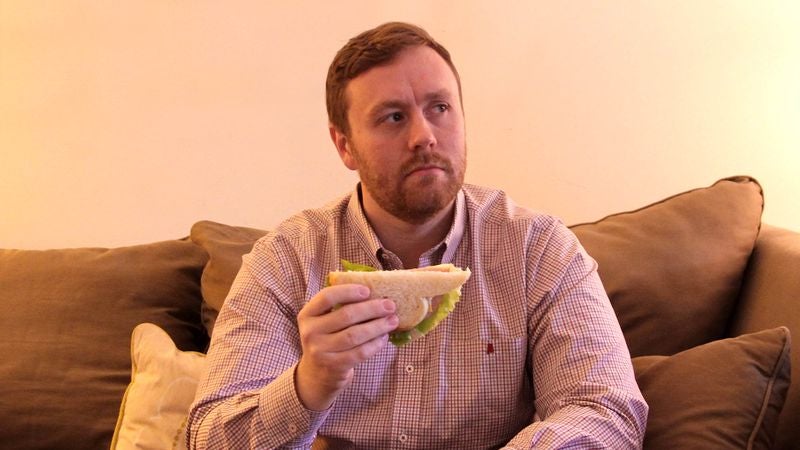
BOULDER, CO—Saying such feelings of desire were observed in nearly every individual they studied, psychologists from the University of Colorado released a report Thursday concluding that it is perfectly natural for people to fantasize about sandwiches other than the one presently in their hands.
The study, which surveyed more than 500 adults from a variety of socioeconomic and ethnic backgrounds, determined that 89 percent of subjects had, at least once during the previous six months, vividly imagined a different sandwich while sitting down at the table with their current hero, hoagie, or po’ boy.
“While many people may find it distressing or shameful when they begin mentally picturing a sandwich that’s nothing like the one they are holding, our findings suggest that these thoughts are, in fact, a completely normal biological impulse,” said Dr. Kelly Sohn, the report’s lead author. “You should by no means feel any sense of regret or embarrassment if you suddenly find yourself mid-bite feeling curious about a particularly striking BLT that caught your eye while you were walking by a café earlier that day or letting your thoughts drift to a pastrami on rye you used to have in college.”
“Even if you’re completely satisfied with the sandwich sitting right in front of you, it is purely an instinctual response to become overwhelmed by a strong desire to taste one that’s very different,” Sohn added. “It’s just human nature.”
According to the research team, it is particularly common for individuals to indulge in fantasies about exotic sandwiches from foreign culinary traditions, like Cubans or Vietnamese bánh mìs, that they have never tried before. Additionally, Sohn said that many subjects reported finding themselves particularly drawn to bigger, beefier sandwiches or those with larger meatballs, often causing them to imagine these alluring features on their own, plainer sandwich when they later sit down for a meal.
Researchers also explained that, on average, a person imagines a different sandwich than the one they’re currently holding about once every week, though a sizable minority of respondents reportedly acknowledged engaging in such fantasies every single time they had lunch.
“It’s important to remember that mentally picturing a piled-high Reuben when you’re eating the same chicken salad sandwich you always get is by and large the product of reflexive brain activity over which you have very little control,” said Sohn, adding that Americans are constantly bombarded with images of picture-perfect subs and idealized pulled pork sandwiches on billboards and television, further explaining the ubiquity of the phenomenon. “In fact, we found that when people are able to unlearn the guilt that is often associated with these harmless fantasies, it can actually make the enjoyment of one’s own sandwich that much more satisfying.”
“The real danger lies in unnecessarily punishing oneself for these thoughts, which can eventually diminish the gratification one derives from eating sandwiches altogether,” she continued.
Sohn further assured the public that it was normal for such fantasies to become extremely vivid and complex. In particular, she noted that 63 percent of subjects had reported that on one or more occasions, they had imagined themselves eating their desired sandwich in an uncommon location, such as in a car, aboard a plane, or even in front of other people in public.
Experts also confirmed that more atypical fantasies, such as eating a sandwich in a hot tub or devouring two sandwiches at once, were, in most cases, perfectly normal as well.
“It’s such a relief to know I’m not some weirdo or a bad person for checking out my brother’s spicy Italian when we went out to lunch a few weeks ago—I felt so guilty about that,” said 42-year-old study participant Craig Worsley, who told reporters he couldn’t help but imagine sinking his teeth into the sandwich’s thick layers of salami, capicola, and provolone until tangy vinaigrette dribbled all down his chin. “Don’t get me wrong, I liked the patty melt I ordered just fine, but man, I looked at his sandwich and couldn’t help but think, ‘Damn, that thing is stacked.’”
Added Worsley, “But now I understand I’m just like any other person out there with a normal, healthy appetite.”
Researchers stated that a small percentage of deeply troubled individuals reported fantasizing about salads while eating their sandwiches, and recommended that anyone experiencing these types of perverse, abnormal thoughts immediately seek psychological counseling.
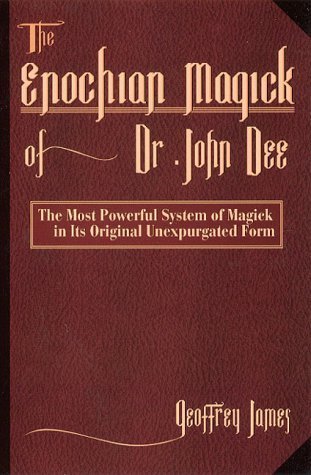
You may have heard people speak of it in hushed Enochian magick! Some say it is dangerous. Others say it is the most powerful magick known. Now you can find out the truth when you read The Enochian Magick of Dr. John Dee by Geoffrey James (previously published as The Enochian Evocation of Dr. John Dee).
This system was received by Dr. John Dee, astrologer to Queen Elizabeth I of England, and his assistant, Edward Kelly. Together, through a series of evocations, they discovered a system of magick so potent that some people fear to use it. Now you can learn the entire Enochian system as never before.
Previously, people went to secondary sources such as the Golden Dawn or Aleister Crowley for information on the Enochian system. Here, for the first time, are the diaries of Dr. Dee, which reveal the entire system so you can use it for a wide variety of magical purposes.
Presented here is the definitive version of the forty-eight angelic keys according to Dee himself. Revealed are the names of the sixteen good angels who are most skilled and powerful in medicine and in the curing of diseases, as well as the sixteen angels of the four elements. Every step of the method by which Dee and Kelly worked their evocations is fully explained so you can recreate their experiments and tap into some of the most powerful magick available.
.”The Vision and the Voice” of the Angels of the Thirty Aethyrs, reprinted from the Equinox, Volume 1, Supplement to No. 5, but here reprinted for the first time with an elaborate commentary by the MASTER THERION, is unique in that it attempts to describe in a perfectly sane and scientific manner, spiritual experiences and the investigations of the more subtle planes.
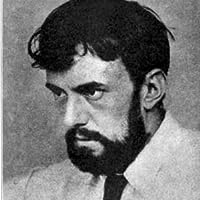
Aleister Crowley was an English occultist, ceremonial magician, poet, novelist, mountaineer, and painter. He founded the religion of Thelema, proclaiming himself as the prophet destined to guide humanity into the Æon of Horus in the early 20th century. A prolific writer, Crowley published extensively throughout his life. Born Edward Alexander Crowley in Royal Leamington Spa, Warwickshire, he was raised in a wealthy family adhering to the fundamentalist Christian Plymouth Brethren faith. Crowley rejected his religious upbringing, developing an interest in Western esotericism. He attended Trinity College, Cambridge, focusing on mountaineering and poetry, and published several works during this period. In 1898, he joined the Hermetic Order of the Golden Dawn, receiving training in ceremonial magic from Samuel Liddell MacGregor Mathers and Allan Bennett. His travels took him to Mexico for mountaineering with Oscar Eckenstein and to India, where he studied Hindu and Buddhist practices. In 1904, during a honeymoon in Cairo with his wife Rose Edith Kelly, Crowley claimed to have received “The Book of the Law” from a supernatural entity named Aiwass. This text became the foundation of Thelema, announcing the onset of the Æon of Horus and introducing the central tenet: “Do what thou wilt.” Crowley emphasized that individuals should align with their True Will through ceremonial magic. After an unsuccessful expedition to Kanchenjunga in 1905 and further travels in India and China, Crowley returned to Britain. There, he co-founded the esoteric order A∴A∴ with George Cecil Jones in 1907 to promote Thelema. In 1912, he joined the Ordo Templi Orientis (O.T.O.), eventually leading its British branch and reformulating it according to Thelemic principles. Crowley spent World War I in the United States, engaging in painting and writing pro-German propaganda, which biographers later suggested was a cover for British intelligence activities. In 1920, Crowley established the Abbey of Thelema, a religious commune in Cefalù, Sicily. His libertine lifestyle attracted negative attention from the British press, leading to his expulsion by the Italian government in 1923. He spent subsequent years in France, Germany, and England, continuing to promote Thelema until his death in 1947. Crowley’s notoriety stemmed from his recreational drug use, bisexuality, and criticism of societal norms. Despite controversy, he significantly influenced Western esotericism and the 1960s counterculture, and remains a central figure in Thelema.
Lon Milo DuQuette, also known as Rabbi Lamed Ben Clifford and by his neo-Gnostic bishop title of Tau Lamed (born 1948), is an American writer, lecturer, musician, and occultist, best known as an author who applies humor in the field of Western Hermeticism. Wikipedia
Tom Lehrer Aug 19, 2013 I hope you enjoy this excellent performance by Mr. Tom Lehrer. He is one of the most amazing comedian/singer i have ever heard. I hope you enjoy. PS. I’m not Tom Lehrer. Im a person who enjoys him. Tech Specs Format: Ampex Quadruplex PAL 4:3 Status: Only full version on youtube Recorded on: Sony Digital Betacam
Consciousness, spirituality, biography, sexuality, androgyny, futurism, space, the arts, science, astrology, democracy, humor, books, movies and more