The Many Sides of Erik Satie

“The Satie life contains so much murk; his music sparkles with riverine clarity.”
By: Ian Penman

June 30, 2025 (thereader.mitpress.mit.edu)

Contemplating this book, I asked a selection of young people: “Have you ever heard of Erik Satie?” Across the board, his name registered nothing. The moment I played the Gnossiennes and Gymnopédies however — “Oh, I LOVE those!” Everyone seems to know one or two, as if they’re now part of some collective audio memory. There are three Gymnopédies and six Gnossiennes, all composed between 1887 and 1895. Most people seem to know either “Gymnopédie #1” or “Gnossienne #1.” They are familiar props in TV adverts, film soundtracks, chill-out compilations. They are both just over three minutes — i.e., pop single length, not grand classical excursion.
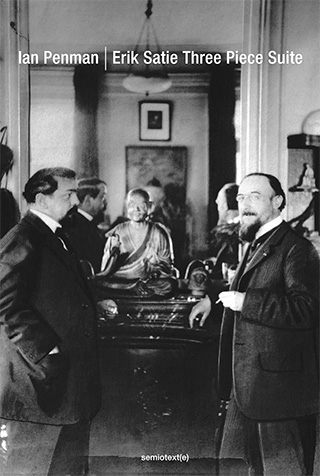
This article is excerpted from Ian Penman’s book “Erik Satie Three Piece Suite” (Semiotext(e))

In the Gymnopédies, Roger Shattuck writes, Satie “takes one musical idea and … regards it briefly from three different directions.” “Gymnopédie #1” is probably Satie’s best-known piece. You reach for words like stately, unhurried, spacious, melancholy, poignant … but the music’s ineluctable strangeness remains. It is like a painting by Velázquez, where everything looks correct but the perspective seems somehow subtly awry. You’re pulled in without quite knowing why. Technically, there is no better description than this, from Constant Lambert: “Melodically speaking we find the juxtaposition of short lyrical phrases of great tenderness with ostinatos of extreme and deliberate bareness …. The strangeness of Satie’s harmonic colouring is due not to the chords themselves, but to the unexpected relationships he discovers between chords.”

“Gnossienne #1” radiates a mood of … what, exactly? Lightly anxious contemplation? Oddly contented melancholy? An icy but heartwarming breeze? For the three Gymnopédies, Satie specifies sad and grave in his instructions for pianists; but the mood is softer, gentler, more wistful. Slightly bruised, but not down and out. The Gymnopédies and Gnossiennes do not sound like 19th-century concert hall music; they sound like pieces composed by someone who knew there would one day be recording studios, CDs, downloads. They feel as old as sand, but strangely contemporary. To have even a wisp of your music eternally circling people’s minds like pollen in the air or a constellation in the night — this is not nothing. Who could have predicted that these brief, evanescent, weightless solo piano pieces would have such a prolonged afterlife? Satie is a crossover artiste, his catalogue ever reviving and never out of print.

A creature of his time, he anticipates a host of things we now take for granted — a world of adverts, headphones, leisure time, music as personal soundtrack.

If you only know these few exquisite morsels, you only know a tiny fraction of Satie. Until relatively recently, I didn’t know too much more myself. Dip a toe into the Satie rock pool and you soon discover a cove, a coastline, an entire horizon. As well as his solo-piano works, he wrote a riotous avant-pop ballet (Parade); a comical Christian allegory (Uspud); an intimate drama with samplings of Greek philosophy (Socrate); and his final work was a groundbreaking movie soundtrack (Cinema). A creature of his time, he anticipates a host of things we now take for granted — a world of adverts, headphones, leisure time, music as personal soundtrack.

In some ways, Satie feels like a long-ago ornament; at the same time, more playfully modern than our own increasingly doctrinaire era. This contradictory pulse — on the one hand, on the other — can be found in all aspects of his life. He is a one-man synthesis of Catholicism and Protestantism. He reconciles counterpoints of high culture and popular song. Founder of a church, habitué of low dives. His day job — or night apprenticeship — was in small clubs, memorizing the melodies of popular songs: things that made people dance and smile and sing. He is knowledgeable about ancient forms, but never wedded to how things have always been done. He loves both raucous cabaret songs and the sacred music of Palestrina. His work rings with marches, waltzes and hymns. He makes angular ballet from popular melodies; infuses classical forms with the ribald life of popular art.

He may have been an elective celibate or madly passionate — or both. There is his five-month-long amour with the artist Suzanne Valadon, shining like a sun over stony fields. Maybe he carries her memory deep inside for the rest of his life — a personal alchemical emblem, the lush rose on his barren cross. Such things do happen.

He could snub people for apparently trivial reasons — status and worth, we should always remember, are two completely different things — but he was generous with his time, especially when it came to young people. He could be prickly if he thought he was being patronized: some of his most barbed wit is reserved for those who have power and don’t deserve it. (In today’s parlance: he always punched up, not down.) He lived most of his life in a state of near-indigence, but when money did arrive he’d spend it on a brace of velvet suits. There is copious testimony as to the utter shambles of his living space — yet the moment he steps outside this tiny cell he is a smiling dandy, spick and span, his own ambulant branch of Yohji Yamamoto.

The Satie life contains so much murk; his music sparkles with riverine clarity.

Like Magritte’s painting of a bowler-hatted gentleman standing between two creatures, one of sea and one of air: neither fish nor fowl.

Maybe what we rush to define as opposites should not always be seen that way.


Ian Penman is a British writer, music journalist, and critic. His first original book, “Fassbinder Thousands of Mirrors” (Semiotext(e), 2023), won the RSL Ondaatje Prize for Literature and the James Tait Black Memorial Prize for Biography in 2024. This article is adapted from his book “Erik Satie Three Piece Suite” (Semiotext(e)).
‘We are perilously close to the point of no return’: climate scientist on Amazon rainforest’s future

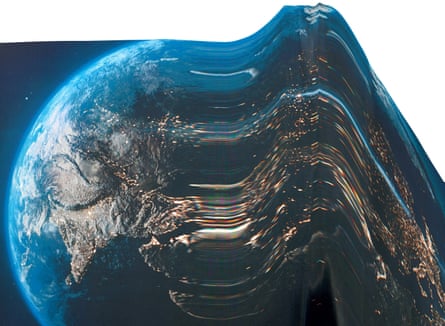
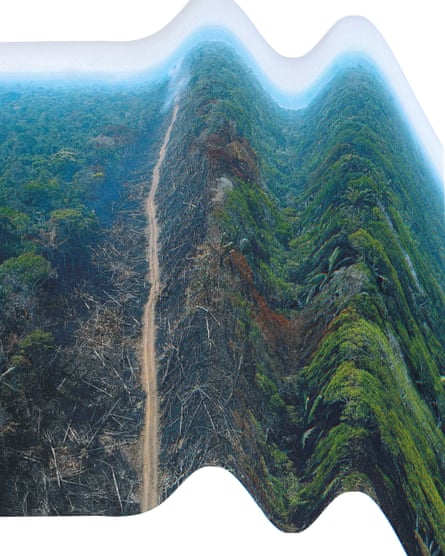
A graphic showing a distorted aerial image of destruction of the Amazon rainforest
3-CarlosComposite: AFP/Getty Images / Guardian Design

Carlos Nobre, who has fought for decades to save the rainforest, says up to 70% of it could be lost if a tipping point is reached

Jonathan Watts Thu 26 Jun 2025 (TheGuardian.com)

For more than three decades, Brazilian climate scientist Carlos Nobre has warned that deforestation of the Amazon could push this globally important ecosystem past the point of no return. Working first at Brazil’s National Institute for Space Research and more recently at the University of São Paulo, he is a global authority on tropical forests and how they could be restored. In this interview, he explains the triple threat posed by the climate crisis, agribusiness and organised crime.

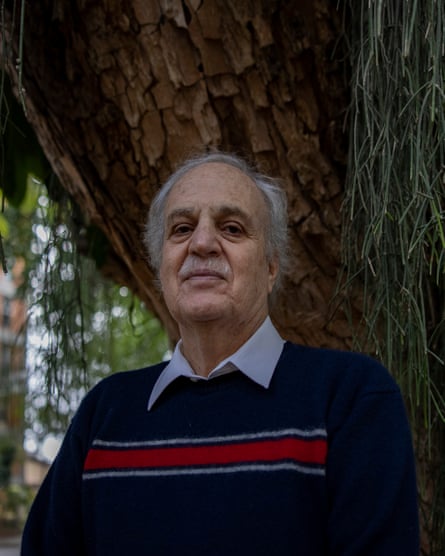
Carlos Nobre stood under a tree while looking at the camera
Carlos Nobre fears that the world is not acting with enough urgency. Photograph: Victor Moriyama/The Guardian

What is the importance of the Amazon?
As well as being incredibly beautiful, the world’s biggest tropical rainforest is one of the pillars of the global climate system, home to more terrestrial biodiversity than anywhere else on the planet, a major influence on regional monsoon patterns and essential for agricultural production across much of South America.

You were the first scientist to warn that it could hit a tipping point. What does that mean?
It is a threshold beyond which the rainforest will undergo an irreversible transformation into a degraded savannah with sparse shrubby plant cover and low biodiversity. This change would have dire consequences for local people, regional weather patterns and the global climate.

At what level will the Amazon hit a tipping point?
We estimate that a tipping point could be reached if deforestation reaches 20-25% or global heating rises to 2.0-2.5C [above preindustrial levels].

What is the situation today?
It is very, very serious. Today, 18% of the Amazon has been cleared and the world has warmed by 1.5C and is on course to reach 2.0-2.5C by 2050.

How is this being felt now?
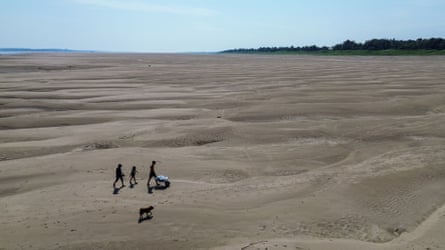
The rainforest suffered record droughts in 2023 and 2024, when many of the world’s biggest rivers were below the lowest point on record. That was the fourth severe drought in two decades, four times more than would have been expected in an undisrupted climate.

Every year, the dry season is becoming longer and more arid. Forty-five years ago, the annual dry season in the southern Amazon used to last three to four months and even then there would be some rain. But today, it is four to five weeks longer and there is 20% less rain. If this trend continues, we will reach a point of no return in two or three decades. Once the dry season extends to six months, there is no way to avoid self-degradation. We are perilously close to a point of no return. In some areas, it may have already been passed. In southern Pará and northern Mato Grosso, the minimum rainfall is already less than 40mm per month during the dry season.

Aren’t those the areas where the most forest has been cleared for cattle ranching and soy plantations?
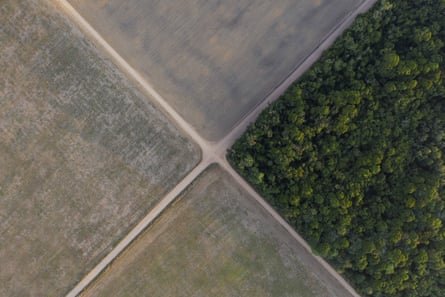
Yes. Livestock grazing is a form of ecological pollution. The areas that have been most degraded by pastures are at, or very close to, a tipping point. That is all of the southern Amazon – more than 2m sq km – from the Atlantic all the way to Bolivia, Colombia and Peru. Scientific studies show degraded pastures recycle only one-third or one-fourth as much water vapour as a forest during the dry season.

People walk along a dried up river bed
People walk along the dried up bed of the Solimões River in Brazil, which goes on to form the Amazon River. Photograph: Raphael Alves/EPA

There is so much water in the Amazonian soil. Trees with deep roots bring it up and release it into the air, mostly through transpiration by the leaves. In this way, forests recycle 4-4.5 litres of water per square metre per day during the dry season. But degraded land, like pastures, recycles only 1-1.5 litres. That helps to explain why the dry seasons are growing one week longer every decade.

Why isn’t an Amazonian savannah a good idea?
It would be less humid and more vulnerable to fire. The tropical forest generally has 20-30% more annual rainfall than tropical savannahs in Venezuela, Colombia, Bolivia and Brazil. The Amazon also has fewer lightning strikes because the clouds are lower than in the savannah. But the most important difference is the fact that a rainforest has a closed canopy so only 4% of solar radiation reaches the forest floor. This means there is always very little radiated energy for the evaporation of the water so the forest floor vegetation and soil are very wet. Historically, this means that lightning strikes only start very small fires that kill only one or two trees but do not spread. In evolutionary terms, this is one reason why there is so much biodiversity in the rainforest; it is resilient to fire. But once it starts to dry and degrade, it is easier to burn.

How would an Amazon tipping point affect the global climate?
The forest in the south-eastern Amazon has already become a carbon source. This is not just because of emissions from forest fires or deforestation. It is because tree mortality is increasing tremendously. If the Amazon hits a tipping point, our calculations show we are going to lose 50-70% of the forest. That would release between 200 and 250bn tonnes of carbon dioxide between 2050 and 2100, making it completely impossible to limit global warming to 1.5C.

An aerial image showing fields and the cut down Amazon rainforest lined by roads
Large areas of the Amazon have been cut down for soy plantations. Photograph: Léo Corrêa/AP

Brazil is one of the world’s biggest agricultural exporters. How would a tipping point affect global food security?
Almost 50% of the water vapour that comes into the region from the Atlantic through trade winds is exported back out of the Amazon on what we call “flying rivers”. I was the first to calculate the huge volume of these flows: 200,000 cubic metres of water vapour per second. My former PhD student, Prof Marina Hirota, calculated that tropical forests and Indigenous territories account for more than 50% of the rainfall in the Paraná River basin in the far south of Brazil, which is a major food-growing area. These flying rivers also provide water for crops in the Cerrado, Mato Grosso, Mato Grosso do Sul, Goiás, Paraná, Santa Catarina, Rio Grande do Sul, Paraguay, Uruguay, and all that northern Argentina agricultural area. So if we lose the Amazon, we are going to reduce the rainfall there by more than 40%. Then you can forget agricultural production at today’s levels. And that would also contribute to converting portions of the tropical savannah south of the Amazon into semi-arid vegetation.

What would be the consequences for nature and human health?
The devastation of the most biodiverse biome in the world would also affect hundreds of thousands of species and raise the risks of zoonotic diseases crossing the species barrier. For the first time since the Europeans came to the Americas, we are experiencing two epidemics: Oropouche fever, and Mayaro fever. In the future, the degradation of the Amazon forest will lead to more epidemics and even pandemics.

How can an Amazonian tipping point be prevented?
In 2019, [the American ecologist] Tom Lovejoy and I recommended nature-based solutions, such as large-scale forestry restoration, zero deforestation, the elimination of monocultures, and a new bioeconomy based on social biodiversity. We argued that it is possible to build back a margin of safety through immediate and ambitious reforestation particularly in areas degraded by largely abandoned cattle ranches and croplands. This prompted a lot of research and new thinking.

Is the Brazilian government adopting these ideas?
Progress fluctuates depending on who is in power. In August 2003-July 2004, we had about 27,000 sq km of deforestation – a huge number. But the first Lula government, with Marina Silva as environment minister, brought the figure down and it reached 4,600 sq km by 2012. Later, during Bolsonaro’s government, it went up to 14,000 sq km. And now, with Lula and Marina back, it is fortunately going down again and there are several beautiful new reforestation projects. This is progress, but not enough. Now I’m saying to Marina Silva, ‘Let’s get to Cop30 with the lowest deforestation in the Amazon ever, less than 4,000 sq km.’ Who knows? But anyway, Brazil is working hard.

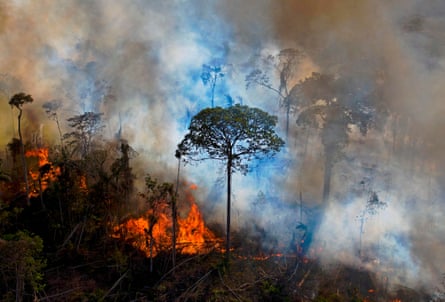
A forest fire in the Amazon rainforest
Nobre believes that more than half of the forest fires in the Amazon were began by arsonists. Photograph: Carl de Souza/AFP/Getty Images

You have warned that criminal activity is a major new risk. Why?
Last year, we had a record-breaking number of forest fires in all biomes in tropical South America – from January to November 2024, the Amazon had more than 150,000. Studies by INPE (The Brazilian Space Agency) show something very, very serious is happening. More than 98% of the forest fires were man-made. They were not lightning strikes. This is very worrying. Because even when we are reducing deforestation, organised crime is making it worse. In my opinion, more than 50% of forest fires were arson.

All Amazonian countries are trying to reduce deforestation. That is wonderful, but then what to do to combat organised crime? They control a $280bn business – drug trafficking, wildlife trafficking, people trafficking, illegal logging, illegal gold mining, illegal land grabbing. It is all connected. And these gangs are at war with the governments. That’s one of the main reasons I’m becoming concerned because I know reducing deforestation is doable, so is forestry restoration. But how to combat organised crime?

How have your feelings about this problem changed?
I am worried that we are not acting with sufficient urgency. Thirty-five years ago, I thought we had plenty of time to get to zero deforestation and to combat the climate problem. Back then, deforestation was 7% and global warming was a little bit above 0.5C. I was not pessimistic because I felt we could find solutions. At the Rio Earth Summit in 1992, many people were saying that the world should aim for zero emissions by the year 2000. Unfortunately, nobody moved. Emissions continued to rise and they hit another record high last year. We now face a climate emergency. I am very, very concerned.


Tipping points: on the edge? – a series on our future

Globe
 Composite: Getty / Guardian Design

Tipping points – in the Amazon, Antarctic, coral reefs and more – could cause fundamental parts of the Earth system to change dramatically, irreversibly and with devastating effects. In this series, we ask the experts about the latest science – and how it makes them feel. Tomorrow, Louise Sime talks about Antarctic tipping points

Read more

Word-Built World: malison

Illustration: Anu Garg

A.Word.A.Daywith Anu Garg

Have you ever wondered why we have wide/width, but not high/highth? The simple answer is, we used to. Highth was the original word, but over time it morphed into the height we use today.

Like rough stones tumbling down a stream, words lose their jagged edges as generations of speakers smooth them away.

But not every word gets polished. Some just get lost in the current, obscured by their more popular opposites. This week, we’re diving in and bringing five of these uncommon antonyms up for air.

malison

PRONUNCIATION:

(MAL-uh-zuhn/suhn) 

MEANING:

noun: A curse.

ETYMOLOGY:

From Anglo-French maleiçun (curse), from Latin maledictio (curse), from maledicere (to curse), from mal- (bad) + dicere (to speak). Earliest documented use: 1300.

NOTES:

Today’s word has a better-known synonym, malediction, though both derived from the same Latin root. You could say they are cuss-ins. The opposite is benison, not to be confused with venison (no benison to the deer).

What Birds Can Teach Us About Protest

The Chickadees I Feed Are Adept at Speaking Out When Their Flock Is Threatened

By Trish O’Kane June 30, 2025 (ZocaloPublicSquare.org)

Are we all chickadees living under dictatorship? Trish O’Kane, who spent time as a human rights investigative reporter in Central America, draws lessons for protesting Americans from her time birding. Credit: University of Vermont birding mentor Nadyah Khan

On a piercingly bright 13-degree morning this spring, I grab some bird seed and drive to Woodside. I seek the counsel of the feathered.

This scruffy, 340-acre strip of wetland, sandplain, and floodplain forest is one of my favorite birding haunts in Vermont, sandwiched between a busy highway and the Winooski River. Near a medical complex and a giant Lowes, most drivers racing by at 50 mph do not even notice it. But long-distance migratory birds following watery highways north, some flying thousands of miles from South America and the Caribbean, certainly do. This wet green ribbon of refuge in the middle of concrete is an ideal avian gas station. The river and its banks offer plenty of the insect protein marathon fliers urgently need after losing up to 20% of their muscle mass on their way to nesting grounds in Vermont’s mountains or Canada’s boreal forests. That’s why diligent birders have discovered 189 bird species here, including hundreds of crows who play and forage in a giant compost pile, a corvid daycare center.

I started birding years ago, after a major midlife crisis. Now our entire country is in a major midlife crisis, just one year before we celebrate our 250th anniversary as a democracy. I don’t know what advice my feathered friends have about confronting a wannabe orange-crested dictator-king or his functionary, JD Vance, who we chased out of our little state only this week. But I do know that they have never, ever let me down. 

In my life before birds, I was a human rights investigative reporter in Central America, covering weak and teetering democracies emerging from U.S.-backed dictatorships. I lived in Guatemala for six years, and reported on one of the worst massacres in recorded North American history, during which the U.S.-trained Guatemalan military slaughtered a village of over 300 souls. I know how dictatorships take residence in your body and how fear changes your daily behavior. How people lower their voices and glance around before they mention certain names. How every SUV with tinted windows and no license plate that slowly passes by starts your heart on a wild race.

Since Trump was elected, my reporter brain keeps telling me that he is just throwing a lot of executive-order bullshit spaghetti against the wall—mostly illegal—and that our courts will hold. This is not Guatemala, where judges got daily death threats, left the country, or just took the bribe, and where death squad vans cruised city streets. But with every horrific headline, my Guatemala brain powers on, and I wake up in terror. Time to feed the birds, and my soul.

It is cold, quiet, and snowy at Woodside. I am the only human here. During COVID, some anonymous St. Francis-type spent dozens of hours in the bitter cold, mittened palms filled with sunflower and safflower seeds, to entice the birds to feed from their hands. So now there is usually a hungry flock waiting near the gate. I fill my gloved right hand with seed and stand still as a statue.

Five minutes later, the first bird lands, a chickadee plumper, larger, and more full of himself than his buddies watching from surrounding bushes. He cocks his head, stares at me for one or two heart-stopping seconds, then grabs that first sunflower seed. Up he zips into a small tree to pound his seed against the trunk until he cracks it open.

Every first protester is like First Chickadee, that sassy bold one who makes that first landing as all the other birds watch very closely and weigh the risks of joining in.

After another five minutes, a few chickadees who have been carefully observing First Chickadee begin hovering around my head like gigantic mosquitoes. They do not land. Others observe from nearby branches as First Chickadee shuttles back and forth between my palm and his seed-pounding trunk, an operation he continues solo until finally another chickadee flies straight at me, nearly skimming my palm. She dips to land, then changes her mind mid-air and races back to her tree, as her audience makes squeaky chortles.

When a second chickadee does land, he does not grab a seed. Instead, he spends several seconds methodically shoveling them out of my palm with his tiny beak, dumping the seeds onto the snow. Several chickadees watching from the bushes then dive at my boots to feast. Is the seed-dumper trying to help his buddies who are too scared to land on my palm, what biologists call “altruism”? Or is he just a messy eater?

A distracted chickadee is a dead chickadee. Their collective defense system depends on watching and listening to each other with a laser-like focus. It takes another 20 minutes of careful observation for the other chickadees to decide I am “safe.” Three land on my palm at the same time. One opens her beak a fraction and emits a silent chickadee curse, sending the other two skedaddling. A fourth perches on my sleeve, waiting. There are chickadees who only want peanuts, chickadees who only pluck sunflower seeds, and chickadees who prefer shell-less safflower seeds. A lone chickadee chooses a single-shelled pumpkin seed, a culinary avian-adventurer. As my ornithology brain catalogues the variations in behavior, my soul delights in the trusting clutch of tiny talons on my Smartwool mitten.

Links to videos:

https://videopress.com/embed/imgmLFAH?cover=1&posterUrl=https%3A%2F%2Fwww.zocalopublicsquare.org%2Fwp-content%2Fuploads%2F2025%2F06%2Funiversity-of-vermont-birding-mentory-1_mov_dvd.original.jpg&preloadContent=metadata&useAverageColor=1&hd=0Credit: University of Vermont birding mentor Isabel Homsi

https://videopress.com/embed/4WXflUey?cover=1&preloadContent=metadata&useAverageColor=1&hd=0Credit: University of Vermont birding mentor Isabel Homsi

Unfortunately, at 13 degrees with a north wind, my feet are quickly becoming blocks of ice. I can stand like St. Francis of the Frozen Tundra no longer. The 40 minutes I’ve lasted is not long enough for the other avian species to summon their courage and brave the perils of my palm. But the semi-circle of branches above is bustling with them, titmice and nuthatches and downy woodpeckers all watching the handfeeding show from their balcony seats, as if I am standing on a stage below.

When chickadees detect a threat, their alarm calls activate an avian rapid-relay system that warns over 50 different bird species in the vicinity of any imminent threat before it can reach them. These avians must know by now that I am safe. But they do not approach. They just watch as the chickadee circus grows louder and rowdier with a chickadee buzzing by my right ear like a large bee, others flapping around my face, so close, they could land on my nose.

I close my eyes and enjoy one last tiny rush of frigid air against my cheek as they careen past, stare at me, grab a seed, and zoom back to their safe perch. But I am disappointed. There have been no aha-avian wisdom moments, no insights on how to drive away an orange-crested wannabe dictator-predator. And none of the other bird species came to my outstretched hands. Then I think back to every time I’ve hand-fed birds over the past decade: The first bird to take that risk has always been a chickadee. They are intrepid. Their curiosity overcomes their fear of a predator. They are the first avian to inquire: What in the hell is going on?

As I leave Woodside, I realize something: We are the chickadees. The Vermonters standing alongside me in the cold for hours to chase Vance away. The intrepid citizens who just started 50501, Indivisible, and the Tesla Takedown. And soon we will be joined by many more, like the people in Los Angeles, San Diego, Minneapolis, Chicago, and New York who are trying to stop ICE from dragging away members of our flock.

It’s scary to protest your first time. We usually only hear about protests that face violent repression, or that turn destructive—seldom about daily acts of courage, some as simple as a single person standing on a street corner with a sign. But every first protester is like First Chickadee, that sassy bold one who makes that first landing as all the other birds watch very closely and weigh the risks of joining in. And the seed that First Chickadee grasps is one of solidarity, comradeship, hope, and joy.


Trish O’Kane is the author of Birding to Change the World: A Memoir. She teaches at the University of Vermont.

Wholistic Empathy: Defining Empathy

Edwin Rutsch Jun 17, 2025 Wholistic Empathy: Defining Empathy Presentation #3 https://definingempathy.com 1. Criticisms of Empathy 2. The Wholistic Empathy Model (WE) & the Empathy Circle 3. Comparing WE to Affective/Cognitive Model This is a project for developing Edwin’s Wholistic Empathy Definition Model. There are many different ways that empathy has been defined. It is important to be clear on how you define it and for consistency and clarity to stick with it. This is the definition I have come up with. We use this website to organize the project. https://definingempathy.com To join the Defining Empathy Project, email EdwinRutsch@gmail.com What Makes The Wholistic Empathy Model Unique? This model has several aspects that make it unique from other current definition models. This model… 1. Moves from an Individualistic to Wholistic Perspective 2. Moves From Abstract Concepts to Personal Experience 3. Eliminates the Reason vs. Feeling Dichotomy 4. Creates an Integrative and Inclusive Approach 5. s a Practical and Useable Application

I’ll probably lose my job to AI. Here’s why that’s OK

Megan J. McArdle | TED2025

• April 2025

Artificial intelligence could cost many of us our careers — but that doesn’t mean we should stop its development, says journalist Megan J. McArdle. As she watches AI encroach on her own craft, she shares a fresh take on the 19th-century Luddites, who tried to destroy machines that would upend their trade. Looking back, McArdle reframes today’s fears with a poignant question: If we halt progress to protect the present, what might we be stealing from the future?

Want to use TED Talks in your organization?

Start here

About the speaker

Columnist

Yo-Yo Ma Finally Works Up Courage To Tell Parents He Quitting Cello

Published: June 30, 2025 (TheOnion.com)

CAMBRIDGE, MA—Taking a deep breath and straightening his back, Yo-Yo Ma finally worked up the courage to tell his parents that he was quitting cello, sources confirmed Friday. “Mom, Dad, this is it—I quit,” said Ma, who exhaled and then winced as his parents immediately reacted to the consequential words by simultaneously exclaiming “But you love cello!” and “Is this a joke?” “You always say I love cello, but that’s not true. You guys love cello. I hate cello. If there was any instrument I wanted to play at all it would probably be the drums. Please, please just let me speak. I’m done. No, I won’t give it ‘just a few more decades.’” At press time, Ma was reportedly back in his bedroom practicing cello after being chewed out by his parents.

Tarot Card for July 1: Luxury

The Four of Cups

The Lord of Luxury, as I said in my first analysis of it, is a card with a sting in the tail. Whilst it indicates a great deal of loving affection surrounding us, it also warns that we stand the very real possibility of committing a great sin – that of taking love for granted.One thing you might have noticed in life is the strange way in which we value the love of people we feel deeply affectionate toward more highly than the love of people we are less attracted to. From my perspective this is an odd, and rather unkind attitude to have.It’s natural to want those we love to return our feelings, of course. But just because we do not feel strongly about a person, we may not imagine that the love they offer us is less valuable. If we are careless of their feelings, we will hurt them just as thoroughly as if we were careless of the feelings of our beloved – or they of ours. And there is no justification for such behaviour.Love is a mighty and precious emotion. It both creates and destroys with ease. That some-one loves us is a priceless gift from the Universe. Whether we necessarily reciprocate in quite the same way is totally irrelevant. This person’s love exists in isolation of our judgement of its importance.So on a day ruled by the Lord of Luxury, count the loving feelings that people hold for you. Treasure each and every one of these as the inestimable compliment and treasure it is. Do not stand in judgement. Rather, take a harder look at the people who offer you love, where you may not have sought it. And adjust your view of that love until you respect its worth, even though you may not return it.Do not fall into the trap of doing things because somebody loves you… simply hold their feelings in the high regard they deserve. And be very grateful and glad to be loved… There are a great many people out there who never experience the warmth of being held dear and special. And that is a very lonely experience.And if, for the time, you feel as though you are one of those people who is not loved and held dear, then use this day to seek out at least one place where there is an abundance of love, and go to it… everybody deserves to feel that they are not completely alone.

Affirmation: “I see love around me and celebrate its presence.”

(Angelpaths.com)

July Astrology Forecast 2025

The Astrology Podcast Jun 30, 2025 Monthly Astrology Forecasts A look ahead at the astrological forecast for July of 2025, with astrologers Chris Brennan and Austin Coppock of The Astrology Podcast! We spend the first hour of the episode talking about the astrology of news and events that have occurred since our last forecast, and then in the second hour we transition into talking about the astrology of July, starting at 1 hour and 3 minutes into the episode. July opens with Uranus entering the sign of Gemini on July 7, which it hasn’t visited since the 1940s, and beginning the long-anticipated Uranus return of the United states.   In the first half of the month Saturn and Neptune both make their first retrograde station in Aries, and move into a very close conjunction with each other in the sky, coming within less than a degree of orb for the first time since the late 1980s.   There is also a Mercury retrograde period in Leo that begins in the middle of the month, and then doesn’t conclude until early August.   In this episode we also celebrate our 10th anniversary of doing forecasts together! United Astrology Conference https://uacastrology.com 15% off Chris’ Hellenistic astrology course using promo code JUPITER until July 14: https://theastrologyschool.com Austin’s Website https://austincoppock.com Patreon for Elections and Bonus Content   / astrologypodcast   Timestamps 00:00:00 Introduction 00:00:57 Quick overview of July 00:03:23 News segment 00:55:36 United Astrology Conference 01:01:37 Hellenistic course discount 01:03:02 July forecast 02:19:30 Electional date for July 02:26:11 Mars-South Node & Venus-Mars 02:35:02 New Moon in Leo July 24 02:44:34 Wrapping up 02:53:04 Credits

Book: “Human History on Drugs: An Utterly Scandalous but Entirely Truthful Look at History Under the Influence”

Human History on Drugs: An Utterly Scandalous but Entirely Truthful Look at History Under the Influence

Sam Kelly

Not yet published Expected 8 Jul 25

A lively, hilarious, and entirely truthful look at the druggie side of history’s most famous figures, including Shakespeare, Queen Victoria, and the Beatles, from debut author (and viral historical TikToker with nearly 100K followers) Sam Kelly

Did you know that Alexander the Great was a sloppy drunk, William Shakespeare was a stoner, and George Washington drank a spoonful of opium every night to staunch the pain from his fake teeth? Or how about the fact that China’s first emperor, Qin Shi Huangdi, ingested liquid mercury in an (ironic) attempt to live forever, or that Alexander Shulgin, inventor of no less than 230 new psychedelic drugs, was an employee of the DEA? 

In Human History on Drugs, historian Sam Kelly introduces us to the history we weren’t taught in school, offering up irreverent and hysterical commentary as he sheds light on some truly shocking aspects of the historical characters we only thought we knew. With chapters spanning from Ancient Greece (“The Oracle of Delphi Was Huffing Fumes”) and the Victorian Era (“Vincent van Gogh Ate Yellow Paint”) to Hollywood’s Golden Age (“Judy Garland Was Drugged by Grown-Ups”) and modern times (“Carl Sagan Got Astronomically High”), Kelly’s research spans all manner of eras, places, and, of course, drugs. 

History is rife with drug use and drug users, and Human History on Drugs takes us through those highs (pun intended) and lows on a wittily entertaining ride that uncovers their seriously unexpected impact on our past.

(Goodreads.com)

Consciousness, spirituality, biography, sexuality, androgyny, futurism, space, the arts, science, astrology, democracy, humor, books, movies and more